Nettle Tea Benefits for Hormones: What Evidence Shows
Nettle has been a staple of herbal medicine across Europe for centuries, and the modern internet has given it a second career as a hormone remedy. Claims about nettle tea benefits for hormones now range from the mildly plausible to the completely invented, often on the same page. The plant is genuinely interesting, genuinely nutritious and genuinely worth a place in a diet. What it is not is a hormonal intervention, and the distance between those two statements is worth understanding before you buy a large bag of dried leaf.
Our hair, skin and nails gummies
GrowPro® Hair, Skin & Nails Gummies, £22.95. Sugar free daily gummies for people who would rather chew than swallow a tablet, supporting hair care from the inside out.
The honest position on nettle tea benefits for hormones is that the evidence is thin and mostly indirect. Nettle root, not the leaf used in tea, is the part studied for hormone related effects, and those studies looked at prostate symptoms rather than hormone levels. Nettle leaf tea is a nutritious drink containing iron, calcium and vitamin K, with mild anti inflammatory activity. Treat it as a pleasant, useful herbal drink rather than as a hormonal treatment.
Key takeaways
- Most claims about nettle tea benefits for hormones quietly borrow research done on nettle ROOT, not the leaf that makes tea.
- Nettle leaf is genuinely nutritious, with iron, calcium, magnesium and vitamin K.
- No good human trial shows nettle tea changing hormone levels in women.
- It interacts with blood thinners, blood pressure and diabetes medicines, so check before drinking it daily.
- For hormone related hair changes, the useful work happens with your GP, not with a teapot.
What is nettle tea, and which part of the plant is in your cup?
Stinging nettle is Urtica dioica, the plant that stings you on a country walk. The sting comes from hollow hairs on the leaf that inject formic acid and histamine, and it disappears entirely once the plant is dried, cooked or steeped in hot water.

The distinction that matters for this topic is leaf versus root. Nettle tea, almost without exception, is made from the dried leaf or the aerial parts of the plant. Nettle root is a different preparation with a different chemical profile, sold as a capsule or tincture rather than as a tea. Nearly every hormone claim you will read about nettle traces back to research on the root, then gets attached to the leaf because that is what people are actually buying.
The substitution to watch for
When a page says nettle affects hormones and then tells you to drink three cups of tea a day, it has swapped root research for leaf usage somewhere in the middle. That is the single most common error in writing about this plant.
What does the research say about nettle tea benefits for hormones?
Taken honestly, there is very little direct evidence. No well designed human trial has shown nettle leaf tea measurably changing oestrogen, testosterone or thyroid hormone levels in women. The claims circulating online rest on three indirect pillars, and each is weaker than it first appears.
| The claim | Where it comes from | How well it holds up |
|---|---|---|
| Nettle lowers testosterone | Laboratory work on nettle ROOT extract and binding proteins | Weak for tea. In vitro root data, not leaf, not drinking, not humans |
| Nettle balances hormones | General herbal tradition | Not a testable claim. No trial supports it |
| Nettle helps prostate symptoms | Human trials of nettle ROOT, some reasonable quality | Real, but about symptoms in men, using root capsules, not tea |
| Nettle reduces inflammation | Cell and small human studies on nettle leaf | Modest but genuine. Least oversold claim on the list |
| Nettle is rich in iron | Food composition data | True for the plant, but a brewed cup delivers far less than the dried leaf |
Notice how often the evidence is about the root while the advice is about the tea.
The last row deserves particular attention, because the iron claim is used constantly in the context of hair. Dried nettle leaf does contain iron. A cup of tea, however, is a water infusion, and iron is not efficiently extracted into it. Nettle tea is not a meaningful iron source, and if you suspect low iron the answer is a blood test through your GP rather than a herbal drink. Our guide on what causes sudden shedding explains why iron status matters and how it is properly checked.
Does nettle affect testosterone and SHBG in any real way?
This is the claim with the most science behind it and the least relevance to a teapot. Sex hormone binding globulin is a protein that binds testosterone and oestrogen in the blood, and how much is bound affects how much is biologically active. Laboratory studies have shown that compounds in nettle root can interact with this protein and with enzymes involved in hormone metabolism.
Three caveats make that far less exciting than it sounds. The work was done in test tubes rather than in people. It used concentrated root extract, not a leaf infusion. And an interaction observed in a dish at high concentration frequently disappears entirely once a substance has to survive digestion and reach a tissue in a living body. Nobody has demonstrated that drinking nettle leaf tea shifts anyone's hormone profile.
If your interest in this topic comes from a hormone related condition, the practical route is diagnostic rather than herbal. Conditions such as PCOS, thyroid disorders and the menopause transition all change hair, and all are confirmed with blood tests and managed with your GP. A herbal tea is not an alternative to finding out which one you are dealing with.
What does this mean for hair, honestly?
Most people arrive at nettle through hair rather than through hormones, so it is worth being precise about which hair problem is in play. Three get confused constantly.
Hair loss is a follicular process. In pattern hair loss the follicle miniaturises over years under hormonal and genetic influence, producing finer and shorter hairs each cycle. No tea changes that.
Hair shedding is a cycle disturbance. A large group of follicles enters the resting phase together after a trigger such as illness, childbirth, a thyroid swing, a nutritional gap or major stress, and the hair falls two to three months later. This is the type most often blamed on hormones, and it is also the type that usually settles once the trigger is addressed.
Hair breakage is mechanical. The fibre snaps because of bleach, heat, tight styling or rough handling, and it mimics thinning convincingly. Nothing you drink affects it, and quite a lot of what you do in the bathroom does.
Watermans products are 100% cosmetic and do not treat medical hair loss. Individual results may vary.
Get a discount on the thinning hair range
Join the Watermans mailing list and we will email a discount code straight to your inbox, so you can try the thinning hair range for less. Vegan, made in the UK, over 6.5 million bottles sold since 2012.
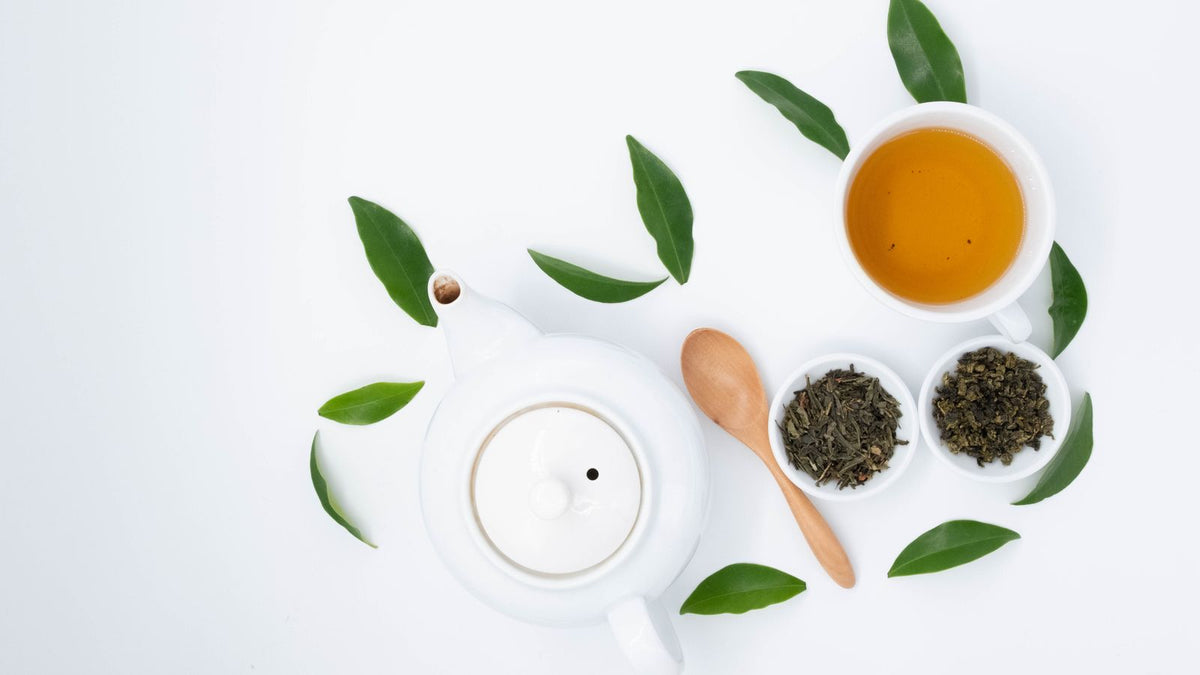
How do you brew nettle tea properly?
If you want the drink for its own sake, which is a perfectly good reason, brewing it well makes a real difference to both taste and the amount of plant material you actually extract.

- Use one to two teaspoons of dried leaf per 250ml cup, or a small handful of fresh leaves if you are picking your own.
- Pour water just off the boil, around 90 to 95 degrees. Fully boiling water makes the brew harsher without extracting more of value.
- Cover and steep for 5 to 10 minutes. Covering matters, because it keeps the volatile aromatic compounds in the cup instead of on your ceiling.
- For a stronger overnight infusion, steep 30g of dried leaf in a litre of hot water in a sealed jar for four to eight hours, then strain and refrigerate. This extracts considerably more minerals than a quick cup.
- Add lemon if you like. Vitamin C improves absorption of plant iron, which makes the small amount present slightly more useful.
- Keep it to one to three cups a day unless a healthcare professional has told you otherwise.
If you are picking nettles yourself, take young leaves from the top of the plant in spring, wear gloves, and avoid roadside verges and any ground likely to have been sprayed or used by dogs. The same principle applies as with any foraging: if you are not completely certain what the plant is, do not pick it.
For a topical route rather than a drink, nettle also appears in herb infused oils, which is a gentler way to use botanicals on the scalp than an undiluted essential oil.
Who should avoid nettle tea?
Nettle is a food plant and is well tolerated by most people, but it is not inert and it has real interactions worth knowing about.
Check with a pharmacist or your GP first if you
take anticoagulants or blood thinning medicines, since nettle is high in vitamin K and affects clotting; take medicines for blood pressure or blood sugar, because nettle may add to their effect; take diuretics, because nettle has a mild diuretic action of its own; are pregnant, where nettle is traditionally avoided and the safety data is inadequate; or have a kidney condition.
Allergic reactions are uncommon but possible, particularly in people sensitive to other plants in the same family. Start with one cup rather than a litre, and stop if you notice a rash, swelling or stomach upset.
What genuinely helps with hormone related hair change?
The unglamorous answer is that identifying the cause does most of the work. A blood test that finds a thyroid problem, low ferritin or a condition such as PCOS gives you something to act on. A herbal tea gives you a pleasant drink and a few months of waiting.

Alongside that, eating enough protein and iron rich food, sleeping properly, managing stress where you can and handling your hair gently all contribute more than any single herb. On the cosmetic side, the goal is keeping the hair you grow rather than persuading your body to grow more.

GrowPro® Hair, Skin & Nails Gummies £22.95
Sugar free vegan gummies with biotin, zinc, selenium and B vitamins, which contribute to the maintenance of normal hair. A sensible everyday top up, and not a substitute for a blood test if you suspect a genuine deficiency.

Grow Me® Hair Growth Shampoo £14.95
A sulfate free daily shampoo with biotin, caffeine, rosemary and niacinamide. Cleanses gently and supports a comfortable scalp environment through a shedding phase.
Grow Me shampoo is vegan. Watermans products are made in the UK, and we have sold over 6.5 million bottles since 2012.
Frequently asked questions
Are nettle tea benefits for hormones actually proven?
No. There is no good human trial showing that nettle leaf tea changes hormone levels. The hormone related research on nettle used root extract in laboratory conditions, and those findings do not transfer to drinking leaf tea.
How much nettle tea should I drink a day?
One to three cups a day is a normal amount for most adults. There is no established therapeutic dose, because there is no established therapeutic effect for the tea. If you take regular medication, check with a pharmacist before making it a daily habit.
Does nettle tea help with menopause symptoms?
There is no reliable evidence that it does. Some people find any warm herbal drink comforting during the menopause transition, which is genuine but not specific to nettle. Effective options for menopausal symptoms are worth discussing with your GP.
Is nettle root better than nettle leaf for hormones?
Nettle root is the part with hormone related research behind it, but that research concerned prostate symptoms in men and used concentrated extracts. It does not mean root capsules will do anything for hormonal hair change in women.
Can nettle tea help my hair grow?
There is no evidence that drinking it changes hair density. If you are shedding heavily, the useful step is finding the trigger, commonly a thyroid issue, low iron, a recent illness or major stress, which is a blood test rather than a tea.
Does nettle tea contain enough iron to matter?
No. The dried leaf contains iron, but very little transfers into a water infusion. If you are worried about low iron, ask your GP for a ferritin test, because guessing at iron status is a good way to get it wrong in either direction.
Can I drink nettle tea while pregnant?
Avoid it unless your midwife or GP says otherwise. Nettle is traditionally avoided in pregnancy and the safety data is not adequate to be confident either way.
Does nettle tea interact with medication?
It can. Nettle is high in vitamin K, which matters if you take anticoagulants, and it may add to the effect of blood pressure, blood sugar and diuretic medicines. A pharmacist can check your specific list in a couple of minutes.
What is the bottom line on nettle tea benefits for hormones?
Nettle is a genuinely good plant that has been asked to carry claims it cannot support. The realistic summary of nettle tea benefits for hormones is that the leaf makes a nutritious, mildly anti inflammatory drink with a long tradition behind it, and that the hormone research everyone cites was done on the root, in a laboratory, for a different purpose. Drink it because you like it and because a warm herbal drink is a decent habit. If hormone related hair change is what actually brought you here, book the blood test, talk to your GP about what it shows, and keep the tea as the pleasant thing it is rather than the treatment it is not. If your question is about products or a routine rather than a medical one, you can talk to Gail Waterman, our co-founder, as an AI avatar on the Watermans homepage. There is more on pomegranate benefits for hair in a separate guide.
If your diet is the weak link, the GrowPro hair vitamins are the simple version. Vegan, made in the UK.
Sources and references
- European Medicines Agency, Urticae folium and Urticae radix herbal monographs, which set out the approved traditional uses and note the limits of the evidence.
- NHS, Hair loss, on causes and when to seek medical advice.
- NHS, Iron deficiency anaemia, on how low iron is actually identified and managed.
- NICE Clinical Knowledge Summaries, Menopause, on symptoms and evidence based management options.
- National Center for Complementary and Integrative Health, Herbs at a Glance, summarising the state of the evidence and known interactions for herbal products.