How to Stop Hair Growth on Your Face: Every Option Compared
Facial hair reduction covers everything from a five minute shave to a course of clinic sessions, and the right answer depends far more on why the hair is there than on which product you buy. Coarse dark hair on the face is usually linked to androgen changes, and the NHS notes this can happen either because hormone levels rise or because the body becomes more sensitive to hormones it already has.
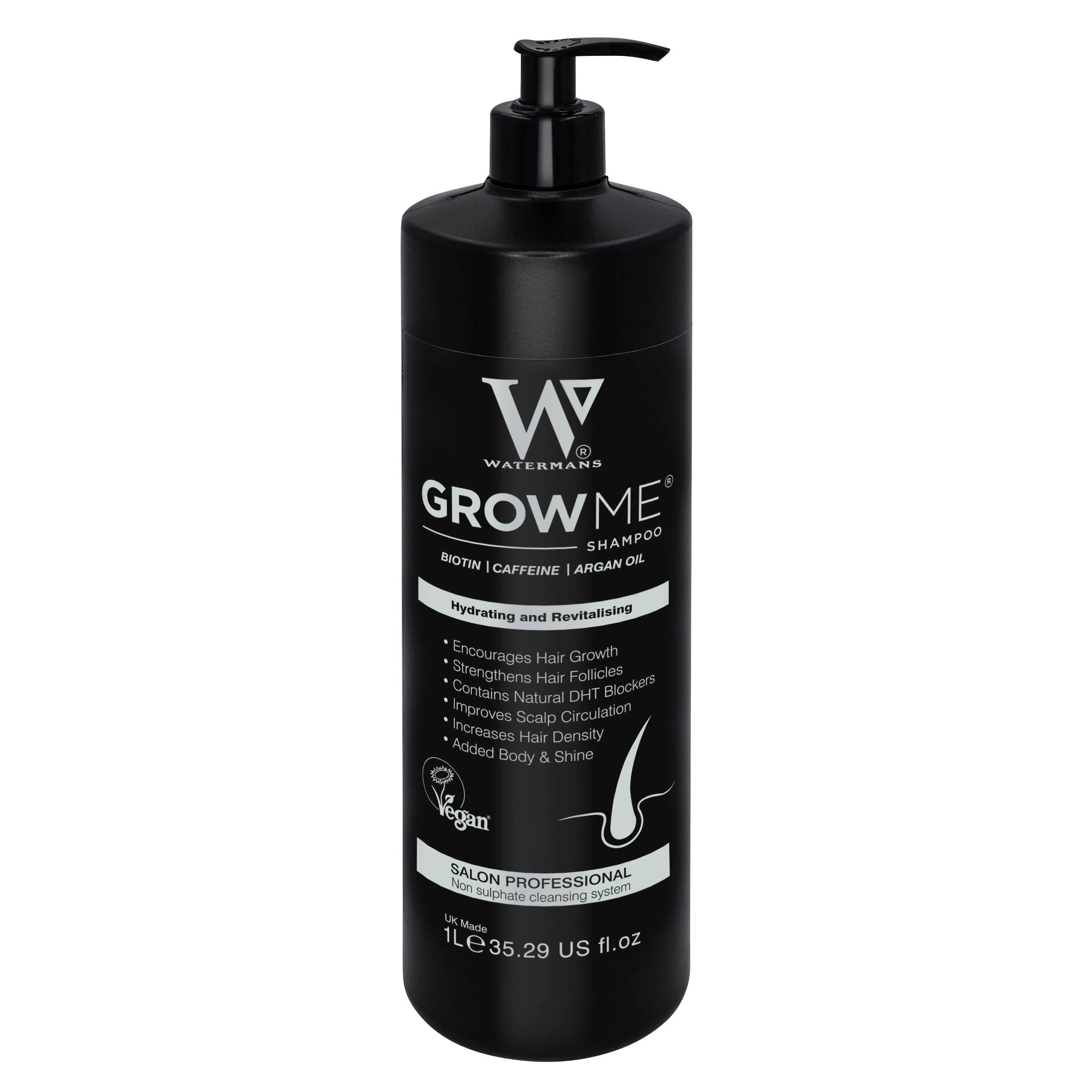
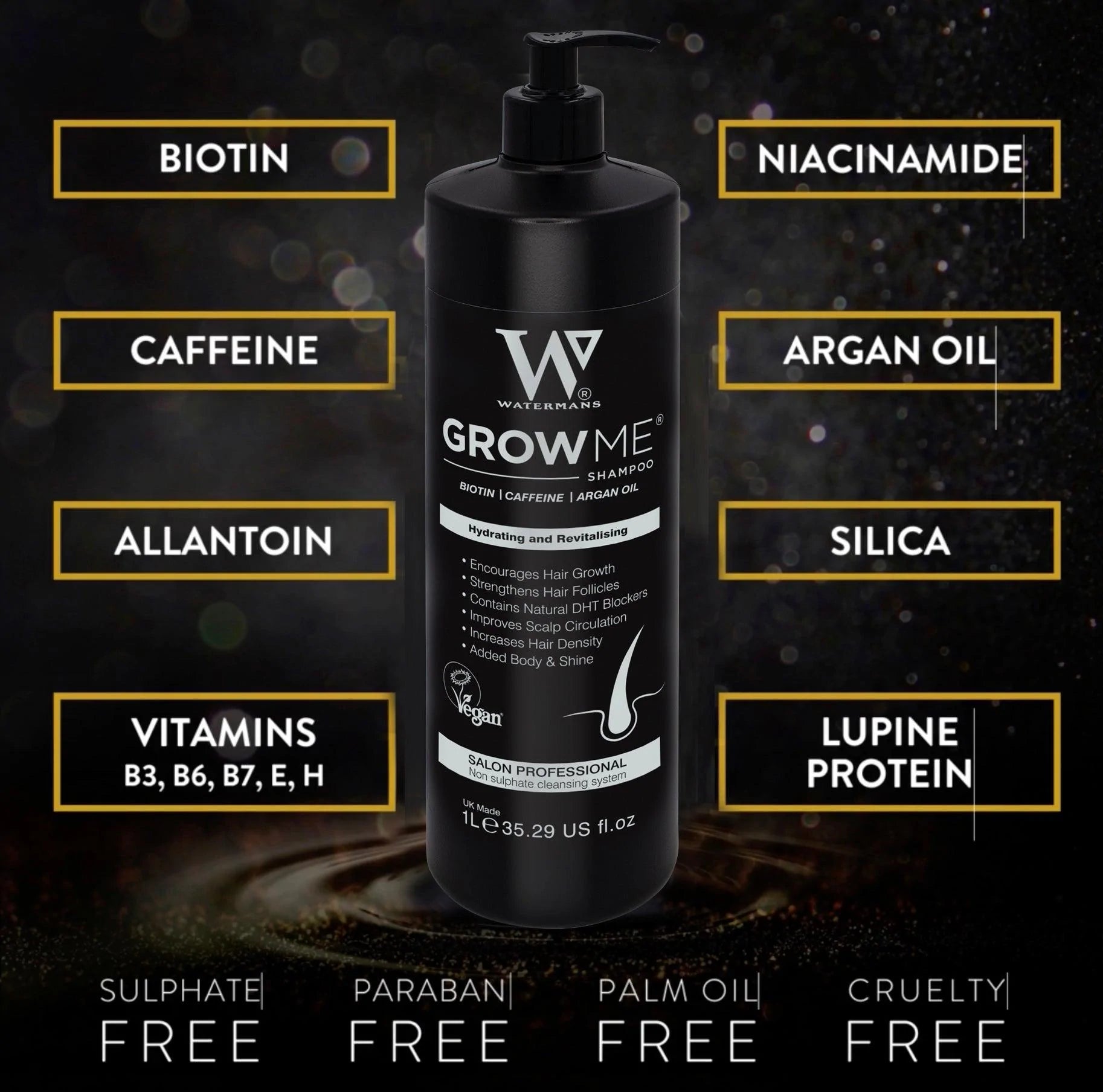
Our hair growth shampoo
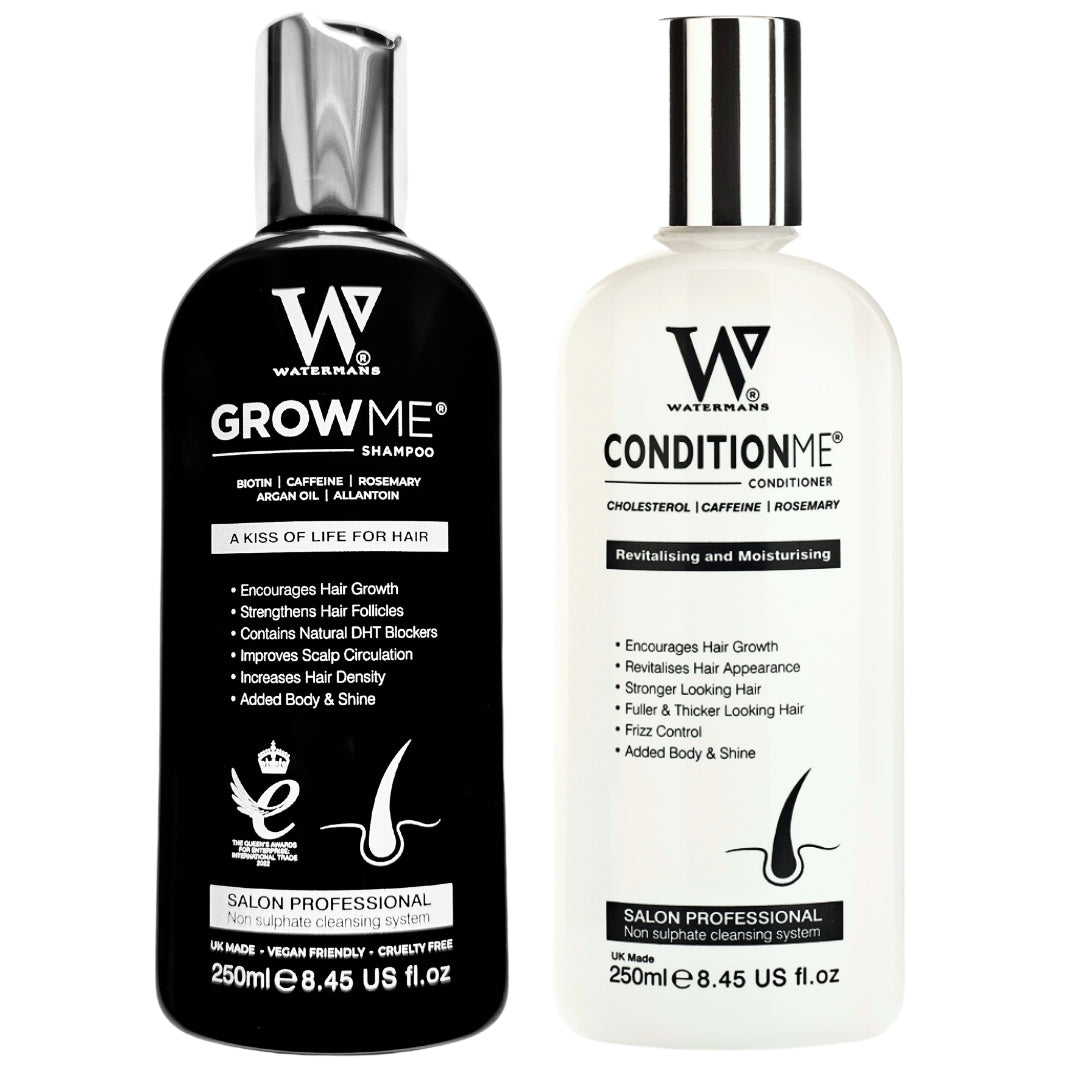
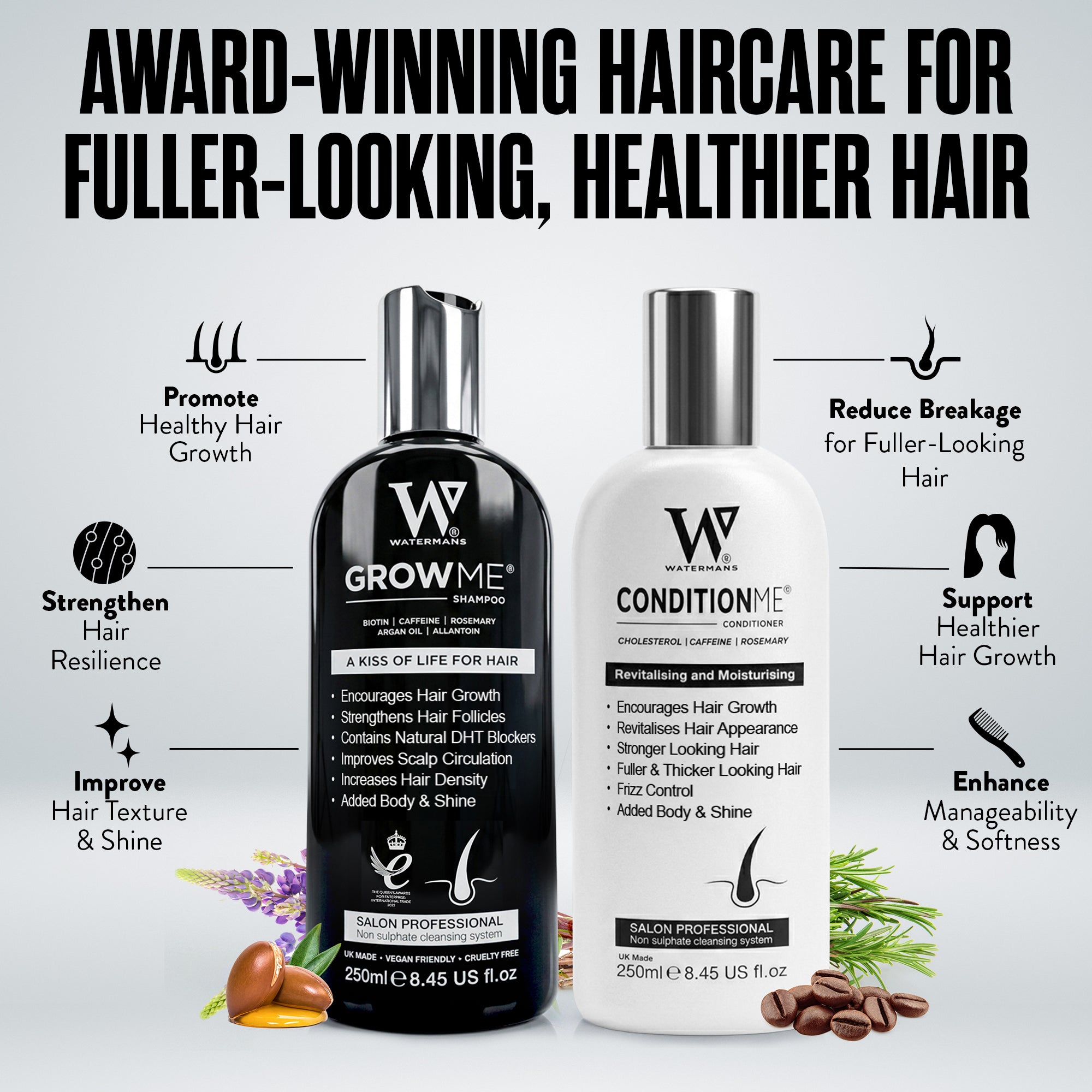
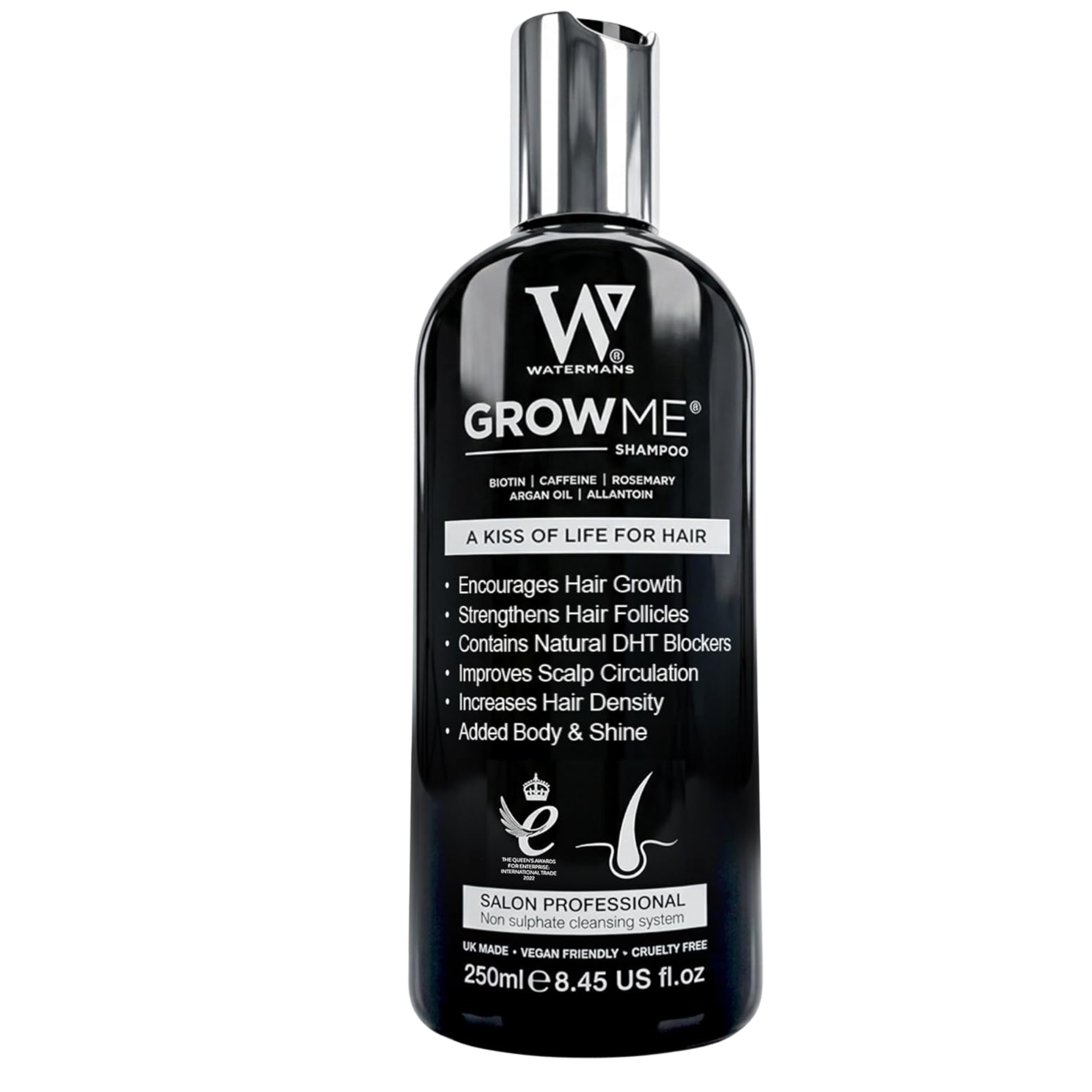
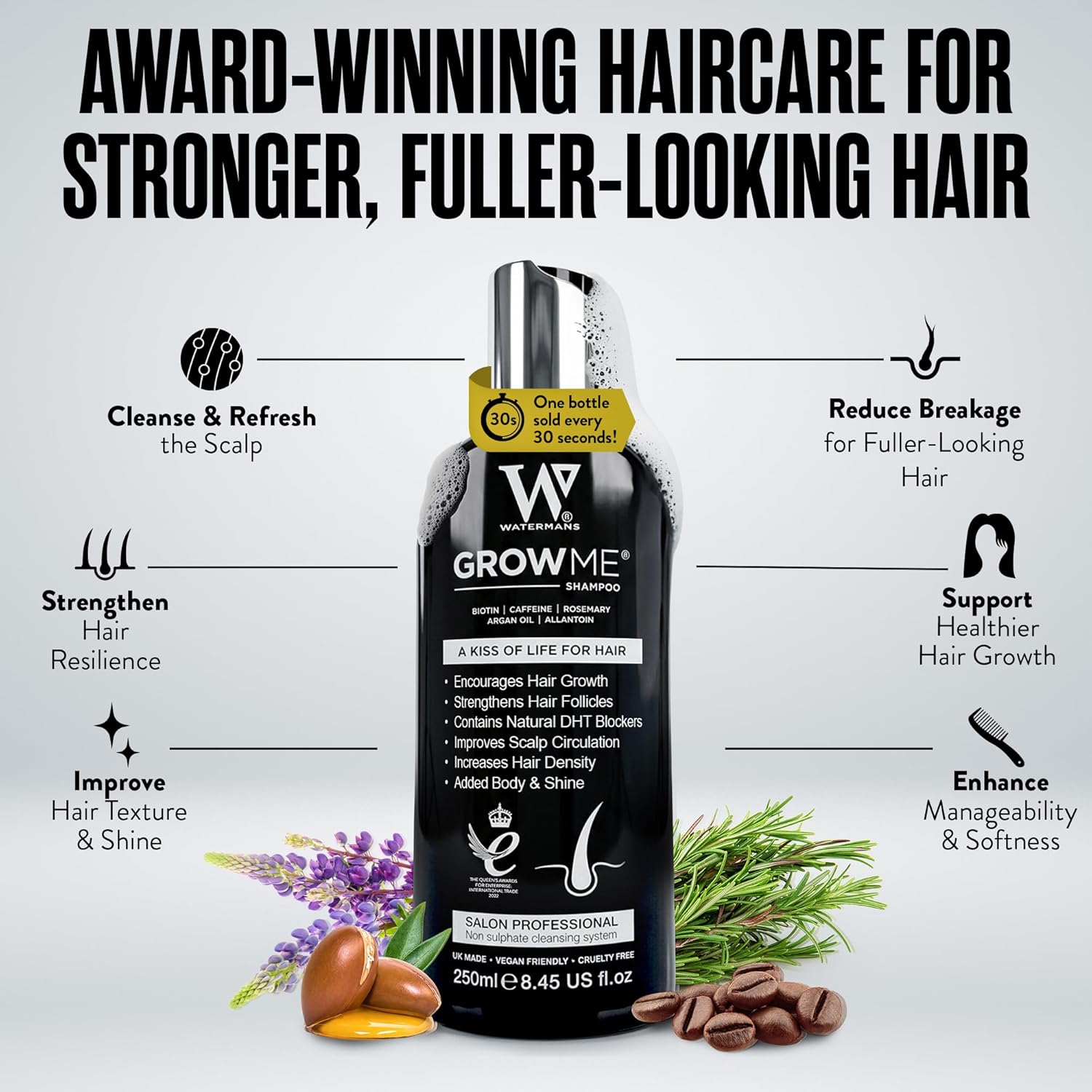
Grow Me® Hair Growth Shampoo, £14.95. A sulphate free daily shampoo that supports a healthy scalp environment and helps reduce breakage, so lengths hold on and look fuller.
Key takeaways
- Shaving, waxing, plucking, hair removal creams and bleaching are the NHS listed at home options.
- Hair removal creams dissolve the fibre at skin level, so nothing grows back blunt and stubbly.
- None of these at home methods changes the follicle. They change how visible the hair is.
- Fine, lighter facial hair is usually not hirsutism, and the NHS notes most women get more of it with age.
- See a GP urgently if coarse hair appears suddenly alongside a deepening voice or increasing muscle bulk.
- The same androgen sensitivity that coarsens facial hair can thin scalp hair in some people.
What causes unwanted facial hair in the first place?
Coarse dark facial hair is usually driven by androgens, the hormone group that includes testosterone. The NHS describes hirsutism as thick, dark hair appearing on the face, neck, chest, tummy, lower back, buttocks or thighs, and links it to androgen changes that can work in two ways: the level of those hormones rises, or the body becomes more sensitive to them.
DermNet explains the follicle level detail. Different genes expressed in individual hair follicles vary in their response to androgens, and follicles at some sites are far more sensitive than others. Under that influence small vellus follicles making tiny, almost invisible hairs turn into larger follicles making bigger pigmented hairs. The hair was always there. It changed category.
The NHS names a hormonal condition affecting the ovaries as the most common cause, and notes it can also bring acne and irregular periods. Less often the cause is a medicine you have been started on, or another hormonal condition such as Cushing's syndrome or acromegaly. Sometimes there is no obvious cause at all, which is a legitimate finding rather than a failure.
The scale a clinician would actually use
DermNet describes the Ferriman-Gallwey visual scale, which scores nine areas of the body from 0 for no hair to 4 for extensive growth. A total of 8 to 14 is graded mild and 15 or above moderate to severe. It is a useful reminder that this is a spectrum with a recognised measure, not a personal failing.
Which facial hair reduction methods actually work at home?
The NHS lists shaving, waxing, plucking, hair removal creams and bleaching as the facial hair reduction options you can do at home to remove or lighten the hair. Each of them works on the hair you can see rather than on the follicle underneath, which is why every one of them needs repeating. That is not a flaw in the method, it is the honest ceiling of surface hair removal.

| Method | How long it lasts | Best for | Watch out for |
|---|---|---|---|
| Hair removal cream | Several days, often longer than shaving | Larger areas such as the upper lip and jawline, on skin that tolerates it | Patch test 24 hours ahead, never exceed the stated time, avoid broken skin |
| Shaving | One to three days | Speed and cost, any area | Blunt ends feel stubbly, though the hair itself does not get thicker |
| Waxing | Two to six weeks | Upper lip, chin, brows | Ingrown hairs and irritation, and it needs some length to grip |
| Plucking | Two to six weeks | A handful of stray hairs | Slow, and repeated plucking of the same hair irritates the follicle |
| Bleaching | Two to four weeks | Fine hair where removal is not needed | Patch test first, and it lightens the hair rather than removing it |
Are hair removal creams a good choice for the face?
Hair removal creams work by breaking down keratin, the protein that hair is made of, so the fibre dissolves at the skin surface and wipes away. Because the hair is not cut straight across, the ends are softer than after shaving and there is no stubbly feel as it comes back. For a lot of people that texture difference is the whole reason they prefer a cream.
The face needs more care than legs. Use a formula sold for facial use, which is milder than the body versions, and patch test on a small area a full day before you commit. Set a timer rather than guessing, and rinse at the stated time even if hair remains, because leaving it longer is the single most common way people give themselves a chemical burn. Avoid broken, sunburnt or freshly exfoliated skin entirely.

Afterwards, keep it simple. Skip retinoids, acids and strong actives for a day, use a plain fragrance free moisturiser, and use sun protection on the area, because freshly treated skin is more reactive than usual. If you get redness that lasts more than a few hours, stop using that product and speak to a pharmacist.
Get a discount on the thinning hair range
Join the Watermans mailing list and we will email a discount code straight to your inbox, so you can try the thinning hair range for less. Made in the UK, over 6.5 million bottles sold since 2012.
What about laser and electrolysis?
Laser and electrolysis are the longer lasting options, and both are clinic procedures rather than something to attempt casually at home. The NHS notes that longer lasting hair removal methods exist alongside the at home list, and that a GP may refer you to a specialist if home measures are not enough or if further tests are needed.
Two honest caveats are worth having before you book. First, results vary a great deal with hair colour and skin tone, because light based methods rely on contrast between the two, so very fair, red, grey or white hair responds poorly. Second, these methods are usually described as long lasting rather than permanent, and most people need maintenance sessions. Ask any clinic to put the expected number of sessions and the maintenance schedule in writing before you pay.
When should you see a GP about facial hair?
See a GP if you are a woman with thick, dark hair on your face, neck, chest, tummy, lower back, buttocks or thighs, particularly if you have also noticed irregular periods. The NHS is clear that this can be caused by a medical condition worth identifying, and that a blood test to measure hormone levels is a normal part of working out what is going on. If your question is about products or a routine rather than a medical one, you can talk to Gail Waterman, our co-founder, as an AI avatar on the Watermans homepage.

Ask for an urgent GP appointment if
The NHS lists three signals that warrant an urgent appointment rather than a routine one: new thick, dark hair that suddenly starts growing on your face and body, a voice that is getting lower, and muscles that are getting bigger. Those together point at a hormonal change that needs looking at quickly, and no cosmetic answer is the right one for them.
It is equally worth knowing what is not a cause for concern. The NHS notes that lighter, finer hair on the face or body is probably not hirsutism, and that most women get more of this type of hair as they get older, particularly after the menopause. If that is what you are looking at, the question is purely cosmetic and the answer is whichever removal method you find least annoying.
Can the same hormones affect the hair on your head?
Yes, and it catches people out because the two effects look like opposites. The same androgen signal that turns fine facial hairs into coarse ones can, in genetically sensitive scalp follicles, work the other way and shrink terminal scalp hairs into finer ones. DermNet notes that a small number of women present with male pattern hair loss because they have raised androgen levels alongside a genetic predisposition, and that this group also tends to notice acne, irregular periods and excess facial and body hair.
If that combination sounds like you, the scalp side is worth a look too. Our guides to why scalp follicles differ in how they react to androgens, the enzyme that regulates DHT production and PCOS related hair loss cover it. If the change arrived around the menopause instead, menopause related thinning is the closer fit. For why beards differ so much between men, see our guide to facial hair growth.
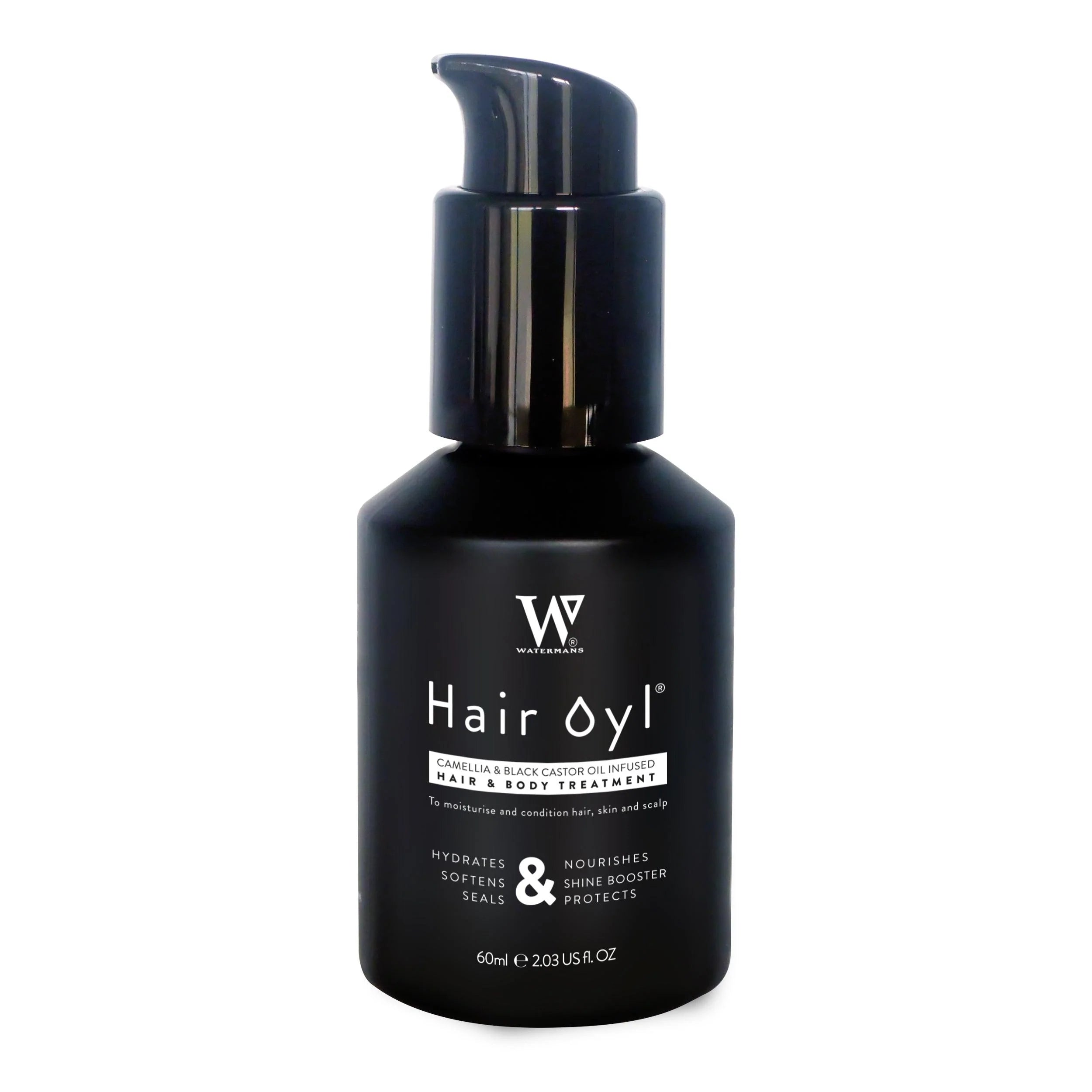
For the scalp, cosmetic care has a genuine job: protecting the hair you have from breaking while a GP works out the hormonal picture. These are for the hair on your head, not for your face.

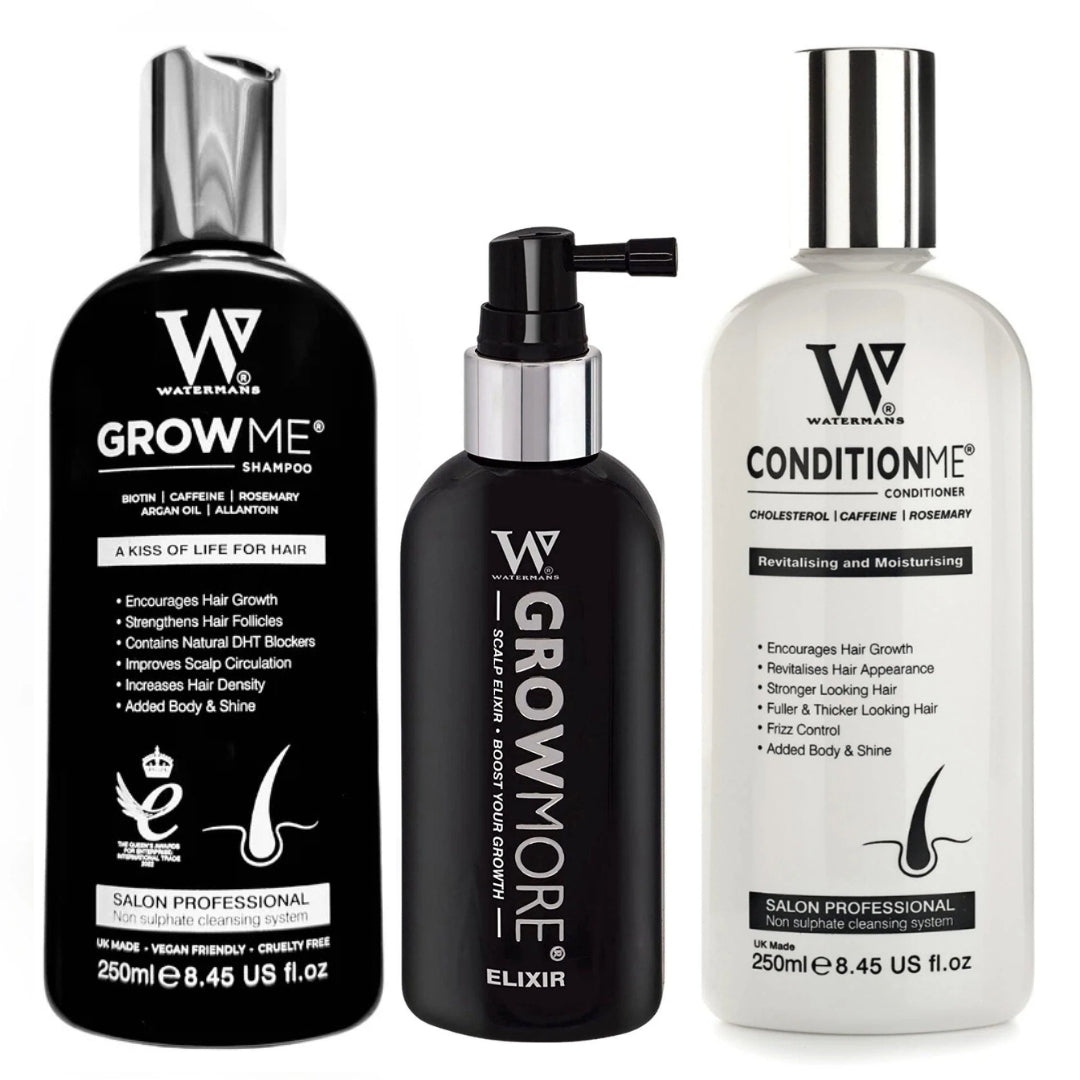
A caffeine and biotin hair growth shampoo for fine or thinning looking scalp hair. Vegan, made in the UK, and part of a range that has sold over 6.5 million bottles since 2012.

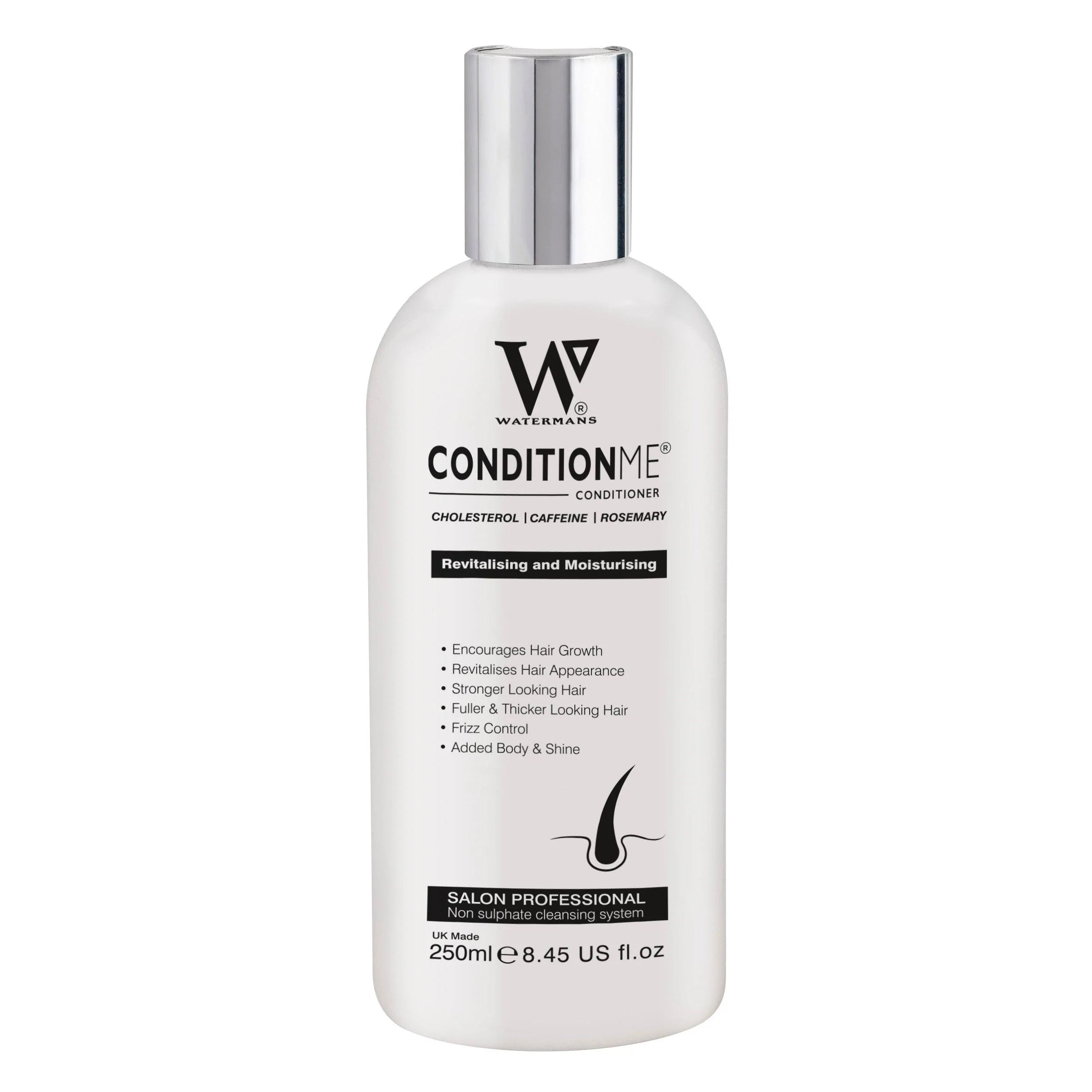
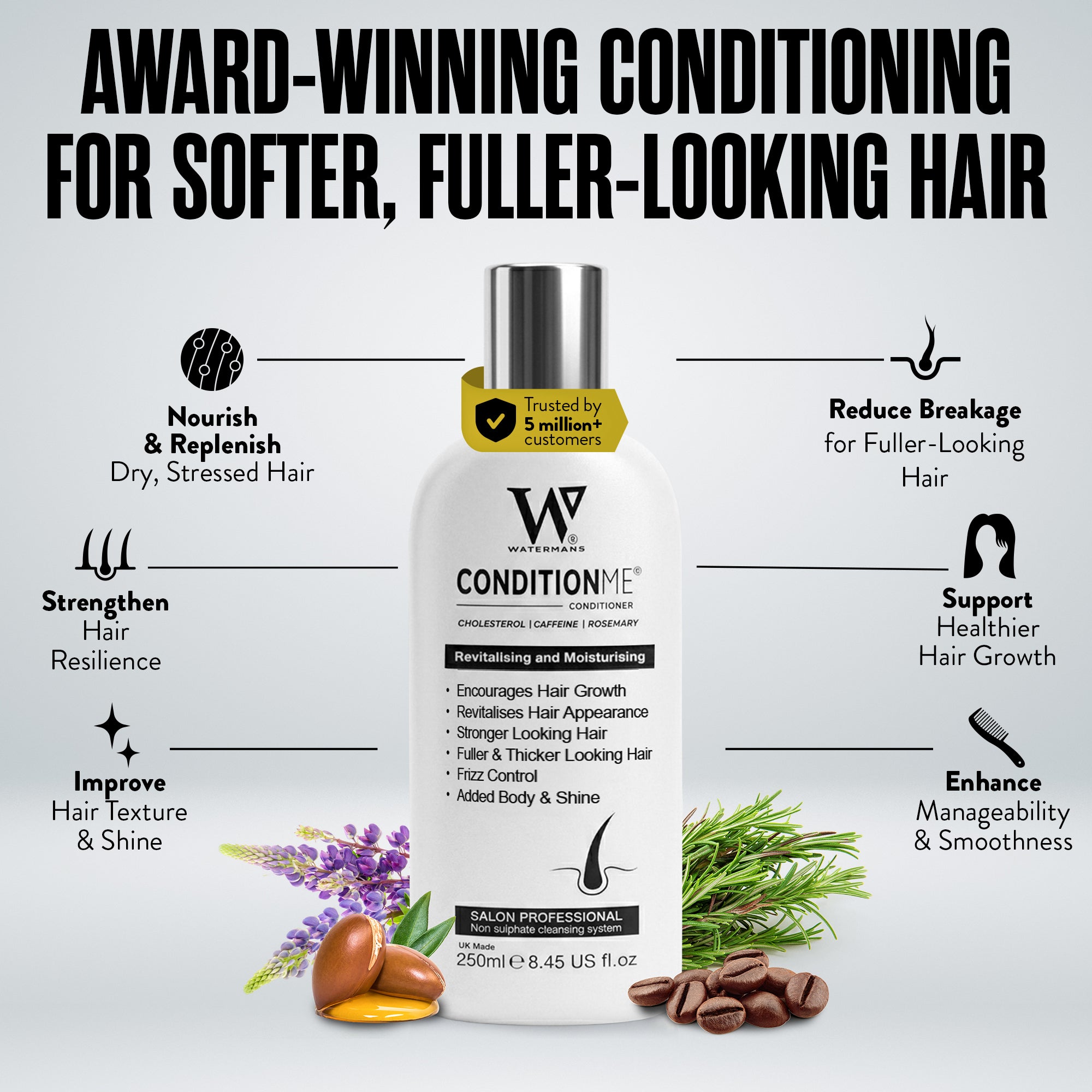
Conditioner is where breakage is won. Condition Me smooths the cuticle so a comb moves through fine hair rather than snagging and snapping it.
Frequently asked questions about facial hair reduction
Does shaving make facial hair grow back thicker?
No. Shaving cuts the fibre straight across, so what comes back has a blunt end that feels coarser against your fingertips than the natural tapered tip did. The follicle is untouched and the diameter of the hair is unchanged. Hair removal creams avoid the sensation because they dissolve the fibre instead of cutting it.
How often can I use a hair removal cream on my face?
Follow the pack, which for most facial formulas means leaving at least 72 hours between uses on the same area. Using one more often than that on facial skin is how irritation builds. If your skin is still pink from the last application, wait longer.
Will losing weight help?
It can, for some people. The NHS lists losing weight, if you are overweight, among the things a GP may suggest, on the basis that it can help control hormone levels. It is not a quick fix and it is not relevant to everyone, which is why this is a GP conversation rather than a rule.
Is facial hair reduction different after the menopause?
Often, yes. The NHS notes that most women get more fine, light facial and body hair as they get older, particularly after the menopause, and that this type of hair is probably not hirsutism. Fine hair usually responds well to bleaching or a gentle cream, and does not need the heavier options.
Can I wax over a spot or a patch of eczema?
No. Waxing, creams and any other removal method should go nowhere near broken, inflamed, sunburnt or actively spotty skin. Work around the area and come back to it once the skin has settled, or you risk pulling skin away with the wax.
Does plucking eventually stop the hair coming back?
Repeated plucking of the same hair can damage a follicle over years, but it is unreliable, slow and can leave scarring or ingrown hairs along the way. It is not a strategy, and it is a poor choice for anything larger than a few stray hairs.
Why do I get ingrown hairs afterwards?
Ingrown hairs happen when a new hair curls back into the skin instead of breaking through, which is more likely after waxing or shaving and more common on curly hair. Gentle exfoliation a couple of days after removal, not immediately, reduces it. Never dig one out with tweezers.
Is there a cream that permanently stops facial hair?
There is a facial cream available only through a doctor that slows facial hair growth, which the NHS lists among the options a GP may suggest. It is not sold over the counter and it is not a cosmetic, so it belongs in a GP conversation rather than a shopping list.
What is the bottom line on facial hair reduction?
Facial hair reduction at home is about managing what you can see, and shaving, waxing, plucking, creams and bleaching all do that well when matched to the area and your skin. A facial hair removal cream is usually the best compromise between coverage and comfort because nothing comes back blunt. What none of them does is change the follicle, so the question underneath matters: if the hair is coarse, dark and new, a GP can find out why.
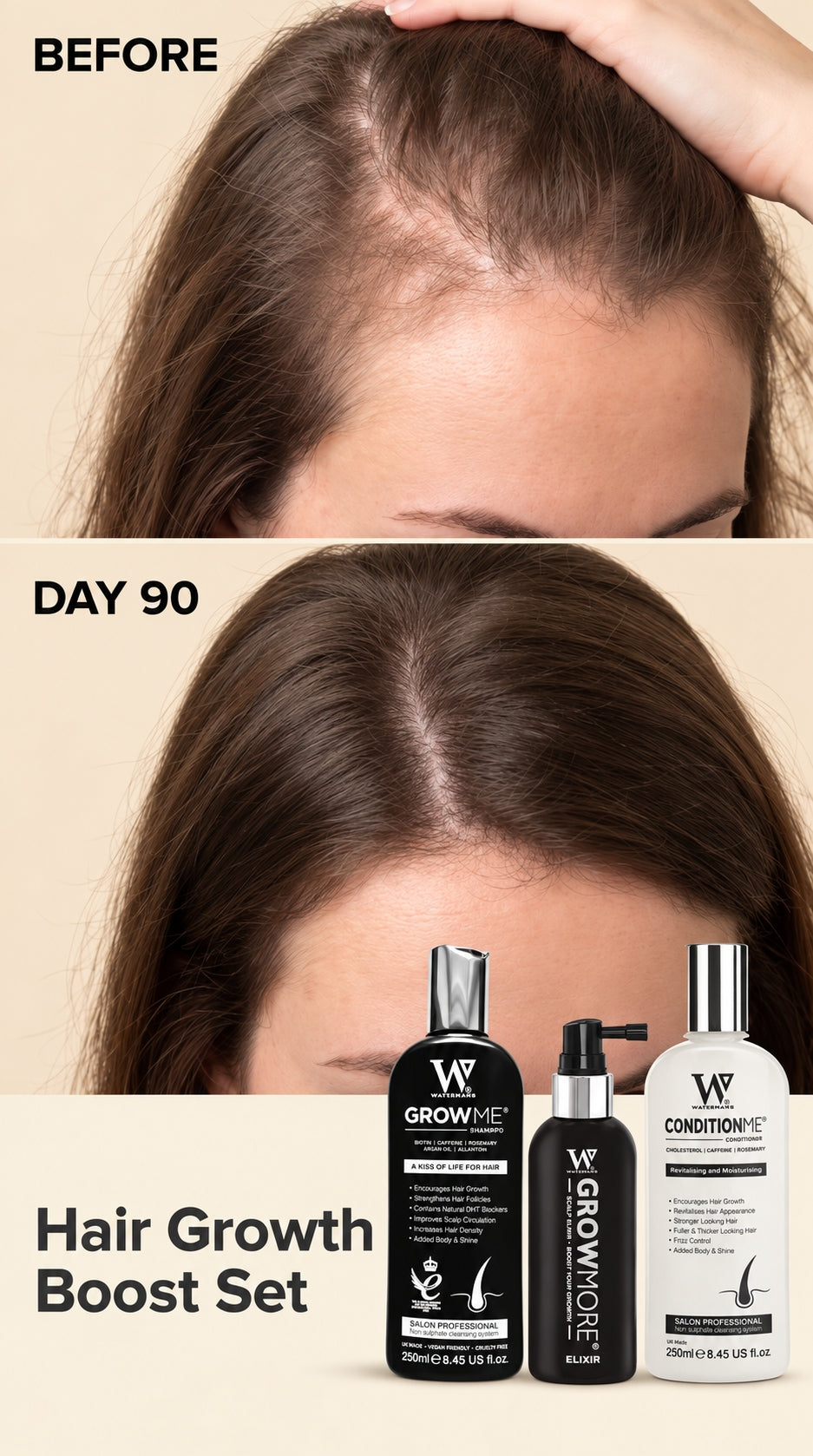
If you are also noticing your parting widening, that is the other half of the same hormonal story and it has its own answer. A hair growth shampoo for the scalp protects the hair you have while a GP looks at the cause.
Watermans products are 100% cosmetic and do not treat medical hair loss. Individual results may vary.
Sources & references
- NHS, Hirsutism, on affected body sites, androgen levels versus sensitivity, at home removal options, when to see a GP and the urgent warning signs
- DermNet, Hirsutism, on follicle genes varying in their response to androgens, vellus follicles becoming terminal, and the Ferriman-Gallwey scoring scale
- British Association of Dermatologists, Hirsutism, leaflet on excess hair growth in women
- DermNet, Male pattern hair loss, on the small group of women with raised androgens who also notice excess facial and body hair
- NHS, Hair loss, on seeing a GP about scalp hair changes before a commercial hair clinic