Lash and Brow Care: How to Keep Them Looking Fuller
Good lash and brow care is mostly about keeping the hairs you already have. Lashes and brows grow for a far shorter time than scalp hair, so most of the sparseness people notice comes from hairs being lost early to rubbing, tugging, old mascara and over-plucking. This guide covers why they stay short, the habits that cost you hairs, how to grow brows back out, and when a change needs a GP.
Our hair and body oil
Camellia & Black Castor Hair & Body Oil, £24.95. Adds hydration and shine to dry lengths and smooths the hair before a blow dry, without weighing fine hair down.
If you arrived looking for a prescription lash product, that is a conversation for your GP or pharmacist. Watermans sells cosmetic hair care only.
Lash and brow care means protecting the lash and brow hairs you already have so more of them reach full length. Lashes and brows grow for weeks to months rather than years, so gentle make-up removal, leaving brows untouched while they fill in, conditioning the brow line and eating enough protein and iron do more than any overnight promise. Sudden, patchy or one-sided loss needs a GP.
Key takeaways
- Lash and brow hairs have a much shorter growing phase than scalp hair, so they are meant to stay short.
- Most thinning lash lines are about loss, not slow growth: rubbing, sleeping in mascara, heated curlers and heavy extensions all remove hairs early.
- Over-plucked brows need four to six months untouched before you judge them.
- A conditioning oil on the brows keeps hairs softer and less likely to snap; it does not add follicles.
- Loss of the outer third of both brows, round smooth patches or crusting on the lid margin are reasons to see a GP.
What decides how full your lashes and brows look?
How full your lashes and brows look depends on four things: how many hairs you keep, how long each one gets to grow, how thick and dark each hair is, and which way the hairs sit. Nothing cosmetic adds new follicles, so the biggest difference between two people is usually how many of their hairs survive to full length instead of snapping or being pulled out early.
The growing phase sets the maximum length, and it is short for lashes and brows and long for scalp hair. DermNet describes the scalp growth phase, anagen, as lasting one to eight years, while facial hair like lashes and brows cycles over months. Thickness and colour change how dense the line reads: fine, pale hairs look sparse even when the count is normal, which is why tinting has such a big effect. Direction is the fastest win of all. Brows that grow in four directions look thin, and the same brows brushed upward and set look far fuller.
Why do lashes and brows stay short?
Lashes and brows stay short because every hair runs a cycle of growing, stopping and resting, and on the face the growing part lasts only a short time. Scalp hair can grow for several years, so it gets long; a lash or brow hair stops long before that, rests, then falls out and is replaced.
This short cycle has two useful consequences. First, a lash line can look noticeably different within about three months, because damaged lashes are replaced relatively quickly once you stop losing them. Second, if brows have been plucked hard for many years, some follicles may have stopped producing, and no cosmetic product changes that. Being honest about which situation you are in saves a lot of money.
| Hair | Growing phase | What it means for lash and brow care |
|---|---|---|
| Eyelash | Short, weeks to a few months | Protection pays off within a season |
| Eyebrow | Short, weeks to a few months | Recovery is slow and uneven; judge in months |
| Scalp hair | One to eight years (DermNet) | Length is possible, but damage builds up over time |

Which habits cost you lashes?
The habits that cost you lashes are the mechanical ones: sleeping in mascara, rubbing your eyes, scrubbing make-up off sideways, clamping lashes in heated curlers, wearing heavy extensions without a break, and using old mascara. Almost every sparse lash line has a cause like this, and all of them can be changed tonight.
Dried mascara makes lashes brittle so they snap against the pillow. Rubbing, whether from hay fever, tiredness or screen strain, pulls lashes out at the root. Waterproof formulas need dissolving, not scrubbing. Clamping a dry lash and holding it can kink or break it half way along. DermNet lists hair extensions among the causes of traction hair loss, and the same principle applies to heavy lash extensions on fine natural lashes: constant weight and repeated glue removal take their toll, so give lashes a break of a few months. Replace mascara about every three months, so you are not dragging a dried, stiff brush through fine hairs.
How do you take eye make-up off properly?
Soak a pad with a gentle bi-phase or oil-based remover and hold it against the closed lid for about fifteen seconds so the formula dissolves. Wipe once, downward and outward, in the direction the lashes grow. Use a fresh pad rather than pressing harder, and a cotton bud along the lash line for anything left. The NHS advice on blepharitis also recommends gently cleaning along the lid edge to remove flakes or crusts, which keeps the base of the lashes comfortable.
Quick check
If a fresh pad still comes away grey after you thought you had finished, you have been sleeping in make-up residue. That residue is what makes lashes brittle.
How long do over-plucked brows take to fill back in?
Over-plucked brows usually take four to six months to fill back in, and they look worse before they look better because hairs return at different rates and lengths. The most important step in brow recovery is to stop tweezing completely, including the strays, because every hair you remove restarts that follicle's clock.
Put the magnifying mirror away, since nobody sees your brows at ten times magnification. Use a pencil or powder to hold the shape while you wait, brush the hairs upward and outward each morning with a clean spoolie, and set them with a clear gel. Keep the skin underneath comfortable, because dry, flaky brow skin makes hairs look sparser and snap more easily. If one area has stayed bare for many years despite being left alone, cosmetic tattooing such as microblading is a reasonable answer rather than a failure.
Frequent pulling that feels hard to stop is different. The NHS describes trichotillomania as an urge to pull out hair that can affect the eyebrows and eyelashes as well as the scalp, and it is worth talking to a GP about, because support helps.

Do oils help in lash and brow care?
Oils help in lash and brow care as conditioners, not as growth products. A conditioning oil on the brow line softens the hairs so they bend instead of snapping, makes pale hairs look richer, and keeps the skin underneath comfortable. What an oil cannot do is create follicles that were never there or restart ones that stopped years ago. For the products sold specifically for lashes, our guide to lash serum alternatives sorts the useful from the overclaimed.
Castor oil is the traditional choice for brows, and camellia oil is lighter and absorbs faster, which matters on the face. Use a rice-grain amount on a clean spoolie at night, on the brows only. Keep oils away from the lash line and out of the eye, because anything that migrates into the eye overnight can cause irritation, and stop if the skin reacts.

Camellia & Black Castor Hair & Body Oil £24.95
Black castor and camellia oil for hair, scalp and skin. On the brow line, use a rice-grain amount on a spoolie at night, brows only, to keep hairs soft and less likely to snap.
Is it lash shedding, breakage or true hair loss?
Lash shedding, breakage and hair loss are different problems. Shedding means whole hairs falling out at the end of their cycle, which happens every day and is normal. Breakage means the hair snapping part way along from dried mascara, curling or rubbing, leaving short, blunt hairs in the line.
Hair loss in the medical sense is different again. DermNet uses the word madarosis for loss of the eyelashes or eyebrows and lists causes including infection, rosacea, eczema, alopecia areata and thyroid problems, with an underactive thyroid typically affecting the outer third of both brows. The British Association of Dermatologists notes that alopecia areata can affect the brows and lashes as well as the scalp. These causes need a GP, not a new mascara.
Get a discount on the hair care range
Join the Watermans mailing list and we will email a discount code straight to your inbox, so you can try the hair care range for less. Vegan, made in the UK, over 6.5 million bottles sold since 2012.
What should you eat for lashes and brows?
For lashes and brows, eat enough protein and iron and keep your diet varied, because fine facial hair is a low-priority tissue that shows shortages early. When the body is short of something it protects vital organs first and cosmetic hair last, so lashes, brows and nails can change before you notice anything on the scalp.
The NHS says women aged 19 to 49 need 14.8mg of iron a day and men and women over 50 need 8.7mg, and it lists iron deficiency among the temporary causes of hair loss. Protein matters because hair is made of keratin. The NHS also advises everyone in the UK to consider 10 micrograms of vitamin D a day in autumn and winter. Food first is the sensible order: eggs, pulses, fish, lean meat if you eat it, leafy greens, nuts and seeds. A supplement is a top-up, not a replacement, and it adds nothing if your intake was already fine.

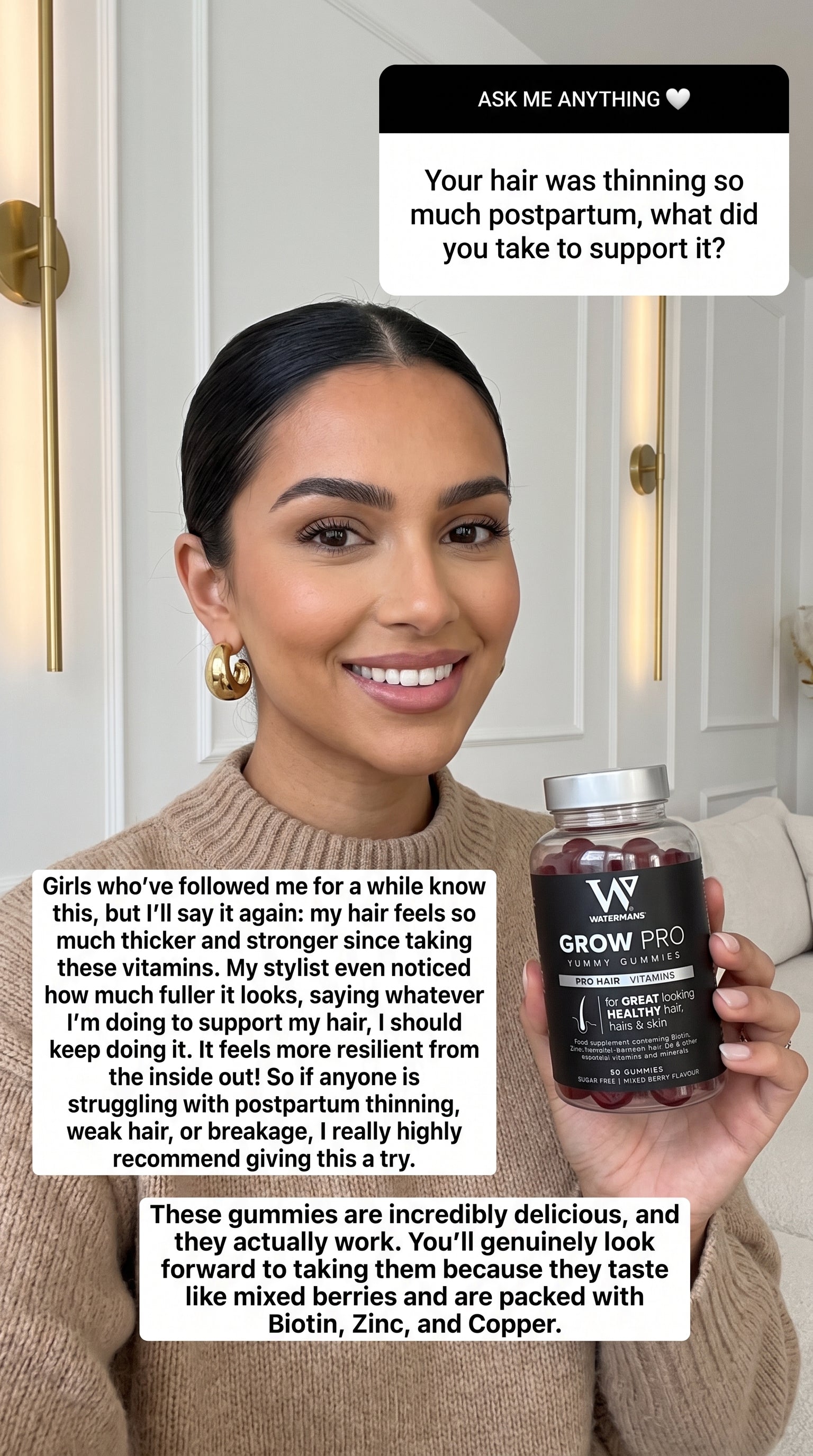
GrowPro Hair Growth Gummies £22.95
Sugar-free gummies with biotin, zinc and vitamins including D3 and B12, taken alongside a balanced diet. Biotin and zinc contribute to the maintenance of normal hair.

Which cosmetic lash and brow options are worth it?
The cosmetic lash and brow options worth considering are the ones that change how the area reads without damaging the hairs you have. None of them change your hair count; they change thickness, colour, curl or direction, which is usually what people want.
| Option | What it changes | Lasts | Risk to your own hairs |
|---|---|---|---|
| Mascara and brow gel | Thickness and colour, instantly | One day | Low, if removed gently |
| Lash lift | Curl, so lashes read longer | About 6 to 8 weeks | Moderate; repeated lifts can leave lashes brittle |
| Lash or brow tint | Colour only, big effect on pale hair | About 4 to 6 weeks | Low; always patch test first |
| Lash extensions | Length and density | About 2 to 4 weeks per infill | High if worn continuously; take breaks |
| Brow lamination | Direction, so brows look fuller | About 4 to 6 weeks | Moderate; do not overlap sessions |
| Microblading | Hair-like strokes on the skin | About 12 to 18 months | None to the hair, but it is a tattoo; choose carefully |
Choose a licensed, experienced technician for anything chemical or semi-permanent, ask for a patch test 48 hours before a tint, and space out lifts and lamination so the hairs have time to recover.
Does your scalp hair follow the same rules?
Your scalp hair follows the same rules as lashes and brows: it looks thinner when hairs are lost or broken faster than they are replaced, and the fix is usually retention rather than anything dramatic. On the scalp you have more room to act, because you can wash, condition and protect it in ways you cannot around the eye.
If your scalp hair has changed at the same time as your brows, pay attention. The NHS lists illness, stress, weight loss and iron deficiency among temporary causes of hair loss, and a change across several sites at once usually points to something like that rather than to your brow routine. Our guide to what causes thinning hair walks through the common triggers, seven everyday habits that protect your hair covers the routine side, and how to use conditioner properly explains the lengths-and-ends rule that cuts breakage.

Grow Me® Hair Growth Shampoo £14.95
A sulfate-free daily shampoo with caffeine, rosemary, niacinamide and hydrolysed lupine protein. It reduces breakage for fuller-looking hair and supports a comfortable scalp environment.
What is a simple weekly lash and brow care routine?
A simple weekly lash and brow care routine takes a few minutes a day. Every night, dissolve eye make-up rather than scrubbing it, comb brows through with a clean spoolie, and add a rice-grain of conditioning oil to the brows only if you use one. Every morning, brush brows upward and outward and set them with clear gel, and curl lashes before mascara, never after.
Twice a week, wash the brow area properly with your usual cleanser, because product build-up dulls the hairs. Every three months, replace your mascara, and take a photo of your brows in normal light so you compare against something objective rather than a memory. Keep tweezers away from everything except strays at the very edge. If you want to try a lash conditioner, our guides to making a simple lash serum at home and choosing a conditioning lash serum cover what to look for.
When should you see a GP about lashes or brows?
You should see a GP about lashes or brows if you lose the outer third of both brows, notice a smooth round patch, lose hair on one side only, or have redness, crusting or soreness along the lid. DermNet links outer-brow loss to an underactive thyroid and patchy loss to alopecia areata, and the NHS lists tiredness and weight gain among underactive thyroid symptoms.
Also see a GP if brow or lash loss comes with rapid scalp or body hair loss, tiredness, weight change, low mood or period changes. None of these are reasons to panic, but all of them are reasons for a proper check and a blood test rather than a shelf of products. Watermans does not offer consultations or medical assessments. If your question is about products or a routine rather than a medical one, you can talk to Gail Waterman, our co-founder, as an AI avatar on the Watermans homepage. For why lashes and brows stay short and what thins them, see our guide to eyelash and eyebrow hair.
What are the frequently asked questions about lash and brow care?
What is the most important step in lash and brow care?
Gentle make-up removal. Dissolve mascara with a remover held on the closed lid for about fifteen seconds, then wipe once in the direction of growth. Sleeping in mascara and scrubbing are the most common causes of a thinning lash line.
How long does it take for eyelashes to come back?
Lashes run a short cycle, so a line that has been damaged usually looks noticeably better within about three months of stopping the damage. After heavy extension wear, allow a few months completely free of extensions before judging.
Does castor oil make eyelashes longer?
No. Length is set by the growing phase, which a cosmetic oil cannot change. On the brows, a conditioning oil keeps hairs flexible so fewer snap. Keep any oil away from the lash line and out of the eye.
Why are my eyebrows suddenly thinner?
Common reasons include years of plucking catching up, age, low iron or protein, thyroid changes and friction from rubbing. DermNet links loss of the outer third of both brows to an underactive thyroid, so mention that to a GP.
Are lash extensions permanently damaging?
Usually not, if you take breaks. The damage comes from continuous wear, extensions too heavy for your natural lash, and picking at them. Having them removed professionally and pausing for a few months lets the line recover.
Can I use shampoo or scalp serums on my brows?
No. Shampoos and scalp serums are made for the scalp, not the face or eye area, where skin is thinner and more reactive. A conditioning oil on the brow hairs is the safer option in lash and brow care.
Does brushing brows help them look fuller?
Yes. Brushing brows upward and outward is the fastest way to make them look fuller, and it lifts flakes that make the area look patchy. Use a clean spoolie and a light touch.
What is the bottom line on lash and brow care?
The bottom line on lash and brow care is to protect what you have: dissolve make-up instead of scrubbing it, put the tweezers down for four to six months, brush brows into place each morning, condition the brow line, and eat enough protein and iron. Then compare photos after three months. Outer-brow loss, patches, one-sided loss or a sore lid margin need a GP.
If you want one product to support the routine, a conditioning hair and brow oil used on the brows at night keeps hairs soft and less likely to snap.
Sources & references
- DermNet, Madarosis, checked 18 September 2026.
- DermNet, Alopecia areata, checked 18 September 2026.
- DermNet, Traction alopecia, checked 18 September 2026.
- British Association of Dermatologists, Alopecia areata information leaflet, checked 18 September 2026.
- NHS, Blepharitis, checked 18 September 2026.
- NHS, Underactive thyroid, checked 18 September 2026.
- NHS, Trichotillomania, checked 18 September 2026.
- NHS, Iron, checked 18 September 2026.
- NHS, Vitamin D, checked 18 September 2026.
- NHS, Hair loss, checked 18 September 2026.
Watermans products are 100% cosmetic and do not treat medical hair loss. Individual results may vary.