Eyelash and Eyebrow Hair: Why It Thins and How to Care for It
Eyelash and eyebrow hair works on a much shorter clock than the hair on your head, which is why lashes never grow past a certain length and why over-plucked brows can take so long to fill in. If you arrived here looking for a lash growth product, this page explains what lashes and brows actually need, what thins them, how to handle them gently and when a change is worth showing a GP.
Our hair growth shampoo
Grow Me® Hair Growth Shampoo, £14.95. A sulphate free daily shampoo that supports a healthy scalp environment and helps reduce breakage, so lengths hold on and look fuller.
Eyelash and eyebrow hair grows in short cycles. A 2018 review found lashes grow about 0.12 to 0.14 mm a day, stay in their growth phase for only 4 to 10 weeks and rarely exceed 12 mm. Thinning usually comes from rubbing, heavy makeup, over-plucking, eyelid inflammation such as blepharitis, thyroid problems or alopecia areata. Gentle cleansing and less pulling help; sudden or patchy loss needs a GP.
Key takeaways
- The upper lid carries about 90 to 160 lashes in 5 to 6 rows and the lower lid about 75 to 80, according to a 2018 review.
- A lash's full life cycle takes about 4 to 11 months, so lost lashes come back slowly.
- DermNet lists thyroid problems, alopecia areata, eyelid infection, eczema, psoriasis and hair pulling among the causes of lash and brow loss.
- Loss of the outer third of both eyebrows is a classic sign of an underactive thyroid, per DermNet.
- The NHS advises cleaning the eyelids twice a day and avoiding eye makeup while blepharitis symptoms are active.

What makes eyelash and eyebrow hair different from scalp hair?
Eyelash and eyebrow hair differs from scalp hair mainly in the length of its growing phase. Scalp follicles can grow a hair for years, while a 2018 review of eyelash research found that a lash grows for only 4 to 10 weeks before resting and falling out, which caps its length at around 12 mm.
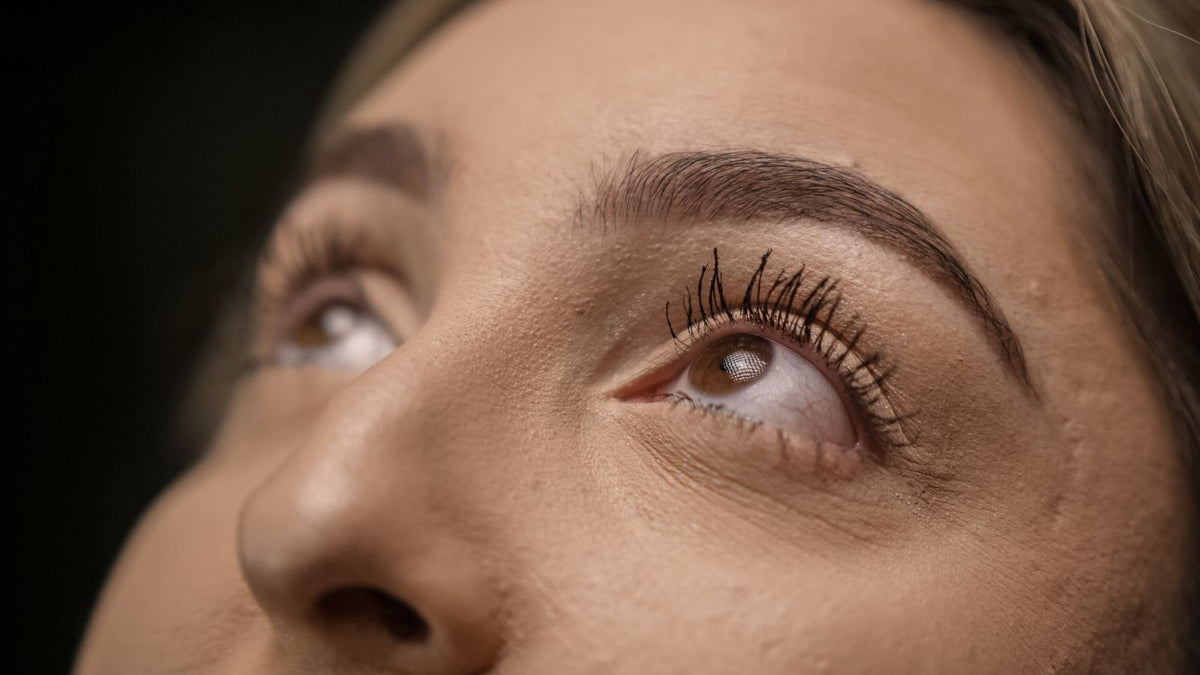
The same review, by Aumond and Bitton at the Université de Montréal, describes the numbers in detail. The upper lid holds about 90 to 160 lashes arranged in 5 to 6 rows, the lower lid about 75 to 80 lashes in 3 to 4 rows, and each lash grows roughly 0.12 to 0.14 mm a day. From growth to fall, the full cycle takes about 4 to 11 months.
Brows follow the same short-cycle principle, although there is much less research on them. Lashes have a protective job: the review notes that an optimal lash length helps reduce the number of particles reaching the eye, which is part of why they stay short.
Why do lashes and brows stay short no matter what you do?
Lashes and brows stay short because the growth phase ends early, not because they are growing slowly or being damaged. When a lash has grown for its few weeks, the follicle switches to rest and the lash falls out to make room for the next one, so length is set by biology.
That has two practical consequences. First, no oil or conditioner can make a lash grow for longer than its cycle allows; conditioning can only help the lashes you have look glossier and resist breaking. Second, a lash you pull out or rub off will not be replaced overnight. With a cycle of 4 to 11 months, lost lashes can take many weeks to be replaced.
What thins eyelashes and eyebrows?
Eyelashes and eyebrows thin for a wide range of reasons, and doctors call the loss madarosis. DermNet lists common causes including eyelid infection, cold sores, rosacea, alopecia areata, an underactive or overactive thyroid, eczema, psoriasis, injury, cancer treatment and cosmetic procedures, as well as hair pulling.
| Cause | What you might notice | What to do |
|---|---|---|
| Rubbing and heavy makeup | Lashes shorter and sparser along the lid | Remove makeup gently every night; stop rubbing |
| Blepharitis | Sore, itchy lids with flakes or crusts at the lash roots | Clean the lids twice a day; see a pharmacist or GP |
| Underactive thyroid | Loss of the outer third of both brows, often with tiredness | See a GP for a blood test |
| Alopecia areata | Sudden, smooth patches of lash, brow or scalp loss | See a GP |
| Hair pulling (trichotillomania) | Broken or missing lashes and brows | Talk to a GP; support is available |
| Over-plucking | Sparse brows that fill in slowly or not at all | Put the tweezers down and allow several months |
DermNet explains that when the follicles survive, lash and brow loss is often temporary, but deeper inflammation can scar the follicles and make loss permanent. That is why persistent or patchy changes deserve a proper look.

Is it loss, shedding or breakage?
Lash and brow changes can be hair loss, normal shedding or breakage, and telling them apart saves a lot of worry. Finding a lash on your cheek is normal shedding, because with 90 to 160 upper lashes each on a months-long cycle, a few fall every day.
| Problem | What is happening | What you will see |
|---|---|---|
| Normal shedding | Resting lashes fall to make way for new ones | The odd whole lash on your cheek or pillow |
| Breakage | The lash or brow hair snaps part-way along | Short, stubby, uneven hairs, often after curling or removing strip lashes |
| Hair loss (madarosis) | Follicles stop producing hair or are damaged | Gaps along the lid or brow that do not fill in, or smooth patches |
The same three-way split applies to the scalp, and our guide to what causes telogen effluvium explains shedding on the head in more depth.
Get a discount on the fine hair range
Join the Watermans mailing list and we will email a discount code straight to your inbox, so you can try the fine hair range for less. Made in the UK, over 6.5 million bottles sold since 2012.
How should you look after your lashes and brows?
You should look after your lashes and brows by cutting friction and pulling, because mechanical damage is the cause you control most. The NHS advice for blepharitis, a common eyelid problem, is to clean the eyelids twice a day and to avoid eye makeup such as eyeliner and mascara while symptoms are active.
- Remove eye makeup every night with a soaked pad held on the closed lid for a few seconds, then wiped gently, rather than scrubbed.
- Stop rubbing your eyes. Itchy eyes from hay fever or blepharitis are worth sorting out for this reason alone.
- Be gentle with curlers and never curl over mascara, which makes lashes stiff and easier to snap.
- Give lashes a break from extensions and strip lashes, whose glue and weight can pull natural lashes out.
- Brush brows into place instead of plucking every stray hair.
- Keep lid hygiene simple. The NHS suggests a warm flannel on the closed lid for 5 to 10 minutes, a gentle 30-second massage and a wipe along the lash line.

What should you know about lash serums?
Lash serums fall into two very different groups, and the difference matters. Conditioning serums contain ingredients such as peptides, oils and panthenol that help lashes look glossier and resist breakage. Products claiming to make lashes grow longer are a different matter, and some contain active medicine-like ingredients that are not appropriate to use without professional advice.
If a product promises dramatic lash growth, check the ingredient list with a pharmacist before putting it near your eyes, and stop using anything that makes your eyes sore, red or itchy. Our guides on making a simple lash serum at home safely and judging a premium lash serum go into ingredients in more detail.
A realistic expectation
Because lash length is set by the growth phase, the honest aim of any lash routine is healthier-looking lashes that stay put, not lashes that grow past their natural length.
How long do over-plucked brows take to fill in?
Over-plucked brows usually take several months to fill in, and sometimes they do not fully return. Brow hairs follow a short cycle like lashes, so each gap has to wait for a new hair to start and grow, and research on brow growth timing is limited.
DermNet notes, in its guidance on hair pulling, that repeated removal of hair damages the follicles and may lead to permanent scarring. So the best plan is to stop plucking entirely for a few months, tidy only with a brow brush and gel, fill gaps with a pencil or powder in the meantime and take a photo each month to see real progress. If you find the urge to pull hard to resist, our guide to trichotillomania explains where support is available.
When are lash or brow changes worth a GP visit?
Lash or brow changes are worth a GP visit if you notice sudden or patchy loss, loss of the outer third of both brows, loss together with tiredness, weight change or dry skin, or sore, crusty lids that do not settle with daily cleaning. DermNet links outer-brow loss with an underactive thyroid, and the NHS lists hair loss among its symptoms.
The NHS advises asking for an urgent GP appointment or contacting NHS 111 if you have eye pain, changes to your vision or very red eyes. Watermans does not give medical advice. If your question is about products or a routine rather than a medical one, you can talk to Gail Waterman, our co-founder, as an AI avatar on the Watermans homepage.
What if your real concern is the hair on your head?
If your real concern is thinning on your head, the same principles apply on a bigger scale: find out whether it is loss, shedding or breakage, get the common causes checked, and look after the hair you have. Our self-check on why your hair is thinning is a good place to start.

Grow Me® Hair Growth Shampoo £14.95
A gentle, sulfate-free shampoo with caffeine, biotin, rosemary and niacinamide, made to support a healthy scalp environment and fuller-looking hair. Vegan and made in the UK. For the scalp, not the eye area.

Condition Me® Hair Growth Conditioner £13.95
A lightweight conditioner that smooths and strengthens the lengths so fine hair looks thicker and resists breakage. For scalp hair, not lashes or brows.
What are the frequently asked questions about eyelash and eyebrow hair?
Why does eyelash and eyebrow hair stay so short?
Its growth phase is short. A 2018 review found lashes grow for only 4 to 10 weeks and rarely exceed 12 mm.
How many eyelashes do we have?
About 90 to 160 on the upper lid and 75 to 80 on the lower lid, according to a 2018 review of eyelash research.
How long do lost lashes take to come back?
A lash's full cycle takes about 4 to 11 months, so lashes lost to rubbing or strip lashes can take many weeks to be replaced.
Can thyroid problems thin your eyebrows?
Yes. DermNet notes an underactive thyroid typically affects the outer third of both eyebrows. See a GP for a blood test.
Is it normal to lose a few lashes a day?
Yes. Lashes shed and are replaced continuously, so the odd lash on your cheek is normal.
Is mascara bad for lashes?
Mascara itself is fine for most people, but rubbing it off harshly or curling over it can snap lashes. The NHS advises avoiding eye makeup while blepharitis symptoms are active.
Should I use a lash growth serum?
Check any growth-claim product with a pharmacist first, and stop using anything that irritates your eyes.
What is the bottom line on eyelash and eyebrow hair?
The bottom line on eyelash and eyebrow hair is that its length is set by a short growth cycle, so the realistic goal is keeping the lashes and brows you have, not pushing them past their natural length. Remove makeup gently, stop rubbing and over-plucking, keep your lids clean, allow months for gaps to fill in, and see a GP about sudden, patchy or outer-brow loss.
If the hair on your head is the bigger worry, a gentle hair growth shampoo is a simple place to start.
Sources & references
- Aumond S, Bitton E. The eyelash follicle features and anomalies: a review. J Optom 2018, checked 19 September 2026.
- DermNet, Madarosis, checked 19 September 2026.
- NHS, Blepharitis, checked 19 September 2026.
- DermNet, Trichotillomania, checked 19 September 2026.
- NHS, Underactive thyroid, checked 19 September 2026.
Watermans products are 100% cosmetic and do not treat medical hair loss. Individual results may vary.