Hair Loss Products: How to Judge the Claims Before You Buy
Hair loss products fall into three honest tiers: a short list of licensed medicines with replicated trial evidence, cosmetic shampoos, conditioners and concealers that improve breakage and appearance, and a large field of expensive optimism. None of the genuine ones are sold as a miracle. The valuable skill is not memorising a list, because the list changes. It is being able to look at any claim and work out what kind of evidence sits behind it.
Our hair growth shampoo
Grow Me® Hair Growth Shampoo, £14.95. A sulphate free daily shampoo that supports a healthy scalp environment and helps reduce breakage, so lengths hold on and look fuller.
Key takeaways
- Evidence comes in tiers. When you are judging hair loss products, a randomised controlled trial and a customer testimonial should never carry the same weight.
- Personal stories, including detailed ones with names and ages, are the weakest form of evidence and the most persuasive. That combination is why they are used so heavily.
- Most hair loss improves or stabilises to some degree on its own timeline, which means anything taken during that period gets the credit.
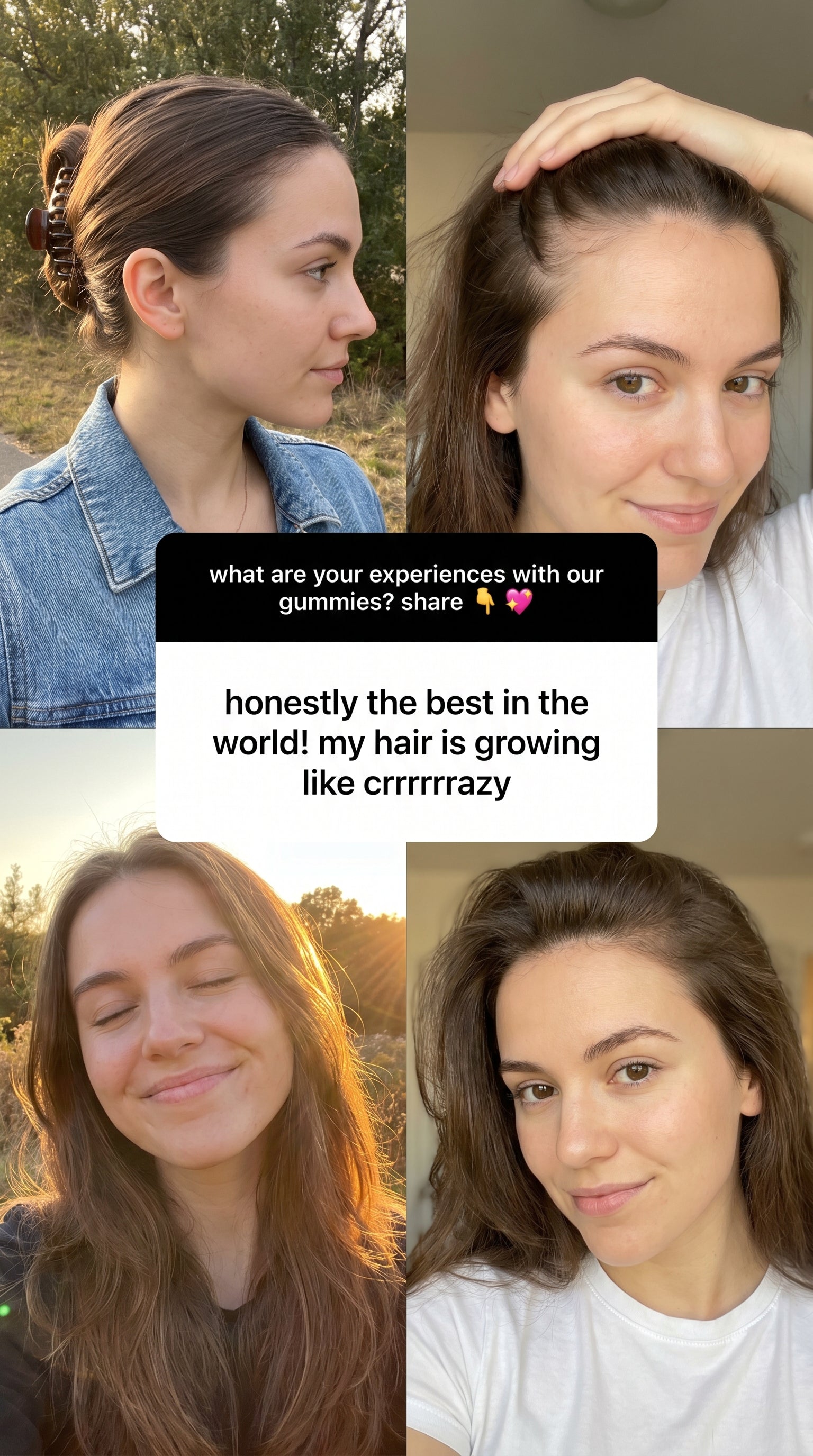
- Before and after photographs are trivially easy to manipulate with lighting, styling, wet versus dry hair and camera angle alone.
- Cosmetic products, including ours, are appearance and breakage level. They are not treatments and the honest ones say so.
- Find out what is causing it first and you will waste far less money, because several causes of hair loss are correctable and none of them are corrected by shopping.
What actually counts as evidence?
Evidence runs in tiers, and almost every disappointing purchase in this category traces back to taking a weak tier as though it were a strong one. A systematic review sits at the top and a testimonial sits at the bottom, with roughly five rungs in between.
| Type of evidence | How much weight it deserves | Why |
|---|---|---|
| Systematic review of multiple trials | Highest | Pools many studies and accounts for the ones that found nothing. |
| Randomised, placebo controlled trial | High | The control group experiences the same passage of time, so improvement can be attributed. |
| Small uncontrolled study | Modest | Suggestive at best. Nothing to compare against. |
| Laboratory or cell study | Low for consumers | An effect on cells in a dish frequently does not survive contact with a human scalp. |
| Consumer perception survey | Very low | Measures what people thought, not what happened. This is what most percentage claims are. |
| Testimonials and case stories | Effectively none | Unverifiable, self selected, and the failures are never published. |
| Influencer or celebrity endorsement | None | It is advertising with a person attached. |
The single most useful question you can ask about any percentage printed on a box of hair loss products is: were these people measured, or were they asked? Counting hairs in a defined area of scalp is measurement. Asking someone whether their hair feels fuller is opinion. Both get printed in the same bold font.

Which hair loss products actually have established evidence?
The genuinely evidence-backed hair loss products are medicines and procedures rather than cosmetics, and every one belongs in a conversation with a GP or pharmacist rather than in a basket filled from an article. Five options carry meaningful trial evidence, and they vary a great deal in how consistent that evidence is.
Licensed topical treatments sold over the counter in UK pharmacies have the longest established record in pattern hair loss. They have to be continued to maintain any benefit, an initial increase in shedding is a recognised effect of some of them, and licensed strengths and dosing differ between products. Read the pack and ask the pharmacist. If your question is about products or a routine rather than a medical one, you can talk to Gail Waterman, our co-founder, as an AI avatar on the Watermans homepage.
Oral prescription medicines exist for pattern hair loss, and some are licensed in the UK for men only. Where that is the case they are not licensed for women, and women who are pregnant or may become pregnant are advised not to handle crushed or broken tablets. They also carry recognised potential side effects that belong in a conversation with a doctor before starting.
Hair transplant surgery redistributes follicles from areas that are resistant to miniaturisation. It does not stop loss continuing elsewhere, which is why surgeons usually recommend combining it with ongoing medical treatment.
Low level laser devices have some randomised evidence behind them, though the studies tend to be smaller and the results less consistent than for the options above. Regard them as plausible rather than proven.
Platelet rich plasma injections have mixed evidence and no standardised protocol, meaning what one clinic does may differ substantially from another. The picture is unsettled.
And where a specific medical cause is found, correcting that cause usually does more than any product. Iron deficiency, thyroid disease and hormonal conditions can all drive hair loss, and addressing them properly outperforms anything on a shelf. This is precisely why finding the cause comes first. What causes thinning hair sets out the range of possibilities.
Where do cosmetic products honestly sit?
Cosmetic products sit below the medical hair loss products on the evidence ladder, and we would rather say so plainly than have you buy ours expecting something it cannot deliver. UK cosmetic law does not permit a cosmetic to claim it addresses a medical condition, and hair loss is one.
A shampoo, conditioner, mask or serum can keep the scalp clean and comfortable, reduce the breakage that stops hair reaching its full length, and improve how full the hair looks. Those are real benefits and they are worth having. They are also cosmetic, appearance-level benefits, and UK cosmetic law does not allow a cosmetic product to be presented as a medicine, and hair loss is a medical condition.
The useful way to think about it is layers. A cosmetic routine is the foundation, and it is cheap, low risk and worth doing. Licensed medical treatment sits above it and does the heavy lifting for pattern hair loss. Knowing the cause sits underneath everything, because it determines whether any of this is the right approach at all. Skipping straight to the middle layer without the bottom one is how people spend years on the wrong thing.
Get a discount on the thinning hair range
Join the Watermans mailing list and we will email a discount code straight to your inbox, so you can try the thinning hair range for less. Made in the UK, over 6.5 million bottles sold since 2012.
How do the main types of hair loss products compare?
The main types of hair loss products split by what they can honestly do: licensed medicines act on pattern hair loss and belong with a GP or pharmacist, cosmetic shampoos and conditioners reduce breakage and improve how full hair looks, concealers change appearance instantly, and supplements only help where a blood test shows a shortfall.
| Type | What it can honestly do | Evidence | Where to get it |
|---|---|---|---|
| Licensed medicines | Act on pattern hair loss; need continued use | Randomised trials | UK pharmacy or GP, with advice |
| Cosmetic shampoo and conditioner | Reduce breakage, keep the scalp comfortable, fuller-looking hair | Appearance level, cosmetic claims only | Shops and brands, including ours |
| Concealing fibres and sprays | Instant visual density in daylight and photographs | Works on sight; washes out | Shops and brands |
| Supplements | Correct a confirmed deficiency such as low iron or vitamin D | Good only where a shortfall is proven | Pharmacy, after a blood test |
| Devices and clinic procedures | Laser caps, PRP, transplant surgery | Mixed to moderate, protocols vary | Clinics; ask a GP first |
Price is a poor guide across all five rows. A cosmetic shampoo at £14.95 and a serum at four times that are both cosmetics, and a supplement at any price does nothing for a level that was already normal. Match the type to the problem first, then compare prices within the type.
Why should a personal story not move you?
A personal story cannot separate the product from everything else happening at the same time, which is why it should not move you however sincere it is. Time passes, habits change, seasons turn, and the people it did nothing for never write anything down.
The problem is not honesty. It is that a single person's experience cannot separate the product from everything else happening at the same time. Consider what else is going on when someone starts a hair loss product:
- Time passes. Many causes of shedding, particularly telogen effluvium after illness, stress or childbirth, resolve on their own over six to twelve months. Whatever was being taken during that window receives the credit.
- Behaviour changes. People who start a product usually also start handling their hair more gently, styling with less heat, eating a bit better and sleeping a bit more. Any of those could be responsible.
- Seasons change. Shedding varies through the year for many people. A three month before and after can capture a seasonal swing.
- Attention changes. Once you start noticing your hair, you notice differently. Perception of improvement is a real and well documented effect.
- You never hear the failures. The people it did nothing for do not write a story about it. What you see is a filtered sample of successes.
This is exactly what a control group exists to solve. A trial gives an identical group an identical experience minus the active ingredient, and only the difference between the groups is attributable. No individual story can do that, no matter how detailed, how many names and ages it carries, or how many months it covers.
Be especially wary of the detailed personal narrative. A story with a name, an age, a job and a timeline feels far more credible than a statistic, and is far weaker as evidence. There is usually no way for you to verify that the person exists, that the timeline is accurate, or that nothing else changed. Specificity is a persuasion technique, not a proof.
How are before and after photographs manipulated?
Before and after photographs are manipulated mostly through lighting, styling and camera angle rather than through editing software. Every technique below is in routine use, and none of them requires anyone to alter the image itself.
- Lighting direction. Overhead light casts shadow through a parting and makes scalp show. Front lighting fills it in. This alone can transform apparent density.
- Wet versus dry. Wet hair clumps into separated strands and shows scalp dramatically. The same head dried and brushed looks far fuller.
- Styling and parting position. Moving a parting two centimetres, or backcombing at the root, changes apparent coverage more than most treatments ever will.
- Camera angle. Shooting down onto the crown exposes it. Shooting level hides it.
- Flash. Direct flash on the scalp creates glare that reads as bare skin. Diffuse light does not.
- Haircut and colour. A shorter cut, a blunt line at the ends, or colour closer to the scalp tone all increase apparent thickness immediately.
- Concealing fibres. An entirely legitimate cosmetic product that produces an instant dramatic change, and is not always disclosed in an after photograph.
- Crop and zoom. Different framing between the two shots removes your ability to compare like with like.
A photograph pair worth taking seriously will have the same lighting, the same angle, the same dryness, the same parting and the same style, and will say how much time elapsed. That is rare enough that its absence should be your default assumption.
How should you read the reviews?
Read reviews for practical, verifiable, short-term facts and ignore them on anything to do with density. A reviewer can accurately report within days whether a pump works or a fragrance is overpowering. Nobody can report within days whether hair grew.
Reviews are genuinely useful for practical, verifiable, short-term matters: whether the pump works, whether the fragrance is overpowering, whether it irritated someone's scalp, whether it arrived damaged, whether the bottle is smaller than it looks. These are things a person can accurately report within days.
Reviews are close to useless for whether a product regrew anyone's hair. That judgement requires a controlled comparison over months, which no reviewer has made. It also arrives at the point of maximum optimism, since most reviews are written within weeks of purchase, well before anything about hair density could possibly be assessed.
Patterns worth noticing: a cluster of five star reviews posted within a few days of each other, reviews that read like marketing copy rather than like a person, and reviewers whose only review on the whole site is this one. Conversely, a product with a spread of ratings including thoughtful three star reviews is usually a more honest picture than one with nothing but perfect scores.

Which six questions should you ask before you buy anything?
- What kind of evidence is behind this claim? A trial, a survey, or a story. If the brand will not tell you, that is your answer.
- Were the people measured or asked? Hair counts are measurement. Satisfaction scores are opinion.
- Is this a cosmetic or a medicine? A cosmetic legally cannot treat a condition. If it is talking like a medicine, something is wrong.
- Do I know what is causing my hair loss? If not, this purchase is a guess, and a blood test is better value.
- What happens when I stop? Almost everything in this category requires continued use. Factor in the annual cost, not the bottle price.
- What would change my mind in 90 days? Decide the test before you start, and photograph in fixed conditions, or you will simply believe whatever you hoped.

What does a realistic approach look like?
A realistic approach to hair loss products runs in five steps, ordered by what returns most for the money and effort involved. Notice that the first two cost almost nothing, and the expensive decisions come later, once you know what you are dealing with.
- Find out the cause if there is any doubt. Especially for women, and especially if the loss is new, rapid, patchy or accompanied by other symptoms. Correctable causes exist and finding one changes everything.
- Fix the breakage. Gentler handling, heat protection, proper conditioning. This is the fastest visible improvement available and it is cheap. Habits that protect your hair covers the practical side.
- Decide about licensed treatment early. Miniaturisation is progressive, and maintaining existing hair is easier than recovering hair lost years ago. That argues for asking sooner.
- Add a cosmetic routine as the foundation. Useful, low risk, and complementary to everything above. How to choose a hair growth shampoo covers reading the label, and what differs between products for men and women covers the rest of the category.
- Use concealers without embarrassment. They solve the immediate visible problem honestly while slower approaches take effect.
When should you see a GP rather than buy anything?
- Hair loss in distinct round patches, or loss of eyebrows or eyelashes, which may indicate alopecia areata.
- Scalp pain, burning, pustules, or smooth shiny areas where follicle openings are no longer visible, which can indicate scarring hair loss where being seen early genuinely matters.
- Rapidly accelerating loss, or a parting widening noticeably within months.
- Shedding alongside fatigue, weight change, heavy periods, or changes in skin and nails.
- Thinning with irregular periods, acne or unusual facial hair growth.
- Any noticeable hair loss in a child.
Where do our own products fit?
Our own products sit in the cosmetic layer, well below the medical options above. Our shampoo cleanses the scalp gently and helps reduce breakage so hair is retained rather than snapped off. That is the whole claim, and we would rather state it accurately than dress it up on a page about not being sold to.

Grow Me® Hair Growth Shampoo, £14.95
Sulphate free, 250ml. A gentle everyday cleanser that helps reduce breakage for fuller-looking hair.
What it is not: a medicine, and it does not address pattern hair loss. It is a cosmetic shampoo and no substitute for finding out what is actually going on.

Condition Me® Hair Growth Conditioner, £13.95
Breakage defence for the mid-lengths and ends. Shea butter, glycerin, hydrolysed lupine protein and rosemary. Breakage is the part of the problem a cosmetic can genuinely improve, and quickly.
What it is not: a medicine, and not a scalp product. It is a conditioner for the lengths.
Watermans is a UK brand and we have sold over 6.5 million bottles since 2012.
Frequently asked questions
Which hair loss products are the most effective?
For pattern hair loss, licensed medical treatments have the strongest evidence, and which is appropriate depends on your sex, your medical history and your circumstances. That is a conversation for a GP or pharmacist. Cosmetic products sit below that and address appearance and breakage.
Do natural remedies work for hair loss?
The evidence is generally weak. Rosemary is the most cited, on the strength of a single small trial that has not been convincingly replicated, which is not the same as proof. Natural also does not mean risk free, and some essential oils irritate the scalp or cause allergic reactions.
Why can I not trust before and after photos?
Because lighting, wet versus dry hair, parting position, camera angle, haircut and concealing fibres can each change apparent density dramatically without any treatment involved. Unless both photographs share all those conditions, they are not a comparison.
How long should I test something before deciding?
Ninety days minimum for anything related to density, because that is the pace of the hair cycle. Six months for licensed treatments. Judge with monthly photographs taken in identical conditions rather than by memory.
Are expensive products more effective?
Not reliably. Price reflects packaging, marketing and retail margin at least as much as formulation. Judge by the evidence behind the claims and the ingredients list.
What does a proven claim on a box actually mean?
Less than it sounds. It tells you some form of study was run, but not whether it was on this finished product, how many people took part, whether there was a control group, or whether it was ever published. Ask for those details before you weight the claim.
Should I use several products at once?
It is reasonable for cosmetic products, which work at different levels. The drawback is that if something improves you will not know which element was responsible. If you are testing one thing specifically, change one thing at a time.
Is it worth seeing a GP about hair loss?
Yes, particularly if the loss is new, rapid, patchy, or accompanied by other symptoms. Several causes are correctable, and identifying one saves both money and time spent on approaches that were never going to address the real problem.
What is the bottom line on hair loss products?
There is no secret list of products that work which the industry is hiding. There is a short list of medical treatments with real evidence, a large field of cosmetic products that genuinely help with appearance and breakage, and an enormous amount of persuasion built on testimonials, unverifiable stories and photographs taken under different conditions. Learn to tell those apart and the question of which hair loss products are worth your money stops being a guess. You will spend less and be disappointed less often. And if you do not yet know what is causing your hair loss, that is the question worth answering before any of the rest of it matters.
If the breakage half of the problem is the part you want to fix now, our sulphate-free hair growth shampoo is a cosmetic foundation that makes no claim beyond what a cosmetic can do.
Watermans products are 100% cosmetic and do not treat medical hair loss. Individual results may vary.
Sources & references
- NHS, Hair loss: normal daily shedding, common causes, and when to see a GP.
- Endotext via NCBI Bookshelf, Male Androgenetic Alopecia: the mechanism and natural history of pattern hair loss.
- DermNet, Hair loss: how hair loss, shedding and breakage differ.
- DermNet, Alopecia areata: patchy hair loss and why it needs a clinician.
- Committee of Advertising Practice, CAP Code section 12: Medicines, medical devices, health-related products: the UK rules on what a cosmetic advertiser may claim.
- Medicines and Healthcare products Regulatory Agency: the UK regulator that licenses medicines, as distinct from cosmetics.