Facial Hair Growth: Why Beards Differ and What Really Helps
Facial hair growth is set mostly by your genes and your hormones, and it keeps changing well past your teens. If your beard is patchy, slow or thinner than you hoped, you are in very common company. This guide explains how beard hair develops, why some men grow a full beard and others do not, which everyday habits genuinely help, and how to groom a beard so it looks thicker while it fills in. We look at hair growth guide separately, with the practical steps.
Our hair and body oil
Camellia & Black Castor Hair & Body Oil, £24.95. Adds hydration and shine to dry lengths and smooths the hair before a blow dry, without weighing fine hair down.
Facial hair growth depends on how sensitive the follicles on your face are to androgens, the hormones that turn fine vellus hairs into thick terminal beard hairs. DermNet explains that this sensitivity is largely inherited, which is why beards run in families. Good sleep, enough protein and iron, patience and smart grooming help a beard look its best, but no shampoo, oil or supplement can change your genes.
Key takeaways
- Beard hairs start as fine vellus hairs that turn into coarse terminal hairs under the influence of androgens, according to DermNet.
- How sensitive your facial follicles are to androgens is largely inherited, so family patterns are the best guide to your own beard.
- Many men see their beard keep filling in for years after it first appears, so a patchy beard at 19 is not the final picture.
- Protein, iron, sleep and not smoking support hair in general; none of them overrides genetics.
- Grooming (length, shape, a beard brush and conditioning oil) makes more visible difference in weeks than anything you swallow.
What controls facial hair growth?
Facial hair growth is controlled by the interaction between androgens and the hair follicles on the face, and that interaction is largely set by your genes. DermNet explains that different genes in individual follicles vary in how they respond to androgens, and that follicles in the beard area are more sensitive to them than follicles elsewhere.
When androgen levels rise at puberty, sensitive follicles on the upper lip, chin and cheeks gradually switch from producing tiny, virtually invisible vellus hairs to producing larger, darker terminal hairs. DermNet describes exactly this change: small vellus follicles become larger intermediate and then terminal follicles making bigger pigmented hairs. The process does not happen everywhere at once. Most men notice the moustache and chin fill first, with the cheeks and the area joining the moustache to the beard coming in last.
Because the switch depends on follicle sensitivity rather than simply on how much testosterone you have, two men with normal hormone levels can grow very different beards. That is also why a patchy beard is rarely a sign of a hormone problem on its own. Our guide to vellus hairs and how they turn into terminal hairs explains the hair types in more detail.

Why is my beard patchy?
A patchy beard is usually caused by genetics and timing rather than by anything you are doing wrong. Some follicles on the cheeks and jaw are simply less sensitive to androgens, or respond later, so they produce thinner hairs or none at all for now. Looking at the beards of your father, grandfathers and brothers is often the most honest forecast you can get. For a related angle, see our guide to is bone broth good for hair growth.
Timing matters too. Facial hair usually keeps developing through the late teens and twenties, and gaps that look permanent at 18 often narrow over the following years. Ethnicity also plays a part: DermNet notes that the normal range of secondary hair growth varies between populations, so a lighter beard can be completely normal for your background.
Occasionally a patch has a different cause. Round, completely smooth bald patches that appear suddenly in a beard that used to be full can be alopecia areata, and redness, flaking or itching can point to a skin condition. Those are worth showing to a GP rather than trying to fix with grooming products.
| What you see | Most likely reason | What helps |
|---|---|---|
| Gaps on the cheeks, full chin and moustache | Genetics and timing | Patience, grow it longer, shape it |
| Soft, fine hairs that never thicken | Follicles still producing vellus or intermediate hairs | Time; grooming to disguise |
| Sudden round smooth patch in a full beard | Possibly alopecia areata | See a GP |
| Red, itchy, flaky skin under the beard | Skin irritation or a scalp-type skin condition | Gentle washing; see a GP if it persists |
How long does facial hair growth take to fill in?
A full adult beard usually takes years, not weeks, to reach its adult pattern. Beard hair first appears at puberty, and many men find it keeps thickening and joining up through their twenties. Within any single growth attempt, give a beard at least 8 to 12 weeks before judging it, because short stubble always looks patchier than the same beard at a few centimetres.
Hair grows roughly one centimetre a month, so the first month of a new beard is mostly itch and awkward stubble. Around the second and third months, longer hairs start to lie across and cover thinner areas. That is why barbers so often advise leaving a beard untrimmed, apart from the neckline, for the first couple of months.
A realistic test
Grow your beard for 12 weeks with only the neckline tidied. Take a photo in the same light at weeks 0, 4, 8 and 12. The difference between week 4 and week 12 is usually much bigger than people expect.

Is it beard hair loss, shedding or breakage?
Beard hair loss, shedding and breakage are three different things, and telling them apart stops you worrying about the wrong one. Every hair follicle cycles through growth, rest and shedding, so finding a few whole beard hairs in the sink is normal. The NHS says it is normal to lose between 50 and 100 scalp hairs a day, and beard hairs follow the same kind of cycle.
Shedding means whole hairs, each with a small white bulb at the root, falling out as part of the cycle or in greater numbers after an illness or stress. Hair loss in the stricter sense means follicles stopping or producing less hair, such as the round patches of alopecia areata. Breakage means hairs snapping part-way along, which is common in coarse, dry beard hair that is brushed roughly or washed with harsh soap. Breakage makes a beard look thinner at the ends, and it is the one you can do most about with grooming.
Get a discount on the beard care range
Join the Watermans mailing list and we will email a discount code straight to your inbox, so you can try the beard care range for less. Made in the UK, over 6.5 million bottles sold since 2012.
Which habits help a beard grow well?
The habits that help a beard grow well are the same ones that support hair everywhere: enough protein, enough iron, decent sleep, regular exercise, not smoking and managing stress. They cannot create follicles your genes did not give you, but shortfalls in any of them can leave existing hair thinner and duller than it needs to be.
Protein and iron. Hair is made mostly of the protein keratin. The NHS says men aged 19 and over need 8.7mg of iron a day, found in red meat, beans, nuts, dried fruit and fortified cereals. If you eat very little meat or have been dieting hard, it is worth checking you are getting enough.
Sleep and stress. Poor sleep and long-term stress do not stop a beard growing, but the NHS notes that stress can change how much we eat, exercise and look after ourselves, and those changes show up in hair. DermNet lists psychological stress, crash dieting and illness among the triggers for a temporary burst of shedding a few months later.
Smoking. Stopping smoking helps circulation and general health, and it is one of the few lifestyle changes with benefits you can feel everywhere, beard included.

Do beard oils, shampoos or supplements make a beard grow faster?
Beard oils, shampoos and supplements do not change how your follicles respond to androgens, so they cannot give you a beard your genes did not plan. What good grooming products can do is keep the skin under the beard comfortable, soften coarse hair so it lies flatter, and reduce breakage, all of which make a beard look fuller.
Be wary of anything sold as a beard growth supplement. A multivitamin can help if your diet genuinely falls short, but extra vitamins on top of a balanced diet do not add hair, and very high doses of some, such as vitamin A, can cause problems. Speak to a pharmacist before buying high-dose products. Products that promise to double beard thickness are making a claim no cosmetic can back up.
Some men consider medicines for a thin beard. Those are a conversation for a GP or pharmacist, not a blog, and they carry side effects worth understanding first. For men on testosterone as part of a transition, our guide to beard growth on testosterone covers the timeline.
How should you groom a beard so it looks thicker?
Grooming a beard so it looks thicker comes down to length, shape and softness. A beard of two to three centimetres covers far more skin than stubble, a shape that follows your jawline hides gaps on the cheeks, and soft, conditioned hair lies flat and reflects light rather than sticking out in wiry strands.
- Wash gently two or three times a week with a mild shampoo rather than soap, which can strip the skin and leave the beard dry.
- Condition the hair after washing, or use a few drops of oil on a damp beard to soften coarse hairs.
- Brush daily with a boar-bristle beard brush to train hairs to lie in one direction and spread natural oil.
- Trim the neckline and cheek line to create a clean outline; a crisp edge makes the whole beard look denser.
- Keep sparse areas longer and the fullest areas slightly shorter so the overall shape looks even.

Camellia & Black Castor Hair & Body Oil £24.95
A light blend of camellia and black castor oil for hair and skin. A few drops on a damp beard soften coarse hairs so they lie flatter and look fuller, and help the skin underneath feel comfortable.

Condition Me® Hair Growth Conditioner £13.95
A conditioner that smooths and softens coarse hair. Used on the beard after washing, it helps reduce snapping and the frizzy, wiry look that makes a beard seem thinner.

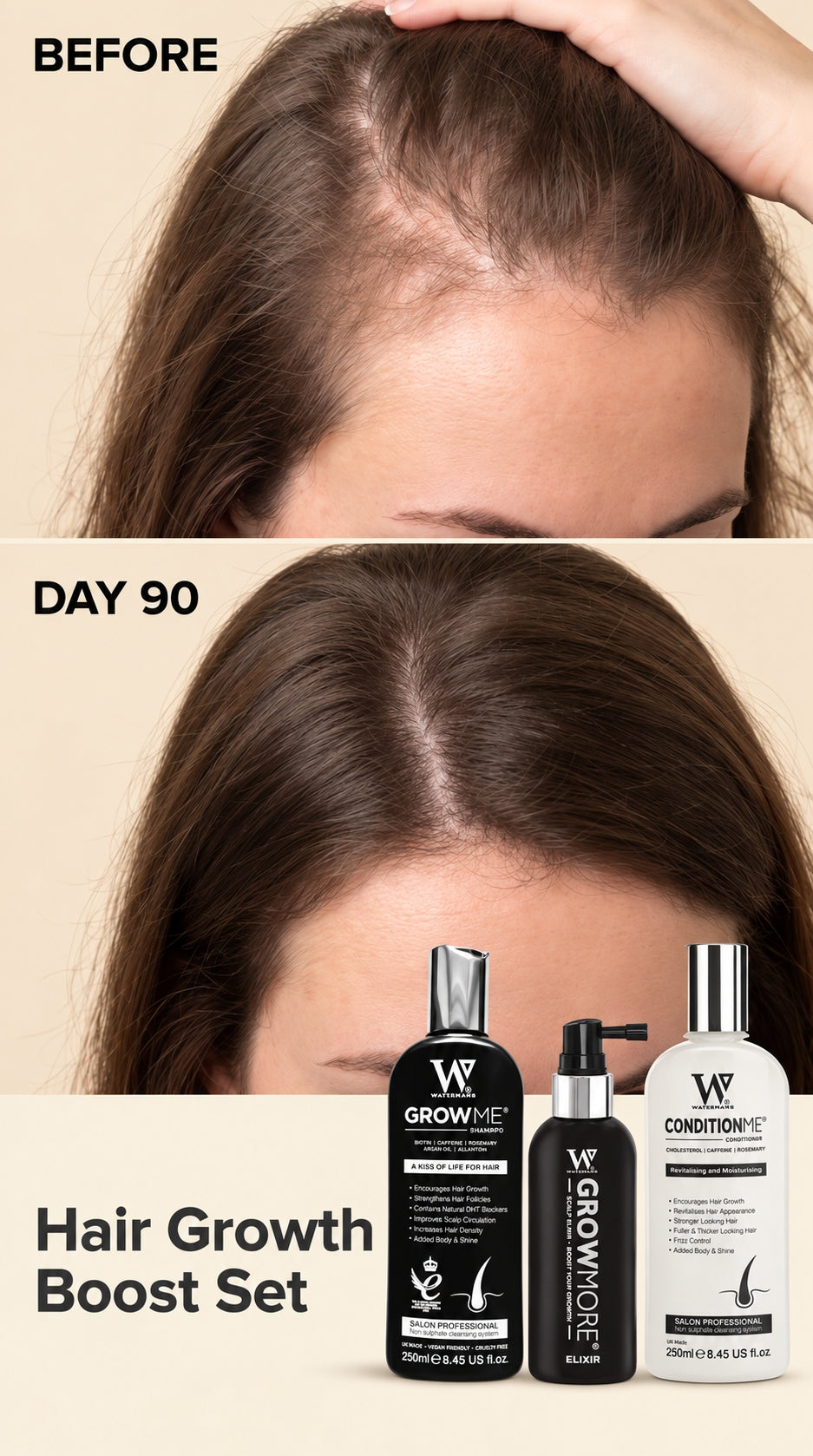
Grow Me® Hair Growth Shampoo £14.95
A gentle, sulfate-free shampoo with caffeine, biotin, rosemary and niacinamide. Many men use it on scalp and beard alike for a clean, comfortable feel without the dryness of soap.
What are the frequently asked questions about facial hair growth?
What decides facial hair growth?
It is decided mainly by how sensitive your facial follicles are to androgens, which is largely inherited, plus your age.
At what age does a beard stop filling in?
There is no fixed age. Many men find their beard keeps thickening and joining up through their twenties.
Does shaving make a beard grow back thicker?
No. Shaving cuts the hair at the surface and does not change the follicle, although stubble that comes back can feel coarser because of its blunt tip.
Can low testosterone cause a patchy beard?
It can in some cases, but most men with patchy beards have normal hormone levels. See a GP if a thin beard comes with other symptoms such as low energy or low sex drive.
Do beard growth supplements work?
Supplements help only if your diet is short of something such as iron or protein. They cannot add follicles your genes did not give you.
How can I make my beard look thicker now?
Grow it to two or three centimetres, shape the outline, condition and oil it, and brush it daily so the hairs lie flat.
When should I see a GP about my beard?
See a GP if you notice sudden round bald patches, red or scaly skin that does not settle, or hair loss on the scalp and body as well.
What is the bottom line on facial hair growth?
The bottom line on facial hair growth is that genetics and time do most of the work, so patience and grooming beat any product promise. Give a beard at least 12 weeks, eat enough protein and iron, sleep well, and use gentle washing, conditioning and a good brush so every hair you have works harder. If patches appear suddenly or the skin is sore, see a GP. If your question is about products or a routine rather than a medical one, you can talk to Gail Waterman, our co-founder, as an AI avatar on the Watermans homepage.
To soften a coarse beard so it lies flatter and looks fuller, try a few drops of our hair and body oil after washing.
Sources & references
- DermNet, Hirsutism (androgen sensitivity and vellus to terminal hair), checked 18 September 2026.
- DermNet, Male pattern hair loss, checked 18 September 2026.
- DermNet, Telogen effluvium, checked 18 September 2026.
- NHS, Hair loss, checked 18 September 2026.
- NHS, Iron, checked 18 September 2026.
- NHS Every Mind Matters, Stress, checked 18 September 2026.
Watermans products are 100% cosmetic and do not treat medical hair loss. Individual results may vary.