Article: Hair Skin and Nails Vitamins: Do They Actually Work?
Hair Skin and Nails Vitamins: Do They Actually Work?
The honest answer depends entirely on one question: is anything actually low?
Hair skin and nails vitamins are a sensible purchase for some people and expensive urine for everyone else. They help when they correct a genuine shortfall, because nutrients like iron, zinc, vitamin D and B12 are needed for normal hair, skin and nail formation. If your levels are already adequate, adding more does not push the system further. The useful first step is a blood test from your GP, which costs nothing.
Our hair, skin and nails gummies
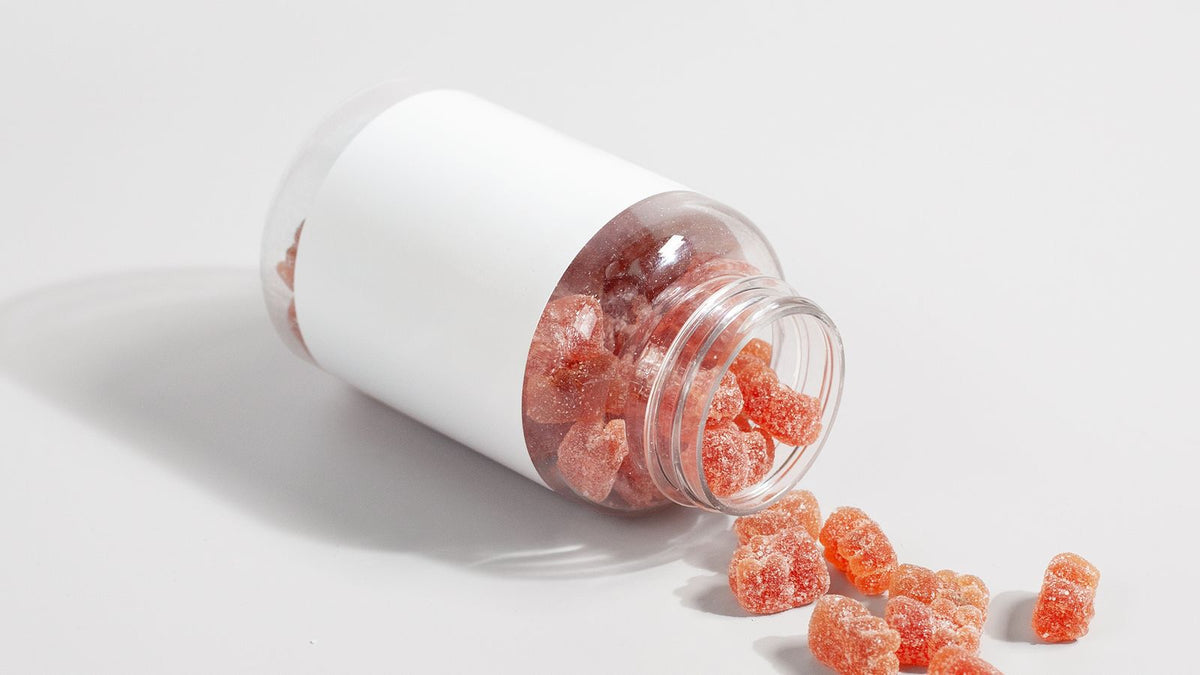
GrowPro® Hair, Skin & Nails Gummies, £22.95. Sugar free daily gummies for people who would rather chew than swallow a tablet, supporting hair care from the inside out.
Key takeaways
- These supplements correct shortfalls. They do not add performance on top of an adequate diet.
- Iron, vitamin D and B12 are the deficiencies most often linked to hair changes in the UK, and all are testable free.
- Biotin deficiency is genuinely rare on a normal diet, which is why biotin capsules disappoint so many people.
- High dose biotin distorts several common blood tests, including thyroid. Tell whoever takes your blood.
- Nails and hair record the past, so any change takes three to six months to become visible.
What do these nutrients actually do?
Hair, skin and nails are all built from keratin-rich tissue that turns over constantly, which makes them among the first places a shortfall shows. Protein supplies the raw material. Iron carries oxygen to the cells doing the building. Zinc and selenium support the enzymes involved. Vitamin D has receptors in the follicle. B vitamins, including biotin, act as cofactors in the reactions that assemble the structure. Collagen is the other ingredient that dominates this shelf, and we looked at whether liquid collagen for hair growth earns its price.
The important word is needed, not boosting. A nutrient is required for a process to run normally, and supplying more than enough does not make the process run faster. That is the single idea that explains why supplements transform outcomes for someone deficient and do almost nothing for someone who is not. Women weighing up a supplement can read our guide to hair vitamins for women, which covers iron, pregnancy and menopause.

Which deficiencies genuinely affect hair, skin and nails?
Four come up repeatedly in UK practice. Low ferritin, meaning depleted iron stores, is common in menstruating women and is well recognised as a contributor to shedding. Vitamin D is low in a large share of the UK population over winter. B12 shortfalls are more common in vegan and vegetarian diets and in people on long term acid-reducing medicines. Protein intake below requirement affects every keratin tissue at once.
| Nutrient | Why it matters | Common signs of shortfall | How to check |
|---|---|---|---|
| Iron / ferritin | Oxygen transport to dividing cells | Shedding, fatigue, brittle nails | Blood test |
| Vitamin D | Receptors present in the follicle | Often none, low in UK winter | Blood test |
| B12 | Cell division and red blood cells | Fatigue, tingling, mouth soreness | Blood test |
| Zinc | Enzyme cofactor for tissue repair | Slow healing, skin changes | Blood test if suspected |
| Protein | The raw material itself | Fine, weak hair and nails | Dietary review |
Notice what is not on that list. Biotin appears in almost every product in this category, yet genuine biotin deficiency is rare in anyone eating normally, because the vitamin is present in eggs, nuts, seeds, fish and wholegrains and is also made by gut bacteria. Our guide to how much biotin you actually need sets out the numbers.
Do hair skin and nails vitamins work if nothing is low?
Evidence for benefit in people who are already replete is thin. Most published work in this area either studies people with a documented deficiency, or is small, short and rarely repeated by a second research group. That does not make supplements useless; it means the benefit is concentrated in a specific group, and marketing tends to describe it as if it applied to everyone.
A fair way to think about it is insurance rather than enhancement. If your diet is genuinely erratic, if you have cut out a food group, or if you know you rarely eat oily fish or red meat, a modest multivitamin covers gaps at low cost. If you eat well and your bloods are normal, the honest expectation is very little.
Get a discount on the hair growth range
Join the Watermans mailing list and we will email a discount code straight to your inbox, so you can try the hair growth range for less. Vegan, made in the UK, over 6.5 million bottles sold since 2012.
What about the biotin blood test problem?
High dose biotin is the one genuine safety issue in this category, and it is not about the hair. Biotin interferes with immunoassays used for thyroid function, vitamin D, hormone panels and troponin, which is the test used to check for a heart attack. Depending on the assay, it can push results falsely high or falsely low.
Practical handling is simple. Tell whoever takes your blood that you take biotin, including if it is inside a hair supplement rather than a standalone capsule. Many labs advise stopping it for a period before testing. This is not a reason to avoid the nutrient, but it is a reason not to take very high doses casually.
Check the label, not the marketing. Many hair supplements contain biotin at many times the adequate intake, and people often take one without thinking of it as a supplement at all.
How long before you see anything?
Three to six months is the realistic window, because hair and nails are records rather than live tissue. The hair you can see left the follicle weeks or months ago, and nails grow roughly three millimetres a month, so a change in nutrition takes a full nail length to show fully. Skin responds faster, often within six to eight weeks.
Track it properly or you will not know. A photo of the same parting in the same light, a note of how nails behave, and one change at a time. Starting a supplement, a new shampoo and a scalp serum in the same week means you learn nothing about any of them.


GrowPro Hair Growth Gummies £22.95
Sugar free vegan gummies with biotin, zinc, MSM, bamboo silica and vitamins C, D3 and B12. Nutrients that contribute to the maintenance of normal hair, two a day, for diets with genuine gaps.
Is food better than a capsule?
Food wins on almost every measure, because it delivers nutrients together with protein, fibre and the cofactors that help absorption. Red meat, pulses and dark leafy greens for iron. Oily fish, eggs and fortified spreads for vitamin D. Dairy, eggs, fish and fortified foods for B12. Nuts, seeds and shellfish for zinc. Enough total protein across the day, which is the one most people underestimate. For the nutrient-by-nutrient version, our guide to essential vitamins and minerals for hair, from A to zinc goes through each one in turn.
A supplement earns its place where food genuinely cannot close the gap: a restricted diet, a confirmed deficiency, pregnancy, or a UK winter with no oily fish in sight. Public health advice in the UK is that adults consider a daily vitamin D supplement in autumn and winter, which is a reasonable default regardless of your hair.

When should you speak to your GP?
Speak to your GP rather than buying capsules if hair is shedding heavily for more than three months, if the parting is widening, if nails are spooned, ridged or lifting, if you are very tired, or if you have cut out a food group. Ferritin, thyroid, vitamin D and B12 are free to test and answer far more than a supplement can. If your question is about products or a routine rather than a medical one, you can talk to Gail Waterman, our co-founder, as an AI avatar on the Watermans homepage.
If your diet genuinely has gaps and you want one product rather than four, our hair vitamins cover the usual suspects in a two-a-day gummy.
What is the bottom line on hair skin and nails vitamins?
Buying hair skin and nails vitamins makes sense when a blood test shows something is low, when your diet has real gaps, or through a UK winter for vitamin D. It makes far less sense as a general upgrade on an adequate diet, and the biotin dose is worth checking before any blood test. Get tested first, eat the food that covers the gaps, and treat the capsule as the smaller part of the answer.
If a genuine gap is the conclusion you reach, our hair, skin and nails gummies are a sugar free, two a day option built around biotin, zinc and bamboo silica, with nutrients that contribute to the maintenance of normal hair. Check the biotin dose against any blood test you have booked before you start.
Frequently asked questions: what else do people ask about hair skin and nails vitamins?
Do hair skin and nails vitamins really work?
They work well when they correct a genuine shortfall such as low iron, vitamin D or B12. In people whose levels are already adequate, the evidence for added benefit is thin.
How long do they take to work?
Three to six months for hair and nails, because both are records of what happened weeks or months ago. Skin often responds faster, within six to eight weeks.
Is biotin safe to take every day?
For most people yes at normal doses. The real issue is that high dose biotin distorts several common blood tests, including thyroid and troponin, so tell whoever takes your blood that you take it.
Can I just eat better instead?
Usually yes, and food is the better option because nutrients arrive with protein and the cofactors that aid absorption. Supplements make sense for restricted diets, confirmed deficiencies, pregnancy and UK winters.
Should I take iron without being tested?
No. Excess iron accumulates and causes harm, and the symptoms of low iron overlap with several other conditions. Ask for a ferritin test first and take iron only if it is indicated.
Are gummies as good as tablets?
For most nutrients, yes, provided the dose is the same. Gummies suit people who struggle with tablets. Check for added sugar, and remember they are a supplement rather than a sweet.
Will they help hair that is thinning at the parting?
Only if a deficiency is part of the picture. A widening parting usually reflects follicle sensitivity rather than nutrition, and that needs a GP assessment rather than a capsule.
Can I take them with other supplements?
Check for overlap, because doubling up is easy when several products contain the same vitamins. Very high combined doses of vitamin A and selenium in particular are worth avoiding.
Sources and references
- NHS: Vitamins and minerals
- NHS: Vitamin B
- NHS: Others (zinc and selenium)
- NHS: Iron
- NHS: Iron deficiency anaemia
- NHS: Hair loss
- Great Britain nutrition and health claims register
Watermans products are 100% cosmetic and do not treat medical hair loss. Individual results may vary.