Liquid Collagen for Hair Growth: Does It Really Work?

Liquid collagen for hair growth is one of the most oversold supplements on the shelf, and the reason is simple: hair is made of keratin, not collagen. Your body digests a collagen drink into amino acids like any other protein, so it cannot deliver collagen to the hair fibre. There is a plausible indirect case around skin, the scalp and overall protein intake, but the human evidence for hair specifically is thin, and most of it is funded by the companies selling it.
Our hair, skin and nails gummies
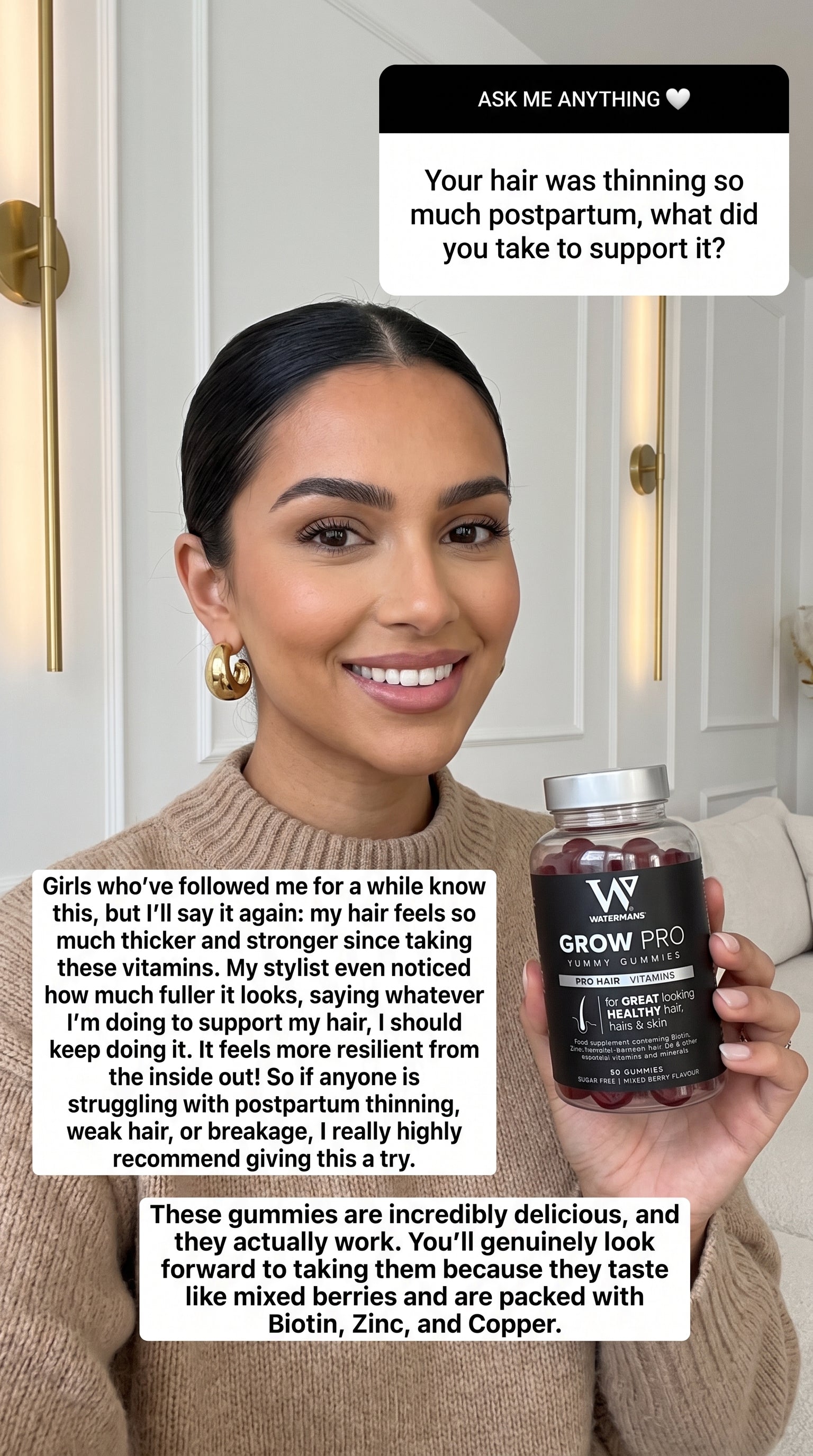
GrowPro® Hair, Skin & Nails Gummies, £22.95. Sugar free daily gummies for people who would rather chew than swallow a tablet, supporting hair care from the inside out.
Key Takeaways
- Hair fibre is keratin. Collagen is a different protein and is not a building block of the strand.
- A collagen drink is digested into amino acids first, so nothing arrives at your follicles labelled collagen.
- The decent trial evidence for oral collagen is about skin hydration and elasticity, not hair, and is mostly industry-funded.
- Liquid, powder and capsule forms are close to equivalent. Adherence and total protein intake matter far more than format.
- Vitamin C genuinely is required to make collagen in the body, which is why the two are so often sold together.
- If you eat enough protein, a collagen supplement is unlikely to change your hair.
- Sudden or patchy hair loss is a GP question, not a supplement question.
Does liquid collagen for hair growth actually work?
There is no good human evidence that liquid collagen for hair growth makes hair grow faster, thicker or denser. That is the honest answer, and it is worth understanding why rather than just taking it on trust.
The hair shaft is built almost entirely from hard keratins, a family of fibrous proteins rich in the sulphur-containing amino acid cysteine. Collagen is a different protein with a different amino acid profile, unusually high in glycine, proline and hydroxyproline and containing essentially no cysteine. Collagen does exist around the follicle, in the dermal sheath and the extracellular matrix of the skin, so it is part of the neighbourhood the follicle lives in. It is not part of the strand itself.
When you drink a collagen supplement, digestive enzymes break it down in the gut. Most of it arrives in the bloodstream as free amino acids and small di- and tripeptides, the same as any other dietary protein. Your body then uses those building blocks wherever it currently has demand. It has no mechanism for routing them preferentially to hair.
What does the research on oral collagen actually show?
The research on oral collagen peptides is concentrated on skin, not hair. Reviews of human studies report modest improvements in skin hydration and elasticity after eight to twelve weeks of daily collagen peptides. Those are the endpoints that have been measured repeatedly, and they are the endpoints the marketing quietly borrows from when it talks about hair.
Three caveats matter when you read those results:
- Funding. A large share of the trials are sponsored by collagen manufacturers. That does not make them wrong, but it is a known source of bias and it should temper how much weight you give a small positive result.
- Endpoints. Skin hydration is not hair density. Borrowing a skin result to sell a hair benefit is a leap the studies themselves do not make.
- Size and duration. Many studies are small and short, which makes them prone to overstating effects.
Where good sources disagree, it is worth saying so plainly. Some dermatology reviews take the view that ingested collagen peptides may act as signalling molecules that nudge fibroblasts in the skin, which would be a genuine mechanism. Others hold that absorbed peptides are simply nutrition and that the observed effects are small and inconsistently replicated. Both positions are held by reasonable people reading the same literature. Neither camp is claiming a demonstrated hair growth effect.

Why is vitamin C always sold alongside liquid collagen for hair growth?
Vitamin C is packaged with collagen because your body physically cannot build collagen without it. Vitamin C is an essential cofactor for the enzymes prolyl hydroxylase and lysyl hydroxylase, which hydroxylate proline and lysine residues so that the collagen triple helix is stable. This is settled biochemistry, and it is the reason severe vitamin C deficiency causes scurvy, whose signs include fragile skin, poor wound healing and corkscrew-shaped body hairs.
The gap between that fact and the sales pitch is dose. Adults in the UK need 40mg of vitamin C a day, an amount comfortably covered by an orange, a handful of strawberries or a portion of peppers or broccoli. Deficiency is uncommon here. If you already get enough, more vitamin C does not push your body into making extra collagen; the enzymes are already saturated.
Get a discount on the hair and scalp range
Join the Watermans mailing list and we will email a discount code straight to your inbox, so you can try the hair and scalp range for less. Vegan, made in the UK, over 6.5 million bottles sold since 2012.
Is liquid collagen better absorbed than powder or capsules?
Liquid collagen is not meaningfully better absorbed than powder or capsules once the peptide size and daily amount are matched. The format differences that actually affect your result are practical ones, not biochemical ones.
| Format | Genuine advantage | Genuine drawback | Typical daily cost |
|---|---|---|---|
| Liquid shot | Easiest to take consistently; no mixing; pleasant to drink | Most expensive per gram; often contains added sugars, sweeteners or preservatives; the smallest actual protein dose | High |
| Powder | Cheapest per gram; you control the amount; usually a bigger dose of peptides | Needs mixing; texture puts some people off | Low |
| Capsules | No taste at all; portable | You often need six or more capsules to match a powder scoop, so people quietly under-dose | Medium |
| Food sources | Free of marketing; comes with the other nutrients hair needs | Less convenient; harder to quantify | Lowest |
The single most common mistake with liquid collagen for hair growth is paying a premium for a shot that contains two or three grams of peptides when the studies people are quoting used two and a half to ten grams a day. Read the label for grams of collagen peptides, not the size of the bottle. We have a separate guide to liquid vitamins for hair growth if that is the part you need.
What actually influences hair growth from the inside?
Nutrition influences hair mainly through deficiency, not through topping up someone who is already replete. The nutrients with the clearest link to hair in the dermatology literature are iron, vitamin D and zinc, alongside adequate total protein and energy intake. A review of vitamins and minerals in hair loss found the evidence for iron and vitamin D to be the most consistent, while noting that supplementing a person who is not deficient shows little benefit and that some nutrients are harmful in excess.
That is the practical frame. A blood test that shows low ferritin is actionable. A collagen shot bought on the strength of a skin study is not the same thing. If you want the nutrient-by-nutrient picture, our guide to vitamins and minerals for hair growth works through them individually, and what to eat and what to take covers the food-first version.

GrowPro® Hair Growth Gummies £22.95
If you would rather cover the nutrients that actually have hair evidence behind them than chase collagen, GrowPro is a sugar-free vegan daily gummy with biotin, zinc, selenium, vitamin C, D and B12. These nutrients contribute to the maintenance of normal hair, and two gummies a day is easier to stick to than a supplement drawer.
View GrowProWhat is the difference between hair loss, hair shedding and hair breakage?
Choosing between a supplement, a shampoo and a GP appointment gets much easier once you know which of these three you are dealing with, because people routinely buy for the wrong one.
| Problem | What is happening | What tends to help |
|---|---|---|
| Hair loss | A follicular problem: the follicle miniaturises or is disrupted, as in androgenetic alopecia or alopecia areata. The parting widens and density genuinely falls. | Assessment by a GP. No supplement addresses the follicular process. |
| Hair shedding | A cycle problem: an unusual number of follicles enter the resting phase together and release a few months later, as in telogen effluvium after illness, surgery, childbirth or crash dieting. Normal daily shedding is 50 to 100 hairs. | Fixing the trigger, correcting any confirmed deficiency, and time. It usually settles within six to nine months. |
| Hair breakage | A fibre problem: strands snap along their length from heat, bleach, friction or over-brushing. Density at the root is unchanged, but hair looks thin and refuses to gain length. | Cosmetic care: gentler handling, heat protection, conditioning and masks. |
Liquid collagen for hair growth is aimed, at best, at the shedding column, and only where low protein intake is genuinely part of the picture. If your hair is snapping rather than falling from the root, the answer is on the outside of the fibre. Our guide to what causes telogen effluvium explains the shedding timeline in detail, and what hair supplements can and cannot do takes the same honest look at another popular range.
Watermans products are 100% cosmetic and do not treat medical hair loss. Individual results may vary.

How do you support hair from the outside while you sort the inside out?
Cosmetic care works on the part of the hair you can actually reach: the fibre that has already left your scalp. That is not a small thing, because most of the visible difference between hair that looks thick and hair that looks thin is retention, meaning how much of the length survives the daily grind of washing, brushing, heat and friction.

Grow Me® Hair Growth Shampoo £14.95
Grow Me is a sulphate-free daily shampoo with biotin, caffeine, rosemary, niacinamide and hydrolysed lupine protein. It is cosmetic, not medical: it cleanses gently and helps reduce breakage so more of your length stays attached, which is what makes hair look fuller.
View Grow MePair that with the basics that cost nothing: turn the heat down, dry to eighty per cent before styling, use a wide-tooth comb on wet hair, and loosen tight ponytails. Those habits change how hair looks over three months more reliably than any drink.
Frequently Asked Questions
Does liquid collagen for hair growth have any evidence behind it?
Not for hair specifically. The human trials on oral collagen peptides measure skin hydration and elasticity, and even those results are modest and largely industry-funded. No good study shows that liquid collagen for hair growth increases hair density or growth rate.
How long would I need to take collagen to see anything?
Supplement studies typically run eight to twelve weeks, and hair itself grows about one centimetre a month, so any nutritional change takes three to six months to show in the length. If you decide to try it, judge it at three months, not three weeks.
Is marine collagen better than bovine collagen for hair?
There is no reliable evidence that one source outperforms the other for hair. Marine collagen is mostly type I and is often said to be absorbed slightly faster because of smaller peptides, but the difference has not been shown to matter for any hair endpoint. Choose on dietary preference and price.
Can I get collagen from food instead?
Yes, and more cheaply. Bone broth, slow-cooked cuts with connective tissue, chicken skin and fish skin all supply collagen. More usefully, any complete protein source gives your body the amino acids it needs, alongside the iron, zinc and B vitamins that have clearer hair evidence than collagen does.
Is there a vegan liquid collagen?
Not a true one. Collagen is an animal protein, so products marketed as vegan collagen are collagen builders: vitamin C, zinc, amino acids like glycine and proline, and sometimes silica. They supply the raw materials rather than collagen itself, which is arguably the more sensible approach anyway.
Are there any risks to taking collagen supplements?
For most healthy adults collagen is well tolerated, with mild bloating or a heavy feeling in the stomach being the usual complaints. Marine collagen is a problem if you have a fish or shellfish allergy. Check with a pharmacist if you are pregnant, breastfeeding or taking regular medication.
Should I take collagen and biotin together?
They are commonly combined, but biotin deficiency is rare in people eating a normal diet, so extra biotin usually does nothing visible. High-dose biotin can also skew some laboratory blood tests, so tell your GP or the phlebotomy team if you take it before having bloods done. If your question is about products or a routine rather than a medical one, you can talk to Gail Waterman, our co-founder, as an AI avatar on the Watermans homepage.
My hair is falling out. Should I try collagen first?
No. Sudden shedding, a widening parting, patchy bald spots or hair loss with tiredness or heavy periods should be looked at by a GP first, because iron deficiency and thyroid problems are common, checkable causes. Start there, then decide about supplements once you know what you are dealing with.
Sources & References
- Influence of Oral Collagen Peptides on Skin Biophysical Properties in Humans: A Narrative Review, Clinical, Cosmetic and Investigational Dermatology. PMC13505773
- Almohanna HM et al., The Role of Vitamins and Minerals in Hair Loss: A Review, Dermatology and Therapy, 2018. PMC6380979
- NHS, Vitamin C: how much you need and what it does. nhs.uk
- British Association of Dermatologists, Telogen Effluvium information leaflet. bad.org.uk
- NHS, Hair loss: causes and when to see a GP. nhs.uk
What is the bottom line on liquid collagen for hair growth?
Liquid collagen for hair growth is a comfortable product with an uncomfortable evidence base. The biology says collagen is not what hair is made of, the trials say the measurable benefits are in skin, and the economics say you are usually paying the most per gram for the least protein. If you enjoy the ritual and can afford it, it is unlikely to do you any harm. But if the goal is hair that looks and feels better in six months, your money buys more when it goes on eating enough protein, checking your ferritin and vitamin D with a GP if you are shedding, and looking after the fibre you already have so it stops snapping off before it gains any length.
Watermans is a British, cruelty free hair care brand, and we have sold over 6.5 million bottles since 2012.
If you take one thing from this, make it the wash step, and Grow Me hair growth shampoo is built for exactly that.