Is Petrolatum Bad for Hair? The Honest Answer
The short answer to the question is petrolatum bad for hair is no, but it is very easy to use badly. Petrolatum is an occlusive: a waxy film that sits on the outside of the hair and slows water escaping from it. It does not enter the fibre, it does not reach the follicle, and it does not damage anything. What it does do is refuse to rinse out with a gentle shampoo, so the honest problem is build-up rather than harm.
Our hair growth shampoo
Grow Me® Hair Growth Shampoo, £14.95. A sulphate free daily shampoo that supports a healthy scalp environment and helps reduce breakage, so lengths hold on and look fuller.
Key takeaways
- Petrolatum is a sealant, not a conditioner. It locks moisture in and locks water out, which is useful only when there is moisture underneath it to seal.
- It cannot suffocate a follicle. Hair is built below the skin from the blood supply, so a film on the surface has no route to interfere.
- The real problem is build-up. It needs a proper detergent to shift, so pairing it with a very mild shampoo leaves a film that compounds week after week.
- Keep it on the mid lengths and ends and off the scalp, especially if you are prone to flaking.
- Cosmetic-grade petrolatum sold in the UK is refined and regulated. The scare stories generally describe unrefined industrial grades that never reach a cosmetic shelf.
What is petrolatum, and why is it in hair products at all?
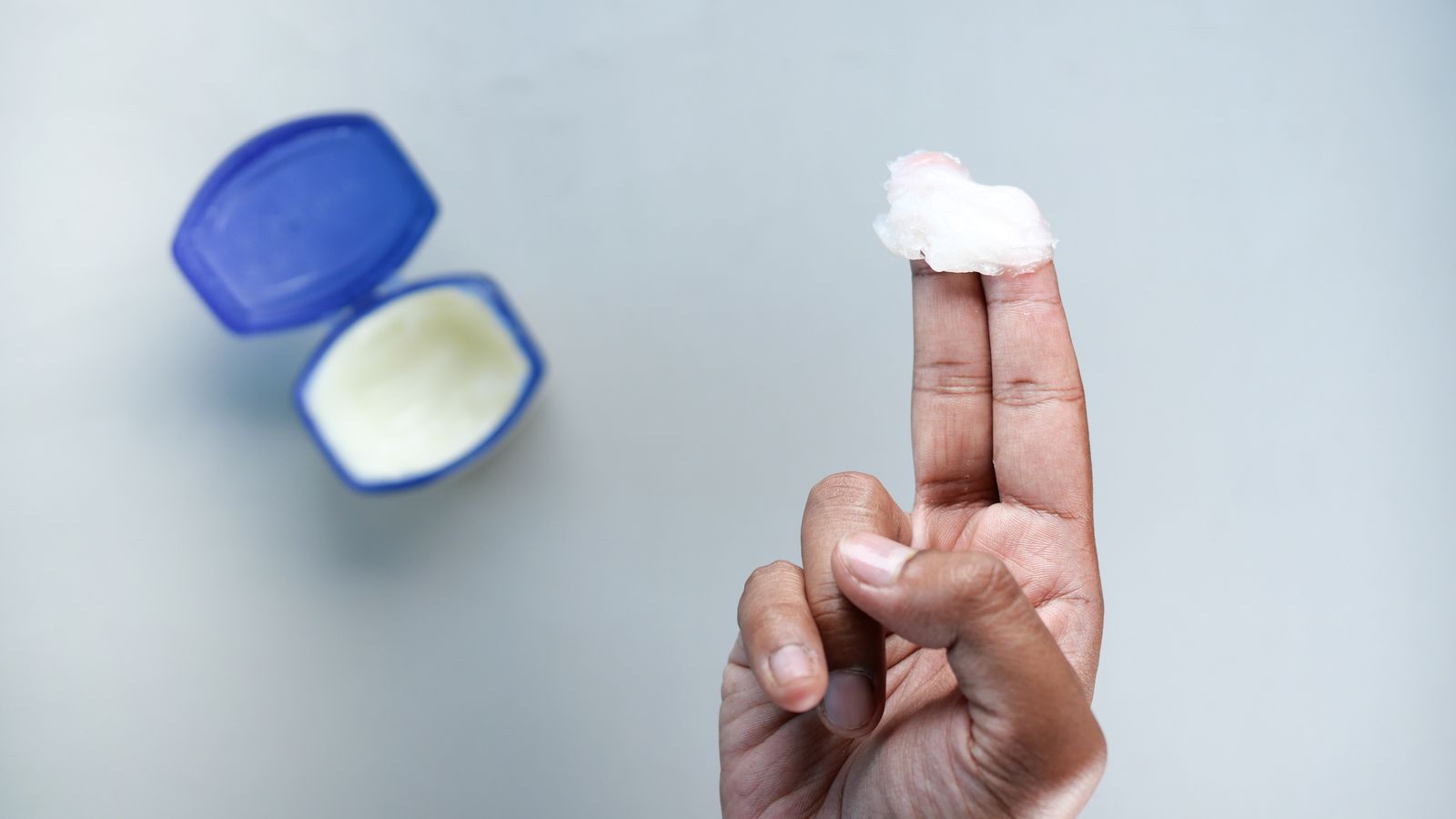
Petrolatum is a semi-solid blend of mineral hydrocarbons, refined from petroleum, and you will know it best as Vaseline. On an ingredients list it appears as Petrolatum, Petroleum Jelly, or occasionally Paraffinum Molle. It has been in cosmetics since the 1870s, which is a long run for an ingredient that supposedly ruins hair.
It is in hair products for one reason: nothing else forms a barrier that good, that cheaply. Its molecules are too large and too non-polar to pass into the hair cortex, so all of it stays on the surface. That single property makes it excellent at reducing water loss and completely useless at nourishing anything, and almost every argument about the ingredient comes down to people expecting the second job from a product that only does the first.
Is petrolatum bad for hair, or just misunderstood?
Three claims circulate, and they deserve separating because two are wrong and one is fair.
| The claim | Is it true? | What is actually going on |
|---|---|---|
| It suffocates the follicle and stops hair growing | No | The follicle sits below the scalp surface and is fed by blood, not air. A surface film has no mechanism to reach it. Hair growth is not an aerobic surface process. |
| It dries hair out | No, the opposite | Petrolatum reduces water loss from the fibre. If hair feels dry after using it, the likely cause is that it was applied to dry hair and sealed that dryness in. |
| It builds up and weighs hair down | Yes, fairly | This is the genuine issue. It resists mild cleansers, so without a proper wash it accumulates, and hair goes progressively limp, flat and dull. |
So the fair version of is petrolatum bad for hair is this: the ingredient is inert and safe, and the failure mode is a routine problem. People apply an occlusive and then wash with something too gentle to remove it.

How does an occlusive differ from a moisturiser?
This distinction fixes most of the confusion. A humectant, such as glycerin or honey, attracts water into the fibre. An emollient, such as an ester or a light oil, smooths and softens the cuticle. An occlusive, such as petrolatum, lanolin or a heavy wax, forms a barrier that stops water leaving. Only the first two add anything. The third preserves what is already there.
That is why the order of application decides the result. Petrolatum on damp hair over a conditioner traps water in the fibre and hair stays soft for days. The same amount on dry, thirsty hair traps the dryness and hair feels worse a week later, at which point the ingredient gets the blame for a sequencing error.
The one rule that makes it work
Never apply petrolatum to dry hair. Dampen first, apply a conditioner or leave-in, then seal with a rice-grain amount of petrolatum on the ends only. If you remember nothing else about this ingredient, remember that it seals in whatever it finds.
Who does petrolatum genuinely suit?
It earns its place for coarse, coily and tightly curled hair, where the natural twists stop sebum travelling down the strand and the ends are chronically dry by geometry rather than by neglect. It suits hair that has been bleached or relaxed, where the cuticle is lifted and water escapes fast. It is genuinely useful on split, fragile ends between trims, and as a protective coating for the perimeter of a protective style. And it is very good in a hard British winter, where cold outdoor air and dry indoor heating strip water from the fibre all day.
It suits fine or oily hair badly. There the film weighs strands down, kills volume, and needs a strong wash that fine hair does not enjoy either. If that describes you, our guide to fixing dry hair with a four step routine is a better starting point than any sealant.
Get a discount on the dry hair range
Join the Watermans mailing list and we will email a discount code straight to your inbox, so you can try the dry hair range for less. Made in the UK, over 6.5 million bottles sold since 2012.
Why does hair go limp and dull after using it?

Build-up follows a predictable curve. After one application hair looks glossy and feels sealed. After three or four, with only a mild shampoo in between, the film thickens and hair starts refusing conditioner, because the conditioner cannot reach the cuticle through the barrier. By week three the hair looks flat at the root, dull along the length, and takes styling badly. Most people conclude the product damaged their hair. It did not. It is still sitting on it.
The tell is that the problem disappears entirely after one clarifying wash, which is not how damage behaves. Genuine damage is structural and does not rinse away. If hair springs back after a single proper cleanse, what you had was residue.
How do you remove petrolatum from hair properly?

The technique matters more than the product. Work an anionic-surfactant shampoo through completely DRY hair first, section by section, then add warm water and lather. Applying to dry hair lets the detergent grip the grease directly instead of competing with a layer of water. One wash lifts a light film. A heavy application, or a build-up of several weeks, may need two. Follow with a conditioner on the mid lengths and ends, because a cleanse strong enough to shift petrolatum will also take the hair's own oils with it.
A very mild sulphate free shampoo will usually not clear it. That is not a fault in the shampoo, it is a mismatch, and the same trap catches people with silicones. Our guide to whether sulphate free shampoo is really better explains what those milder formulas do and do not lift, which is worth reading before you build a routine around one.
Is petrolatum bad for hair or scalp health specifically?
Keep the two separate. On the fibre, petrolatum is benign. On the scalp, it is a judgement call. Skin needs to shed and breathe out moisture, and a thick occlusive layer over a scalp already prone to flaking traps sebum and warmth against skin that is reacting to exactly those conditions. People with seborrhoeic dermatitis often report their flaking worsens under heavy greases. A healthy scalp with occasional use is unlikely to notice.
The practical rule is simple: mid lengths and ends, not roots. Almost nothing that helps dry ends needs to touch the scalp at all.
Is petrolatum bad for hair compared with oils and butters?
| Sealant | Penetrates the fibre? | Best at | Watch out for |
|---|---|---|---|
| Petrolatum | No, none at all | The strongest barrier available. Sealing ends, winter protection, protective styles. | Needs a real detergent to remove. Heavy on fine hair. Keep off a flaky scalp. |
| Coconut oil | Yes, genuinely | Reducing protein loss during washing. One of the few oils shown to enter the cortex. | Protein-sensitive hair can go stiff with frequent use. |
| Shea butter | Barely | Softening and sealing together. Gentler than petrolatum and easier to wash out. | Can still build up. Grainy if melted and re-set badly. |
| Jojoba oil | Partly | A light finish close to the scalp's own sebum. Good for fine hair. | A weak sealant. Will not hold moisture through a cold day. |
| Silicones (dimethicone) | No | Slip, shine and comb-through with far less weight than petrolatum. | Same build-up trap, same requirement for a proper cleanse. |
Read across and the honest conclusion is that petrolatum is the strongest sealant and the weakest conditioner on the list. That is a description, not a criticism. Choose it when sealing is the job.
Where does Watermans fit into this?
We do not use petrolatum. Our range is sulphate free, made in the UK, and it is built around a different job: reducing breakage so the hair you already have stays on your head and the density you have looks as full as it can. That is a cosmetic job and we are explicit that it is one. If you use a petrolatum sealant on your ends, you will need a cleanse capable of lifting it, and then conditioning to put back what the cleanse took.

Grow Me® Hair Growth Shampoo
A sulphate free daily shampoo for the washes in between. Fingertips into the scalp, lukewarm water, and leave the lengths to the lather running down.

Condition Me® Hair Growth Conditioner
Conditioning through the mid lengths and ends, which is the layer you want under a sealant rather than instead of it. Two minutes, then rinse cool.

Masque Me® Hair Growth Mask
A weekly deep conditioner for coarse, coloured or heat-styled hair. Use it in place of conditioner once a week, then seal the ends afterwards if you still need to.
Watermans products are 100% cosmetic and do not treat medical hair loss. Individual results may vary.
Two habits matter more than any single ingredient: condition every wash from the mid lengths down, and detangle with a wide tooth comb while the conditioner is still in. Our step by step on how to use conditioner properly covers the technique, and what causes hair damage explains where damage actually comes from, which is rarely the ingredient people suspect.
Hair loss, shedding or breakage: which one are you seeing?
People often arrive at this question because they are finding more hair than usual and are auditing their products for a culprit. It is worth separating three different things. Hair loss means the follicle itself has stopped producing normally, as in androgenetic alopecia. Hair shedding means the growth cycle has pushed an unusual number of follicles into their resting phase at once, as in telogen effluvium after illness, childbirth, surgery or a crash diet. Hair breakage means the fibre snapped somewhere along its length while the follicle carried on working perfectly well.
No topical sealant can cause the first two. Petrolatum has no hormonal action and no route below the skin. It can contribute to the third indirectly, if build-up makes hair harder to comb and you force the tangles. The tell is the hair itself: shed hairs carry a small pale bulb at the root end, whereas broken hairs are short, blunt and bulbless and collect on the bathroom shelf rather than in the drain. If what you are seeing is genuine shedding, the answer is not in your product cupboard.
When should you speak to a GP instead of changing product?
Changing what you put on your hair is the right response to dull texture, dry ends, residue or snapping strands. It is the wrong response to a widening parting, a receding hairline, visible scalp at the crown, bald patches, or a shed that has run past six months. A GP can arrange blood tests for iron, ferritin, thyroid function and vitamin D. Sudden patchy loss, a painful or scarred scalp, or hair changes alongside other unexplained symptoms should be looked at promptly rather than managed at home. If your question is about products or a routine rather than a medical one, you can talk to Gail Waterman, our co-founder, as an AI avatar on the Watermans homepage.
Frequently asked questions
Is petrolatum bad for hair if you use it every day?
Daily use is where problems start, though not because the ingredient harms the fibre. Petrolatum does not wash out with a mild shampoo, so a daily application builds a thicker and thicker film. Within two or three weeks hair reads as limp, dull and unresponsive to conditioner. Used once or twice a week on the ends only, the same ingredient causes no trouble at all.
Does petrolatum block hair growth from the follicle?
No. Hair is produced inside the follicle, below the surface of the scalp, and the follicle draws everything it needs from the blood supply rather than from the air. A film sitting on the skin cannot starve it. This is the most persistent myth about the ingredient and there is no mechanism behind it.
Is petrolatum bad for hair that is already dry or damaged?
It is arguably at its most useful there, with one caveat. Damaged hair has a lifted cuticle that loses water quickly, and an occlusive film slows that loss better than almost anything else. The caveat is that petrolatum seals in whatever is underneath it, so apply it to damp hair over a conditioner or a leave-in, not to bone-dry hair, or you seal in dryness.
Will petrolatum clog the scalp and cause dandruff?
On a healthy scalp, occasional use is unlikely to cause trouble. On a scalp already prone to flaking or seborrhoeic dermatitis, a heavy occlusive layer traps sebum and moisture against the skin and can make the flaking worse rather than better. Keep it off the scalp and on the mid lengths and ends, which is where dryness actually lives.
How do I get petrolatum out of my hair?
Apply a shampoo containing a proper anionic surfactant to DRY hair first, work it through thoroughly, then add water and lather. Doing it dry gives the detergent a chance to grip the grease before water gets in the way. One wash usually clears a light film; a heavy application can take two. A sulphate free shampoo alone will often not shift it.
Is petrolatum bad for hair compared with natural oils?
They do different jobs, so it is not a like-for-like contest. Coconut oil is one of the few oils that genuinely penetrates the cortex and reduces protein loss during washing. Petrolatum penetrates nothing and sits entirely on the surface, which makes it a better sealant and a worse conditioner. A routine can honestly use both, at different steps.
Is petrolatum safe, or is the crude oil origin a problem?
Cosmetic-grade petrolatum sold in the UK is refined to a standard that removes the polycyclic aromatic hydrocarbons people worry about, and it is regulated under the UK and EU cosmetics rules. The safety concerns circulating online generally refer to unrefined industrial grades, which are not what goes into a jar of Vaseline or a hair balm.
Does petrolatum make hair look greasy?
Yes, if you use too much or put it too close to the root. It is a solid at room temperature and it reflects light in a way that reads as greasy rather than glossy. A rice-grain amount warmed between the palms and pressed onto the last few centimetres is the difference between sealed ends and a greasy head.
Is petrolatum bad for hair, and what is the bottom line?
So, is petrolatum bad for hair? No. It is an inert, well-regulated, unusually effective sealant that has been misfiled as a conditioner for about thirty years. It cannot reach the follicle, cannot suffocate anything, and does not dry hair out. What it can do is accumulate, because it needs a genuine detergent to remove and most people pair it with something far gentler. Use it on damp hair over a conditioner, keep it on the mid lengths and ends rather than the scalp, use a rice-grain amount, and clarify properly when hair starts feeling heavy. Do that and it is a useful tool. Ignore all four and you will end up blaming the ingredient for a routine that never gave it a chance.
When you are ready to put a routine behind the reading, the Grow Me hair growth shampoo is the first bottle to reach for. Made in the UK, with over 6.5 million bottles sold since 2012.
Sources and References
- European Commission. CosIng cosmetic ingredient database, entry for Petrolatum. ec.europa.eu. Used for the declared cosmetic function and the refining requirement.
- UK Government. The Cosmetic Products Enforcement Regulations 2013 and the retained EU Cosmetic Products Regulation 1223/2009, Annex III. legislation.gov.uk. The rule that petrolatum is permitted only where the full refining history is known.
- Rele, A. S. and Mohile, R. B. Effect of mineral oil, sunflower oil and coconut oil on prevention of hair damage. Journal of Cosmetic Science, 2003. The source for mineral oil and petrolatum sitting on the surface while coconut oil penetrates the cortex.
- Robbins, C. R. Chemical and Physical Behavior of Human Hair, 5th edition, Springer. Standard reference for cuticle structure, water loss from the fibre and surfactant action on oily residues.
- British Association of Dermatologists. Information leaflets for the public on seborrhoeic dermatitis and hair care. bad.org.uk. Background on scalp conditions that occlusion can aggravate.
- NHS. Hair loss. nhs.uk. Guidance on the common causes of hair loss and when to speak to a GP.