Lions Mane Hair Loss Claims: An Honest Look
Lions mane hair loss claims rest on an analogy, not a study. Hericium erinaceus is a genuine, well researched mushroom, but that research is about nerve growth factor in laboratory and animal models, not about human hair follicles. No published trial has ever measured hair density, shedding or thickness in people taking it. If your hair is thinning, nutrition testing and a GP visit will get you much further than this supplement.
Our hair, skin and nails gummies
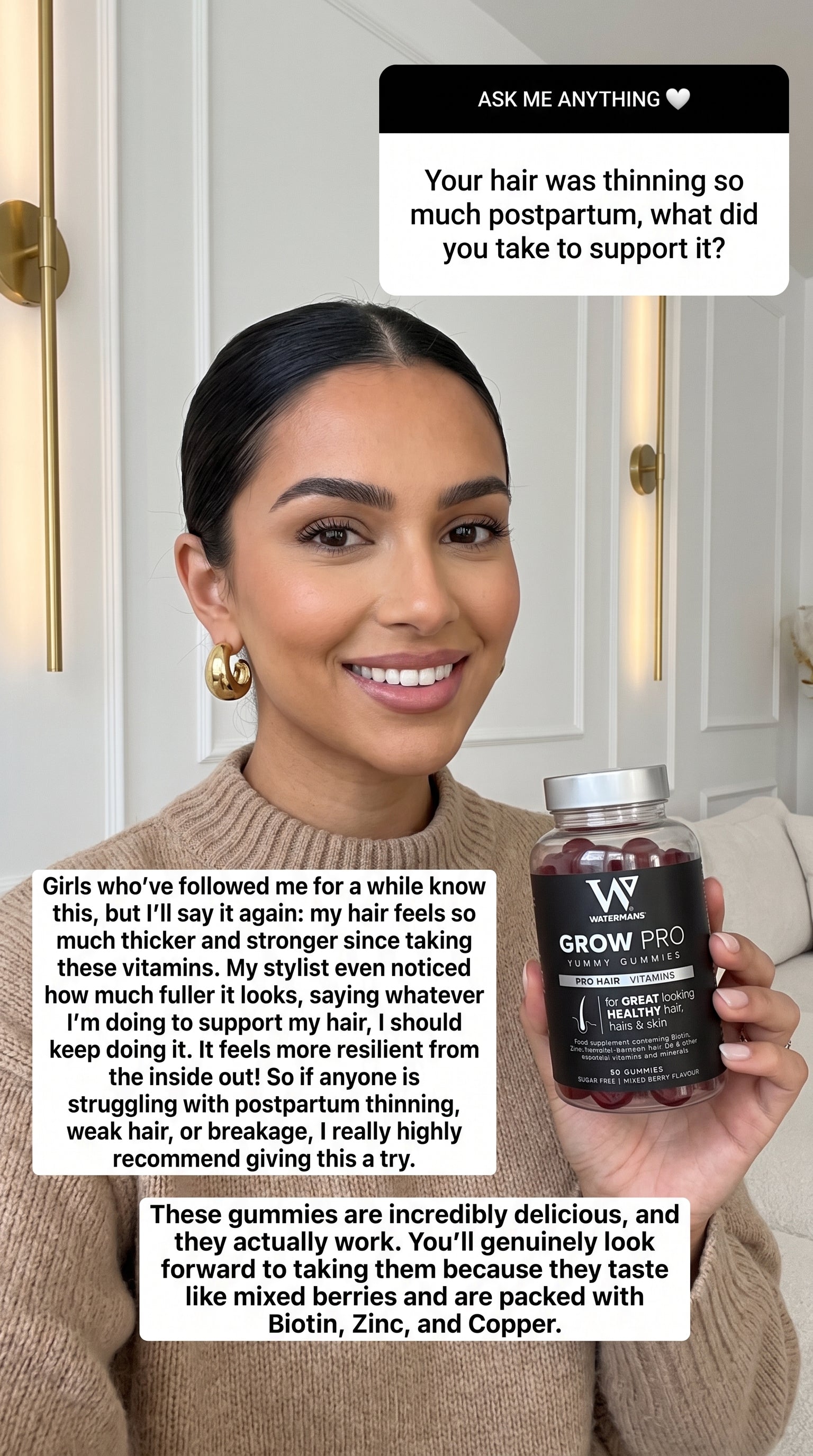
GrowPro® Hair, Skin & Nails Gummies, £22.95. Sugar free daily gummies for people who would rather chew than swallow a tablet, supporting hair care from the inside out.
Key takeaways
- Lions mane is Hericium erinaceus, a shaggy white mushroom studied mainly for nerve related compounds.
- No human trial has tested it for any hair outcome. Not one.
- The marketing chain runs nerve growth factor to growth factor to hair, and that chain has never been tested.
- Iron and zinc deficiency have real evidence behind them, so get tested rather than guessing.
- Hair loss, hair shedding and hair breakage are different problems needing different answers.
What is lions mane, and why is it linked to hair?
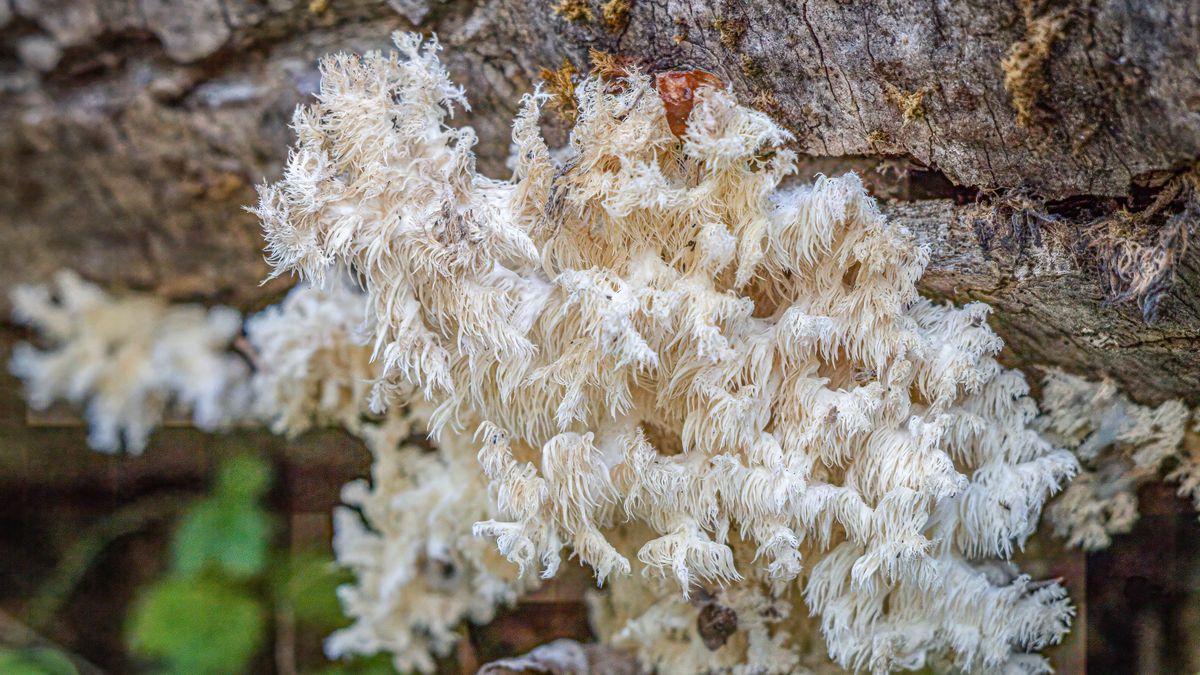
Lions mane is the common name for Hericium erinaceus, a white mushroom that grows in cascading spines on hardwood trees and looks, reasonably enough, like a lion's mane. It has a long history as a food in East Asia and a shorter one as a supplement in Europe, where it is usually sold as a capsule or powder aimed at focus and memory.
The compounds researchers care about are erinacines, found in the mycelium, and hericenones, found in the fruiting body. A 2026 review in the Journal of Natural Medicines summarised the chemistry of erinacines and their bioactivities, and the recurring theme is nerve growth factor: in cell culture and in rodent studies, these compounds appear to stimulate its production. That is real work, and genuinely interesting.
The jump to hair happens outside the research. Nerve growth factor is a growth factor, hair follicles are known to respond to growth factors, and supplement marketing quietly presents those two facts as if they connected. They do not. The signalling molecules that govern the hair cycle are a different and specific set, and nothing in the lions mane literature measures them.
The gap in one sentence
Every study behind the lions mane hair loss claim was done on nerve cells or rodent brains, and every claim made from it is about human scalps. Nobody has bridged that gap, and until somebody does, the honest position is that we do not know.
What does the evidence on lions mane hair loss actually show?
Directly, it shows nothing, because it does not exist. A search of the published literature returns work on cognition, on nerve regeneration in animal models, on the chemistry of the mushroom's active compounds, and on its safety as a food. It returns no randomised trial, no observational study and no case series measuring hair in people taking lions mane. There is no result to report, positive or negative. We have a separate guide to reishi mushroom for hair growth if that is the part you need.
That absence is worth sitting with, because it is different from a substance that has been tested and failed. Lions mane has simply never been put to the question. Anyone who tells you it works for hair is not reading a study you have missed. They are extrapolating, and usually selling.
Where credible sources do agree is on the nutritional side of hair. A 2017 review in Dermatology Practical and Conceptual looked at diet, nutrient deficiency and supplement use in hair conditions, and found meaningful evidence that iron deficiency and zinc deficiency are associated with hair problems, while routine supplementation in people who are not deficient has little support. Where reviews disagree is on how aggressively to correct borderline iron levels, which is precisely the sort of judgement a GP with your blood results should make.

Can a mushroom supplement change what happens at the follicle?
A supplement can change follicle behaviour in exactly one reliable way: by correcting a deficiency that was holding hair back. If your ferritin is on the floor, restoring it can help. If your protein intake is genuinely low, fixing that can help. Beyond correcting a shortfall, oral supplements have a thin record.
Pattern thinning, the most common reason adults see visible scalp, is driven by follicle sensitivity and shrinks hairs over years. That process is not nutritional and it is not something a food supplement addresses. Alopecia areata is immune mediated. Scarring conditions destroy the follicle outright and need urgent specialist care. None of these is a mushroom shaped problem.
Get a discount on the thinning hair range
Join the Watermans mailing list and we will email a discount code straight to your inbox, so you can try the thinning hair range for less. Vegan, made in the UK, over 6.5 million bottles sold since 2012.
Watermans products are 100% cosmetic and do not treat medical hair loss. Individual results may vary.
Hair loss, hair shedding or hair breakage: which are you dealing with?
Most people searching for lions mane hair loss answers have not yet worked out which of these three they have, and the right answer differs completely between them.
| Problem | Signs | Right first move |
|---|---|---|
|
Hair loss The follicle itself is affected, as in pattern thinning or alopecia areata. |
Widening parting, visible crown, receding line, or sharply defined bald patches. | See your GP. This is a follicle problem, and no supplement or cosmetic changes it. |
|
Hair shedding The growth cycle has been disrupted, pushing too many hairs into the resting phase. |
Sudden heavy shedding two to three months after illness, childbirth, surgery, rapid weight loss or severe stress. | Ask for iron, ferritin and thyroid checks, address the trigger, and give it six to nine months. |
|
Hair breakage The fibre snaps along its length instead of leaving the scalp. |
Short broken pieces around the crown and hairline, frizz, split ends, length that never seems to increase. | Change your washing, conditioning, heat and tension habits. This is the one everyday care genuinely improves. |
If you are not sure which row you are in, our guides on what causes telogen effluvium and how much daily hair loss is normal for a woman are the fastest way to narrow it down.

What nutrition genuinely matters for hair?
Four things carry most of the weight, and none of them are exotic. Protein comes first, because hair is made of it and a persistently low intake shows up in the fibre. Iron comes second, and low ferritin is one of the most common findings in women with diffuse shedding. Zinc matters at genuine deficiency. Overall energy intake matters more than people expect, which is why sharp weight loss so often precedes heavy shedding a couple of months later.
- Protein: aim to include a decent source at each meal, not just at dinner.
- Iron: red meat, pulses, dark leafy greens and fortified cereals, with vitamin C alongside plant sources to help absorption.
- Zinc: shellfish, meat, seeds, wholegrains.
- Enough calories: crash dieting is one of the most reliable ways to trigger shedding a few months later.
The NHS guidance on vitamins and minerals is a sensible reference point here, not least because it is clear that more is not better and that some nutrients are harmful in excess. If you want the detail on one of the most hyped hair nutrients, our piece on what biotin actually does for hair sets out where the evidence starts and stops.


GrowPro® Hair, Skin & Nails Gummies £22.95
Sugar-free vegan gummies with biotin, zinc, selenium and vitamins that contribute to the maintenance of normal hair. A sensible everyday top-up alongside a balanced diet, not a substitute for having your iron checked.
What should you do instead?
Start with the checkable things. Ask your GP for iron, ferritin, thyroid function and vitamin D, because those are common, real and fixable. Look honestly at the last six months for a trigger: an illness, a course of medication, a baby, an operation, a diet, a bereavement. Shedding typically lags its trigger by two to three months, so the cause is usually further back than people think.
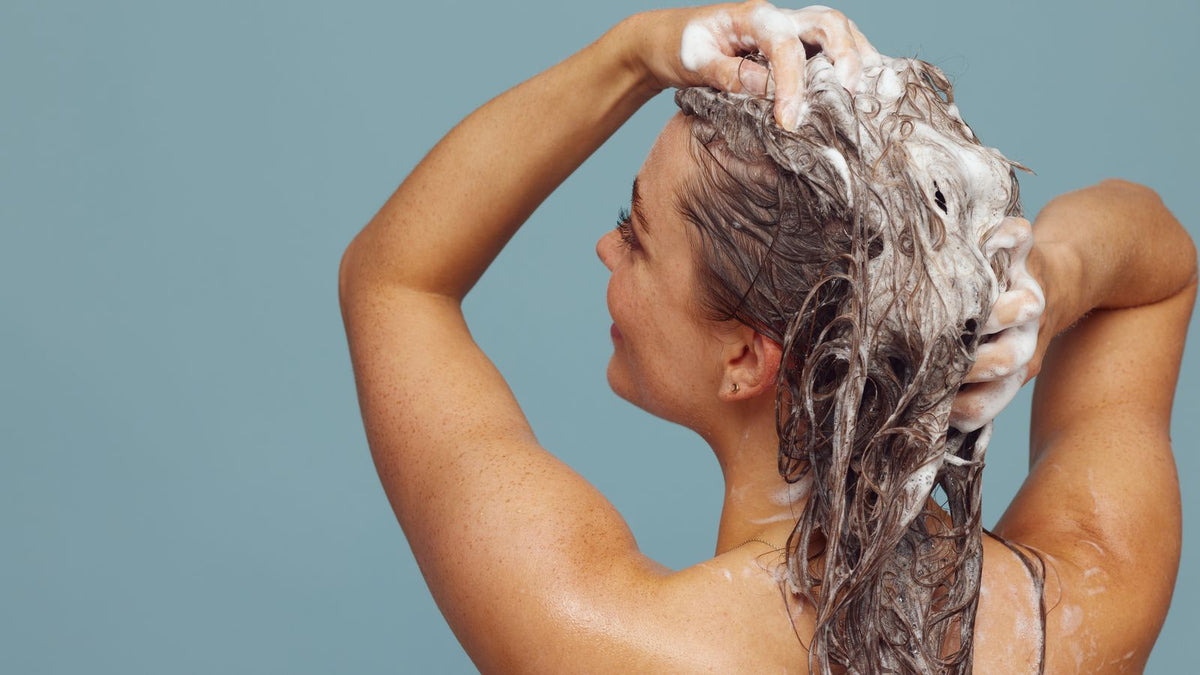
Then deal with what you can control at the fibre. Wash gently and often enough that your scalp is comfortable, condition every wash, drop the hottest heat settings, and stop wearing tight styles that pull at the hairline. These will not change a follicle, but they will keep the hair you have on your head longer, which is what most people actually want. Our guide to what honestly works for hair loss problems sets out the full order of operations.

Grow Me® Hair Growth Shampoo £14.95
A sulphate free shampoo with caffeine, rosemary, niacinamide and biotin that cleans without stripping, formulated to reduce breakage for fuller-looking hair. The product you use most often is the one worth getting right.
Frequently Asked Questions
Is there any study on lions mane and hair?
No. There is no published human trial testing Hericium erinaceus for hair density, shedding or thickness. The lions mane hair loss claim is built entirely by analogy from unrelated research on nerve growth factor in laboratory and animal models. An analogy is not a finding.
Why do people say lions mane helps hair grow?
The reasoning runs like this: lions mane contains erinacines and hericenones, those compounds stimulate nerve growth factor in the laboratory, nerve growth factor is a growth factor, and hair follicles respond to growth factors. Every step is real in isolation and the chain as a whole has never been tested. Follicles respond to a specific and different set of signals.
Could lions mane help hair indirectly through stress?
Possibly, and this is the most defensible version of the argument. Sudden shedding is often triggered by acute stress, illness or a sharp drop in nutrition. If a supplement genuinely helped someone sleep or feel calmer, and stress was their trigger, the shedding could settle. That is a general wellbeing effect, not a hair ingredient, and better sleep would do the same thing free.
Is lions mane safe to take?
For most healthy adults it appears well tolerated in the short term, but it is a food supplement rather than a licensed medicine, so quality and strength vary between brands. People with mushroom allergies, bleeding disorders, or upcoming surgery, and anyone pregnant, breastfeeding or on regular medication, should speak to a pharmacist or GP before starting it. If your question is about products or a routine rather than a medical one, you can talk to Gail Waterman, our co-founder, as an AI avatar on the Watermans homepage.
Should I take lions mane instead of seeing my GP?
No. If you have a widening parting, patches, a receding hairline or shedding that has run beyond six months, that deserves a proper assessment. Iron deficiency and thyroid problems are common, checkable and very treatable causes of shedding, and no mushroom substitutes for a blood test.
What supplements do have evidence behind them for hair?
The honest answer is narrow: correcting a genuine deficiency helps, and taking extra beyond that generally does not. A 2017 review in Dermatology Practical and Conceptual found the strongest links for iron and zinc deficiency, with much weaker support for supplementing people who are not deficient. Get tested rather than guessing.
How long would I need to take it to see anything?
Hair grows roughly a centimetre a month and the shedding cycle runs in months, so any honest trial of any hair supplement is three to six months. That long window is exactly why supplement marketing works so well: shedding often settles on its own in that time, and whatever you were taking gets the credit.
Is lions mane worth the money for hair?
For hair specifically, no. If you enjoy it for focus or general wellbeing, that is your call, but the lions mane hair loss angle is marketing rather than science. The same monthly spend put toward an iron and ferritin check, more protein at breakfast, or a gentler washing and styling routine would do more.
Sources & References
- Chemistry and bioactivities of erinacines from Hericium fungi. Journal of Natural Medicines, 2026. PubMed 41801298
- Guo EL, Katta R. Diet and hair loss: effects of nutrient deficiency and supplement use. Dermatology Practical & Conceptual, 2017. PubMed 28243487
- NHS. Hair loss. nhs.uk
- NHS. Vitamins and minerals. nhs.uk
- DermNet. Telogen effluvium. dermnetnz.org
What is the bottom line on lions mane hair loss?
The lions mane hair loss story is a chain of plausible sounding steps with no study at the end of it. Hericium erinaceus is a real mushroom with real research behind it, and none of that research is about hair. If your hair is thinning or shedding, the useful moves are a GP visit with blood tests, an honest look at the last six months for a trigger, enough protein and iron, and a gentler routine. Spend your money and attention there first.
Watermans is a British family brand. Grow Me shampoo is vegan. Our products are made in the UK and cruelty free, with over 6.5 million bottles sold since 2012.
Most routines fall over because they are complicated, so start with the Grow Me hair growth shampoo and nothing else.