Hybrid Hair Treatment: What It Is and How to Choose One
A hybrid hair treatment is a product that does two jobs at once: a mask you can leave in, a serum that also buffers heat, a cleanser with conditioning built in. There is no legal definition and no standard behind the word, so it tells you about the manufacturer's intent rather than the formula. The useful question is never whether something is a hybrid. It is which two jobs it combines, and whether it does the one you actually need well enough.
Our heat protection spray
Protect Me® Heat Protection Spray, £13.95. A leave in spray that shields hair from heat styling, helps control frizz and keeps colour looking fresher for longer.
Key takeaways
- "Hybrid" is a marketing label, not a category with rules. Read the ingredient list, not the front of the bottle.
- Every hybrid hair treatment trades peak performance for fewer steps, and that is often a good trade.
- Combining a rinse-out job with a leave-in job is where hybrids genuinely work.
- Combining cleansing with conditioning is where they most often disappoint.
- Match the product to your single biggest hair problem, not to the longest list of claims.
What actually makes a hair product a hybrid?
A hybrid combines two functions that the industry normally sells separately. Four combinations account for almost everything on the shelf.
- Mask plus leave-in. Deep conditioning designed to stay in the hair rather than be rinsed out.
- Serum plus protectant. A lightweight smoothing serum that also gives some thermal buffering before heat styling.
- Oil plus styler. A conditioning oil formulated light enough to finish and define rather than weigh down.
- Cleanser plus conditioner. The co-wash, cleansing with conditioning agents instead of strong surfactants.
The important structural point is that some of those pairs are naturally compatible and some are chemically in tension. Conditioning and leaving-in are compatible, because both want deposition on the fibre and neither has to be undone afterwards. Cleansing and conditioning are opposed, because cleansing removes deposits and conditioning adds them, in the same wash. That single distinction predicts which hybrids satisfy people and which ones quietly get abandoned in the shower.
Does a hybrid hair treatment actually work as well as two products?
Usually not at the peak, and usually well enough in the middle. A dedicated mask left on for fifteen minutes will out-condition a leave-in hybrid, because contact time and concentration both favour it. A dedicated heat protectant will out-protect a serum that also has to be light enough to wear all day.
That comparison only matters if you were genuinely going to use both products. A hybrid used four times a week beats a superior mask used once a month, because consistency does more for hair condition than peak formula strength. The honest framing is that a hybrid hair treatment buys adherence with performance, and for most people adherence is the scarcer resource.
The place to be sceptical is a product claiming four or five functions at once. Each added job constrains the formula: more emollient means less hold, more surfactant means less deposition, lighter texture means less film. By the fourth claim something has to be nominal, and it is rarely the one on the front of the bottle.

Which hybrid suits which hair problem?
Pick by your single biggest complaint. The table below maps the common formats to the problem each one genuinely addresses, and to the thing it will not fix.
| Format | Best for | Will not fix | Watch out for |
|---|---|---|---|
| Leave-in mask | Dry, coarse or porous mid-lengths | Oily roots, fine flat hair | Weight and build-up on fine hair |
| Serum protectant | Frizz plus regular heat styling | Severe existing damage | Thin thermal films, apply generously |
| Oil styler | Shine, flyaways, ends | Internal dryness, scalp issues | Greasy look if applied above the ears |
| Co-wash | Curly, coily, very dry hair | Oily scalp, heavy product users | Residue, needs periodic clarifying |
| Scalp serum plus leave-in | Scalp comfort with fine lengths | Structural damage along the fibre | Applying to lengths instead of scalp |
Which ingredients in a hybrid hair treatment do the real work?
The word on the front is marketing. The list on the back is chemistry, and four groups do nearly all of the lifting.
Conditioning agents and cationic surfactants are the reason a conditioner works at all. They carry a positive charge, damaged hair carries a negative one, so they deposit where the damage is and lie the cuticle flatter. The overview of hair cosmetics in the International Journal of Trichology sets this out as the core mechanism behind detangling and shine, and it is the least glamorous and most reliable thing in any bottle.
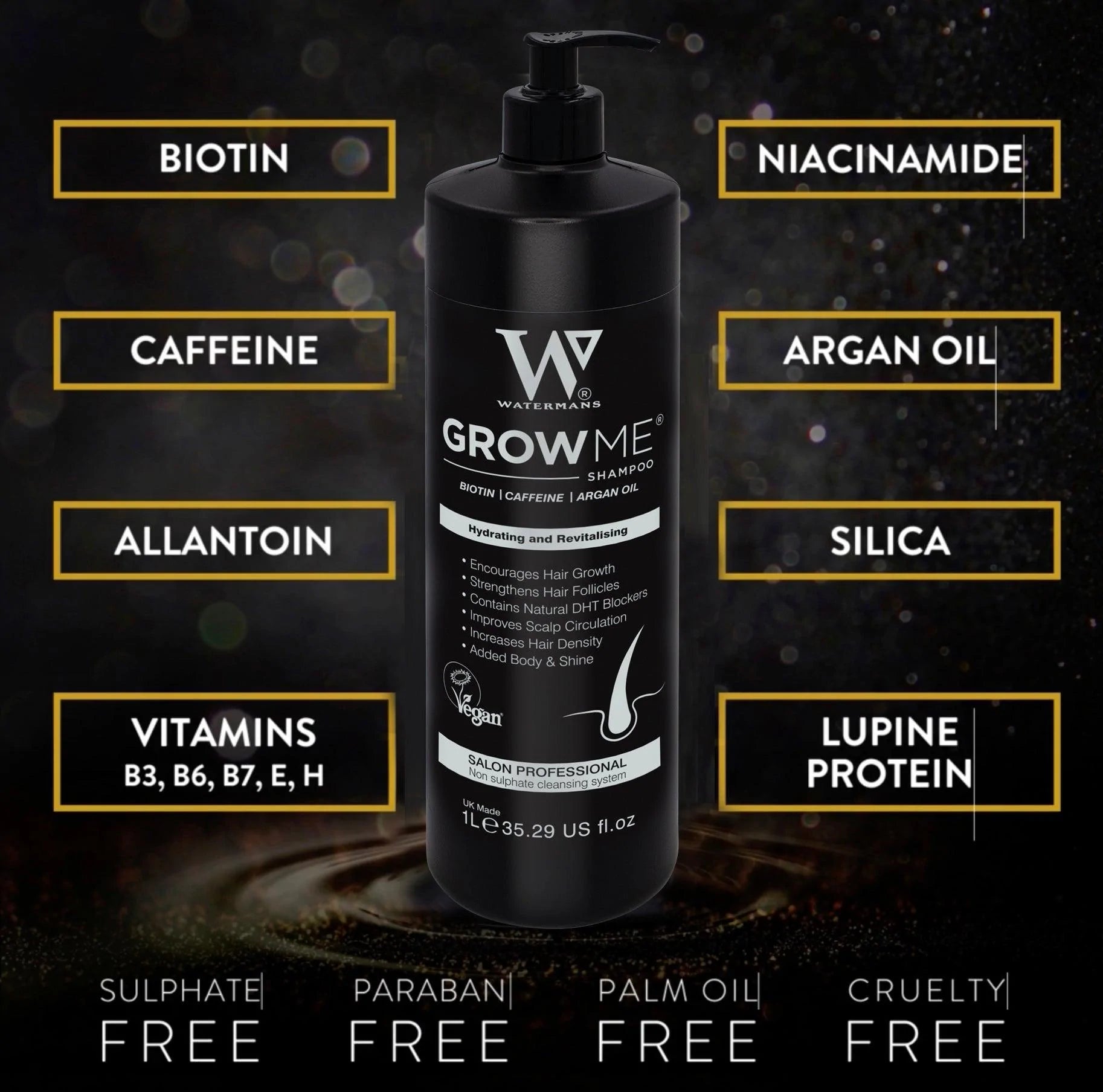
Hydrolysed proteins such as keratin, wheat or lupin are cut into fragments small enough to adsorb onto the fibre and, in part, fill surface gaps. The effect is real, temporary and cosmetic. Proteins do not rebuild a broken fibre, they patch its surface until the next few washes remove them, which is why protein products need repeating rather than completing.
Oils vary far more than the category suggests. A 2003 study in the Journal of Cosmetic Science compared mineral, sunflower and coconut oils and found coconut oil markedly better at limiting protein loss from hair, attributed to lauric acid's affinity for the protein and its ability to move into the fibre rather than sit on it. Mineral oil, by contrast, stays on the surface. So "contains oil" tells you nothing useful, and which oil tells you a lot.
Humectants such as glycerin and hyaluronic acid pull water toward the fibre, which helps in humid air and can work against you in very dry air unless something seals them in. If a hybrid is humectant-led and your house is heated all winter, that is worth knowing before you blame the product.
Scalp-directed actives are a genuine but narrower story. A 24-week randomised, double-blind, placebo-controlled trial published in the International Journal of Cosmetic Science reported improvements in scalp condition from a specific antioxidant combination. That is evidence about those ingredients in that formula, not about every scalp serum with a similar label, and it is worth holding the distinction.

Is your problem dryness, damage or something at the follicle?
Hybrids are cosmetic products and they act on the fibre and the scalp surface. Whether that is the right tool depends entirely on which problem you have, and three quite different things get described as "thinning".
Hair breakage is fibre failure. The strand snaps partway along its length from heat, bleach, friction or tension, leaving short blunt pieces and a thin, wispy look at the ends. This is the problem a hybrid hair treatment is genuinely built for, because flexibility and surface condition are exactly what conditioning agents and proteins change.
Hair shedding is a cycle event. More follicles than usual enter the telogen resting phase together, typically two to three months after illness, surgery, childbirth, a sharp calorie drop or acute stress. You find more whole hairs with a small pale bulb at the root. No topical product changes this, and it usually resolves as the cycle resets.
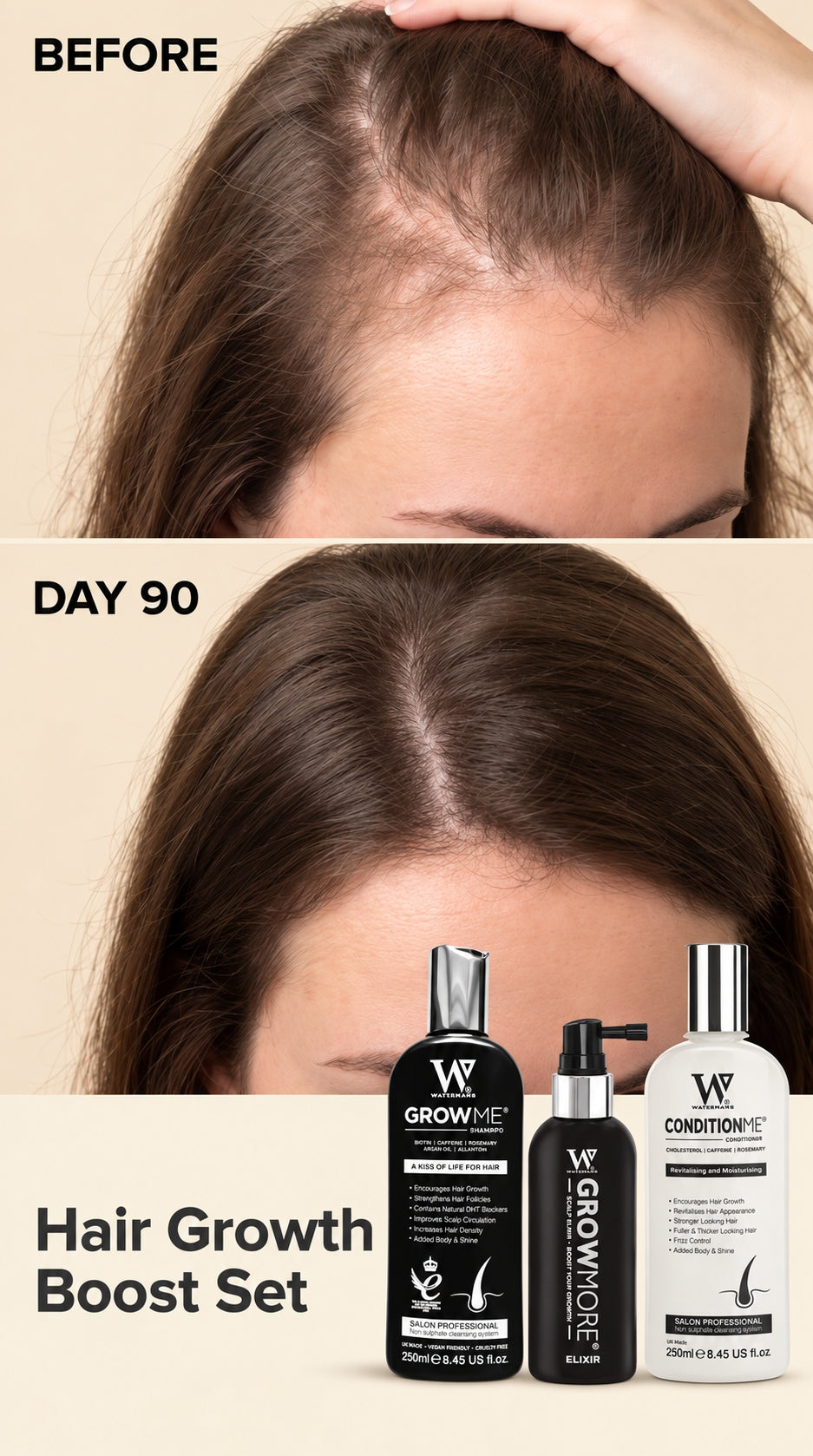
Hair loss is follicular. The follicle produces a finer fibre each cycle or stops producing, as in androgenetic alopecia. Density falls and stays down. Cosmetic products can make the remaining hair look fuller and reduce breakage-related loss of length, and that is the limit of what they do.
Sorting which one you have takes about a minute with a brush. Whole hairs with a bulb mean shedding. Short blunt fragments mean breakage. A widening parting with neither mean it is worth a GP conversation. Our guide to the four causes of hair damage covers the breakage side in detail, and the four step routine for dry hair is the right starting point if dryness is the real complaint.
Get a discount on the dry and damaged hair range
Join the Watermans mailing list and we will email a discount code straight to your inbox, so you can try the dry and damaged hair range for less. Vegan, made in the UK, over 6.5 million bottles sold since 2012.
How do you build a routine around a hybrid?
A hybrid replaces a step, it does not replace a routine. The structure that works is unchanged: cleanse, condition, protect, and occasionally reset.
- Keep cleansing separate. This is the one job to leave alone unless your hair is curly, coily or very dry. Co-washing suits those textures and frustrates most others.
- Let the hybrid take the middle step. Conditioning, leave-in and protection are where combining genuinely saves time without much cost.
- Apply from the ends upward. The ends are the oldest and most damaged part of the fibre and should get the most product. Roots need the least.
- Give it four weeks. Surface-acting products show their real effect over several washes, not on day one.
- Clarify every two to three weeks. Anything that deposits will accumulate, and dullness is usually build-up rather than a bad product.
- Change one thing at a time. Swapping three products at once tells you nothing about which one worked.
If you are weighing a salon service against an at-home product, whether a keratin treatment suits thin hair covers that trade-off, and the honest case for sulphate free shampoo is worth reading before you change the cleansing step.
Which Watermans products work as multi-taskers?
Two products in the range genuinely do more than one job, and it is worth being clear about which jobs those are.

Protect Me® Leave-In Conditioner
The clearest multi-tasker in the range: a light leave-in that conditions, controls frizz and buffers heat styling in one spray. Aimed at reducing breakage so hair keeps its length and looks fuller.
View Protect Me Leave-In
Leave-In Hair Density Serum
A leave-on scalp elixir for the scalp-serum end of the category. Cosmetic care that supports a healthy scalp environment and fuller-looking hair. Apply to the scalp rather than the lengths.
View the Density SerumWatermans is a UK family business and has sold over 6.5 million bottles since 2012. Grow More Elixir is vegan, and the range is made in the UK.

When is a hair or scalp problem worth a GP visit?
No cosmetic product is the right answer to a medical problem, and a few patterns are worth acting on rather than shopping for. Speak to your GP if hair comes out in discrete patches, if the scalp is sore, scaly, weeping or persistently itchy, if you are losing eyebrow or body hair alongside scalp hair, or if increased shedding has continued beyond three months. Those pictures can point to thyroid disease, iron deficiency, a scalp condition or an autoimmune cause, and a blood test settles most of them quickly. If your question is about products or a routine rather than a medical one, you can talk to Gail Waterman, our co-founder, as an AI avatar on the Watermans homepage.
Watermans products are 100% cosmetic and do not treat medical hair loss. Individual results may vary.
Frequently asked questions
Is a hybrid hair treatment worth the money compared with buying two products?
It depends on whether you would genuinely use both. A hybrid usually costs less than two dedicated products and performs somewhat below each of them at their best, so the value comes from the steps you actually complete. If your bathroom already contains an unopened mask, a hybrid is the better buy. If you have a settled routine you follow, dedicated products will give you more.
Can I use a hybrid product every day?
Leave-in and serum hybrids are generally designed for daily use, and mask-style hybrids are not. The limiting factor is deposition: anything that leaves a film on the fibre accumulates, and daily use of a rich formula shows up as dullness and limpness within a fortnight. Start at two or three times a week for anything mask-like, and clarify every two to three weeks whatever you use.
Do co-washes really clean hair properly?
They clean it gently, which is the point and also the limitation. Conditioning cleansers use mild agents that lift light oil and dirt without stripping, which suits curly, coily and very dry hair. On an oily scalp, or over heavy styling products, they leave residue that builds week on week. Most co-wash users need a clarifying shampoo periodically, and that is a feature of the approach rather than a failure of it.
What should I look for on the ingredient list?
Look at the first five ingredients, since those make up most of the formula. For conditioning, cationic agents such as behentrimonium or cetrimonium near the top are a good sign. For strength, hydrolysed proteins. For oils, look for which oil rather than whether there is one, since coconut behaves quite differently from mineral oil. Anything appearing after the fragrance is usually present in a token amount.
Will a hybrid hair treatment help with thinning hair?
It can change how thin hair looks and how much length you keep, and it cannot change follicle density. Reducing breakage means fewer snapped fibres and better retention of the hair you grow, which reads as fuller. That is a genuine cosmetic benefit and it is not the same as altering the underlying cause, so if the parting is widening it is worth investigating that separately.
Are salon hybrid services the same as at-home hybrid products?
No, and the gap is mostly concentration and heat. Salon services often use higher active levels and apply heat to drive deposition, which produces a stronger and longer-lasting result. At-home products are formulated for safety without supervision, so they act more mildly and need repeating. Neither is dishonest about this, but the marketing language is often close enough to blur the difference.
Does a hybrid replace conditioner?
A leave-in hybrid can replace a rinse-out conditioner for many people, particularly on fine hair where a full conditioner is too heavy. On coarse, porous or chemically processed hair it usually cannot, because contact time and concentration in a rinse-out product do work a light leave-in cannot match. The practical test is how hair behaves when wet: if detangling is still a fight, you need the rinse-out step back.
What is the bottom line on hybrid hair treatment?
A hybrid hair treatment is a convenience format, not a performance category, and it earns its place when the step it replaces is one you were skipping anyway. Combining conditioning with leaving-in works well because the two jobs pull in the same direction. Combining cleansing with conditioning works only for curly, coily and very dry hair, because those two jobs pull against each other. Ignore the number of claims on the front, read the first five ingredients on the back, match the product to your single biggest complaint, and give it four weeks before judging. And keep the categories straight: a hybrid acts on the fibre and the scalp surface, so it is the right tool for breakage and dryness and the wrong one for a problem that starts at the follicle.
If you are not giving up the straighteners, at least use our heat protection spray. Made in the UK.
Sources and references
- Hair cosmetics: an overview. International Journal of Trichology, 2015 (PMID 25878443, how conditioning agents and proteins act on the fibre).
- Rele AS, Mohile RB. Effect of mineral oil, sunflower oil, and coconut oil on prevention of hair damage. Journal of Cosmetic Science, 2003 (PMID 12715094, why which oil matters).
- Scalp application of antioxidants improves scalp condition and reduces hair shedding: a 24-week randomised, double-blind, placebo-controlled trial. International Journal of Cosmetic Science, 2021 (PMID 34424558, specific actives in one formula, not a class claim).
- Physiology, Hair. StatPearls, NCBI Bookshelf (the anagen, catagen and telogen cycle behind shedding).
- NHS: Hair loss (when a hair or scalp change is worth a GP appointment rather than a product).