Is a Keratin Treatment on Thin Hair a Good Idea?
A keratin treatment on thin hair does one thing very well and one thing badly, and knowing which is which decides whether it is worth the money. It smooths brilliantly, cutting frizz and drying time for two to three months. It also flattens, and flattening is the last thing sparse hair needs. So the honest rule is simple: choose it for frizz, avoid it for volume.
Our heat protection spray
Protect Me® Heat Protection Spray, £13.95. A leave in spray that shields hair from heat styling, helps control frizz and keeps colour looking fresher for longer.
Key takeaways
- A keratin smoothing service reduces frizz and drying time. It does not add density, and it will not make hair look fuller.
- Smoothing is the mechanism, so it costs you volume. On fine hair that is a real and visible trade, not a side note.
- The heat sealing step runs hot. Fine fibres fail at lower temperatures than coarse ones, so the iron setting is the safety question that matters.
- Ask what the formula releases when heated, and whether the room is ventilated. Some smoothing products release formaldehyde.
- Separate hair loss at the follicle, hair shedding from the cycle, and hair breakage where the fibre snaps. A smoothing service touches only the third.
What does a keratin treatment on thin hair actually do?
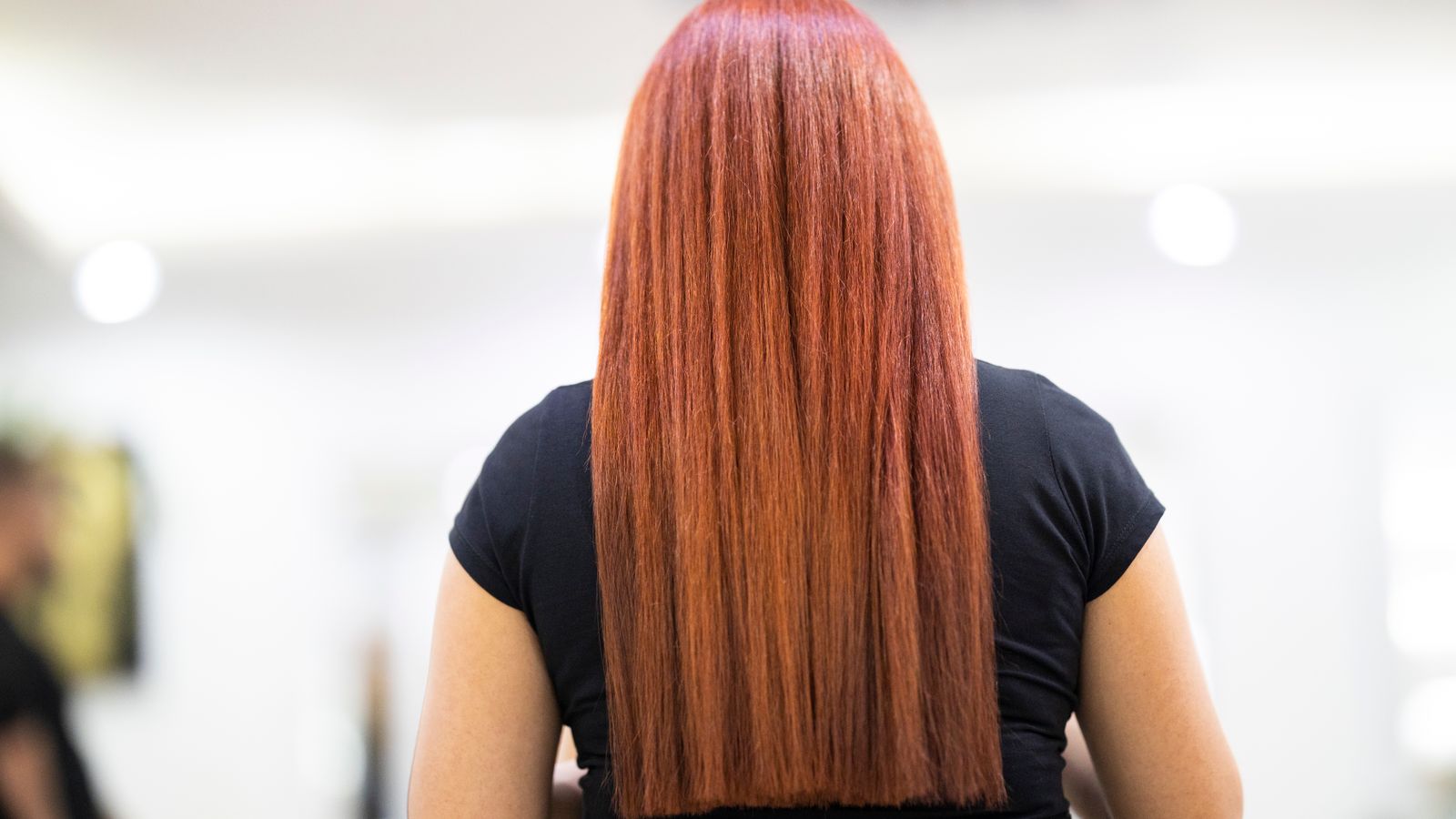
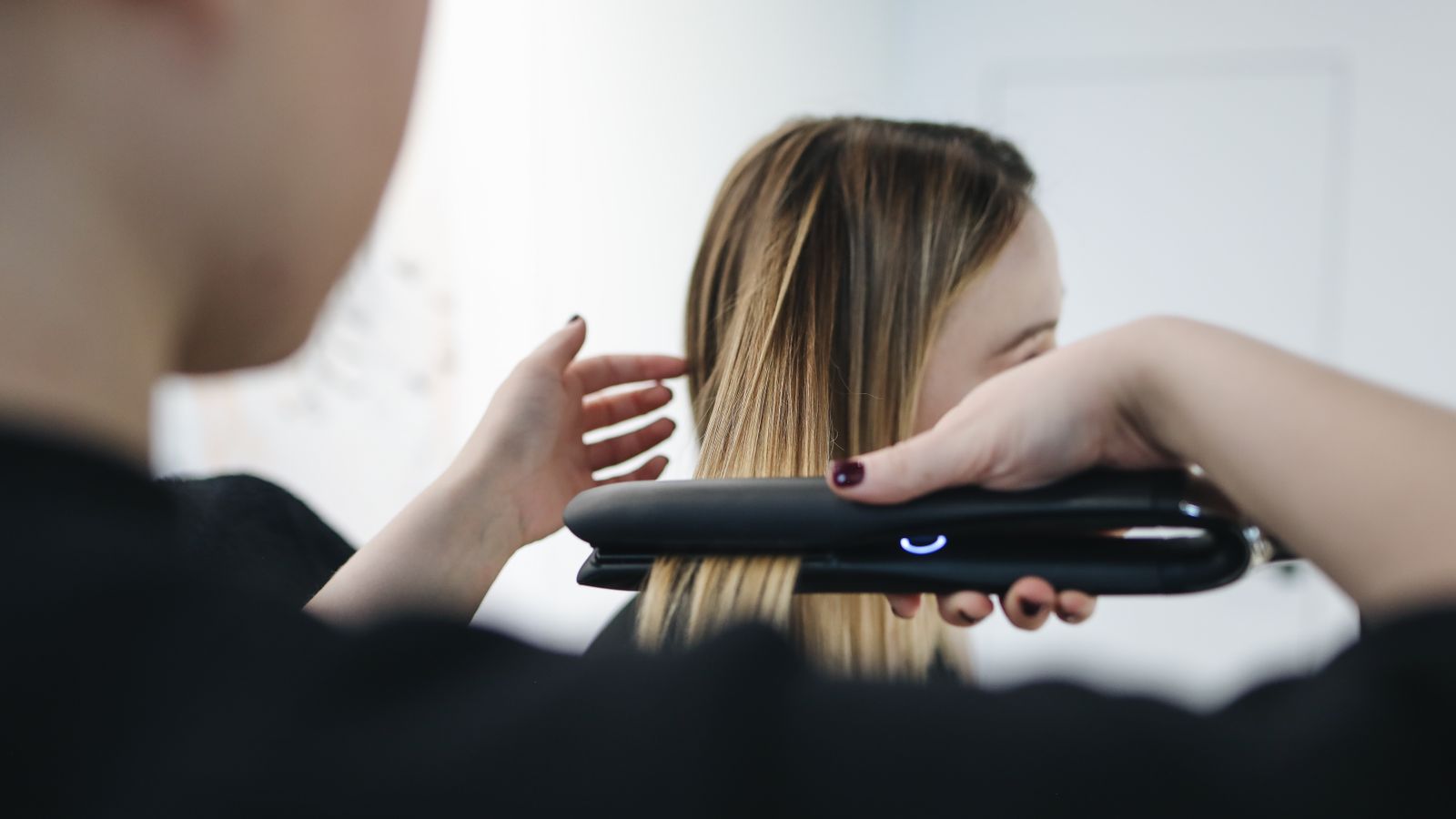
The service coats the hair fibre in a protein solution, usually hydrolysed keratin along with a smoothing agent, then dries it and seals it with a flat iron at high temperature. The heat is not incidental. It is what drives the solution into the outer layers and locks the strands into a straighter, flatter arrangement. The result lasts until it gradually washes out.
Two things follow that are worth being precise about. The keratin sits on and just inside the outer layers of the fibre. It does not reach the follicle, so it cannot change how much hair your scalp produces. And the smoothing works by making strands lie parallel and close together instead of standing apart, which is exactly why it reduces frizz and exactly why it reduces apparent volume.
The one sentence version
A smoothing service changes the hair you already have. It cannot change how much of it there is, and by laying it flatter it makes the amount you have look like less.
Why does it flatten fine hair so noticeably?
Apparent thickness is mostly an optical effect. Hair looks full when individual strands stand slightly apart from one another and catch light at different angles, creating the impression of a dense mass. Coarse hair has enough fibre diameter to look substantial regardless. Fine hair depends almost entirely on that separation.

A smoothing service removes the separation deliberately. Strands lie parallel, sit closer to the scalp and reflect light as a single sheet. On thick hair that reads as glossy and expensive. On fine hair it reads as flat, and often as sparser than before, because the scalp becomes easier to see through the parting. Nothing has been lost. It simply looks that way, which for most people asking this question is the whole problem.
Who is a keratin treatment on thin hair genuinely right for?
| Your hair | Your main complaint | Worth it? |
|---|---|---|
| Fine but dense, plenty of strands | Frizz, roughness, an hour of blow drying | Yes. This is the best case. You have volume to spare |
| Fine and sparse, scalp visible at the parting | Hair looks flat and thin | No. Smoothing makes the parting more visible, not less |
| Fine and curly or wavy | Frizz and unmanageability | Often yes, but expect to lose the curl pattern as well as the frizz |
| Fine and colour treated | Frizz plus dullness | Cautiously. The most fragile combination. Insist on a lower iron temperature |
| Fine and actively shedding | Hair coming out in the shower | No. Wait until the shed settles. Heat on a fibre you are already losing is the wrong order |
| Fine with breakage and split ends | Snapping, rough mid lengths | Consider a bond building service instead. It strengthens without flattening |
Read down that table and the pattern is that the service answers a texture complaint, not a density complaint. If you are here because your hair looks thin rather than because it frizzes, the honest answer is that this is not the tool.
Is the heat step a real risk on fine hair?
Yes, and it is the risk worth taking seriously. Sealing typically runs somewhere around 200 to 230 degrees Celsius, and it is repeated over many passes. A finer fibre has less mass to absorb that heat and a thinner cortex holding it together, so it reaches a damaging temperature sooner and fails at a lower one than coarse hair would.

What that looks like afterwards is not dramatic. It is mid lengths that feel rough, ends that split, and short broken pieces standing up along the parting a few weeks later. People often read those broken pieces as new growth. They are usually the opposite. Ask your stylist for the lowest temperature that will set the formula, and more passes at a lower heat rather than fewer hot ones. A good stylist will already be doing this on fine hair and will not mind being asked.
Get a discount on the thinning hair range
Join the Watermans mailing list and we will email a discount code straight to your inbox, so you can try the thinning hair range for less. Made in the UK, over 6.5 million bottles sold since 2012.
What about formaldehyde?
Some smoothing formulas release formaldehyde gas when heated, which is what produces the eye and throat irritation people report during the service. The complication is labelling: a formula may name methylene glycol or another precursor rather than formaldehyde itself, while still releasing it under a hot iron.
In Great Britain the cosmetic regulation restricts free formaldehyde in cosmetic products and requires products above a set threshold to be labelled accordingly, and the Health and Safety Executive publishes guidance for salons on ventilation and exposure. Practically, ask three questions before you book: what does this formula release when heated, is the room ventilated, and what is the iron temperature. A salon that answers all three plainly is a salon worth using. Formaldehyde free formulas exist, generally deliver a softer smoothing result, and are the sensible default on fine hair.
How much does it cost, and how long does it last on fine hair?
In the UK expect roughly £120 to £300 depending on the salon and hair length, with two to four hours in the chair. On fine hair the result typically lasts eight to twelve weeks and often lands at the shorter end, for two reasons that compound. Fine strands hold less product each, and fine hair is usually washed more often because the roots go oily faster. Every wash removes a little more.
Worth budgeting for the aftercare too. Sulphate free shampoo is the standard advice afterwards, because a strong cleanse strips the result faster.
What are the gentler alternatives?
| Option | What it does | Volume effect |
|---|---|---|
| Bond building service | Strengthens the internal structure of a damaged fibre | Neutral. Does not flatten |
| Gloss or glaze | Adds shine and smooths the cuticle surface | Minimal. Washes out in weeks |
| Volumising cut with layers | Creates separation and lift mechanically | Positive. The most reliable way to look fuller |
| Lightweight conditioning routine at home | Reduces friction and breakage, so ends stay blunt and full | Neutral to positive |
| Heat protection plus a cooler iron | Prevents the damage that makes ends look wispy | Positive over time |
If your goal is fuller looking hair rather than smoother hair, our guide to getting thicker hair covers what genuinely helps and what cannot, and what causes thinning hair explains the three mechanisms behind thinning so you can work out which one you are dealing with.
Is your issue hair loss, hair shedding or hair breakage?
This distinction decides whether a salon service is even the right department. Hair loss means the follicle has stopped producing a usable hair, as in female or male pattern hair loss. Hair shedding means an unusual number of hairs entered the resting phase at once, which follows illness, childbirth, surgery, or a sharp weight loss, and settles over months. Hair breakage means the fibre snapped along its length while the follicle carried on working normally.
A smoothing service has no effect on the first two and can worsen the third. So if you are shedding, wait. If you are breaking, address the breakage before adding heat. And if the follicle is the issue, no cosmetic service in any salon changes that, and it is worth saying so plainly rather than letting a booking answer a question it cannot.
Where does cosmetic hair care fit around a smoothing service?

Before and after a keratin treatment on thin hair, the useful products are the ones that reduce breakage and protect the fibre from the heat, because breakage stacked on top of fine hair is what makes it look wispy at the ends. That is a cosmetic job about keeping the length and density you have looking as full as possible, and we are explicit that it is a cosmetic job.

Protect Me® Heat Protection Spray
The most relevant product on this page. Any flat iron session, at the salon or at home afterwards, should start with heat protection on a fine fibre that fails at lower temperatures than coarse hair.

Grow Me® Hair Growth Shampoo
Sulphate free, which is what the aftercare advice actually means. A gentler cleanse keeps a smoothing result longer and is kinder to fine hair between salon visits.

Condition Me® Hair Growth Conditioner
Lightweight conditioning through mid lengths and ends, where slip stops a comb snapping a fine fibre. Fine hair needs conditioner, it just needs it kept off the roots.
Watermans products are 100% cosmetic and do not treat medical hair loss. Individual results may vary.
Two further reads worth having: what causes hair damage on the four things that genuinely wreck a fibre, and how to prevent split ends if the ends are where you are seeing the trouble.
What should you ask before you book?
- Have you done this on hair as fine as mine, and can I see it? Not a portfolio of thick hair.
- What does this formula release when it is heated, and is it labelled?
- What iron temperature will you use, and can you go lower?
- How ventilated is the room? If your eyes sting, that is information.
- How flat will it sit at the roots? Ask for the honest answer, not the reassuring one.
- What happens as it grows out? A soft transition matters more on fine hair.
When should you speak to a GP instead of booking a salon?
A salon service is the right response to frizz, roughness, unmanageability and drying time. It is the wrong response to a widening parting, a receding hairline, visible scalp at the crown, patches with no hair, a sore or scaly scalp, or shedding that has continued past six months. Those belong with a GP, who can arrange blood tests for iron, ferritin, thyroid function and vitamin D. No smoothing service answers them, and having one first only adds heat to hair you are already worried about. For the full picture on types, formaldehyde and aftercare, our keratin smoothing guide covers what to ask before you book. If your question is about products or a routine rather than a medical one, you can talk to Gail Waterman, our co-founder, as an AI avatar on the Watermans homepage.
Frequently asked questions
Is a keratin treatment on thin hair a good idea?
It depends what bothers you. If the problem is frizz, roughness or an hour of daily blow drying, it helps a lot and the result is genuinely easier hair. If the problem is that your hair looks flat and sparse, it usually makes that worse, because smoothing hair makes it lie closer to the scalp and read as thinner.
Will a keratin treatment on thin hair make it fall out?
Not through the keratin itself. The realistic risks are breakage from the high heat sealing step on an already fine fibre, and scalp irritation from formaldehyde releasing formulas in a poorly ventilated room. Fine hair snaps at lower temperatures than coarse hair, which is why the iron setting matters more here than anywhere.
Does it add volume or take it away?
It takes volume away. That is the entire mechanism: the service reduces frizz by getting strands to lie flat and parallel rather than standing apart from each other. Fine hair relies on that separation for the appearance of body, so smoothing is a direct trade.
How long does it last on fine hair?
Typically eight to twelve weeks, often at the shorter end. Fine hair holds less product per strand and is washed more frequently because roots go oily faster, and both shorten the life of the result.
Is formaldehyde still used in these services?
Some formulas release formaldehyde when heated, even when the bottle names something else such as methylene glycol. In Great Britain the cosmetic regulation restricts free formaldehyde and requires labelling above a threshold. Ask the salon what the formula releases and whether the room is properly ventilated. A reputable salon will answer without hesitating.
Can I have a keratin treatment on thin hair if it is colour treated?
Usually yes, and it is often done straight after colour in the same appointment. Be aware that colour treated fine hair is the most fragile combination there is, and the flat iron step is where that shows. Ask for a lower iron temperature and more passes rather than fewer hot ones.
What is the difference between this and a Brazilian blow dry?
In practice, very little. Brazilian blow dry is a marketing name for the same category of smoothing service. What actually varies between them is the specific formula, whether it releases formaldehyde, and how much straightening it delivers, so ask about the product rather than the name.
What are the gentler alternatives for fine hair?
A bond building service, which strengthens without smoothing. A gloss or glaze, which adds shine without flattening. Or a good cosmetic routine at home: a lightweight conditioner, heat protection before any iron, and a volumising cut, which gives the appearance of body rather than removing it.
What is the bottom line on keratin treatment on thin hair?
A keratin treatment on thin hair is a good answer to the wrong question for most of the people asking it. If your hair is fine but dense and your complaint is frizz, roughness or an hour with the dryer every morning, it delivers exactly what it promises for two to three months and you have the volume to spare. If your complaint is that your hair looks flat and sparse, smoothing works directly against you, because laying strands parallel is how it reduces frizz and it is also how it makes a parting more visible. Add the heat risk on a fine fibre and the formaldehyde question, and the decision comes down to one honest sentence: choose it for texture, never for density. If the density itself is what is changing, that is a GP conversation and no salon appointment substitutes for it. If the weight is the worry, a lighter hybrid hair treatment may suit fine hair better.
If the styling tools are staying, the Protect Me heat protectant spray is the one thing you should not skip. Made in the UK, with over 6.5 million bottles sold since 2012.
Sources and References
- Health and Safety Executive. Formaldehyde in hair smoothing products: guidance for salons. hse.gov.uk. Used for the ventilation and exposure section.
- Office for Product Safety and Standards. The Cosmetic Products Enforcement Regulations 2013 and assimilated Regulation (EC) No 1223/2009. Used for the Great Britain restriction on free formaldehyde in cosmetic products and the labelling threshold.
- NHS. Hair loss. nhs.uk. Used for the description of common causes of thinning and when to speak to a GP.
- British Association of Dermatologists. Information leaflets for the public on female pattern hair loss and telogen effluvium. bad.org.uk.
- Robbins, C. R. Chemical and Physical Behavior of Human Hair, 5th edition, Springer. Reference for fibre diameter, the effect of heat on the keratin structure and why finer fibres fail at lower temperatures.