Keto Hair Loss: Why Low Carb Diets Trigger Shedding
Keto hair loss is real, but it works through the same route as any large dietary change. When energy, protein or key nutrients drop sharply on a ketogenic or strict low carb diet, more hairs than normal move into the resting phase and let go around three months later. That shedding is diffuse, temporary and self correcting once intake is fixed. Keto hair loss is not the same as inherited pattern thinning, and it does not mean cutting carbs has damaged your follicles.
Our hair, skin and nails gummies
GrowPro® Hair, Skin & Nails Gummies, £22.95. Sugar free daily gummies for people who would rather chew than swallow a tablet, supporting hair care from the inside out.
Key Takeaways
- The usual mechanism behind keto hair loss is telogen effluvium, a temporary shift of hairs into the resting phase after a sudden drop in energy or nutrients.
- The delay is the giveaway. Shedding typically starts 8 to 14 weeks after the change, not in the first fortnight.
- Rapid weight loss, very low calorie intake and low protein are bigger drivers than carbohydrate restriction itself.
- Iron, zinc, vitamin D, B vitamins and total protein are the nutrients most often squeezed out when whole food groups disappear.
- Most diffuse shedding of this kind settles within 6 to 9 months once eating is rebalanced, with new growth appearing as short baby hairs along the parting.
- If shedding lasts beyond 9 months, comes with patches, or arrives with fatigue or cycle changes, ask your GP for a blood test rather than guessing.
What counts as a low carb diet?
A low carb diet is any pattern of eating that deliberately reduces carbohydrate below typical intake, and the label covers a very wide range. Moderate low carb sits around 100g to 150g of carbohydrate a day. Stricter low carb runs roughly 50g to 100g. Ketogenic eating usually sits under 50g and often under 30g, which is low enough to shift the body toward using fat and ketones for fuel. For context, average UK adult intake is far higher than any of these, so moving to the strict end is a substantial change, not a tweak. If you have lost a lot of weight quickly on any diet, our Wolverhampton guide to hair shedding after weight loss covers the timeline and when to see a GP.
That range matters because the hair effects reported by people online almost never come from the moderate end. They cluster around the strict end, and especially around the strict end done quickly, with a large calorie deficit and without much attention to protein. Two people can both say they are eating low carb and be having completely different experiences.

Is keto hair loss real, and does moderate low carb cause it too?
Keto hair loss is real, but the link is indirect and it is honest to say the evidence is thinner than the internet suggests. Moderate low carb eating rarely produces it on its own. There is no large randomised trial comparing hair density on low carb eating against a control diet. What exists is a well described mechanism plus a long record of the same pattern appearing after other rapid dietary changes: bariatric surgery, very low calorie diets, crash dieting and sudden illness. Reviews of telogen effluvium list rapid weight loss and low protein intake among its recognised triggers, and reviews of diet and hair list iron, zinc and protein shortfalls as contributors to diffuse shedding. If you want the detail on that, our guide to kratom and hair loss walks through it step by step.
Good sources genuinely disagree about how much of this belongs to carbohydrate restriction as such. One reading is that carbohydrate is not the culprit at all, and that a well formulated low carb diet with adequate calories, generous protein and a wide range of vegetables is unlikely to cause shedding. The other reading is that the strict versions of low carb eating tend, in practice, to produce a large spontaneous drop in appetite and therefore in calories, and that this drop is itself a documented trigger. Both can be true. The practical conclusion is the same either way: the risk sits in how the diet is executed, not in the macronutrient label on the front of it. Cutting sugar specifically is the version of this question readers ask most, and our guide to whether hair grows back when you stop eating sugar gives the honest answer.
It also helps to name what this is not. Cutting carbs does not shrink follicles the way inherited pattern thinning does, and it does not cause scarring. The follicles are still there, still cycling, and still capable of producing hair. Read our explainer on the three mechanisms behind thinning hair if you want to place your own situation.
Why does the shedding start about three months after the change?
Because the hair cycle runs on a delay. Each follicle spends years in anagen, its active growing phase, then a couple of weeks in catagen as it winds down, then roughly three months in telogen, resting, with the old hair still anchored in place. Only at the end of telogen does that hair release, usually pushed out by the new one coming up behind it.
So a stressor in January does not show up in the hairbrush in January. It quietly moves a batch of follicles into telogen, and that batch releases together in March or April. This is why people so often blame the wrong thing. The diet change, the illness or the crash diet that actually caused the shift has been forgotten by the time the shedding arrives. Our guide to the stages of the hair growth cycle sets out the timings in full, and what causes telogen effluvium covers the triggers and the recovery curve.
Hair loss, hair shedding or hair breakage: which one is this?
These three get used interchangeably and they are not the same thing. Getting the category right changes what you should do next, so it is worth two minutes with a shed hair and a good light.
| What it is | What you see | Typical cause on keto or low carb |
|---|---|---|
| Hair shedding (cycle) | More hairs coming out all over, each full length with a small white bulb at the root | The common one. Energy or nutrient drop pushing follicles into telogen |
| Hair breakage (fibre) | Short broken pieces of varying length, no bulb, often with split or frayed ends | Not really about the diet. Heat, bleach, tight styles and rough detangling |
| Hair loss (follicular) | A widening parting, a receding line, or defined bald patches that do not fill in | Inherited pattern thinning or alopecia areata. The diet may have unmasked it, not created it |
Diffuse shedding with bulbs on the ends, starting a couple of months after a big change, is the classic picture behind keto hair loss. Short broken fragments point at your styling routine instead. Distinct coin sized patches point somewhere else again, and are worth showing to your GP.
Which nutrients does low carb eating most often squeeze out?
Cutting a food group removes everything that came with it, not just the carbohydrate. Bread and cereals in the UK are fortified, pulses carry iron and folate, and fruit carries vitamin C, which helps you absorb the iron in plant foods. None of that is irreplaceable, but it does need replacing on purpose.
| Nutrient | Why hair notices | Low carb friendly sources |
|---|---|---|
| Protein | Hair is mostly keratin. A sustained shortfall is one of the clearest links to diffuse shedding | Eggs, fish, poultry, meat, Greek yoghurt, tofu, cheese |
| Iron | Low iron stores are repeatedly associated with diffuse shedding, especially in women | Red meat, liver, sardines, spinach, pumpkin seeds, with vitamin C alongside |
| Zinc | Involved in the protein synthesis and cell division that keep follicles cycling | Shellfish, beef, pumpkin and hemp seeds, cheese |
| B vitamins | Often arrive via fortified cereals and grains, which are the first things to go | Eggs, liver, salmon, leafy greens, nutritional yeast |
| Vitamin D | Low levels are common in the UK year round and are associated with hair cycle disruption | Oily fish, eggs, and the 10 microgram daily supplement the NHS advises in autumn and winter |
| Total energy | Hair is metabolically expensive and not essential, so the body deprioritises it first | Eat to a moderate deficit rather than the largest one you can tolerate |

Get a discount on the diet related shedding range
Join the Watermans mailing list and we will email a discount code straight to your inbox, so you can try the diet related shedding range for less. Vegan, made in the UK, over 6.5 million bottles sold since 2012.
How do you protect your hair while eating low carb?
The good news is that the fixes are unglamorous and mostly free. None of this requires abandoning the way you want to eat.
- Slow the deficit down. Losing 0.5kg to 1kg a week is far kinder to the hair cycle than losing 2kg a week. Aggressive deficits are the single most common thread in stories about keto hair loss.
- Anchor every meal on protein. Roughly 1.2g to 1.6g per kilogram of body weight per day suits most active adults who are losing weight. Spread it across the day rather than loading it into dinner.
- Replace what the food group carried. If bread and cereal are gone, the iron, folate and B vitamins they were quietly delivering need another home. The table above is your shopping list.
- Keep vegetables in. Low carb does not mean no plants. Leafy greens, cruciferous vegetables and berries fit comfortably inside most carbohydrate budgets.
- Take the vitamin D. The NHS advises 10 micrograms a day for adults in autumn and winter, and year round for people who get little sun on their skin.
- Do not stack stressors. A new diet, a new training block, poor sleep and a stressful quarter at work all pull the same lever. Change one thing at a time where you can.
- Be gentle while it is happening. Shedding hair is not weaker hair, but a thinner ponytail shows every snapped end. Loosen tight styles, lower the heat, and detangle from the ends upward.
Where a cosmetic routine genuinely helps
Nothing you put on your scalp will replace the calories or the iron behind a keto hair loss episode. What a good routine does do is protect the hair you still have while the cycle sorts itself out, so the recovery is not undermined by breakage on top of shedding. That is a real job, and it is the honest limit of what a shampoo can claim.

GrowPro Hair Growth Gummies, £22.95
Sugar free vegan gummies with biotin, zinc, selenium and bamboo silica. Biotin and zinc contribute to the maintenance of normal hair, which is exactly the gap a restricted diet can open up. A supplement is a backstop for a food first approach, not a substitute for one.

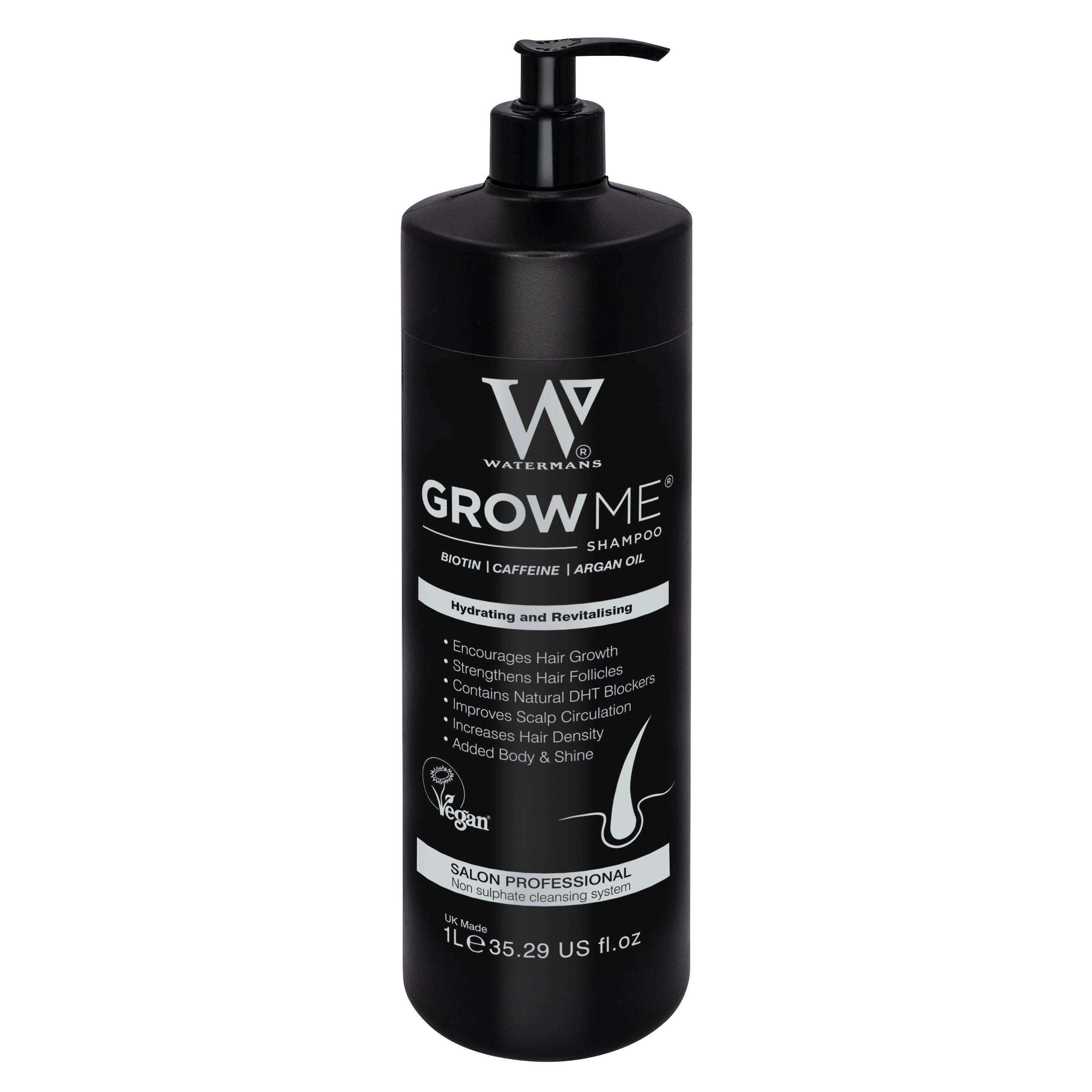
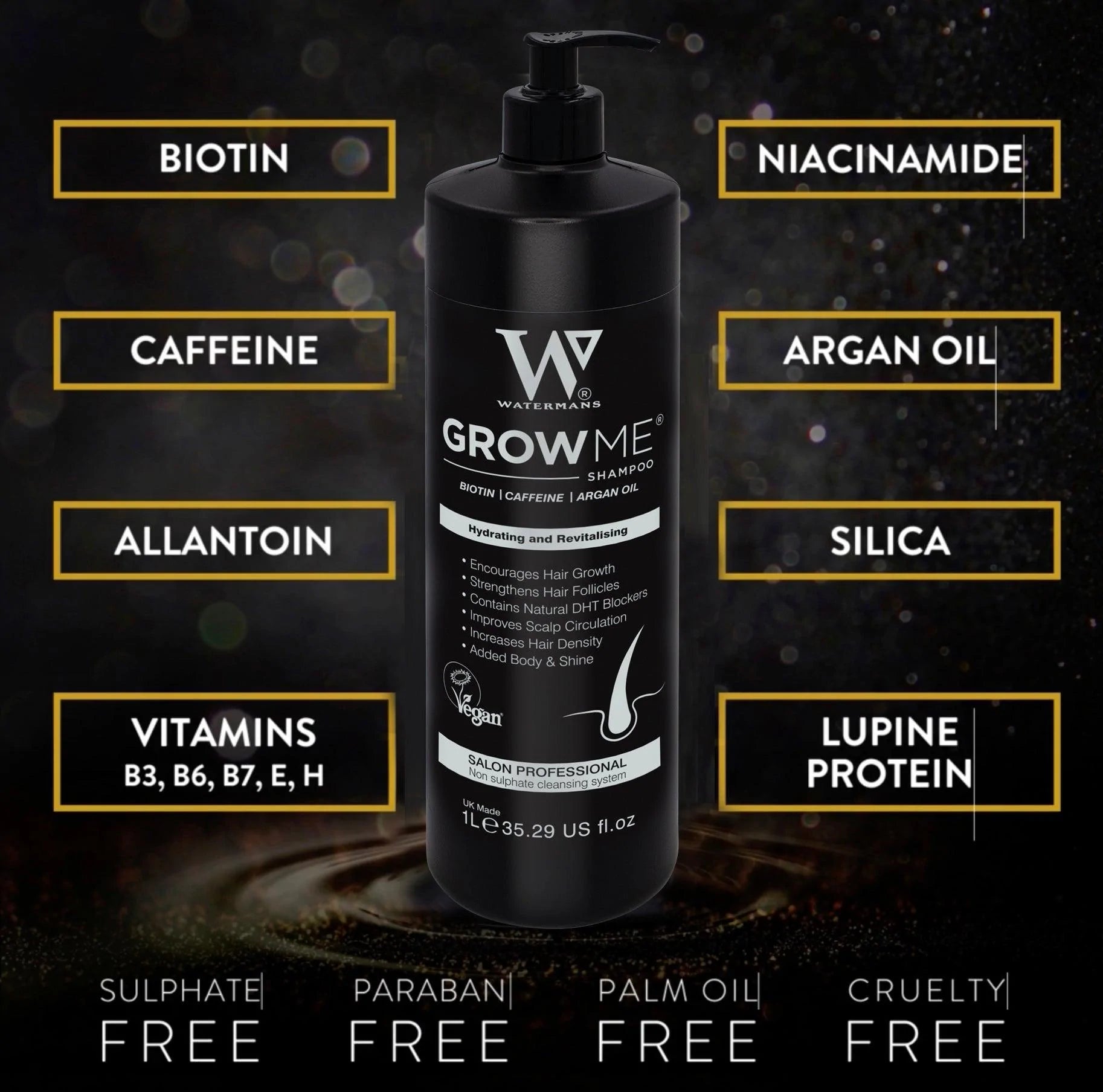
Grow Me Hair Growth Shampoo, £14.95
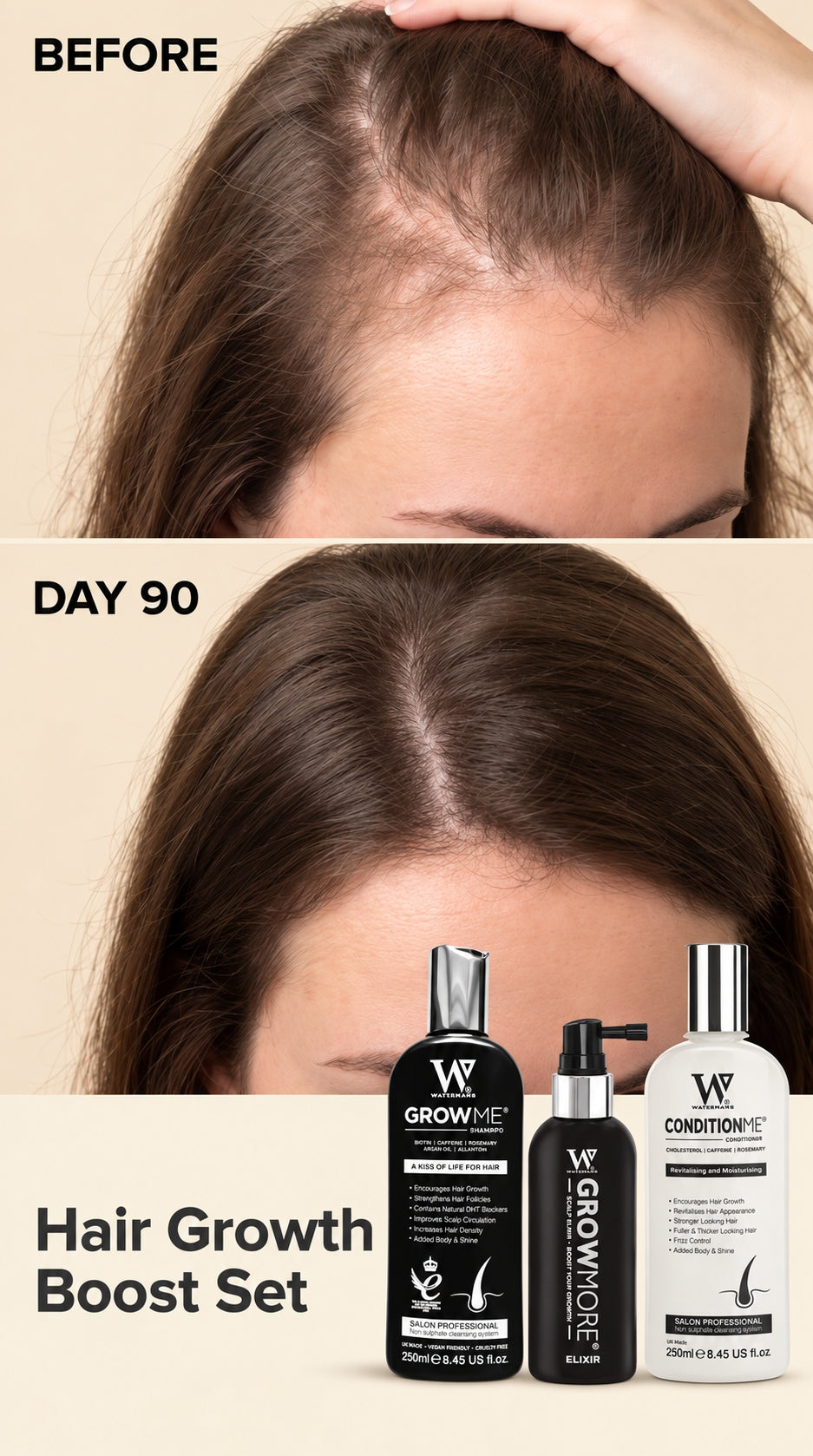
A sulphate free daily shampoo with biotin, caffeine, rosemary and niacinamide, formulated to support a comfortable scalp and leave hair looking fuller and thicker while density is recovering.
When should you speak to your GP?
Self managing is reasonable for a few months of diffuse shedding that clearly follows a diet change. Book time with your GP if any of the following apply, because a simple blood test answers questions that guesswork cannot. If your question is about products or a routine rather than a medical one, you can talk to Gail Waterman, our co-founder, as an AI avatar on the Watermans homepage.
- The shedding is still going strong after 9 months, or it never really slowed.
- You can see scalp through the parting, or the density has visibly dropped rather than just the volume.
- There are defined patches, scaling, redness, soreness or itching.
- You also have fatigue, breathlessness, feeling cold, changes to your periods, or unexplained weight change.
- You are vegetarian or vegan on top of low carb, which narrows the iron and B12 supply considerably.
Iron studies including ferritin, a thyroid check, vitamin D and a full blood count are the usual starting set. Ask for the actual numbers rather than just being told they are normal, since ferritin in particular can sit at the bottom of the reference range and still be low for hair.

Frequently Asked Questions
How long does keto hair loss last?
Most diffuse shedding of this type runs for around 3 to 6 months and then tapers, with the full picture settling over 6 to 9 months from the point the trigger is corrected. New growth shows up first as short, fine, upright hairs along the parting and hairline.
Does keto hair loss grow back if I stay low carb?
In most cases yes, provided the diet is giving you enough calories, enough protein and enough micronutrients. The trigger is the shortfall, not the carbohydrate count, so a well built low carb diet with those boxes ticked is compatible with a normal hair cycle.
Is keto worse for hair than moderate low carb?
It carries more risk, mostly because it is stricter and because appetite tends to fall on it, which makes an accidental large calorie deficit easy. Ketosis itself has not been shown to harm follicles. The execution is what differs.
Should I take biotin?
Biotin genuinely matters for hair, but true biotin deficiency is rare in the UK, so supplementing it rarely changes anything on its own. It is worth noting that high dose biotin can interfere with some laboratory blood tests, including thyroid and cardiac ones, so tell whoever takes your blood that you are using it.
Can I just add carbs back to stop the shedding?
Adding carbohydrate back often helps, but usually because it comes with more total calories and a broader range of foods rather than because of the carbohydrate itself. If you want to stay low carb, raising calories and protein achieves the same thing.
Does hair shedding mean I am losing muscle too?
Not necessarily, but they share a cause. Both hair and lean tissue suffer when protein and energy are persistently short, so a shedding phase alongside falling strength in the gym is a reasonable prompt to eat more.
Is this the same as male or female pattern thinning?
No. Pattern thinning is follicular and progressive, driven by genetics and hormones, and it follows a recognisable map: temples and crown in men, a widening parting in women. Diet related shedding is diffuse and temporary. A rapid diet can, however, make existing pattern thinning much more visible, which is why some people notice both at once.
What is the bottom line on keto hair loss?
Keto hair loss belongs in the same sentence as your diet far less often than the internet implies, and when it does, the culprit is almost always the speed and the shortfall rather than the carbohydrate. Eat to a moderate deficit, keep protein high, replace the nutrients the missing food group used to carry, and give the hair cycle its three month lag before you panic. If the shedding is still going after 9 months, or it comes with patches or other symptoms, get the bloods done rather than guessing.
If you would rather start small, swap the wash first and see how the scalp feels on the Grow Me hair growth shampoo. Made in the UK, with over 6.5 million bottles sold since 2012.
Sources and References
- NHS. Hair loss, covering common causes, timelines and when to seek help.
- NHS. Iron: vitamins and minerals, on requirements and food sources.
- NHS. Vitamin D, including the 10 microgram autumn and winter advice.
- Guo EL, Katta R. Diet and hair loss: effects of nutrient deficiency and supplement use. Dermatology Practical and Conceptual, 2017.
- Malkud S. Telogen Effluvium: A Review. Journal of Clinical and Diagnostic Research, 2015.
- British Dietetic Association. Food Facts, evidence reviewed guidance on dietary patterns.
- NHS. Eating a balanced diet.
Where these sources disagree, we have said so in the text rather than picking the more convenient reading.
Further reading from our blog: hair vitamins, what actually works and what does not.
Watermans products are 100% cosmetic and do not treat medical hair loss. Individual results may vary.