If I Stop Eating Sugar Will My Hair Grow Back? An Honest Answer
If I stop eating sugar will my hair grow back is one of the most common diet questions people ask when they notice more strands in the shower, and the honest answer is no, not on its own. Cutting added sugar will not restore hair lost to pattern baldness, because that is driven by genetics and hormones rather than by your breakfast. What a lower sugar, balanced diet genuinely does is support a healthier scalp environment and better quality hair from the roots up.
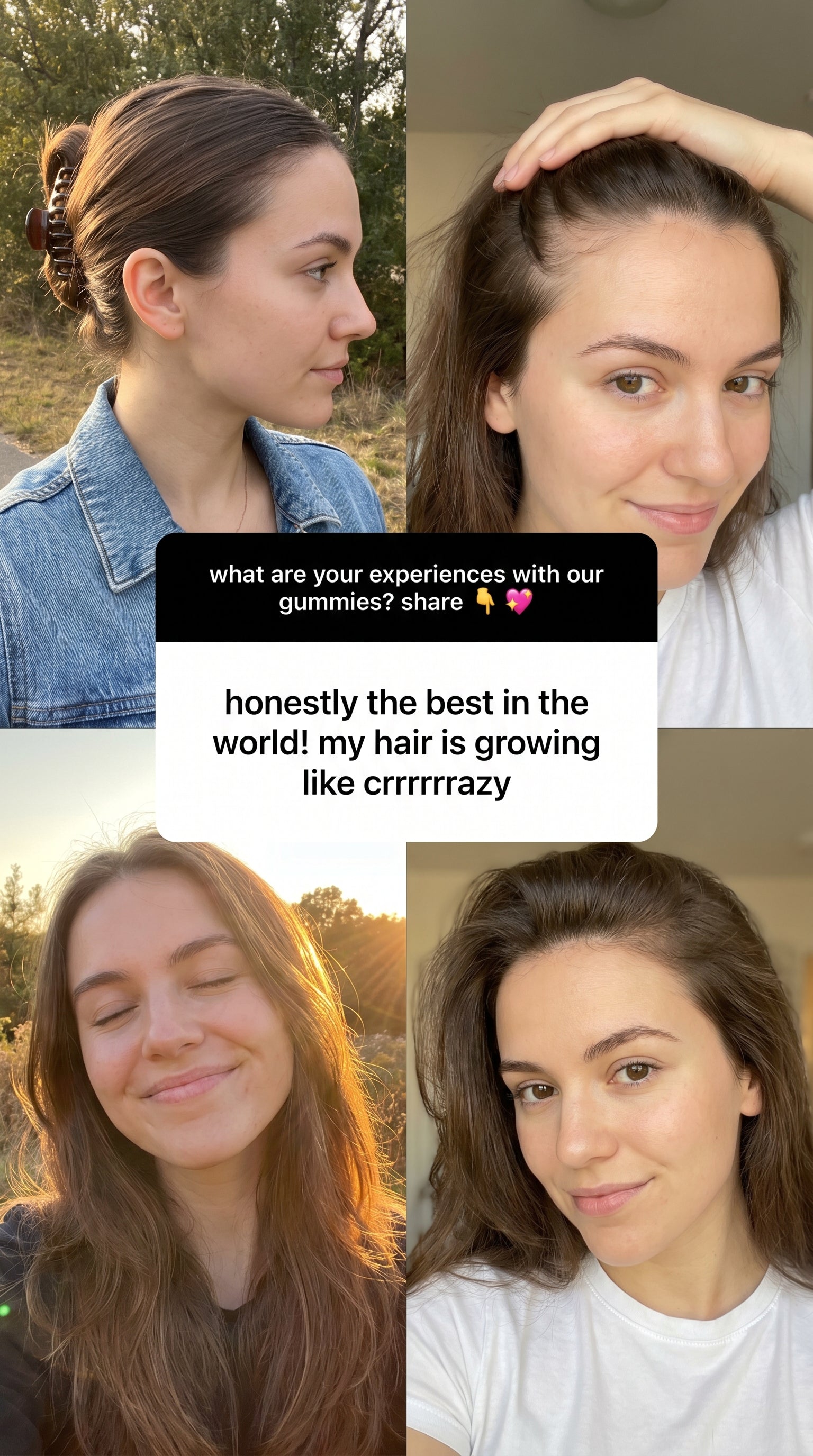
Our hair, skin and nails gummies
GrowPro® Hair, Skin & Nails Gummies, £22.95. Sugar free daily gummies for people who would rather chew than swallow a tablet, supporting hair care from the inside out.
Key takeaways
- The short answer to if I stop eating sugar will my hair grow back is no. Cutting added sugar does not by itself bring back hair already lost to genetic pattern baldness.
- Very high added sugar diets are linked with inflammation and insulin resistance, and insulin resistance is associated with pattern hair loss in conditions such as PCOS.
- Hair loss, hair shedding and hair breakage are three different problems. Diet realistically influences shedding and breakage far more than it influences follicular hair loss.
- Whole fruit is not the problem. The target is added and free sugars, especially sugary drinks.
- Hair is built from protein, iron, zinc and other nutrients, so what you add to your plate matters more than what you remove.
- If shedding is heavy, sudden or patchy, see your GP for a proper assessment rather than changing your diet and waiting.
If I stop eating sugar will my hair grow back?
No, cutting sugar alone will not bring lost hair back, and any article promising otherwise is overselling. Sugar is not a direct cause of baldness and removing it is not a remedy for it. The reason the question keeps coming up is that people who cut added sugar usually change several things at once. They drink fewer sugary drinks, cook more, eat more protein and vegetables, sleep a little better and often lose some weight. That whole package can genuinely improve the condition of the hair growing out of the scalp, and it can help if shedding was linked to a nutritional shortfall. None of that is the same as reviving a follicle that has already miniaturised.
So the realistic framing is this. A lower sugar diet is a sensible foundation for hair health and general health. It is not a standalone answer to hair loss, and it should never delay getting a real cause identified.
Why does sugar get blamed for hair loss in the first place?
Sugar gets blamed because three separate and genuine links have been compressed online into one oversimplified claim. Taking them one at a time makes the picture much clearer.
- Insulin and blood sugar. Diets very high in free sugars and refined carbohydrates drive repeated insulin surges. Sustained over years this contributes to insulin resistance, and insulin resistance is associated with androgenetic hair loss, most clearly in polycystic ovary syndrome. This is an association observed in populations, not proof that a chocolate bar thins your hair.
- Low grade inflammation. Diets high in free sugars and ultra processed foods are associated with chronic low grade inflammation. A calm scalp is a better environment for hair than an irritated one.
- Nutrient displacement. This is the most underrated link and the most fixable. If sugary foods crowd out protein, iron and vegetables, you can end up short of the raw materials hair is made from. The problem then is not the sugar itself, it is what the sugar replaced.
Notice what is absent from all three: any direct mechanism by which removing sugar makes a dormant follicle produce hair again. The links are real, indirect and mostly about the quality and retention of the hair you still have. That is why the answer to if I stop eating sugar will my hair grow back stays no, even though every individual link in the chain is genuine.

What is the difference between hair loss, hair shedding and hair breakage?
Hair loss, hair shedding and hair breakage are three genuinely different problems, and confusing them is the single biggest reason people chase the wrong fix. Diet has very different leverage over each one, so working out which you are dealing with should come before any change to how you eat.
- Hair loss is follicular. The follicle itself miniaturises or is switched off, as in androgenetic pattern hair loss or alopecia areata. Hairs come away with a visible white bulb at the root and density drops in a pattern, typically at the crown or parting. Diet is not the driver here.
- Hair shedding is a hair cycle problem. An unusual number of follicles move into the resting phase at once and release their hairs a few months later, which is telogen effluvium. Triggers include illness, surgery, rapid weight loss, low iron and severe dietary restriction. This is the category where nutrition genuinely matters.
- Hair breakage is fibre failure. The hair snaps along its length rather than leaving the follicle, so you find short broken pieces without a root bulb, along with split ends and a rough texture. Heat, bleach, tight styling and over washing cause it. Diet plays only a small supporting role, and gentle handling does most of the work.
The practical test is to look at what is actually coming away. Long hairs with a small pale bulb point to shedding or loss. Short fragments with no bulb point to breakage. If you are seeing thinning at the parting rather than diffuse shedding, that suggests pattern hair loss, and that is a conversation for your GP.
| What you are seeing | Most likely category | How much diet helps |
|---|---|---|
| Widening parting, thinning crown, gradual over years | Pattern hair loss | Little to none directly |
| Sudden heavy shedding two to four months after an event | Telogen effluvium shedding | Genuinely useful if a nutrient gap is involved |
| Short snapped pieces, split ends, rough mid lengths | Hair breakage | Minor, handling and heat matter more |
| Smooth round bare patches appearing quickly | Alopecia areata, see your GP | None, this needs assessment |
How does blood sugar actually affect the hair cycle?
Blood sugar affects the hair cycle indirectly, through hormones and through the general condition of the body rather than through any nerve running from your stomach to your scalp. Each hair follicle runs a cycle of growth, transition and rest, and roughly eight or nine of every ten follicles are in the growing phase at any moment. Anything that puts the body under sustained strain can push more follicles into the resting phase early, and a few months later those hairs are released together.
Persistently high insulin is one form of that strain. In polycystic ovary syndrome, insulin resistance is linked with higher androgen levels, and androgens are what drive follicle miniaturisation in people genetically susceptible to pattern hair loss. That is a real and well described chain, and it is why improving insulin sensitivity is part of standard PCOS management. It is also why the sugar and hair story has a kernel of truth in it. Our guide to PCOS related hair thinning covers that hormonal picture in more depth.
The other route is more mundane. Crash dieting and very rapid weight loss are well recognised triggers for telogen effluvium, and people cutting sugar aggressively sometimes cut overall energy intake far too hard at the same time. Ironically, an extreme sugar elimination can trigger a bout of shedding rather than prevent one. The same pattern shows up with very restrictive low carbohydrate approaches, which we cover in our piece on low carb diets and shedding.
Which nutrients does hair genuinely need?
Hair genuinely needs protein above everything else, followed by iron, zinc and a handful of vitamins that support normal hair maintenance. Hair fibre is roughly ninety five percent keratin, a structural protein, so a diet consistently short on protein gives the body little to build with. Rather than fixating on what to remove, it is far more productive to check what is actually on the plate.
| Nutrient | Why hair needs it | Everyday sources |
|---|---|---|
| Protein | The keratin the fibre is built from | Eggs, fish, poultry, dairy, beans, lentils, tofu |
| Iron | Low iron stores are a recognised contributor to shedding | Red meat, lentils, tofu, dark leafy greens, fortified cereal |
| Zinc | Contributes to the maintenance of normal hair | Shellfish, seeds, nuts, wholegrains |
| Omega 3 fats | Support general skin and scalp condition | Oily fish, walnuts, flaxseed, chia |
| B vitamins including biotin | Contribute to the maintenance of normal hair | Eggs, wholegrains, dairy, leafy greens |
One honest caveat on supplements. Where good sources disagree is on whether supplementing a nutrient you are not short of does anything at all, and the weight of evidence says it does not. Correcting a genuine deficiency, particularly iron, can make a real difference to shedding. Taking high dose biotin when your levels are already normal has no demonstrated benefit, and it can interfere with some laboratory blood tests including thyroid and troponin assays, which is worth mentioning to your GP before any blood test. Food first is the sensible default, and our guide to eating for hair takes that approach.

How do you cut added sugar without making it miserable?
Cutting added sugar works best as a gradual swap rather than a total ban, because the extreme version is the one people abandon in a fortnight. UK guidance is that free sugars should make up no more than about five percent of daily energy intake, which is roughly thirty grams a day for an adult. Most people get there by changing a handful of habits rather than by overhauling everything.
- Start with drinks. Sugary drinks are the single largest source of free sugars for many people and the easiest thing to change. Water, sparkling water, unsweetened tea and coffee all work.
- Read labels for the hidden ones. Free sugars appear as syrups, honey, fruit juice concentrate, dextrose, maltose and a long list of other names ending in ose.
- Keep whole fruit. The sugar in an apple comes bound up with fibre, water and micronutrients, and it behaves quite differently from the sugar in a soft drink. Guidance targets free sugars, not fruit.
- Add protein and fibre before subtracting. A breakfast with eggs or Greek yoghurt steadies appetite far better than a low fat sugary cereal, and it quietly removes the mid morning craving.
- Do not crash. Losing weight very rapidly is itself a shedding trigger. Slow and sustainable protects your hair as well as your sanity.
Get a discount on the thinning hair range
Join the Watermans mailing list and we will email a discount code straight to your inbox, so you can try the thinning hair range for less. Vegan, made in the UK, over 6.5 million bottles sold since 2012.

What does a realistic timeline look like?
A realistic timeline runs in months, not weeks, because hair grows roughly one centimetre a month and the follicle responds slowly to anything. If you change your diet today, the hair currently emerging from your scalp was formed weeks ago and will not change retrospectively. What changes is the fibre produced from this point on.
- Weeks one to four. Energy and appetite often settle. Nothing visible is happening at the scalp yet and you should not expect it to.
- Months two to three. If a nutrient gap was contributing to shedding and it has been corrected, shedding often begins to ease around here. New growth is still too short to see.
- Months three to six. Short new hairs may become visible at the hairline and parting. Texture and shine of the mid lengths generally improve, partly from diet and partly from gentler handling.
- Months six to twelve. This is where any genuine change in density becomes assessable. Photographs in consistent lighting are far more reliable than memory.
If you are tracking progress to answer if I stop eating sugar will my hair grow back for yourself, judge it at six months and not before. A useful sense check throughout: shedding that was going to settle usually settles within six to nine months. Shedding still going strong at twelve months, or thinning that follows a clear pattern at the crown or parting, is not a diet problem and deserves proper assessment. Our explainer on what causes telogen effluvium sets out that timeline in detail.
When should you see a GP rather than change your diet?
You should see your GP first, rather than experimenting with food, whenever the pattern suggests something other than ordinary shedding. Diet is a slow, supportive lever, and using it as a substitute for assessment simply costs months. Speak to your own GP if any of the following apply.
- Smooth, round bare patches appear, or hair comes away in clumps.
- The parting is visibly widening, or the crown is thinning in a pattern.
- Heavy shedding is still going strong beyond about nine to twelve months.
- There are other symptoms alongside it, such as fatigue, unexplained weight change, irregular periods or feeling cold, which can point to thyroid problems, low iron or PCOS.
- The scalp is sore, scaly, red or scarring.
A simple blood panel can check ferritin, thyroid function and other basics, and that information is worth far more than another month of guessing. None of this is something to feel awkward about raising.
How can you support the hair you already have from the outside?
Supporting the hair you already have means protecting it from breakage while the diet side does its slow work, because retention is what makes hair look denser in practice. People asking if I stop eating sugar will my hair grow back often overlook this half of the equation entirely. Length is only visible if it survives brushing, heat and washing. Gentle cleansing, conditioning the mid lengths and ends, reducing heat and avoiding tight styles all preserve fibre that would otherwise snap.

Sugar free, vegan gummies with biotin, zinc and selenium, which contribute to the maintenance of normal hair. A sensible companion to a lower sugar diet rather than a replacement for one, and not a substitute for correcting a confirmed deficiency.
View GrowPro Gummies
A sulphate free daily cleanser with biotin, caffeine, rosemary and niacinamide that supports a healthy scalp environment and helps reduce breakage for fuller looking hair. Cosmetic care, designed to sit alongside a balanced diet.
View Grow Me ShampooWatermans is a UK family business that has sold over 6.5 million bottles since 2012. Grow Me shampoo is vegan, and the whole range is made in the UK.
Watermans products are 100% cosmetic and do not treat medical hair loss. Individual results may vary.
Frequently asked questions
If I stop eating sugar will my hair grow back on its own?
No. Cutting added sugar on its own will not bring back hair lost to genetic pattern baldness, because that process is driven by hormones and inherited sensitivity rather than by diet. A lower sugar, balanced diet supports the condition of the hair you are still growing and can help where shedding was linked to a nutritional gap.
How long would it take to notice any difference?
Expect three to six months before anything is visible, and six to twelve months before density can be judged properly. Hair grows around one centimetre a month, so any dietary change shows up slowly in newly formed fibre rather than in hair that has already emerged.
Does sugar directly cause hair loss?
Sugar is not a direct cause of hair loss. Very high free sugar diets are associated with inflammation and, over years, with insulin resistance, which in turn is associated with pattern hair loss in conditions such as PCOS. That is an indirect chain of associations rather than a simple cause and effect.
Do I need to give up fruit as well?
No. UK guidance targets free sugars, which means added sugars plus those in syrups, honey and fruit juice. The sugar inside whole fruit comes packaged with fibre, water and micronutrients, and whole fruit remains part of a healthy diet.
Can cutting sugar too aggressively make shedding worse?
Yes, it can. Very rapid weight loss and severe energy restriction are recognised triggers for telogen effluvium, so an extreme sugar elimination that also slashes overall intake can provoke shedding a few months later. Gradual change avoids this.
Will hair supplements work if my diet is already good?
Probably not for the deficiency itself. Correcting a genuine shortfall, especially iron, can meaningfully reduce shedding, but supplementing a nutrient you already have enough of has no demonstrated benefit. High dose biotin can also interfere with some blood tests, so mention any supplement to your GP before testing.
Is my problem hair loss, shedding or breakage?
Look at what is coming away. Long hairs with a small pale bulb at the root indicate shedding or follicular loss. Short fragments with no bulb, alongside split ends, indicate breakage. A widening parting or thinning crown points towards pattern hair loss, which is worth raising with your GP.
Does cutting sugar help with PCOS related thinning?
It can help indirectly. Improving insulin sensitivity is part of standard PCOS management, and diet is one lever within that. It works best as part of a plan agreed with your GP or a registered dietitian rather than on its own.
Which sugar and hair claims should you ignore?
Three claims circulate constantly and none of them hold up, so it is worth naming them before they cost you money.
- "Sugar feeds the fungus that causes hair loss." Scalp yeasts such as Malassezia are involved in dandruff and seborrhoeic dermatitis, and a very irritated, flaking scalp is not ideal for hair. But dietary sugar has not been shown to drive scalp yeast overgrowth, and dandruff is not a cause of permanent hair loss.
- "Going sugar free brings grey hair back to its original colour." Greying is driven by pigment cells in the follicle running down with age and genetics. No dietary change has been shown to restore pigment.
- "A sugar detox will fix shedding in three weeks." The hair cycle does not move that fast. Any genuine change takes three months to become visible, and a rapid restrictive detox is more likely to trigger shedding than settle it.
Where credible sources genuinely disagree is on how much dietary sugar matters for scalp inflammation in people who are otherwise healthy. Some nutrition researchers argue the effect is meaningful over decades, others consider it small next to genetics, smoking and overall diet quality. That disagreement is real, and it is a reason for honest expectations rather than for either extreme. On the vaping side specifically, our guide to does vaping cause hair loss sets out what the smoking research does and does not show.
What is the bottom line on cutting sugar and your hair?
If I stop eating sugar will my hair grow back is a question with a disappointing headline answer and a genuinely useful footnote. The headline is no: cutting sugar does not bring back hair lost to pattern baldness, and it is not a remedy for hair loss. The footnote is that a lower sugar, balanced diet with enough protein, iron and zinc gives your body what hair is actually built from, avoids the crash dieting that provokes shedding, and supports a calmer scalp. That is worth doing on its own merits. Diet questions about hair colour come up just as often, and we answer one of them in which foods increase melanin in hair.
Be clear about which problem you have before you change anything, since loss, shedding and breakage respond to completely different things. Protect the hair you have from heat and tension while the slow work happens. And if the shedding is heavy, sudden or patterned, book in with your GP rather than spending another six months on your diet alone. If your question is about products or a routine rather than a medical one, you can talk to Gail Waterman, our co-founder, as an AI avatar on the Watermans homepage.
Most routines fall over because they are complicated, so start with our sulphate free hair growth shampoo and nothing else. Vegan and made in the UK.
Sources & References
- NHS, Hair loss. Causes of hair loss and when to see a GP.
- NHS, Sugar: the facts. UK free sugars guidance of no more than about 30g a day for adults.
- NHS, Iron. Dietary sources and the role of iron.
- NHS, Polycystic ovary syndrome. Insulin resistance and androgen related symptoms.
- Scientific Advisory Committee on Nutrition, Carbohydrates and Health. The evidence review underpinning UK free sugars policy.
- NHS, Iron deficiency anaemia. Symptoms and how it is identified, including the blood tests a GP uses.
- NHS, B vitamins including biotin. Requirements and why supplementing beyond need is not advised.