Thinning Hair Products for Women: How to Choose Well
The shelf is full of bottles making the same promise. Very few of them explain what they are actually for.
Thinning hair products for women fall into four honest groups: cleansers and conditioners that reduce breakage, leave-on scalp products that support a healthy scalp environment, nutritional support where a real shortfall exists, and camouflage that changes how dense hair looks today. Anything sold as a percentage strength is a medicine question for a pharmacist or GP, not a cosmetic one. Knowing which group you need matters far more than which bottle you pick.
Our hair growth shampoo
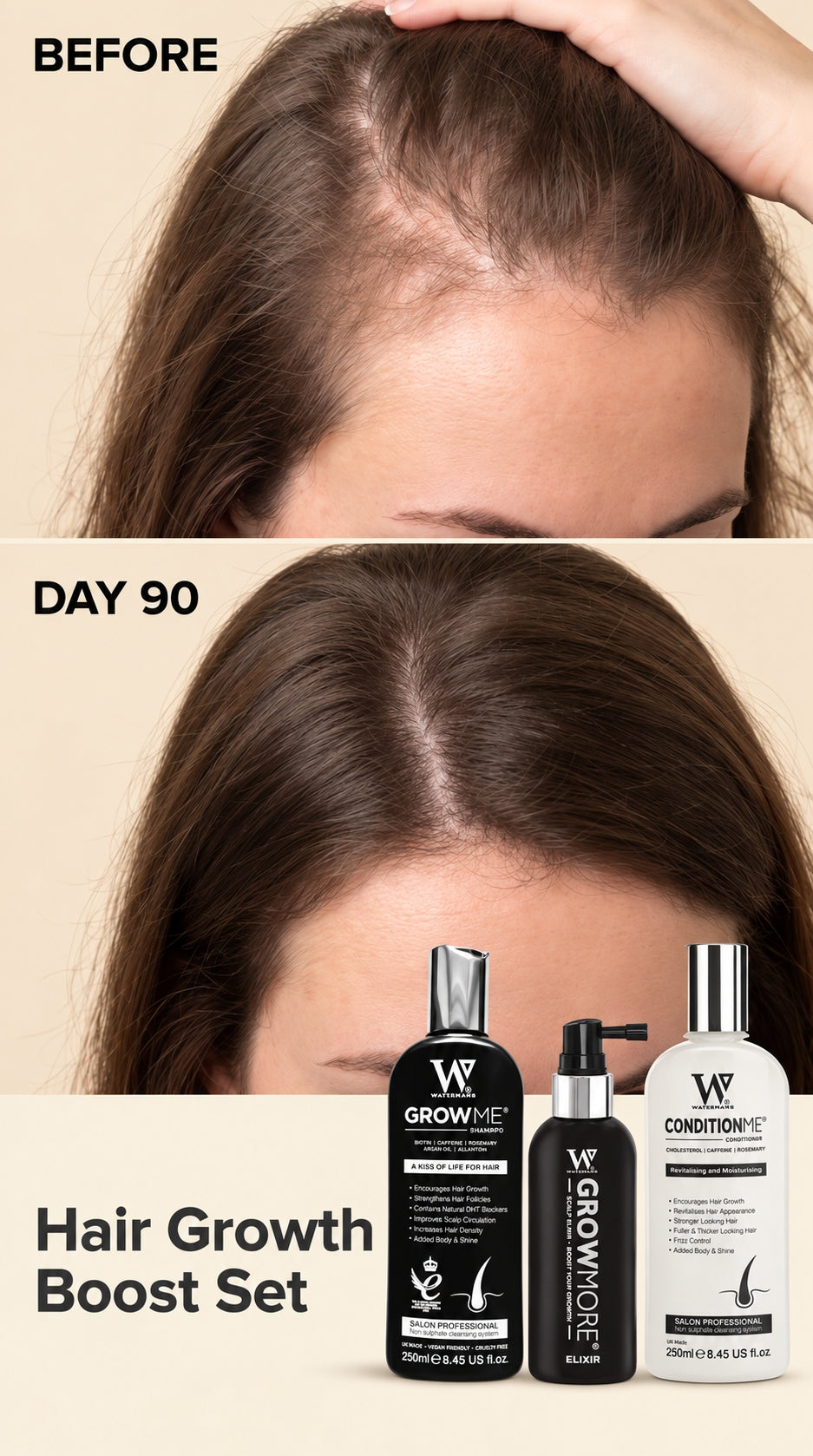
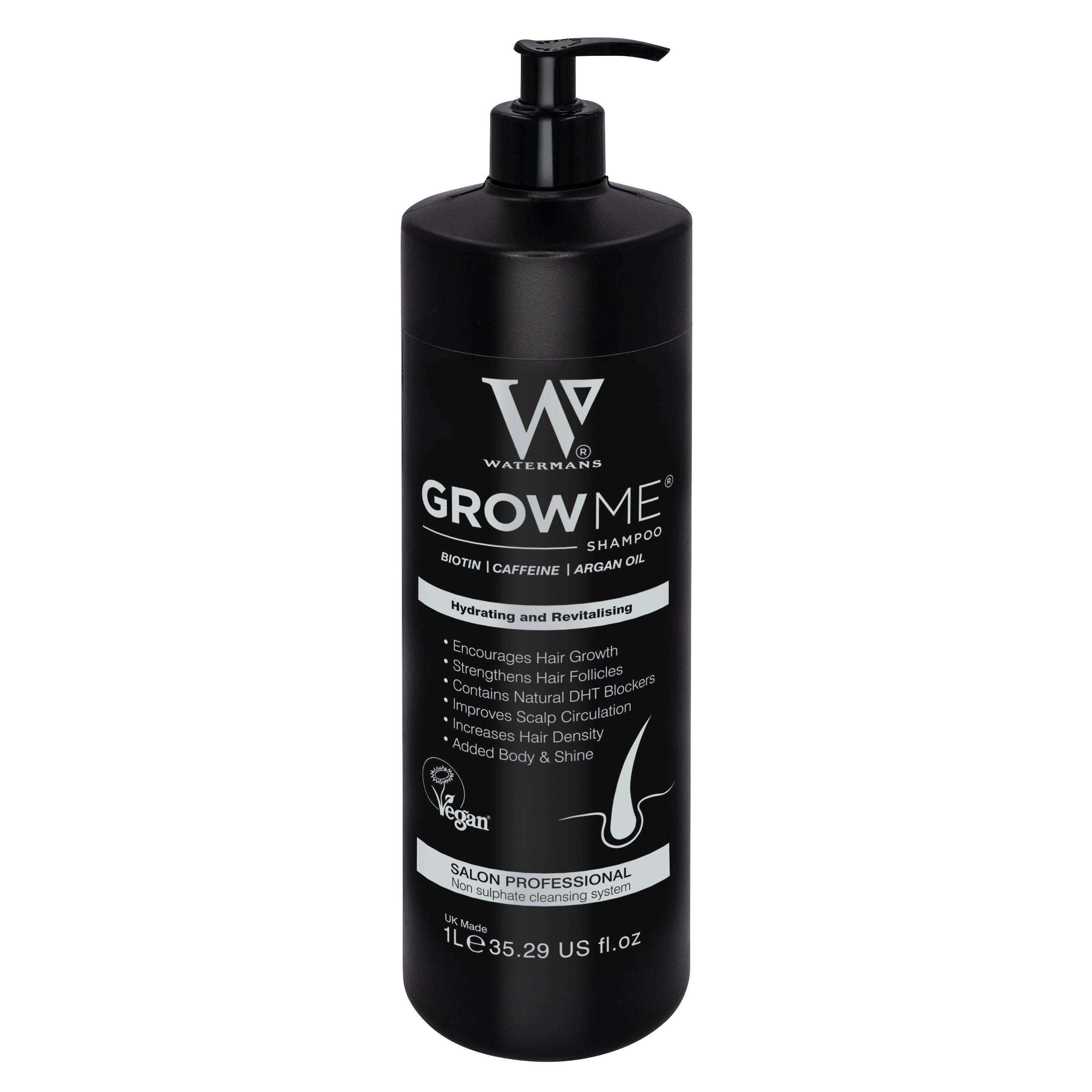
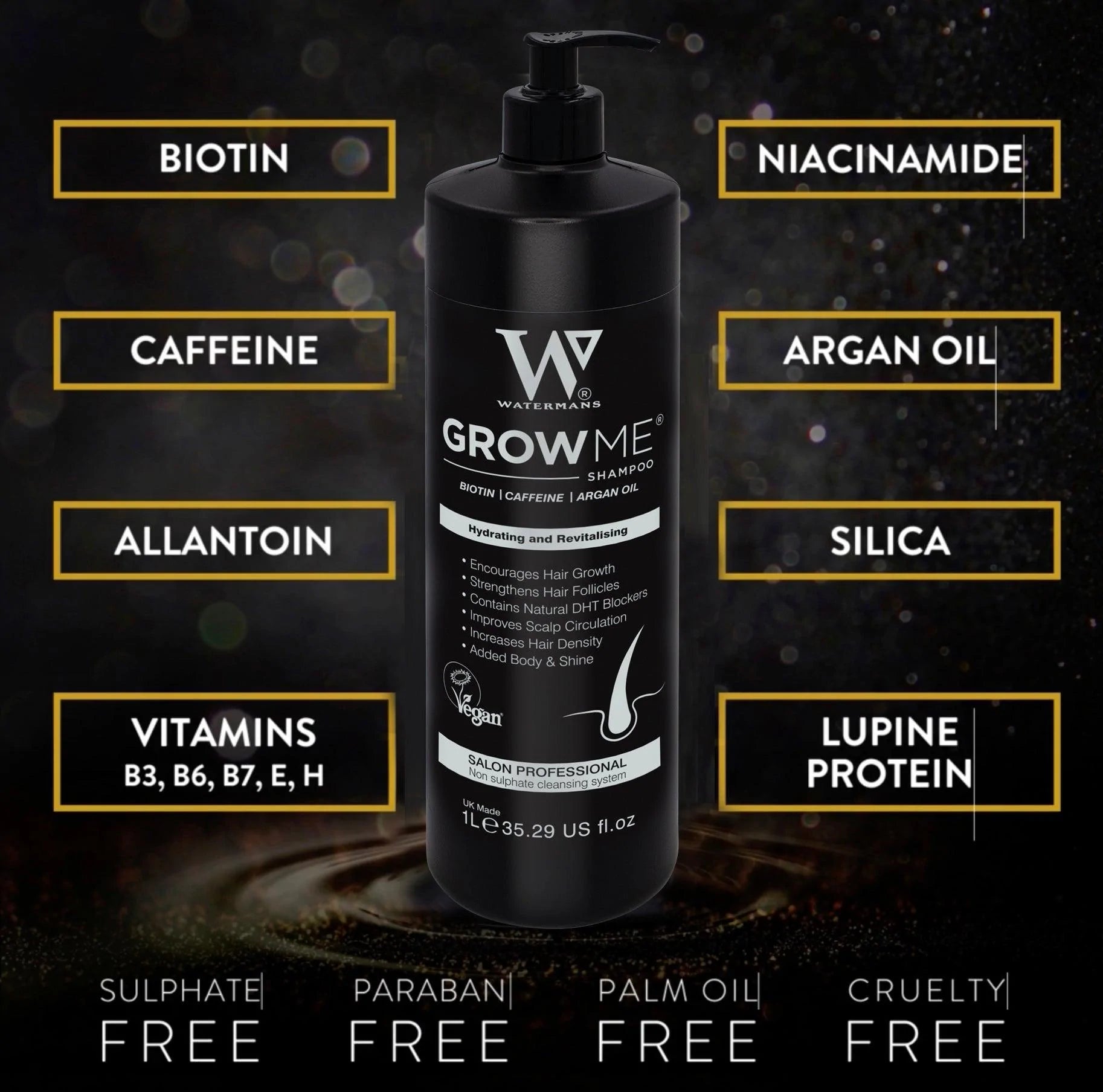
Grow Me® Hair Growth Shampoo, £14.95. A sulphate free daily shampoo that supports a healthy scalp environment and helps reduce breakage, so lengths hold on and look fuller.
Key Takeaways
- A higher percentage is not a better product. Strength figures belong to medicines, and stronger versions carry more side effects, not more certainty. That conversation belongs with a pharmacist or your GP.
- Work out the problem before the product. Loss, shedding and breakage look similar in the mirror and need completely different responses.
- Most visible improvement in the first three months is retained hair, not new hair. Hair that does not snap is hair you keep.
- Give anything 90 days and photograph it. Hair cycles are slow and memory is unreliable.
- Sudden, patchy or painful changes are a GP appointment, not a shopping decision.
What are thinning hair products for women, and what can they actually do?
Thinning hair products for women are cosmetics, which means they work on the hair fibre and the scalp surface rather than on the biology that decides how much hair you grow. That sounds like a limitation, and it is, but it is also the part most people underuse. A large share of what women see as thinning is hair that grew perfectly well and then broke somewhere along its length, and that is squarely a cosmetic problem with a cosmetic answer.
What a cosmetic cannot do is change an inherited pattern, restart follicles that have stopped, or correct a hormonal or nutritional cause. Sellers blur that line constantly, usually with before and after photographs taken under different lighting with a different parting. The useful test is simple: if a product page describes what it does to your hair and scalp, it is being straight with you. If it describes what it does to your hair loss, be careful.
Does a higher percentage mean a better product?
No, and this is the single most common mistake made when comparing thinning hair products for women. Percentage strengths belong to licensed medicines, where the number describes how much active drug is in the bottle. In that world a higher strength is not a better product, it is a different risk profile, which is precisely why those decisions sit with a pharmacist or a GP who knows your history rather than with a search result.
Cosmetics do not work that way at all. A shampoo is a system, and the concentration of any single ingredient tells you almost nothing on its own, because how the formula is buffered, what it is delivered in and how long it stays on your head all change the outcome. A caffeine shampoo rinsed off after 40 seconds is not doing what a leave-on serum does, whatever the percentages say. Chasing numbers across categories that do not share a scale is how people end up with a bathroom shelf and no plan.
| Format | What it realistically does | Best for | Time to judge |
|---|---|---|---|
| Shampoo | Cleans without stripping, keeps the scalp comfortable | Everyone, as the base of a routine | 8 to 12 weeks |
| Conditioner and mask | Cuts snapping during detangling and styling | Breakage, fine or processed hair | 2 to 4 weeks, the fastest visible win |
| Leave-on scalp serum | Stays on the scalp rather than rinsing away | A widening parting or a thinner crown | 12 weeks minimum |
| Supplements | Fill a genuine dietary shortfall, nothing more | People with a tested deficiency | 3 to 6 months |
| Camouflage fibres | Reduces the contrast between scalp and hair | Anyone who needs to look fuller today | Immediate, washes out |
Is it hair loss, shedding or breakage?
These three are different problems that produce a similar reflection, and picking a product before answering this question is why so many women conclude that nothing works. Hair loss means follicles producing progressively finer hair or none at all, which is the pattern process and is not something a cosmetic changes. Hair shedding means hair released early across the whole head, typically two to three months after childbirth, illness, a crash diet or a period of real stress, and it usually settles by itself. Hair breakage means the fibre snapping partway along its length, so the hair count is fine but the ends are thin and wispy.
There is a quick test that separates them. Look at the hairs in your brush: if most have a small pale bulb at one end, they were shed from the root. If they are short broken pieces with no bulb, that is breakage. And if your parting is widening while your brush looks normal, that points towards the pattern process rather than either. Our three clue self-check for thinning walks through this properly, and our 90 day action plan sets out what to do once you have an answer.

How do you read the label on thinning hair products for women?
Reading the label on thinning hair products for women is mostly a matter of knowing where to look and what to ignore. Ingredients are listed in descending order by weight down to one percent, after which the order means nothing, so an ingredient sitting near the end of a long list is present in a small amount however prominently it appears on the front of the bottle.
- Check the first five ingredients. That is the formula. Everything after that is refinement.
- Front of bottle claims are marketing, the back is the product. A hero ingredient named in large letters may sit below the preservative.
- Sulfate free matters most for coloured, dry or coily hair, where harsh cleansing drives the roughness that leads to snapping.
- Ignore any percentage quoted without context. Concentration only means something within a single category and delivery method.
- Watch for a claim doing medical work in cosmetic clothing. Language about blocking hormones or restarting follicles is a claim a cosmetic cannot support.

Grow Me® Hair Growth Shampoo
A sulfate free daily wash with biotin, caffeine, rosemary and niacinamide. The job here is cleansing without stripping, so the scalp stays comfortable and hair looks fuller. Cosmetic, and it says so.
Get a discount on your next order
Join the Watermans mailing list and we will email a discount code straight to your inbox. Made in the UK, over 6.5 million bottles sold since 2012.
Which format suits which problem?
Match the format to the answer you reached above, because that is where thinning hair products for women either earn their place or waste your money. If the brush is full of short broken pieces, conditioning and gentler handling will do more in a month than anything else on this page. If the parting is widening, a leave-on scalp product makes more sense than another wash-off, simply because it stays where the problem is. If hair came out in handfuls after a difficult few months, the honest answer is that time is doing the work and your job is to avoid making it worse.
One change at a time is the rule almost everybody breaks. Starting four products in one week means that when something improves, you have no idea what to keep buying, and when your scalp reacts, you have no idea what to stop.

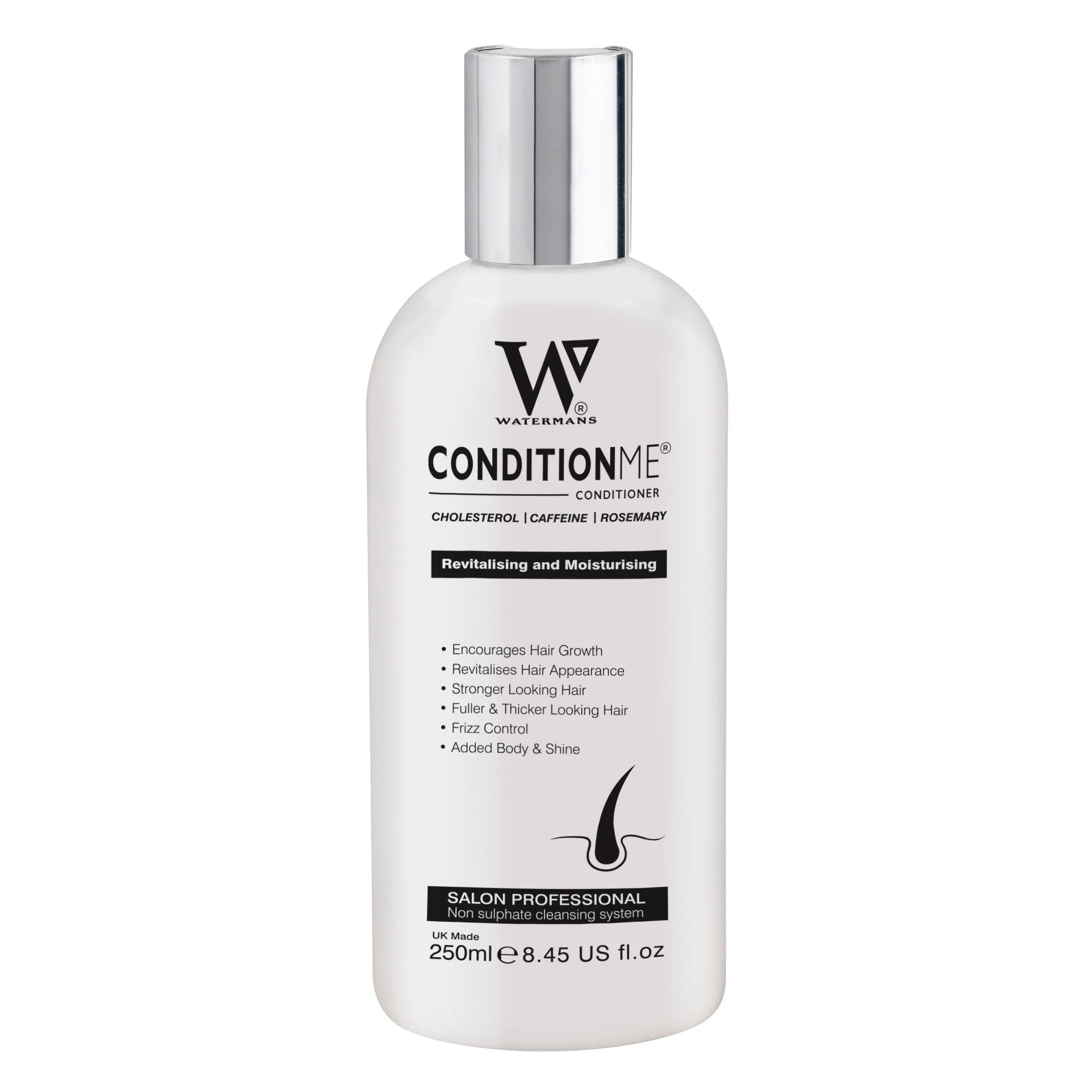
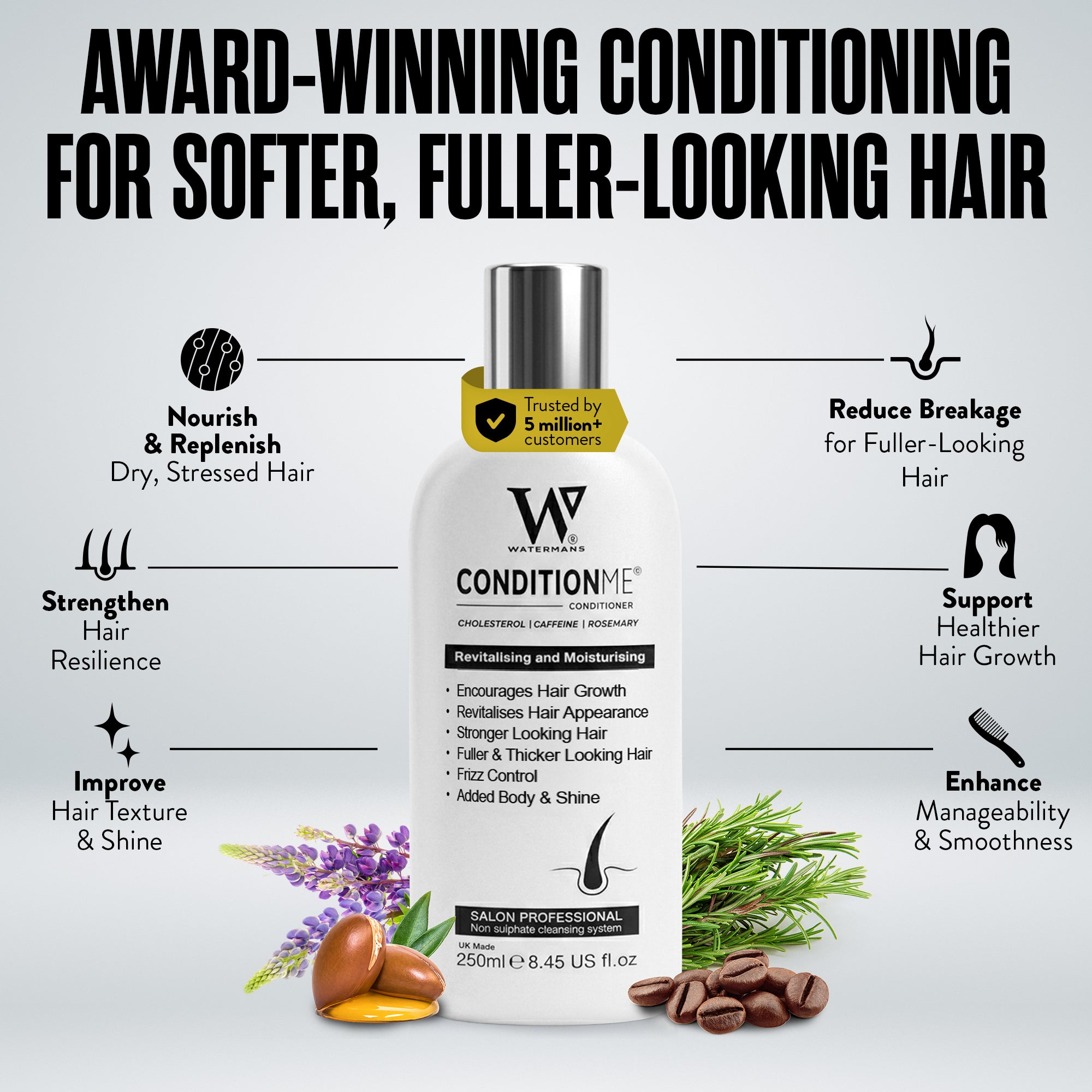
Condition Me® Conditioner
Breakage defence with cholesterol, shea butter and hydrolysed lupine protein. If your brush is full of short snapped pieces, this is the fastest visible change available to you.

Grow More® Elixir Scalp Serum
A leave-on serum for a widening parting or a thinner crown, where staying on the scalp overnight is the whole point. Give it twelve weeks and photograph the same parting in the same light.

What results are realistic, and how long do they take?
Hair grows roughly a centimetre a month, and a follicle that changes its behaviour takes a full cycle to show it, so nothing visible happens quickly. The realistic timeline is two to four weeks for condition and manageability, eight to twelve weeks before density judgements mean anything, and a full six months before you draw a conclusion about a leave-on scalp routine.
The improvement most women actually experience in that window is retention. Hair that would have snapped during detangling stays attached, so length holds and the ends look less see through. That is a genuine result and it is worth having. It is also a smaller claim than the category usually makes, which is rather the point.
Photograph the same spot, in the same light, on the same day of the week. Nothing else you do will tell you as much, and our guide to tracking hair progress properly covers the method.
Watermans products are 100% cosmetic and do not treat medical hair loss. Individual results may vary. Over 6.5 million bottles sold since 2012, made in the UK.
When should you see a GP instead of buying another bottle?
See your own GP if hair is coming out in defined round patches, if the scalp is sore, scaly, shiny or itchy, if the change was sudden rather than gradual, or if it arrived alongside tiredness, weight change, heavier periods or a new medication. Iron, ferritin and thyroid problems are common in women, straightforward to test and entirely correctable, and no shampoo substitutes for that blood test.
Watermans sells cosmetics and does not run clinics, so nothing here is an assessment of your scalp. If you have been buying bottles for a year with no answer, the cheapest next step is an appointment rather than another purchase. Our page on sudden hair loss in women covers the signs worth acting on quickly. If your question is about products or a routine rather than a medical one, you can talk to Gail Waterman, our co-founder, as an AI avatar on the Watermans homepage.
Frequently Asked Questions About Thinning Hair Products for Women
Are thinning hair products for women different from men's?
The formulas are usually near identical and the marketing is not. What differs is the pattern being addressed: women more often see a widening parting with the front hairline preserved, while men more often recede at the temples. Buy for your hair type and your problem rather than for the colour of the packaging.
Can a shampoo make hair thicker?
A shampoo can make hair look thicker by cleaning without stripping, leaving the fibre smoother and reducing the snapping that thins your ends. It does not change the diameter of the hair your follicle produces. Both of those statements are true at once, which is why the category confuses people.
How long before I should give up on a product?
Ninety days for anything aimed at density, and about a month for anything aimed at condition and breakage. Stopping at three weeks tells you nothing, and continuing for two years with no change tells you something you probably already knew.
Do I need a whole routine or just one product?
Start with one, chosen for the problem you identified. A full routine makes sense once you know what you are dealing with, mostly because shampoo and conditioner are doing related jobs, but buying five things at once removes your ability to learn anything from the result.
Is thinning hair after 40 inevitable?
Some density change with age is very common, particularly around the menopause when the hormonal environment shifts. Common is not the same as untreatable or unmanageable, and it is also not the same as harmless, so a change that is fast or patchy still deserves a GP appointment rather than being written off as your age.
Will cutting my hair shorter help?
It genuinely helps the look, because thin see through ends are what read as sparse, and removing them makes the remaining length appear denser. It has no effect at all on the root, since cutting happens above the skin, so count it as styling rather than as a fix.
Are expensive products better?
Not reliably. Price reflects packaging, brand and margin as much as formulation. Read the first five ingredients, check whether the format matches your problem, and ignore the rest of the signalling.
Can I use camouflage fibres every day?
Yes, they are cosmetic and wash out, and for many women they are the single most effective thing on this list for how they feel about a photograph. They need existing hair to cling to, so they work on fine and sparse areas rather than on bare skin.
What is the bottom line on thinning hair products for women?
Choosing between thinning hair products for women gets much easier once you stop comparing bottles and start identifying the problem. Decide whether you are dealing with loss, shedding or breakage, because each one has a different answer and only breakage is fully a cosmetic problem. Ignore percentage strengths, which belong to medicines and to a conversation with a pharmacist or GP. Pick one product that matches your answer, give it ninety days, and photograph it. And if the change is sudden, patchy or painful, book the appointment first and buy the bottle later.
If your current shampoo is stripping the scalp, Grow Me hair growth shampoo is the gentler swap. Vegan and made in the UK.
Sources & References
- NHS, Hair loss, for the UK position on causes, what is normal and when to seek advice.
- DermNet, Female pattern hair loss, for how the pattern process presents differently in women.
- DermNet, Telogen effluvium, for the two to three month delay between a trigger and the shedding it causes.
- StatPearls, Physiology, Hair, NCBI Bookshelf, for growth rates and the hair cycle behind the ninety day rule.
- UK Government, Cosmetic Products Enforcement Regulations 2013, for where the legal line sits between a cosmetic and a medicinal claim.
Sources checked on 21 August 2026. Note that sources describe typical timelines rather than fixed rules, and individual hair cycles vary, so the windows above are given as tendencies.