Does Stronger Mean Better in Hair Products? Honest Guide
Does stronger mean better in hair products? Almost never, and the reason is simple. Once an ingredient is present at the level the formula was designed around, adding more of it does not push the result higher. It pushes the irritation higher instead. The number on the front of the bottle is a marketing signal far more often than it is a meaningful difference, and the strength that suits your scalp is usually the one you can keep using without your scalp complaining.
Our hair growth shampoo
Grow Me® Hair Growth Shampoo, £14.95. A sulphate free daily shampoo that supports a healthy scalp environment and helps reduce breakage, so lengths hold on and look fuller.
Key takeaways
- Higher percentages hit a ceiling. Above a certain level, extra concentration adds side effects rather than extra benefit.
- The number on the front is not the whole formula. Delivery, pH, contact time and what else is in the bottle matter at least as much.
- Irritation is the usual cost. A scalp that itches, stings or flakes is the most common reason people abandon a routine altogether.
- The strength you keep using beats the strength you quit. Twelve consistent weeks at a moderate level tells you more than three intense weeks.
- Nothing cosmetic changes the hair growth cycle at any concentration, so raising the strength cannot turn a cosmetic product into something else.
Does stronger mean better in hair products?
No. For cosmetic hair and scalp products, the honest answer to does stronger mean better in hair products is that concentration follows a curve with a flat top. Going from nothing to a sensible level makes a difference. Going from a sensible level to double that usually does not, because the skin surface can only take up so much of anything in a given period, and whatever is left over sits on the scalp or ends up on your pillow.
What you reliably do get from the higher number is a higher chance of stinging, redness and flaking, and a bottle that runs out faster. That is a poor trade, and it is the trade most people are actually making when they upgrade.

What does the percentage on a hair product label actually measure?
The percentage measures how much of one named ingredient is present by weight in the finished formula. It does not measure how much of that ingredient reaches your scalp, how long it stays there, or whether the rest of the formula helps it or fights it. Two bottles carrying the same number can behave completely differently on the same head.
This is why a percentage on its own is close to meaningless as a comparison tool. A well built formula at a modest level frequently outperforms a crude one at a higher level, because the modest one keeps the ingredient stable, spreads it evenly and leaves the scalp comfortable enough that you use it again tomorrow.
| Claim on the label | What it does tell you | What it does not tell you |
|---|---|---|
| A named percentage | How much of that one ingredient is in the jar by weight | How much of it your scalp actually takes up |
| Maximum strength | That the brand has chosen the top of its own range | Whether the top of that range is useful or just uncomfortable |
| Extra strength or intensive | Essentially nothing, it is not a defined term | What was raised, or whether anything was |
| Concentrated formula | Often that there is less water, so you use less per application | Whether the total amount you apply per week has changed at all |
| Professional or salon strength | A price and packaging positioning | Any measurable difference from the standard version |
Why does a higher concentration stop adding benefit?
Skin absorbs a limited amount of any topical ingredient in a given window, and the scalp is not an exception. Once the surface is saturated, the extra material has nowhere to go. It stays on top, gets absorbed into your pillowcase, or is washed away at the next shampoo. That is the ceiling, and it is a physical one rather than a matter of trying harder.
The second reason is tolerance of the vehicle. Raising the level of an active usually means raising the level of the solvents and penetration helpers that keep it dissolved, and those are what most people actually react to. So the person who moves up a strength often experiences more of the discomfort and none of the extra benefit, which is exactly the wrong half of the deal.

What goes wrong when you push the strength up?
Four things go wrong, in a fairly predictable order.
- Discomfort arrives first. Tingling that used to fade in a minute now lasts an hour. The scalp feels tight after washing.
- Flaking follows. An irritated scalp sheds surface skin, which people often misread as dandruff and then attack with yet another product.
- Adherence collapses. An uncomfortable routine gets skipped, then abandoned, usually somewhere around week five.
- You lose the ability to read the experiment. If you raised the strength and changed the frequency in the same fortnight, nothing that happens next can be attributed to either.
If your scalp has started itching since you moved up, go back down for a fortnight before you conclude anything. Our guide to scalp itching from hair growth products covers the usual causes and how to tell irritation from an allergy.
Worth knowing: the amount you apply is a bigger lever than the percentage in the bottle, and it is one you control for free. Most people either use far too little to cover the area or far too much to absorb. Our guide to how much product to use on your scalp sets out sensible amounts by area.
How do hair loss, hair shedding and hair breakage change the answer?
These three are genuinely different problems, and the strength of a bottle is relevant to only one of them.
- Hair loss in the follicular sense, such as androgenetic alopecia, is a change in the follicle itself. Hairs come back progressively finer and shorter over years. No cosmetic product alters that process at any concentration.
- Hair shedding is a hair cycle event. Telogen effluvium after illness, childbirth, surgery, crash dieting or a genuinely stressful period pushes a batch of hairs into the resting phase together, and they release two or three months later. It is usually self limiting, and no strength shortens it. Our guide to telogen effluvium and how long shedding lasts explains the timeline.
- Hair breakage is the fibre snapping partway along its length. This is the one where formulation genuinely earns its keep, though still not through raw percentage. Conditioning every wash, heat protection every single time and less tension do the work.
So when you ask does stronger mean better in hair products, the honest follow up question is which of these three you are actually dealing with. For two of them the answer is that no bottle at any strength is the deciding factor.
Get a discount on your next order
Join the Watermans mailing list and we will email a discount code straight to your inbox. Vegan, made in the UK, over 6.5 million bottles sold since 2012.
How long should you stay on one strength before judging it?
Twelve weeks, and change one thing at a time. Hair grows roughly a centimetre a month, so anything you change today only shows in the length that grows after today. Three months gives you about three centimetres of new growth to look at, which is enough to judge condition near the roots and enough to notice whether breakage has eased.
Photograph the same parting, in the same spot, in the same light, on day one and then monthly. Memory is a terrible instrument for this and photographs are a good one. We set out realistic timings in our guide to how long before hair products show results, and the reasons two people on the identical product get different outcomes in why the same hair product gives different results.

Which products suit this approach?
Two products cover the two ends of a sensible routine, and neither of them is sold on a strength number.

Grow Me Shampoo
The wash day slot, two to four times a week. Sulphate free, with biotin, caffeine, rosemary, niacinamide and hydrolysed lupine protein. Cosmetic support for a comfortable scalp and fuller looking hair. Vegan and made in the UK.

Grow More Scalp Elixir
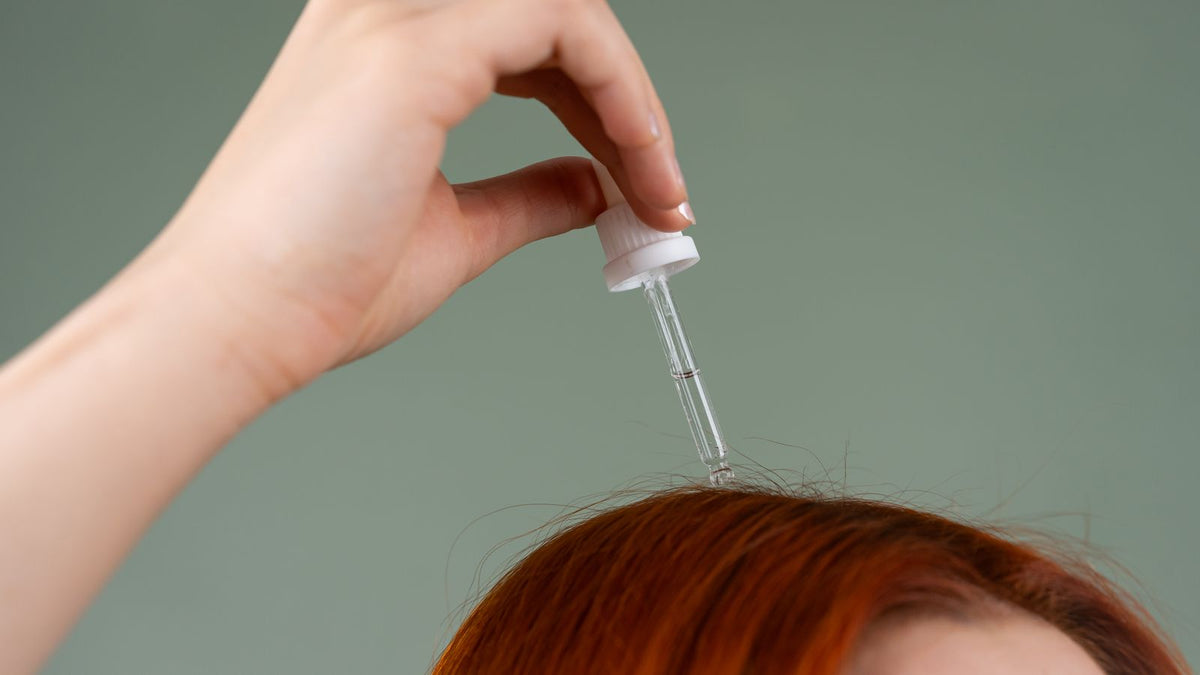
The leave on slot, three to five nights a week on a dry or towel dried scalp. Start at three nights. If your scalp is completely comfortable after a month, you can go up. If it is not, that is your answer.
Over 6.5 million bottles sold since 2012, which tells you people repurchase and tells you nothing at all about what will happen on your own head. Judge it on your own twelve weeks, not on ours.
Frequently asked questions
Does stronger mean better in hair products if my scalp tolerates it fine?
Tolerating a higher strength is not the same as benefiting from it. If the surface is already saturated at the standard level, the extra is simply passing through the routine unused. Comfort is a reason to continue, not evidence that the higher number is doing more.
Why do brands sell higher strength versions at all?
Because a bigger number is easy to advertise and easy to charge more for. It is a positioning decision at least as often as a formulation one, which is why terms such as extra strength and intensive have no agreed definition behind them.
Is a higher percentage more likely to irritate my scalp?
Yes, and usually because of the solvents needed to keep the ingredient dissolved rather than the ingredient itself. Redness, persistent tingling and new flaking are the signals to step back down.
Should I use a strong product less often to balance it out?
That is a reasonable compromise, but it is usually simpler and cheaper to use the standard strength at the normal frequency. You end up in the same place with fewer variables and a smaller bill.
Does a thicker or more concentrated texture mean a stronger product?
No. Thickness comes from gums, butters and emulsifiers, and it is a sensory choice. A thin liquid can carry more active material than a rich cream.
Can I layer two products to get a higher total strength?
You can, but the same ceiling applies, and layering doubles the chance of irritation while making it impossible to tell which product caused what. Introduce one, hold it twelve weeks, then consider the second.
What matters more than the percentage?
Consistency, the amount applied, the frequency, whether the scalp stays comfortable, and whether you are addressing loss, shedding or breakage. All five outrank the number on the front.
My hair is thinning quickly. Should I just go straight to the strongest option?
Rapid change is a reason to speak to your GP rather than to escalate a cosmetic routine. Sudden or patchy hair loss, a sore or scaly scalp, or loss alongside other symptoms deserve a proper look from someone who can examine you. If your question is about products or a routine rather than a medical one, you can talk to Gail Waterman, our co-founder, as an AI avatar on the Watermans homepage.
Sources and references
- NHS, Hair loss, for the difference between pattern hair loss and temporary shedding, and when to see a GP.
- NICE Clinical Knowledge Summaries, Female pattern hair loss, for the natural history of pattern hair loss and realistic timescales.
- British Association of Dermatologists information leaflets, for contact irritation and scalp reactions.
- Committees of Advertising Practice, the UK advertising codes, for the standard of evidence a cosmetic claim has to meet before it can be made.
Does stronger mean better in hair products, and what is the bottom line?
Does stronger mean better in hair products? Only up to a point, and most bottles are already past it. Concentration matters until the scalp is saturated, and after that the extra buys irritation rather than results. Pick a formula you find comfortable, apply a sensible amount, keep the frequency steady, photograph the same parting once a month and give it twelve weeks. If a brand is selling you a bigger number rather than a better formula, you are paying more for the part that stops mattering first.
The shampoo is the step you actually repeat, which is why Grow Me hair growth shampoo is the one worth getting right. Made in the UK, with over 6.5 million bottles sold since 2012.
Watermans products are 100% cosmetic and do not treat medical hair loss. Individual results may vary. If your hair or scalp is changing quickly, or you have a sore, scaly or painful scalp, speak to your GP or a dermatologist.