How to Track Hair Growth: A Method That Actually Works
How to track hair growth properly comes down to one principle: compare yourself to yourself under identical conditions. Hair grows around one centimetre a month, so nothing meaningful happens week to week. Set a dated baseline of photographs and measurements, repeat it in exactly the same conditions every four weeks, keep a short log of what changed in your routine, and judge the whole thing at three and six months rather than in the mirror on a bad morning. Tracking also helps you tell a genuine plateau from a badly lit photo, and we cover why results fade after the first few months.
Our hair growth shampoo
Grow Me® Hair Growth Shampoo, £14.95. A sulphate free daily shampoo that supports a healthy scalp environment and helps reduce breakage, so lengths hold on and look fuller.
Key takeaways
- How to track hair growth well is a question of consistency, not precision. A rough method repeated identically tells you more than an accurate one done once.
- Hair grows roughly 1cm a month, so monthly is the fastest useful cadence and quarterly is the honest one.
- Always photograph a control area, usually the back of the head, so you can tell a real change from a lighting change.
- Track three numbers, not one: length from a fixed point, ponytail circumference, and a scalp photograph. Each catches something the others miss.
- Log what you changed and when. Without that, a tracking record tells you what happened but never why.
Why bother learning how to track hair growth at all?
Memory is a terrible instrument for this. Hair changes far too slowly to perceive day to day, so people flip between believing nothing is working and believing they are losing it fast, usually on the basis of one bad bathroom mirror. A record replaces that with evidence.
It also protects your money. Most hair products need three to six months before a fair judgement is possible. Without a baseline you will either abandon something that was working at week six, or keep paying for something that was not working at month nine. A tracking habit is the cheapest thing on this page and it saves the most.
What do you need?
- A phone camera and a fixed spot with consistent, ideally diffuse, light. A window on a north facing wall is more consistent than a bathroom spotlight.
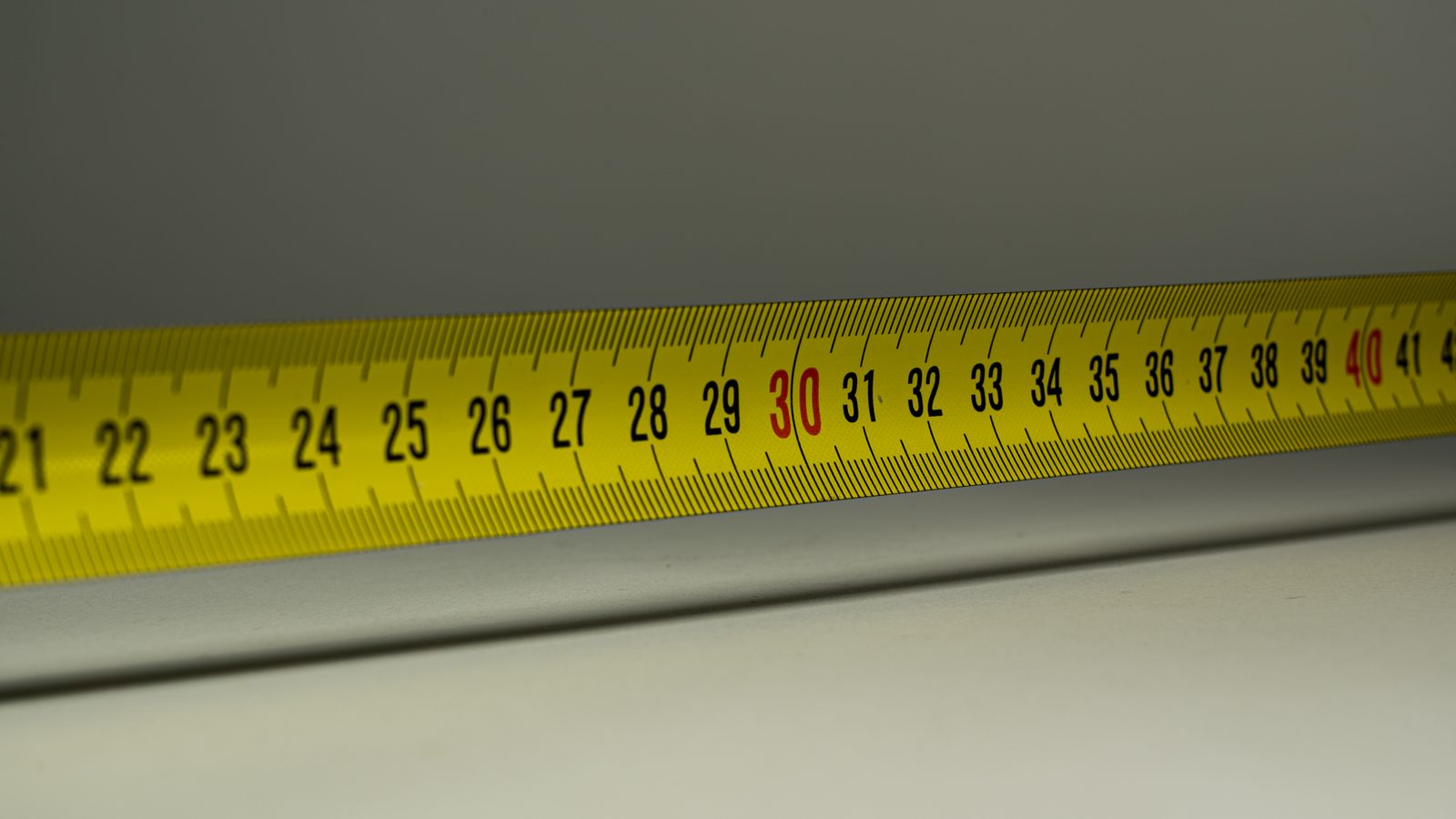
- A soft tape measure, the sort used for sewing.
- A permanent landmark to locate the same scalp area every time: distance from a mole, the top of an ear, the crown whorl.
- A ruler or a coin to include in scalp photos for scale.
- Somewhere to write things down. A note on your phone is fine, as long as it has dates.
You do not need a trichoscope, a hair analysis app or a subscription. None of them beats a dated photograph taken the same way twice.

How to track hair growth: what is the six step method?
1. Set the baseline today
Do this before you change anything, not a month into a new routine. Wash and fully dry your hair, style it the way you normally would for a photo, and record all three measures in one session. Write the date on everything. A baseline taken after you have already started is worth far less, because you can no longer separate the routine from where you began.
2. Fix the conditions and never change them
Same room, same time of day, same light source, same distance, same parting, hair clean and dry every time. This is the step people skip and it is the one that decides whether the whole exercise means anything. Wet hair clumps and shows more scalp. Overhead light throws shadow into a parting. A different angle changes an apparent hairline by a centimetre. Any of those will swamp a real month of growth.
3. Measure length from a fixed point
Pick one section, ideally at the crown or the front where new growth is easiest to see, and measure from the scalp down a specific strand to a fixed marker such as the shoulder or a point on the tape. Record the number. Expect about 1cm a month, less in some people, a little more in others, and expect seasonal variation.
4. Measure ponytail circumference
Gather the hair as you normally would, wrap the tape around the ponytail at a fixed distance from the roots, say 5cm, and note the measurement. This is the number most people should care about most, because it captures bulk rather than length, and bulk is what changes when breakage stops or when shedding recovers.
5. Photograph the scalp and a control area
Take a straight down shot of the parting, a straight on shot of the hairline, and a shot of the back of the head. The back is your control: in pattern hair loss it is generally spared, so if the front looks worse but the back looks identical, that difference is real. If both look worse, you are probably looking at a lighting change or a diffuse shedding episode rather than a pattern.
6. Log what you changed
One line per month is enough. New shampoo, started a supplement, stopped a supplement, stressful month, illness, restrictive diet, new medication, heavy period. Hair reacts to triggers two to four months later, so a change you record in March explains something you photograph in June. Without the log that connection is invisible.
The one mistake that ruins most home tracking. Changing the lighting. A photo taken under a bathroom downlight and a photo taken by a window are not comparable, and the difference between them is larger than a year of real change. Pick a spot and be boring about it.

How often should you check when learning how to track hair growth?
| Interval | What it can show | Verdict |
|---|---|---|
| Daily or weekly | Nothing. Roughly 2mm of growth is invisible and lost in noise | Skip it. It generates anxiety, not data |
| Monthly | About 1cm of length, and early changes in ponytail bulk when breakage stops | The fastest cadence worth using |
| Every three months | Real change in density and the first fair read on a new routine | The honest review point |
| Every six months | Changes in hairline shape and parting width | The one that settles arguments |
Take the measurements monthly, but only draw conclusions quarterly. That split keeps the habit alive without letting a single noisy month talk you out of something that is working.
Get a discount on the hair growth range
Join the Watermans mailing list and we will email a discount code straight to your inbox, so you can try the hair growth range for less. Vegan, made in the UK, over 6.5 million bottles sold since 2012.
Are you tracking growth, shedding or breakage?
These three need different measurements, and using the wrong one is why a lot of home tracking produces confusing results.
| What you are tracking | The right measurement | What a change means |
|---|---|---|
| Hair loss, meaning follicles miniaturising | Parting width and hairline shape from fixed photographs, front compared with back | A widening parting or a changing outline over six months is a real pattern change and belongs with your GP |
| Hair shedding, meaning cycle driven fall | A rough daily count from the shower drain and brush, over a week, repeated monthly | A spike two to four months after a trigger, usually settling within six months. Full length hairs with a white bulb |
| Hair breakage, meaning the fibre snapping | Ponytail circumference, plus looking for short broken pieces with no bulb | Circumference improving within four to eight weeks of gentler handling confirms breakage rather than loss |
Ponytail circumference is the most underused number here. It moves quickly when breakage stops, which makes it the one measurement that can reward a routine change inside two months instead of six.
How does this differ from measuring and from judging results?
Three related jobs get muddled constantly, so it is worth being explicit. This page is about the tracking system: what to record, how often, and how to keep the conditions honest. If you want the measurement technique itself, including counting hairs in a marked square and the errors that creep into home counts, read our guide to how to measure hair growth. If you already have a record and want to know how to read it, our guide to tracking hair growth results covers interpreting a run of data and deciding whether to continue.

What should you expect the numbers to do?
Setting expectations correctly is half of what makes tracking useful. Hair grows at roughly one centimetre a month on average, which is about 12cm to 15cm a year, and that rate varies between individuals and slows with age. Growth is also not continuous per follicle: at any moment most of your follicles are in the growing anagen phase, a small proportion are transitioning, and around one in ten is resting and about to release its hair. Our guide to the stages of the hair growth cycle explains why that mix matters, and the anagen phase guide explains why your maximum length is capped by how long that phase lasts for you.
Three practical consequences follow. Length gains are steady and boring. Bulk changes can be quicker, because they reflect breakage rather than the cycle. And density changes are the slowest of all, which is why six months is the honest interval for judging them.
What are the common tracking mistakes?
- Starting the routine and the tracking on the same day. You lose the before.
- Measuring wet hair sometimes and dry hair other times. Wet hair looks thinner and stretches longer. Pick one and stay with it.
- Raising your eyebrows in hairline photos. It lifts the hairline visibly and has convinced many people they were receding when they were not.
- Changing two things at once. If you start a supplement and a new shampoo in the same week, a result tells you nothing about either.
- Only photographing the front. Without a control shot of the back, you cannot separate a real change from a bad light day.
- Judging at six weeks. Every honest guide to how to track hair growth says three months minimum, and six is better.
What are you actually tracking a routine for?
If you are tracking to see whether a cosmetic routine helps, be clear about what it can and cannot move. Shampoos, conditioners and scalp serums are cosmetics. They do not change the number of follicles you own. What they can do is keep the scalp comfortable and reduce the breakage that costs you length and bulk, and those effects do show up in a ponytail measurement.

Grow Me Hair Growth Shampoo, 14.95 pounds
Sulphate free, so it clears build up without stripping. If you are running a tracked trial, a consistent daily cleanse is the variable you want held steady rather than swapped every month.

Grow More Scalp Elixir, 25.50 pounds
A leave on scalp serum for a targeted area, which pairs naturally with photographing one fixed spot every month rather than assessing your whole head at once.
Watermans products are 100% cosmetic and do not treat medical hair loss. Individual results may vary.
When should the record go to your GP?
A good tracking record is genuinely useful in a GP appointment, because it turns a vague complaint into dated evidence. Take it along if your photographs show a parting widening or a hairline changing shape over six months, if you find smooth bald patches, if the scalp is red, scaling, painful or shiny, if heavy shedding has not settled after around six months, or if hair changes arrive alongside fatigue, weight change or irregular periods. Your GP can arrange blood tests including ferritin, thyroid function and vitamin D, and refer you on where appropriate. To keep a fair record through any HRT change, see our guide to HRT hair monitoring. If your question is about products or a routine rather than a medical one, you can talk to Gail Waterman, our co-founder, as an AI avatar on the Watermans homepage.
Frequently asked questions about how to track hair growth
How fast does hair grow on average?
Around one centimetre a month, roughly 12cm to 15cm a year. The rate varies between individuals, tends to slow with age, and can dip during illness or poor nutrition. Because the monthly figure is so small, weekly checking cannot show anything reliable.
How often should I measure?
Measure monthly and draw conclusions quarterly. Monthly is the fastest cadence that captures a real centimetre of growth, while three months is the earliest point a routine change can be judged fairly. Six months settles questions about density and hairline shape.
Why measure the same section every time?
Hair grows at slightly different rates across the scalp, and different areas catch light differently. Measuring a fixed, landmarked section removes that variation, so any change you see is a change in your hair rather than in where you happened to measure.
Should I count hairs I lose each day?
Only if you are tracking shedding rather than growth, and only as a rough weekly average. Losing somewhere between 50 and 100 hairs a day is normal, and daily counts swing wildly depending on whether you washed, brushed or wore your hair up.
Does diet change how fast my hair grows?
A genuine shortfall in protein, iron, zinc or overall calories can shorten the growing phase and slow visible growth. Correcting a real deficiency helps, and it appears in the record three to six months later. Supplementing a nutrient you are not short of does not push growth past its normal rate.
What if I am tracking loss rather than growth?
Change what you record. For loss, the useful measures are parting width and hairline shape from fixed photographs, always with a control shot of the back of the head, compared at six month intervals. Length measurements tell you very little about follicular loss.
Are hair tracking apps worth using?
An app that reminds you and stores dated photographs in one place is useful. An app claiming to analyse density from a phone photo is working from an image whose lighting, angle and focus you cannot control well enough for the number to mean much. The dated photograph is the valuable part.
How long should I give a new routine before deciding?
Three months minimum, six preferably. Ponytail circumference can respond faster, sometimes within four to eight weeks, because it reflects breakage rather than the growth cycle. Anything working through the follicle needs the longer window.
Sources & References
- StatPearls via NCBI Bookshelf, Physiology, Hair. Growth rate, the proportion of follicles in each phase, and what caps maximum length.
- NHS, Hair loss. What counts as normal daily hair loss, common causes, and when to see a GP.
- DermNet, Telogen effluvium. Why a shedding spike follows a trigger by two to four months and usually settles.
- StatPearls via NCBI Bookshelf, Androgenetic Alopecia. Why the back of the head works as a control area in pattern loss.
- Scalp Condition Impacts Hair Growth and Retention via Oxidative Stress, via PubMed Central. Peer reviewed evidence on scalp condition and retention.
Sources vary on the exact average growth rate, with figures between roughly 1cm and 1.25cm a month quoted in different references. That spread is another argument for comparing yourself to yourself rather than to a published number.
What is the bottom line on how to track hair growth?
How to track hair growth is a discipline problem, not a technology problem. Set a dated baseline before you change anything. Fix your lighting, distance and hair state, and never vary them. Record three things every month: length from a landmarked section, ponytail circumference, and photographs of the parting, the hairline and the back of the head as a control.
Measure monthly, conclude quarterly, and give any new routine three to six months. Log what changed and when, because hair answers a trigger two to four months later and without the log that link is invisible. Change one thing at a time, or the record cannot tell you which thing did it.
Watermans is made in the UK, and has sold over 6.5 million bottles since 2012. If you want a consistent routine to hold steady while you track, the Grow Me shampoo and the Grow More scalp elixir are the pair we would keep constant for six months, and your ponytail measurement will tell you what they did. If you are measuring after a dieting shed specifically, the expected shape of the curve is set out in hair recovery after weight loss.