How to Eat for Your Hair When Your Appetite Has Gone
The answer to how to get enough protein with no appetite is density rather than discipline. When only a small volume of food will go down, every mouthful has to carry more protein than it normally would. Swapping ordinary versions of foods you already eat for concentrated ones, stirring milk powder into what you already drink, and eating cold food when hot food smells overwhelming will typically move an adult from around 30g of protein a day to 70g or more, without adding a single extra meal to the day.
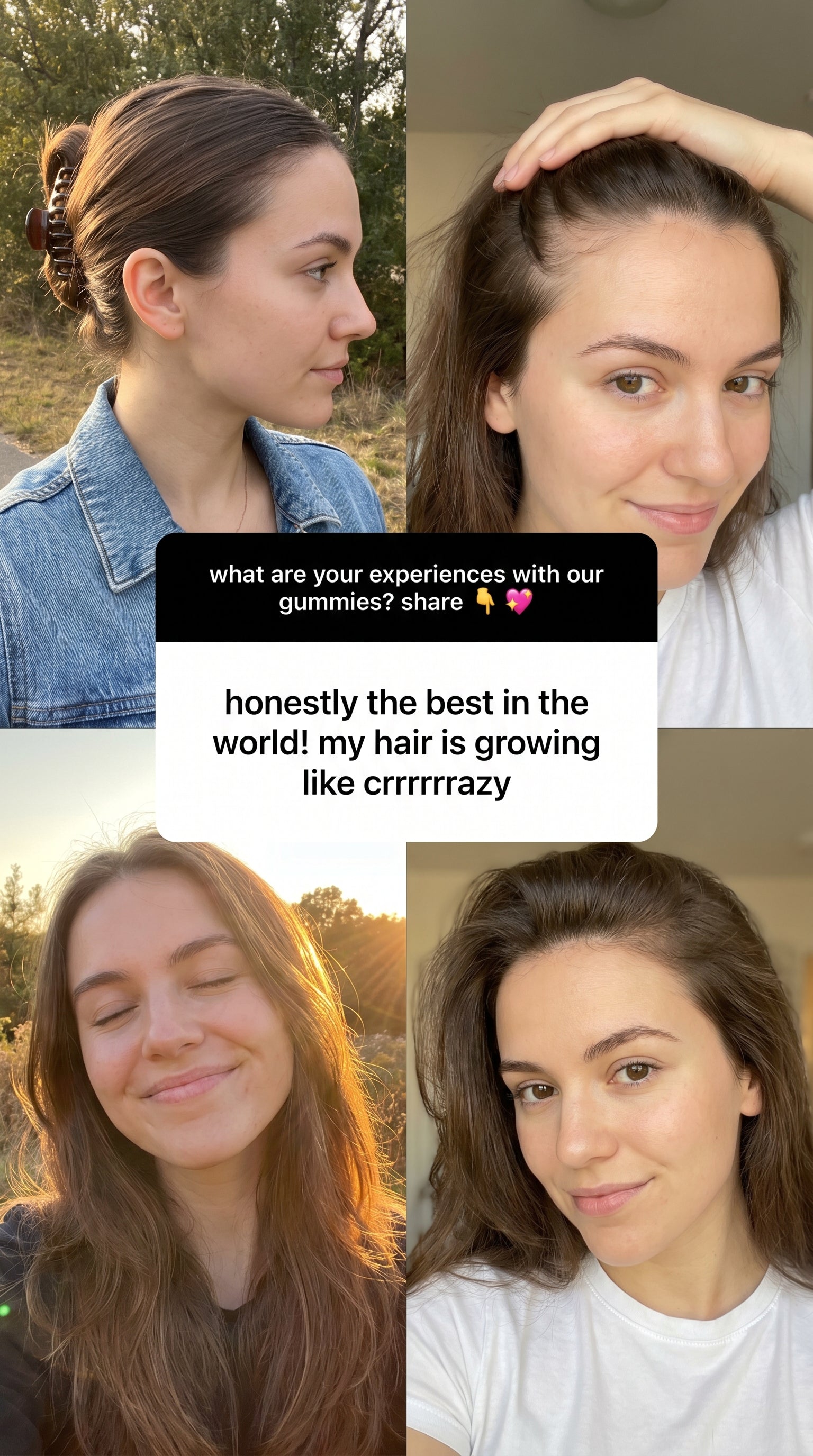
Our hair, skin and nails gummies
GrowPro® Hair, Skin & Nails Gummies, £22.95. Sugar free daily gummies for people who would rather chew than swallow a tablet, supporting hair care from the inside out.
If your appetite collapsed and your hair started coming out in the shower about three months later, those two facts are almost certainly connected. The useful part is that the second one lags the first, which means the food you manage this month shows up in the mirror later in the year.
Key takeaways
- A poor appetite does not thin your hair on the day. It shows up roughly two to four months later, as shedding from the roots.
- Hair shedding, hair loss and hair breakage are three different problems. Eating too little drives the first and can worsen the third, and it is not the same as pattern hair loss.
- Adults need roughly 0.75g of protein per kilogram of body weight a day as a minimum, which is about 45g for a 60kg woman and 56g for a 75kg man.
- The winning move is density, not volume: same spoonful, more protein. Greek yogurt instead of standard, skimmed milk powder stirred into milk, cheese instead of butter.
- Iron, zinc, vitamin D and B12 matter alongside protein, and low iron is worth a conversation with your GP rather than guesswork.
- Cosmetic hair care cannot replace food, but it can stop you losing length to breakage while the rest catches up.
Why does eating very little show up in your hair months later?
Hair follicles cycle through a growing phase and a resting phase, and a sudden drop in energy or protein intake pushes an unusually large group of follicles out of growing and into resting at the same time. The resting hairs stay anchored in the scalp for roughly two to four months before they release, which is why the shedding arrives long after the eating changed. DermNet describes this pattern as telogen effluvium, and the same delay applies whether the trigger was illness, surgery, a crash diet or a period of appetite loss. Cutting carbohydrates sharply produces exactly this pattern, and our guide to low carb diets and hair loss explains why the shedding starts.
Our guide to how long telogen effluvium lasts covers that timeline in detail. That delay cuts both ways, and it is the single most reassuring fact on this page. Food you get in during a bad month will not stop the shedding that is already queued up, because those follicles have already switched. What it does is shorten the queue behind them.
What is the difference between hair shedding, hair loss and hair breakage?
Hair shedding means whole hairs releasing from the follicle, usually with a small pale bulb on the end, and it is what a poor appetite tends to cause. Hair loss in the medical sense means follicles themselves shrinking or being lost, as in pattern hair loss or alopecia, and food will not drive that on its own. Hair breakage means the fibre snapping somewhere along its length, leaving short broken pieces with no bulb, and it comes from mechanical and chemical damage rather than diet.
Telling them apart changes what you should do. Pull a few of the hairs from your brush and look at the ends: a small white or pale bulb means the hair came out from the root and you are looking at shedding. Ragged ends with no bulb at both ends mean the fibre snapped, and the answer is in how you wash, comb and heat style, not on your plate. Nutrition can quietly worsen breakage too, because hair grown during a thin patch is often finer and gives way more easily under a brush.
How much protein do you actually need each day?
The UK reference nutrient intake for protein is about 0.75g per kilogram of body weight per day for adults, which works out at roughly 45g for a 60kg woman and around 56g for a 75kg man. That is a floor for general health rather than a target for someone rebuilding after months of eating badly, and many people with a poor appetite are landing nearer 25g to 35g without realising it.
Hair is made largely of keratin, a protein, and the body deprioritises hair when supply is short. It will keep protein moving to organs and muscle long before it spends it on a hair fibre. That is the mechanism behind the shedding, and it is also why simply hitting the floor figure tends to be enough: you are not trying to build anything exotic, you are trying to stop the body rationing.
A quick way to find your own number
Take your weight in kilograms and multiply by 0.75. That is your daily minimum in grams. Write it on a sticky note on the fridge, because on a bad appetite day the target is the only thing that keeps the guessing honest.
How to get enough protein with no appetite using the density rule?
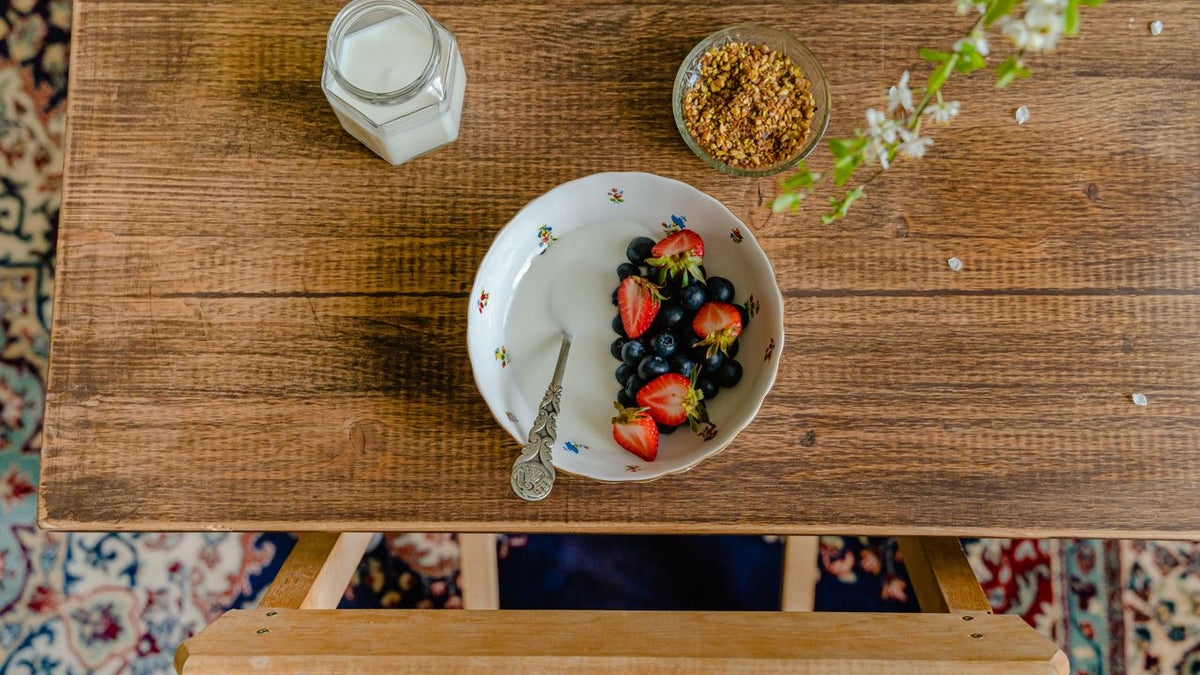
Density is the whole game, and it is the part of how to get enough protein with no appetite that people skip. If your stomach will only accept a small bowl, the question stops being what to eat and becomes what occupies that bowl. The table below shows pairs of foods at roughly the same volume, and the protein difference between them is often two or three times over, for no extra eating effort at all.
| Instead of this | Eat this, same volume | Protein difference |
|---|---|---|
| 150g standard yogurt | 150g Greek style yogurt | About 6g becomes about 15g |
| A glass of milk | A glass of milk with 2 tbsp skimmed milk powder stirred in | About 8g becomes about 16g |
| Toast with butter | Toast with cheese or peanut butter | About 3g becomes about 10g |
| Clear soup | Soup blended with red lentils or a tin of beans | About 2g becomes about 12g |
| A handful of crisps | A handful of roasted chickpeas or nuts | About 2g becomes about 8g |
| Standard breakfast cereal with milk | Same cereal with milk plus a scoop of milk powder and nuts | About 9g becomes about 20g |

The skimmed milk powder trick deserves singling out because it is nearly invisible. Two tablespoons stirred into milk, porridge, soup, mashed potato or a milky coffee adds roughly 8g of protein and changes the taste very little. For someone who can face a drink but not a meal, drinking your protein is a legitimate answer rather than a compromise.
Get a discount on the hair shedding range
Join the Watermans mailing list and we will email a discount code straight to your inbox, so you can try the hair shedding range for less. Made in the UK, over 6.5 million bottles sold since 2012.
Which foods carry the most protein in the smallest volume?
Concentrated animal proteins lead on density, but several plant options hold their own and matter if meat is exactly what you cannot face. Eggs, hard cheese, Greek yogurt, tinned fish, milk powder, red lentils, peanut butter and roasted soya beans all deliver a lot for a small mouthful.
Texture usually decides what wins on a bad day. Cold, soft, wet and mild tends to go down when hot, dry and strongly flavoured does not, which is why a small bowl of Greek yogurt with honey beats a chicken breast even though both are good on paper. The best protein is the one you actually finish.

What helps when nausea makes food impossible?
Nausea is the point at which how to get enough protein with no appetite stops being an arithmetic problem. It is usually driven as much by smell as by taste, and heat is what carries smell into the air. Eating food cold or at room temperature removes most of the aroma before it reaches you, which is why cold chicken, cold omelette, yogurt, cheese and milkshakes are often tolerable when the hot versions of the same foods are not.
Three other workarounds do most of the remaining work. Use a smaller plate, because a normal portion on a normal plate reads as an obstacle before you start. Separate drinking from eating by about half an hour, since filling up on liquid leaves no room for the food. And eat on a timer rather than on hunger, because once appetite has gone, waiting to feel hungry means waiting for a signal that is not coming.
If food is going down but weight is still dropping fast
Rapid unplanned weight loss is worth a GP appointment in its own right, separately from anything to do with your hair. Bring a rough note of what you have managed to eat in a normal week, because that is far more useful than trying to recall it in the room.
Which nutrients besides protein matter most for hair?
Protein is the headline, but four micronutrients come up repeatedly when hair is shedding after a period of eating poorly, and our guide to nutrients that support hair strength goes through them in more depth. Each has a catch that makes it worth knowing rather than simply swallowing a tablet.
| Nutrient | Why hair notices it | The catch |
|---|---|---|
| Iron | Low iron stores are a recognised contributor to shedding, particularly in women who menstruate. | Iron should be checked with a blood test before supplementing, since too much is harmful and the symptoms of low iron overlap with plenty of other things. |
| Zinc | Involved in the normal structure of hair and skin, and easy to run low on when overall intake drops. | High dose zinc over long periods interferes with copper absorption, so stick to normal amounts unless advised otherwise. |
| Vitamin D | The UK government advises everyone consider a 10 microgram daily supplement in autumn and winter. | Sunlight in the UK is not sufficient between October and March, so food and supplements are doing the work in those months. |
| Vitamin B12 | Matters for cell division, which is exactly what a hair follicle does constantly. | Mainly found in animal foods, so a reduced appetite combined with avoiding meat is the combination to watch. |
What does a realistic day of eating look like?
The day below contains no actual meal, which is the point. It is built from things that can be assembled in under two minutes and eaten cold, and it lands at roughly 90g of protein, comfortably above the floor for most adults.
- On waking: milky coffee made with milk plus 2 tbsp skimmed milk powder. About 16g.
- Mid morning: 150g Greek yogurt with a spoon of honey and a few nuts. About 18g.
- Lunch, such as it is: two boiled eggs and a small piece of cheese, eaten cold. About 20g.
- Afternoon: a milkshake made with milk, milk powder and a banana. About 18g.
- Evening: a small bowl of blended lentil soup with a spoon of peanut butter stirred through. About 16g.
Nothing there needs cooking beyond boiling an egg, and no single item is large. That is deliberate, because the thing that defeats most people is not the food itself but the size of the task in front of them.
Where do supplements genuinely fit?
Supplements answer a narrower question than how to get enough protein with no appetite, and they are useful in exactly one situation: when you cannot get something in from food and you know which something it is. They are a poor substitute for overall intake, because no tablet supplies meaningful protein, and protein is the thing most commonly missing when appetite has gone.
Biotin in particular is oversold, and how much biotin you actually need sets out why. Where supplements earn their place is at the edges. A vitamin D supplement through the British winter is sensible for almost everyone. A general hair, skin and nails formula covers the small gaps left by a narrow diet. Iron is the exception that should follow a blood test rather than a hunch.

GrowPro® Hair Growth Gummies £22.95
Sugar free vegan gummies with Biotin, Zinc, Vitamin C and bamboo silica. Two a day, useful when appetite is small and whole foods are hard to face.
Useful when whole foods are hard to face and you want the micronutrient gaps covered. Not a protein source, and not a substitute for eating.
What can hair care do while you sort the food out?
Cosmetic hair care cannot put protein into your bloodstream, and any product that suggests otherwise is overselling. What it can do is stop you losing length to breakage during the months when new growth is coming in finer than usual, so that when the shedding settles you still have the hair you grew.
That means being gentler at the two moments hair is weakest, which are wet combing and heat styling. A conditioner that smooths the cuticle reduces the drag that snaps fine hair on a comb, and a shampoo that cleans without stripping keeps the scalp comfortable through a period when everything else feels like hard work.


Grow Me® Hair Growth Shampoo £14.95
Sulfate free daily shampoo with Biotin, Caffeine, Rosemary, Niacinamide and hydrolysed lupine protein. Cleans without stripping, so hair looks fuller and snaps less on the comb.
Sulfate free, so a daily wash does not strip a scalp that is already unhappy.

Condition Me® Hair Growth Conditioner £13.95
A breakage defence conditioner with cholesterol, shea butter and silica. It smooths the cuticle so wet combing pulls far less hair out of the brush.
The one to add if hair is snapping on the comb rather than releasing from the root.
When should you speak to your GP?
See your own GP if the shedding is still heavy after six months, if you can see scalp through the hair rather than just a thinner ponytail, if there are bald patches with defined edges, or if the appetite loss itself is not improving. Those are all worth a professional opinion rather than a shopping decision. If your question is about products or a routine rather than a medical one, you can talk to Gail Waterman, our co-founder, as an AI avatar on the Watermans homepage.
The NHS hair loss page is a sensible starting point for what a GP will consider, and it is worth reading before the appointment so you can describe what you are seeing accurately. Take a photograph of your parting in good light every month, because a set of dated photos answers the question far better than memory does.
Frequently asked questions
How long after eating badly does hair start to shed?
Usually between two and four months. The follicles switch to resting soon after the trigger, but the hairs stay in the scalp for weeks afterwards before releasing, which is why the shedding feels like it came out of nowhere.
Will the hair come back once I am eating properly again?
Shedding driven by a temporary drop in intake is generally a timing problem rather than a permanent one, and hair density usually recovers over several months once intake is steady. Recovery is slow because hair grows around 1cm a month, so give it a full season before judging.
Is a protein shake a reasonable answer to how to get enough protein with no appetite?
Yes, and it is often the most practical one. Liquid tends to go down when solid food will not, and a shake made with milk and milk powder is cheaper than commercial versions while delivering a similar amount.
Can I just take a biotin supplement instead?
Biotin only helps if you are short of biotin, which is uncommon in the UK, and it does nothing about the protein and energy shortfall that is usually driving the shedding. It also interferes with some blood tests, so mention it if you are having bloods done.
How much weight loss is enough to affect hair?
There is no exact threshold, but rapid loss and very low intake are the pattern that comes up most. Losing weight slowly with adequate protein is far less likely to trigger shedding than losing it quickly on very little food.
Does eating more protein make hair grow faster?
No. Adequate protein lets hair grow at its normal rate, and a shortfall slows it. Going above what you need does not speed anything up, so the goal is sufficiency rather than maximising.
Should I stop washing my hair so often while it is shedding?
Washing does not cause the shedding. Hairs that are already released collect in the scalp and come out when you wash, so washing less just means more of them arrive at once, which looks worse rather than better.
Is hair thinning after weight loss the same as pattern hair loss?
No. Shedding after weight loss is diffuse and temporary, whereas pattern hair loss is gradual, follows a recognisable shape at the parting or temples, and does not resolve by itself. If the pattern is what you are seeing, that is a GP conversation.
What is the bottom line on how to get enough protein with no appetite?
The short answer to how to get enough protein with no appetite is to stop trying to eat more and start trying to eat denser. Work out your minimum by multiplying your weight in kilograms by 0.75, then use the swap table to make the small amount of food you can manage carry two or three times the protein it does now. Milk powder in things you already drink, Greek yogurt instead of standard, cheese instead of butter, cold instead of hot, on a timer rather than on hunger. The shedding you are seeing today was decided months ago, so the food you get in this week is buying back the months ahead.
While your intake catches up, the practical job is holding on to the length you already have. A sulfate free hair growth shampoo keeps the scalp comfortable through a demanding few months without stripping hair that is already finer than usual.
Watermans products are 100% cosmetic and do not treat medical hair loss. Individual results may vary.
Sources & references
Every source below was opened and checked while writing this page.
- NHS, Hair loss, symptoms, causes and when to see a GP
- DermNet, Telogen effluvium, the delayed shedding pattern described above
- British Association of Dermatologists, Telogen effluvium information leaflet
- NHS, Eating a balanced diet, UK guidance on protein and food groups
- NHS, Iron, requirements and the risks of taking too much
- NHS, Vitamins and minerals, others, zinc and related micronutrients