Menopause Hair Care Routine: What Actually Helps
A menopause hair care routine has one job: keep the hair you are still growing on your head for as long as possible. Hormonal change alters how thick each new hair grows, and there is nothing in a bathroom cabinet that changes hormones. What a routine can change is breakage, tension, scalp comfort and how full your hair looks, and those add up to more than most people expect.
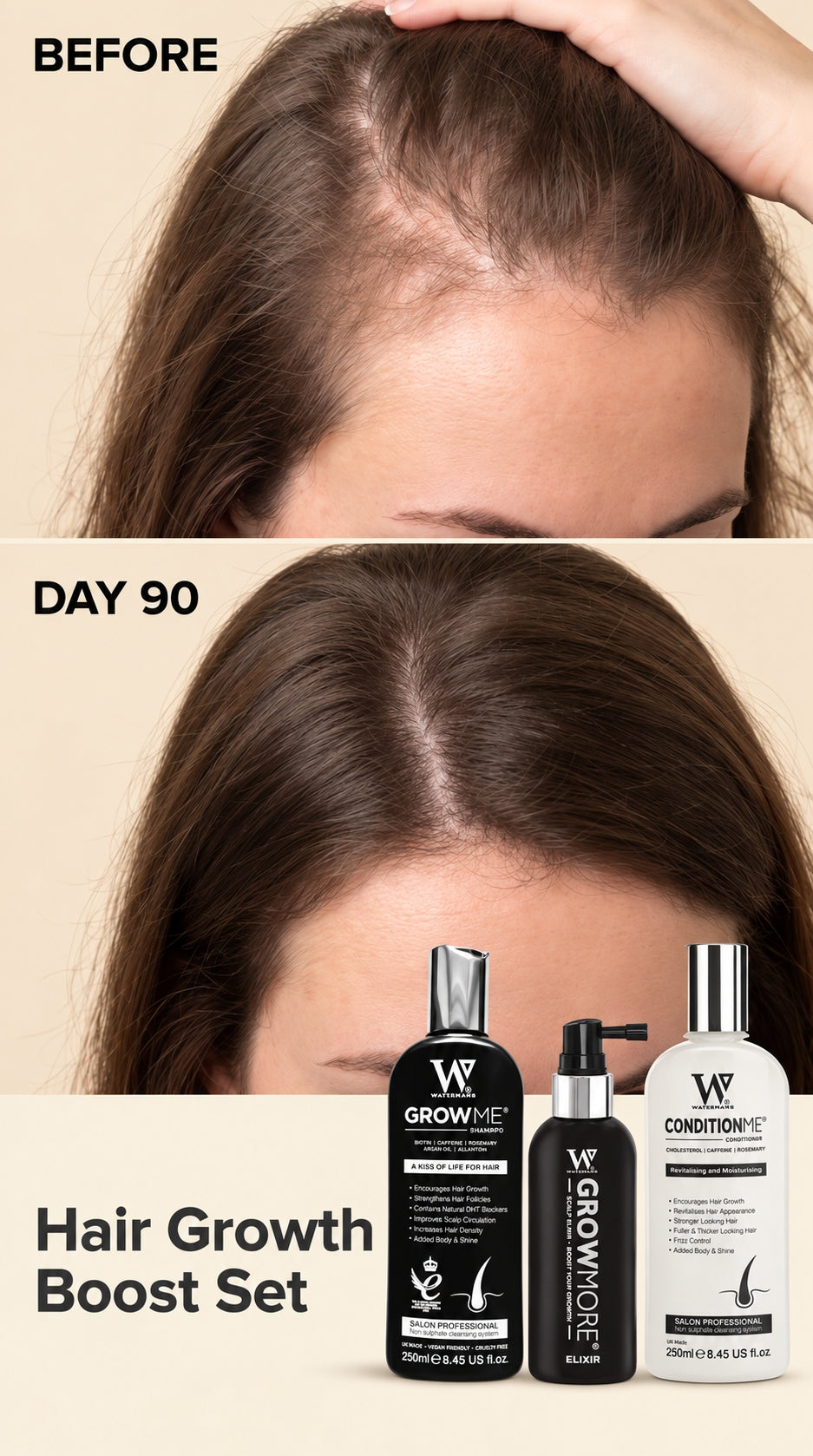
Our menopause hair care kit
Menopause Hair Care Kit, £69.99. A complete hair, skin and wellbeing routine put together for the hair changes that arrive around the menopause.
Key takeaways
- Hair around menopause usually gets finer rather than falling out in patches. The parting widens, the ponytail thins, the hairline mostly holds.
- The NHS lists thinning hair among common menopause symptoms, alongside dry skin and changes in sleep and mood.
- Retention beats growth. Every strand that snaps at six inches is length you never get to see.
- Wash frequency should follow your scalp, not a rule. An oilier or flakier scalp needs washing more often, not less.
- Sudden, patchy or painful hair change is a GP conversation, not a shampoo decision.
What does a menopause hair care routine actually need to do?
A menopause hair care routine works on three things it can genuinely influence, and leaves alone the one thing it cannot. It can keep the scalp comfortable, reduce the number of hairs that snap before they reach full length, and make the hair that is there look denser. It cannot change the hormonal signal that made your hair finer in the first place.
That is not a disappointing conclusion, it is a useful one. On a head of hair that has gone from coarse to fine, mechanical damage costs you far more visible density than it used to, because a fine fibre snaps at a fraction of the force a coarse one tolerates. Fixing the handling is the highest return change available to you, and it is free.
Why does hair change during the menopause?
Oestrogen levels fall through perimenopause and after the final period, and hair follicles are among the many tissues that respond. The NHS lists thinning hair and dry skin among common menopause symptoms, and NICE guideline NG23 sets out how menopause is recognised and managed in the UK.
The mechanism at the follicle is what DermNet describes as female pattern hair loss: affected follicles produce a slightly finer, shorter hair with each successive cycle, so density is lost gradually across the top of the scalp while the frontal hairline usually stays intact. That diffuse pattern is why the parting widening is often the first thing anyone notices, and why the change looks nothing like the receding hairline pattern people expect.
It is not always the menopause
Thyroid problems, low iron and big changes in diet all cause hair change in the same age band, and all are checkable with a blood test. If your hair changed suddenly rather than over years, ask your GP before assuming it is hormonal.
What does a good menopause hair care routine look like week to week?
Structure beats intensity, and the whole thing fits into a normal week without adding a single step you have to remember. The routine below is built around retention: cleanse without stripping, condition every single wash, keep heat and tension low, and give the scalp one deliberate treatment a week.
| When | What you do | Why it matters |
|---|---|---|
| Every wash | Sulphate free shampoo at the scalp only, conditioner mid lengths to ends | Cleansing belongs on the scalp. Conditioner belongs where the hair is oldest and driest |
| Every wash | Detangle with conditioner still in, wide tooth comb, ends first | Detangling dry or from the roots is the single biggest cause of avoidable breakage |
| Daily | Leave-on scalp serum worked in with fingertips, or nothing at all | A leave-on step is where any scalp active gets its contact time |
| Weekly | Deep conditioning mask, 10 minutes, mid lengths to ends | Restores slip to the oldest hair, which is the part most likely to snap |
| Weekly | One heat free day and one loose hairstyle audit | Repeated tension in the same spot is preventable hair loss |


Menopause Relief Hair Care Kit £69.99
The five step menopause system: Grow Me, Condition Me, Grow More Elixir, Allevi8 and Moisturise Me, built for hair and skin changes around midlife.
Get a discount on the menopause hair range
Join the Watermans mailing list and we will email a discount code straight to your inbox, so you can try the menopause hair range for less. Made in the UK, over 6.5 million bottles sold since 2012.
How often should you wash your hair during menopause?
Wash frequency should follow your scalp rather than a number you read somewhere. Scalp oil production changes around menopause in both directions: some people find the scalp drier and flakier, others find it oilier than it has been in decades. Both are normal, and they need opposite answers.
The practical test is how the scalp feels on day two. Itchy, tight or flaky means you are washing too aggressively or not moisturising the lengths. Heavy, greasy or smelling of product means you are washing too rarely for your scalp. Leaving an oily scalp unwashed to "let the oils travel down" does not thicken hair, and on a flake prone scalp it makes the flaking worse. Our guide to choosing a menopause shampoo goes through what actually matters on the label.

Grow Me® Hair Growth Shampoo £14.95
Sulphate free, 250ml. Biotin, caffeine, rosemary and hydrolysed lupine protein (ANAGELINE®) in a everyday cleanse that leaves hair looking thicker and fuller.
Which ingredients are worth looking for?
Four categories earn their place on a fine, midlife head of hair, and they are chosen for what they do to the fibre and the scalp rather than for any promise about hormones. Nothing here changes the follicle. All of it changes how the hair behaves between washes.
- Hydrolysed proteins. Small enough to sit on and inside the damaged outer layer of the fibre, which is what gives fine hair back some body and resistance to snapping.
- Niacinamide and panthenol. Well established conditioning agents for hair and skin. Panthenol holds water in the fibre. Niacinamide is a familiar scalp comfort ingredient.
- Emollients that suit fine hair. Shea butter and glycerin give slip without the weight that flattens a fine ponytail. Heavy silicone build up is the opposite of what you want here.
- Caffeine and rosemary. Common in scalp products for the feel and the stimulation of the routine itself. Treat them as part of a pleasant scalp habit rather than a promise.
Watermans formulas are built on biotin, caffeine, rosemary, niacinamide and hydrolysed lupine protein (ANAGELINE®), with shea butter, glycerin and silica on the conditioning side. Our fuller breakdown of which menopause hair products are worth using takes each category in turn.

Condition Me® Hair Growth Conditioner £13.95
Breakage defence conditioner with cholesterol, shea butter, glycerin and silica. Slip for detangling, so fewer strands snap on the way through.
Is this hair loss, hair shedding or hair breakage?
Three separate problems present as "my hair is going", and a menopause hair care routine helps enormously with one, a little with another and not at all with the third. Sorting out which you have before you change anything saves months.
| What it is | What you see | Timeline | What actually helps |
|---|---|---|---|
| Hair loss | Follicles producing finer, shorter hairs each cycle. Parting widens across the top | Years, gradual | Realistic expectations, styling for density, GP or registered trichologist if it accelerates |
| Hair shedding | Normal full length hairs leaving faster than usual, all over | Two to four months after a trigger, then settles | Patience. Find and fix the trigger. Shampoo does not shorten it |
| Hair breakage | Short broken pieces, rough ends, frizz halo, no root bulb | Improves within weeks of changing handling | Conditioner, detangling properly, less heat, looser styling |
The reassuring part is that breakage is extremely common at this stage and responds fastest. Fine hair plus years of heat plus a tight daily ponytail produces a lot of snapped fibres, and all three are things you control. Our guide to working out whether it is really the menopause walks through the same sorting process.
What should you stop doing?
Subtraction is the underrated half of any menopause hair care routine, and four habits do most of the damage. None of them feel dramatic, which is exactly why they persist for years.
- Stop brushing hair from the roots down when it is tangled. Start at the ends and work up. Dragging a knot from the scalp pulls out hair that had no reason to leave.
- Stop the daily straightener pass. If heat styling is non negotiable, drop the temperature and use a protectant. Fine hair needs far less heat than coarse hair to hold a shape.
- Stop wearing the same tight style every day. Traction at the same point every day for years is one of the few genuinely preventable causes of hair loss at the hairline.
- Stop skipping conditioner to avoid weighing hair down. Skipping conditioner does not add volume, it adds friction, and friction is what snaps fine hair. Condition mid lengths to ends and rinse properly.

When should you see a GP instead of changing your shampoo?
Certain patterns are not cosmetic problems and no routine will address them. See your GP if hair comes out in defined patches, if the scalp is sore, scaly, red or scarring, if the change happened over weeks rather than years, or if it comes with fatigue, weight change, heavier periods or feeling cold all the time.
Blood tests for iron and thyroid function are ordinary, quick and worth asking your GP about, because both conditions affect hair in exactly this age band and both are manageable once identified. If you are considering or already using hormone replacement, our guide to what HRT can and cannot change about hair covers the realistic picture. The Institute of Trichologists holds the UK register if you want a qualified specialist opinion.

How do you style fine menopausal hair so it looks fuller?
Styling choices change apparent density more than any bottle does, and the effect is immediate rather than seasonal. Three decisions carry most of the result: where the parting sits, how blunt the ends are, and how much product weight sits at the root.
- Move the parting. A parting worn in the same place for years flattens the hair on either side of it and exposes the most scalp. Shifting it an inch lifts the root and covers the widest gap instantly.
- Ask for blunt ends, not heavy layers. Thinned, feathered ends make fine hair taper to nothing. A blunt perimeter keeps weight at the bottom, which reads as thickness.
- Keep conditioner and oil off the roots. Weight at the root is what flattens fine hair. Slip belongs on the mid lengths and ends, where the fibre is oldest.
- Dry with the head tipped forward for the last thirty seconds. Free lift, no product, no heat damage if the dryer is on a cool setting.
One honest note on colour. Lightening fine hair raises the cuticle and makes it more fragile, so bleach and highlights genuinely increase breakage. That does not mean never colour it, it means condition harder and stretch the gap between appointments. A tinted root spray covers a wide parting for a fraction of the damage, and costs a fraction of the money.
Frequently asked questions
How long before a menopause hair care routine shows a difference?
Breakage related improvements show within four to six weeks, because you stop losing length almost immediately. Anything to do with how thick each new hair grows takes a full growth cycle, so give it six months and judge it with photographs of the same parting in the same light.
Does menopause cause hair to fall out or just get thinner?
Mostly thinner. The usual midlife pattern is diffuse thinning across the top of the scalp, where each follicle produces a finer hair with each cycle, rather than hair coming out in patches. Patchy loss is a different problem and needs a GP.
Should I wash my hair less often during menopause?
Only if your scalp is genuinely dry. Many people find the opposite, that the scalp becomes oilier or flakier, and washing less makes both worse. Let day two tell you: tight and flaky means wash gentler, greasy and heavy means wash more often.
Can a shampoo or conditioner change menopausal hair thinning?
No cosmetic product changes the hormonal signal at the follicle, and any brand claiming otherwise is making a medical claim it cannot support. What good products do is reduce breakage, add body to a fine fibre and keep the scalp comfortable, which makes hair look and feel fuller.
Do hair vitamins help with menopause hair changes?
Supplements help if you are short of something, and not otherwise. Iron and vitamin D deficiency are common enough in this age group to be worth a blood test. Taking high dose supplements without knowing your levels is guesswork, and some nutrients are harmful in excess.
Is it worth cutting my hair shorter?
Often yes, on purely mechanical grounds. The oldest few inches have taken the most heat, brushing and weather, and they are the part most likely to look thin and snap. Removing them makes the remaining hair look thicker immediately and reduces the tangling that causes further breakage.
Will my hair go back to how it was after menopause?
For most people the fine texture persists, because the change at the follicle is ongoing rather than temporary. Any sudden shedding layered on top usually settles. Setting expectations honestly here matters, because chasing a reversal costs money and time that a good routine and a good cut spend far better.
What is the single most useful change to make first?
Detangling properly with conditioner still in the hair, working from the ends upwards with a wide tooth comb. It costs nothing, takes two extra minutes, and removes the most common cause of avoidable breakage on fine midlife hair.
What is the bottom line on a menopause hair care routine?
A menopause hair care routine cannot change your hormones, and any product that claims to is overreaching. What it can do is keep every hair you grow on your head for its full length, keep the scalp comfortable, and make fine hair look and feel denser. Cleanse the scalp, condition the ends, detangle from the bottom up, cut the heat, loosen the tension, and give it six months.
Sort out which of hair loss, hair shedding and hair breakage you are actually dealing with before you spend anything. And if the change was sudden, patchy or came with other symptoms, that belongs with your GP rather than with a new shampoo. If your question is about products or a routine rather than a medical one, you can talk to Gail Waterman, our co-founder, as an AI avatar on the Watermans homepage.
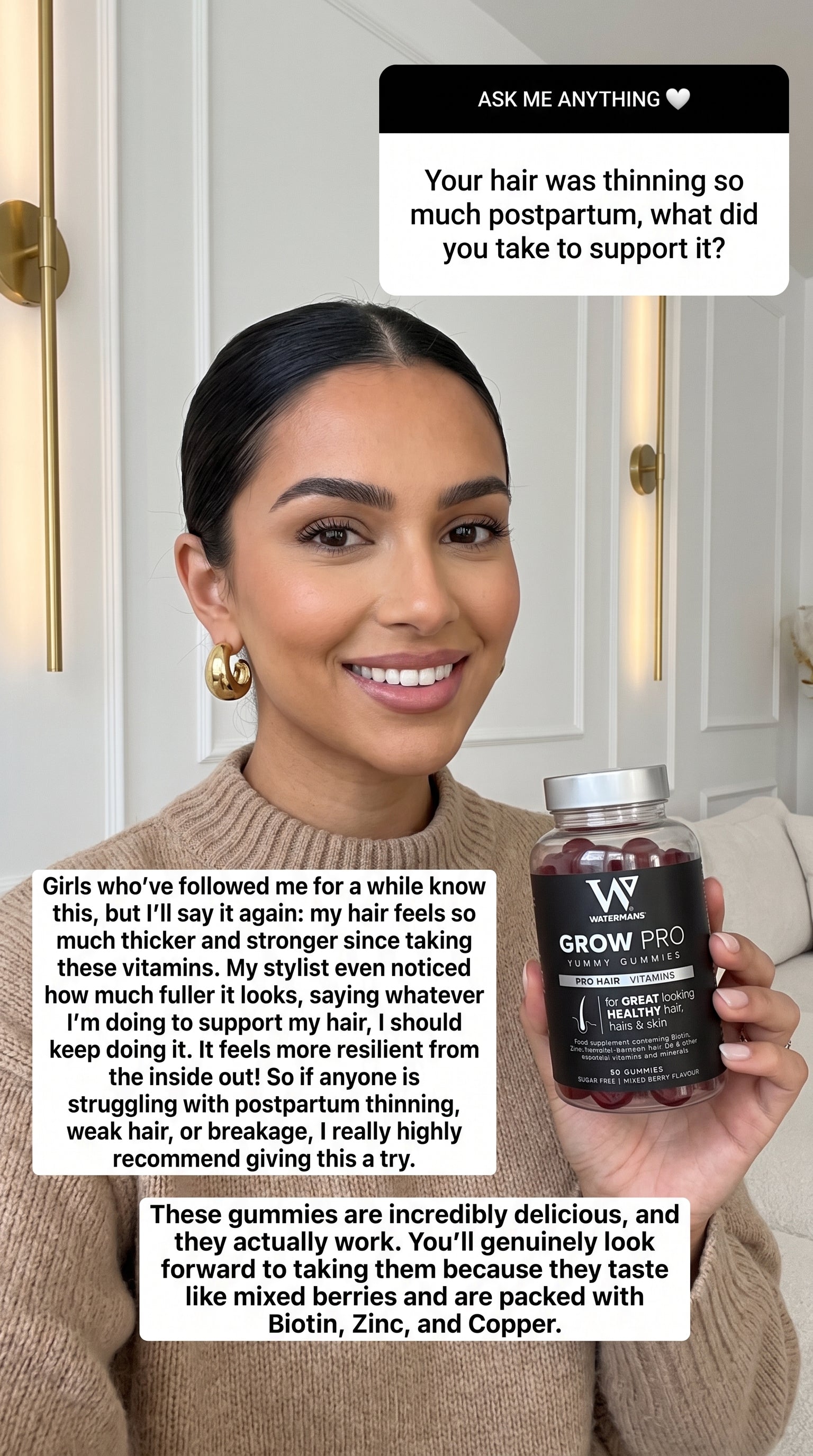
If you want one place to start, the menopause hair care kit puts the whole routine in a single box: shampoo, conditioner, leave-on scalp elixir, supplement and moisturiser, built for hair and skin changes around midlife.
Sources & references
- NHS, Menopause, overview of menopause and perimenopause in the UK.
- NHS, Menopause symptoms, lists thinning hair and dry skin among common symptoms.
- NICE guideline NG23, Menopause: identification and management, the UK clinical guideline.
- DermNet, Female pattern hair loss, on diffuse thinning across the top of the scalp.
- NHS, Hormone replacement therapy (HRT), NHS guidance on HRT.
- NHS, Iron, on iron and deficiency.
- The Institute of Trichologists, the UK register of qualified trichologists.
Watermans products are 100% cosmetic and do not treat medical hair loss. Individual results may vary.