Trichologist Eastleigh: Traction Alopecia and Tight Styles
Tension is the quietest cause of hair loss, because nothing hurts enough to stop you. A ponytail that feels secure, a braid set that lasts six weeks, a clip that always goes in the same place: each one pulls on the same follicles, day after day, until the hairline starts to move back. If you are looking for a trichologist Eastleigh has nearby because your edges are thinning, traction alopecia is the first thing worth ruling in or out.
Our curly hair set
Curly Hair Shampoo & Conditioner Set, £24.95. A moisture led cleanse and condition pairing made for curls and coils, defining the curl pattern without stripping it.
A trichologist Eastleigh residents can consult will check the hairline, the temples and the parting for traction alopecia, which is thinning caused by repeated pull rather than by anything internal. It shows up where tension is highest, often with small bumps or tenderness after styling. Caught early, follicles usually recover once the pull stops. Left for years, the follicle scars over and the change is permanent.
Key takeaways
- Traction alopecia is caused by repeated pull on the follicle, so the pattern follows your styling rather than a genetic pattern.
- Tenderness, small bumps or a headache after styling are early warnings. Pain is never the price of a good style.
- The fringe sign, a surviving band of fine hairs right at the front edge with thinning behind it, is a classic clue.
- Scalp hair grows roughly 1 cm a month, so judging recovery takes three to six months of genuinely low tension.
- Once the skin in the thinned area looks smooth and shiny with no visible pores, scarring has happened and the change is permanent.
What is traction alopecia and how does it start?
Traction alopecia is hair loss caused by sustained mechanical pull on the follicle. The follicle is anchored in the scalp by soft tissue, and constant tension inflames that anchoring, weakens the attachment and eventually shuts the follicle down. Because the cause is external, the pattern always matches the styling: thinning at the front hairline from tight ponytails, at the temples from braids and weaves, along a parting from clips and extensions, or behind the ears from headbands.
It builds slowly enough to be missed. The first stage is often invisible: small bumps around the hair shafts after a fresh style, an itch, or a dull ache in the scalp that evening. The second stage is short, fine, broken hairs in the tension zone. Only the third stage looks like hair loss, and by then the habit is usually years old. Dermatology sources including DermNet and the British Association of Dermatologists describe it as one of the few genuinely preventable forms of alopecia, which is the good news buried in all of this.

What is the difference between hair loss, hair shedding and hair breakage?
Hair loss, hair shedding and hair breakage are three separate mechanisms, and tight styling can cause two of them at once. Hair loss means the follicle stops producing, leaving visible scalp. Hair shedding means hairs leave at the root in unusual numbers after an internal trigger such as illness or stress, and it recovers. Hair breakage means the fibre snaps along its length while the follicle is healthy, which is what tight elastics, dry detangling and rough edges on clips do.
| What you notice | Mechanism | What changes it |
|---|---|---|
| Hairline moving back where styles pull | Traction hair loss | Lower tension, varied styles, breaks between sets |
| Short snapped pieces where the elastic sits | Breakage | Fabric ties, no elastic in the same spot, conditioning |
| Handfuls at every wash, all over | Shedding | Time and a GP check on iron and thyroid |
| Smooth shiny skin with no pores | Scarring | Nothing cosmetic. This needs dermatology |
The distinction matters because breakage improves within weeks of changing how you handle hair, while traction loss takes months and only if the pull genuinely stops. Our overview of the three mechanisms behind thinning hair sets each one out with the tests you can do at home.
What is the fringe sign and why does it matter?
The fringe sign is a narrow band of fine, short hairs that survives right at the very front edge of the hairline while the area immediately behind it thins. It happens because the outermost hairs are too short to be caught by the style, so they escape the tension that the hairs behind them take. Dermatologists use it as a strong pointer towards traction alopecia rather than pattern loss, because pattern hair loss does not spare the front edge that way.
It matters to you for a different reason: the fringe sign means follicles in that zone are still alive. A hairline with a surviving fringe has not scarred over yet, and that is precisely the window where changing habits makes a difference. A hairline that is smooth and shiny all the way to the edge has usually passed that point.
Which hairstyles cause the most tension?
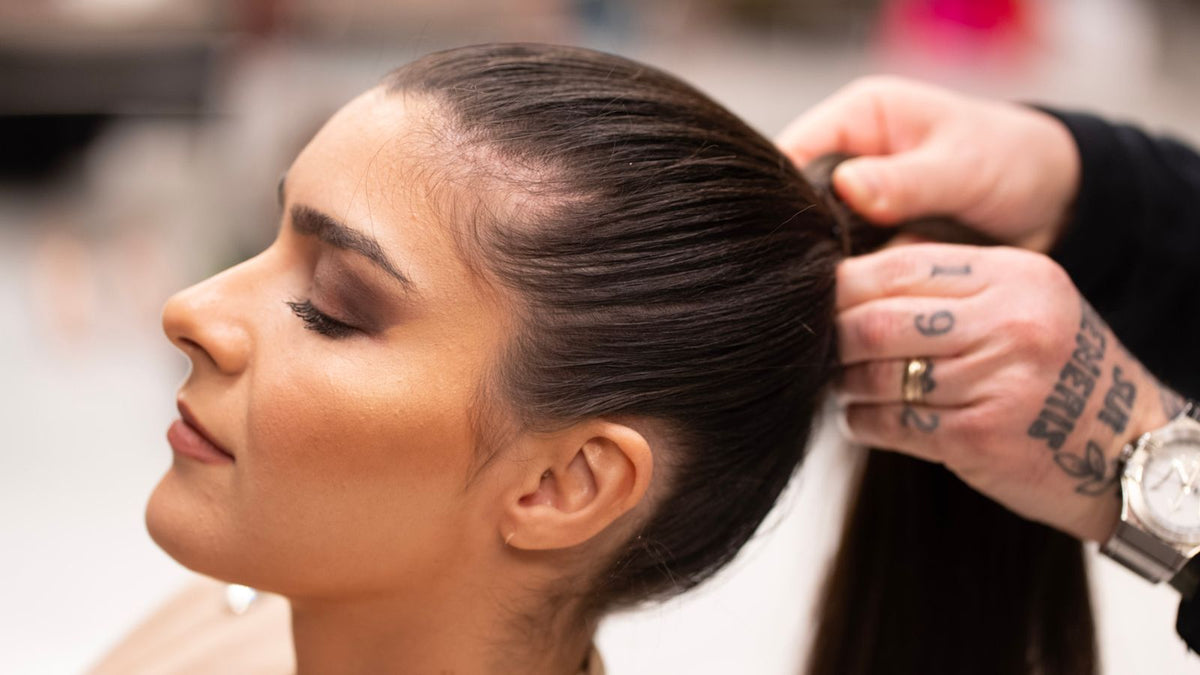
The styles that cause the most tension are the ones that hold hair in a fixed position under load for long periods. Tight high ponytails and sleek buns concentrate pull on the front and sides. Braids and cornrows taken close to the scalp put steady tension on every follicle in the row, and the tighter the take-down, the worse it is. Bonded, sewn or clipped extensions add weight, which multiplies the load on the hairs carrying them. Tight headbands and repeatedly parting in exactly the same place do smaller versions of the same thing.
The five minute rule
If a style still feels tight five minutes after it is finished, it is too tight. Tenderness, a headache, tingling or visible bumps around the hair shafts all mean the tension is beyond what the follicle tolerates. Loosen it that day rather than waiting for the style to settle, because the damage happens while you wait.
Heat and chemical processing compound it. Relaxed, coloured or heat-straightened hair is weaker along the shaft, so the same tension causes more breakage on top of the traction. That combination, chemical processing plus tight styling, is the one most often behind a hairline that has moved back several centimetres over a decade.
Get a discount on the hairline tension and breakage range
Join the Watermans mailing list and we will email a discount code straight to your inbox, so you can try the hairline tension and breakage range for less. Made in the UK, over 6.5 million bottles sold since 2012.
How long does it take for hair to recover once tension stops?
The first thing a trichologist Eastleigh based will tell you is that recovery from traction alopecia takes months rather than weeks, because scalp hair grows roughly 1 cm a month and a follicle that has been dormant has to restart a full cycle first. A realistic expectation is three to six months of genuinely low tension before you can judge whether anything is changing, and up to a year for the front to look filled in. That timescale is why photographs matter more than daily mirror checks.
Two things make the difference between recovery and no change. The first is whether the follicle has scarred, which you cannot judge reliably yourself. The second is whether the tension has actually stopped, as opposed to being reduced: swapping a very tight ponytail for a slightly less tight one worn every day is not a break. Rotating styles, wearing hair loose at home, and giving the hairline two to four weeks between protective sets is what a break actually looks like.

When does traction alopecia become permanent?
Traction alopecia becomes permanent when repeated inflammation destroys the follicle and it is replaced by scar tissue. The visible sign is skin that looks smooth, shiny and slightly pale, with no follicular openings visible when you look closely under good light. At that stage no styling change, shampoo or oil alters the outcome, and the options that remain are camouflage, a cut that works with the shape, or a surgical consultation, which is a dermatology conversation rather than a hair-care one.
There is no fixed number of years at which this happens, which is the frustrating part. It depends on how tight, how often, how long each style stays in, and on how much inflammation an individual scalp produces. What is consistent is direction of travel: the longer tension continues after the first warning signs, the smaller the chance of recovery. That is the whole argument for acting on tenderness rather than tolerating it.
How should you wear protective styles safely?
Protective styles protect hair only when they are fitted loosely and taken down on time, and they do the opposite when they are not. The principles are simple: no tension at the roots, no weight the hair cannot carry, no style left in past its useful life, and breaks between sets. A braider who says a little pain means it will last is describing damage, and it is entirely reasonable to ask them to loosen the first row before they carry on.
- Ask for braids and cornrows to be taken loosely at the hairline and temples specifically.
- Keep protective styles to six to eight weeks maximum, and leave two to four weeks between sets.
- Change where the parting and the tension fall between styles rather than repeating the same pattern.
- Choose lighter extension weights, and avoid adding length and weight to already fine edges.
- Sleep on satin or silk, and use a loose bonnet rather than a tight one.

Curly Hair Shampoo & Curl Definition Conditioner Set £24.95
A curl shampoo and conditioner set for textured and coily hair, built around slip and moisture so take-down day costs you fewer hairs. Cosmetic care for the hair around the hairline, not a fix for tension damage.
Our guides to length retention for afro hair and building a full afro routine both go further into protective styling without the tension.
What does a low-tension wash day routine look like?
The wash day routine a trichologist Eastleigh locals see would suggest is designed so the comb never has to fight. Detangle in sections on conditioned, wet hair rather than dry, start at the ends and work upward, use a wide-tooth comb or fingers, and accept that it takes longer. Most of the hair people lose on wash day is breakage from detangling dry or from the top down, not shedding, and changing that one habit is measurable within a couple of weeks.

Condition Me® Hair Growth Conditioner £13.95
Slip is the whole point of conditioner on wash day. Work it through the mid-lengths and ends, comb it through in the shower, then rinse.

Grow Me® Hair Growth Shampoo £14.95
A daily shampoo formulated to reduce breakage and keep the scalp clean between protective styles. Cosmetic care, and it is not a remedy for tension damage.
Scalp care between styles matters too. Product build-up under braids, combined with sweat, leaves the scalp itchy, and scratching an already inflamed hairline adds injury to tension. Washing between sets, rather than stretching a style to avoid the hassle, keeps the scalp in better condition. Our list of seven everyday habits that reduce breakage covers the rest of the routine.

What does a trichologist Eastleigh consultation cover?
A trichology consultation covers a close examination of the scalp, usually under magnification, a look at the pattern of thinning against your styling history, a gentle pull test, and practical guidance on routine. The Institute of Trichologists keeps a public register of qualified UK members, and checking it first is the simplest safeguard. Expect to pay roughly 50 to 150 pounds for a first private consultation, since trichology is not an NHS service.
NHS advice is to see a GP when hair loss is sudden, patchy, comes with a sore, itchy or scaly scalp, or is causing distress. A tender, bumpy hairline that is not settling is worth a GP visit regardless of what a trichologist Eastleigh way says, because inflammation at the follicle is the step before scarring and it is better looked at early.
What are the frequently asked questions a trichologist Eastleigh hears about tight styles?
Does traction alopecia always come back with time?
If the follicles have not scarred, hair usually returns once the tension genuinely stops, over three to twelve months. If the skin in the area is smooth and shiny with no visible pores, the follicles have scarred and the change is permanent.
Are braids bad for your hair?
Braids are not the problem, tension and duration are. Loosely fitted braids taken down on time protect hair from daily handling. Tight braids at the hairline, heavy extensions, or sets left in for months cause exactly the damage they are supposed to prevent.
Why does my scalp hurt after my hair is styled?
Pain means the pull is beyond what the follicle tolerates, and it is a warning rather than a normal part of styling. Loosen the style that day. Repeated episodes of tenderness are how traction damage accumulates.
Can men get traction alopecia?
Yes. Man buns, tight durags, dreadlocks carrying weight and daily tight caps all produce the same pattern, usually at the temples or the front hairline. The mechanism does not care about gender.
Is thinning at the temples always traction?
No. Pattern hair loss also affects the temples, and the two can overlap. The clue is whether the very front edge is spared, which points towards traction, and whether the thinning matches where your styles pull.
Do oils help a thinning hairline?
Oils improve how the hair fibre behaves and reduce friction, which helps with breakage. They do not change what tension is doing at the follicle, so an oil alongside the same tight styling changes very little.
How long should I leave between protective styles?
Two to four weeks is a reasonable break, worn loose, washed and conditioned normally. A break is about the hairline being free of load, not simply about swapping one tight style for another.
Should I stop wearing my hair up altogether?
No, and that is not realistic. Vary the height and the position, use fabric ties rather than elastics, keep it loose enough to slide, and take it down in the evening. Tension that changes place is far less damaging than tension that never moves.
Sources & references
- NHS: Hair loss
- DermNet: Traction alopecia
- British Association of Dermatologists: Traction alopecia information leaflet
- DermNet: Female pattern hair loss
- The Institute of Trichologists
What is the bottom line on trichologist Eastleigh?
If you are searching for a trichologist Eastleigh has nearby because your edges are thinning, traction alopecia is the most likely answer and it is also the most actionable one. The pattern follows your styling, the early warnings are tenderness and small bumps rather than visible loss, and the fringe sign at the front edge is a good indication that the follicles are still alive.
The action is unglamorous: looser styles, shorter sets, real breaks, varied tension, gentle detangling on conditioned hair, and a satin pillowcase. Give it three to six months before judging, and see a GP if the hairline is sore, bumpy or not settling, because inflammation is the step before scarring and that is the change nothing cosmetic can undo. If your question is about products or a routine rather than a medical one, you can talk to Gail Waterman, our co-founder, as an AI avatar on the Watermans homepage.
For textured hair that needs slip on take-down day, start with the curly hair shampoo and conditioner set, which is built around moisture and detangling rather than hold.
Please note: Watermans products are 100% cosmetic and do not treat medical hair loss. Individual results may vary.