Trichologists Edinburgh: How to Check Credentials
Searching for trichologists Edinburgh throws up clinics, salons and hair studios side by side. They are not the same thing.
In the UK, "trichologist" is not a protected title, so anyone may use it without holding a qualification. When you compare trichologists Edinburgh lists, the useful check is not the website but the register: look for membership of the Institute of Trichologists or the Trichological Society, ask what the qualification was and how long it took, and find out whether the person earns their money from advice or from selling you a course of products.
Key takeaways
- "Trichologist" is an unprotected title in the UK, so among the trichologists Edinburgh lists the register matters more than the shopfront.
- Membership of the Institute of Trichologists or the Trichological Society is the single quickest credential check you can make.
- A scalp or hair problem with pain, sudden patches, scaling or scarring belongs with a GP or an NHS dermatology referral first, not a private hair studio.
- Ask how the person is paid. Advice-only fees and product-commission models produce very different recommendations.
- Hair loss, shedding and breakage are three different problems. Establish which one you have before you pay anyone to fix it.
What does the word trichologist actually mean in the UK?
A trichologist studies hair and scalp health, and the good ones are genuinely useful: they look at the scalp under magnification, take a history, measure what is happening at the parting and the hairline, and tell you honestly whether the problem belongs with them or with a doctor. The complication is legal rather than clinical. Unlike "physiotherapist" or "dentist", the word trichologist is not protected in UK law. No register has to be joined, no examination has to be passed, and no regulator can strike anyone off. That does not make trichology worthless. It means the burden of checking falls on you.
The two established UK bodies are the Institute of Trichologists, founded in 1902, and the Trichological Society. Both set an examined course and a code of practice, and both publish a member directory you can search by area. A member of either has done structured study. Someone advertising a "hair consultation" with no letters after their name and no register entry may still be skilled, but you have no way to verify it.
How should you compare the trichologists Edinburgh has before you pay?
Comparing practitioners works best as a short checklist rather than a feeling about a website. Run the same five questions past every practice you are considering, and the differences show up quickly.
- Which register are you on? Ask for the body and the membership grade, then check the directory yourself rather than taking the logo on the site as proof.
- What qualification do you hold, and how long was it? A multi year examined course and a weekend certificate are both "training". They are not equivalent.
- How are you paid? A flat fee for the session, a fee plus optional products, or a free session that only makes money if you buy a programme. All three exist in Scotland.
- What happens if this turns out to be medical? A good answer names the route: back to your GP, or on to NHS dermatology. A poor answer is that they can handle anything.
- What do I leave with? Written findings and a plan you can read at home are worth paying for. A verbal chat and a bag of products are not.

One quick sanity check
Search the practitioner name on the Institute of Trichologists and Trichological Society directories before your first visit. It takes two minutes. If the name is not there, ask why, and listen to the answer rather than the reassurance.
Which registers and regulators are worth checking in Scotland?
Scotland has a different regulatory map from England, and it catches people comparing trichologists Edinburgh wide out. The Care Quality Commission does not operate here. Independent healthcare in Scotland is regulated by Healthcare Improvement Scotland, and only where a service is actually providing independent healthcare. A high street hair studio offering cosmetic advice usually falls outside that entirely, which is exactly why the professional register matters so much.
| What you are checking | Where to check it | What it tells you |
|---|---|---|
| Trichology training and code of practice | Institute of Trichologists or Trichological Society member directories | That the person passed an examined course and answers to a professional body |
| Independent clinics offering healthcare | Healthcare Improvement Scotland | That a genuine clinical service is registered and inspected in Scotland |
| A doctor calling themselves a hair specialist | The GMC medical register | That the doctor holds a licence to practise, and in which specialty |
| Whether your problem is medical at all | Your own GP practice, or NHS inform | Whether an NHS route exists before you spend anything privately |
Is your problem hair loss, hair shedding or hair breakage?
These three get lumped together as "hair loss" and they need completely different answers, so it is worth being precise before anyone sells you a plan.
- Hair loss is follicular, and our guide to what causes thinning hair walks through the mechanisms. The follicle itself is affected, as in androgenetic alopecia where follicles gradually miniaturise, or alopecia areata where the immune system attacks them. Hair density falls in a pattern.
- Hair shedding is a cycle problem, set out in more depth in what causes telogen effluvium. A trigger such as illness, childbirth, a crash diet, surgery or a thyroid problem pushes an unusually large share of follicles into the resting phase at once, and roughly two to three months later they release together. The follicles are still there.
- Hair breakage is fibre damage. The hair snaps along its length from heat, bleach, tight styling or rough detangling, so length and thickness are lost while the follicle is untouched. You see short broken ends rather than a wider parting.

The practical difference matters. Breakage responds to changing what you do to your hair, and it responds fairly quickly. Shedding usually settles once the trigger is dealt with, which is a job for blood tests and time rather than products. Follicular loss is the one where a medical opinion carries the most weight, and where cosmetic products can support the look and feel of hair without changing what is happening under the skin.
When should you see a GP before a private hair specialist?
Some presentations should go to a doctor first, and any reputable practitioner will say the same. Speak to your GP practice, rather than a private hair studio, if you have sudden smooth bald patches, hair coming out with visible scalp scarring or shiny skin, a painful, weeping or crusted scalp, hair falling out alongside marked fatigue, weight change or heavier periods, or hair loss in a child. Scotland has a straightforward route: your GP can arrange blood tests and refer on to NHS dermatology where it is warranted, and NHS inform sets out what the service covers.
This is not a reason to avoid private trichology. It is a reason to sequence it. Find out first whether there is a named medical cause with an NHS pathway, then decide what a private practitioner adds on top.
Get a discount on the thinning hair range
Join the Watermans mailing list and we will email a discount code straight to your inbox, so you can try the thinning hair range for less. Vegan, made in the UK, over 6.5 million bottles sold since 2012.
What happens in a first trichology session, and what does it cost?
A first session in Edinburgh typically runs 45 to 60 minutes and costs somewhere in the region of £60 to £150, with follow ups lower. Expect a history covering family pattern, illness, medication, diet and styling, a look at the scalp under magnification, a pull test at several points on the head, and photographs for comparison later. Some practices offer hair mineral analysis. Treat that with caution, because its usefulness for everyday hair complaints is not well supported and it can add a lot to the bill. Our Dunfermline guide to what a first consultation covers and costs breaks the same hour down stage by stage.
If you have never been to one, our walkthrough of what to expect from a hair loss consultation covers the format. What you should leave with is a written summary: what was observed, what the likely explanation is, what would change the picture, and when to come back. If the entire output of the appointment is a recommendation to buy a three month course of own brand products, you have been to a sales meeting rather than an assessment.
What can you do at home while you sort out who to see?
Nothing you buy in a bottle changes a follicular cause, and no honest brand will tell you otherwise. What sensible daily care does do is stop you losing hair you already have to breakage, and keep the scalp comfortable. That is worth doing while you wait for an appointment, because breakage is the one component you control immediately.

Most of the trichologists Edinburgh residents rate will start here rather than with a product. Wash as often as your scalp needs, which for most people is every two to three days, and more if you exercise. Edinburgh water is soft, so shampoo lathers easily and it is worth using less than you think rather than scrubbing. Condition the mid lengths and ends every wash, detangle with a wide tooth comb from the ends upwards, and let hair dry most of the way before heat goes near it. Loosen tight ponytails and clips, especially around the hairline, where repeated tension does real damage over months. If the scalp is flaking or itching as well, read our guide to a flaky, irritated scalp before you change anything else.

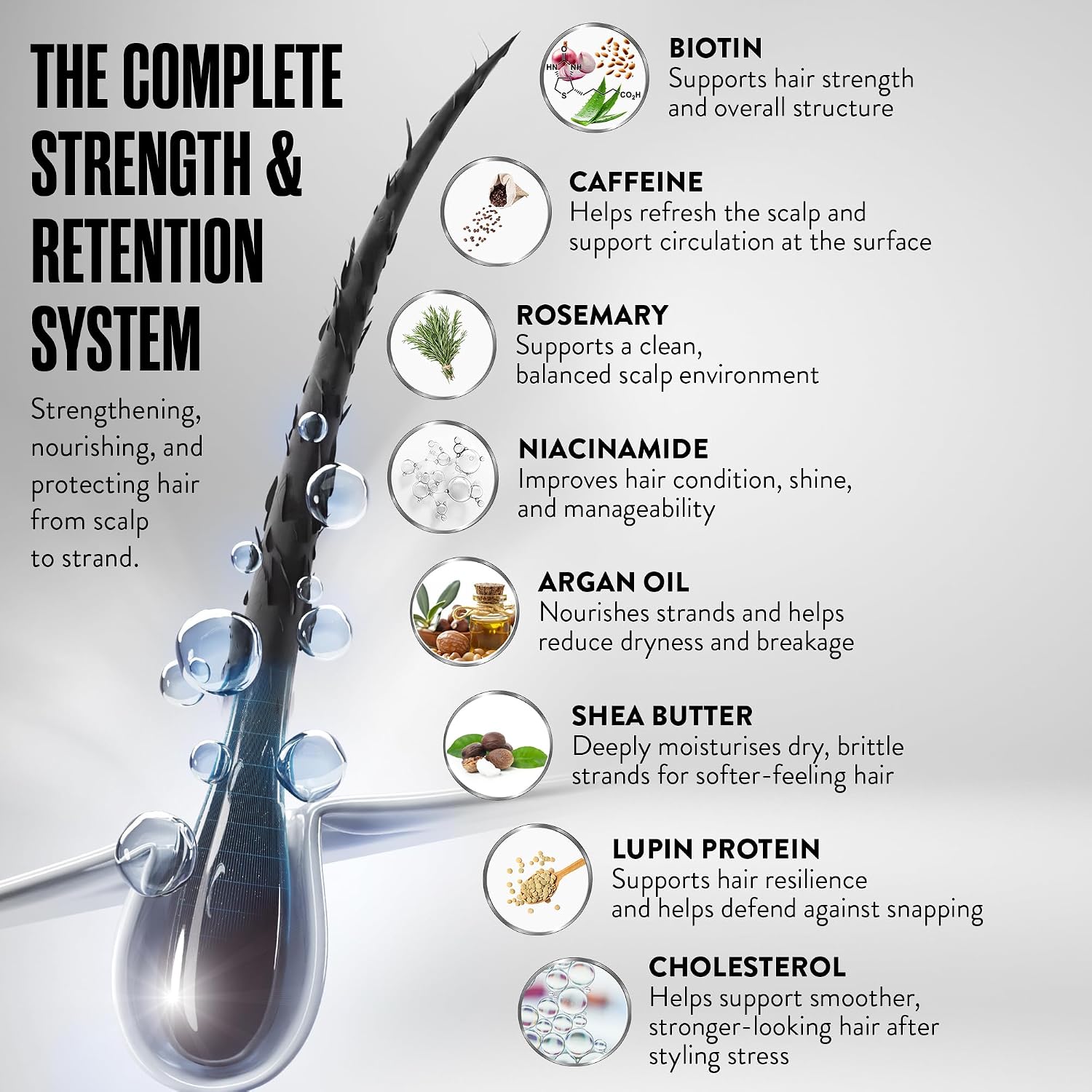
A sulfate free daily shampoo with biotin, caffeine, rosemary and niacinamide. It cleanses without stripping and supports a healthy scalp environment. Cosmetic care, not a medical product and not a substitute for one.

A leave on overnight elixir for the parting and crown, with caffeine, rosemary, niacinamide and hydrolysed lupine protein. It is a cosmetic product for scalp comfort and fuller looking hair.
Both are cosmetic products. They support a healthy scalp environment and fuller looking hair, and they sit alongside proper advice rather than replacing it. If a private practitioner tells you a shampoo will fix a medical cause, that is the moment to walk.
Frequently asked questions
Is trichologist a protected title in the UK?
No. Trichologist is not a protected title in UK law, so anyone can use the word without holding a qualification. This is why checking membership of the Institute of Trichologists or the Trichological Society matters more than the appearance of a clinic or its website. Readers in the Forth Valley may also want hard water, buildup and what they do to hair.
How much do trichologists Edinburgh based usually charge?
A first session is commonly around £60 to £150 for 45 to 60 minutes, with follow ups lower. Extra tests, and any products recommended, are charged on top. Ask for the full fee structure in writing before you attend.
Can I see a trichologist on the NHS in Scotland?
Trichology is not an NHS specialty. If a hair or scalp problem has a medical cause, the NHS route in Scotland is your GP practice, which can arrange blood tests and refer to dermatology where appropriate. Private trichology sits outside that.
Do I need a GP referral to see a trichologist?
No, private trichology is self referred. It is still worth speaking to your GP first if you have sudden patches, scalp pain, scarring, or symptoms elsewhere in the body, because those point to causes a private hair practitioner cannot manage.
What should I bring to a first appointment?
Bring a list of medicines and supplements, any recent blood results, dated photographs of your hair over the past few months, and a note of when the change started and what else was happening at the time.
Are hair mineral analysis tests worth paying for?
The evidence supporting hair mineral analysis for everyday hair complaints is weak, and it can add significantly to the cost of a session. A GP arranged blood panel covering iron, ferritin, thyroid function and vitamin D answers more useful questions.
Will a shampoo or serum stop my hair thinning?
No cosmetic product changes what is happening inside a follicle. Good daily care reduces breakage, keeps the scalp comfortable and helps hair look thicker, which is worth having, but it is not a medical answer to a medical cause.
Sources & references
- NHS, Hair loss
- NHS inform Scotland, Alopecia
- The Institute of Trichologists
- The Trichological Society
- Healthcare Improvement Scotland
- British Association of Dermatologists, information leaflets
The short version
Because the title is unprotected, choosing between trichologists Edinburgh offers is really an exercise in checking credentials and incentives. Look the name up on the Institute of Trichologists or Trichological Society directory, ask what the qualification was and how the practice is paid, and rule out a medical cause through your GP before you spend anything privately. Work out whether you are dealing with loss, shedding or breakage, because the answer decides who can actually help. Then keep the hair you already have with gentle, consistent daily care while you wait.
Watermans products are 100% cosmetic and do not treat medical hair loss. Individual results may vary.