Trichologist Enfield: How to Check Who You Are Seeing
Before you book a trichologist Enfield appointment, there is one fact worth knowing: in the United Kingdom the word trichologist is not a protected title. There is no statutory register, no legal minimum training and no licence to lose. Some practitioners are excellent and have trained for years; others printed a certificate. Since the law will not sort them out for you, this page is about how to do it yourself in about ten minutes.
Our curly hair set
Curly Hair Shampoo & Conditioner Set, £24.95. A moisture led cleanse and condition pairing made for curls and coils, defining the curl pattern without stripping it.
In short: Choosing a trichologist Enfield practitioner comes down to verification, because the title is unregulated in UK law. Ask which professional body they belong to, confirm that membership with the body directly, and expect a first consultation to cost roughly 75 to 250 pounds in north London. See your GP first for blood tests and any dermatology referral, and read a clear answer about the limits of their scope as the strongest signal you will get.
Key takeaways
- Trichologist is not a protected title. There is no statutory register, so verify membership yourself.
- Check with the body, not the website. The Institute of Trichologists and The Trichological Society publish member lists.
- Budget roughly 75 to 250 pounds for a first consultation in north London; prices are unregulated.
- A real assessment has five parts: history, magnified scalp exam, hair shaft check, pull test, written plan.
- North London water is hard, which dulls hair and roughens the fibre. It does not pull hair from the follicle.
- Traction alopecia is the urgent one. Caught early it usually recovers; left for years it may not.
Why does verification matter so much with a trichologist Enfield search?
Verification matters because nothing else is doing the job. In regulated professions, a statutory register removes the worst practitioners before you ever meet them, and the Health and Care Professions Council maintains exactly that kind of register for titles including physiotherapist, dietitian and radiographer. Trichology sits outside it entirely, so the filtering is yours to do.
That is not an argument against seeing one. It is an argument for spending ten minutes on the check. The two recognised bodies, the Institute of Trichologists and The Trichological Society, each run assessed training and hold a complaints process, so membership tells you something real. The check itself is simple: ask for the body and the membership name, then look it up on that body's own site.

Three questions that reveal almost everything
“Which body are you a member of, and under what name?” “What would make you send me back to my GP?” “What does the fee include, and is anything extra?” Clear answers to all three are a good sign. Hesitation on any of them is worth more than any number of testimonials.
What should a proper hair and scalp assessment include?
A proper assessment has five components and takes the best part of an hour. A history of what changed and when, a scalp examination under magnification, an inspection of the hair shafts for snapping and irregularity, a gentle pull test to gauge how readily hairs are releasing, and a written plan you take home. Anything shorter is a conversation, not an assessment.
Two other things should be present. First, an honest statement of scope: what this appointment can address and what needs a GP. Second, a photographic baseline, because the only reliable way to judge change over months is two images taken in the same light and the same parting. Without a baseline, everyone involved is guessing three months later.
Our guide to preparing for a hair loss consultation lists what to bring, and the three-clue self-check for thinning hair helps you describe the problem accurately when you get there.
Get a discount on the thinning hair range
Join the Watermans mailing list and we will email a discount code straight to your inbox, so you can try the thinning hair range for less. Vegan, made in the UK, over 6.5 million bottles sold since 2012.
What are the real costs, and what should make you walk away?
First consultations in north London commonly sit between roughly 75 and 250 pounds, with follow-ups lower. None of that is regulated, so the spread across a few miles is wide and price alone tells you very little about quality. What the price should buy is time, magnification and a written plan.
The warning signs are consistent, and they are about commercial structure rather than clinical detail:
- A course of sessions sold before any assessment has taken place.
- A promise of a specific outcome, or any language implying a certain result.
- Own-brand products that only that clinic sells, pushed as essential to the plan.
- No willingness to name what falls outside their scope.
- Pressure to decide today, or a discount that expires when you leave.
Is it hair loss, hair shedding or hair breakage?
Three different events, three different answers, and one test you can do yourself. Take a few loose hairs from your brush and look at the root end. A pale, club-shaped bulb means the hair completed its cycle and was released. A blunt or frayed end with no bulb means the fibre snapped.
| What is happening | Timescale | Where to start | |
|---|---|---|---|
| Hair shedding | A large group of follicles rests early and releases together | Appears 2 to 4 months after the trigger, runs 3 to 6 months | GP blood tests |
| Hair loss | Follicles miniaturise, or are damaged by tension or disease | Years, gradually, or patches appearing over weeks | GP, with dermatology referral where needed |
| Hair breakage | The fibre snaps along its length; the follicle is fine | Improves within weeks of changing handling | Your own routine |
The delay in the middle row is why people so often misidentify the cause. Something happens, nothing appears to change, and three months later the shedding starts, by which time the original event feels like ancient history. Our explainer on what causes telogen effluvium sets out the timeline, and how stress affects the hair cycle covers the most commonly misread trigger of all.
What does hard water in north London actually do to hair?
Hard water roughens and dulls; it does not cause hair to fall out. Thames Water, which supplies much of north London, states that all the water in its region is hard, and its published scale puts hard water above 200 mg/l of calcium carbonate. The minerals leave a deposit on the fibre, which lifts the cuticle, catches the light badly and makes combing harder.
Harder combing is where the real damage comes from, because that is mechanical breakage rather than anything happening at the root. A clarifying wash every week or two, conditioning from mid-lengths to ends at every wash, and detangling from the ends upward handle most of it. A shower filter may help, though the evidence for filters is thin compared with simply changing how you handle wet hair.

Why is traction alopecia the one to catch early?
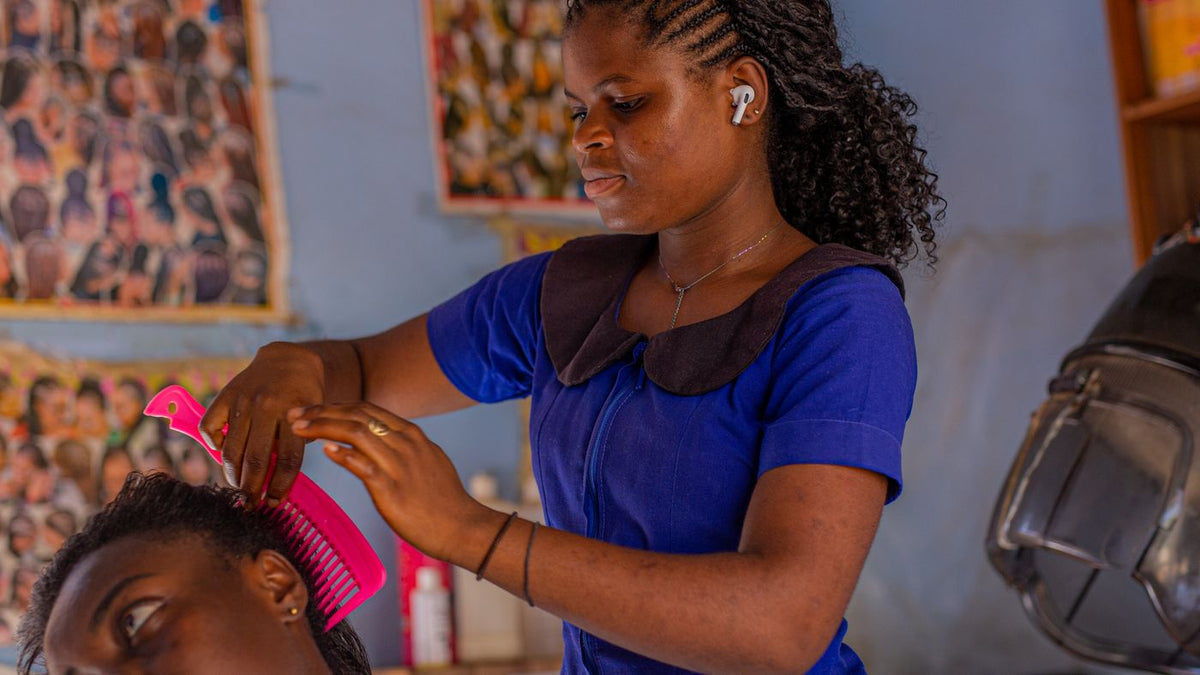
Traction alopecia is caused by sustained pulling on the same part of the hairline, and it is both the most preventable and the most permanent form of hair loss seen in Enfield clinics. Tight braids, weaves, extensions, high buns and headscarves worn the same way every day all concentrate force on the same follicles, day after day.
The early signs are specific: thinning right at the front hairline or above the ears, small bumps around the follicles, tenderness after styling, and short broken hairs along the edge. At that stage the follicles are still alive and loosening the tension usually allows density to return. After years of the same tension the follicles can scar, and scarred follicles do not come back. This is the one situation where booking sooner genuinely changes the outcome. If you would rather arrive with evidence than a description, our guide to what to measure before seeing a trichologist in Greenwich sets out the four weeks of dated photographs and wash-day shed counts worth gathering first.


Curly Hair Shampoo & Curl Definition Conditioner Set · £24.95
A sulfate-free cleanse and condition pairing for curls, coils and textured hair, formulated to keep moisture in and reduce the snapping that comes with detangling. Curl definition without the stripped, squeaky finish that makes combing harder.

Grow Me® Hair Growth Shampoo · £14.95
A gentle everyday shampoo with biotin, caffeine, rosemary and niacinamide that supports a healthy scalp environment and reduces breakage, so hair looks and feels fuller. It is cosmetic, and it does not act on the follicle cycle.
Our guides to retention for afro and textured hair and the everyday habits that reduce breakage cover the handling side in more depth.
Frequently asked questions
How do I check that a trichologist Enfield clinic is genuine?
Ask which professional body the practitioner belongs to, then check that membership on the body's own website rather than believing a logo on the clinic page. The Institute of Trichologists and The Trichological Society both publish member lists. If the answer is vague, or the qualification turns out to be a weekend certificate from a product brand, you have learned what you needed to know for free.
Is trichologist a protected title in the UK?
No. UK law protects titles such as doctor, nurse, physiotherapist and dietitian through statutory registers, and trichologist is not on that list. The Health and Care Professions Council register is where protected titles sit, and searching it for trichology returns nothing. Anyone may legally use the word, which is precisely why the membership check matters more here than in most health settings.
What should a real assessment include?
A proper assessment covers a full history, a scalp examination under magnification, a look at the hair shafts themselves, a pull test, and a written plan you take away. It should also include a clear statement of what is outside the practitioner's scope. If the appointment is mostly a product demonstration, you have bought a sales meeting rather than an assessment.
What does a consultation cost in north London?
In north London, first consultations commonly run from around 75 to 250 pounds depending on the practice, with follow-up appointments lower. Prices are unregulated and vary widely across the same few postcodes. Ask what the fee covers, whether any tests are extra, and be cautious about packages paid up front.
Is Enfield in a hard water area?
Yes. North London sits in the hard water belt, and Thames Water, which supplies much of the region, states plainly that all the water in its area is hard, which on its own published scale means above 200 mg/l of calcium carbonate. The effect is cosmetic though: hard water leaves deposits that make hair feel rough and look dull, and it does not cause hair to fall from the follicle.
Can a trichologist help with traction alopecia?
Yes, and early is the word that matters. Traction alopecia comes from repeated pulling on the same section of hairline, from tight braids, weaves, extensions, buns or a headscarf worn the same way daily. Caught while the follicles are still intact, changing the tension usually allows density to return. Left for years, the follicles can be permanently damaged, at which point no product or appointment will bring them back.
Should I see my GP as well?
Yes. A GP can request ferritin, full blood count, thyroid function, vitamin D and B12, and can refer you to dermatology if the scalp shows signs of a skin condition. A trichologist cannot do either. Booking the free appointment first and the private one second is almost always the better order.
Does shampoo make any difference to hair loss?
Not to hair loss itself. Cosmetic products work on the hair fibre and the surface of the scalp, so they cannot alter what a follicle does beneath the skin. They do reduce breakage, which is worth doing, because what people see in the mirror is usually shedding and years of accumulated breakage together rather than one alone.
What is the bottom line on trichologist Enfield?
Choosing a trichologist Enfield practitioner is a verification job, not a shopping one. The title is unregulated in UK law, so ask which body they belong to and confirm it with that body rather than the clinic website. Expect roughly 75 to 250 pounds for a first consultation, and expect it to include a history, a magnified scalp exam, a pull test and a written plan. See your GP first for blood tests and any dermatology referral. And if tension styles are part of your routine, deal with that now rather than later, because traction alopecia is the one form of hair loss where waiting genuinely costs you follicles. If your question is about products or a routine rather than a medical one, you can talk to Gail Waterman, our co-founder, as an AI avatar on the Watermans homepage.
If hard water and heavy detangling are roughing up your hair, start with the wash. Our curly hair shampoo and conditioner set is sulfate-free and made in the UK, and it is built to keep moisture in so combing takes less out.
Sources & references
- Health and Care Professions Council, Check the Register: the statutory register of protected titles in the UK, which does not include trichologist.
- The Trichological Society, professional body and membership information.
- Care Quality Commission, the regulator of independent healthcare providers in England.
- Thames Water, water hardness: the published hardness scale and the statement that all water in the region is hard.
- DermNet, traction alopecia: causes, early signs and the point at which damage becomes permanent.
- DermNet, telogen effluvium: the delay between trigger and shedding, and recognised causes.
- NHS, hair loss: common causes and when to see a GP.
- NICE, Clinical Knowledge Summaries: iron deficiency anaemia: guidance on ferritin testing.
- British Association of Dermatologists, public information leaflets on hair and scalp conditions.
Important: Watermans products are 100% cosmetic and do not treat medical hair loss. Individual results may vary.