Trichologists in Havant: Does Hot Water Make Thinning Hair Worse?
A hot shower feels like the best part of a cold morning, but your scalp and fine hair may see it differently.
If you are searching for trichologists in Havant because more hair seems to end up in the drain after a hot shower, the water temperature is rarely the cause. Hot water is harder on the scalp barrier, can roughen the hair surface and lets more dye escape, but we found no good evidence that it loosens healthy hair from the follicle. Warm, short washes suit fine or thinning hair best. Handfuls, patches or a widening parting are a matter for your GP.
Our weekly hair mask
Masque Me® Hair Mask, £24.95. A deep conditioning weekly mask for dry, stressed lengths, adding gloss and hydration where heat and colour have taken their toll.
Key takeaways
- In a 2022 study of 50 volunteers, hot water more than doubled the water lost through the skin of the hands, while cold water raised it far less.
- The cells of the hair's outer cuticle spread out by 50 to 150% within minutes of getting wet, whatever the temperature, and no study we found shows a cold final rinse "seals" them.
- Permanent colour fades mainly by dissolving into the wash water, so fewer, shorter and cooler washes are a sensible, low-cost precaution for coloured hair.
- The NHS suggests cool or lukewarm showers for itchy skin, and the American Academy of Dermatology suggests keeping showers to 5 to 10 minutes.
- Losing 50 to 100 hairs a day is normal, the NHS says; save your GP, and trichologists in Havant, for handfuls, patches or thinning that keeps going.
What does hot water actually do to your scalp?
Hot water weakens the skin's outer barrier faster than warm or cool water, letting more moisture escape and raising redness, so a scalp washed hot can end up tight, dry, itchy or flaky, and in a 2022 study hot water more than doubled the water lost through healthy skin.
The study, by dermatologists at the University of Granada and published in the Journal of Clinical Medicine, measured the skin of 50 healthy volunteers before and after water exposure. Hot water raised transepidermal water loss, a standard measure of how leaky the skin barrier is, from 25.75 to 58.58 g/h/m², and also pushed up skin pH and redness. Cold water raised water loss too, but only to 34.96. The authors concluded that long, continuous water exposure harms the skin barrier, that hot water is even more harmful, and that cold or lukewarm water is the better choice.
Two caveats matter. The study looked at hands, not scalps, and we could not find the same test run on the scalp. The scalp is still skin, though, with the same kind of outer barrier, and it spends several minutes under the stream at every wash. The NHS gives the same direction for itchy skin in general: have cool or lukewarm baths or showers, and do not spend a long time in them.

What does hot water do to the hair fibre itself?
Water of any temperature makes the hair fibre swell, pushes its outer cuticle cells apart and leaves the strand softer and easier to stretch, and nothing we found suggests hotter water helps, so the practical risk from a hot wash is a rougher, drier-feeling surface rather than any change at the root.
A 1995 study at the California Institute of Technology used an atomic force microscope to watch single hairs take up water. The overlapping cells of the cuticle, the hair's protective outer layer, spread out by between 50 and 150% when hydrated, while the whole shaft widened by about 10%. That swelling reached saturation within the first few minutes of immersion, and hair swelled much more at higher, more alkaline pH.
A 2025 study in the International Journal of Cosmetic Science tracked how hair takes up moisture and confirmed that fibres swell as they absorb water, with a shift at around 30% relative humidity, where the inner structure opens to hold more water molecules. Put simply, hair drinks water fast, and a swollen fibre with its cuticle cells pushed apart is softer and more easily roughened by rubbing, which is why wet hair needs gentler handling. Our guide to wet hair care after a shower covers towels, combs and the first half hour.
Does a cold rinse really seal the hair cuticle?
A cold final rinse has not been shown to seal the hair cuticle, because the cuticle is made of dead, overlapping keratin cells with no muscle to open or close them, and we could not find a controlled study showing that cool water leaves hair shinier, stronger or less frizzy than a warm rinse does.
The idea borrows from the old belief that cold water closes pores. What the microscope work does show is that cuticle cells spread out as the fibre soaks up water, and that pH changes swelling more than anything else the researchers measured. Hair keeps swelling until it is saturated, and a 20-second cold rinse at the end of a wash does not dry it: the fibre is still full of water when you step out.
What smooths the cuticle is conditioner. Conditioners leave a thin film on the surface that cuts friction and static between strands, and the American Academy of Dermatology describes conditioner as the step that moisturises and detangles hair and makes it easier to manage.
The cold rinse: what is and is not known
- Known. Hair swells in water within minutes, and hot water is harder on the skin barrier than lukewarm or cold water.
- Not known. Whether a cold rinse adds shine, changes frizz or makes any difference to shedding or hair growth. We found no controlled study on any of these.
- Fine to do. A cool rinse costs nothing and many people like how it feels. Just do not expect it to replace conditioner.
Does hot water make hair colour fade faster?
Hot water is a plausible contributor to colour fade rather than a tested one, because permanent dye leaves the hair mainly by dissolving into the wash water, so anything that increases how much water flows through the hair, and for how long, gives the colour more chances to escape down the drain.
A 2009 study in the Journal of Cosmetic Science on oxidative, or permanent, hair colour found that fading during shampooing happens primarily through the dye dissolving in water, and that the type of cleanser, the pH and the hair type all changed how much dye escaped. In its tests, a conditioning polymer that formed a water-repelling barrier on the hair gave up to 50% colour protection. The study did not compare water temperatures, and we found no study that did, so the case against hot water for colour rests on how dyes behave in water rather than on a head-to-head test.
For coloured fine hair, the low-cost precautions are the same as for the scalp: warm rather than hot water, shampoo on the roots rather than the lengths, conditioner after every wash and fewer long soaks. Our guide on how to take care of dyed hair covers the first wash, heat and shade-by-shade tips.

Can hot showers make a dry, itchy or flaky scalp worse?
Hot showers can make a dry, itchy or flaky scalp worse, because hot water weakens the skin barrier and leaves skin redder than lukewarm water does, and the NHS advice for itchy skin is to have cool or lukewarm baths or showers and not to spend a long time in them.
The American Academy of Dermatology gives similar advice for dry skin: limit baths and showers to five to ten minutes and use warm water. That time limit matters as much as the dial. In the Granada study, long, continuous water exposure harmed the skin barrier on its own, and heat made it worse.
- Tight or itchy after a hot wash, settling within a day. Most likely simple dryness. Turn the heat down and shorten the shower for a couple of weeks.
- Small white flakes. Dandruff is common. The NHS says to see a GP if it continues after using an anti-dandruff shampoo for at least 4 weeks, or if your scalp is very itchy, red or swollen.
- Soreness, spreading redness or patches beyond the hairline. Speak to a pharmacist or your own GP rather than changing the water and waiting.
A dry scalp and dry lengths are different problems. If the lengths feel like straw after a winter of hot showers, our guide on how to rescue dry hair covers masks, leave-ins and the habits behind dryness.

An 8-in-1 deep conditioning mask with argan oil, provitamin B5 and rosemary, £24.95 in September 2026. Smooth it through dry mid-lengths and ends once a week, away from the scalp, so hair looks and feels softer after a run of hot winter showers.
Get a discount on the thinning hair range
Join the Watermans mailing list and we will email a discount code straight to your inbox, so you can try the thinning hair range for less. Made in the UK, over 6.5 million bottles sold since 2012.
Are saunas, steam rooms and hot tubs bad for fine or thinning hair?
We found no evidence that saunas, steam rooms or hot tubs cause hair loss, but each exposes hair to far more heat or moisture than a shower does, so the sensible approach for fine or thinning hair is to cover the lengths, keep sessions short, rinse afterwards and watch the scalp for spots.
Finnish saunas, the most studied kind, run at 80 to 100°C with dry air at 10 to 20% relative humidity, according to a 2024 review in the journal Temperature. That is far hotter than any shower, even though air carries heat less readily than water. Uncovered hair in dry heat like that can come out feeling rough and static, so wrap dry hair in a cotton towel or a felt sauna hat, and put conditioner on afterwards.
A steam room works the other way round: a lower temperature, but air close to saturated with water. Hair soaks that moisture up quickly, as the 2025 moisture study shows, so fine hair tends to lose its volume and turn frizzy. That is a styling nuisance rather than damage to the follicle; the shape comes back once your hair has dried.
Hot tubs bring a different issue: the water, not the heat. DermNet explains that spa pool folliculitis, an itchy rash of spots around the hair follicles, is due to infection with Pseudomonas aeruginosa, a germ that thrives in warm water, and a 2021 article in the British Journal of General Practice asked whether the lockdown boom in garden hot tubs was bringing more cases. Keep your head out of the water, shower afterwards and speak to a pharmacist or your own GP if spots appear on the scalp or body. For chlorine, salt water and sun on holiday, see our Portsmouth guide to sea, sun and salt water hair.

What water temperature is best for washing fine or thinning hair?
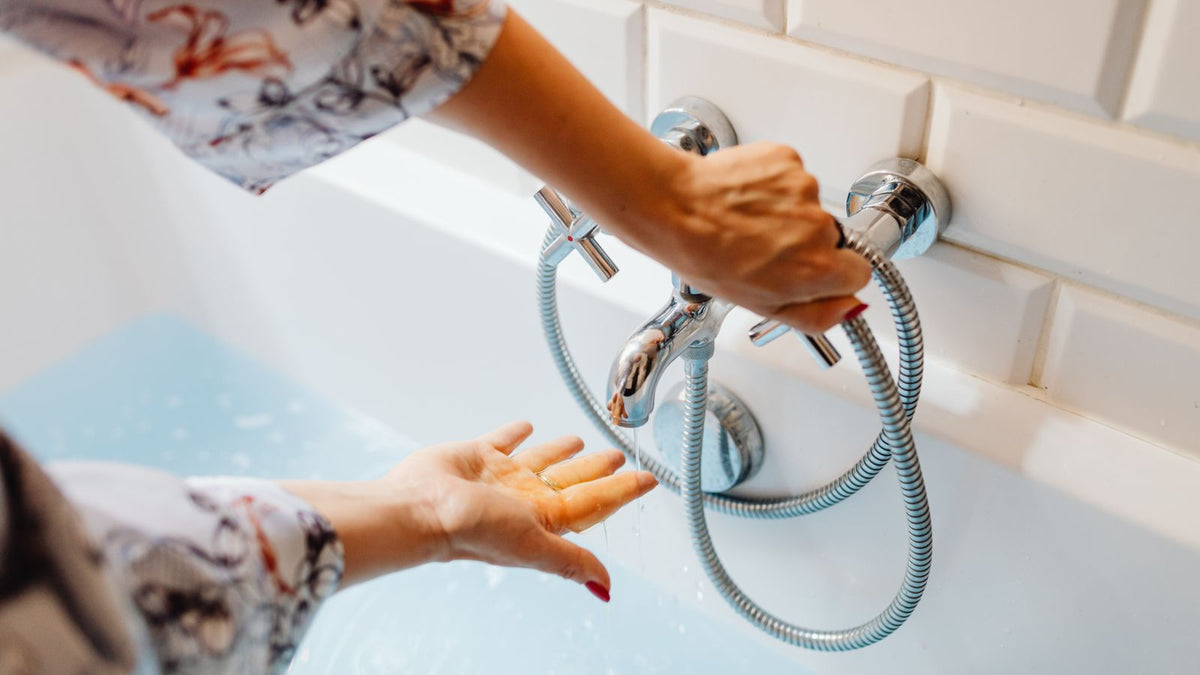
The best water temperature for washing fine or thinning hair is warm, close to body heat and comfortable on the inside of your wrist, rather than hot, because the shampoo does the cleaning, not the heat, while hotter water is harder on the scalp barrier, and a cooler final rinse is optional.
There is no official ideal shower temperature for hair. As a reference point, the Health and Safety Executive says thermostatic mixing valves should stop bath and shower water in care settings going above 44°C, and 41°C is the maximum required in NHS settings, because stored hot water is often kept above 60°C to control legionella. A shower that leaves your skin pink and blotchy is hotter than your scalp needs.
| Water | Scalp | Hair fibre and colour | Verdict for fine hair |
|---|---|---|---|
| Hot (skin turns pink) | Most water loss and redness in the 2022 skin study | Swells like any water; likely more dye lost per wash | Turn it down, especially if itchy or coloured |
| Warm (close to body heat) | The AAD's choice for dry skin, in 5 to 10 minute showers | Shampoo lathers and rinses well | The everyday default |
| Cool or lukewarm | NHS advice for itchy skin | Still swells the fibre; no proof it seals the cuticle | Optional final rinse if you like the feel |
- Set the water warm, not hot. Keep the whole shower to 5 to 10 minutes, as the AAD suggests for dry skin.
- Wet the hair through first. A minute under the stream lets the lather spread without extra rubbing.
- Shampoo the scalp, not the lengths. The AAD advises applying shampoo to the scalp. Work it in with your fingertips, not your nails.
- Rinse thoroughly in warm water. Leftover lather weighs fine hair down.
- Condition the ends. For fine or straight hair, the AAD advises conditioner on the ends of the hair.
- Finish lukewarm or cool if you like. It seals nothing; it is simply a comfortable way to end.
- Blot, do not rub. Press water out with a towel and let the lengths dry a little before any heat.

A sulfate-free 250ml shampoo with biotin, caffeine, rosemary and niacinamide. Lather it at the scalp in warm rather than hot water and rinse well, for a gentle clean that helps fine hair look and feel fuller.

A breakage-defence conditioner with cholesterol, shea butter and glycerin, £13.95 in September 2026. Keep it on the mid-lengths and ends of fine hair for slip that reduces breakage, without weighing the roots down.

Is hair in the shower drain hair loss, shedding or breakage?
Hair in the shower drain is usually normal shedding, since the NHS says we can lose between 50 and 100 hairs a day and washing gathers them in one place; short snapped pieces are breakage, and genuine hair loss shows up on the scalp itself as thinning, patches or a widening parting.
- Hair shedding. Whole hairs with a tiny pale bulb at the root, released at the end of their growth cycle. The British Association of Dermatologists (BAD) says only about 15% of scalp hairs are normally in the shedding phase, rising to 30% or more in telogen effluvium, which can start around 3 months after a trigger such as illness or stress and is most noticeable after washing or brushing.
- Hair breakage. Short pieces with no bulb, where the fibre has snapped along its length. Warm or hot water does not snap hair on its own, but scrubbing and rough towelling of swollen wet hair can.
- Hair loss. The follicle itself changes. The BAD describes female pattern hair loss as the most common type of hair loss in women, with diffuse thinning over the top of the scalp and a wider, more visible parting.
Water temperature does not move hairs from one group to another. A hot shower can make shed hairs more noticeable, because you stay in longer and rub harder, but hairs that fall out in the shower had already finished growing. The BAD also gives a wider normal range than the NHS, 30 to 150 hairs a day, a reminder that normal varies from person to person.
When should shower shedding take you to your GP or to trichologists in Havant?
Shower shedding should take you to your own GP when hair comes out in handfuls, patches appear, the parting keeps widening or the scalp is sore, while the trichologists in Havant that local searches bring up are most useful later, for a closer look at your hair and scalp once medical causes have been checked.
The NHS says to see a GP to get an idea about what is causing hair loss before thinking about going to a commercial hair clinic, and it lists illness, stress, weight loss and iron deficiency among the causes of temporary hair loss. The Office for National Statistics lists Havant as a district in Hampshire, and wherever you live in the borough, your own GP practice is the first stop.
Speak to your own GP first if
Hair is coming out in handfuls; you have smooth bald patches; your parting or hairline keeps widening; your scalp is sore, red, swollen or weeping; spots appear after a hot tub and spread; or heavy shedding began around 3 months after an illness, a new medicine or a major stress and has not settled.
A trichologist is a private hair and scalp practitioner rather than a doctor, so check membership before you pay any of the trichologists in Havant you find. The Institute of Trichologists keeps a Find a Trichologist register, and the Trichological Society is the other main UK body. Three questions are worth asking: will you look at my scalp and hair under magnification, will you send me back to my GP if something looks medical, and are you recommending products you sell?
We make hair care and run no clinics, so we cannot look at your scalp. Grow Me shampoo is vegan and made in the UK, and Watermans has sold over 6.5 million bottles since 2012. Our products are cosmetic: they help hair look and feel healthier and reduce breakage, but they cannot change how a follicle behaves.
What are the most frequently asked questions about hot water and thinning hair?
Should I look for trichologists in Havant because of hair loss in the shower?
Not usually as a first step. Losing 50 to 100 hairs a day is normal, according to the NHS, and washing simply gathers them together. Speak to your own GP first for handfuls, patches or a sore scalp. Registered trichologists in Havant are most useful after that, for a closer look at your hair and scalp.
Does hot water cause hair loss?
We found no evidence that hot water causes hair loss or loosens healthy hairs. Hot water is harder on the skin barrier than lukewarm water, so it can leave the scalp dry and itchy, and it may speed up colour fade. Hairs you see in the shower had already reached the end of their growth cycle.
Does rinsing with cold water make hair shinier?
No controlled study we found shows that. The cuticle is made of dead cells that cannot open and close like a door, and hair stays full of water after a short cold rinse. Conditioner does more for smoothness and shine. A cool rinse is harmless if you like it.
What temperature should I wash thinning hair in?
Warm water, close to body heat, for five to ten minutes. There is no official figure for hair, but the Health and Safety Executive says shower water in care settings should not go above 44°C. If your skin turns pink, the water is hotter than your scalp needs.
Do saunas damage hair?
Finnish saunas run at 80 to 100°C with dry air, which can leave uncovered hair rough and static. Cover the lengths with a towel or sauna hat, keep sessions short and condition afterwards. We found no evidence that saunas cause hair loss.
Can a hot tub affect my scalp?
It can. DermNet explains that spa pool folliculitis, an itchy rash of spots around hair follicles, is due to a germ that thrives in warm water. Keep your head out of the water, shower afterwards and speak to a pharmacist or your own GP if spots appear.
Why does my scalp itch after a hot shower?
Hot water weakens the skin barrier and raises redness, as a 2022 study of 50 volunteers found on the hands. The NHS advises cool or lukewarm showers for itchy skin. If the itch continues with flakes, redness or swelling, speak to your own GP.
Sources & references
- NHS, Hair loss
- NHS, Itchy skin
- NHS, Dandruff
- American Academy of Dermatology, Tips for healthy hair
- American Academy of Dermatology, Tips for relieving dry skin
- British Association of Dermatologists (skinhealthinfo.org.uk), Telogen effluvium
- British Association of Dermatologists (skinhealthinfo.org.uk), Female pattern hair loss
- DermNet, Folliculitis
- Health and Safety Executive, Scalding and burning
- Office for National Statistics, Explore local statistics: Havant
- Herrero-Fernandez M et al. Impact of water exposure and temperature changes on skin barrier function. J Clin Med, 2022
- O'Connor SD, Komisarek KL, Baldeschwieler JD. Atomic force microscopy of human hair cuticles. J Invest Dermatol, 1995
- Breakspear S et al. The kinetics of moisture sorption by hair. Int J Cosmet Sci, 2025
- Zhou Y et al. Protection of oxidative hair color fading from shampoo washing by hydrophobically modified cationic polymers. J Cosmet Sci, 2009
- Laukkanen JA, Kunutsor SK. The multifaceted benefits of passive heat therapies, with a focus on Finnish sauna. Temperature, 2024
- Osborne E et al. Pseudomonas folliculitis: a complication of the lockdown hot tub boom? Br J Gen Pract, 2021
- The Institute of Trichologists, Find a Trichologist
- The Trichological Society
What is the bottom line on trichologists in Havant?
Hot water is harder on the scalp than warm water, can leave fine hair feeling rougher and may speed up colour fade, but we found no evidence that it causes hair loss, and the cold rinse is a pleasant habit rather than a cuticle sealant. Wash in warm water for five to ten minutes, shampoo the roots, condition the ends and cover your hair in the sauna. Save trichologists in Havant, and your GP, for shedding that comes in handfuls, patches or a parting that keeps widening. If your question is about products or a routine rather than a medical one, you can talk to Gail Waterman, our co-founder, as an AI avatar on the Watermans homepage.
For a gentle, warm-water wash that suits fine hair, a sulfate-free shampoo such as Grow Me lathers at the roots with biotin, caffeine and rosemary and rinses out cleanly without extra heat or scrubbing.
Watermans products are 100% cosmetic and do not treat medical hair loss. Individual results may vary.