Trichologist Ilford: How to Find One and What to Expect
If you are looking for a trichologist Ilford way, you are looking for a hair and scalp specialist rather than a doctor. A trichologist assesses the scalp and the hair fibre, identifies patterns such as telogen effluvium or traction damage, and advises on care. They cannot write prescriptions and they are not part of the NHS, so most people in the IG postcodes pay privately and travel a short way into east London or the City for the nearest registered practitioner.
Our hair growth shampoo
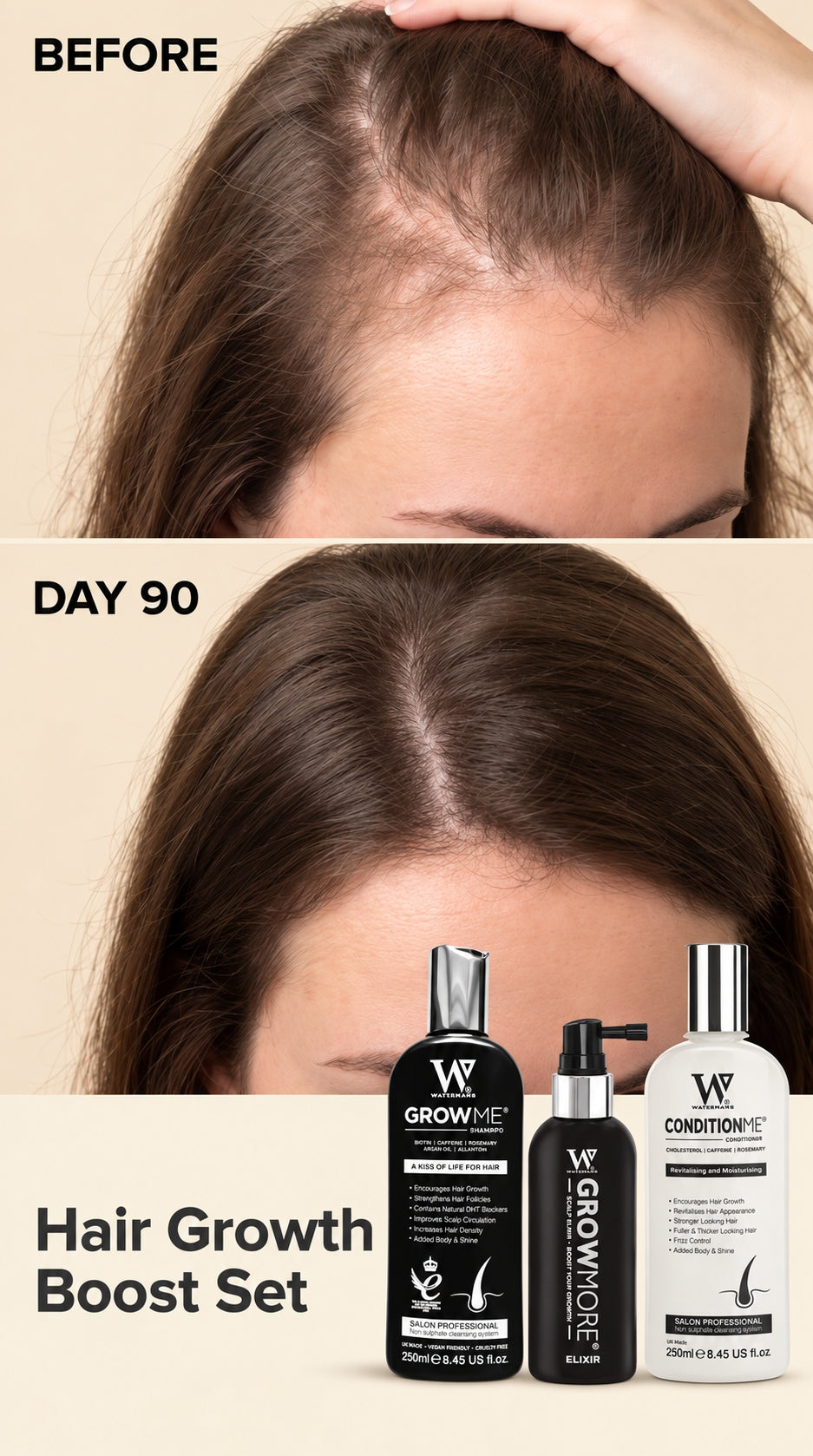
Grow Me® Hair Growth Shampoo, £14.95. A sulphate free daily shampoo that supports a healthy scalp environment and helps reduce breakage, so lengths hold on and look fuller.
Key takeaways
- There is no register entry for a trichologist Ilford itself at the time of writing, so expect to travel to Romford, Stratford, Harley Street or the City. That is a twenty to forty minute journey for most IG addresses.
- Trichology is not a protected title in the UK. Anyone can use the word, so check the Institute of Trichologists or the Trichological Society register before you pay a penny.
- Work out first whether you are dealing with hair loss, hair shedding or hair breakage. They look similar in the mirror and they need completely different advice.
- Expect roughly 60 to 150 pounds for a first session in this part of London, usually 45 to 60 minutes, with products charged separately.
- Anything with pain, scaling, sudden bald patches or scarring belongs with your GP first, not with a hair specialist.
What does a trichologist Ilford residents search for actually do?
A trichologist studies the hair and scalp specifically. In a session they will look at the scalp under magnification, examine the hair shaft, take a history covering illness, medication, diet, styling and family pattern, and often perform a gentle pull test to gauge how much hair is loose at the roots. From that they describe the pattern they are seeing and set out a care plan.
What they cannot do is act as a doctor. Trichologists are not medically qualified, cannot order NHS blood tests, and cannot supply prescription medicines. A good one knows exactly where that line sits and will refer you back to your GP or on to a dermatologist when the picture calls for it. That referral habit is one of the clearest signs you are dealing with a serious practitioner rather than a product salesperson.

Is there a trichologist in Ilford itself?
Searches for a trichologist Ilford based rarely turn up a practice inside the IG1 to IG6 postcodes. The professional registers list very few practitioners east of the City, and the ones that do appear tend to sit in Romford, Stratford, Ilford Lane salons offering scalp services rather than trichology, or central London. Several salons and barbers in the area advertise scalp analysis, which is a useful service in its own right but is not the same qualification.
In practice most people take one of three routes. They travel into central London for a registered specialist, they use a video session with a practitioner elsewhere in the country and post in photographs, or they start with their GP because the NHS route costs nothing and can rule out the medical causes first. If your hair change came on suddenly, the GP route is the one to take.

Is it hair loss, hair shedding or hair breakage?
This distinction decides everything that follows, and it is the single most useful thing to work out before you pay anyone. The three problems look alike from the outside and respond to completely different advice.
| What you are seeing | What it usually means | Who to see first |
|---|---|---|
| Hair loss: widening parting, thinning at the crown or temples, scalp showing through, gradual over months or years | A follicular pattern such as androgenetic alopecia, or a patchy condition such as alopecia areata. The follicle itself is affected. | GP, then dermatologist if referred |
| Hair shedding: far more hair in the brush and plughole, whole hairs with a small white bulb, started two to three months after an event | Telogen effluvium, a cycle disturbance after illness, childbirth, surgery, crash dieting, low iron or thyroid trouble. Usually temporary. | GP for blood tests |
| Hair breakage: short broken ends, rough midlengths, hair that snaps rather than releases, no white bulb | Fibre damage from heat, bleach, relaxers, tight styles or friction. The follicle is fine, the strand is failing. | Trichologist or a good stylist |
Breakage is where cosmetic hair care genuinely earns its place, because the problem is the strand rather than the follicle. Shedding is usually a job for blood tests. Loss with a clear pattern needs a doctor. Our guide to what causes telogen effluvium goes through the shedding timeline in more detail, and the signs of a receding hairline covers the pattern side.
Which hair and scalp problems come up most often around Ilford?
Ilford has one of the most ethnically mixed populations in London, and the hair concerns that show up locally reflect that. Practitioners serving east London report a heavy weight of traction damage from tight braids, weaves, wigs and ponytails, chemical breakage from relaxers, and scalp irritation under long wear protective styles. Textured hair is structurally more prone to snapping at the point of tension, so styling load matters more here than it would elsewhere.
Alongside that sit the concerns you would see anywhere: post illness shedding, thinning that follows a family pattern, dandruff and seborrhoeic dermatitis, and the run of scalp flare ups that follow a stressful year. Stress related shedding and thyroid related hair changes are two of the commonest reasons a shed will not settle on its own. When a flare up follows a change of shampoo, our Chelmsford guide to whether sulfates, silicones or parabens can upset your scalp shows you how to read the label first.
Get a discount on the thinning and shedding hair range
Join the Watermans mailing list and we will email a discount code straight to your inbox, so you can try the thinning and shedding hair range for less. Made in the UK, over 6.5 million bottles sold since 2012.
How do you check a hair specialist is properly qualified?
Trichology is not a protected title in the UK. There is no statutory regulator, no legal barrier to using the word, and no requirement to hold any qualification at all. That is why the checks below matter more here than they would for a dentist or a physiotherapist, and why anyone searching for a trichologist Ilford side should do them before booking.
1. Look them up on the register, not on their own website
The two bodies worth checking are the Institute of Trichologists and the Trichological Society. Both publish searchable member lists. A logo on a website proves nothing on its own, because nobody polices its use. Search the register by name and confirm the entry exists.
2. Ask what you leave the session with
A serious practitioner sends you away with a written summary: what they observed, what pattern they think it fits, what to change, and when to come back. If the only thing you leave with is a carrier bag of products, that is a retail encounter wearing a clinical costume. If you are noticing changes early, see our guide to thinning in your twenties and thirties, and what to check first.
3. Ask how often they refer people on
Anyone who never refers is either extraordinarily lucky with who walks through the door or is working outside their limits. Ask directly. The answer tells you whether they understand where trichology stops and medicine begins.
4. Ask about experience with your hair type
Assessing traction damage on 4C hair is a different skill from assessing a receding temple on fine straight hair. Given the local population this question matters a great deal around Ilford. Ask what proportion of the people they see have textured hair.
5. Separate the fee from the products
Ask what the session costs on its own, before any products are mentioned. If the fee is very low or waived, the money is coming from somewhere, and it is coming from the shelf.
What actually happens in a trichology session?
A first session usually runs 45 to 60 minutes. Expect a long history first, covering when the change started, what else was happening in your life at the time, your medication, your styling routine, your diet and who else in the family has similar hair. Then comes the physical examination: scalp under magnification or a scope camera, a look at the hair shaft, a gentle pull test, sometimes photographs of the parting and crown for comparison later.
You should come away with a plain description of what they saw, a care plan covering washing, styling and tension, a view on whether to see your GP, and a realistic timescale. What you should not come away with is a promise. Hair works on a slow cycle and nobody can honestly commit to an outcome.
How much does a trichologist Ilford visit cost, and how long until you can tell?
In east and central London a first session generally runs 60 to 150 pounds, with follow ups around 40 to 80 pounds. Scope photography is sometimes charged on top. Products are almost always separate, and that is where costs run away if you are not careful. Ask for the full price list before you commit.
On timescales, be patient in a way that feels unreasonable. Scalp comfort can improve within two to four weeks. Breakage stops getting worse as soon as the cause is removed, but the damaged length has to grow out, which at roughly a centimetre a month is a long wait. A shed usually runs its course over three to six months and density rebuilds over the following six to twelve. Anyone offering a verdict at four weeks is guessing.
What can you do at home in the meantime?
While you wait for a session, or if you decide the GP route makes more sense first, the useful things are unglamorous. Take the tension out of your styling, because traction damage is cumulative and stops accumulating the moment the pulling stops. Give heat tools a rest and use a heat protectant when you do reach for them. Space out chemical services rather than stacking bleach and relaxer in the same season. Wash at whatever frequency keeps your scalp comfortable, because leaving hair unwashed to save it simply gathers loose hairs into a bigger clump later.

Cosmetic care sits alongside all of that rather than replacing it. A gentle sulphate free wash and a conditioner that helps the strand hold together reduce the mechanical breakage that makes thin hair look thinner, which is a real and worthwhile job. It is not a medical intervention and it will not change a follicular pattern.

Grow Me® Shampoo
A sulphate free everyday shampoo with biotin, caffeine and rosemary oil, made for fine and thinning looking hair. It cleanses without stripping, which matters when you are trying to reduce breakage rather than add to it.

Condition Me® Conditioner
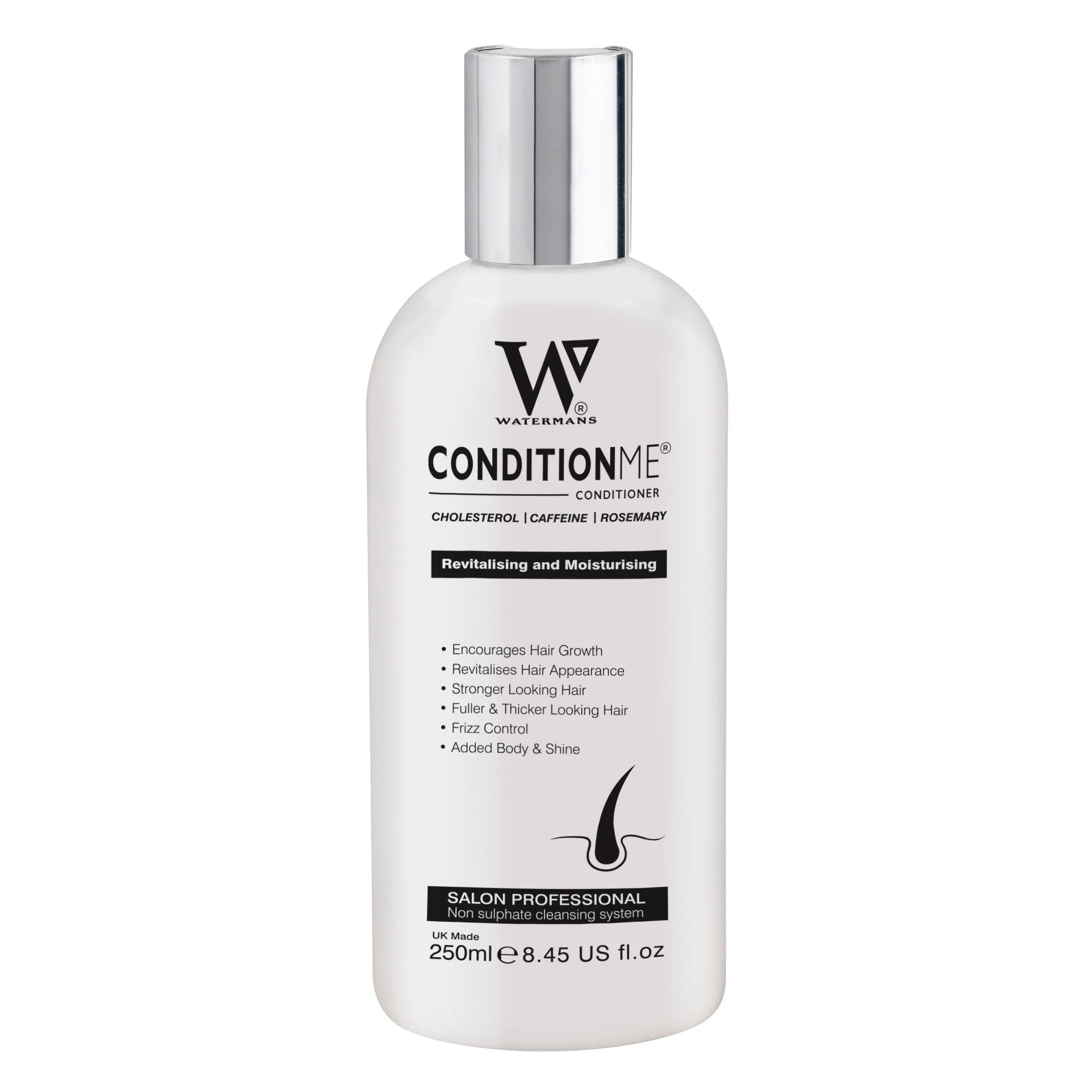
Built to improve slip and reduce the snapping that happens during detangling, which is where a lot of everyday breakage actually occurs. Useful for anyone wearing protective styles or working with textured hair.
Made in the UK, and over 6.5 million bottles sold since 2012. Watermans products are 100% cosmetic and do not treat medical hair loss. Individual results may vary.
When should you see your GP rather than a hair specialist?
Some presentations should go to a doctor first, and a good trichologist will tell you the same thing. See your GP if bald patches appear suddenly or in circles, if the scalp is painful, burning, weeping or scaling heavily, if you notice shiny smooth skin where hair used to be, which can indicate scarring, if hair loss follows a new medicine, or if it comes with fatigue, weight change, heavy periods or a change in your cycle. Children with hair loss should always be seen by a GP. There is also a free NHS step worth taking first, and our guide to the NHS route versus a private trichologist in Lewisham sets out which blood tests a GP can arrange at no cost.
None of that means a hair specialist has nothing to offer. It means the order matters. Rule out the medical picture first, then use trichology for the hair and scalp care side.
Frequently asked questions
Is there a registered trichologist Ilford has of its own?
Not on the professional registers at the time of writing. The nearest listed practitioners are in Romford, Stratford and central London, which is a twenty to forty minute journey from most IG postcodes. Several local salons advertise scalp analysis, which is a different and unregulated service.
How much does a first session cost in the Ilford area?
A trichologist Ilford residents travel to will typically charge 60 to 150 pounds for a first session of 45 to 60 minutes, and 40 to 80 pounds for follow ups. Products are charged separately and can easily exceed the session fee, so ask for the whole price list up front.
Can a trichologist write me a prescription?
No. Trichologists are not medically qualified and cannot issue prescription medicines in the UK. Anything that requires a prescription has to come through your GP or a dermatologist. A trichologist can, however, write to your GP setting out what they observed.
Can I see a trichologist on the NHS?
No, trichology is a private service. The NHS route is your GP, who can run blood tests and refer you to a dermatologist where appropriate. That referral is free and is the sensible first move for sudden or patchy hair loss.
What is the difference between a trichologist and a dermatologist?
A dermatologist is a medical doctor with specialist training in skin, hair and nails, works within the NHS or privately, and can order tests and issue prescriptions. A trichologist specialises in hair and scalp but is not a doctor. They overlap on assessment and diverge completely on medicine.
Is traction alopecia reversible?
Early traction damage often recovers once the tension is removed, because the follicle has been stressed rather than destroyed. Long standing traction, particularly at the hairline after years of tight styling, can scar, and scarred follicles do not come back. That is why acting early matters so much.
Should I stop relaxing my hair if it is breaking?
Not necessarily stop, but space it out and never overlap onto previously processed hair. Most relaxer breakage comes from overlapping, from stacking a relaxer with colour, or from combining chemical processing with tight styling. Ask your stylist to work only on the new growth.
How many hairs a day is normal to lose?
Between 50 and 100 is the usual figure quoted, though it varies with hair length, wash frequency and how you style. Long hair makes the same number look far more dramatic in the plughole. What matters is a sustained change from your own normal rather than the absolute count.
Will blood tests explain my hair loss?
Often they explain part of it. Ferritin, full blood count, thyroid function and vitamin D are the usual starting panel, and low iron in particular is a very common finding behind a stubborn shed. Blood tests will not explain a pattern that follows the family line.
Does washing my hair more often make it fall out faster?
No. Hairs that have already been released by the growth cycle come away whenever you next handle your hair. Washing less often simply postpones the moment and gathers them into a larger and more alarming clump. Wash at the frequency that keeps your scalp comfortable.
Sources and References
- NHS, Hair loss, on causes, when to see a GP and what the NHS does and does not cover.
- British Association of Dermatologists, Telogen effluvium, on the shedding timeline and typical recovery.
- British Association of Dermatologists, Traction alopecia, on tension damage and when it becomes permanent.
- The Institute of Trichologists, member register and scope of practice.
- The Trichological Society, the second UK register worth checking.
What is the bottom line on trichologist Ilford?
There is no registered trichologist Ilford can call its own, so plan on a short journey to Romford, Stratford or central London, and check the register before you book anything. Before you go, work out whether you are dealing with loss, shedding or breakage, because that decides who you should see first. Sudden, patchy or painful changes belong with your GP. Breakage and everyday scalp care are where a specialist and a gentle cosmetic routine genuinely help. If your question is about products or a routine rather than a medical one, you can talk to Gail Waterman, our co-founder, as an AI avatar on the Watermans homepage.
The scalp is where this starts, so give our sulphate free hair growth shampoo a couple of months of honest use. Made in the UK, with over 6.5 million bottles sold since 2012.
Watermans products are 100% cosmetic and do not treat medical hair loss. Individual results may vary.