Trichologist Worksop: Could Your Medication Be Causing Shedding?
You started a new medicine in the spring. By late summer there is hair in the plughole, hair on the pillow and a ponytail that feels half the size it was. The two things feel unconnected because they are months apart, which is exactly why so many people miss the link and start searching for a trichologist Worksop way instead.
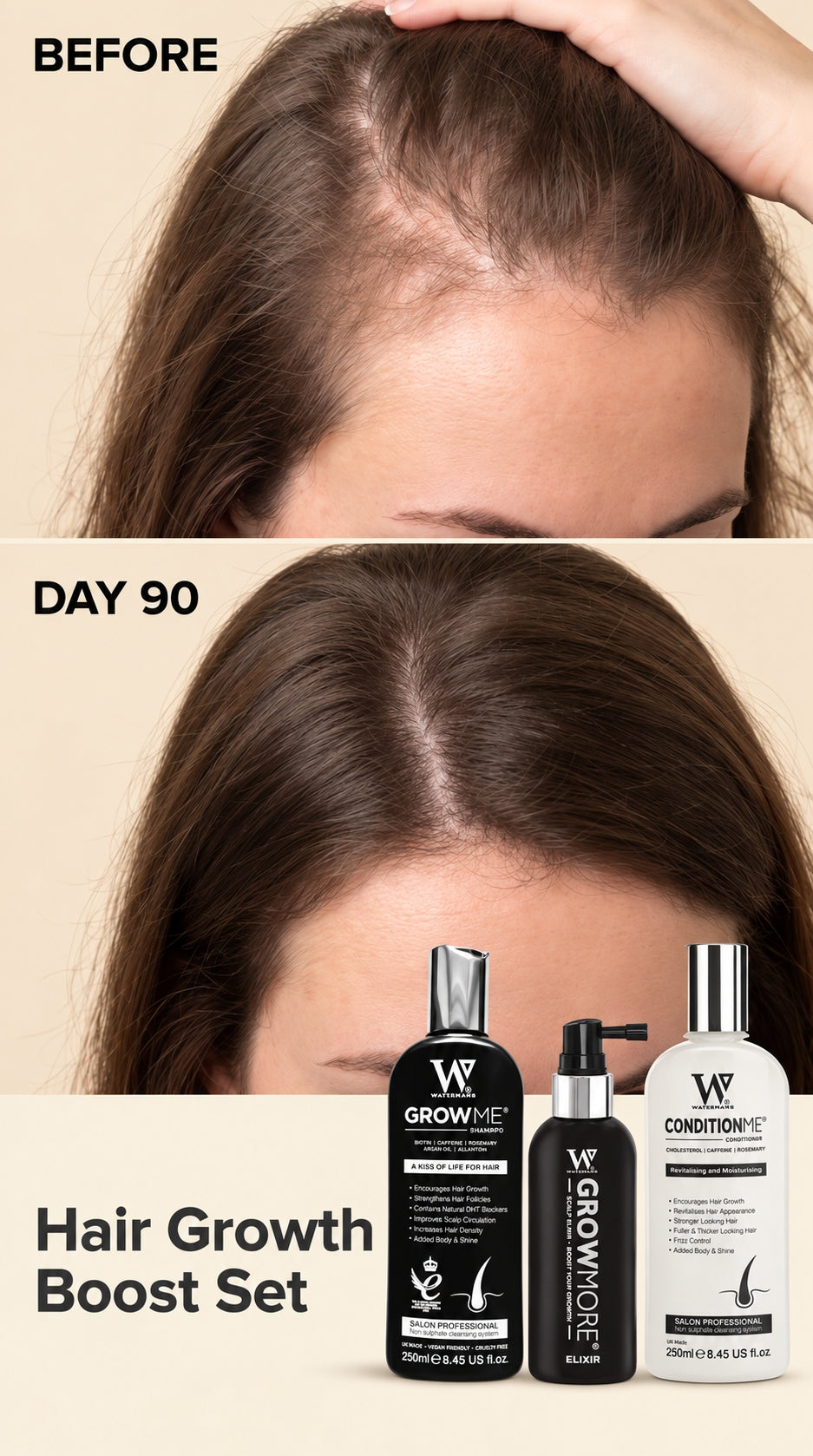
Our hair growth shampoo
Grow Me® Hair Growth Shampoo, £14.95. A sulphate free daily shampoo that supports a healthy scalp environment and helps reduce breakage, so lengths hold on and look fuller.
A trichologist Worksop search often starts with medicine-linked shedding. Several common drug classes can push hairs out of their growing phase and into the resting phase early, so they fall out together two to four months later. The delay hides the cause. In most cases the shedding is temporary and reversible once the trigger is identified, but you should never stop a medicine you have been given yourself.
Key takeaways
- Medicine-linked shedding is usually diffuse, all over the scalp, rather than patchy or confined to the parting.
- The gap between starting a medicine and seeing hair fall is typically two to four months, which is why the link is so often missed.
- DermNet reports that most cases of this type of shedding settle within about six months once the trigger is removed or the body adjusts.
- Never stop a medicine you have been given on your own. Ask for a medicines review instead, which community pharmacies in Worksop provide free on the NHS.
- You can report a suspected side effect yourself through the MHRA Yellow Card scheme, without going through anyone else.
- Hair grows roughly one centimetre a month, so visible recovery takes seasons rather than weeks.
- A trichologist Worksop consultation is worth booking for a proper scalp assessment, but it comes after the pharmacy and the blood tests, not instead of them.
Can medication really cause hair shedding?
Yes. Several widely used classes of medicine interfere with the hair growth cycle, pushing a larger than normal share of follicles out of their growing phase and into their resting phase early. Those resting hairs stay anchored for weeks, then release together. The result is diffuse shedding across the whole scalp rather than a bald patch.
The mechanism has a name, telogen effluvium, and DermNet describes it as one of the most common causes of sudden diffuse hair fall. The key word is diffuse. Medicine-linked shedding thins the whole head a little, so it shows up as a smaller ponytail, a wider parting on every side and more hair in the brush, rather than as a defined patch of skin. Steroid medicines are one of the groups most often involved, and our guide to steroid medication hair shedding sets out the timeline and the care that helps.
A smaller number of medicines cause a different pattern, attacking hairs while they are still actively growing. Chemotherapy is the obvious example, and that is why it produces such rapid and dramatic hair fall rather than the slow creeping shed described here.
Loss, shedding and breakage are three different problems
Hair shedding is a cycle problem: whole hairs release from the scalp with a small white bulb at the root, and the follicle survives. Hair loss is a follicle problem, where follicles shrink or scar and produce progressively finer hair or none at all. Hair breakage is a fibre problem: the strand snaps along its length, so you find short broken pieces with no bulb. Medicine-linked hair fall is shedding. Getting that distinction right changes what you do next.
Which types of medicine are most often linked to hair shedding?
Medicines linked to hair shedding cluster into a handful of classes rather than being scattered at random. The best known groups are blood thinners, some blood pressure medicines including beta blockers, retinoid-based acne medicines, thyroid medicines, hormonal contraception and hormone therapy, some mood and epilepsy medicines, certain gout medicines and chemotherapy agents.
Being on the list does not mean the medicine caused your shedding. Millions of people take these medicines with no hair change at all, and reported side effects describe what has been observed rather than what is likely. What the list gives you is a reason to look rather than a verdict.
The most reliable way to check your own is the information leaflet in the box. Hair loss, alopecia and hair thinning are listed under side effects by frequency, from very common down to rare. If you no longer have the leaflet, the emc website holds the current leaflet for every medicine licensed in the UK, and a pharmacist can pull it up in seconds.
| Class of medicine | What people commonly notice | What it usually is not |
|---|---|---|
| Blood thinners and some heart medicines | Diffuse shedding a few months in, often noticed in the shower | Not patchy, and not confined to the parting |
| Retinoid-based acne medicines | Shedding plus dry, brittle hair that snaps | Dryness-driven breakage is often the bigger visible problem |
| Thyroid medicines | Shedding during the settling-in period as levels move | Often the thyroid condition itself rather than the tablet |
| Hormonal contraception and hormone therapy | A shed after starting, stopping or switching | Not a sign the follicle has been damaged |
| Mood and epilepsy medicines | Gradual thinning noticed over several months | Rarely sudden or dramatic |
| Chemotherapy agents | Rapid, extensive hair fall within weeks | Not the slow diffuse shed described in this guide |

Why does hair shedding start two to four months after the medicine?
Hair shedding lags the trigger because of how the growth cycle works. A follicle disturbed today does not drop its hair today. Instead it ends its growing phase early and enters a resting phase that typically lasts around three months, and only at the end of that resting phase does the hair release. The fall you see in September was set in motion in June.
That lag explains why so many people rule out the correct answer. By the time the hair appears in the plughole, the medicine has become routine and feels unrelated. Anyone assessing a shed works backwards along a three to four month window rather than looking at what changed last week.
It also sets a realistic recovery clock. Once the trigger is removed, new hairs must re-enter the growing phase and then grow out at roughly one centimetre a month. Three months of new growth is three centimetres long, which is still too short to add visible density. Judging progress before six months is judging it too early.
How can you tell the medicine apart from the other causes?
Separating a medicine from the alternatives comes down to timing, pattern and blood work. Write down the date the medicine started and the date you first noticed extra shedding. A gap of roughly two to four months supports the link. A gap of two weeks, or of two years, points elsewhere.
Pattern matters just as much. Run the checks below before you conclude anything, because female pattern hair loss, iron deficiency, thyroid disease and a post-illness shed all produce hair fall that can feel identical in the shower but look different on the scalp.
- Check the root. Shed hairs have a small white club-shaped bulb. Broken hairs have no bulb and are shorter than the rest of your hair.
- Check the pattern in daylight with two mirrors. Diffuse thinning all over suggests a shed. A parting that keeps widening while the back stays dense suggests female pattern hair loss instead.
- Count for three days. Collect what comes out in the shower and brush, and note the number. Up to about 100 hairs a day is normal, and what matters more is whether your own count is rising or falling over weeks.
- Check the timeline against every change, not just the medicine: illness, surgery, crash dieting, a new baby, or a period of severe stress three to four months ago.
- Ask for blood work covering full blood count, ferritin, thyroid function and vitamin D before blaming any single cause.

Get a discount on the shedding hair range
Join the Watermans mailing list and we will email a discount code straight to your inbox, so you can try the shedding hair range for less. Made in the UK, over 6.5 million bottles sold since 2012.
What should you do instead of stopping the medicine?
Stopping a medicine you have been given without advice is the one genuinely risky move available to you here, and it is the one most people consider first. Heart medicines, thyroid medicines, epilepsy medicines and mental health medicines can all cause serious harm when stopped abruptly. Hair shedding, unpleasant as it is, is not an emergency.
Book a medicines review instead. NHS community pharmacies across Worksop provide free advice on the medicines you are taking, no referral needed, and a pharmacist can cross-check your whole list against known hair-related side effects in one conversation. Bring the boxes, including anything you buy over the counter and every supplement.
If the review suggests a link, the pharmacist can advise whether it is worth asking your GP about an alternative within the same class. Sometimes a switch is straightforward. Sometimes the medicine is doing something too important to trade away for hair, and knowing that is genuinely useful too, because it turns an open worry into a decision you have made.

Grow Me® Hair Growth Shampoo £14.95
A sulphate-free daily shampoo made in the UK with biotin, caffeine and rosemary, formulated to support a healthy scalp environment and to reduce the breakage that makes a shed look worse. Over 6.5 million bottles sold since 2012.
What should you ask your GP or pharmacist in Worksop?
Bring dates and boxes, not impressions. Anyone who starts with a trichologist Worksop search usually gets the fastest answers from a pharmacist, and specific questions get you further than describing the problem in general terms. Clinicians work faster from dates and lists than from impressions, so take the timeline you have written down and the boxes themselves rather than trying to remember names.
- Does anything on my list have hair loss or alopecia in its side effect leaflet, and at what frequency?
- Is there an alternative within the same class with a lower reported rate?
- Can we check full blood count, ferritin, thyroid function and vitamin D before assuming it is the medicine?
- Am I taking two products that overlap, for example a multivitamin plus a separate high dose supplement?
- If the medicine is the likely cause and cannot be changed, what is the realistic timeline for the shedding to settle?
If you want the side effect on record, submit it yourself through the MHRA Yellow Card scheme. Reports come directly from the public as well as from clinicians, and a report takes around ten minutes. It changes nothing about your own hair, but it is how side effect data accumulates.
Will the hair come back after a medicine-linked shed?
Hair usually comes back after a medicine-linked shed, because the follicle itself is unharmed. This type of shedding interrupts the cycle rather than destroying the structure, and DermNet reports that most cases settle within about six months of the trigger being removed. Density returns gradually rather than in one visible step.
Two things blur that recovery. The first is the one centimetre a month growth rate, which means new hair spends months too short to contribute to your ponytail while still standing up along the parting as flyaways. Those flyaways are a good sign misread as a bad one.
The second is that a shed can unmask a pattern change that was already underway. If the density does not recover after about nine months, or if the parting continues to widen while the back of the head stays thick, the shed may have revealed female pattern hair loss rather than caused it. That is worth a GP conversation, because the two are managed differently.

How should you care for hair that is shedding right now?
Hair that is shedding needs less handling, not more product. Nothing applied to the scalp will hold a hair that has already entered its resting phase, so the goal for the next few months is simple: keep every hair you still have, and avoid adding breakage on top of a shed that is already thinning the whole head.
- Wash as often as suits your scalp. Washing does not cause shedding, it reveals hairs that already released, and skipping washes just batches them into a more alarming clump.
- Detangle from the ends upwards with a wide tooth comb, never from the roots down.
- Give wet hair support. Hair is at its most fragile when soaked, so blot rather than rub and never twist it into a towel turban.
- Drop the tight styles. Slicked ponytails and tight buns add tension to hair that is already thinner than usual.
- Turn the heat down and always use a protectant. Breakage on top of shedding is what makes the ends look wispy.
- Eat enough protein and iron-rich food, and get ferritin checked rather than guessing.

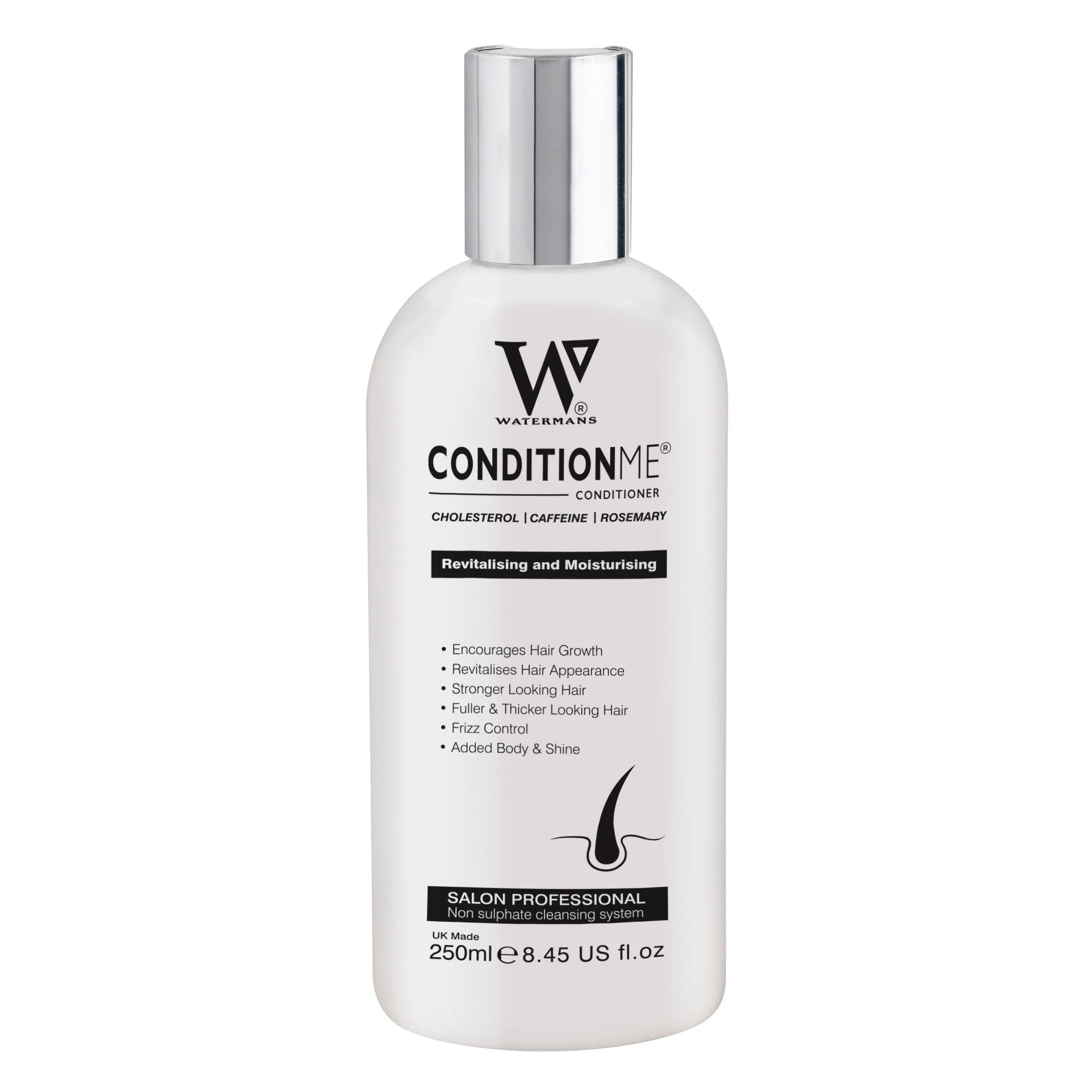
Condition Me® Hair Growth Conditioner £13.95
A lightweight daily conditioner that improves slip so a comb passes through without snapping fragile strands, which matters most while the whole head is temporarily thinner. Made in the UK, never tested on animals.
For the wider routine, our guide to using conditioner properly covers the mid-lengths-and-ends rule that keeps fine hair from going flat, and what causes hair damage explains which everyday habits do the most harm.
Is a trichologist Worksop visit worth it for medicine-linked shedding?
A trichologist Worksop visit is worth it when you want the scalp examined properly and you have already covered the medical basics. A good consultation includes close inspection under magnification, a look at the pattern across the whole scalp and a structured history covering the last twelve months, which is more time than a ten minute GP slot allows.
What it does not do is replace blood work or a medicines review, and no trichologist can change what you have been given. Sequence it properly: pharmacist and GP first for the medicines and the blood tests, then a trichologist for the scalp assessment if questions remain. Our guide to what happens in a trichologist consultation sets out what to expect.
Worksop has no large specialist trichology centre, so most people travel to Sheffield, Doncaster or Nottingham, and readers in those areas may find our Doncaster trichologist guide useful. Before booking anywhere, check the practitioner against the Institute of Trichologists register, because trichologist is not a protected title in the UK and anyone may use it. Ask what the fee covers and whether it includes a follow-up.
When to go straight to a GP instead
See a GP rather than anyone else if you have patches of complete hair loss with smooth skin, a scalp that is painful, scaly, weeping or scarring, hair fall alongside marked fatigue, weight change or a change in periods, or any hair change in a child. Those need medical assessment first, and hair care products are not the answer to any of them. For a closer look at why hair sheds two to four months after an illness or operation, see our guide to why hair sheds two to four months after an illness or operation.
Frequently asked questions about medicine-linked shedding
How long after starting a medicine does hair shedding begin?
Shedding linked to a new medicine usually begins two to four months after the first dose, and DermNet puts the typical onset at around two to three months after any trigger. Hairs are pushed into their resting phase at the time of the trigger, then held there for weeks before they release. The delay is the single biggest reason the link gets missed.
Should I stop my medicine if I think it is causing hair shedding?
No. Stopping a medicine you have been given without medical advice can be far more dangerous than the shedding, particularly with heart, thyroid, epilepsy and mental health medicines. Ask for a medicines review instead, and let the clinician who started it decide whether an alternative exists.
Can a pharmacist in Worksop help with this?
Yes. NHS community pharmacies offer free medicines advice without an appointment being needed, and a pharmacist can check your full list for known hair-related side effects in a few minutes. That check is often faster than waiting to see a GP, and the pharmacist can flag anything that genuinely needs a GP review. If your question is about products or a routine rather than a medical one, you can talk to Gail Waterman, our co-founder, as an AI avatar on the Watermans homepage.
Is medicine-linked shedding permanent?
Usually not. This type of shedding affects the hair cycle rather than destroying the follicle, so the follicle remains capable of producing hair. DermNet reports most cases settle within about six months once the trigger is gone, though hair takes longer than that to look its old self.
Could the illness be causing it rather than the medicine?
Often, yes, and separating the two matters. A high fever, major surgery, rapid weight loss, severe infection, a thyroid problem and iron deficiency all push hairs into the resting phase in exactly the same way. Ask for blood work rather than assuming the new tablet is to blame.
Do supplements cause shedding too?
They can. Very high dose vitamin A and its relatives are the clearest example, and taking several combined products at once makes accidental overdosing easy. Take your supplement bottles to the pharmacy alongside everything else you take so the whole picture gets checked at once.
Does biotin interfere with blood tests?
Yes, and this catches people out. High dose biotin can skew several common laboratory assays, including thyroid tests, producing results that look abnormal when they are not. Tell whoever takes your blood that you are on biotin, or pause it for a few days first if they advise it.
Can I report a side effect myself?
Yes. The MHRA Yellow Card scheme accepts reports directly from the public, so you do not need a clinician to submit one on your behalf. Reporting a suspected hair-related side effect adds to the safety data, and it takes about ten minutes.
Is a trichologist Worksop visit regulated?
No. Any trichologist Worksop listing you find is unregulated, because trichologist is not a protected title in the UK and anyone can use it. The Institute of Trichologists maintains a register of members who have completed its training, so check registration before you book and ask what the fee covers.
Sources & references
- NHS: Hair loss
- DermNet: Telogen effluvium
- NHS: How pharmacies can help
- MHRA Yellow Card scheme
- The Institute of Trichologists
- British Association of Dermatologists hair and scalp leaflets
What is the bottom line on a trichologist Worksop search for medicine-linked shedding?
A trichologist Worksop search that begins with medicine-linked shedding usually ends with three ordinary steps rather than a dramatic one. Write down when the medicine started and when the shedding began, get a free medicines review at a community pharmacy, and ask for blood work before blaming any single cause.
The delay between cause and effect is what makes this so easy to get wrong, and the same delay applies to recovery. Hair grows about one centimetre a month, so a shed that settles in six months still takes another six to look like your old hair. Meanwhile, handle it gently and protect what you still have.
Above all, do not stop a medicine you have been given to save your hair. Ask for the review, take the timeline with you, and let the person who started the medicine weigh it up with you.
If daily handling is making brittle, shedding hair worse, a gentler wash is the one thing you control today. Watermans hair growth shampoo is a sulphate-free daily cleanser made in the UK, formulated to support a healthy scalp environment and reduce the breakage that makes thinning hair look worse than it is.
Please note: Watermans products are 100% cosmetic and do not treat medical hair loss. Individual results may vary.