

How to Apply Sunscreen Under Makeup Without Pilling
Last updated: August 2026
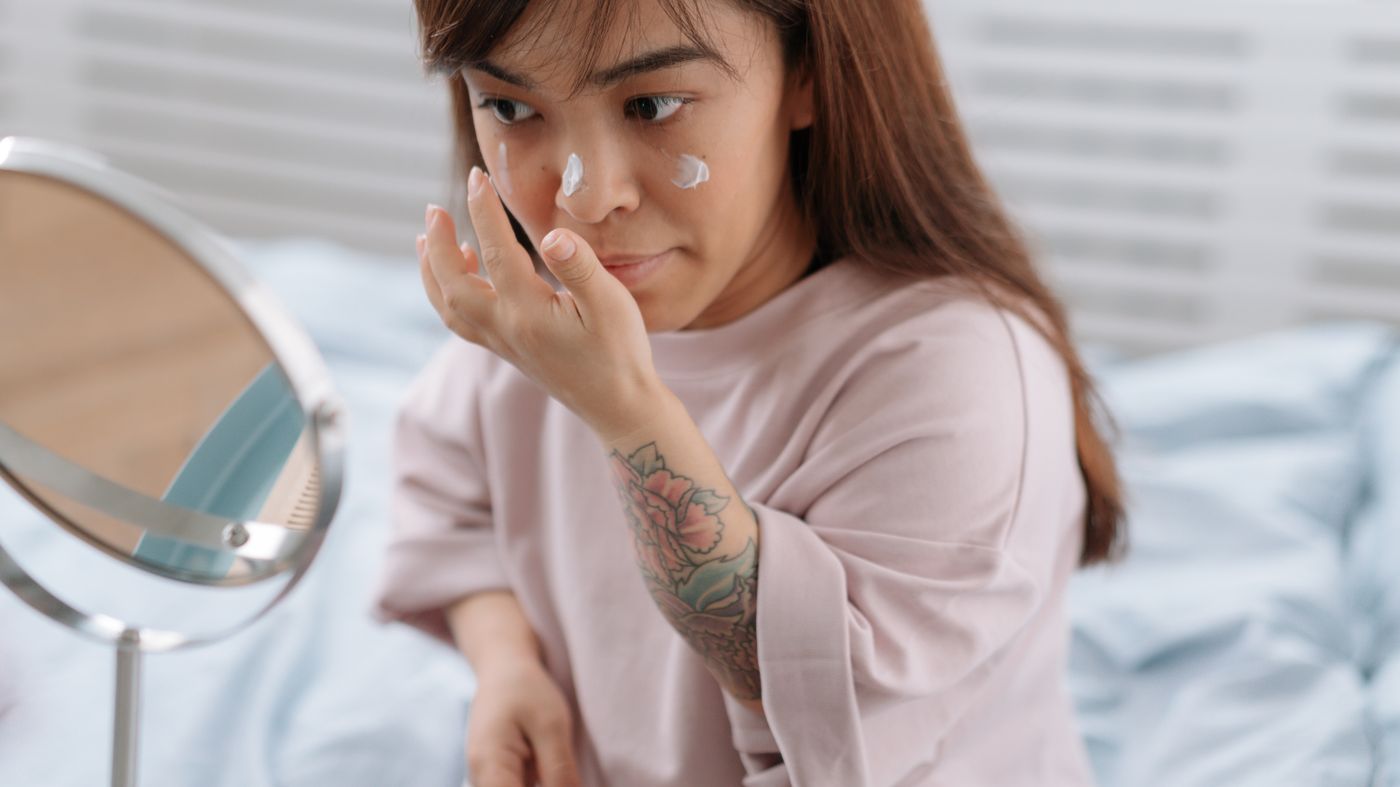
Sunscreen goes on before makeup, always. It is the last step of your skincare and the first thing under your base. Apply about a quarter of a teaspoon to your face, let it settle for two to three minutes until it stops feeling wet, then press your base on top rather than dragging it. That order protects your skin properly and is also the order least likely to cause pilling.
Key takeaways
- Sunscreen is the final skincare step and goes underneath makeup, never over the top of it.
- A quarter of a teaspoon covers an adult face, which is roughly two full finger lengths of product.
- Most people apply between a fifth and a half of the amount used in SPF testing, so real world protection is well below the number on the bottle.
- SPF numbers do not add up: foundation with SPF 15 over sunscreen SPF 30 does not give you SPF 45.
- Pilling is usually too much product, too little drying time, or a gel over a silicone, not a bad sunscreen.
- In the UK, look for SPF 30 or higher plus four or five UVA stars, or the UVA logo inside a circle.
- Your parting and hairline burn like any other skin and are the most commonly missed spot on the whole body.
Does sunscreen go on before or after makeup?
Sunscreen goes on before makeup. It is the last step of your skincare routine and sits directly against clean, moisturised skin, because a sunscreen film only works where it makes even contact with the surface. Anything applied over the top of it, including foundation, powder and setting spray, sits above the protective layer and does not interfere with it.
The reason this order matters is mechanical rather than chemical. Sunscreen is tested as a continuous film across the skin. If you apply foundation first and sunscreen second, you break that film into patches as you blend, and you end up rubbing away the base you just applied. The order that gives you the most reliable protection is also the order that looks best.
If you want the full sequence rather than just the sunscreen step, our guide to the correct skincare routine order sets out where cleanser, serum and moisturiser fall around it.

How much sunscreen do you actually need on your face?
An adult face needs about a quarter of a teaspoon of sunscreen, which is roughly 1.2 grams for face and neck together. That is the amount that gets you close to the density used in laboratory SPF testing, which is 2 milligrams per square centimetre of skin. Almost nobody applies that much by eye.
This is the single biggest gap between what the label promises and what your skin receives. Repeated studies of real world application find people using somewhere between a fifth and a half of the tested quantity, and protection falls disproportionately as the layer thins. Put simply, an SPF 50 applied at half thickness does not behave like an SPF 25, it behaves worse than that.
| Method | What to do | Best for |
|---|---|---|
| Quarter teaspoon | Measure once with a real quarter teaspoon so you learn what it looks like in your palm | Creams and lotions, and for calibrating your eye |
| Two finger rule | Squeeze two lines along the full length of your index and middle fingers, use both on face and neck | Everyday use, quick and surprisingly accurate |
| Apply twice | One normal layer, wait until it settles, then a second normal layer | People who cannot tolerate a thick single layer under makeup |
| Sticks and mists | Hardest to dose correctly, so treat as a top up rather than your main application | Reapplying, not for the first layer of the day |
The NHS recommends applying sunscreen twice when you are going out in strong sun: once around 30 minutes before you leave, and again just before you go. Two thinner layers are easier to wear under makeup than one heavy one, and they get you closer to the right quantity.
How long should you wait between sunscreen and makeup?
Wait two to three minutes, or until the sunscreen no longer feels wet or tacky when you touch it lightly. You are waiting for the film to dry down and set evenly, not for anything to activate. Rushing this step is the most common cause of foundation lifting, streaking and pilling.
You may have read that chemical filters need a full 20 minutes to start working. The more useful way to think about it is that any sunscreen, mineral or otherwise, performs best once it has formed an even, settled layer. The NHS advice to apply before you head outside covers this without anyone needing to stand at the mirror with a timer.
If you have very oily skin and your sunscreen never quite stops feeling tacky, press a clean tissue lightly over the face before your base. Press, do not wipe.

Why does sunscreen pill under makeup, and how do you stop it?
Pilling is when layers roll into small flakes or crumbs as you apply the next product. It is a compatibility and technique problem rather than a sign of a bad sunscreen, and it is almost always fixed by using less product, waiting longer, and pressing instead of dragging.
| Cause | What it looks like | Fix |
|---|---|---|
| Too many layers | Crumbs appear at the foundation stage | Cut the serum or the primer, not the sunscreen |
| Not enough drying time | Base slides and streaks rather than sitting | Wait until touch dry, two to three minutes |
| Gel over silicone, or the reverse | Instant balling on contact | Keep textures consistent, water based with water based |
| Rubbing and buffing | Patchy bald spots in the base | Press with a damp sponge, work in sections |
| Heavy exfoliating acids the same morning | Flaking that looks like pilling | Move acids to the evening routine |
One more practical point: pilling that only happens on certain days is usually a leftover product problem. Silicone based primers and water based sunscreens are the classic clash, and the order you apply them in will not rescue an incompatible pair.
Does makeup with SPF count as sun protection?
Foundation and powder with SPF count for very little on their own, because you apply them far too thinly to reach the labelled number. SPF is measured at 2 milligrams per square centimetre, and nobody wears foundation at that density. Treat any SPF in your makeup as a small bonus on top of real sunscreen, never as a replacement for it.
The second half of this is a maths point worth being clear about. SPF values do not add together. A foundation labelled SPF 15 applied over a sunscreen labelled SPF 30 does not give you SPF 45. In practice you get roughly the protection of the higher of the two, reduced by however unevenly each one was applied.
Quick check for UK buyers. Look for SPF 30 or higher for UVB, and for UVA protection look for either four or five stars on the Boots rating system or the letters UVA printed inside a circle. That circle logo means the UVA protection is at least a third of the labelled SPF. The NHS recommends at least SPF 30 and at least four UVA stars.
How do you reapply sunscreen over makeup without ruining it?
Reapply at least every two hours of sun exposure, and use a format that sits on top rather than one you have to rub in. Pressing a cream sunscreen on with a damp sponge is the most protective option, and a brush on powder or a mist is the realistic one when you are out and cannot redo your face.
Be honest with yourself about what each option delivers. A powder or mist applied over makeup almost never reaches the density needed for its labelled SPF, so it is a top up that slows the decline rather than a full reset. If you are going to be outdoors for hours, the better plan is a hat and shade rather than an eighth layer of powder.
We looked at this in detail, including what brush on formats can and cannot do, in our guide to powder sunscreen and whether brush on SPF really works.
Lips deserve their own step here, because lip skin is thin, has almost no melanin protection and gets licked and wiped all day. Our guide to choosing an SPF lip balm covers what to look for.
Which sunscreen texture layers best under which makeup?
Match the texture of your sunscreen to the texture of your base, because clashing bases are what causes most layering failures. As a rule, water based and gel sunscreens sit best under water based foundations, while silicone rich sunscreens pair with silicone primers and long wear bases.
| Sunscreen type | Feel under makeup | Pairs well with | Watch out for |
|---|---|---|---|
| Fluid or gel, mostly organic filters | Lightest, sets fastest | Water based and skin tint foundations | Can sting sensitive eyes |
| Mineral, zinc oxide or titanium dioxide | Thicker, can leave a pale cast | Fuller coverage bases that hide the cast | Grabs at dry patches, moisturise first |
| Tinted mineral | Doubles as light coverage | Wearing little or no foundation | Shade range is often narrow |
| Hybrid with silicones | Smoothing, primer like | Long wear and matte foundations | Clashes badly with gel textures |
Do you need sunscreen under makeup all year in the UK?
Daily facial sunscreen earns its place in the UK from roughly March to October, when the UV index regularly reaches 3 or higher. Through the depths of a British winter the UV index sits below 3 in most of the country on most days, and everyday sun protection matters far less for the average person.
Two sensible exceptions. If you are on or near snow, at altitude, or travelling somewhere sunny, the UV index is what matters, not the month. And if you are using a treatment that increases sun sensitivity, such as a retinoid or certain acne medicines, keep sunscreen going all year and follow the specific advice you were given.
Winter also brings up vitamin D, since UK sunlight is too weak between October and March for your skin to make it. That is a supplement question rather than a sunscreen question, and we cover it in who actually needs to supplement vitamin D in the UK.

The spot everyone misses: your parting, hairline and ears
The scalp along your parting is skin, it burns, and it is one of the most commonly missed areas on the entire body because hair hides it right up until it is pink. It matters more than most people assume: scalp lesions are often spotted late precisely because nobody can see them, so covering the area is worth the small effort.
What works in practice, without wrecking your hair or your makeup:
- Run a sunscreen stick straight along the parting line, then comb through so it does not sit in a greasy stripe.
- Move your parting a centimetre or two every few weeks so the same strip is not always exposed.
- Do not forget the tops of your ears and the back of your neck, both classic burn sites and both easy to reach while you are doing your face.
- On a genuinely sunny day a hat outperforms every product mentioned in this article.
Sun, salt water and chlorine also leave hair itself dry, rough and faded, because UV degrades the proteins and pigment in the hair shaft. That damage is cosmetic rather than dangerous, and it responds well to putting moisture and conditioning agents back in after exposure.

Masque Me Repairing Hair Mask
A deep conditioning treatment for hair left dry and rough by sun, salt and chlorine. Formulated with argan oil, provitamin B5 and rosemary to soften the hair shaft and reduce breakage, for smoother, shinier looking summer hair. Vegan, made in the UK.
Shop Masque Me hair maskA hair mask is a cosmetic conditioning treatment. It does not offer sun protection, and it is not a substitute for sunscreen, a hat or shade.
Five mistakes that undo the whole routine
- Applying a token amount. Half the right quantity costs you far more than half the protection. Measure it once so you know what it should look like.
- Trusting SPF in foundation. Applied at normal makeup thickness it does not deliver its labelled number.
- Buying on SPF alone. A very high SPF with poor UVA protection is an unbalanced product. Check the stars or the circled UVA logo.
- Never reapplying. Two hours outdoors is the practical limit before protection has meaningfully dropped.
- Stopping at the jawline. Neck, ears, hairline and the backs of the hands age visibly and are routinely skipped.
See a GP if you notice a change in your skin. A new mole, a mole that changes shape, size or colour, a sore that will not heal after four weeks, or a rough scaly patch that keeps coming back should all be checked. This is general information, not medical advice, and nothing here replaces an assessment from your GP or a dermatologist.
Frequently asked questions
Should I use a primer if I already use sunscreen?
A primer is optional once you are using sunscreen, because many sunscreens already smooth and grip well enough to serve the same purpose. If you do use one, apply it after your sunscreen has dried down and match the textures, since a silicone primer over a gel sunscreen is a common cause of pilling.
Can I skip moisturiser and just use sunscreen?
Yes, for many people with normal or oily skin, because most sunscreens contain enough emollient to work as a light moisturiser. If your skin feels tight or your sunscreen clings to dry patches, keep a simple moisturiser underneath and let it absorb fully before the sunscreen goes on.
How do I stop sunscreen leaving a white cast under makeup?
Choose a tinted mineral sunscreen or one based on organic filters, since the white cast comes from zinc oxide and titanium dioxide reflecting light. Applying in thin sections and pressing rather than rubbing also helps, and a foundation applied over the top will usually neutralise what remains.
Does setting spray with SPF top up my protection?
Setting sprays with SPF add very little protection, because a mist deposits far less product per square centimetre than the density used in SPF testing. Use one for convenience if you like it, but count your morning sunscreen as your actual protection and add shade or a hat when you are outdoors for long.
Is SPF 50 worth it over SPF 30?
SPF 30 filters roughly 97 percent of UVB and SPF 50 roughly 98 percent, so the gap is smaller than the numbers suggest. The higher figure is still worth having if you burn easily or you know you under apply, because it leaves more margin when the layer ends up thinner than it should be.
Do I need sunscreen indoors or in front of a screen?
Everyday indoor life needs no sunscreen for most people, since window glass blocks almost all UVB, and screens emit negligible ultraviolet light. If you sit beside a large sunny window for hours or drive long distances, UVA does pass through standard glass, so daily sunscreen on the exposed side is reasonable.
Can sunscreen cause breakouts under makeup?
Sunscreen can contribute to congestion if the formula is heavy for your skin, though the layering of several rich products together is more often the cause than the sunscreen alone. Try a lighter fluid or gel format, cut one step from the routine, and remove everything thoroughly at the end of the day.
What order do sunscreen, retinol and vitamin C go in?
Vitamin C goes on in the morning under sunscreen, and retinol goes on at night with no sunscreen needed afterwards. Retinoids increase sun sensitivity, so a morning sunscreen becomes more important rather than less when you are using one, all year round.
The short version
Sunscreen first, makeup second, with two to three minutes of drying time in between. Use a quarter of a teaspoon on your face, choose SPF 30 or above with four or five UVA stars, treat SPF in your makeup as a bonus and not a plan, and do not stop at your jawline. Cover the parting, the ears and the back of the neck, and when the sun is genuinely strong, reach for a hat before you reach for another layer of powder.
Watermans is a British hair care brand with more than 5 million bottles sold since 2012. Everything we make is vegan and made in the UK. We do not make a sunscreen, and we would rather tell you that than sell you something that is not the right tool for the job.