

The Four Step Skincare Routine Dermatologists Broadly Agree On
Two products do most of the work in any skincare routine: a sunscreen you wear every morning, and a moisturiser that suits your skin barrier. A well made vitamin C serum is a worthwhile third, and a gentle cleanser makes four. Everything beyond that is refinement, not foundation.
That is an unglamorous answer, and it is also where the professional consensus sits. The British Association of Dermatologists and the bulk of the clinical literature keep landing on the same short list, while the shelves keep getting longer. This guide sets out what each of those four steps actually does, how to choose a vitamin C serum without wasting money on one that has already oxidised, and which extras are worth adding only if you have a specific goal.
Key takeaways
- Daily sunscreen is the single highest value step, and the only one shown in controlled trials to slow visible skin ageing.
- Moisturiser is barrier repair, not luxury. An intact barrier is what makes every other product tolerable.
- Vitamin C is the best supported antioxidant, but formulation and packaging matter more than the brand on the bottle.
- An orange or brown serum has oxidised. It is no longer doing what you paid for.
- Fragrance is the most common avoidable irritant, particularly for sensitive or rosacea prone skin.
- Add actives one at a time, four to six weeks apart, so you can tell what is working and what is stinging.
The four steps, and what each one is for
| Step | When | What it is actually doing | Strength of evidence |
|---|---|---|---|
| Sunscreen | Every morning | Prevents burning, photoageing and skin cancer risk | Strong, including randomised trials |
| Moisturiser | Morning and night | Restores the lipid barrier, reduces water loss and irritation | Strong |
| Gentle cleanser | Night, and lightly in the morning | Removes sunscreen, makeup, sweat and sebum without stripping | Good |
| Vitamin C serum | Morning, before SPF | Neutralises free radicals, supports collagen, evens tone | Moderate, formulation dependent |
Note the order of that table. It is deliberately not the order of glamour. Sunscreen is at the top because it is the only skincare step with randomised controlled trial evidence for slowing visible ageing, and because it is the step people skip in March and regret in July.
Step one: sunscreen, and the mistake almost everyone makes
Choosing a sunscreen is the easy part. Applying enough of it is where routines quietly fail. The laboratory SPF number assumes 2mg of product per square centimetre of skin, which works out at roughly half a teaspoon for the face, neck and ears. Most people use a fraction of that, which is why a bottle labelled SPF 50 often performs closer to SPF 15 in practice.
What to look for on a UK bottle:
- SPF 30 or higher for daily use, applied generously rather than sparingly.
- The UVA logo in a circle, which means UVA protection is at least a third of the labelled SPF. UVA is the ageing side of the equation.
- A texture you will genuinely reapply. A fluid you like beats a superior formula you resent.
- Zinc oxide or titanium dioxide if your skin is reactive, since mineral filters are less likely to sting.
- A tint if pigmentation is your concern, because the iron oxides that create the tint also block visible light, which mineral and organic UV filters alone do not.
We have covered both of those threads in depth: how much sunscreen to use and the spots people miss, and whether tinted sunscreen helps hyperpigmentation.

Step two: moisturiser, the step that makes everything else possible
Moisturiser has an image problem. It sounds like the optional nice one, when in fact it is the step that determines whether you can tolerate anything else. The skin barrier is a layer of corneocytes held together by a lipid matrix of ceramides, cholesterol and fatty acids. When that matrix is depleted, water escapes, irritants get in, and every active you apply stings.
Three ingredient families do the work, and a good moisturiser usually contains all three:
- Humectants draw water into the upper layers: glycerin, hyaluronic acid, urea, panthenol.
- Emollients smooth the gaps between cells and improve feel: squalane, plant butters, fatty alcohols.
- Occlusives slow water loss from the surface: petrolatum, dimethicone, waxes.
Glycerin deserves a particular mention. It is cheap, it appears near the top of almost every well formulated moisturiser on the market, and it is one of the most reliably effective humectants there is. An expensive cream whose glycerin sits below the fragrance is usually paying for the marketing.

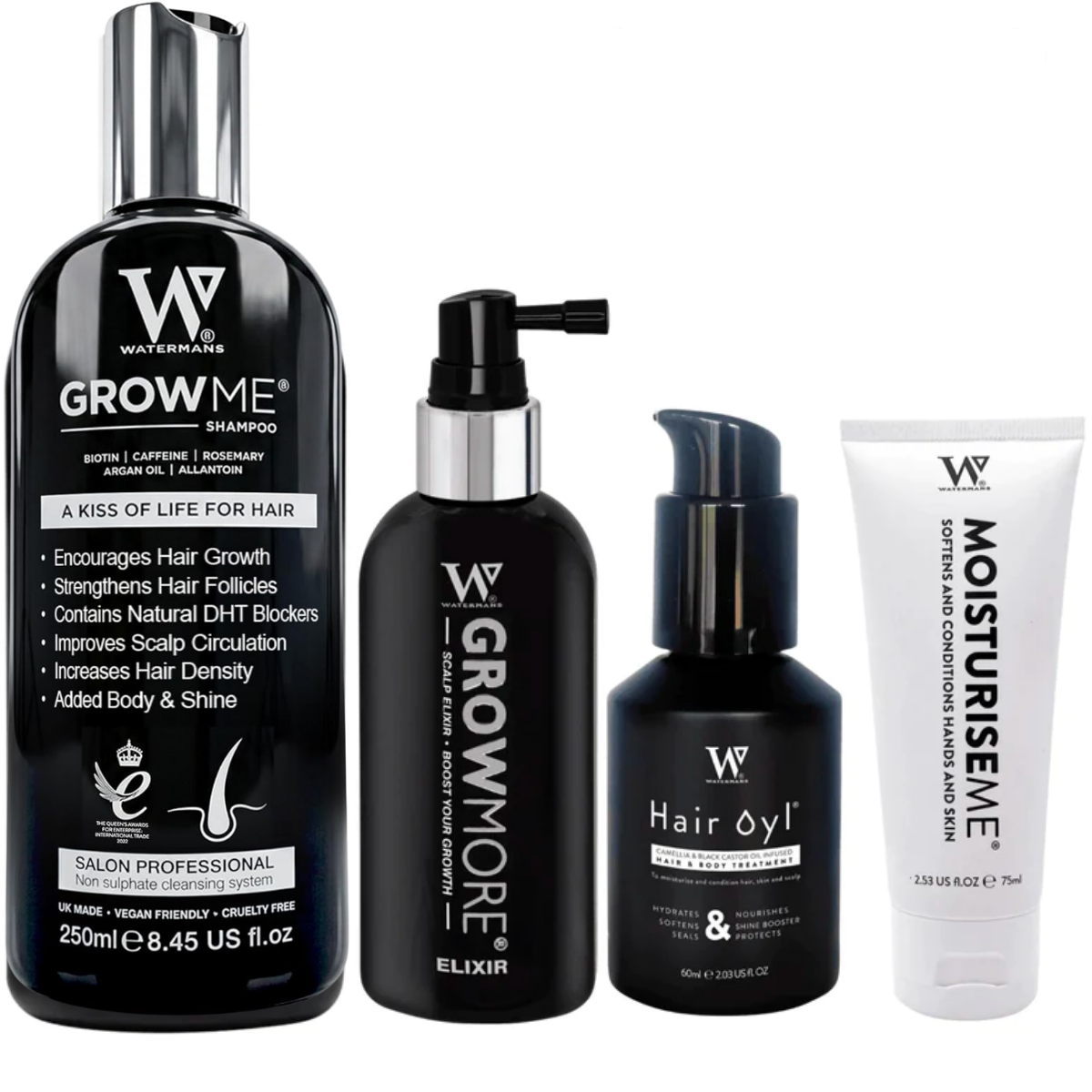
Moisturise Me Face and Hand Cream
A rich emollient cream with cupuacu, shea and cocoa butters plus allantoin, aimed at the dry, tight feeling that follows cold weather, frequent hand washing or an over enthusiastic cleanser. Vegan and made in the UK.
Allergy note: this cream contains almond oil. Do not use it if you have a nut allergy. It is a cosmetic moisturiser for comfort and softness, not a treatment for eczema, rosacea or any diagnosed skin condition.

Step three: cleansing without stripping
The purpose of cleansing is to remove sunscreen, makeup, sweat and excess sebum. It is not to make your skin squeak. That tight, squeaky feeling is the sound of a damaged barrier, and it is the most common self inflicted skincare injury there is.
- Once at night is enough for most people. In the morning, water or a very mild cleanser will do unless your skin is oily.
- Use lukewarm water. Hot water strips lipids and aggravates redness.
- If you wear a heavy sunscreen or long wear makeup, a cleansing balm or oil followed by a gentle wash removes it properly without scrubbing.
- Skip the physical scrubs. Rough particles create micro injury without any advantage over a chemical exfoliant used sparingly.
- Pat dry. Then apply moisturiser while skin is still slightly damp.
Step four: how to choose a vitamin C serum
Vitamin C is the best studied topical antioxidant. It mops up free radicals generated by UV and pollution, it is a required cofactor for the enzymes that build collagen, and it interferes with the pigment producing enzyme tyrosinase, which is why it helps with uneven tone.
It is also notoriously unstable, which is why two serums with the same percentage on the box can perform completely differently.
What actually matters in the formula
- L-ascorbic acid is the form with the most evidence behind it. The most studied combination in dermatology pairs 15 per cent L-ascorbic acid with 1 per cent vitamin E and 0.5 per cent ferulic acid, a formulation developed by researchers at Duke University. The vitamin E and ferulic acid are not padding, they stabilise the vitamin C and add antioxidant protection of their own.
- Concentration has a ceiling. Absorption plateaus around 20 per cent, and higher percentages mostly buy irritation.
- pH must be low, below about 3.5, for L-ascorbic acid to penetrate. That is also why it can sting on compromised skin.
- Packaging is not cosmetic. Opaque, airtight, ideally a pump or a dark glass bottle. A clear dropper bottle sitting on a sunny windowsill is a design failure.
- Derivatives are gentler but weaker on evidence. Sodium ascorbyl phosphate, magnesium ascorbyl phosphate and tetrahexyldecyl ascorbate are stable at higher pH and suit sensitive skin, but the clinical data behind them is thinner.
The colour test
A fresh L-ascorbic acid serum is clear or very pale straw. As it oxidises it turns yellow, then orange, then brown. Once it is orange, it has largely converted to dehydroascorbic acid and is no longer delivering what you paid for. Oxidised vitamin C can also temporarily stain skin and light fabrics. Buy the smallest size you will finish in three months, keep it away from heat and light, and stop treating a browning bottle as still usable.

Sensitive, reactive and rosacea prone skin
If your skin flushes easily, burns with actives or reacts to products it tolerated last month, the answer is almost always to do less rather than to find a cleverer product.
- Fragrance free first. Fragrance, including essential oils, is the most common avoidable cause of contact reactions in cosmetics.
- Mineral sunscreen tends to be better tolerated than organic filters on reactive skin.
- Patch test on the inner forearm or behind the ear for a few days before putting anything new on your face.
- Introduce one new product at a time, four to six weeks apart. Two at once and you learn nothing.
- Consider a vitamin C derivative rather than low pH L-ascorbic acid if serums sting.
Rosacea is a medical diagnosis, not a skin type. Persistent central facial redness, visible vessels, papules or a burning sensation should be assessed by a GP, because effective prescription treatments exist and because ocular rosacea affecting the eyes is easily missed. Skincare supports the treatment, it does not replace it. The same applies to any rash that is spreading, weeping, painful or accompanied by feeling unwell.
What to add only if you have a specific goal
| Ingredient | Add it for | Worth knowing |
|---|---|---|
| Retinoid | Fine lines, texture, acne | The strongest evidence after sunscreen. Start twice weekly. Avoid in pregnancy. |
| Niacinamide | Redness, oil control, barrier support | Well tolerated. 4 to 5 per cent is plenty. |
| Azelaic acid | Rosacea, pigmentation, acne | One of the few actives usually considered suitable in pregnancy. Check with your midwife. |
| Salicylic acid | Congestion, blackheads | Oil soluble, so it works inside the pore. Twice a week is enough. |
| Glycolic or lactic acid | Dullness, rough texture | Increases sun sensitivity. Non negotiable SPF the next day. |
| Hyaluronic acid | Immediate plumping | Apply to damp skin and seal with moisturiser, or it can pull water outward in dry air. |
What you can comfortably skip
- Ten step routines. More products means more opportunities to irritate and less certainty about what helped.
- Toners marketed as pH balancing. Healthy skin restores its own pH within about half an hour of washing.
- Detox claims. Skin does not accumulate toxins that a mask can draw out.
- Collagen creams. The collagen molecule is far too large to cross the stratum corneum intact. Supporting your own collagen through sun protection and retinoids is the route that works, and we look at the oral supplement evidence separately in do collagen supplements work for skin and hair.
- Stacking every active nightly. Retinoid plus acid plus vitamin C in one evening is how barriers break.
Your scalp is skin too
It is easy to treat the face as skincare and everything above the hairline as haircare, but the scalp has the same barrier, the same lipid matrix and the same reactivity. It also has far more sebaceous glands and, on a summer day, considerably more direct ultraviolet exposure than your cheeks.
The same principles transfer. Do not strip it, do not over exfoliate it, protect the parting from sun, and treat persistent flaking, itching or soreness as something to investigate rather than to scrub away. Our guide to keeping your scalp healthy covers that in full, and for the diet side of skin health see what the evidence actually supports about diet for glowing skin. If you are starting from scratch, how to build your first routine is the gentler introduction.
Frequently asked questions
What is the minimum skincare routine that actually works?
A gentle cleanser at night, a moisturiser morning and night, and a broad spectrum SPF 30 or higher every morning. That covers the great majority of the benefit. A vitamin C serum in the morning is a reasonable fourth step, and a retinoid at night is the strongest addition after sunscreen if you tolerate it.
Should I apply vitamin C in the morning or at night?
Morning, under sunscreen. Vitamin C works alongside SPF by neutralising the free radicals that filters do not stop, so the two complement each other. It does not replace sunscreen and should never be used instead of it.
How do I know if my vitamin C serum has gone off?
Look at the colour. A fresh L-ascorbic acid serum is clear or pale straw, and it darkens to yellow, orange then brown as it oxidises. Once it looks orange it has largely degraded. Buy small bottles, keep them out of light and heat, and expect roughly three months once opened.
Does the order of skincare products matter?
Yes, broadly thinnest to thickest, and water based before oil based. In the morning that means cleanse, vitamin C, moisturiser, sunscreen last. At night, cleanse, any active, then moisturiser. Sunscreen always goes on top of skincare and under makeup.
Can I use vitamin C and retinol together?
You can, but most people do better keeping them apart. Vitamin C in the morning and a retinoid at night is easier on the barrier than stacking both at once, and it makes it far clearer which product is responsible if you react.
Is expensive skincare better than budget skincare?
Not reliably. The evidence sits with ingredients and formulation, not price. Sunscreen, glycerin based moisturisers and well packaged vitamin C are all available at supermarket prices, and a formula you use consistently beats a luxury one you ration.
How long before I see results?
Hydration and comfort improve within days. Tone and texture take about 8 to 12 weeks, because that is how long meaningful cell turnover and collagen change need. Anything promising visible transformation in a week is describing temporary plumping.
Do I need a separate eye cream?
Usually not. The skin around the eye is thinner and more reactive, so a fragrance free moisturiser applied gently is often enough. A dedicated eye product is worth it mainly if your face moisturiser is too rich or too active for that area.
The bottom line
A good routine is short, consistent and boring to describe. Protect the skin from ultraviolet, keep the barrier intact, clean it without stripping it, and add one well formulated antioxidant. Give any change eight to twelve weeks before you judge it, and add nothing new while you are still deciding whether the last thing worked.
Looking after skin and hair together? Watermans has made vegan, cruelty free skincare and haircare in the UK since 2012, with over five million bottles sold. Moisturise Me face and hand cream is our emollient option for dry, tight skin, and it contains almond oil, so please avoid it if you have a nut allergy. Our products are cosmetic care rather than medical treatments. For persistent redness, a rash that will not settle, or any changing mole, please see your GP.