



Dermaplaning: How It Works, Aftercare and Who Should Skip It
Dermaplaning is a manual exfoliation treatment in which a practitioner draws a sterile single blade across taut skin at roughly a 45 degree angle, shaving off dead surface cells and the fine vellus hairs known as peach fuzz. It is a cosmetic surface treatment, not a medical one. The results are real but shallow and short lived, lasting around 3 to 4 weeks, which is why clinics book it every 4 to 6 weeks.
Last updated: August 2026
Key takeaways
- Dermaplaning removes dead surface skin plus vellus hair with a single sterile blade, and the smoothness typically lasts 3 to 4 weeks.
- Professional dermaplaning goes deeper than at home facial shaving because the blade is surgical grade and the skin is held taut by a second pair of hands.
- Aftercare matters more than the treatment itself: keep the routine bland for 48 hours and wear broad spectrum SPF 30 or higher every day.
- Skip it entirely if you have active acne, a rosacea flare, sunburn, cold sores, broken skin or you are using isotretinoin.
- Shaving cannot change the thickness, colour or number of your hair follicles, so peach fuzz does not grow back darker or coarser.
- Claims that dermaplaning builds collagen, clears acne or erases fine lines are not supported by good clinical evidence.
What is dermaplaning, and how is it different from facial shaving?
Dermaplaning is a clinic or salon treatment that uses a sterile 10 gauge surgical blade to scrape away the outermost layer of dead skin along with vellus hair. Facial shaving is the same physical idea done at home with a small single blade eyebrow razor or a battery powered dermaplaning tool. The mechanism is identical. The depth, the hygiene and the risk profile are not.
The practical difference is control. In a clinic a trained practitioner stretches the skin flat with one hand and works in short 3 centimetre strokes with the other, which lets the blade sit closer to the surface without catching. Doing that on yourself, in a bathroom mirror, one handed, is genuinely harder, so at home shaving stays deliberately shallower.
| Professional dermaplaning | At home facial shaving | Sonic dermaplaning device | |
|---|---|---|---|
| Blade | Sterile surgical scalpel | Single blade facial razor | Guarded micro blade head |
| Who performs it | Esthetician, nurse or doctor | You | You |
| Typical UK cost | About 40 to 90 pounds per session | About 5 to 10 pounds for a pack of razors | About 70 to 100 pounds plus refills |
| Depth of exfoliation | Deepest of the three | Light | Light to moderate |
| Frequency | Every 4 to 6 weeks | Every 1 to 3 weeks | Every 2 to 4 weeks |
| Main risk | Nicks, irritation, cost | Razor burn, folliculitis from reused blades | Over use because it feels gentle |

What actually happens during a professional dermaplaning appointment?
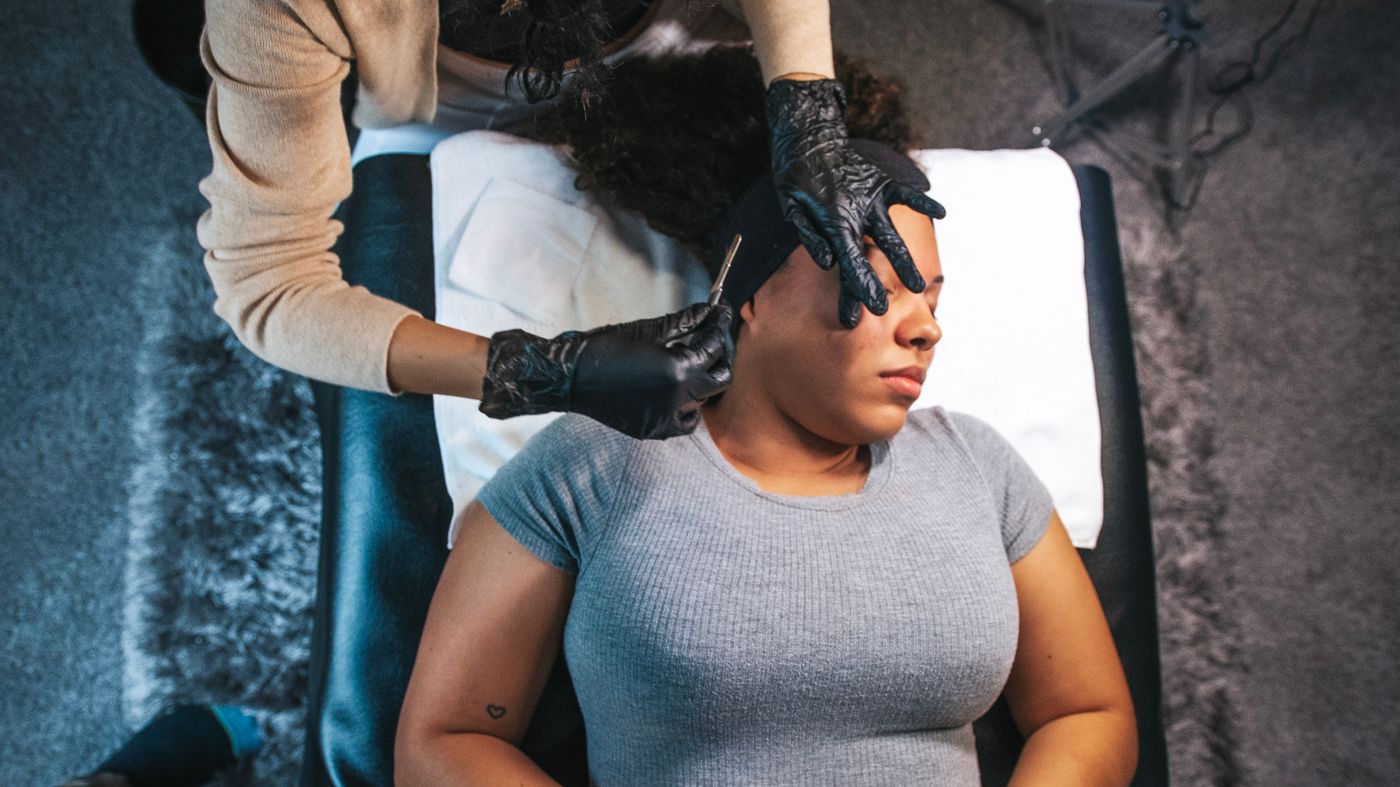
A professional dermaplaning appointment takes about 30 minutes and follows a fixed sequence: cleanse, dry the skin completely, stretch a small section flat, then draw the blade across it in short upward strokes at a 45 degree angle. Nothing is injected and nothing numbs the skin, because the blade never breaks the surface.
Dry skin is the part people underestimate. The blade needs a completely dry, oil free surface to lift dead cells cleanly, so a good practitioner will spend as long degreasing the face as they do on the blade work. If the skin is damp, the blade drags and that is where irritation comes from.
Most people describe the sensation as a light scratching, similar to a pencil eraser being pulled across the cheek. There is usually mild pinkness for an hour or two afterwards and no formal downtime, which is why it is a common pre event treatment.
How often should you have dermaplaning done?
Every 4 to 6 weeks is the standard interval for professional dermaplaning, and it is set by biology rather than by marketing. The outer layer of skin turns over roughly every 28 to 40 days in healthy adults, so treating more often simply removes cells that have not finished their job of holding water in and irritants out.
At home facial shaving can sit on a shorter cycle, every 1 to 3 weeks, because it is far shallower. The honest test is your own skin: if it feels tight, stings when you apply a serum, or looks shiny and red rather than smooth, you are exfoliating too often and should stretch the gap.
Tip: never dermaplane in the same week as a chemical peel, a retinoid ramp up, laser hair removal or waxing on the same area. Stacking two exfoliating treatments is the single most common cause of a bad reaction, and the reaction usually gets blamed on whichever one came second.
What is the correct dermaplaning aftercare routine?
Correct dermaplaning aftercare is deliberately boring: for the first 48 hours use only a gentle cleanser, a plain fragrance free moisturiser and a broad spectrum SPF 30 or higher. Freshly exfoliated skin has lost its layer of dead cell buffer, so anything active will absorb faster and sting harder than usual.
Here is the sequence most clinics recommend, day by day.
- Day 0, the first 24 hours. Cleanse with lukewarm water and a non foaming cleanser. Apply a bland moisturiser. Skip make up if you can, and skip the gym, saunas, steam rooms and swimming pools, because heat, sweat and chlorine all irritate a newly exfoliated surface.
- Day 1 to 2. Keep going with cleanser, moisturiser and SPF only. No acids, no retinol, no vitamin C at high strength, no scrubs, no facial brushes.
- Day 3 to 7. Reintroduce actives one at a time, not all at once, and start at half your usual frequency. If you use a retinoid, that is the last thing to come back.
- Every day, indefinitely. Broad spectrum SPF 30 or higher on the face. This is the step that decides whether the treatment leaves you brighter or blotchier, particularly on deeper skin tones where post inflammatory pigmentation is a real risk.
If you want the full ordering logic for the products either side of a treatment, our guide to the correct order to apply your skincare covers what goes on before and after moisturiser, and why the sequence changes what actually absorbs.

How do you dermaplane at home without wrecking your skin?
At home dermaplaning works when you treat it as a shallow shave rather than a peel. Use a fresh single blade facial razor on completely dry, freshly cleansed skin, hold the area taut, and work in short downward strokes at about a 45 degree angle. Stop at the jawline and never go over the same patch twice.
- Cleanse and dry fully. Any leftover oil or moisturiser makes the blade skid. Give the skin a couple of minutes to dry properly.
- Use a new blade every time. A dull blade tugs the hair instead of cutting it, and a reused blade is the usual route to folliculitis, those small itchy bumps that appear two days later.
- Pull the skin taut. One hand anchors the skin above the area you are working on. This is the step most people skip and it is the one that prevents nicks.
- Short strokes, light pressure. Roughly 2 to 3 centimetres at a time. You are lifting fuzz, not scraping wallpaper. Pressure adds no benefit and multiplies the risk.
- Avoid the eyelids, lips, nostrils and any spot. Never shave over active acne. Dragging a blade across an inflamed lesion spreads bacteria across the cheek.
- Finish bland. Moisturiser only, then SPF in the morning. Save the acids for another night.
Hygiene rule: a facial razor is a single use item. Rinsing and reusing it saves about 60 pence and is the reason most at home dermaplaning goes wrong. Store spares dry, and bin any blade that has touched a spot.
Who should avoid dermaplaning and facial shaving?
Dermaplaning is not suitable for everyone, and the exclusions are not cosmetic preferences, they are infection and scarring risks. Avoid it, or get medical advice first, if any of the following apply to you.
- Active acne, especially inflamed or pustular acne. A blade across a lesion spreads bacteria and can leave marks that outlast the spot.
- A rosacea flare. Mechanical exfoliation on flushed, reactive skin usually makes the redness worse rather than smoothing it.
- Sunburn, windburn, eczema or any broken skin. Wait until the barrier has fully recovered.
- An active cold sore. Blade work around the mouth can spread a herpes simplex outbreak across a wider area.
- Isotretinoin, now or in the last 6 months. Skin is far more fragile on and after this medicine. Ask the prescriber before booking anything mechanical.
- A history of keloid scarring. Any procedure that can nick the skin carries more consequence.
- Unexplained new facial hair growth. A sudden increase in coarse dark facial hair in women can be hormonal, and it is worth seeing a GP rather than only shaving it. Conditions such as PCOS are common and treatable, and our guide to PCOS and hair changes explains what to ask about.
If you are unsure where your skin sits, see a GP or a dermatologist before booking. That single conversation is cheaper than treating a reaction.
Does dermaplaning make facial hair grow back thicker or darker?
No. Shaving cuts hair at the surface and has no contact with the follicle, which is what determines a hair's thickness, colour and growth rate. Regrowth can feel coarser for a few days because a cut shaft has a blunt tip instead of a tapered one, but the hair itself is unchanged.
This is probably the most persistent myth in the whole category, and it is worth understanding properly rather than just being told it is false. We take the evidence apart in detail in does shaving make hair grow back thicker, including why the illusion is so convincing.
What can dermaplaning realistically do, and what is oversold?
Dermaplaning has one well established effect: it physically removes dead surface cells and vellus hair, which makes skin look brighter and makes make up sit flatter. Everything beyond that sits on much weaker ground, and the marketing tends not to make the distinction.
| Claim | How well it holds up |
|---|---|
| Removes peach fuzz and dead skin | Well established. This is the mechanism of the treatment and it is visible immediately. |
| Make up applies more smoothly | Well established. Foundation has less texture and fuzz to catch on. |
| Skin looks brighter for a few weeks | Supported. Removing dull surface cells improves light reflection, and it fades as the skin turns over. |
| Serums absorb better afterwards | Plausible but modest. Less surface debris means less in the way. It also means actives sting more, so it cuts both ways. |
| Stimulates collagen production | Limited evidence. The blade does not penetrate the dermis, which is where collagen is made. Microneedling and lasers work at that depth. Dermaplaning does not. |
| Treats acne | Not supported, and often counterproductive. Active acne is on the exclusion list. |
| Reduces fine lines and wrinkles | Not supported. Any improvement is a short lived surface smoothing effect, not a structural change. |
The honest summary: dermaplaning is a very good exfoliation and hair removal treatment pretending to be an anti ageing one. Judged as the first thing, it delivers. Judged as the second, it will always disappoint.

How does dermaplaning fit into the rest of your routine?
Dermaplaning replaces your exfoliation step, it does not add to it. On the day you dermaplane, drop the acids, the scrubs and the cleansing brush entirely, then rebuild around two things that always help: a moisturiser that holds water in, and daily SPF.
It also pairs badly with a heavy cleansing routine on the same evening. If you normally double cleanse, do it before the blade, not after, and keep the second cleanse gentle.
One honest caveat on moisturiser choice. Straight after facial dermaplaning, the right product is a light, plain, fragrance free facial cream. Rich butter based creams are better suited to hands, elbows and the dry patches that show up in cold weather, which is also the situation covered in our guide to caring for dry skin in winter.

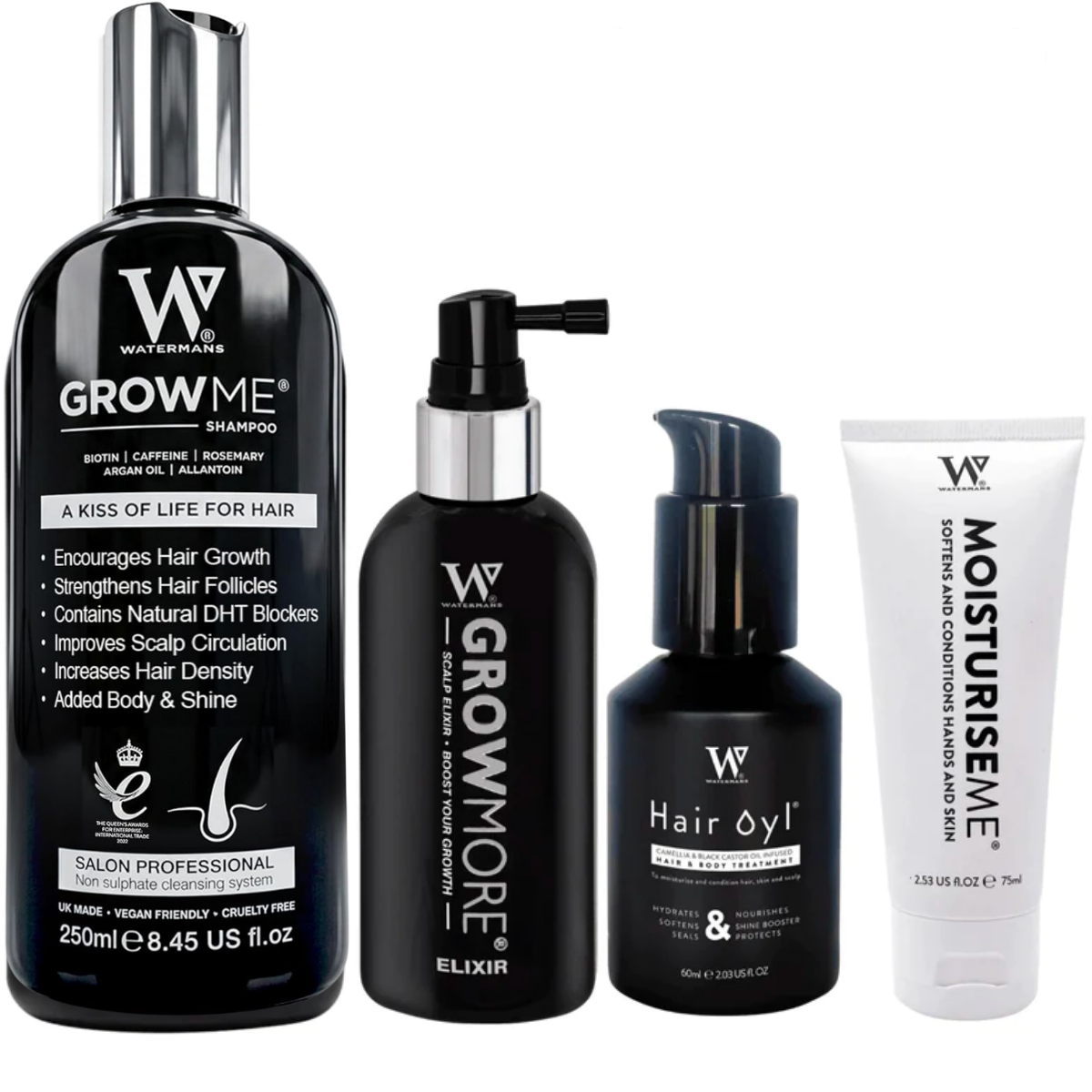
Moisturise Me® Face & Hand Cream, 15.00 pounds
A rich cream built on cupuacu, shea and cocoa butters with allantoin and almond oil. It is the one to reach for on hands, elbows and dry patches, and on drier faces once the 48 hour post treatment window has passed. Vegan and made in the UK.
Dermaplaning versus other exfoliation methods: which should you choose?
Choose dermaplaning if your main complaint is peach fuzz and rough texture. Choose a chemical exfoliant if your complaint is congestion or uneven tone, and choose neither if your barrier is already irritated. They are not interchangeable, and using two at once is how most people end up with sensitised skin.
| Method | Best for | Removes hair | Watch out for |
|---|---|---|---|
| Dermaplaning | Peach fuzz, rough texture, make up prep | Yes | Not for active acne or rosacea flares |
| Glycolic or lactic acid (AHA) | Dullness, uneven tone | No | Sun sensitivity, stinging on a damaged barrier |
| Salicylic acid (BHA) | Congestion, blackheads, oily skin | No | Dryness if used daily at strength |
| Physical scrubs | Body skin, rarely the face | No | Micro tears from coarse particles |
| Waxing or threading | Coarse hair, brows and lip | Yes, from the root | Ingrowns, and never on the same day as a blade |
If hair removal rather than exfoliation is the real goal, it is worth reading what genuinely slows regrowth before you commit to a routine. Our honest rundown of how to slow body and facial hair growth rates each method on the evidence rather than the marketing.
Frequently asked questions about dermaplaning
How long do dermaplaning results last?
Dermaplaning results usually last 3 to 4 weeks. The immediate smoothness comes from removing dead surface cells and vellus hair, and both return as the skin completes its natural turnover cycle of roughly 28 to 40 days. That timing is why clinics rebook at 4 to 6 weeks.
Does dermaplaning hurt?
Dermaplaning is not painful for most people. The blade sits flat against taut skin and does not break the surface, so the sensation is closer to a light scratching or a pencil eraser dragged over the cheek. Mild redness for an hour or two afterwards is normal and settles on its own.
Can I dermaplane if I have acne?
Not while acne is active. Drawing a blade over inflamed spots can spread bacteria across the face and leave marks that last far longer than the original lesion. Once skin is clear and settled, dermaplaning is usually fine, but check with a GP or dermatologist first if you are on acne medication.
Should I dermaplane before or after cleansing?
Always after cleansing, and only once the skin is completely dry. Oil, residue and moisture all make the blade drag rather than glide, which is the main cause of nicks and irritation. Cleanse, wait 2 to 3 minutes for the skin to dry fully, then start.
Can I wear make up after dermaplaning?
Wait 24 hours if you can. Freshly exfoliated skin has less of a protective buffer, so heavy foundation applied straight away is more likely to irritate or clog. After the first day, make up is one of the main reasons people book the treatment, because it sits noticeably flatter.
Is dermaplaning safe during pregnancy?
Dermaplaning is a surface treatment with no chemicals absorbed into the body, so it is generally considered low risk in pregnancy, and it is a common alternative for people who cannot use retinoids or strong acids. Tell your practitioner you are pregnant, and raise it with your midwife or GP if you have any doubt.
Why do I get small bumps a few days after facial shaving?
Small itchy bumps 2 to 3 days after shaving are usually folliculitis, an irritation or low grade infection of the follicle. The usual causes are a reused or dull blade, too much pressure, or shaving over a spot. Use a fresh single blade every time and let the skin recover before repeating.
Does dermaplaning help hair on the head or scalp?
No. Dermaplaning is a facial skin treatment and has no effect on scalp hair density or shedding. If your concern is thinning hair rather than facial fuzz, that is a separate issue with its own causes, and sudden or patchy loss is worth raising with a GP or trichologist.
Where to take this next
If you came here for smoother skin, the two habits that matter most are the boring ones: exfoliate no more often than your skin can rebuild, and wear SPF every single day. Dermaplaning is a genuinely useful addition on top of that, and a poor substitute for it.
Watermans is a founder led British hair and skin brand with over 5 million bottles sold since 2012. Everything we make is vegan and produced in the UK. If your skin needs richer support through the drier months, Moisturise Me Face & Hand Cream is the butter based cream we make for hands, elbows and dry patches.
This article is for general information and is not medical advice. See a GP or a dermatologist about persistent skin problems, unexplained changes in facial hair, or before starting a treatment while on prescribed medication.