Slow Hair Growth: What Works on Body and Facial Hair
If you want to slow hair growth on your legs, face or body, the honest answer is that only two things genuinely change how fast hair comes back: a course of laser or IPL, and electrolysis. Everything else, including waxing, epilating, threading and depilatory creams, changes how new growth looks and how long the gap between sessions feels, without altering the speed the follicle works at. This guide ranks every method honestly, so you can spend your money on the ones that hold up.
Our hair growth conditioner
Condition Me® Hair Growth Conditioner, £13.95. Detangles and strengthens the hair fibre so lengths snap less on the brush and look thicker through the ends.
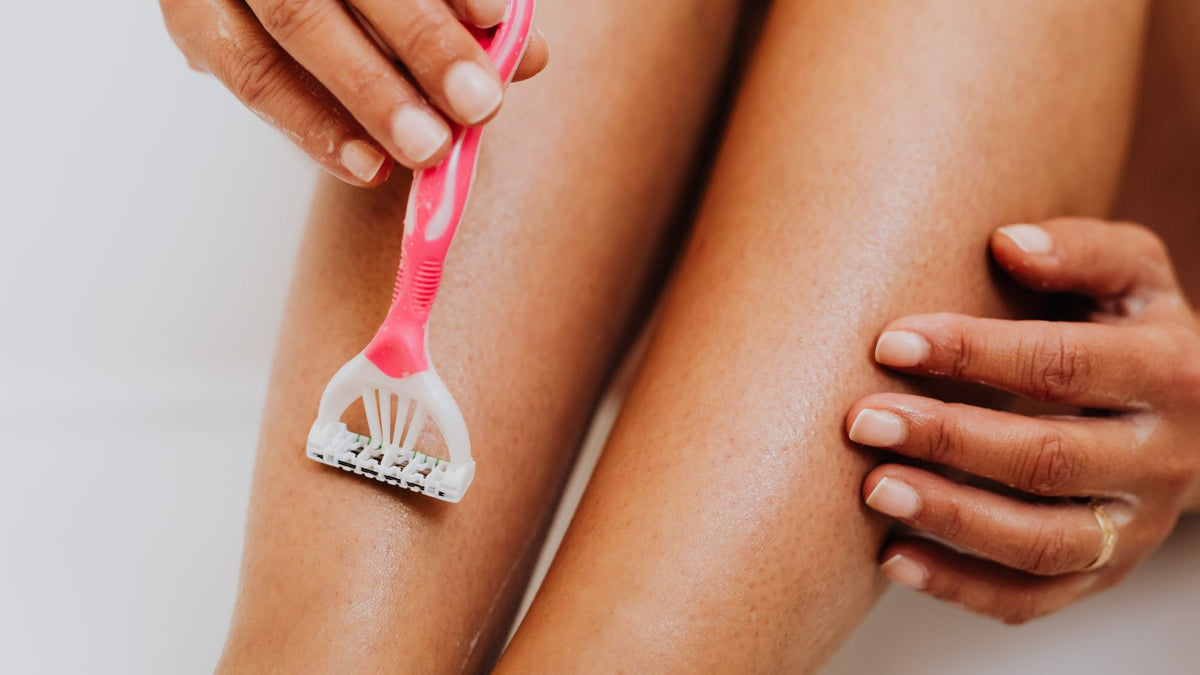
To slow hair growth in a way that lasts, you need to affect the follicle itself, not the hair above the skin. A course of laser or IPL damages actively growing follicles so they produce finer, sparser hair, and electrolysis targets them one at a time with an electrical current. Waxing, epilating and threading pull hair from the root, which buys three to six weeks rather than three days, but the follicle recovers and its speed is unchanged. Shaving and creams work only at the surface.
Key takeaways
- Only laser, IPL and electrolysis genuinely slow hair growth. Everything else changes the gap between sessions, not the rate.
- Electrolysis, laser and IPL all aim to destroy the follicle. All need several sessions, and none is a single visit fix.
- Shaving does not make hair grow back thicker or faster. A blunt cut tip just feels coarser than a tapered one.
- Spearmint tea has two small trials behind it for androgen levels, and no measured effect on hair itself.
- If it is your scalp hair that feels slow, the problem is almost always breakage, not growth speed.
What does slow hair growth actually mean?
The phrase "slow hair growth" gets searched by two completely different groups of people, and they need opposite advice. It is worth working out which one you are before reading further.
The first group wants less body or facial hair. They are shaving every other day, or waxing every month, and they want the gap to be longer. Most of this guide is for them.
The second group has scalp hair that feels stuck at one length. They measure it, wait three months, and it seems no longer. For them, growth speed is almost never the real issue, and the fix is completely different. There is a section further down that deals with it properly.
Which one are you?
If you want less hair, read the removal sections. If you want more length on your head, skip to "What if it is your scalp hair that feels slow?" near the end. The two problems share a search phrase and nothing else.
Why does hair grow at the speed it does?
Every hair follicle cycles through three phases. Anagen is the active growing phase, catagen is a short transition, and telogen is the resting phase before the hair is released. The length of anagen is what decides how long a hair can get, and it varies enormously by body site.
Scalp anagen runs for years, which is why head hair reaches waist length. Anagen on the legs, arms, face and underarms lasts weeks to a few months, which is why body hair stops at a short length and sits there. This is also why body hair new growth looks patchy and staggered: at any moment, different follicles on the same patch of skin are in different phases.
Growth speed itself is largely set by genetics and by androgens, the hormones that drive coarse terminal hair in androgen sensitive areas such as the face, chest and stomach. Nothing you apply to the surface of the skin changes either of those things.

Which hair removal methods genuinely slow hair growth?
Here is every common method ranked by whether it truly slows hair growth or merely delays the moment you notice new growth. The distinction matters, because the second group is priced as though it belongs to the first.
| Method | Where it works | Typical gap | Does it slow growth? |
|---|---|---|---|
| Shaving | At the skin surface | 1 to 3 days | No. The follicle is untouched. |
| Depilatory cream | Just below the surface | 3 to 7 days | No. It dissolves keratin chemically. |
| Threading | At the root | 2 to 5 weeks | No, but new growth comes back fine and tapered. |
| Waxing | At the root | 3 to 6 weeks | No. Longer gap, same follicle speed. |
| Epilating | At the root | 2 to 4 weeks | No. Same principle as waxing, done mechanically. |
| IPL (home or salon) | The follicle | Months, with top ups | Yes, partially. Gentler and less precise than laser. |
| Laser | The follicle | Months to years, with top ups | Yes. Aims to destroy the follicle, over several sessions. |
| Electrolysis | The follicle, one at a time | Long term, per follicle | Yes. Works on any hair colour, but slow over large areas. |
Read that table one way and it is discouraging. Read it another and it is genuinely useful: if all you want is a longer gap between sessions, waxing and epilating deliver that for a fraction of the cost of laser, and you do not need to believe a growth inhibition claim to get the benefit.

Do laser and IPL permanently slow hair growth?
Laser and IPL both work by aiming light at the pigment in the hair, which converts to heat and damages the follicle. The British Association of Dermatologists describes laser and IPL as aiming to destroy the hair root permanently, while noting that several sessions are needed and that both are expensive and not normally available on the NHS.
Several sessions are unavoidable because each one only affects follicles that happen to be in their active growing phase on the day. Expect them spaced weeks apart, followed by occasional maintenance. Two honest limitations are worth knowing before you book:
- Contrast decides the result. The light targets pigment, so dark hair on pale skin responds best. Grey, white, red and very fair hair have too little pigment to absorb enough energy, and no amount of sessions changes that.
- IPL is not laser. IPL scatters a broad spectrum of light, laser uses a single wavelength. IPL devices, including home units, are gentler and generally need more sessions for a weaker result. That is a fair trade at the price, but it is a trade.
Before you book a course
Ask for a patch test, ask which device is being used, and ask what maintenance looks like after the initial course. In the UK, laser hair removal is not currently regulated the way many people assume, so the operator matters more than the brochure.
Do creams, teas and food tricks reduce hair growth?
This is where most of the money gets wasted, so it is worth being blunt about the evidence.
Spearmint tea
Spearmint is the one folk remedy with actual human trials behind it. A 2007 study and a 2010 randomised study both found that drinking spearmint tea twice daily reduced free testosterone in women with excess facial hair. Both were small and short. Crucially, neither found a statistically significant reduction in measured hair growth over the study period, only in the hormone levels. That is an honest reason to try it and an honest reason not to expect much.
Turmeric, papaya and gram flour pastes
These appear in a great many articles and have no controlled evidence behind them for slowing hair growth. Papaya contains papain, an enzyme that breaks down protein, which is the theoretical hook. The concentration in a kitchen paste sitting on intact skin for ten minutes is not doing anything to a follicle sitting well below the surface.
Hair minimising lotions
Over the counter lotions sold as growth inhibitors, usually applied after waxing, do not have good published evidence. NICE guidance for UK primary care does include a prescription only cream for facial hirsutism in women aged 19 and over, so if facial hair is your concern, your GP is the right person to ask about it rather than a shelf in a chemist.
Get a discount on the body and facial hair range
Join the Watermans mailing list and we will email a discount code straight to your inbox, so you can try the body and facial hair range for less. Made in the UK, over 6.5 million bottles sold since 2012.
When is unwanted hair worth raising with a GP?
Most unwanted hair is simply genetics and nothing to worry about. But coarse, dark hair appearing in a male pattern on the face, chest, stomach or back is called hirsutism, and it has causes worth looking into, particularly when it arrives alongside irregular periods, acne, or noticeably fast changes.
Polycystic ovary syndrome is the most common underlying cause, and it is very manageable once identified. A GP can arrange the right blood tests and talk you through the options. We are a hair care company, not a clinic, so this is the one part of the problem we cannot help with and would not pretend to.
Worth a GP appointment
Book with your own GP if coarse hair appears quickly, spreads in a male pattern, or comes with irregular periods, acne or unexplained weight changes. Getting the cause looked at is more useful than any removal method, because it changes what will actually work.
What if it is your scalp hair that feels slow?
This is the other half of the slow hair growth search, and it deserves a straight answer. Scalp hair grows at roughly one centimetre a month, and that rate is remarkably consistent between people. If your hair has sat at shoulder length for two years, it is almost certainly not growing more slowly than anyone else. It is breaking off at the ends at the same speed it grows at the roots. On the scalp side, our guide to transmasculine hair cuts and scalp care covers choosing a barber cut and washing an oilier scalp.
This is a retention problem, and it is worth separating three things people constantly blur together, because the fix for each is different:
| What it is | What is happening | What it looks like | What helps |
|---|---|---|---|
| Hair breakage | The fibre snaps along its length | Short flyaway bits, rough ends, hair that will not pass a certain length | Gentler handling, conditioning, heat protection, regular trims |
| Hair shedding | More follicles enter the resting phase at once | More hair in the brush and drain, whole strands with a small white bulb | Time, plus addressing the trigger such as illness or stress |
| Hair loss | Follicles produce finer hair or stop producing | A widening parting, a thinning crown, a receding line | A GP or dermatologist, because the causes are medical |
If your ends are rough, your hair tangles easily and you find short broken pieces rather than whole strands, you are dealing with breakage. That is a hair care problem and it responds well to fairly boring changes: conditioning every wash, detangling from the ends upward, protecting from heat, sleeping on a smoother pillowcase, and getting the split ends removed rather than trying to mend them.

We make cosmetic products for exactly this, and it is worth being precise about what they do. They do not speed hair up. They reduce the breakage that stops you keeping the length you already grow, which is what most people are actually asking for when they say their hair grows slowly.

Condition Me® Conditioner £13.95
A breakage defence conditioner with cholesterol, shea butter and hydrolysed lupine protein. Slip is the point here: hair that detangles without dragging is hair that snaps less on the way through a comb.

Masque Me® Hair Growth Mask £24.95
An 8 in 1 deep conditioning mask for when the ends have already gone rough. Used weekly in place of conditioner, it makes lengths feel stronger and look less frayed.
For the full picture on why length disappears, read our guide to stopping hair breakage naturally at home, and if the ends are already split, preventing split ends covers the habits that stop it recurring.
How should you look after skin between hair removal sessions?
Whatever method you use, the skin does most of the complaining. A few things reduce that reliably:
- Exfoliate gently, two to three days after removal. Not immediately, when skin is still irritated. This is the single most effective way to reduce ingrown hairs.
- Moisturise daily. Dry skin grips new growth and makes ingrowns more likely.
- Let waxing new growth reach about 5mm before the next session. Shorter than that and the wax cannot grip, which means more passes and more irritation.
- Never shave between laser sessions with a blunt blade, and avoid waxing or plucking during a laser course, because the follicle needs to be present for the light to find it.
If you wax or epilate, our guide to reducing hair growth after waxing goes further into the aftercare side, and how to make hair grow slower covers the day to day routine in more detail.
What is the bottom line on slow hair growth?
If you want to genuinely slow hair growth, there are two credible routes and one honest budget option. Electrolysis is slow and best for small areas such as the face, and it works whatever colour your hair is. A course of laser or IPL covers larger areas quickly if your hair and skin contrast suits it. And if neither is realistic, waxing or epilating buys you three to six weeks instead of three days for a fraction of the price, as long as you buy it for the gap and not for a growth inhibition claim.
Skip the pastes and the minimising lotions. Try spearmint tea if you like it, knowing the evidence covers hormone levels rather than hair. And if coarse hair has appeared quickly or in a male pattern, see your GP before spending anything, because the cause changes which method will work. We have a separate guide to nettle tea benefits for hormones if that is the part you need.
Frequently Asked Questions
Can hair removal ever be permanent?
The British Association of Dermatologists says electrolysis, laser and IPL all aim to destroy the hair root permanently, and that several sessions are needed in each case. Electrolysis works on any hair colour but works through one follicle at a time, so it suits small areas. Laser and IPL cover larger areas but rely on pigment. Shaving, waxing and creams do not change the follicle at all.
Does shaving make hair grow back thicker or faster?
No. Shaving cuts the hair shaft at the skin surface and does not touch the follicle, so it cannot change the rate of growth. New growth feels coarse because a razor leaves a blunt tip instead of the naturally tapered end, and that blunt tip is what your fingertips read as stubble.
How long does waxing keep hair away compared with shaving?
Waxing removes hair from the root, so most people get three to six weeks before new growth is obvious, against one to three days from shaving. Waxing does not slow hair growth itself. It simply starts each hair from further down, so the visible gap is longer.
Does spearmint tea slow hair growth on the face?
Two small human trials found that drinking spearmint tea twice a day lowered free testosterone in women with excess facial hair, but neither trial found a measurable drop in hair itself over the study period. It is a cheap thing to try and it is not a substitute for seeing a GP about the cause.
How many laser or IPL sessions will I need?
Several, spaced weeks apart. The British Association of Dermatologists notes that multiple sessions are needed, because each one only affects follicles that happen to be in their active growing phase that day. It also notes that laser and IPL are expensive and are not normally available on the NHS. Results are strongest on dark hair against pale skin, and weakest on grey, red or very fair hair.
Is there a cream that will reduce facial hair?
There is a prescription only cream in the UK that slows facial hair growth for some people, and a GP is the person to ask about whether it suits you. Over the counter hair minimising lotions sold as inhibitors have no good evidence behind them, and depilatory creams dissolve hair at the surface rather than slowing anything.
Why does my scalp hair seem to have slow hair growth?
Scalp hair grows at a fairly fixed rate of roughly one centimetre a month, and that rate barely varies between people. When hair seems stuck at one length, the usual cause is breakage at the ends matching growth at the roots, so length is lost as fast as it is gained. That is a retention problem, not a growth problem.
Could unwanted hair be a sign of something worth checking?
Sometimes. Coarse dark hair appearing in a male pattern on the face, chest or stomach, especially alongside irregular periods, acne or rapid changes, is worth raising with your GP. Hirsutism has identifiable causes and your GP can look into them properly. If your question is about products or a routine rather than a medical one, you can talk to Gail Waterman, our co-founder, as an AI avatar on the Watermans homepage.
The conditioner is doing the protective work here, and the Condition Me hair growth conditioner is ours. Made in the UK, with over 6.5 million bottles sold since 2012.
Watermans products are 100% cosmetic and do not treat medical hair loss. Individual results may vary.
Sources & References
- NHS, Hirsutism, causes of excess hair in a male pattern and when to see a GP
- NICE Clinical Knowledge Summaries, Hirsutism, assessment and management in UK primary care
- Grant P. Spearmint herbal tea has significant anti androgen effects in polycystic ovarian syndrome. Phytotherapy Research, 2010, randomised trial, reduced free testosterone, no significant change in measured hair over 30 days
- Akdogan M et al. Effect of spearmint teas on androgen levels in women with hirsutism. Phytotherapy Research, 2007, earlier study reporting the same hormonal effect
- British Association of Dermatologists, Hirsutism information leaflet, electrolysis, laser and IPL all aim to destroy the hair root permanently, several sessions needed, and neither laser nor IPL is normally available on the NHS