Donor Hair Quality: 7 Signs That Shape a Hair Transplant
Donor hair quality is the part of a hair transplant that nobody can change on the day. A transplant does not create new hair; it moves hair you already have from the back and sides of your head to the areas that have thinned. So how much hair there is to move, how thick each strand is and how stable that area will stay over the years sets the limit on what any surgeon can achieve. This guide explains the seven things that decide it, how to judge your own, and how to look after your hair before and after surgery.
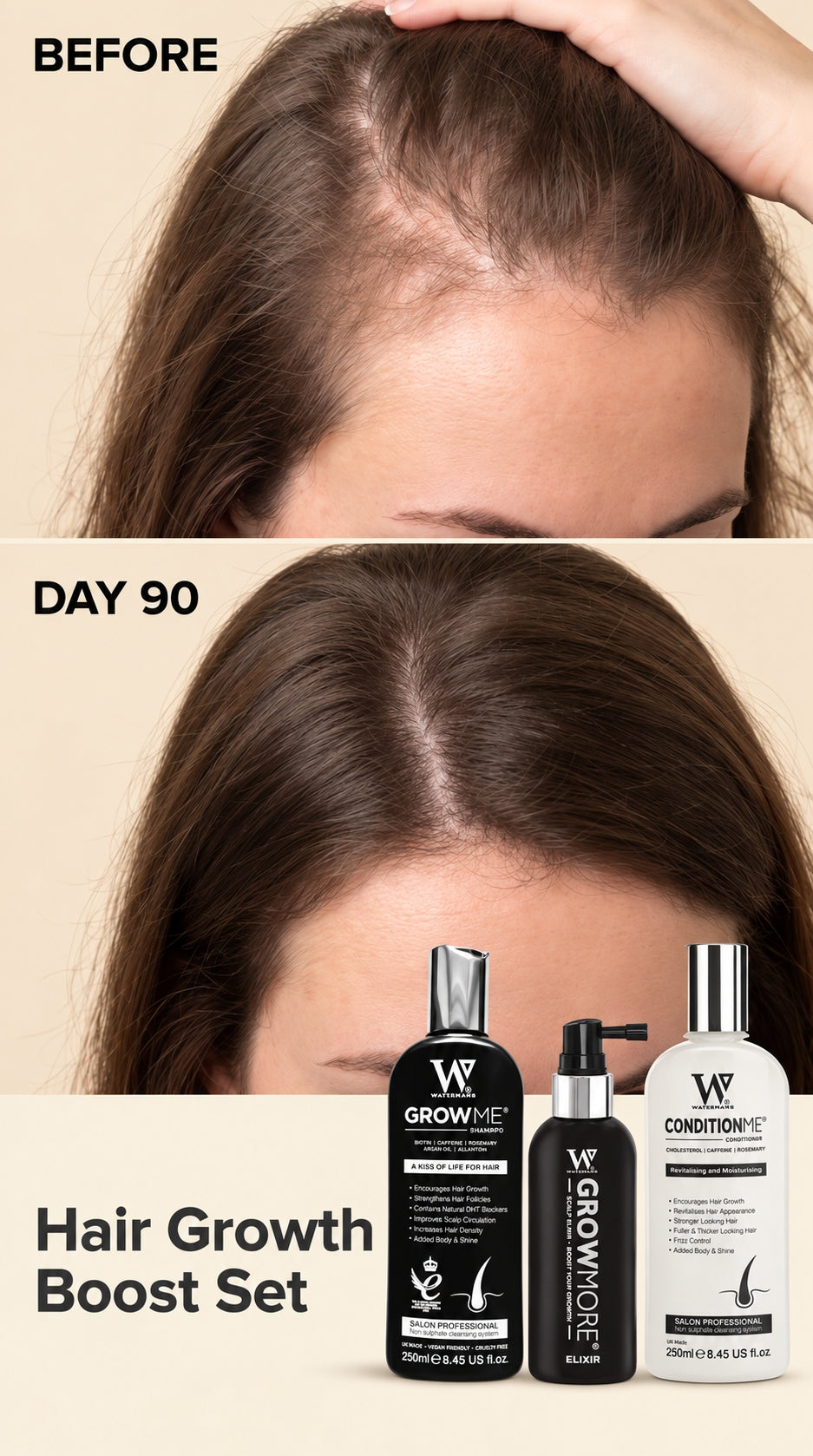
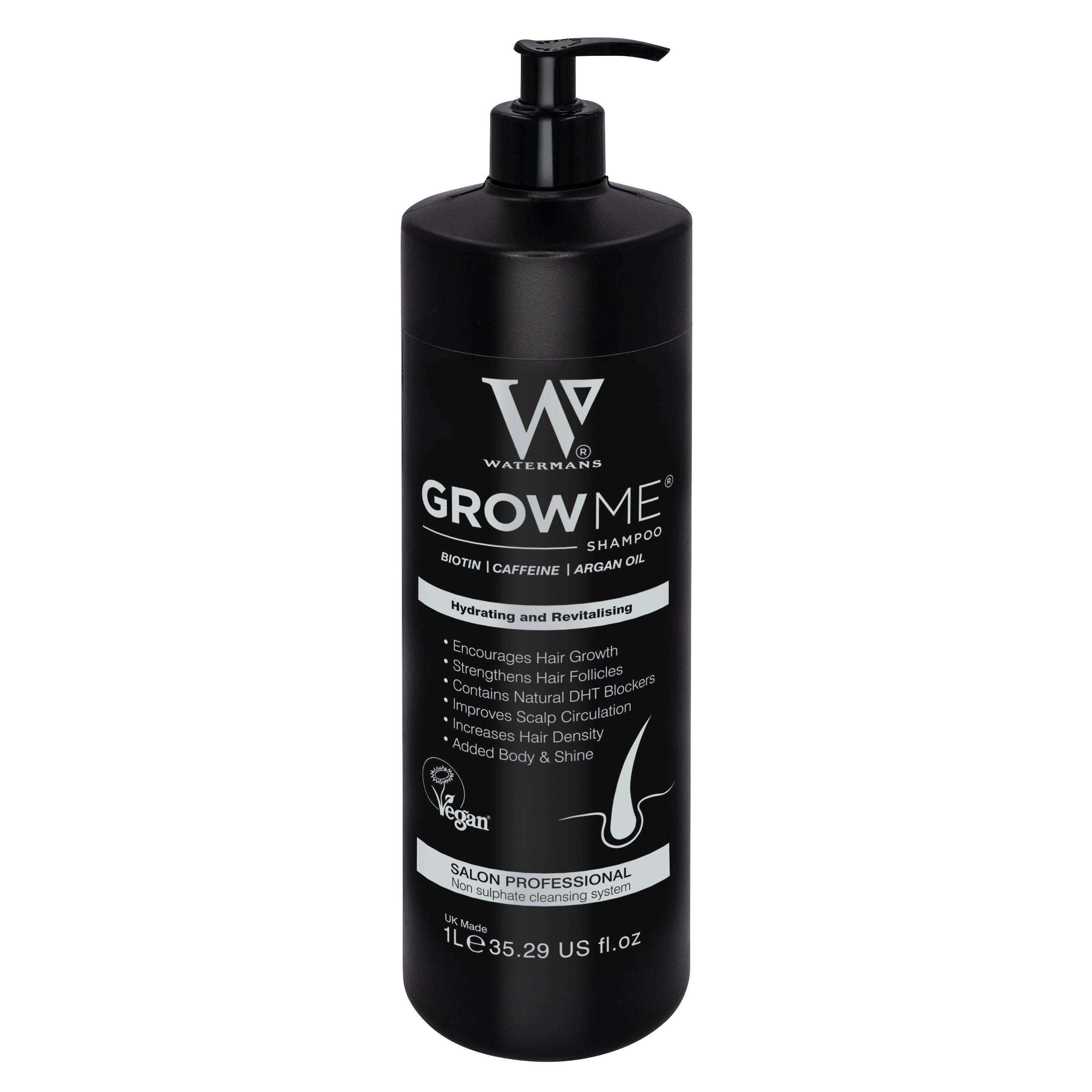
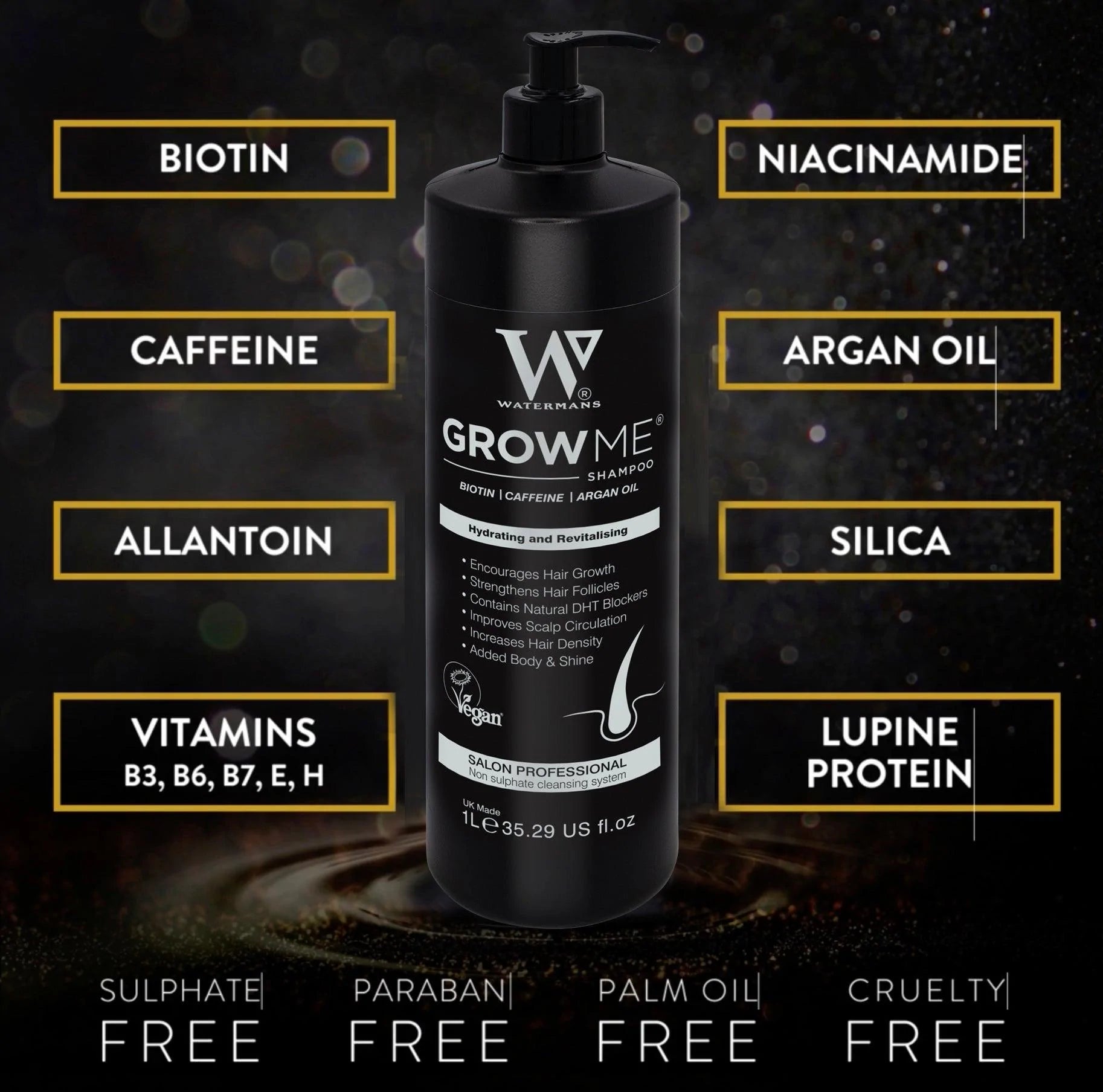
Our hair growth shampoo
Grow Me® Hair Growth Shampoo, £14.95. A sulphate free daily shampoo that supports a healthy scalp environment and helps reduce breakage, so lengths hold on and look fuller.
Donor hair quality is how suitable the hair at the back and sides of your head is for moving in a transplant. It depends on density, hair thickness, hairs per follicular unit, curl, hair and skin colour contrast, scalp looseness and whether the donor area itself is stable. Good donor hair covers more scalp with fewer grafts; weak donor hair limits what any transplant can achieve.
Key takeaways
- A transplant moves your own hair, so the donor area sets the ceiling on how much coverage is possible.
- The NHS explains that grafts contain 1 to 4 hairs each, which is why hairs per graft matters as much as the number of grafts.
- Thick, wavy hair with low contrast against the skin looks fuller per graft than fine, straight, dark hair on pale skin.
- The NHS says transplants suit permanent, inherited baldness and are not usually suitable for patchy hair loss such as alopecia areata.
- In England, any clinic doing cosmetic surgery must be registered with the Care Quality Commission (CQC), so check before you book.
What is donor hair quality?
Donor hair quality is a measure of how much usable, long-lasting hair sits in the donor area, the band of scalp at the back and sides of the head that is usually less affected by inherited thinning. Surgeons take hair from here because it tends to keep growing in its new position.
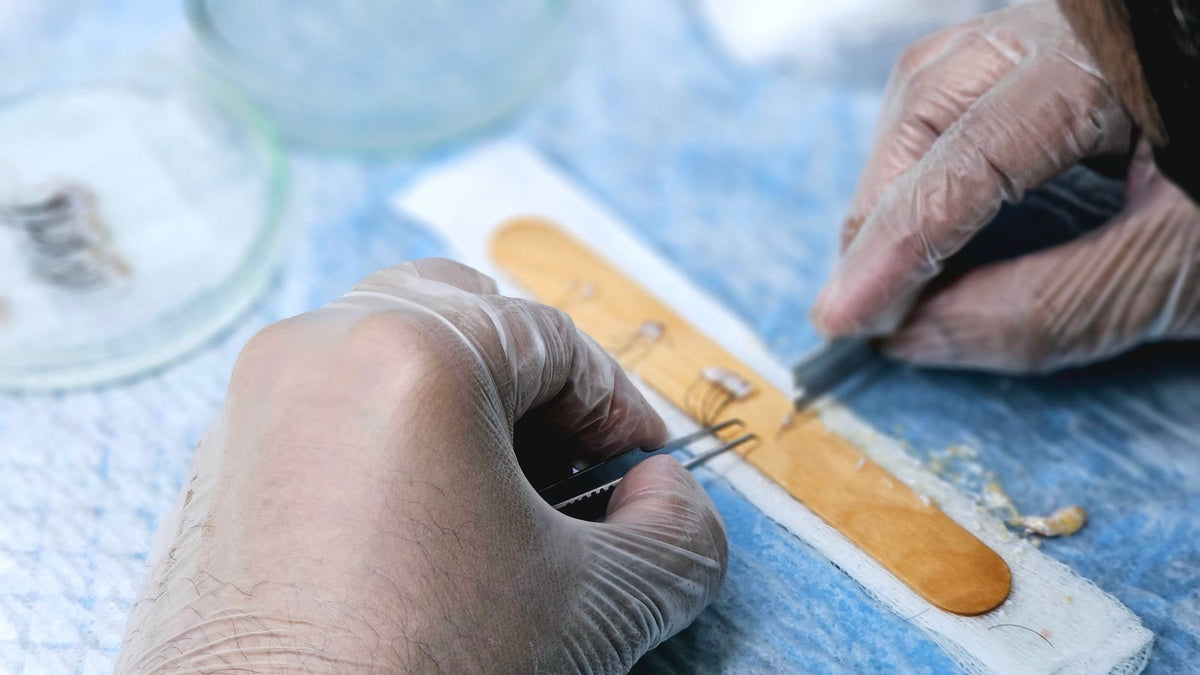
The NHS describes the two main methods. In follicular unit transplantation (FUT, or the strip method), a thin strip of skin with hair is removed from the back of the head and divided into grafts, each containing 1 to 4 hairs. In follicular unit extraction (FUE), the back of the head is shaved and individual grafts are removed one by one. Either way, the grafts come from the same limited supply, which is why the donor supply is the first thing to understand before you consider surgery.
For a closer look at how many hairs per square centimetre you have to work with, see our guide to donor density.

What are the 7 signs of good donor hair quality?
The seven signs are high density, thick individual hairs, several hairs per follicular unit, some natural wave or curl, low contrast between hair and skin colour, a scalp with some give in it, and a donor area that is not thinning itself. Each one changes how far a set number of grafts will stretch.
| Sign | What it means | Why it matters |
|---|---|---|
| 1. Density | How many hairs grow in each square centimetre of the donor area | More hair to move without leaving the back looking thin |
| 2. Hair thickness (calibre) | How wide each individual hair is | Thicker hairs cover more scalp, so each graft looks fuller |
| 3. Hairs per follicular unit | Whether hairs grow in singles or groups of 2, 3 or 4 | Grafts with more hairs add more coverage for the same number of grafts |
| 4. Curl or wave | The natural shape of the hair | Wavy and curly hair stands off the scalp and looks denser |
| 5. Colour contrast | How close your hair colour is to your skin tone | Low contrast, such as fair hair on fair skin, hides the scalp better |
| 6. Scalp looseness | How easily the scalp moves over the skull | Matters most for the strip method, which needs some give to close the wound |
| 7. Donor stability | Whether the back and sides are thinning too | Hair taken from a thinning area may not last once moved |
Why does hair thickness matter as much as density?
Hair thickness matters as much as density because coverage depends on how much of the scalp the hair shades, not just on how many hairs there are. A thick hair covers far more scalp than a fine one, so two people with the same number of grafts can end up with very different results.
This is why a surgeon looks at the donor area under magnification rather than simply counting. Fine hair can still be moved successfully, but it needs more grafts to give the same fullness, and the donor supply may run out sooner. If your hair is fine, a realistic plan might focus on framing the face and hairline rather than trying to cover the whole crown.
A simple at-home look
Part the hair at the back of your head in good light and compare it with a parting on top. If the back looks noticeably denser and the individual hairs look as thick as they did years ago, that is a good sign. If the back looks as see-through as the top, raise it early, because donor stability is the hardest problem to work around.

Who is a good candidate for a hair transplant?
A good candidate for a transplant is usually someone with permanent, inherited thinning, a stable pattern and a strong donor area. The NHS says a hair transplant is suitable for people with permanent baldness, the type that runs in families, and is not usually suitable for other types of hair loss, such as the patchy loss of alopecia areata.
Age and the stage of thinning matter too. Younger men whose hair is still receding may lose more hair around the transplanted area over time, and the donor supply has to last a lifetime. Surgeons often take extra care with younger people for this reason, so they do not use up donor hair on a hairline that will need more work later.
Women and men can both have good donor hair, but diffuse thinning that also affects the back and sides makes the donor area less reliable. Our guide to FUE versus FUT transplants explains how each method uses the donor area differently.
Is it hair loss, shedding or breakage in the donor area?
Thinning in the donor area can come from three quite different problems: hair loss from the follicle, temporary shedding, or breakage of the hair fibre. Only the first one genuinely reduces the donor supply, so it is worth knowing which you are looking at.
| Problem | What is happening | What it means for the donor area |
|---|---|---|
| Hair loss | Follicles produce finer hairs over time or stop | A real reduction in donor supply; tell the surgeon |
| Hair shedding | Whole hairs fall from the root for a few months after illness, stress or surgery | Usually temporary; hair normally grows back |
| Hair breakage | Hairs snap part-way along from heat, bleach or friction | Makes the area look thinner but does not affect the follicles |
Some shedding around the donor and recipient areas after surgery is common as the scalp recovers. That is different from permanent loss. Our guide on how to know if grafts are damaged covers what is and is not normal in the weeks afterwards.
Get a discount on the thinning hair range
Join the Watermans mailing list and we will email a discount code straight to your inbox, so you can try the thinning hair range for less. Made in the UK, over 6.5 million bottles sold since 2012.
How should you look after your hair before and after a transplant?
You should look after your hair before and after a transplant by keeping your scalp healthy, avoiding damage to the hair you have, and following your surgeon's aftercare instructions exactly. The NHS notes that the grafts are not secure for the first 2 weeks and that you may need 1 to 2 weeks off work.
- Before surgery: keep your scalp clean and comfortable, avoid harsh bleaching or chemical straightening, and ask what to do about any products you use.
- In the first 2 weeks: follow the aftercare plan to the letter. Do not rub, pick or scratch the grafts, and only wash the way you have been shown.
- Once your surgeon says so: return to a gentle, sulfate-free shampoo and a conditioner on the lengths, and keep heat and tight styles to a minimum.
- Over the following months: be patient. Transplanted hairs often shed before new growth appears, which is part of the normal cycle.
Our guide to graft survival explains the recovery timeline in more detail.

Grow Me® Hair Growth Shampoo £14.95
A gentle, sulfate-free shampoo with caffeine, biotin, rosemary and niacinamide. Once your surgeon is happy for you to use your own products, it keeps the scalp clean and comfortable for fuller-looking hair. Vegan and made in the UK.

What can you do if your donor hair quality is limited?
If your donor supply is limited, you can still improve how your hair looks by setting realistic surgical goals, choosing a cut that works with your density, and using cosmetic options that add visible fullness. A good clinic will tell you honestly if a transplant is not the right step.
- Prioritise. Framing the face with a natural hairline often makes more visible difference than spreading grafts thinly across the crown.
- Choose a shorter cut. Shorter hair on the back and sides reduces contrast and makes the top look fuller.
- Use hair fibres. Coloured fibres cling to existing hair to soften the contrast between hair and scalp, with or without surgery.
- Get checked for other causes. If you are also shedding, ask your GP about checks such as iron levels before making decisions.

Hair Building Fibres £19.95
Coloured keratin fibres that cling to existing hair to make thinner-looking areas look fuller in seconds. Useful while you decide on surgery, or while transplanted hair grows through. They wash out with shampoo.
How do you choose a safe hair transplant clinic?
You choose a safe hair transplant clinic by checking it is registered with the regulator, finding out who will actually do the work, and being wary of pressure to book quickly. The NHS advises checking that any clinic in England is registered with the Care Quality Commission (CQC), because all independent clinics and hospitals providing cosmetic surgery in England must be.
The NHS also says a hair transplant in the UK can cost anywhere between £1,000 and £30,000, depending on the extent of hair loss, the type of procedure and the clinic. Ask for a written plan that states how many grafts they intend to take and from where, what happens if the donor area runs short, and what aftercare is included. The British Association of Hair Restoration Surgery and the International Society of Hair Restoration Surgery both publish information for the public.
Watermans does not carry out transplants or give medical advice. If you are worried about your hair loss, the NHS advises seeing a GP first. If your question is about products or a routine rather than a medical one, you can talk to Gail Waterman, our co-founder, as an AI avatar on the Watermans homepage.
What are the frequently asked questions about donor hair quality?
What is donor hair quality?
It is how suitable the hair at the back and sides of your head is for moving in a transplant, based on density, thickness, hairs per graft, curl, colour contrast, scalp looseness and stability.
Can you improve your donor hair?
You cannot change the genetics of the donor area, but you can protect the hair you have by avoiding damage from heat, bleach and tight styles, and by keeping your scalp healthy.
How many grafts can the donor area give?
It varies a great deal from person to person, which is why a surgeon examines the donor area under magnification before suggesting a number.
Is FUE or FUT better for donor hair?
Each uses the donor area differently. FUT takes a strip and leaves a linear scar; FUE takes grafts one by one and leaves many tiny scars. The right choice depends on your hair and scalp.
Does donor hair thin after a transplant?
The donor area can look thinner if too many grafts are taken, which is why careful planning matters. Some temporary shedding can also happen after surgery.
Can women have good donor hair?
Yes. The key question is whether the back and sides are stable or thinning along with the top.
Does grey hair affect a transplant?
Grey or fair hair on fair skin creates less contrast, which can actually help coverage look fuller.
What is the bottom line on donor hair quality?
The bottom line on donor hair quality is that it sets the limit on what any transplant can achieve, because a transplant only moves the hair you already have. Density, thickness, hairs per graft, curl, contrast, scalp looseness and stability all shape the result. Look after the hair you have, choose a CQC-registered clinic that is honest about your donor supply, and set goals that suit your hair rather than someone else's.
Whatever you decide about surgery, hair building fibres are the quickest way to make thinner-looking areas look fuller today.
Sources & references
- NHS, Hair transplant, checked 19 September 2026.
- NHS, Hair loss, checked 19 September 2026.
- Care Quality Commission (CQC), checked 19 September 2026.
- British Association of Hair Restoration Surgery, checked 19 September 2026.
- International Society of Hair Restoration Surgery, checked 19 September 2026.
- DermNet, Telogen effluvium, checked 19 September 2026.
Watermans products are 100% cosmetic and do not treat medical hair loss. Individual results may vary.