How to Stop Hair Fall After Hair Color: What Actually Helps
Most people asking how to stop hair fall after hair color are looking at breakage rather than hair leaving the root. Permanent dye and bleach lift the cuticle and oxidise the fibre underneath, so coloured strands snap along the mid lengths and collect in the brush. The fix is protein and moisture in balance, sulphate free washing, far less heat and gentle detangling. Genuine root shedding after colour is less common and usually points to a scalp reaction or a separate trigger.
Our hair growth shampoo
Grow Me® Hair Growth Shampoo, £14.95. A sulphate free daily shampoo that supports a healthy scalp environment and helps reduce breakage, so lengths hold on and look fuller.
Key takeaways
- Hair that snaps mid length with no white bulb is breakage. Whole hairs with a small pale bulb are shedding. The two need different answers.
- Colour and bleach damage is oxidative. The cuticle lifts, protein is lost from the cortex and the wet fibre stretches further before it gives way.
- Sulphate free washing, a weekly conditioning mask and heat protection do most of the work in the first month.
- Protein and moisture have to be balanced. Too much of either leaves hair either brittle or limp and mushy.
- An itchy, sore, swollen or weeping scalp after dye is not damage, it is a reaction. Stop using that dye and speak to your GP or pharmacist.
- A shedding spike around three months after a big colour change is usually telogen effluvium responding to the stress of the change, not the dye on the fibre.
Is it breakage or shedding after colouring?
Breakage and shedding look identical in the plughole and need opposite responses, so this is the first thing to sort out. Pick up several of the fallen hairs and look at the end that was nearest your scalp. A shed hair carries a small white or pale bulb, the root club, because the follicle released it at the end of its resting phase. A broken hair has no bulb at either end and is usually shorter than the rest of your hair, often only a few centimetres long.
Three separate things get confused under the heading of hair fall, and coloured hair mostly suffers from the third:
| What it is | What you see | What it responds to |
|---|---|---|
| Hair loss (follicular, such as alopecia) | Density falls in a pattern, a widening parting, patches, a receding line. The scalp shows through. | A medical assessment with your GP. Cosmetics cannot change follicle behaviour. |
| Hair shedding (cycle) | Full length hairs with a pale bulb, more of them than usual, all over the head. | Time and removing the trigger. It settles as the cycle resets. |
| Hair breakage (fibre) | Short bulbless pieces, split ends, frizz that appears halfway down, lengths that stop growing. | Conditioning, protein and moisture balance, less heat and tension. This is the coloured hair problem. |
If your fallen hairs are mostly short and bulbless, the rest of this article is written for you. If they are mostly full length with pale bulbs and the volume of them worries you, read our guide to what causes telogen effluvium and how long it lasts instead, because the answer there is about triggers and timing rather than conditioner.
Why does hair colour weaken the fibre?
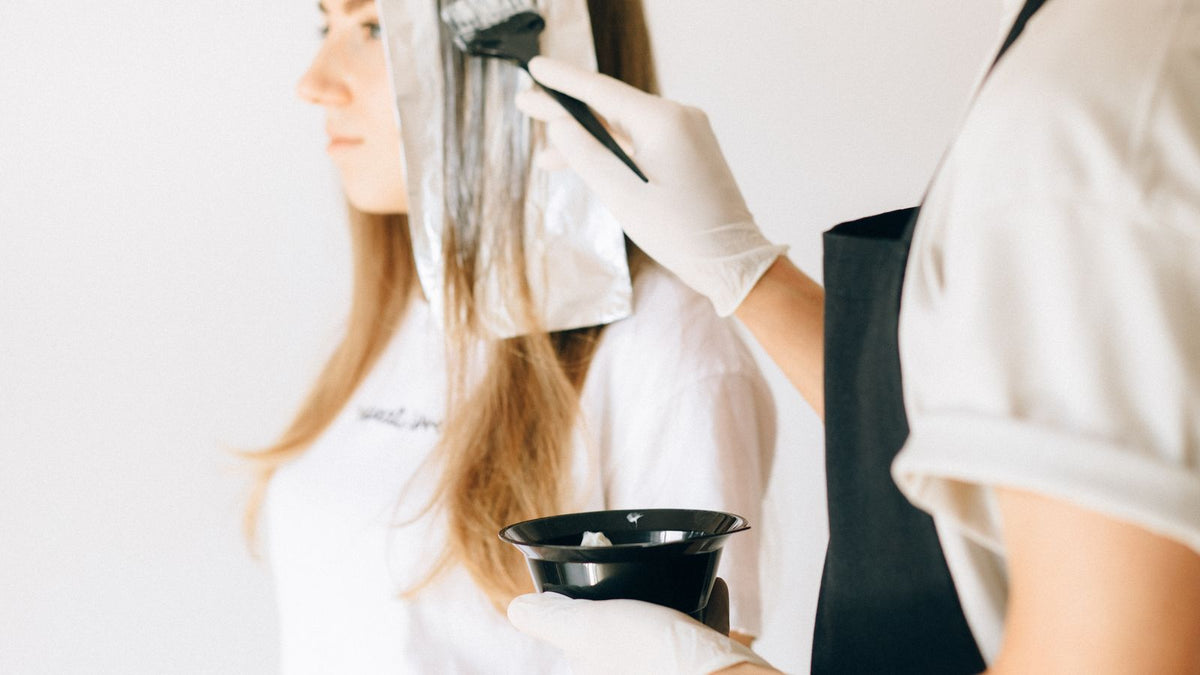
Understanding the chemistry is what makes the rest of how to stop hair fall after hair color make sense. Permanent colour works by opening the hair up. An alkaline agent swells the fibre and lifts the cuticle scales, hydrogen peroxide oxidises your natural pigment so the new colour can be deposited, and the cuticle never closes quite as tightly again. Microscopy work on repeatedly bleached hair shows visible cuticle lifting and erosion along with damage to the cortex underneath, which is why heavily lifted hair feels rough dry and stretchy wet.
The chemistry leaves a measurable fingerprint. Oxidative processing carbonylates the keratin proteins in the fibre, and researchers now use that protein carbonylation as a marker of structural oxidative damage in hair. In plain terms: the internal scaffolding that holds a strand together has been chemically nicked, so the same brush stroke that a virgin strand shrugs off is enough to part a coloured one.
Two practical consequences follow. First, wet coloured hair is at its most vulnerable, because water plasticises the fibre and the weakened cortex gives way sooner under tension. Second, damage is cumulative and permanent at the fibre level. You cannot undo it, you can only look after the length you have and let undamaged hair grow in. Anyone promising to rebuild dyed hair back to virgin condition is selling you a story.

How to stop hair fall after hair color: what are the steps?
The routine below is ordered by how much difference each step makes in the first month. Work down the list rather than doing everything at once, because if you change six things together you will never know which one helped.
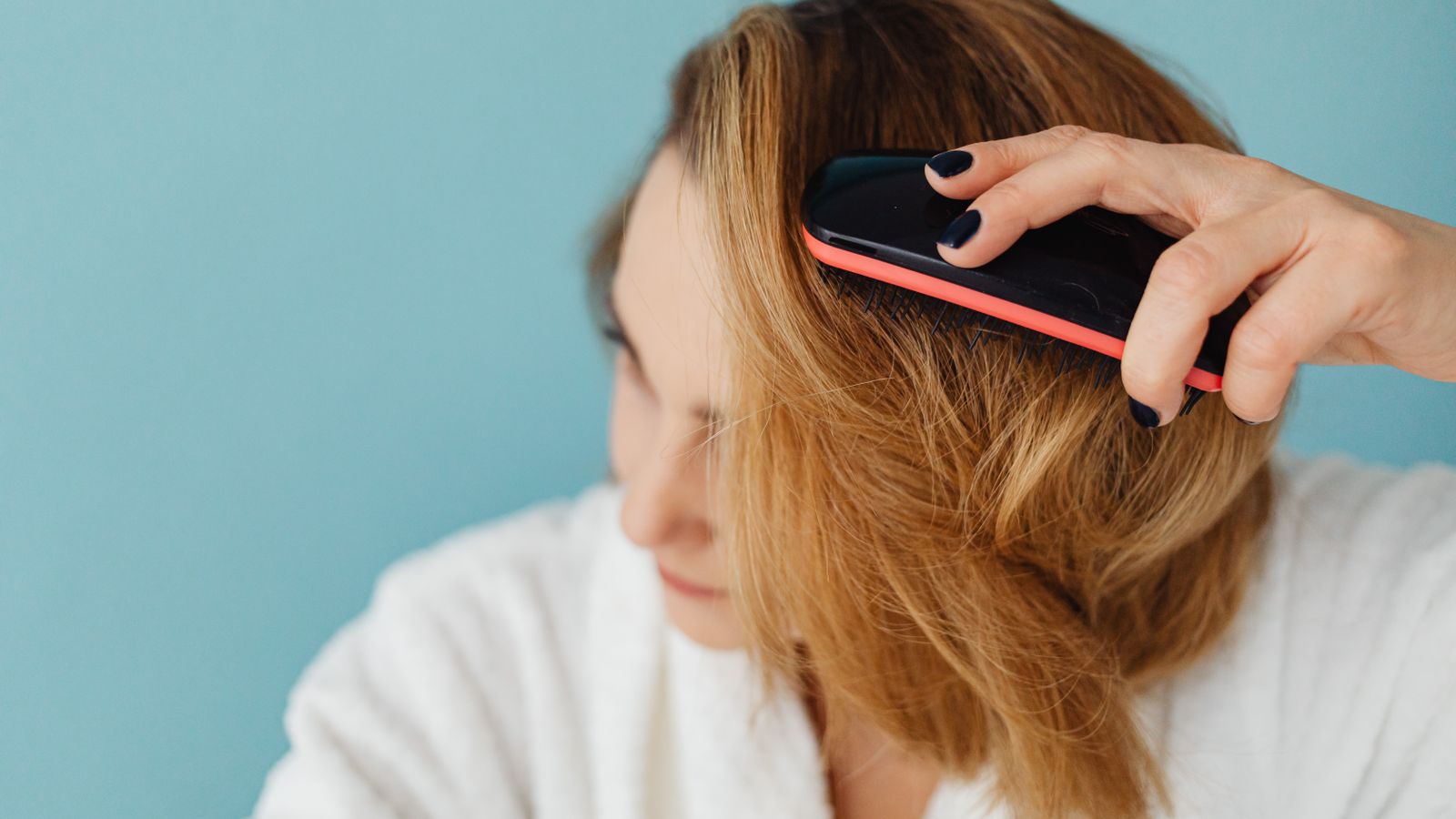
- Stop the tension on wet hair. No brushing straight out of the shower. Squeeze water out with a towel, never rub, apply a leave in, then detangle from the ends upwards with a wide tooth comb.
- Switch to a sulphate free shampoo. Harsh surfactants strip both the dye molecules and the lipids the fibre needs, and coloured hair has fewer of both to spare.
- Condition every single wash, mask once a week. Conditioner is not optional on coloured hair. It is the thing keeping the cuticle flat and the comb moving.
- Drop the heat by 20 degrees and add a heat protectant. Colour plus 200 degree irons is the combination that produces the worst mid length snapping.
- Space out your colour appointments and keep bleach off the lengths. Root only application means the ends are processed once, not seven times.
- Get the ends tidied. A split travels upward. Half a centimetre off every eight to ten weeks keeps a split from becoming a snapped mid length.
Most people who follow the first four steps see less hair in the brush within two to three washes, because you have removed the mechanical part of the problem immediately. The fibre itself does not heal, so what you are really doing is retaining the length you already have.
Which washing routine protects coloured hair?
The washing routine is where how to stop hair fall after hair color stops being theory, and the biggest wins are free. Wash less often, because every wash means more wet handling. Use tepid water rather than hot, which opens the cuticle further and speeds colour loss down the drain. Shampoo the scalp only and let the suds rinse through the lengths, since the lengths are the oldest and most processed part of your hair and do not need direct scrubbing. Condition from mid length to ends every time, leave it on for the two minutes the bottle asks for, and rinse cool.
If you are choosing a new shampoo, sulphate free is the single specification worth insisting on. Our own guide to sulphate free shampoo goes into what that swap does and does not do, and it is honest about the fact that it is a gentleness upgrade, not magic.

Sulphate free, vegan and made in the UK, with biotin, caffeine, rosemary and hydrolysed lupine protein. A gentle everyday wash for coloured hair that supports a comfortable scalp and helps the lengths hold together.

Breakage defence for the part of your hair that colour hits hardest. Cholesterol, shea butter and glycerin soften the comb through, so fewer strands snap during detangling.
How often should coloured hair be deep conditioned?
Once a week is the right starting point for most coloured hair, moving to twice a week if you have bleached to a light blonde and back to fortnightly once the hair feels supple again. The mask is doing a different job from your everyday conditioner: more time, more substantive ingredients, and a proper chance for hydrolysed proteins to settle into the gaps that oxidation left behind.
The thing that catches people out is protein and moisture balance. Coloured hair genuinely needs protein, but a fibre loaded with protein and starved of moisture becomes stiff and snaps just as readily as a limp one. Use this table to read your own hair before you reach for another bottle.
| Sign | What it usually means | What to change this week |
|---|---|---|
| Feels rough and straw like, snaps dry | Too little moisture | Richer mask, longer conditioner dwell time, an oil on the ends before washing |
| Stretches a long way wet then breaks, feels mushy | Too little protein | A protein rich mask once a week for three weeks, then reassess |
| Stiff, brittle, tangles instantly, dull | Too much protein, not enough moisture | Pause protein products for two weeks, use a plain moisturising conditioner |
| Limp, will not hold a style, feels coated | Product build up | One gentle clarifying wash, then straight back to the normal routine |


The weekly step for colour processed lengths. Hydrolysed lupine protein, provitamin B5 and argan oil for softer, stronger looking hair that combs through without a fight.
Get a discount on the coloured hair breakage range
Join the Watermans mailing list and we will email a discount code straight to your inbox, so you can try the coloured hair breakage range for less. Made in the UK, over 6.5 million bottles sold since 2012.
How much heat is safe on coloured hair?
Lower than you are probably using. Heat is the step most people skip when they work out how to stop hair fall after hair color, and it is the one that shows up fastest in the brush. Heat on coloured hair compounds damage that has already been done chemically, and the mid lengths take the worst of it because that is where the iron passes most often. Fine or bleached hair should stay at or below 150 degrees, medium hair around 170, and coarse or very dense hair rarely needs more than 190. If you have been sitting at 220 because it means one pass instead of two, the arithmetic is not in your favour.
Three rules make more difference than the number on the dial. Never put an iron on damp hair, because the water inside the fibre turns to steam and blows the cuticle open. Always use a heat protectant, which puts a sacrificial layer between the plate and the strand. And give yourself two or three no heat days a week, because the recovery is not in the product, it is in the hair not being cooked.

Protect Me® Heat Protection Spray
A leave in spray rated to 230 degrees, with panthenol and niacinamide. Spray through damp lengths, dry, then style, so the plates meet the spray and not the raw fibre.

What should you do if your scalp reacts to dye?
A reacting scalp is a different problem from a damaged fibre and it deserves to be taken seriously. Itching, burning, redness, swelling around the hairline or ears, weeping or crusting in the days after a colour service are signs of a contact reaction rather than ordinary dryness, and the usual culprit is paraphenylenediamine, the oxidative dye ingredient known as PPD. Reactions can build over years of uneventful colouring and then arrive suddenly.
If that is what is happening, stop using that dye, wash the product out with a mild shampoo, and speak to your pharmacist or GP the same week, particularly if there is swelling of the face or eyelids. Always patch test a new dye 48 hours before the full application, every single time, and do not let a salon skip it. Persistent scalp soreness with hair coming out in the same area needs a GP looking at it rather than another mask.
If your scalp is simply itchy and dry rather than inflamed, our piece on why hair products sometimes make the scalp itch covers the ordinary causes and what to change.
When is post colour hair fall a sign of something else?
Sometimes the colour is a coincidence. If you have worked through how to stop hair fall after hair color for six weeks and nothing has changed, the cause is probably not the dye. A big change to your hair often lands in the same season as a stressful event, an illness, a crash diet or a new baby, and any of those can push a wave of follicles into their resting phase at once. The British Association of Dermatologists notes that this kind of shedding typically begins around three months after the trigger and the shedding phase itself runs for three to six months, so the timing rarely lines up with the day you sat in the salon chair.
The NHS puts normal daily loss at between 50 and 100 hairs, and most of those go unnoticed. Signs it is worth a GP appointment rather than another conditioner: full length hairs with pale bulbs coming out in handfuls for more than six weeks, a parting that is visibly widening, patches of scalp with no hair at all, or shedding alongside tiredness, weight change or a change in your periods. Those are questions for a doctor, and no cosmetic product answers them. Grey hair behaves differently under colour, and how hair pigmentation works explains why unpigmented strands are more porous.
Watermans products are 100% cosmetic and do not treat medical hair loss. Individual results may vary.
Frequently asked questions
How long does hair fall after colouring last?
Breakage stops improving the week you stop causing it, so most people see less hair in the brush within two or three gentler washes. Damaged lengths do not repair themselves, so the full picture takes as long as it takes to grow and trim out the processed hair, usually several months.
Does hair colour cause hair loss from the root?
Dye sitting on the fibre does not reach the follicle, so ordinary colouring does not cause follicular hair loss. A severe scalp reaction, or hairstyles pulled tightly during a colour service, can affect the scalp itself, which is why an inflamed scalp always needs proper attention.
What is the single fastest fix for how to stop hair fall after hair color?
Stop brushing wet hair from the roots down. Detangling upward from the ends with a wide tooth comb on conditioned hair removes the largest single source of mechanical snapping, and it costs nothing.
Should I wash my hair the day after colouring?
Wait 48 hours if you can. The cuticle needs time to settle, and delaying the first wash keeps more dye where you paid for it to be.
Is bleached hair worse than permanent colour?
Usually yes. Bleach removes pigment by oxidising it, so it does more structural damage than a deposit only colour, and repeated lightening compounds it. Our guide to repairing bleach damaged hair covers that lane in detail.
Do I need a protein mask or a moisture mask?
Read the fibre, not the label. Hair that stretches a long way when wet and feels mushy wants protein. Hair that is stiff, brittle and instantly tangled has usually had too much protein and wants moisture.
Will a shampoo make my colour last longer?
A sulphate free shampoo, cooler water and fewer washes all slow colour loss. No shampoo locks colour in permanently, and any that claims to is overselling.
Can I colour again while my hair is breaking?
Give it a break of at least six to eight weeks, and when you go back, ask for root only application. Processing already weakened lengths a second time is how a manageable problem becomes a haircut.
Does taking a supplement help with breakage?
A balanced diet supports hair that is still forming inside the follicle, but nothing you swallow changes a strand that has already been chemically processed. The gains here are in handling, not in a pill.
What is the bottom line on how to stop hair fall after hair color?
The honest answer to how to stop hair fall after hair color is that most of it is breakage you can stop today, not loss you have to accept. Handle wet hair like silk, wash gently and less often with a sulphate free shampoo, condition every wash and mask weekly, take 20 degrees off your irons and always use a protectant, and space out your colour appointments with root only application. Then watch the fallen hairs: if they turn out to be full length with pale bulbs, or the shedding runs on past six weeks, that is a conversation for your GP rather than a shopping decision. Watermans is made in the UK, and has sold over 6.5 million bottles since 2012. If your question is about products or a routine rather than a medical one, you can talk to Gail Waterman, our co-founder, as an AI avatar on the Watermans homepage.
The conditioner is doing the protective work here, and our breakage defence hair growth conditioner is ours.
Sources and References
- NHS, Hair loss, for normal daily hair loss of 50 to 100 hairs and when to see a GP.
- British Association of Dermatologists, Telogen effluvium leaflet, for the three month lag after a trigger and the three to six month shedding phase.
- Lee and colleagues, Effects of excessive bleaching on hair: comparative analysis of external morphology and internal structure, Applied Microscopy, 2024, for cuticle and cortex damage after repeated lightening.
- Carbonylation of hair proteins: a robust biomarker of molecular and structural oxidative damage, International Journal of Cosmetic Science, 2025, for oxidative protein damage in chemically processed hair.
- Dias, Hair cosmetics: an overview, International Journal of Trichology, 2015, for how dye chemistry, surfactants and conditioning agents act on the fibre.