Epsom Salt for Hair: What It Does and What It Does Not
Epsom salt for hair is a decent occasional clarifying scrub and nothing more. Dissolved magnesium sulfate physically loosens build-up and dead skin from the scalp, and roughening the cuticle makes fine hair look temporarily fuller at the roots. It does not reach the follicle, it does not add magnesium to your body through your scalp, and it is drying enough that fortnightly is a sensible ceiling.
Our weekly hair mask
Masque Me® Hair Mask, £24.95. A deep conditioning weekly mask for dry, stressed lengths, adding gloss and hydration where heat and colour have taken their toll.
Key takeaways
- Epsom salt for hair is magnesium sulfate, not the sodium chloride in sea salt. Most articles confuse the two.
- The genuine effects are clarifying and a temporary volume boost from a roughened cuticle.
- The transdermal magnesium claim is not established. Skin is a poor route for charged ions.
- Research on hard water shows hair takes magnesium and calcium up from water, and that uptake is linked to worse fibre condition.
- Fortnightly at most. Monthly if your hair is dry, curly, coloured or damaged.
- Always follow with a conditioner or mask, and rinse for longer than feels necessary.
What Is Epsom Salt, Actually?
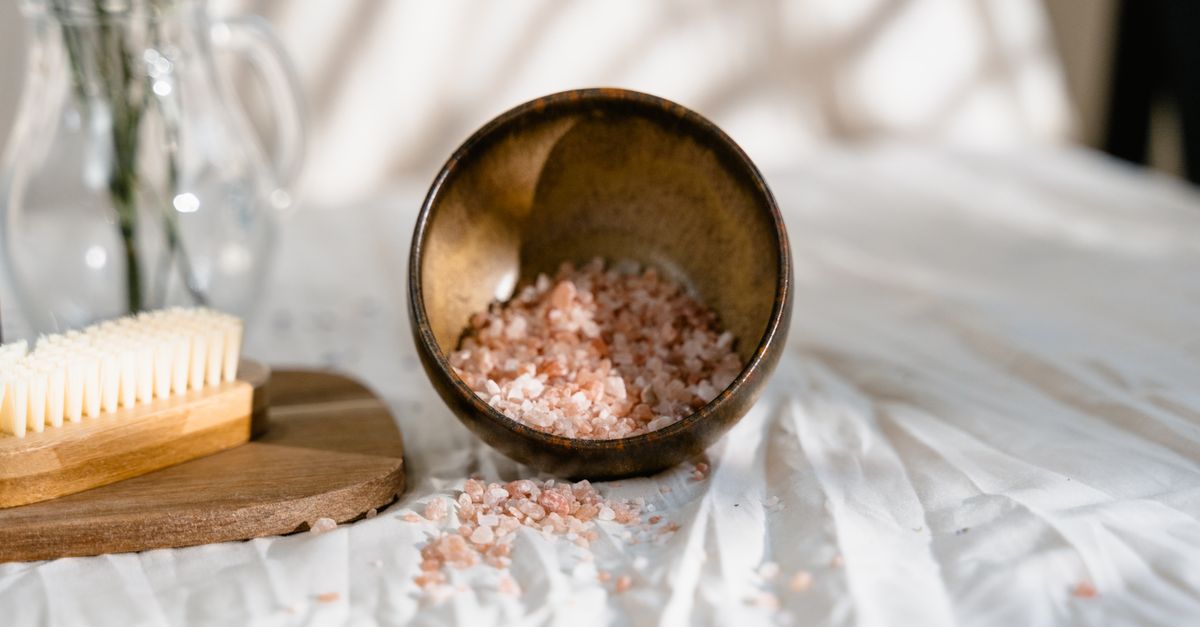
Epsom salt is magnesium sulfate, a compound named after the spring water at Epsom in Surrey where it was first isolated in the seventeenth century. It is not related to table salt beyond both being called salts in the chemical sense. Table salt and sea salt are largely sodium chloride, a completely different compound with different behaviour on skin and hair.
This distinction gets flattened in almost every article on the subject, and it matters for two reasons. The claims made for Epsom salt for hair almost all hinge on magnesium specifically, so if a recipe works equally well with sea salt then magnesium is not the active part. And the two salts have different solubility and crystal shapes, so they behave differently as physical scrubs.

What Does Epsom Salt for Hair Genuinely Do?
There are two real effects here, and they are worth having as long as you know what they are.
It clarifies. Undissolved crystals are an abrasive, and rubbing an abrasive over the scalp lifts away build-up from styling products, dry shampoo, silicones and sebum, along with loose dead skin. Anyone who has used a heavy leave-in for months and then clarified knows how different the scalp feels afterwards. That is a genuine, immediate result.
It adds temporary volume. Salt roughens the cuticle, the overlapping outer scales of the hair shaft. Rough fibres do not lie flat against each other, so they sit apart, and hair that sits apart reads as thicker. This is the same mechanism behind sea-salt texturising sprays, and it is why hair feels big and slightly gritty after a day at the beach.
The catch built into the mechanism
The volume comes from cuticle damage. A lifted, roughened cuticle is a fibre that has lost some of its smooth protective surface, which means more friction, more tangling and more snapping when you brush. The look you want and the damage you do not want are the same event.
That trade is fine occasionally and terrible as a routine. It is also why Epsom salt suits fine, oily, straight hair far better than it suits anything dry, curly, coloured or already damaged.
What Is the Transdermal Magnesium Claim, and Why Can We Not Support It?
The most common claim made for Epsom salt for hair is that magnesium is absorbed through the scalp and then supports the follicle. It is an appealing story and there is very little behind it.
Magnesium in solution exists as a charged ion, and charged particles cross intact skin poorly. The outer skin barrier is specifically structured to keep water-soluble, charged things out. Researchers have gone looking for this effect directly, testing whether magnesium ions permeate skin, including skin whose barrier has been deliberately disrupted. The honest position is that transdermal magnesium is an unresolved question at best, and it is nowhere near strong enough to support a hair claim.
There is a second problem that almost nobody raises. Work on hard water has shown that hair takes up hardness metals, calcium and magnesium among them, from the water it is washed in, and that this uptake is associated with measurable changes in the fibre and with worse perceived hair condition. A magnesium sulfate rinse is, from the fibre's point of view, self-inflicted hard water. That is not proof that an Epsom rinse damages hair, because those studies looked at ordinary washing rather than at Epsom rinses, but it points in the opposite direction from the benefit being claimed.
Where this leaves the magnesium story
If you want more magnesium, eat it. Nuts, seeds, wholegrains, beans and leafy greens all supply it reliably, and your gut is built for the job in a way your scalp is not.
Get a discount on the dry and breakage prone hair range
Join the Watermans mailing list and we will email a discount code straight to your inbox, so you can try the dry and breakage prone hair range for less. Made in the UK, over 6.5 million bottles sold since 2012.
How Do You Use Epsom Salt for Hair Without Wrecking It?
Two methods, both occasional. The rule that matters more than either recipe is what you do afterwards.
1. The scalp scrub. Mix one tablespoon of Epsom salt into two tablespoons of your usual conditioner, or into a light oil if your scalp is oily to begin with. On damp hair, work it along the scalp in sections with your fingertips, never your nails, using small circles. Two to three minutes is plenty. Rinse extremely thoroughly, shampoo once, then condition the mid-lengths and ends generously.
2. The clarifying rinse. Dissolve one tablespoon of Epsom salt fully in 500ml of warm water. Fully dissolved matters: undissolved crystals are what get stuck near the roots and leave hair feeling gritty for days. Pour it over the scalp after shampooing, leave for two minutes, then rinse and condition. This version is gentler than the scrub because there is no abrasive left.

The non-negotiable step. Condition afterwards, every time, along the mid-lengths and ends rather than at the roots. You have just lifted the cuticle deliberately, and a conditioner is what smooths it back down. Skipping this is the single reason most people conclude that Epsom salt ruined their hair.

Masque Me® Hair Mask from £24.95
The follow-up step a salt scrub makes necessary. An 8-in-1 deep conditioning mask with rosemary, argan oil, provitamin B5 and hydrolysed lupine protein, for dry, clarified or colour-worn lengths.

Condition Me® Conditioner from £13.95
For the weeks in between. Cholesterol, shea butter and hydrolysed lupine protein give slip so hair snaps less when you detangle, which matters most on hair that has just been clarified.

Who Should Skip Epsom Salt Entirely?
This is a genuinely bad idea for more people than it is a good one. Skip it if your hair is dry, brittle or breaking already, because you would be adding cuticle damage to fibres that cannot spare it. Skip it if your hair is curly or coily, since coiled fibres are drier by nature and snap more readily once roughened. Skip it if you colour your hair and want the colour to last. Skip it if you have eczema, psoriasis or an actively sore or broken scalp, because scrubbing inflamed skin spreads the inflammation. Skip it if you have very fine hair that tangles easily, since the roughening makes detangling far more damaging.
If you have oily, straight, uncoloured hair that gets weighed down by product, you are the one person this is genuinely for. Even then, fortnightly.
How Does Epsom Salt Compare With the Alternatives?
If the goal is a clean scalp and roots with some lift, there are three ways to get there and they are not equivalent.
| Method | What it is | Strengths | Cost to the fibre |
|---|---|---|---|
| Epsom salt | Magnesium sulfate, abrasive | Cheap, strong build-up removal, volume | High. Roughens cuticle, drying |
| Sea salt | Sodium chloride, abrasive | Similar texture effect | High, and no magnesium story attached |
| Clarifying shampoo | Formulated surfactant blend | Controlled, even, pH balanced | Moderate, and predictable |
| Gentle daily shampoo | Mild sulfate-free cleanser | Prevents build-up in the first place | Low |
Read down the right-hand column and the sensible strategy becomes obvious. Preventing build-up with a gentle shampoo you use consistently beats stripping it off aggressively once a month. Our piece on whether salt water is good for hair covers the sodium chloride side of this, and if you have already over-clarified, our realistic plan for damaged hair is the place to start.

Grow Me® Hair Growth Shampoo from £14.95
A sulfate-free daily shampoo with biotin, caffeine, rosemary and niacinamide. It cleanses without stripping, which is the strategy that makes an aggressive monthly scrub unnecessary. Vegan and made in the UK.
What is the difference between hair loss, hair shedding and hair breakage?
Epsom salt gets recommended for all three, which is a good sign that the recommendation is not based on much.
Hair breakage is the one Epsom salt is most likely to cause rather than solve. The fibre snaps along its length from heat, bleach, tension or friction, and a roughened cuticle increases friction. If your hair will not get past a certain length, breakage is the usual reason, and salt scrubs work against you.
Hair shedding is a cycle problem. Too many follicles enter the resting phase at once after illness, a very low calorie period, low iron or prolonged stress, and hairs come out from the root with a small white bulb attached. Nothing applied to the outside changes it. Our guide to what genuinely helps with hair shedding covers the tests worth asking for.
Hair loss is follicular miniaturisation or follicle damage, as in pattern hair loss or a scarring alopecia. It is a medical matter and needs a proper opinion. A scalp scrub is not in the conversation.
Please note: Watermans products are 100% cosmetic and do not treat medical hair loss. Individual results may vary.
Frequently Asked Questions
Does Epsom salt for hair actually make it grow faster?
No. Nothing in a magnesium sulfate rinse reaches the follicle, and no published study has tested Epsom salt against hair growth in people. What people notice is extra volume at the roots, which comes from removing build-up and roughening the cuticle so strands sit apart from each other. That is a texture effect, not growth.
How often can I use Epsom salt on my hair?
Once a fortnight at most, and once a month is safer for anyone with dry, curly, coloured or damaged hair. It is a clarifying step, and clarifying steps work precisely because they strip. Doing it weekly is how people end up with straw-like ends and a tight, itchy scalp.
Will Epsom salt strip my hair colour?
It can accelerate fade, yes. Salt scrubs lift the cuticle and help wash out dye molecules that were sitting in the cortex, and the mechanical scrubbing adds to it. If you have spent money on colour, use a colour-safe clarifying shampoo instead and keep the Epsom salt for your bath.
Can Epsom salt help an itchy or flaky scalp?
It can physically loosen flakes, which feels good and looks like progress. It does not address why the scalp is flaking, and the drying effect often makes the underlying flaking worse a few days later. Persistent flaking, redness or soreness is worth showing to your GP or a pharmacist rather than scrubbing at. If your question is about products or a routine rather than a medical one, you can talk to Gail Waterman, our co-founder, as an AI avatar on the Watermans homepage.
Is Epsom salt the same as sea salt for hair?
No, and the difference matters. Epsom salt is magnesium sulfate. Sea salt and table salt are mostly sodium chloride. They behave similarly as physical scrubs, but they are different compounds, and articles that use the words interchangeably are not worth much on the detail.
Does Epsom salt add magnesium to my body through the scalp?
There is no good evidence that it does. Magnesium is a charged ion, and charged ions cross intact skin poorly. Researchers have specifically tested whether magnesium permeates skin, and the honest summary is that the claim is not established. Eating magnesium-rich food is the reliable route.
Can I use Epsom salt for hair if I have curly or coily hair?
It is a poor match. Curly and coily hair is naturally drier because scalp oils travel down a coiled fibre less easily, and it breaks more readily when the cuticle is roughened. If you want to clarify, use a gentle clarifying shampoo and follow with a deep conditioner rather than a salt scrub.
What should I do straight after an Epsom salt rinse?
Rinse far longer than feels necessary, because leftover crystals are what make hair feel gritty and rough for days. Then use a conditioner or a mask along the mid-lengths and ends. The conditioning step is not optional with this one, it is what makes the whole thing survivable.
What is the bottom line on epsom salt for hair?
Epsom salt for hair is a cheap, occasionally useful clarifying scrub with a texture bonus, wrapped in a magnesium story that the evidence does not support. Used once a fortnight on oily, straight, uncoloured hair, fully dissolved or properly rinsed, and always followed by a conditioner, it does a real job. Used weekly, or on hair that is dry, curly, coloured or fragile, it causes exactly the roughness and breakage people then blame on something else.
If your actual goal is thicker-looking hair, the boring version wins. Prevent build-up rather than stripping it, protect the fibre from heat and tension, and if density is genuinely changing, get your ferritin and thyroid checked rather than reaching for the bath salts.
If your current shampoo is stripping the scalp, Grow Me hair growth shampoo is the gentler swap.
Sources and References
- Camili V, Stürup S and colleagues. Does magnesium permeate the skin? An ex vivo investigation of magnesium ion delivery through intact and barrier-disrupted skin. European Journal of Pharmaceutics and Biopharmaceutics, 2026. PubMed 42372834
- Evans AO, Marsh JM and colleagues. The structural implications of water hardness metal uptake by human hair. International Journal of Cosmetic Science, 2011. PubMed 21923661
- Godfrey S, Staite W and colleagues. Metals in female scalp hair globally and its impact on perceived hair health. International Journal of Cosmetic Science, 2013. PubMed 23305149
- NHS. Hair loss: overview, causes and when to get medical advice. nhs.uk/conditions/hair-loss
On the limits of the evidence: we searched the biomedical literature for any study of Epsom salt applied to hair or scalp and found none. The magnesium absorption question has been investigated directly and remains unsettled, and the hard water work cited above studied ordinary washing rather than deliberate magnesium sulfate rinses. Where we have reasoned from one to the other, we have said so rather than presenting it as a finding.