How to Use Derma Stamp for Hair Growth: Safe Guide
Scalp microneedling at home has gone from niche to everywhere, and most of what is said about it online is overclaimed.
The short answer on how to use derma stamp for hair growth is this. A derma stamp presses very fine needles a fraction of a millimetre into the scalp, making controlled micro injuries that close within hours. Keep the depth to 0.25 mm or 0.5 mm, sterilise the head before and after, press lightly, apply nothing to the scalp that night, and leave a full week between sessions. It is a low cost extra with early evidence behind it, not a medicine, and it grows nothing by itself. Before you buy a device, our guide to microneedling for hair loss sets out the six checks to make first.
Our overnight scalp elixir
Grow More® Overnight Scalp Elixir, £25.50. A leave in scalp serum worked into the roots at night, supporting a healthy scalp environment while you sleep.
Key takeaways
- A derma stamp is a scalp tool, not a medicine. It creates tiny channels in the skin, nothing more.
- Depth is the safety dial. Keep to 0.25 mm to 0.5 mm at home and leave anything deeper to a trained professional.
- Hygiene is not optional. Sterilise before and after, never share a stamp, and never needle broken or infected skin.
- Put nothing active on a freshly stamped scalp. That is when irritation and lumps under the skin happen.
- Separate the problem first. Shedding, pattern thinning and breakage are three different things, and a stamp is irrelevant to two of them.
What is a derma stamp, and how does it differ from a roller?
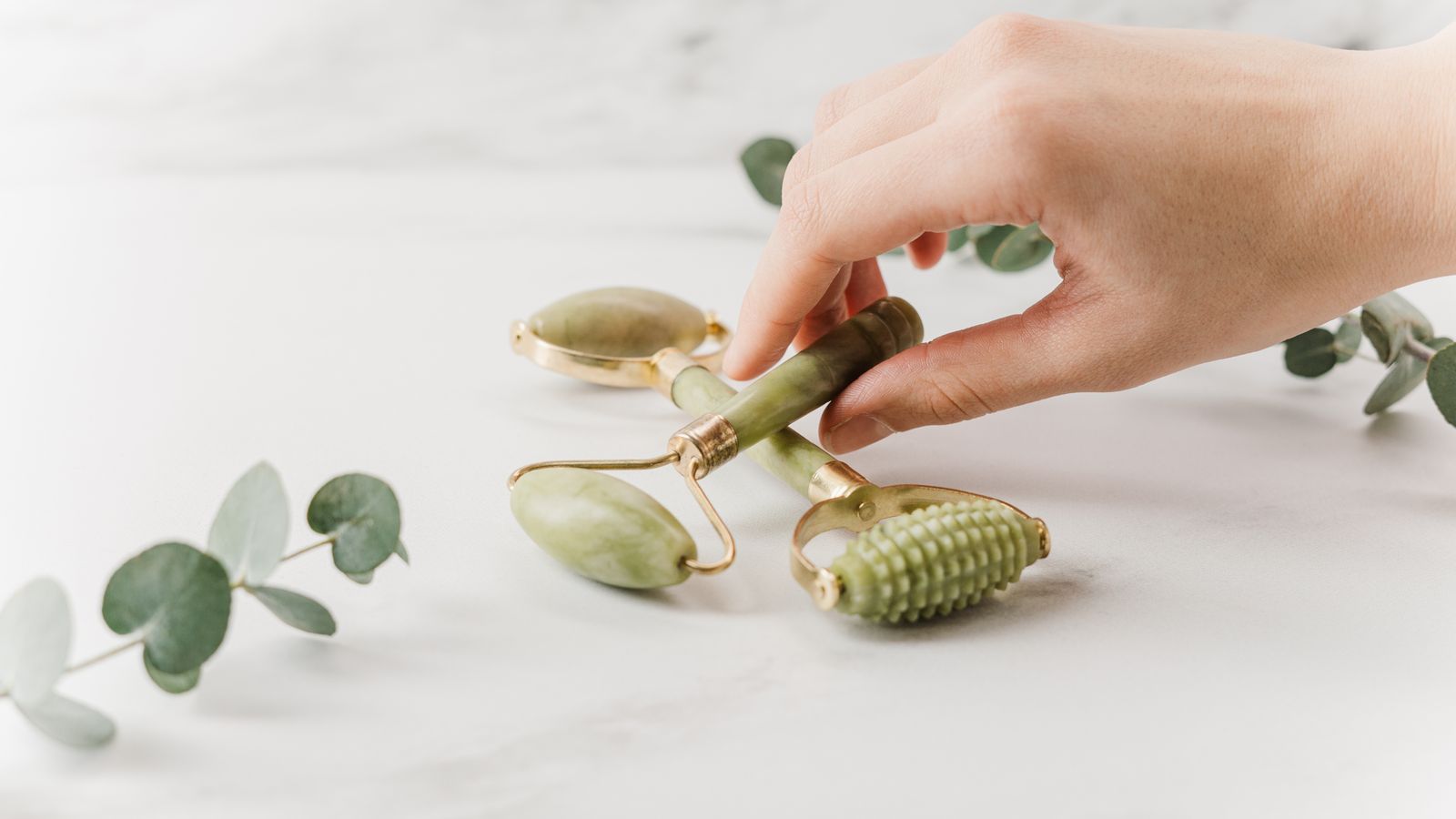
A derma stamp is a flat head studded with fine, short needles on the end of a handle. You press it straight down onto the skin and lift it straight off, leaving a grid of microscopic punctures that close within hours. A derma roller does the same job with a rotating drum you push across the skin.
The difference matters more on a scalp than on a face. A rolling head drags sideways as it turns, which is uncomfortable through hair and can catch strands. A stamp goes in and out on the same axis, so you can work a parting or a thinning patch precisely without pulling on the hair around it. Neither tool is inherently safer. The depth you choose and the state of your skin decide that.

How to use derma stamp for hair growth: what are the steps?
1. Pick a shallow depth and stay there
For scalp use at home the sensible range is 0.25 mm to 0.5 mm. At that depth you feel a prickle, the skin pinks up briefly, and it settles the same evening. Above about 1 mm you are into pain, bleeding and a genuinely open wound, which is where infection and scarring risk climbs steeply. Longer needles are not a shortcut to a better result. They are simply a bigger injury.
2. Start clean, every single time
Wash your hair with a gentle shampoo and let the scalp dry fully. Soak the needle head in surgical spirit or 70% isopropyl alcohol for a few minutes before and after every session, and let it air dry so you are not pressing wet alcohol into the skin. The stamp is a personal item. Never lend it, never borrow one, and replace the head once the needles feel blunt or look bent, because a dull needle tears rather than punctures. The roller version of the same hygiene routine is set out in our guide to cleaning a derma roller properly and safely.
3. Work in sections with light, even pressure
Part the hair to expose scalp, press the stamp down, lift, move about a centimetre, and repeat across the area. Two or three passes over a thinning patch is plenty. You are aiming for even coverage, not intensity. Do not press hard, do not drag the head sideways, and stop the moment you see blood. Bleeding means the needles are too long or your hand is too heavy.
4. Put nothing on the scalp that night
This is the step people get wrong. For a few hours afterwards your scalp absorbs far more than usual, which sounds like an opportunity and is actually the main risk. Fragranced products, essential oils, acids and unfamiliar serums can all sting badly or provoke a reaction, and repeated irritation of open channels can leave small lumps under the skin. Leave the scalp bare, sleep on a clean pillowcase, and go back to your normal routine the next day.
5. Leave a full week between sessions
Once a week at these depths gives skin time to close and recover. There is no version of this where doing it three times a week gets you there faster. If the scalp still feels tender or looks pink when the next session comes round, skip it.
6. Keep the area clean while it settles
Skip swimming pools, saunas, heavy sweating and dusty environments for about 24 hours, and do not colour or bleach your hair on the same day. Those are the ordinary ways an otherwise fine session turns into an irritated scalp.
| Needle depth | What it feels like | Where it belongs |
|---|---|---|
| 0.25 mm | A light prickle, brief pinkness | Home use, the sensible starting point |
| 0.5 mm | Noticeable, sharp in places, no bleeding | Home use, once tolerance is established |
| 1.0 mm and above | Painful, pinpoint bleeding is expected | Trained professional only, sterile setting |
What does the evidence actually say?
The honest summary is that the evidence is early and thinner than the marketing suggests. The most cited work is a small pilot study in androgenetic alopecia which added microneedling on top of a standard topical medicine and compared that against the medicine used alone. The combination did better. That is genuinely interesting, and it is also a specific finding about an add on, from a small group of people, over a few months.
What that study does not show is that a derma stamp does anything useful by itself, and no good trial has tested a stamp on its own against doing nothing. Dermatology references describe skin needling as a procedure with real uses and real risks, chiefly infection, pigment changes and scarring when depth or hygiene is wrong. So when someone tells you how to use derma stamp for hair growth is settled science, they are ahead of the data. When someone tells you it is useless, they are behind it. It sits in between, as a cheap, low commitment extra with an unglamorous safety checklist attached.

What is the difference between hair loss, hair shedding and hair breakage?
This is the part that decides whether a derma stamp is even relevant to you, and most articles skip it.
- Hair loss is a follicle problem. In pattern hair loss, genetically sensitive follicles gradually produce finer, shorter hairs until they stop. In scarring conditions the follicle is destroyed and replaced with scar tissue, and nothing brings that back.
- Hair shedding is a cycle problem. Telogen effluvium pushes an unusually large share of follicles into their resting phase at once, typically two to three months after an illness, a crash diet, childbirth, surgery or a period of severe stress. The follicles are intact and the shedding settles once the trigger has passed.
- Hair breakage is a fibre problem. The hair shaft snaps somewhere along its length from heat, bleach, tight styling or rough handling. Your follicles are fine. Your hair is simply not surviving long enough to show length.
A scalp device is only conceivably relevant to the first of those three. If you are shedding after a clear trigger, time and fixing the trigger do the work. If your hair is snapping, a stamp is beside the point and gentler handling, heat control and a proper conditioner are what change things. Working out which one you are dealing with is worth more than any tool.
Get a discount on the thinning hair range
Join the Watermans mailing list and we will email a discount code straight to your inbox, so you can try the thinning hair range for less. Made in the UK, over 6.5 million bottles sold since 2012.
Where does cosmetic hair care fit around this?
Nothing on a shelf substitutes for knowing what is going on with your scalp. What a good routine does do is protect the hair you have, keep the scalp comfortable, and stop breakage quietly stealing the length and fullness you were trying to build. That is a cosmetic job, and it is a real one.

A leave on scalp serum with biotin, caffeine, rosemary and niacinamide, for the lower density areas people tend to focus on. Apply it on your normal days, not on the night you have stamped, when the scalp should be left bare. Cosmetic support for the hair you have.
View Grow More Elixir
A sulphate free cleanser with biotin, caffeine, argan oil and rosemary. Useful here simply because a clean, calm scalp is the starting condition every session needs. Use it as your ordinary shampoo, on a normal wash day.
View Grow Me
Breakage defence for the lengths, with hydrolysed lupine protein, shea butter and glycerin. Worth pairing with any scalp routine, because hair that stops snapping mid length looks fuller without anything new having to grow.
View Condition Me
What should you look for when buying one?
Most of the risk in how to use derma stamp for hair growth is decided before you ever touch your scalp, at the point you choose the tool. Buy from a seller who states the needle material and length in writing, and a listing that will not commit to a depth is a listing to walk away from. Titanium and surgical steel are both used, and steel is easier to sterilise properly while titanium holds an edge longer.
Check that the head is replaceable, because needles blunt with use and a blunt needle tears the skin instead of puncturing it cleanly. Avoid anything sold as a combined device with a battery or a heating element unless you have a specific reason for it, and be suspicious of very cheap multipacks, where quality control on needle length is the first thing to go. If a stamp arrives with bent needles, throw it away rather than filing it down.
How long before you would know if it did anything?
Hair moves slowly, which is why how to use derma stamp for hair growth is a question about months rather than weeks. Scalp hair grows roughly a centimetre a month, and a follicle that changes behaviour still has to push a visible hair out and grow it long enough to see. That means three months is too early to conclude anything and six months is the first honest checkpoint.
Judge it properly or do not judge it at all. Take a photo in the same spot, in the same light, with dry hair parted the same way, once a month. Memory is a terrible instrument for this, and the difference between a good week and real change is invisible day to day. If nothing has moved by six months of consistent, sensible use, that is your answer, and it is a useful one.
Who should skip it entirely?
For some people the right answer to how to use derma stamp for hair growth is simply not to. It is worth being blunt about who, because the list is short and specific. Anyone with an active scalp infection, inflamed acne, eczema or psoriasis on the scalp. Anyone with a bleeding disorder or taking blood thinning medication without speaking to their GP first. Anyone with keloid scarring in their history. Anyone who is pregnant, where the sensible default is to leave new procedures alone. And anyone with sudden, patchy or rapid hair loss, which needs looking at by a clinician rather than experimenting on. For a low cost habit with one real study behind it, see what the evidence says about scalp massage for hair growth.
Frequently asked questions
Does a derma stamp make hair grow?
A derma stamp does not make new follicles, and no home device does. The research interest is in whether the tiny channels it makes help the scalp respond and help topicals absorb. The honest position is that the evidence is early, small and mostly from studies where microneedling was added to something else, so treat it as a possible extra rather than the thing that fixes thinning.
What needle depth should I use at home?
Stay between 0.25 mm and 0.5 mm on the scalp. Shallow depths are uncomfortable at worst. Needles of 1 mm and above draw blood, hurt considerably and carry a real risk of infection and scarring, which is why they belong with a trained professional in a controlled setting, not in a bathroom.
How often should I stamp?
Once a week at 0.25 mm to 0.5 mm is the usual rhythm, and skin needs those days in between to close and settle. Stamping more often does not speed anything up. It just keeps the skin barrier open, which is how irritation and infection start.
What is the short version of how to use derma stamp for hair growth?
Wash and dry your hair, sterilise the head with alcohol and let it dry, stamp thinning areas with light even pressure, put nothing active on the scalp that night, and leave a week before the next session. Keep the tool to yourself and replace the head when it dulls.
Can I put my usual serum on straight after?
No. Freshly needled skin absorbs far more than intact skin, so anything fragranced, acidic or strongly active can sting, inflame or cause lumps under the skin. Leave the scalp bare that night and go back to your normal leave on products the following day.
Is a derma stamp better than a derma roller?
A stamp presses straight down and lifts straight off, so it is easier to control near a parting and gentler on hair that could tangle in a rolling head. A roller covers ground faster but drags across the skin. For scalp work most people find a stamp the more controllable of the two.
Will it help if my hair is breaking rather than thinning at the root?
Probably not, and this is worth being clear about. Breakage is the hair shaft snapping along its length, which is a fibre problem you solve with gentler washing, heat control and conditioning. A scalp device does nothing for a fibre that is snapping halfway down.
When should I not use one at all?
Do not use one over infected, inflamed, sunburnt or broken skin, over active acne, eczema or psoriasis on the scalp, or anywhere with moles or raised lesions. If you take blood thinners, have a bleeding disorder, are pregnant, or have a scalp condition you have not had looked at, speak to your GP or a dermatologist first.
What is the bottom line on using a derma stamp?
Understanding how to use derma stamp for hair growth is mostly about understanding restraint. Shallow depth, spotless hygiene, light pressure, a bare scalp afterwards, a week between sessions, and six months before you decide anything. It is a plausible extra with early evidence, not a solution, and it only speaks to one of the three reasons hair thins. If you are shedding after a trigger or snapping mid length, put your effort somewhere it will actually count, and if the loss is sudden, patchy or fast, see your GP rather than a gadget. If your question is about products or a routine rather than a medical one, you can talk to Gail Waterman, our co-founder, as an AI avatar on the Watermans homepage.
Worth reading next: our honest guide to spotting a receding hairline early, what genuinely helps if you are shedding more than usual, how to track hair growth properly so you can judge any routine fairly, and what scalp serums can and cannot do. There is more on hair growth serum in a separate guide.
If you are changing one thing this month, make it the wash: our sulphate free hair growth shampoo is sulphate free and built for the scalp. Made in the UK, with over 6.5 million bottles sold since 2012.
Sources and References
- DermNet, Skin needling on technique, depth and the recognised risks of the procedure.
- A Randomized Evaluator Blinded Study of Effect of Microneedling in Androgenetic Alopecia: A Pilot Study, International Journal of Trichology the small pilot study behind most claims made for scalp microneedling.
- DermNet, Hair loss, balding, hair shedding, alopecia for the distinction between loss, shedding and scarring.
- DermNet, Telogen effluvium on trigger related shedding and its usual timeline.
- NHS, Hair loss on when to see a GP about hair loss in the UK.
- Physiology, Hair, StatPearls, NCBI Bookshelf on the growth cycle and why change takes months to become visible.
Watermans products are 100% cosmetic and do not treat medical hair loss. Individual results may vary. Watermans is a UK family business that has sold over 6.5 million bottles since 2012. The range is cruelty free and made in the UK.