Moringa Powder for Hair: Honest Benefits and How to Use It
Moringa powder for hair works best as food rather than as a topping. Dried moringa leaf is genuinely nutrient dense, carrying iron, beta-carotene, vitamin C and protein, and a diet short of those nutrients is a well recognised reason for hair to shed. Applied as a mask it behaves like any other plant paste: mildly conditioning and pleasant, but it does not feed the follicle through the scalp.
Our hair, skin and nails gummies
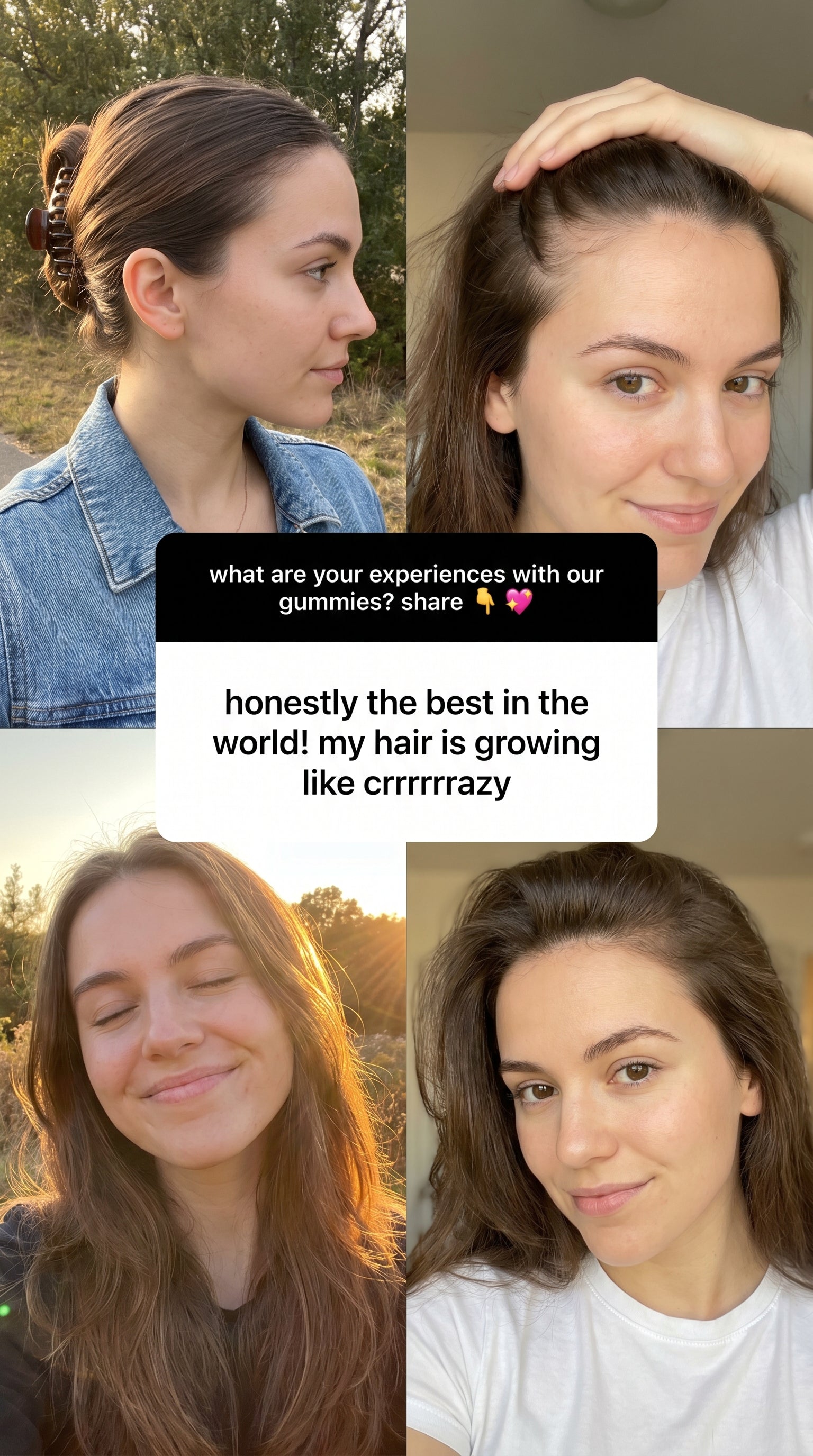
GrowPro® Hair, Skin & Nails Gummies, £22.95. Sugar free daily gummies for people who would rather chew than swallow a tablet, supporting hair care from the inside out.
Key takeaways
- Moringa leaf powder is a real food with a real nutrient profile. That is where its honest value for hair sits.
- Eating it is the route with a plausible mechanism. Rubbing it on the scalp is the route with almost nothing behind it.
- No powder fixes a hair problem that is genetic, hormonal or thyroid related. Nutrition only helps if nutrition was the gap.
- Moringa leaf is food. Moringa root and bark preparations are a different matter and are not appropriate in pregnancy.
- Green masks stain. Use an old towel, and expect to wash more than once.
What is moringa powder, and what is actually in it?
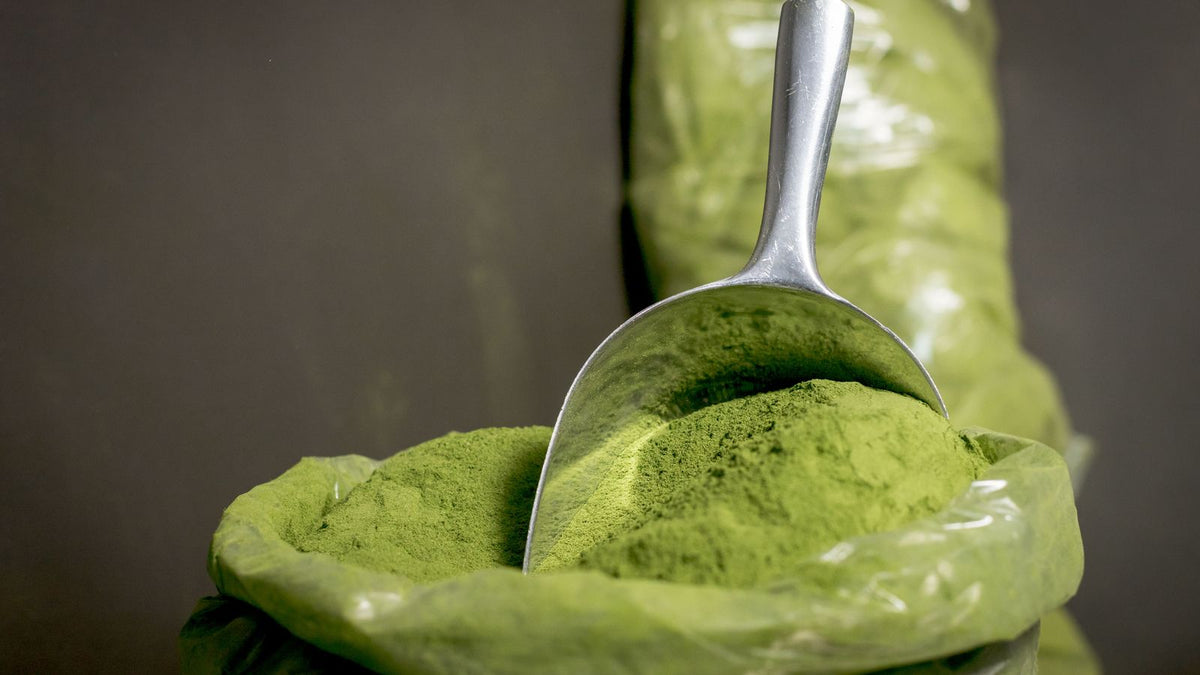
Moringa oleifera is a fast growing tree native to the foothills of the Himalayas and now grown across South Asia and much of Africa. It is often called the drumstick tree after its long seed pods. The powder sold in health shops is almost always the dried, milled leaf, which is the part with the food history behind it.
Nutritionally, the leaf is impressive. Peer reviewed reviews of its composition consistently report meaningful amounts of protein, iron, calcium, potassium, vitamin C and beta-carotene, which the body converts into vitamin A, along with a range of polyphenols and glucosinolates. It has been studied seriously as a supplementary food in regions where deficiency is common, which is a very different context from a teaspoon stirred into a smoothie in Manchester.
Two things follow from that. First, the nutrient claims about moringa are broadly true. Second, they are claims about a food, and a food only helps you if you were short of what it contains.
Does moringa powder for hair do anything for growth?
Moringa powder for hair has no direct clinical evidence in humans showing that it makes hair grow. There are no trials of moringa masks or moringa supplements measuring hair density, hair diameter or shedding rates in people. What exists is nutritional research on the plant, laboratory work on its antioxidant compounds, and a large amount of confident internet copy that runs well past both.
The indirect argument is more defensible. Iron deficiency is one of the more common nutritional contributors to hair shedding in women, and low protein intake, low zinc and low vitamin D all show up in the literature on diffuse shedding. If your diet is genuinely short, improving it can help, and a nutrient dense green leaf powder is one perfectly reasonable way to nudge that along. Lentils, spinach, eggs and red meat do the same job and are cheaper.
What moringa cannot do is override genetics or hormones. If the pattern is a widening parting, a thinning crown or a shrinking ponytail, that is a follicular process, and no amount of green powder changes it. Being honest about that boundary is the difference between a useful habit and wasted money.

Hair loss, hair shedding or hair breakage: which one is this relevant to?
These three are not the same problem, and lumping them together is why so much hair advice fails.
- Hair loss is follicular. The follicle is producing progressively finer hairs or has stopped. Androgenetic hair loss and alopecia areata sit here. Nutrition is not the lever.
- Hair shedding is a cycle event. Illness, surgery, childbirth, rapid weight loss, low iron or a hard stretch of stress push a large batch of follicles into the resting phase together, and two to three months later they release. This is where diet genuinely matters, and where moringa has an argument.
- Hair breakage is fibre damage. The hair snaps along its length because of bleach, heat, friction or tight styling. You get short broken pieces and hair that never gains length. Conditioning and gentler handling are the answer, not supplements.
Work out which of the three you are looking at before you buy anything. If you are unsure, our explainer on the four things that actually damage hair is a quick way to rule breakage in or out.
Eating it or applying it: which route makes sense?
| Route | What it can plausibly do | What it cannot do | Verdict |
|---|---|---|---|
| Eaten, stirred into food or a smoothie | Adds iron, protein, vitamin C and beta-carotene to a diet that was short of them | Correct a hormonal or genetic pattern, or replace a blood test | The sensible route |
| Applied as a scalp or hair mask | Coat the strand, add slip when mixed with oil or yoghurt, feel nice | Deliver nutrients into the follicle, or change the growth cycle | Harmless, optional, messy |
| Moringa seed oil on lengths | Behave like other light oils: reduce friction, add shine, limit water swelling | Do anything at the root | Fine, and no better than argan |
How do you use moringa powder for hair as a mask?
If you want to try it topically, treat it as a conditioning ritual rather than a remedy, and keep it simple. A basic version that will not wreck anything:
- Mix two tablespoons of moringa powder with enough plain yoghurt or warm water to make a smooth paste, roughly the texture of thick custard.
- Add a teaspoon of a light oil for slip. This is the step that makes the difference between a mask that combs out and one that sets like plaster.
- Apply to damp, sectioned hair from the mid lengths to the ends. Keep it off the scalp if you have a sensitive or reactive scalp.
- Leave for 20 to 30 minutes under a cap. Longer does not do more.
- Rinse thoroughly, then shampoo. Green plant matter clings, so budget for two washes.
- Condition properly afterwards. A mask without a conditioner behind it leaves hair rough and more prone to snapping.
Patch test on the inner forearm 24 hours beforehand if you have never used it. And be realistic about the mess. Moringa powder for hair stains light towels, grout and fingernails.

Get a discount on the dry and damaged hair range
Join the Watermans mailing list and we will email a discount code straight to your inbox, so you can try the dry and damaged hair range for less. Vegan, made in the UK, over 6.5 million bottles sold since 2012.
How much moringa is sensible, and does more help?
Most suppliers suggest one to two teaspoons of leaf powder a day, roughly five to ten grams, and there is no reason to exceed that. This is a food, not a medicine, and taking triple the amount does not triple anything except the taste, which is grassy and slightly bitter.
Stir it into a smoothie, soup, dal, scrambled eggs or porridge rather than drinking it in water, where it is genuinely unpleasant. Heat degrades some of the vitamin C, so add it at the end of cooking if you can be bothered, and do not worry about it if you cannot.
One caution worth stating plainly: if you suspect an iron deficiency, a supplement is not a substitute for a blood test. Ask your GP for ferritin and full blood count rather than guessing. Correcting a real deficiency has a much bigger effect on shedding than any powder, and taking iron you do not need is not harmless.
Who should be careful with moringa?
Moringa leaf eaten as food has a long track record. The cautions are mostly about other parts of the plant and about specific situations.
- Pregnancy. Moringa root and bark preparations have traditional uses that make them inappropriate in pregnancy. Leaf powder is a food, but supplement doses are a different question from a spoonful in a curry, so check with your midwife or GP before starting anything new.
- Blood sugar and blood pressure medicines. Moringa has been studied for effects on both. If you take medication for either, mention it to your pharmacist.
- Thyroid conditions. Any large change in a nutrient dense supplement is worth flagging if your thyroid is being monitored.
- Children. Stick to normal food. There is no case for supplementing a child's diet with a novel powder for hair reasons.
What gives a more reliable result for hair?
If the honest verdict on moringa powder for hair is that it is a decent food and an optional mask, the next question is what actually moves the needle. For most people it is retention: keeping the hair you have already grown rather than chasing new growth. Hair grows at about a centimetre a month whatever you do, so every strand you stop snapping is a strand you keep.

GrowPro Hair, Skin & Nails Gummies, £22.95
Sugar free and vegan, with biotin, zinc, selenium and vitamins C, D and B12. If the appeal of moringa was topping up nutrients, this does the same job in a known, measured amount rather than a variable spoonful.

Masque Me Deep Conditioning Mask, £24.95
An 8-in-1 mask with rosemary, provitamin B5, argan oil and hydrolysed lupine protein. It does what a kitchen mask is reaching for, reduces breakage and leaves hair easier to comb, without turning the bathroom green.

Camellia & Black Castor Hair & Body Oil, £24.95
If you are making masks at home anyway, this is the oil to stir in for slip, or to use on its own as a pre-wash on dry ends.
Over 6.5 million bottles sold since 2012. Made in the UK.
For the nutrient side of this, our piece on what biotin does and does not do is a useful reality check, and if you like plant oils, the same honest treatment is applied in our guide to argan oil for hair. Most people also get more out of using conditioner properly than out of any mask, homemade or otherwise.

When to see your GP. Speak to your GP if hair comes out in patches, if the scalp is sore, scaly or itchy, if heavy shedding has gone on for more than six months, or if it comes alongside tiredness, weight change or heavy periods. Iron deficiency and thyroid problems are common, and a blood test settles them far faster than a supplement shelf. If your question is about products or a routine rather than a medical one, you can talk to Gail Waterman, our co-founder, as an AI avatar on the Watermans homepage.
Frequently asked questions
Does moringa powder for hair really work?
Eaten, moringa powder for hair is a reasonable way to add iron, protein and vitamin C to a diet that was short of them, and correcting a genuine nutritional gap can reduce shedding. Applied as a mask, there is no evidence it changes the growth cycle.
How long before I would see anything?
Three to six months at minimum, because hair grows at roughly one centimetre a month and shedding responds slowly. Monthly photographs in the same light are far more reliable than memory.
Can I leave a moringa mask on overnight?
There is no benefit and a real risk of a rough, tangled mess in the morning. Twenty to thirty minutes is plenty, and dried plant matter is difficult to rinse out once it sets.
Will moringa stain light or grey hair?
It can tint very light, porous or grey hair slightly green, particularly if the mask sits for a long time. Do a strand test on a hidden section first.
Is moringa safe in pregnancy?
Moringa leaf as a food is different from a concentrated supplement, and root and bark preparations are not appropriate in pregnancy at all. Check with your midwife or GP before starting any new supplement.
Is moringa better than a hair supplement?
Neither is magic. A hair supplement gives you a known amount of specific nutrients, while moringa gives you a variable amount of many. If you already eat well, both are optional.
Can moringa help with hair breakage?
Not meaningfully. Hair breakage is fibre damage from heat, bleach, friction and tension, and it responds to conditioning, heat protection and gentler handling rather than to nutrition.
Does moringa oil do the same thing as the powder?
No. Moringa seed oil is a light emollient oil for the lengths and behaves much like argan. The powder is the dried leaf and is a food. They are not interchangeable.
Sources & References
- Moringa oleifera in a modern time: a comprehensive review of its nutritional and bioactive composition. Food Research International, 2025. PubMed 39849793
- Recent advances in drumstick (Moringa oleifera) leaves bioactive compounds: composition and health benefits. Antioxidants, 2022. PubMed 35204283
- NHS. Vitamins and minerals. nhs.uk
- NHS. Iron. nhs.uk
- NHS. Vitamin A. nhs.uk
- NHS. Foods to avoid in pregnancy. nhs.uk
- NHS. Hair loss. nhs.uk
The nutritional literature on moringa is strong. The hair literature does not exist. We have kept those two facts separate rather than blending them into a claim.
What is the bottom line on moringa powder for hair?
Moringa powder for hair is a good food and a mediocre mask. Eaten, it adds iron, protein, vitamin C and beta-carotene to your diet, and if you were short of those, that can genuinely reduce shedding over three to six months. Applied to the scalp it does not reach the follicle, and no published research shows otherwise. Work out whether you are dealing with hair loss, shedding or breakage first, get a blood test if shedding is heavy or persistent, and put your money into the things that reliably keep hair on your head.
If you want to support it from the inside as well as the outside, the GrowPro hair vitamins are the easy step. Made in the UK, with over 6.5 million bottles sold since 2012.
Watermans products are 100% cosmetic and do not treat medical hair loss. Individual results may vary.