Hair Loss After Stopping Birth Control: The Timeline and What Helps
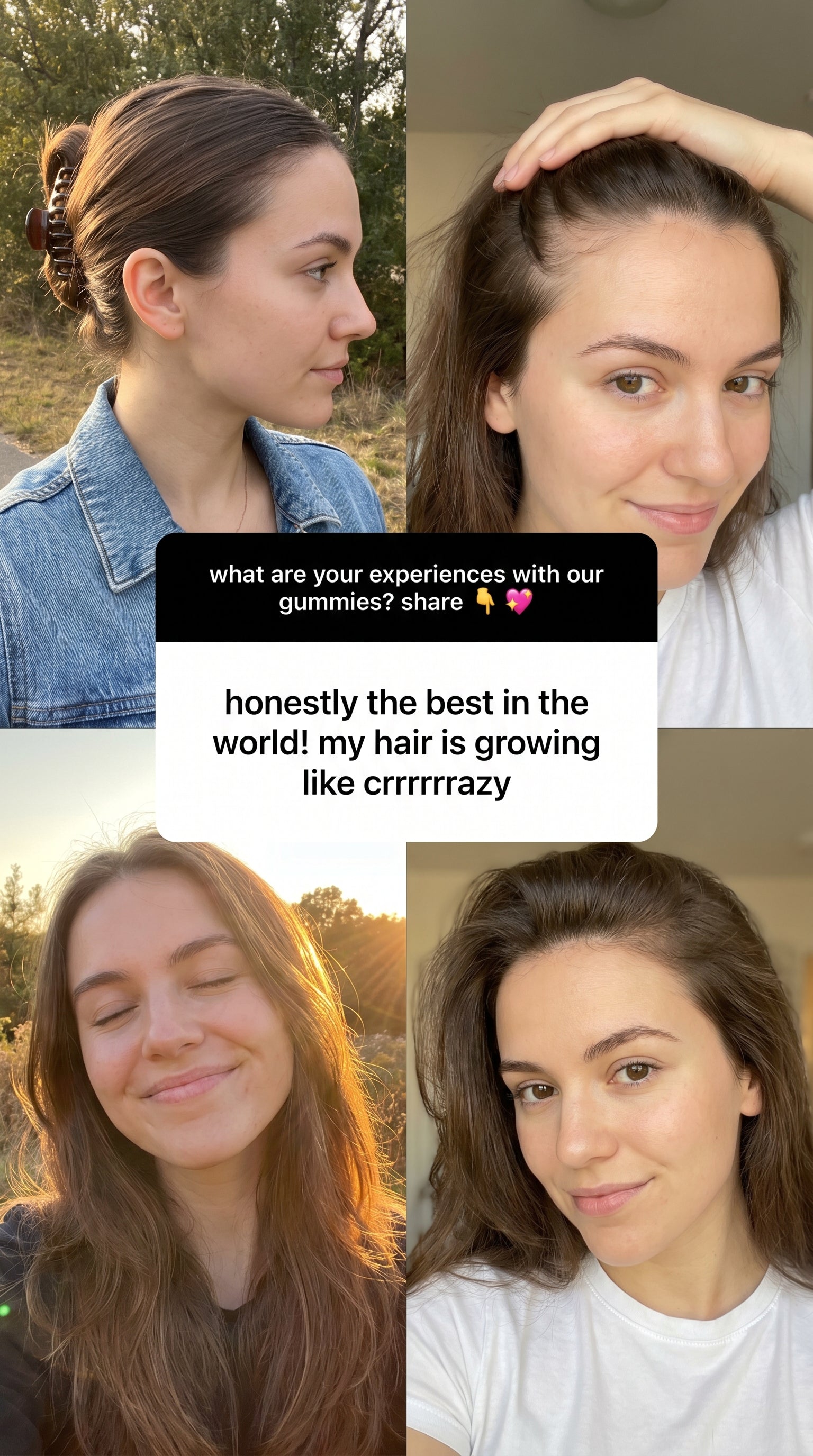
Hair loss after stopping birth control is what most people search for, and what they are usually seeing is a temporary shed rather than permanent hair loss. Combined hormonal contraception raises circulating oestrogen, which holds a larger than usual share of follicles in their growing phase. When that support is withdrawn, a group of follicles moves into the resting phase together and is released two to three months later. For most people the shed peaks around months three to six and settles inside a year.
Our hair growth shampoo
Grow Me® Hair Growth Shampoo, £14.95. A sulphate free daily shampoo that supports a healthy scalp environment and helps reduce breakage, so lengths hold on and look fuller.
Key takeaways
- The shed is delayed. Nothing happens for two to three months, then hair arrives in the brush all at once, which is why it feels unconnected to a decision you made in the spring.
- Hair loss after stopping birth control is almost always shedding from the growth cycle, not loss at the follicle. The follicles were paused, not destroyed, so density normally rebuilds over nine to twelve months.
- Some people get the opposite complaint. Coming off the pill can also mean more facial or body hair, because the same hormones that were suppressed are no longer suppressed.
- Iron and thyroid are the two things genuinely worth testing rather than guessing, especially if periods have returned heavier than before.
- Watermans products are cosmetic. They protect the fibre and the scalp while the cycle resets, and that is the honest limit of what they do.
Why does hair loss after stopping birth control happen at all?
Oestrogen lengthens the growing phase of the hair cycle. While you are taking combined hormonal contraception, a slightly larger proportion of your follicles than normal is held in anagen, the active phase, and a slightly smaller proportion is cycling through telogen, the resting phase. That is not a dramatic effect and most people never notice it while it is happening. What they notice is what happens when it is removed.

When the external hormones stop, the follicles that were being held in the growing phase past their natural point are released to rejoin the ordinary cycle. Because they were held together, they move together, and a cohort that would normally have entered the resting phase across many months does it across a few weeks instead. That is the whole mechanism behind hair loss after stopping birth control, and it is the same process that produces shedding after childbirth, after a serious illness or after a crash diet. Our explainer on what causes telogen effluvium covers the mechanism in full.
The type of contraception matters less than the stopping
Combined methods raise oestrogen and are the ones most often linked to a post stopping shed. Progestogen only methods behave differently, and some are associated with thinning while they are being used rather than afterwards. Either way, the shed is triggered by the change in hormonal state, not by the brand, which is why the pattern looks so similar across very different products.
What is the timeline for hair loss after stopping birth control?
The timeline is consistent enough to be genuinely reassuring, and knowing it removes most of the fear. Nothing visible happens at first. The follicles shift quietly into the resting phase, sit there for two to three months, and only then release the hair. So the shed begins around month two or three, runs heavily for roughly six to twelve weeks, and eases. Short new hairs at the hairline and parting usually appear three to six months after the shed starts.
| Time since stopping | What is usually happening | What to do |
|---|---|---|
| Months 0 to 2 | Nothing visible. Follicles are moving into the resting phase quietly | Nothing hair specific. Eat properly and note the date you stopped |
| Months 2 to 4 | The shed begins. Noticeably more hair in the brush, shower and on the pillow | Handle hair gently. Ask your GP about a ferritin test if periods are heavy |
| Months 4 to 6 | Usually the peak, then it starts to ease. Density looks thinner, especially wet | Keep the routine gentle. This is the hardest stretch psychologically |
| Months 6 to 9 | Shedding has stopped. Short new hairs appear at the hairline and parting | Look for the short hairs. They are the reassurance you need |
| Months 9 to 12 | Density rebuilding toward where it was. Length lags behind density | Normal care. Do not judge progress by length yet |
| Beyond 12 months | Still shedding heavily, or a widening parting, or bare patches | Speak to your GP. This is no longer the ordinary pattern |
Two things commonly muddy the timeline. The first is a second trigger landing on top of the first, such as a stressful few months, a bout of illness or a large drop in calories, which starts a fresh cohort and makes one shed look endless when it is really two overlapping ones. The second is that stopping contraception can unmask thinning that was already developing slowly, so the density you settle at is the density you were genuinely heading for rather than the one you remember. This page is about the timeline and what to do; for the hormonal reset itself, our guide to hair shedding after stopping the pill explains the washout period.
Is this hair loss, hair shedding or hair breakage?
These three describe different problems and the response to each is different. Hair loss means the follicle itself has stopped producing a useful hair, which shows as a widening parting, a receding hairline or a defined bare patch, and it does not resolve on its own. Hair shedding is the growth cycle releasing hairs that have finished their run, which is what a post contraception shed is, and each hair comes out from the root with a small pale bulb on the end. Hair breakage is the fibre snapping partway along its length, leaving short pieces of uneven length with no bulb.
| What you are seeing | What it usually is | What it means here |
|---|---|---|
| Full length hairs with a tiny white bulb at the root | Shedding from the growth cycle | The expected pattern. Temporary |
| Diffuse thinning across the whole scalp, scalp visible when wet | Telogen effluvium | The expected pattern. Temporary |
| Short broken pieces of varying length, no bulb | Breakage | A handling and conditioning problem, not a hormone one |
| A parting that has widened steadily over a year or more | Thinning at the follicle | Not the shed. Worth a GP conversation |
| A smooth, coin shaped bare patch appearing over days | Not telogen effluvium | See a GP promptly |
Getting this right saves money. Breakage improves within weeks once handling and conditioning change. A shed improves only with time. Thinning at the follicle improves with neither, and needs a proper look. If you are unsure which of the three you have, start by looking for the pale bulb on the end of a shed hair, because that one detail separates shedding from breakage immediately.
Why do some people notice more body or facial hair instead?
Because combined hormonal contraception suppresses androgen activity, and stopping removes that suppression. Androgens are the hormones that drive terminal hair on the face, chest and abdomen, and while you are on the pill their effect is partly damped. Once that damping is withdrawn, hair that was previously fine and pale can come back coarser and darker over several months. It is the same hormonal shift as the scalp shed, seen from the other side.
This matters most for anyone whose androgen levels were already at the higher end. Polycystic ovary syndrome is the common reason, and hormonal contraception is often what was keeping the symptoms quiet in the first place, which is why they reappear on stopping rather than appearing for the first time. If increased facial or body hair arrives alongside irregular periods, acne or difficulty with weight, that is worth raising with your GP rather than managing alone. Our guide to PCOS and hair covers the scalp side of the same picture.
Get a discount on the post pill shedding range
Join the Watermans mailing list and we will email a discount code straight to your inbox, so you can try the post pill shedding range for less. Made in the UK, over 6.5 million bottles sold since 2012.
What genuinely helps with hair loss after stopping birth control?
Less than the internet suggests, and that is good news rather than bad. The follicles were paused, not lost, so the shed ends on its own. The useful work is removing anything that drags it out, and protecting the hair you still have while density rebuilds. Four things are worth actually doing.
Get iron checked rather than guessing. Periods often return heavier after stopping hormonal contraception, and low ferritin is a genuine and common contributor to a shed that will not settle. Ask for a ferritin test and a full blood count instead of buying a supplement blind, because taking iron you do not need is not harmless.

Eat enough, particularly protein. Hair is largely keratin, a protein, and the body deprioritises it when intake drops. This is the single most common self inflicted reason a shed drags on, and it usually shows up as a deliberate diet started at the same time as the decision to stop contraception.
Sleep, and lower the load where you can. Stress is a trigger for the same shedding mechanism, so a stressful year stacked on top of a hormonal change produces a longer shed than either alone. Our piece on stress and hair loss explains why that link is real rather than folklore.
Be patient with the timeline. This is the hardest part and the most important. Nothing you buy shortens a telogen effluvium, and anything sold on the promise that it will is making a claim it cannot support.
Which blood tests are worth asking your GP for?
Three, in most cases, and they are ordinary tests rather than anything exotic. Ferritin shows your iron stores, which is the single most common reversible contributor and is particularly relevant if your periods have returned heavier. A full blood count picks up anaemia and a few other things worth knowing. Thyroid function matters because both an underactive and an overactive thyroid affect the hair cycle, and thyroid problems are common in women of exactly this age group.
If increased facial or body hair is the main complaint rather than shedding, your GP may also want to look at androgen levels and at whether polycystic ovary syndrome fits the wider picture. Watermans sells cosmetic hair care and does not run clinics, so anything requiring an examination or a test result belongs with your own GP. If your question is about products or a routine rather than a medical one, you can talk to Gail Waterman, our co-founder, as an AI avatar on the Watermans homepage.
How should you wash and style through the shed?
Washing does not cause the shed and avoiding washing does not slow it. Hairs that have already been released come out whenever you next handle your hair, so skipping washes simply collects several days of shedding for one alarming morning. Wash as often as suits your scalp, with a mild sulphate free shampoo and lukewarm rather than hot water.

Handling is where you can genuinely change the outcome. Detangle from the ends upward with a wide tooth comb, never from the root down. Keep heat styling low and infrequent while density is reduced, because breakage on top of shedding makes the thinning look considerably worse than it is. Avoid tight ponytails, tight buns and anything that pulls at the hairline, since the new short hairs coming through are fragile and easily snapped. A satin or silk pillowcase cuts overnight friction for very little effort.
Styling buys confidence while you wait. A shorter cut or some layers disguises reduced density far better than long thin lengths, and layers blend the short new hairs in rather than leaving them standing up at the hairline. A lightweight volumising product at the root does more visually than any serum will. We have a separate guide to low hairline if that is the part you need.
Which products support the routine?
A small number, used for what they actually do. Nothing here shortens the shed behind hair loss after stopping birth control, and we are not going to pretend otherwise. What a good routine does is keep the scalp comfortable, reduce breakage so you are not losing hair from a second cause on top of the first, and make the hair you have look fuller.

Grow Me® Hair Growth Shampoo
A sulphate free daily shampoo that cleans without stripping, which is what a scalp adjusting to a hormonal change needs. Fingertips into the scalp, lukewarm water, no scrubbing the lengths.

Condition Me® Hair Growth Conditioner
The practical anti breakage step. Mid lengths and ends every wash, left a couple of minutes, so detangling stops snapping the fragile new hairs coming through.

GrowPro® Hair Growth Gummies
Biotin and zinc contribute to the maintenance of normal hair, which is a nutritional statement rather than a promise about your shed. Useful as a floor under a diet that has slipped, not as a substitute for a blood test.
Watermans products are 100% cosmetic and do not treat medical hair loss. Individual results may vary.
When should you speak to a GP?
Most post contraception shedding needs no medical input at all. Five situations are different. Speak to your GP if heavy shedding is still going beyond twelve months, if your parting is visibly widening rather than the whole scalp thinning evenly, if you can see smooth defined bare patches, if your scalp is sore, scaly, scarred or intensely itchy, or if the shedding comes with fatigue, breathlessness, unexplained weight change, acne or periods that have not returned at all.
That last group matters. Periods failing to return several months after stopping hormonal contraception is worth investigating in its own right, quite apart from the hair. Our guide to hormonal hair changes and which hormone is involved covers how the different causes are told apart.
Frequently asked questions
How long does hair shedding last after stopping the pill?
Usually six to twelve weeks of noticeably heavier shedding, starting around month two or three and easing after that. Overall density typically rebuilds over nine to twelve months. Shedding still heavy beyond a year is not the ordinary pattern and is worth raising with your GP.
Will my hair go back to how it was?
In most cases, yes. The follicles behind hair loss after stopping birth control were paused rather than lost, so they restart. The honest caveat is that stopping can unmask pattern thinning that was already developing, in which case the density you settle at reflects that rather than the shed.
Is it normal to get more facial hair after coming off the pill?
It is common. Combined contraception damps androgen activity, and stopping removes that damping, so hair that was fine and pale can return coarser over several months. If it arrives with irregular periods or acne, mention it to your GP rather than managing it alone.
Should I go back on contraception to stop the shedding?
That is a conversation for your GP, not for a hair care company. What we can say is that the shed is temporary and self limiting, so it is rarely a good reason on its own to change a decision you made for other reasons.
Does the type of pill make a difference?
Combined methods, which contain oestrogen, are the ones most often linked to a shed on stopping. Progestogen only methods behave differently and are sometimes associated with thinning during use instead. The trigger is the change in hormonal state rather than the brand.
Can a shampoo shorten the shed?
No. The hairs coming out have already finished their cycle and nothing applied to the scalp changes that. A good shampoo and conditioner keep the scalp comfortable and reduce breakage, so you are not losing hair from a second cause at the same time.
How much shedding is too much?
Fifty to a hundred hairs a day is the usual baseline and a shed can run at several times that for a few weeks. Duration and pattern matter more than any count: diffuse thinning that eases within six months fits the expected picture, whereas bare patches or shedding past twelve months does not.
Should I take a supplement while this is happening?
Only with a reason. If a blood test shows you are low in iron or something else, correcting it genuinely matters. If your bloods are normal, a hair supplement is unlikely to change the course of the shed, whatever the packaging implies.
What is the bottom line on hair loss after stopping birth control?
Hair loss after stopping birth control follows a predictable arc: quiet for two to three months, heavy for six to twelve weeks, easing by month six, density rebuilding across the year. It is shedding from a cycle that briefly synchronised, not loss at the follicle, and it ends on its own. The work worth doing is unglamorous. Eat enough protein, get ferritin and thyroid checked rather than guessing, handle wet hair as little as possible, keep tension and heat off it, and give the calendar the nine to twelve months it genuinely needs.
The scalp is where this starts, so give the Grow Me hair growth shampoo a couple of months of honest use. Vegan, made in the UK.
Sources and References
- NHS. Hair loss. nhs.uk. Guidance on the common causes of shedding and when to see a GP.
- NHS. Your contraception guide. nhs.uk. Background on combined and progestogen only methods and what changes when they are stopped.
- NHS. Iron deficiency anaemia. nhs.uk. Background on ferritin, heavy periods and the blood tests worth asking for.
- NHS. Polycystic ovary syndrome. nhs.uk. The most common reason androgen driven symptoms reappear after stopping hormonal contraception.
- British Association of Dermatologists. Information leaflets for the public on telogen effluvium and female pattern hair loss.