Microneedling vs Dermarolling: What Is the Difference?
The two words get used as if they mean the same thing. They are related, but not equivalent.
Microneedling vs dermarolling comes down to depth, device design and who is holding it. Dermarolling means rolling a drum of fixed-length needles over the skin, usually at home and at shallow depths. Microneedling is the broader term, and in professional use it means a motorised pen that stamps needles vertically at a depth the operator sets. Same principle, different precision, different risk, and different rules about who should do it.
Our overnight scalp elixir
Grow More® Overnight Scalp Elixir, £25.50. A leave in scalp serum worked into the roots at night, supporting a healthy scalp environment while you sleep.
Key takeaways
- Dermarolling is one method of microneedling, not a separate technology. All dermarolling is microneedling; not all microneedling is dermarolling.
- A roller drags needles in at an angle and out again, which tears more than a pen does. A pen stamps straight in and out.
- Depth is the real dividing line. Shallow at-home rollers are a cosmetic tool; deeper needling is a clinical procedure.
- Hygiene is the single biggest at-home risk, and rollers are much harder to clean properly than single-use pen cartridges.
- Neither is appropriate on an inflamed, infected, sore or scarring scalp. Get that looked at first.
- If you are considering anything beyond very shallow at-home use, have it done by a trained, insured professional.
What is dermarolling, exactly?
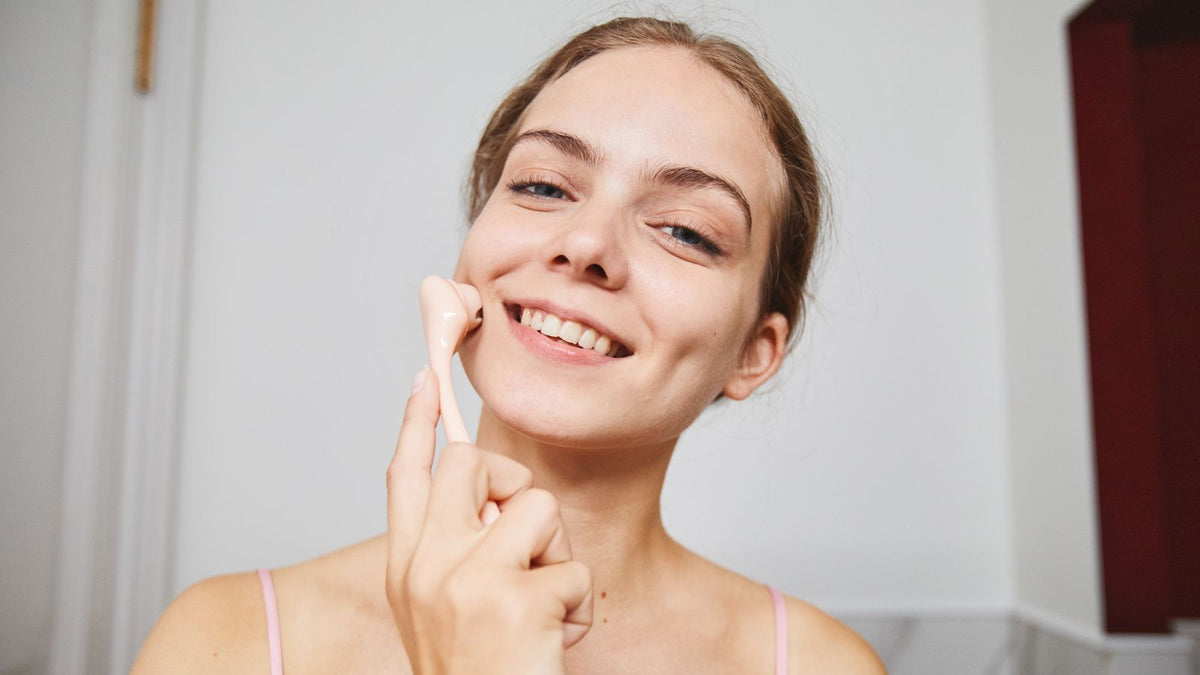
Start the microneedling vs dermarolling comparison with the simpler device. A dermaroller is a handheld barrel studded with fine needles of a single fixed length, mounted on a handle. You roll it across the skin in several directions. Because the needle length is fixed by the device, the only control you have is pressure and how many passes you make, which is precisely why at-home rollers are sold at very short needle lengths.
The mechanics are worth picturing. A roller is a wheel, so each needle enters the skin at an angle, sweeps through a short arc while the drum turns, then exits at an angle. That arc is the problem: it creates a small tear rather than a clean channel. At 0.25mm this is trivial. At longer lengths it stops being trivial.
What is microneedling, and how is it different?
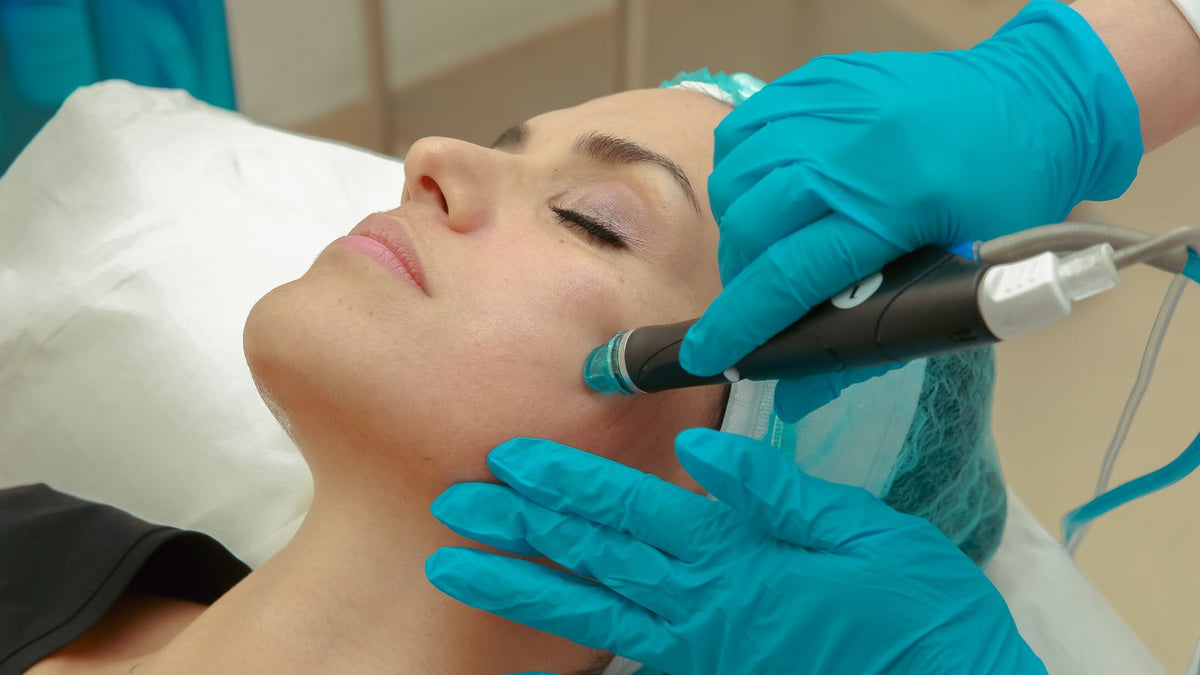
Microneedling is the umbrella term for creating controlled micro-injuries in the skin with fine needles. In professional settings it is usually done with an electric pen holding a disposable needle cartridge that oscillates rapidly up and down. The needles go straight in and straight out, perpendicular to the skin, and the operator sets the depth on the device, often varying it across different areas.
That gives three advantages over a roller: cleaner channels because there is no dragging arc, adjustable and consistent depth, and a single-use sterile cartridge instead of a barrel you have to disinfect yourself. It also means a trained operator is making the depth decision rather than a shopper reading a product listing.

Microneedling vs dermarolling: what are the differences side by side?
| Dermaroller (at home) | Microneedling pen (professional) | |
|---|---|---|
| Needle action | Rolls in and out at an angle, creating a small tear | Stamps vertically in and out, creating a cleaner channel |
| Depth control | Fixed by the device you bought | Adjustable on the device, set by the operator |
| Typical depth | 0.2 to 0.5mm for home cosmetic use | Set by a trained professional after assessing the skin |
| Sterility | You have to clean and store it yourself, and it degrades | Single-use sterile cartridge, discarded after one session |
| Needle blunting | Needles blunt with repeated use, which increases tearing | Not an issue, the cartridge is new each time |
| Consistency | Varies with your pressure and speed | Consistent across the area |
| Cost | Low upfront, replace the roller regularly | Higher per session |
| Main risk | Infection, tearing, uneven results, using too long a needle | Lower, but not zero, and depends on the operator |
| Downtime | Minimal at shallow depths | Redness for a day or more, depending on depth |
The single most useful takeaway: with a roller you control pressure but not depth, and depth is the variable that decides whether something is cosmetic or clinical.
Get a discount on the thinning hair range
Join the Watermans mailing list and we will email a discount code straight to your inbox, so you can try the thinning hair range for less. Vegan, made in the UK, over 6.5 million bottles sold since 2012.
Why does needle depth matter so much?
Depth is the heart of the microneedling vs dermarolling question, because it changes what layer of skin you are affecting, and therefore what can go wrong. Very short needles work at the level of the outer skin, which is why shallow rolling is generally regarded as a cosmetic activity with a modest effect, mainly on how well a topical product spreads and on surface texture.
Go deeper and you reach living tissue with a blood supply, which is why longer needles draw pinpoint bleeding. At that point you have moved from a cosmetic routine into something that carries real infection risk, real scarring risk if done badly, and, on a scalp, a real risk of damaging the very follicles you were hoping to look after. A UK review of home-use dermatology devices makes the same general point about the category: the gap between what a device can do in trained hands and what it does in untrained ones is where most of the harm sits.
The rule most people get wrong
Longer needles are not a stronger version of the same thing. Past a certain depth you are doing a different procedure, one that needs training, sterile technique and insurance. Buying a longer roller does not buy you any of those.
Does either help with thinning hair on the scalp?
This is the honest bit. Needling the scalp is an area of genuine research interest, and the proposed mechanism, that controlled micro-injury prompts a local wound-healing response, is plausible and is being studied. But the evidence base is far smaller and more variable than the marketing implies, much of it involves professional depths rather than shallow home rollers, and much of it is done alongside a medicine obtained through a doctor rather than on its own.
Where good sources disagree, it is worth saying so rather than picking the convenient side. Some studies report encouraging results for scalp needling as an add-on; others are small, short, unblinded, or lack a proper control group, which is exactly the design weakness that tends to flatter a procedure. So the fair summary is: promising as an adjunct in professional hands, unproven as a standalone fix, and not something to try at aggressive depths on yourself at home.
It also has nothing to offer for the other two things people call hair loss. Worth separating them clearly:
- Hair loss in the follicular sense, where follicles miniaturise or are destroyed, is a medical matter. If a scarring condition is involved, needling the area could make things worse, not better.
- Hair shedding, where more hairs than usual enter the resting phase after illness, stress or childbirth, resolves as the trigger resolves. Needling does nothing for the trigger.
- Hair breakage, where the fibre snaps along its length, is a hair-care problem, not a scalp problem. A needling device is the wrong tool entirely.
If you are not sure which of the three you are dealing with, start with the three-clue self-check before you buy any device at all.
Please note: Watermans products are 100% cosmetic and do not treat medical hair loss. Individual results may vary.

Who should not use either?
Skip both, and speak to your GP or a dermatology service, if any of the following apply.
- Any active scalp condition: infection, open sores, weeping or crusting areas, or a flare of psoriasis or eczema on the scalp.
- Any suspicion of a scarring hair condition, or a smooth, shiny area where follicles look absent.
- A history of keloid or hypertrophic scarring.
- You take medicines that affect bleeding or immunity, or you are having chemotherapy or radiotherapy.
- Poorly controlled diabetes, or anything else that slows wound healing.
- You are pregnant or breastfeeding, in which case get individual advice first.
- Sudden, patchy or rapid hair loss, or a painful, itchy or scaling scalp. That needs a medical opinion, not a device.
Hygiene, if you use a roller anyway
Never share a roller with anyone. Clean the scalp first. Disinfect the roller before and after every use as the manufacturer instructs, let it dry fully, and store it in its case. Replace it regularly, because blunt needles tear rather than pierce. Stop immediately if the skin becomes sore, red beyond a few hours, swollen or weepy, and see a pharmacist or GP if you think an area has become infected. For depth ranges, aftercare and who should avoid it entirely, our fuller guide to scalp microneedling goes through the safety side.
What should you look for if you go to a professional?
- Training and insurance. Ask what qualification they hold for this specific procedure and who insures them.
- A consultation before any needling, including a proper look at your scalp and a discussion of what is actually causing your hair concern.
- Single-use sterile cartridges, opened in front of you.
- A device that is legitimately supplied for the purpose. Devices sold in the UK have to meet legal requirements, and a reputable operator will be able to tell you what they are using and why.
- Realistic language. Anyone promising a certain result, or describing a cosmetic procedure as if it were a medicine, is telling you something useful about themselves.
- Written aftercare, and a contact if something goes wrong.
For the practical at-home side specifically, including the shallow-depth question, we cover it in more detail in microneedling for hair loss at home and in our honest look at whether a 0.25mm derma roller is effective.
How do you look after the scalp without a device?
Most people asking about needling actually want a calmer, cleaner scalp and hair that looks fuller. Both of those respond well to ordinary care, which carries none of the risk.

Grow More® Leave-In Scalp Elixir £25.50
A leave-on scalp serum with biotin, caffeine, rosemary and niacinamide. Applied to a clean, intact scalp as part of an everyday routine, it is designed to support the look of fuller, thicker hair. Not for use on broken or irritated skin.

Grow Me® Hair Growth Shampoo £14.95
A sulphate-free daily shampoo that cleans the scalp gently without stripping it, leaving hair looking thicker and fuller.
Vegan, made in the UK, and over 6.5 million bottles sold since 2012.

Frequently Asked Questions
Is microneedling vs dermarolling really a meaningful distinction?
Yes. In microneedling vs dermarolling terms, dermarolling is one way of doing microneedling, using a fixed-length roller. Professional microneedling uses a motorised pen with adjustable depth and sterile single-use cartridges. The device design changes the needle action, the consistency and the infection risk. At the shallow end the difference matters less than the marketing suggests, as our guide to the 0.25mm derma roller explains.
Which is better for the scalp?
For anything beyond very shallow cosmetic use, a professional pen is the safer option because depth is controlled and the cartridge is sterile. A shallow home roller is lower risk simply because it does less.
What needle length is safe to use at home?
Home cosmetic devices are generally sold in the 0.2 to 0.5mm range, and shorter is safer. Longer needles move you into procedure territory that needs training, sterile technique and insurance, so that should not be a solo decision at home.
Does dermarolling hurt?
At very short needle lengths most people describe it as prickly rather than painful. Discomfort that goes beyond that is a signal you are pressing too hard or using too long a needle, not a sign it is working.
How often should you do it?
Less often than most people assume, because skin needs time to recover fully between sessions. Follow the manufacturer's guidance for your specific device, and if the scalp is still red or sore, it is too soon.
Can I use my face roller on my scalp?
Do not share a device between areas or between people. Beyond the hygiene issue, scalp skin and facial skin differ, and a roller dragged through hair behaves differently from one used on bare skin.
Will it work on a receding hairline?
A receding hairline is usually a follicular pattern change, which is a medical matter rather than a cosmetic one. Speak to your GP about what is driving it before spending money on any device.
Do I still need a normal hair routine?
Yes, and for most people that is where the visible difference comes from. Gentle cleansing, conditioning the lengths, heat protection and careful detangling reduce breakage, which is the part of the problem you can control day to day.
Sources & References
- NHS, Cosmetic procedures
- NHS, Hair loss
- GOV.UK, Medical devices: how to comply with the legal requirements
- Unlocking the Secrets of Home-Based Dermatology Devices: A Comprehensive Guide, Indian Journal of Dermatology, 2026
- Emerging bioactive microneedle platforms for disease management, Bioactive Materials, 2026
What is the bottom line on microneedling vs dermarolling?
On microneedling vs dermarolling, the useful framing is not which one is better but how deep you are going and who is doing it. A shallow roller used hygienically is a low-risk cosmetic habit with modest expectations attached. Anything deeper belongs with a trained professional who assesses your scalp first. And if hair is genuinely thinning at the root, the most valuable step is not a device at all, it is a conversation with your GP about why. If your question is about products or a routine rather than a medical one, you can talk to Gail Waterman, our co-founder, as an AI avatar on the Watermans homepage.
If you want to work on the scalp directly rather than through a wash, the Grow More overnight scalp serum goes on at night and stays put. Made in the UK, with over 6.5 million bottles sold since 2012.