Healthy Scalp: What One Looks Like Up Close and How to Read Yours
A healthy scalp is skin that happens to grow hair, and it looks the part: even in tone, calm, neither tight and flaking nor greasy within hours of washing, with no itch, soreness or visible scale. Under magnification you would see an intact barrier, a light film of sebum, a settled mix of resident microbes and follicles emerging cleanly, often two or three hairs from a single opening. Most scalp complaints are a departure from one of those four things.
Our hair growth shampoo
Grow Me® Hair Growth Shampoo, £14.95. A sulphate free daily shampoo that supports a healthy scalp environment and helps reduce breakage, so lengths hold on and look fuller.
Key takeaways
- Your scalp is skin, with the same barrier, the same microbes and the same needs as the rest of you, only with far more oil glands and hair.
- Four things define a healthy scalp: an intact barrier, balanced sebum, a settled microbial community, and clear follicle openings.
- Two or three hairs coming from one opening is normal anatomy, not a sign of anything wrong.
- Flaking is a symptom, not a cause. Dry flakes, greasy yellow scale and thick silvery plaques mean different things.
- A calm scalp does not by itself produce more hair, but an inflamed one is a poor environment to grow it in.
- Itch, soreness, spreading redness, sudden shedding or a smooth shiny patch are reasons to see your GP, not to buy a shampoo.
What is the scalp actually made of?
Structurally the scalp is ordinary skin with three unusual features. It carries the highest density of hair follicles anywhere on the body, it has a very high concentration of sebaceous glands attached to those follicles, and it sits over a thin sheet of muscle and connective tissue with a rich blood supply.
The top layer, the stratum corneum, is the barrier. It is a few dozen cells thick, constantly renewing, and its job is to hold water in and keep irritants out. On a healthy scalp this renewal happens invisibly: cells are shed individually, too small to see. Visible flakes mean cells are coming away in clumps, which is a barrier or inflammation story rather than a cleanliness one.
What does sebum do, and how much is normal?
Sebum is the oily secretion from glands attached to each follicle. It coats the emerging hair, contributes to the skin's slightly acidic surface, and helps limit water loss. You want some. The complaint people describe as an oily scalp is usually about timing rather than presence: oil that is obvious within a day of washing rather than after two or three.
Sebum output is driven largely by hormones and genetics, which is why it changes at puberty, around the menstrual cycle, in pregnancy and through the menopause transition. Research looking at scalps with high sebum production has examined how cleansing changes the surface, and the practical implication is unsurprising: how you wash matters, but you are managing a set point rather than resetting it. Washing more aggressively does not lower the set point, and stripping the barrier tends to make everything else worse.
Washing your hair does not make your scalp produce more oil. Stripping it repeatedly, then over-correcting with heavy products, is what turns an oily scalp into an irritated one.

What lives on a healthy scalp?
A settled community of bacteria and yeasts, and that is normal and desirable. The scalp is an unusual habitat: warm, humid, sheltered by hair, and rich in the lipids that certain organisms feed on. Malassezia yeasts in particular are part of the ordinary resident flora of nearly everyone's scalp. Their presence is not a problem; a shift in the balance, or an individual sensitivity to their by-products, is what is associated with flaking and itch.
Recent work describes this as a scalp microbiome and hair axis, examining how the microbial community and the follicle influence one another. It is an active field rather than a settled one, and it is worth being cautious about products making confident microbiome claims: the science is genuinely interesting and genuinely early. What is not in dispute is the simpler point, that a chronically inflamed, itchy, scratched scalp is not a comfortable environment for hair to grow from.
Get a discount on the scalp health range
Join the Watermans mailing list and we will email a discount code straight to your inbox, so you can try the scalp health range for less. Vegan, made in the UK, over 6.5 million bottles sold since 2012.
How can you read your own scalp?
Part the hair under good light, ideally daylight, on a day you have not applied styling product. Work through these six checks in turn.
| What to look at | A healthy scalp | Worth investigating |
|---|---|---|
| Colour | Even, close to your skin tone, no more pink than the skin behind your ear | Persistent redness, or redness in patches with a defined edge |
| Surface | Smooth, no visible scale | Loose dry flakes, greasy yellowish scale, or thick silvery plaques |
| Feel | Comfortable, no sensation at all most of the time | Itch, burning, tenderness, or pain when you move the hair |
| Oil | Clean-feeling for a day or two after washing | Oily within hours, or tight and squeaky immediately after washing |
| Follicle openings | Visible, clear, often with two or three hairs from one opening | Openings that look plugged, pustules, or a smooth shiny area with none at all |
| Hair emerging | Even density across the parting | A parting that is visibly widening, or a patch that is thinning faster than the rest |
The one finding to take seriously straight away
A smooth, shiny area where you cannot see follicle openings at all suggests the follicles may no longer be there. That is not something any shampoo addresses, and it is worth a GP appointment sooner rather than later, because with scarring conditions the priority is protecting what remains.
What do flakes actually mean?
Flaking is the single most common scalp complaint and the most commonly misread, because three different things produce it and they want opposite handling.
- Simple dryness. Small, fine, dry flakes, often with a tight feeling, frequently after harsh cleansing, hard water or cold weather. Responds to gentler washing and more conditioning.
- Dandruff and seborrhoeic dermatitis. Larger, often greasy and yellowish scale, usually with itch, sometimes with redness, and often also in the eyebrows or beside the nose. This is associated with the yeast balance rather than dryness, so more moisture alone does not settle it. The NHS has clear guidance, and pharmacy shampoos with an appropriate active are the usual first step.
- Psoriasis. Thick, well-defined, silvery plaques with a sharp border, often extending past the hairline, and sometimes with changes to the nails. This is an immune condition and needs a medical assessment.
If your flaking is greasy and itchy rather than dry, our guide to a flaky scalp and what actually settles it goes through the options in order.

Does a healthy scalp actually grow more hair?
This deserves a careful answer, because it is where a lot of marketing overreaches. A calm scalp does not add follicles, and it does not change the genetics of how your follicles behave. What it does is remove obstacles. Three different things get lumped together as hair loss, and scalp condition relates to each differently.
| What it is | How scalp condition relates | |
|---|---|---|
| Hair loss | Follicles miniaturising or being lost, as in androgenetic alopecia or a scarring condition | Scalp care does not change it. A scarring condition specifically needs medical attention early. |
| Hair shedding | More hairs than usual entering the resting phase, then released a few months later after illness, stress or childbirth | Not caused by the scalp surface. It follows a whole-body trigger and settles as that resolves. |
| Hair breakage | The fibre snapping along its length, giving short broken pieces and a ragged hemline | Indirect but real. An itchy scalp gets scratched, and scratching plus rough handling breaks hair. |
So the honest claim is a modest one, and it is still worth having: a comfortable scalp means less scratching, gentler handling and better-looking hair. If you are trying to work out which of the three you have, use the three-clue self-check first.
Please note: Watermans products are 100% cosmetic and do not treat medical hair loss. Individual results may vary.
What genuinely keeps a scalp calm?
- Wash often enough for your scalp, not for a rule you read. Oily scalps generally do better washed more frequently, not less. Leaving sebum and sweat to sit is not kinder.
- Shampoo the scalp, condition the lengths. Use fingertips, not nails, and give the scalp a proper massage rather than piling the lengths on top of your head.
- Rinse thoroughly. Residue is a common and easily fixed cause of irritation.
- Turn the water down. Very hot water strips the barrier and leaves the scalp tight.
- Do not scratch. Scratching breaks the barrier, and a broken barrier itches more. If it itches persistently, that is a signal to get it looked at, not to scratch harder.
- Give new products a fair trial of a few weeks, and change one thing at a time so you can tell what did what.
For the full step-by-step routine, including frequency and technique, see our companion guide to keeping your scalp healthy for longer, stronger hair, and how to use conditioner properly for the lengths.
Which products support the everyday routine?
Cosmetic products work on the surface and on the look and feel of the hair. That is a real job, and it is the only job they do.

Grow Me® Hair Growth Shampoo £14.95
Sulphate-free and formulated to cleanse without stripping, with biotin, caffeine, rosemary and niacinamide. Designed for regular use on the scalp, leaving hair looking thicker and fuller.

Grow More® Leave-In Scalp Elixir £25.50
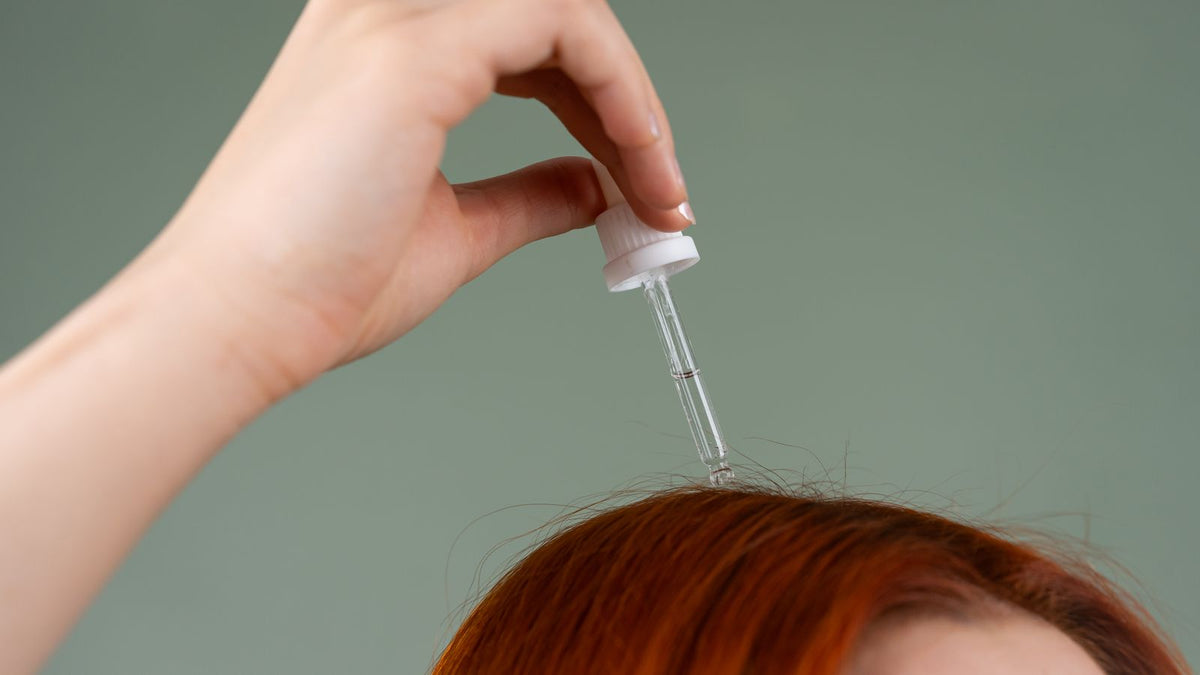
A lightweight leave-on serum for the scalp, for use on intact, comfortable skin as part of a daily routine. Not for broken or inflamed areas.

Camellia & Black Castor Hair & Body Oil £24.95
A pre-wash oil for dry lengths and a comfort layer for a tight-feeling scalp. Apply before shampooing rather than leaving heavy oil on an oily scalp.
Made in the UK, and over 6.5 million bottles sold since 2012.

Frequently Asked Questions
What does a healthy scalp look like?
Even in colour and close to your natural skin tone, smooth with no visible scale, comfortable with no itch or soreness, and with clear follicle openings. Seeing two or three hairs emerging from one opening is normal anatomy.
Is it normal to see my scalp through my hair?
Under bright overhead light, at a parting, or when hair is wet, yes. What matters is change over time. A parting that is visibly wider than it was a year ago is worth discussing with your GP.
How often should I wash my hair for a healthy scalp?
As often as your scalp needs. Oilier scalps usually do better with more frequent washing, and there is no benefit in leaving sebum and sweat sitting on the skin. Judge it by comfort rather than by a rule.
Why is my scalp itchy but not flaky?
Common causes include product residue, a reaction to a fragrance or dye, water that is too hot, or a barrier that has been over-cleansed. Persistent itch without an obvious cause should be looked at by your GP or a pharmacist.
Does a healthy scalp mean thicker hair?
Not directly. A calm scalp does not add follicles or change hereditary patterns. What it does is remove obstacles, so there is less scratching and less breakage, and the hair you have looks better.
Are scalp scrubs a good idea?
Occasionally and gently, for build-up. Frequent abrasive scrubbing damages the barrier and tends to cause the irritation it was meant to solve. If the scalp is already sore or inflamed, skip them.
Can stress affect my scalp?
Yes, in two ways. Stress is a well-recognised trigger for the kind of shedding that shows up a few months later, and it can worsen inflammatory skin conditions including scalp psoriasis and seborrhoeic dermatitis.
When should I see a doctor about my scalp?
Sudden or patchy hair loss, a smooth shiny area with no visible follicle openings, pain, spreading redness, pustules, weeping or crusting, or any flaking that does not settle with pharmacy measures over several weeks.
Sources & References
- NHS, Dandruff
- NHS, Psoriasis
- NHS, Atopic eczema
- The Scalp Microbiome-Hair Axis: Mechanisms and Therapeutic Translation, Research, 2026
- Physiological Characteristics of Scalp Skin With High Sebum Production and the Impacts of Shampoo Cleansing, Skin Research and Technology, 2026
What is the bottom line on healthy scalp?
A healthy scalp is a low-drama one: even in colour, comfortable, not flaking, with follicle openings you can see. Getting there is mostly about gentle, consistent basics rather than anything dramatic, and the realistic payoff is comfort and better-looking hair rather than more follicles. The findings that matter most are the ones that send you to your GP: sudden shedding, a widening parting, pain, or a smooth patch with no openings at all. If your question is about products or a routine rather than a medical one, you can talk to Gail Waterman, our co-founder, as an AI avatar on the Watermans homepage.
The scalp is where this starts, so give the Grow Me hair growth shampoo a couple of months of honest use. Vegan and made in the UK.