Natural Hair Strengthener: What Works and a Simple Routine
Search this topic and the same kitchen ingredients come back endlessly, unranked and unexamined.
A natural hair strengthener is any plant oil, protein or botanical used to make the hair fibre more resistant to snapping. The honest position is that none of them rebuild a damaged strand, because hair is not living tissue and cannot repair itself. What the good ones do is limit further damage: reducing how much the fibre swells during washing, improving slip so combing tears less, and temporarily filling gaps in a worn cuticle. That is a real, visible benefit, and it is a smaller claim than most articles make. There is more on marula oil for hair in a separate guide.
Our hair growth conditioner
Condition Me® Hair Growth Conditioner, £13.95. Detangles and strengthens the hair fibre so lengths snap less on the brush and look thicker through the ends.
Key takeaways
- Hair is dead protein. Nothing repairs it permanently, so the goal is preventing damage, not undoing it.
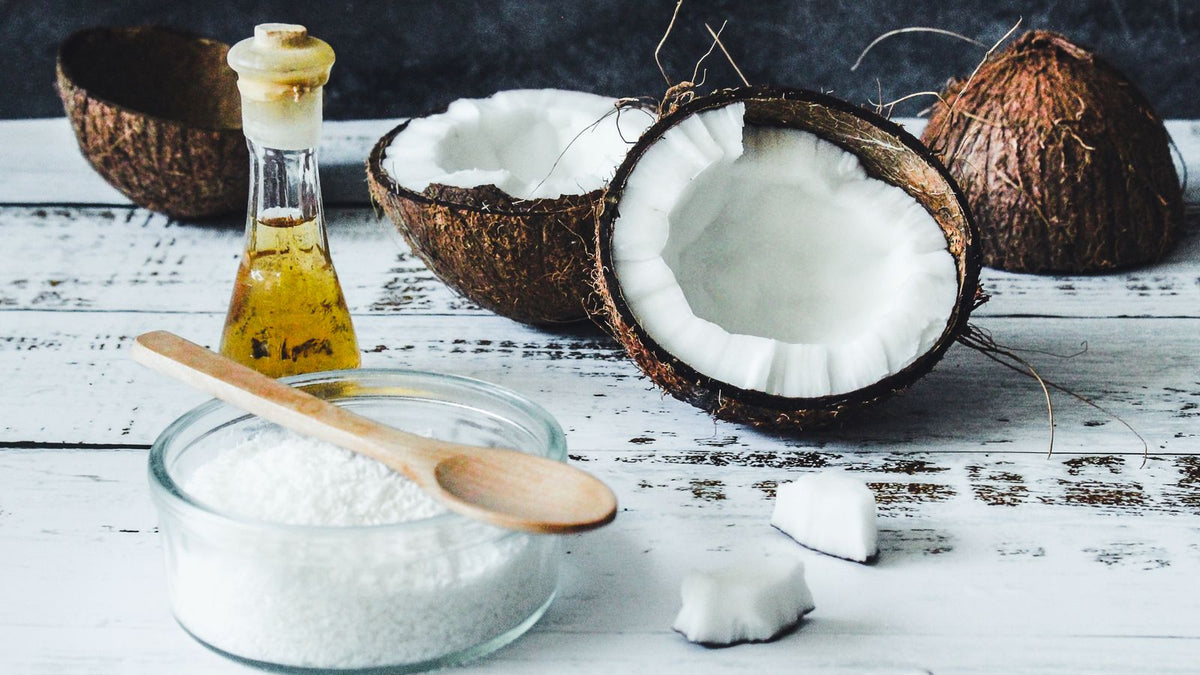
- Coconut oil has the strongest evidence, because it penetrates the fibre and reduces protein loss during washing.
- Protein and moisture are a balance. Too much protein makes hair stiff and brittle, which causes the breakage it was meant to stop.
- Most breakage is created by handling: wet combing, heat, tight styles and friction while you sleep.
- Rice water, aloe and egg masks are pleasant and low-risk, but the evidence is much thinner than the internet suggests.
- If hair is leaving at the root rather than snapping mid-length, this whole category is the wrong tool. Speak to your GP.
What does hair strength actually mean?
Strength here means tensile strength: how much force a strand takes before it breaks, and how much it can bend and stretch without failing. That comes from the cortex, the bulk of the fibre, where long keratin chains are held together by two kinds of bond.
Disulfide bonds are the strong ones, permanent links between sulfur atoms on the protein chains. They set the fibre's fundamental strength and its natural curl pattern, and they are what bleaching and chemical straightening break. Hydrogen bonds are weak and temporary, broken by water and re-formed as hair dries, which is why wet hair stretches and why a blow-dry holds a shape until the next damp morning.
Around the cortex sits the cuticle, overlapping scales like roof tiles. An intact cuticle lies flat, reflects light and lets the comb slide. A worn one lifts, catches, tangles and lets water in and out too easily. Almost everything a natural hair strengthener does happens at the cuticle, or just under it.
Hair has no blood supply and no cells to rebuild itself with. Once a strand leaves the follicle, every bit of damage it takes is permanent, so protection beats repair every time.

Which natural hair strengthener ingredients have the best evidence?
Ranked honestly, from best supported to least. Note that the strongest evidence in this field is laboratory work on hair tresses rather than large human studies, which is a genuine limitation worth stating.
| Ingredient | Evidence | What it plausibly does | Verdict |
|---|---|---|---|
| Coconut oil | Strongest in the category | Its main fatty acid penetrates the fibre rather than sitting on top, which reduces the protein lost during washing and limits how much the fibre swells | The one to start with, used before washing |
| Hydrolysed proteins (wheat, rice, lupine, keratin) | Good | Small enough fragments to bind to and temporarily fill worn areas of the cuticle, adding stiffness and reducing breakage | Effective, but respect the balance below |
| Argan, olive and sunflower oils | Moderate | Mostly surface conditioning: slip, shine and less friction. Less penetrating than coconut | Good finishing oils, weaker as pre-wash |
| Panthenol (provitamin B5) | Moderate | Draws in and holds moisture, improves flexibility and reduces static | A quiet workhorse in good formulas |
| Rice water | Weak but not nothing | Contains starches and some amino acids that coat the fibre. Widely used traditionally, with little controlled testing | Low risk, low cost, modest expectations |
| Aloe vera | Weak | Humectant and soothing on the scalp | Pleasant, not a strengthener |
| Egg and mayonnaise masks | Weak | Whole egg protein is too large to enter the fibre, so the effect is surface coating | Harmless, oversold, and messy |
| Onion juice | Weak and often misread | Studied for a specific patchy hair condition, not for fibre strength | Not a strengthener. The smell is real |
Get a discount on the hair breakage range
Join the Watermans mailing list and we will email a discount code straight to your inbox, so you can try the hair breakage range for less. Made in the UK, over 6.5 million bottles sold since 2012.
Why can protein make hair worse?
This is the mistake that sends people in circles. Protein products add stiffness. Stiffness is exactly what over-porous, bleached, stretchy hair needs, and exactly what already-coarse, low-porosity, protein-loaded hair does not. Keep stacking protein onto hair that has enough and it becomes rigid, straw-like and snaps more, which most people interpret as needing yet more protein. For how this fits alongside everything else, see our guide to the best hair growth products and the order to buy them in.
| Sign | What it points to | What to do |
|---|---|---|
| Hair stretches a long way when wet, then snaps and feels mushy | Needs protein | Add a protein or bond-focused product, then always follow with a moisturising conditioner |
| Hair feels rough, stiff, straw-like and snaps without stretching | Too much protein | Pause protein products, use a rich moisturising mask for a few weeks |
| Hair feels limp, over-soft and will not hold any shape | Too much moisture, too little protein | Introduce a light protein product weekly |
| Hair feels flexible, combs easily, holds a style | Balanced | Change nothing |
The wet stretch test
Take a shed hair, wet it, and pull gently. Healthy hair stretches a little and springs back. Hair that stretches a long way and stays stretched, or breaks immediately, needs protein. Hair that snaps straight away with no give at all is usually over-proteined and needs moisture instead.
What breaks hair in the first place?
Worth being blunt: most breakage is created by handling, not by a missing ingredient. Laboratory work on repeated combing shows how mechanical stress accumulates over time, and how much worse it is on bleached hair. That is the lever with the biggest return.
- Combing wet hair from the roots down. Wet hair is at its weakest, and dragging a comb from the top pushes every tangle into a knot at the ends.
- Heat, especially on damp hair. Very hot tools on hair that is not fully dry cause the most damage in the shortest time.
- Bleach and chemical straightening. These break disulfide bonds by design, which is permanent.
- Tight styles and repeated tension at the same point, plus elastics with metal fastenings.
- Friction overnight on cotton, and rough towel-drying.
- Over-washing with a harsh cleanser, which strips the lipids that keep the cuticle flexible.
Our guides to what causes hair damage and how to prevent split ends cover the handling side in detail.

Is it breakage, shedding or hair loss?
Before spending anything, work out which problem you have, because a strengthener only addresses one of them.
- Hair breakage means the fibre snaps along its length. You find short broken fragments, the hemline looks ragged and see-through, and the hair never seems to gain length. This is what a strengthening routine is for.
- Hair shedding means whole hairs released from the follicle, each with a small pale bulb at the root. Often follows illness, childbirth, a crash diet or a stressful period by two to four months, and usually settles on its own.
- Hair loss in the follicular sense means follicles miniaturising or being lost, as in androgenetic alopecia. The parting widens, density falls, and no cosmetic product changes it.
If you are unsure, the three-clue self-check is the quickest way to tell them apart. Sudden, patchy or rapid loss, a sore or scaling scalp, or shedding lasting beyond about six months should be discussed with your GP.
Please note: Watermans products are 100% cosmetic and do not treat medical hair loss. Individual results may vary.
What does a simple weekly routine look like?
- Pre-wash oil, once a week. Coconut oil through the mid-lengths and ends, 30 minutes to overnight, before shampooing. This is the highest-value habit in the whole routine.
- Detangle before you get in the shower, from the ends upward, on dry or damp hair with a wide-toothed comb.
- Shampoo the scalp only, gently, with fingertips. The lengths get cleaned by the suds running down.
- Condition the lengths every wash, and leave it on for a couple of minutes. Slip is what stops the comb tearing.
- Deep condition weekly if you colour, heat-style, or have coarse, curly or coily hair.
- Squeeze, do not rub, with a towel, then let hair dry most of the way before any heat.
- Heat protection every single time, and turn the tool down.
- Protect it overnight with a silk or satin pillowcase, or a loose plait.
- Trim every 10 to 12 weeks. A split travels upward, so removing it early saves length.
For the wash-day detail, see how to use conditioner properly and the four-step routine for dry hair.
Which products do this job?
A shop-bought and a kitchen natural hair strengthener are not rivals. Use the oil before washing and a formulated conditioner afterwards, because they are doing different jobs.

Condition Me® Conditioner £13.95
Everyday breakage defence with hydrolysed lupine protein, shea butter, glycerin and silica. Adds the slip that lets a comb pass through wet hair instead of tearing it.

Masque Me® Deep Conditioning Mask £24.95
The weekly step for dry, coloured or heat-styled hair, with rosemary, provitamin B5, argan oil and lupine protein for stronger-looking, more flexible lengths.

Camellia & Black Castor Hair & Body Oil £24.95
A pre-wash oil for the lengths and a light finishing oil for frizz and shine, if you would rather buy one than decant coconut oil from the kitchen.
Made in the UK, and over 6.5 million bottles sold since 2012.

Frequently Asked Questions
What is the best natural hair strengthener?
Coconut oil used before washing has the strongest supporting evidence, because it penetrates the fibre and reduces the protein lost during a wash. Hydrolysed proteins come next, working at the cuticle to temporarily fill worn areas.
Can a natural hair strengthener repair damaged hair?
No, and any product claiming otherwise is overstating it. Hair is not living tissue, so damage is permanent. What a good routine does is stop further damage and improve how the fibre looks and behaves in the meantime.
How long does a natural hair strengthener take to work?
Handling changes show up almost immediately in how much hair you find in the comb. Visible improvement in the hemline takes two to three months, because you are waiting on undamaged length to grow through.
Does rice water really strengthen hair?
The evidence is thin. It coats the fibre with starches and some amino acids, which can make hair feel smoother, but controlled testing is limited. It is low cost and low risk, so it is reasonable to try with modest expectations.
How often should I do a protein treatment?
Start at once a fortnight and adjust by feel. If hair becomes stiff, rough or snaps without stretching, you have had too much and should switch to moisture for a few weeks.
Is coconut oil suitable for every hair type?
Most, but not all. Fine hair can be weighed down and some people find it too heavy for low-porosity hair. Use a small amount on the mid-lengths and ends only, before washing rather than after.
Do hair supplements strengthen hair?
Only where a real dietary shortfall exists. Nutrients affect hair as it is being built inside the follicle, so they do nothing for the length already on your head. Persistent shedding is worth discussing with your GP.
Will a strengthener stop my hair thinning?
If the thinning is really breakage, then yes, less snapping means fuller-looking hair. If follicles are miniaturising or hair is coming out at the root, no cosmetic product changes that, and it should be looked at medically.
Sources & References
- NHS, Hair loss
- NHS, Vitamins and minerals
- Cyclic combing of untreated and bleached human hair: analysis of the time-dependent breakage of hair through repeated combing, International Journal of Cosmetic Science, 2026
- Prevention of Hair Heat Damage via Thermoresponsive Organic Silicon-Modified Keratin, Molecules, 2026
- With or without Silicones? A Comprehensive Review of Their Role in Hair Care, Skin Appendage Disorders, 2025
What is the bottom line on natural hair strengthener?
The best natural hair strengthener is a boring one used consistently: coconut oil before washing, a conditioner with real slip every wash, a weekly mask if you colour or heat-style, and gentler handling in between. Ranked by how much difference they make, handling comes first, formulated conditioning second, and kitchen botanicals a distant third. And if the problem turns out to be hair leaving at the root rather than snapping in the middle, that is a conversation for your GP rather than a bottle. If your question is about products or a routine rather than a medical one, you can talk to Gail Waterman, our co-founder, as an AI avatar on the Watermans homepage.
If brushing is the part that costs you hair, the Condition Me hair growth conditioner is the sensible swap.