Transgender Hair Follicles: What Hormone Therapy Changes
Transgender hair follicles respond to hormones in opposite directions depending on where they sit. Lowering androgen activity usually halts further scalp thinning and slowly makes body hair finer, while raising testosterone thickens body and facial hair and can start pattern thinning on the scalp in people who are genetically susceptible. Follicles that have already shrunk substantially rarely come back. Timelines run in years, not weeks.
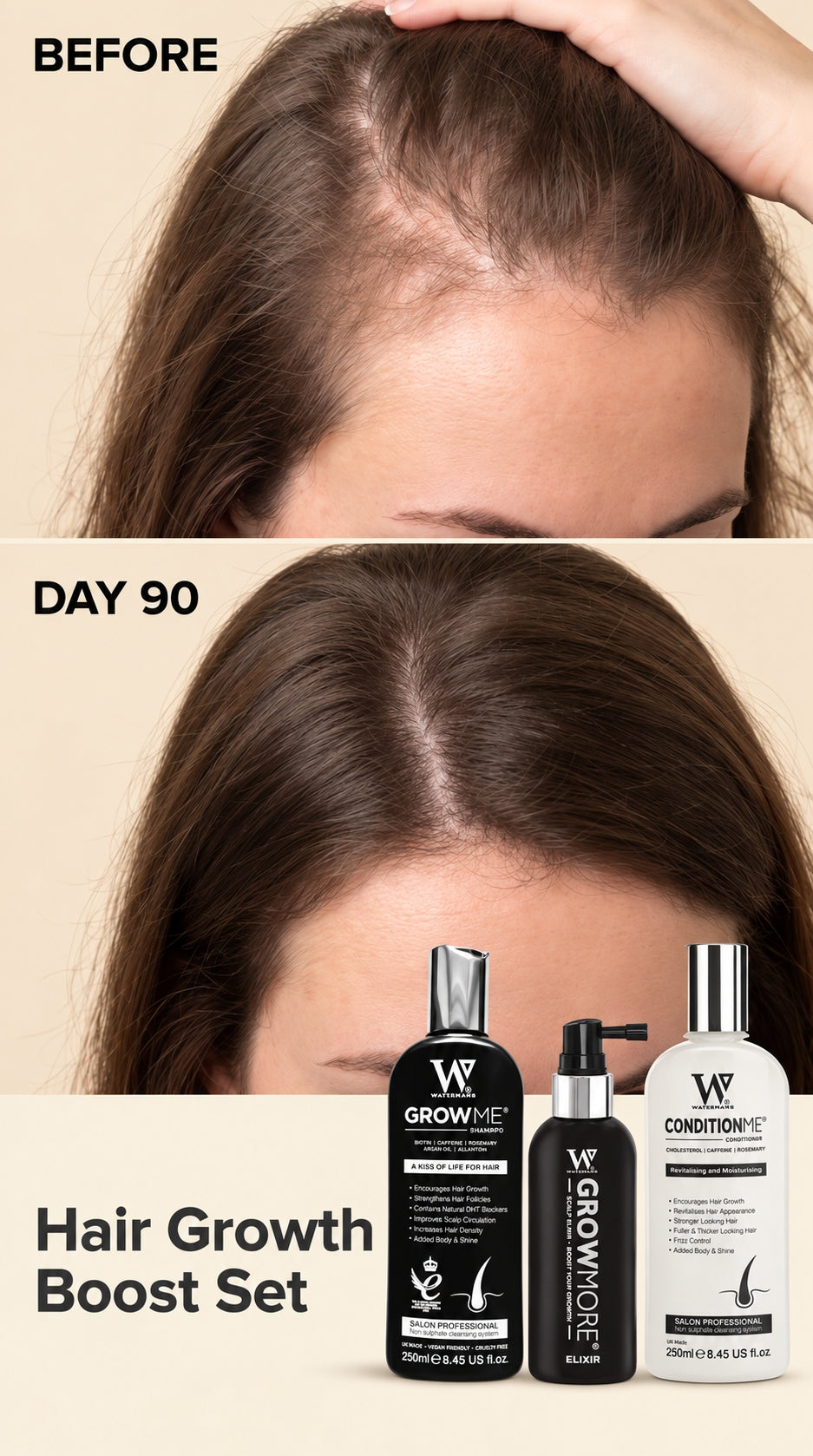
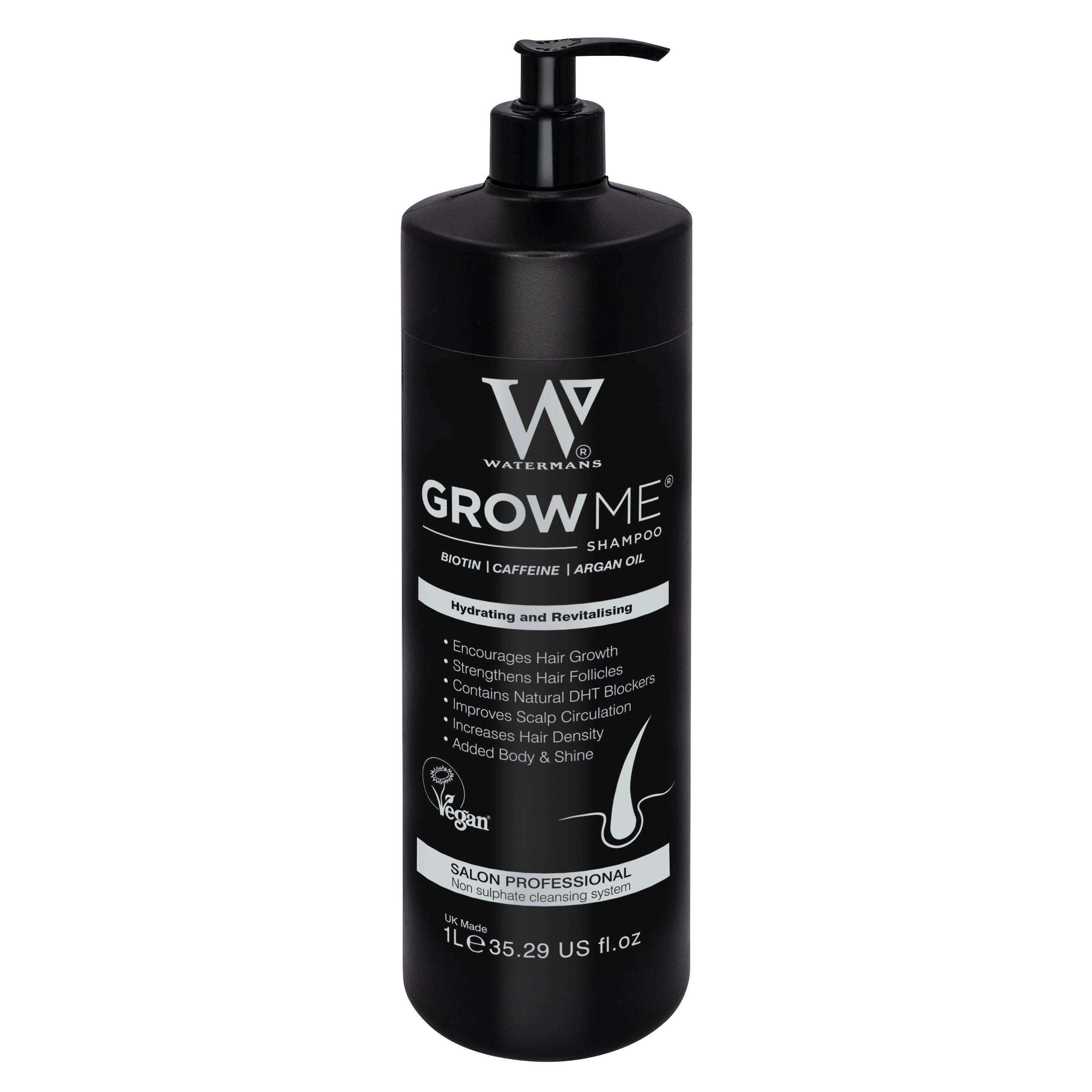
Our hair growth shampoo
Grow Me® Hair Growth Shampoo, £14.95. A sulphate free daily shampoo that supports a healthy scalp environment and helps reduce breakage, so lengths hold on and look fuller.
Key takeaways
- Scalp and body follicles carry different sensitivities to the same hormone, which is why one thins while the other thickens.
- Feminising therapy is far better at holding the line than at recovering what is already gone. Starting earlier preserves more.
- Masculinising therapy builds facial and body hair over one to five years, and can begin scalp recession where there is a family pattern.
- Facial hair rarely disappears on feminising hormones alone. Electrolysis is the only removal method that works on every hair colour.
- Hair loss, shedding and breakage are three different problems. Telling them apart matters more than any product choice.
- Everything medical belongs with the clinician who looks after your hormone care. Cosmetic hair care sits alongside that, never instead of it.
Before you read on. Hormone therapy is prescription medicine with real risks and real monitoring requirements. Never start, stop, adjust or supplement a regimen based on anything you read online, this page included. If you are on a waiting list and struggling, speak to your GP, and contact a support organisation such as Gendered Intelligence or Mermaids rather than sourcing medication yourself.
How do hormones actually reach a hair follicle?
Every hair follicle is a small organ with its own receptors. The ones that matter here are androgen receptors, and how a follicle behaves depends on how many it carries and what it does with the hormone once it binds.
Testosterone circulating in the blood reaches the follicle, where an enzyme called 5-alpha-reductase converts some of it into dihydrotestosterone, or DHT. DHT binds the androgen receptor far more strongly than testosterone does. What happens next depends entirely on which follicle you are looking at.
- Scalp follicles at the temples and crown, in genetically susceptible people. DHT shortens the growing phase a little more with each cycle. The follicle shrinks, the hair it makes gets finer and shorter, and eventually it produces only invisible vellus hair. This is androgenetic alopecia.
- Beard, chest and body follicles. The same DHT does the opposite. It converts fine vellus hairs into thick, dark, long growing terminal hairs.
- Follicles at the back and sides of the scalp. Largely insensitive to DHT, which is why that band of hair survives pattern baldness and why it is the donor area for transplants.
That single asymmetry explains almost everything people find confusing about transgender hair follicles. It is not that hormones are working inconsistently. It is that identical signals arrive at follicles with different instructions already written into them. Our guide to what triggers androgenic alopecia goes deeper on the receptor biology.
What does feminising hormone therapy do to transgender hair follicles?
A feminising regimen combines oestrogen with something that lowers androgen activity. The specific combination is a clinical decision made with the service looking after you, and the medicines involved are outside what a hair care company should be commenting on. The follicular effect, though, is essentially puberty running backwards.
- Scalp. Androgenetic loss usually stops progressing once androgen activity falls. This is the single most valuable effect for most people, and it is easy to undervalue because stopping something getting worse is invisible.
- Density recovery. Follicles that shrank but are still producing something can partly recover, so density at the temples and crown may improve modestly. Areas that have been smooth and bare for years generally do not come back, because the follicle structure is largely gone.
- Body hair. Gets finer, lighter, slower and less dense over one to three years. It rarely disappears entirely.
- Facial hair. The most stubborn of all. Beard follicles that became terminal during puberty usually stay terminal. Growth slows and softens, but most people who want facial hair gone need electrolysis or laser.
The honest headline is that hormones are excellent at holding the line and only modestly good at recovering ground. The earlier therapy begins, the more there is to preserve. If unwanted facial and body hair is the part you are most concerned about, our guide to transgender hirsutism covers the removal side in detail.

What does masculinising hormone therapy do to transgender hair follicles?
Testosterone raises androgen activity, and follicles across the body respond according to their own sensitivity.
- Body and facial hair. Vellus hairs convert to terminal hairs, typically starting on the upper lip, chin and abdomen. Density and coarseness build over three to five years. Final coverage is largely down to genetics, so looking at close male relatives predicts more than any timeline chart.
- Scalp. If you carry the genetic susceptibility, recession at the temples and thinning at the crown can begin. This is genuine androgenetic alopecia and it behaves as it does in cisgender men: gradual, patterned and progressive if nothing is done.
- Texture. Existing scalp hair often becomes coarser and oilier, and the scalp may produce more sebum, which people notice as new greasiness or flaking.
For many trans men, some scalp recession is an acceptable or even welcome part of masculinisation. For others it is distressing. Either reaction is reasonable, and it is worth raising early rather than after significant loss, because everything available works better as prevention than as rescue.
Get a discount on the thinning hair range
Join the Watermans mailing list and we will email a discount code straight to your inbox, so you can try the thinning hair range for less. Made in the UK, over 6.5 million bottles sold since 2012.
How do hair loss, shedding and breakage differ here?
These three get used interchangeably and they should not be. Each has a different cause, a different pattern and a different sensible response, and mixing them up is why so much advice online contradicts itself.
| Which one | What is happening | How to recognise it |
|---|---|---|
| Hair loss | Follicles shrinking cycle by cycle, so each new hair is finer and shorter | Patterned at temples, hairline and crown. Slow. Hairs of visibly different thicknesses side by side. |
| Shedding | An unusually large group of follicles entering the resting phase together, then releasing two to three months later | Diffuse across the whole scalp. Full length hairs with a pale bulb at the root. Settles in six to nine months. |
| Breakage | The hair fibre snapping along its length. The follicle is perfectly healthy. | Short broken pieces, no bulb on the end, worst at the mid lengths. Length stops increasing. |
A hormonal shift commonly triggers the middle one. Our guide to what causes telogen effluvium covers the timeline, and pattern hair loss in men and women explains what the first one looks like. If shedding is heavy, sudden, or still going strong beyond nine months, mention it to your GP, because thyroid function and iron levels are worth checking and have nothing to do with your hormones.
What are the realistic timelines?
These are the broad ranges described in gender affirming care guidance. Individual variation is wide, and genetics does more of the work than anything else.
| Change | Usually starts | Usually maximal | Lasting? |
|---|---|---|---|
| Body hair thinning on feminising therapy | 6 to 12 months | Around 3 years | Returns if therapy stops |
| Scalp loss halting on feminising therapy | 1 to 3 months | 1 to 2 years | Depends on continued therapy |
| Facial hair softening on feminising therapy | 6 to 12 months | 3 years or more | Usually incomplete without electrolysis |
| Facial hair growth on testosterone | 3 to 6 months | 3 to 5 years | Yes, permanent |
| Body hair growth on testosterone | 3 to 6 months | 4 to 5 years | Yes, permanent |
| Scalp recession on testosterone | Variable, often after 12 months | Ongoing | Yes, progressive if nothing is done |
How to track it without driving yourself mad: take three photographs on the same day each month, in the same room, in daylight, from the front, from above and from one side. Do not compare week to week, because normal daily variation in how hair sits will swamp the actual signal. Compare month six with month one. It is also the single most useful thing you can bring to a review with your hormone service.

What should you ask your hormone service?
These are the questions worth writing down beforehand. The answers are individual and belong to a clinician who knows your history, your bloods and your regimen.
- Given where my hairline is now, what is realistic to preserve and what is realistically already lost?
- Is there anything scalp specific you would add to my current plan, and how would it fit with what I already take?
- Should we check ferritin, thyroid function and vitamin D, given how much shedding I am seeing?
- At what point would a referral to a dermatologist be useful?
- If I am considering electrolysis or laser, when in the process is the right time to start?
- If I am considering a hair transplant or hairline surgery, how long should hormones be stable first?
Two general points come up constantly. First, anything medical for the scalp depends heavily on what you are already taking, which is exactly why it is a clinical conversation rather than a personal preference. Second, electrolysis is the only method that permanently destroys the follicle regardless of hair colour. Laser needs pigment, so it does little for grey, white, red or very fine blonde hair.
What can everyday hair care actually do?
It is worth being clear about the boundary. Shampoos, conditioners and masks work on the hair shaft and on scalp comfort. They do not change hormone levels and they do not undo follicle shrinkage. What good routine care does is stop you losing length and condition on top of everything else, which matters a great deal when hair is finer and every strand counts. The same follicle changes also alter how each fibre feels, and how hormone therapy changes hair texture walks through that side of it.
- Wash to suit your scalp, not a rule. Testosterone often increases oil production, so a scalp that suited two washes a week may now want four. Feminising therapy often does the opposite.
- Be gentle when wet. Wide tooth comb, conditioner in, work from the ends upwards. Wet hair is at its weakest.
- Avoid tight styles on fine hair. Persistent tension causes its own pattern of loss at the hairline, and it is entirely avoidable.
- Use heat protection and lower temperatures. Fine hair damages fast, and breakage is the one cause on this page you have direct control over.
- Look after the scalp skin itself. Our guide to keeping your scalp healthy covers the basics.
- Eat and sleep properly. Not as a hair remedy, but because deficiency and sustained stress reliably make shedding worse.

Sulfate free daily cleansing with biotin, caffeine, rosemary, niacinamide and hydrolysed lupine protein. It cleanses without stripping and supports a healthy scalp environment. To be completely clear, it is a cosmetic product: it does not affect hormone levels and it will not bring back a receded hairline.

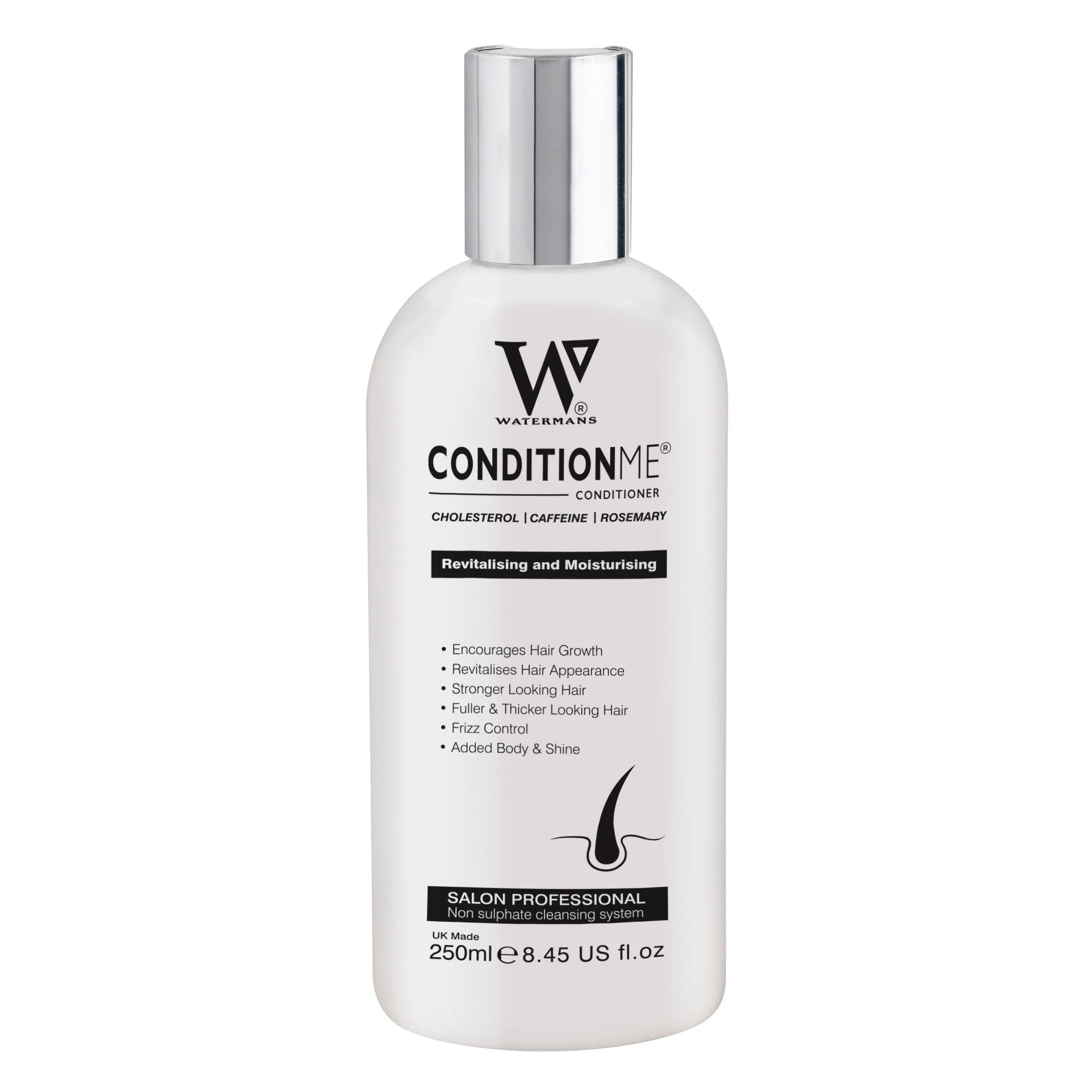
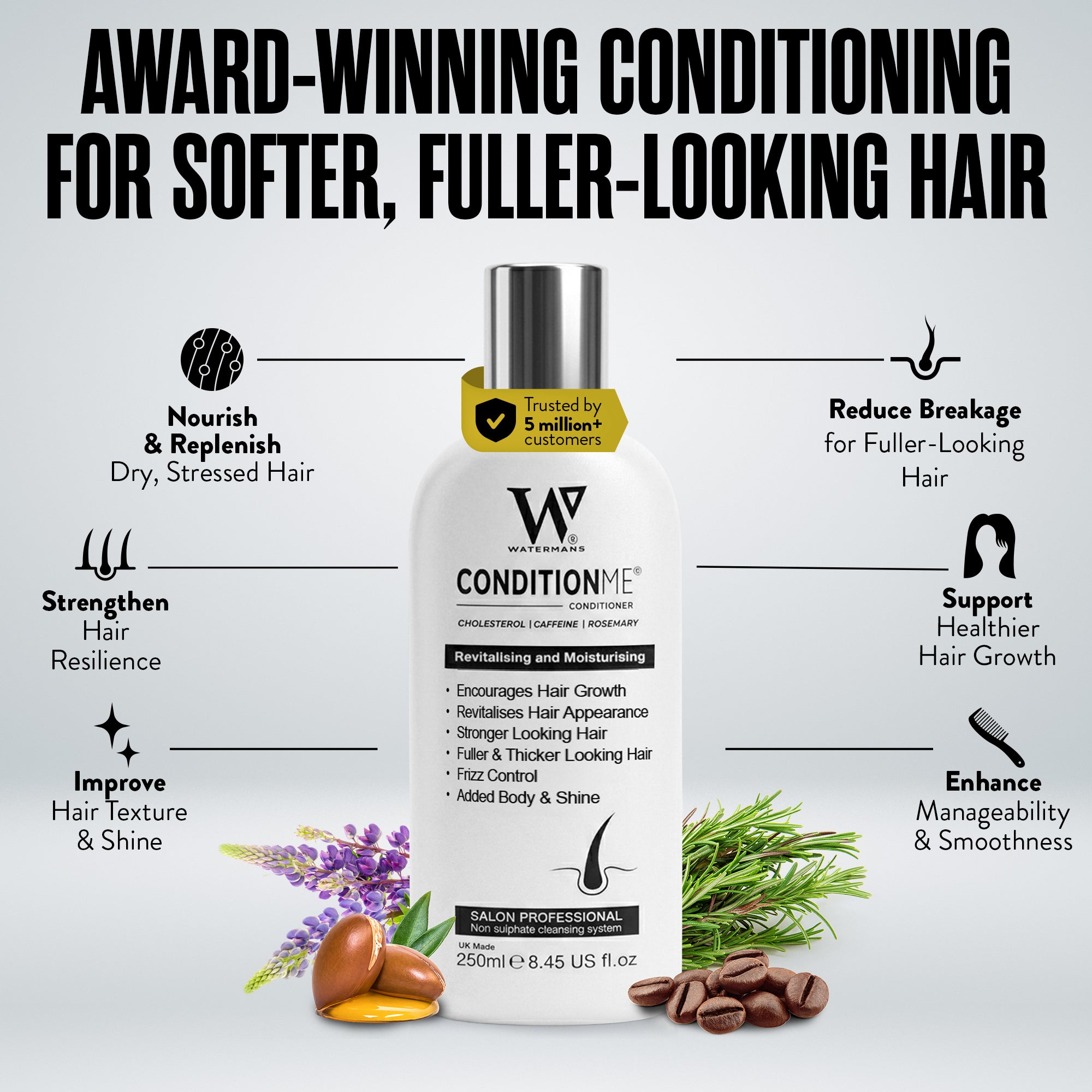
Condition Me® Conditioner, £13.95
Breakage defence with cholesterol, shea butter and hydrolysed lupine protein. Retained length is what makes thinner hair read as fuller, so the conditioner half of the routine is the half worth not skipping.

When should you see a doctor rather than wait it out?
- Shedding that is sudden, heavy, or still going strong after nine months
- Smooth, round bald patches appearing anywhere, which suggests something different entirely
- A sore, scaly, burning or painful scalp, particularly with any loss of the follicle openings
- Rapid recession that is distressing you, because acting early preserves far more than acting late
- Hair changes alongside fatigue, weight change, temperature intolerance or heavy periods, which points towards thyroid or iron
- Any point at which hair is significantly affecting your mood, which is a legitimate reason to seek support and not something to minimise
Frequently asked questions about transgender hair follicles
Will oestrogen bring my hairline back?
It will usually stop further loss, and density may improve modestly where follicles shrank but are still active. Areas that have been completely bare for several years rarely respond, because the follicle structure has largely gone. Starting earlier preserves more.
Will testosterone definitely make me go bald?
No. It depends on whether you carry the genetic sensitivity to DHT. Some trans men see no scalp change at all, others see recession within a couple of years. Family history on both sides is the best available predictor.
Should scalp medication be added alongside hormone therapy?
That is a question for the clinician who looks after your hormone care, and the answer genuinely depends on your regimen and your bloods. Never source anything yourself, and never adjust what you already take on the strength of something you read online.
How long until body hair reduces on feminising therapy?
Most people notice hair getting finer and slower from around six to twelve months, with the full effect at roughly three years. It usually thins rather than disappears, and facial hair is the most resistant of all.
Does laser hair removal work on all hair?
No. Laser targets pigment, so it is much less effective on grey, white, red and very fine blonde hair. Electrolysis works on any hair colour and is the only method that permanently destroys the follicle, though it takes considerably more sessions.
Is the shedding after starting hormones permanent?
Usually not. A diffuse shed in the first few months of a hormonal change is typically telogen effluvium, which resynchronises and settles within six to nine months. If it is patterned at the temples and crown, or still heavy after nine months, raise it with your GP.
Should I wait for hormones to settle before considering a hair transplant?
Generally yes, and any reputable surgeon will say the same. Hormones change what transgender hair follicles do, so planning a hairline before that has stabilised means designing against a moving target.
Will a hair growth shampoo help during transition?
A cosmetic shampoo can improve how hair looks and reduce breakage, which is genuinely worth having. It cannot change hormone levels or undo follicle shrinkage. Use it as everyday care alongside your medical plan, never instead of it.
Does stress make transition related hair loss worse?
Significant stress can trigger or worsen diffuse shedding, and transitioning is frequently a stressful period for reasons that have nothing to do with hormones. It does not cause pattern loss, but it stacks on top and can make a stable situation look like it is deteriorating.
What is the bottom line on transgender hair follicles?
Hormone therapy changes what transgender hair follicles do, slowly and largely permanently, and the earlier scalp thinning is addressed the more there is to keep. Everyday hair care sits alongside that, not in place of it. Watermans makes hair care in the UK and has sold over 6.5 million bottles since 2012, and we would rather say plainly that shampoo is not the answer to a hormonal question. Take the questions above to your hormone service, and if you are struggling while you wait, speak to your GP or a support organisation. If your question is about products or a routine rather than a medical one, you can talk to Gail Waterman, our co-founder, as an AI avatar on the Watermans homepage.
If you would rather start small, swap the wash first and see how the scalp feels on our sulphate free hair growth shampoo. Made in the UK, with over 6.5 million bottles sold since 2012.
Watermans products are 100% cosmetic and do not treat medical hair loss. Individual results may vary.
Sources and references
- NHS, Gender dysphoria: treatment
- NHS, Hair loss
- NHS, Hirsutism (excess hair)
- NHS, Underactive thyroid