Trichologist Torquay: Sun, Sea, Chlorine and Hair Damage
Living by the sea is good for almost everything except hair. Salt, wind, UV and a summer of pool swimming all wear at the same outer layer, and because hair cannot repair itself biologically, the damage accumulates. If you are looking for a trichologist Torquay has nearby, the useful question is usually not what is wrong with your hair but which of four different insults is doing the most harm, because the fix for each is different.
Our hair and body oil
Camellia & Black Castor Hair & Body Oil, £24.95. Adds hydration and shine to dry lengths and smooths the hair before a blow dry, without weighing fine hair down.
A trichologist Torquay residents can consult will normally separate coastal hair problems into damage and loss. Salt, UV, chlorine and hard water damage the fibre, which shows as roughness, dullness, split ends and snapped hairs rather than bare scalp. Genuine hair loss leaves visible scalp and has an internal cause. The coastal cluster is almost always the first group, and it responds well to rinsing, conditioning and reducing heat.
Key takeaways
- Salt, UV, chlorine and hard water all attack the cuticle, the overlapping outer scales that keep hair smooth and strong.
- Hair has no blood supply and cannot heal itself, so every summer of damage is cumulative until it is cut off.
- UK pool operators typically hold free chlorine at around 1 to 2 mg per litre under PWTAG guidance, which is enough to dry hair out over a season of regular swimming.
- Green tints in light hair come from copper in the water, not from chlorine itself.
- Breakage and hair loss are different problems. If you can see scalp, that is not a conditioning issue and it is worth a GP visit.
What does the sea, sun and chlorine actually do to hair?
Sea water, sun and chlorine all damage the cuticle, which is the layer of overlapping scales on the outside of every hair. When those scales lie flat, hair reflects light, feels smooth and holds moisture. When they lift or chip away, hair looks dull, feels rough, tangles more, absorbs water faster and snaps more easily. That single mechanism explains most of what coastal living does to hair, and it is why the same three fixes keep coming up regardless of which insult caused it.
The important detail is that hair is not living tissue. A hair shaft above the scalp has no blood supply and no repair machinery, so nothing undoes structural damage once it has happened. Products can smooth, coat, fill and protect, which genuinely changes how hair behaves and how it looks, but the only thing that removes damaged fibre is scissors. Anyone selling repair as a permanent structural rebuild is stretching the word.

What is the difference between hair loss, hair shedding and hair breakage?
Hair loss, hair shedding and hair breakage are three different failures and coastal hair problems are nearly always the third. Hair loss means the follicle stops producing, so scalp becomes visible. Hair shedding means more hairs than usual leave the scalp at the root, usually after illness, stress, childbirth or a crash diet, and density recovers once the trigger passes. Hair breakage means the fibre snaps somewhere along its length while the follicle underneath is perfectly healthy.
| Clue | Mechanism | What helps |
|---|---|---|
| Short broken ends, flyaways, no visible scalp | Breakage | Conditioning, less heat, gentler detangling, a trim |
| More hairs in the plughole, hairs with a white bulb at the root | Shedding | Time, and a GP check on iron and thyroid if it persists |
| Widening parting or bare patches | Hair loss | A GP appointment, not a product |
| Rough, dull, tangly lengths after a summer of swimming | Cuticle damage | Rinse, condition, weekly mask, protect from UV |
A hair that snapped has a blunt, dry end. This is the first thing any trichologist Torquay based would look at, and you can do it at home. A hair that shed has a small pale bulb at one end. Pulling a few strands from your brush and looking at the ends under a good light is a crude test, but it is the same first check a hair specialist makes, and it tells you which half of this article applies to you.
How does salt water damage the hair fibre?
Salt water damages hair by drawing moisture out of the fibre through simple osmosis. Sea water is far more concentrated than the water inside a hair, so water moves outward, the fibre dries and stiffens, and the raised cuticle scales catch on each other. Add wind and the mechanical tangling that follows, and you get the classic post-beach combination of gritty texture, knots at the nape and a handful of snapped ends when you detangle.
Salt also leaves a residue that keeps working after you have left the beach. That is why rinsing with fresh water before you swim and again straight afterwards makes such a difference: hair that is already saturated with clean water absorbs less sea water, and a rinse afterwards removes the salt before it dries in. Our guide to whether sea water is good or bad for hair covers the texture trade-off in more detail.
Does chlorine really turn blonde hair green?
Chlorine does not turn blonde hair green. Copper does. Copper reaches pool water from pipework and from some algaecides, oxidises in chlorinated water and binds to the protein in hair, and the result is a green cast that shows up most on light, porous or bleached hair. Chlorine's own contribution is different but just as real: it strips sebum, lifts the cuticle and leaves hair dry, squeaky and prone to snapping.
The 30 second rule at the pool
Soak your hair in clean water at the poolside shower before you get in. A hair fibre that is already full of fresh water has much less capacity to take on chlorinated water, and that single habit does more for swimmers than any product bought afterwards.
UK pools are managed to standards set out by the Pool Water Treatment Advisory Group, with free chlorine typically held at around 1 to 2 mg per litre. That is a modest concentration, and it is not dangerous to hair in one session. The problem is exposure across a season: three swims a week for a summer is around 70 immersions, and cuticle damage is cumulative. Our detailed guide to protecting hair from chlorine and tap water sets out the full routine.

How do you tell hard water damage from sea and pool damage?
Hard water damage feels different from salt and chlorine damage because it adds weight rather than stripping. Hard water carries dissolved calcium and magnesium that deposit on the hair surface, so hair feels coated, lathers badly, rinses poorly and looks flat rather than rough. Water hardness in England and Wales is regulated by the Drinking Water Inspectorate and every supplier publishes a hardness figure by postcode, so you can check yours in a minute rather than guessing.
A useful home test is what happens to your shampoo. If it refuses to foam and leaves a film, hardness is likely part of the picture and a clarifying wash once a week helps. If hair squeaks, feels stripped and snaps at the ends, that is closer to chlorine and salt. Most people who ask a trichologist Torquay way about dull, coated hair turn out to have some combination of all of it, which is why the routine below is built around one weekly reset rather than a different product for each problem.
Get a discount on the sun and sea damaged hair range
Join the Watermans mailing list and we will email a discount code straight to your inbox, so you can try the sun and sea damaged hair range for less. Made in the UK, over 6.5 million bottles sold since 2012.
How much sun exposure does hair actually get by the sea?
Sun exposure matters more for hair on the coast because reflection off water and pale sand raises the effective dose well above what you would get inland. NHS sun safety guidance puts the strongest UK ultraviolet between 11am and 3pm from March to October, which is precisely when most beach days happen. UV degrades the proteins and pigments in the hair shaft, which is why sun-exposed lengths lighten, lose elasticity and go brittle while the roots underneath look untouched.
There is no SPF rating system for hair products in the way there is for skin, so claims about sun protection for hair should be read carefully. What genuinely helps is physical: a hat, a scarf, a bun that tucks the vulnerable ends away, or a leave-in that coats the fibre. The parting is worth a mention too, because that strip of exposed scalp burns like any other skin and NHS guidance on sunscreen applies to it.
What is the right hair routine before and after swimming?
The swimming routine a trichologist Torquay locals use would recommend has four steps and takes about a minute. Wet hair thoroughly with clean water first, so the fibre has less capacity to absorb salt or chlorinated water. Add a leave-in conditioner or a light oil as a physical barrier. Tie hair back loosely, or wear a cap, so it moves less in the water. Then rinse properly as soon as you are out, before the residue has a chance to dry into the cuticle.
- Soak hair in fresh water before you get in, at the poolside shower or a tap.
- Smooth through a leave-in or a few drops of oil from mid-length to ends.
- Tie hair loosely or wear a cap so friction and tangling are reduced.
- Rinse straight after swimming rather than waiting until you get home.
- Shampoo and condition properly that evening, and use a mask once a week through the season.

Camellia & Black Castor Hair & Body Oil £24.95
A few drops of camellia and black castor oil through the ends before a swim gives the fibre a physical barrier, and the same oil smooths flyaways afterwards. Lightweight enough not to leave hair greasy in summer.
Which repairs actually work on weather-damaged hair?
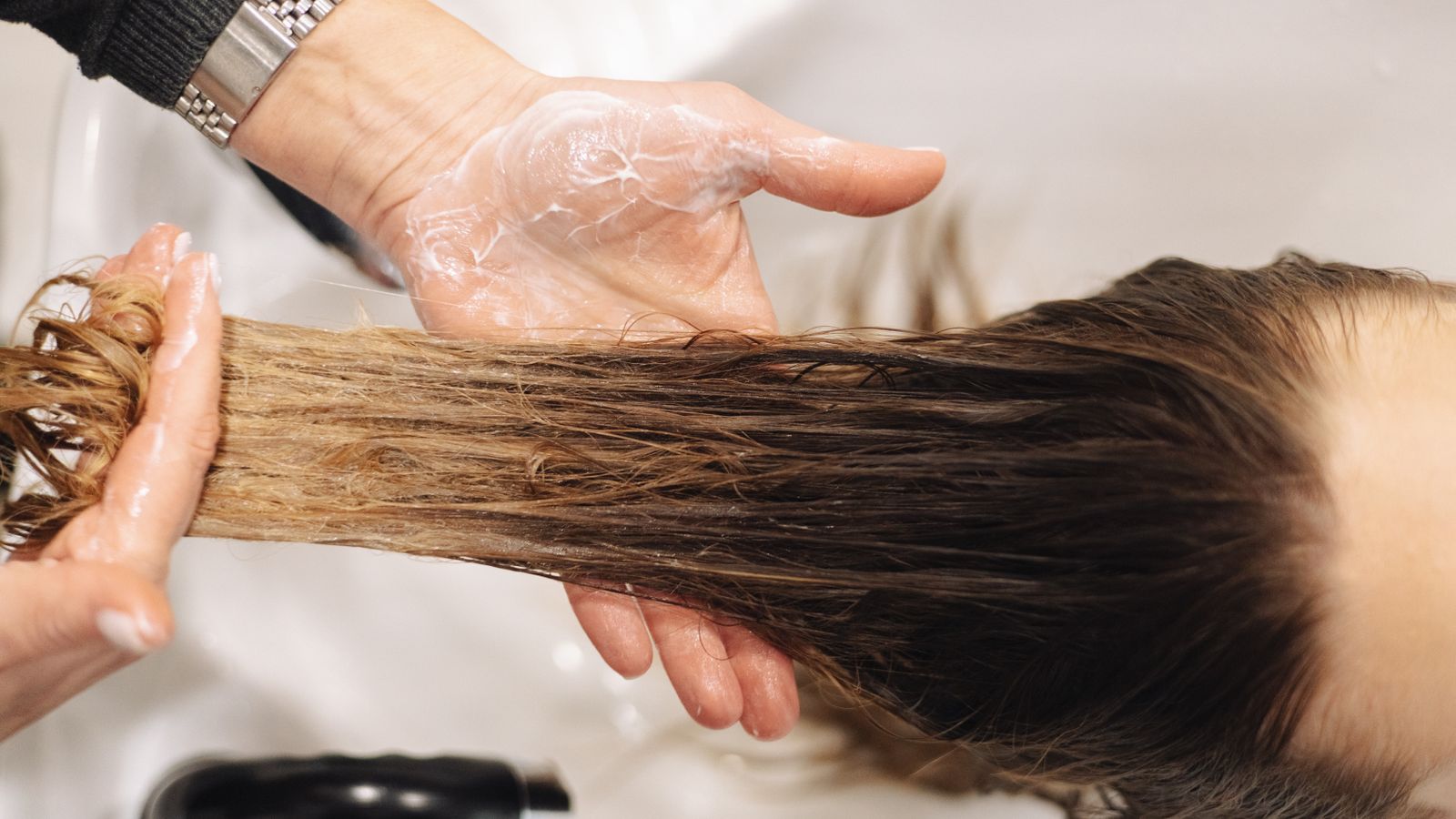
Repair for weather-damaged hair means improving how the fibre behaves rather than rebuilding it, and the three things that measurably reduce breakage are conditioning, reducing heat and detangling gently. Conditioner lays the cuticle down and adds slip, which is why combing wet conditioned hair pulls out far fewer strands than combing it dry. A weekly deep mask does the same job for longer. Reducing heat matters because damaged hair is already low on moisture and a straightener at full temperature finishes the job.

Masque Me® Repairing Hair Mask £24.95
The same UV that roughens hair on a coastal day burns the part of the face people protect least, which is why we set out how to choose an SPF for lips in our guide to lip sunscreen and why lips burn first.
A weekly deep mask is the single most useful addition to a coastal routine, because it resets the whole length after a week of salt, sun and pool water. Leave it on for the full time on the pack rather than rinsing straight through.

Condition Me® Hair Growth Conditioner £13.95
Everyday conditioning is what keeps detangling from costing you hairs. Work it through the mid-lengths and ends, comb it through with a wide-tooth comb in the shower, then rinse.
The honest limit, and any decent trichologist Torquay has will say the same, is that badly split ends cannot be rejoined. A trim every eight to twelve weeks through the summer stops splits travelling up the shaft, and it does more for how hair looks than any bottle. Our guide to matching the repair to the cause of the damage goes through each type in turn.

When is coastal damage actually hair loss rather than breakage?
Coastal damage stops being a hair-care question the moment you can see scalp. Breakage makes hair look thinner because the lengths are shorter and wispier, but the density at the root is unchanged. If your parting is widening, if the hairline is moving back, if there is a defined bare patch, or if the scalp is sore, scaly or itchy, none of that comes from sea water and it will not respond to a mask. Our overview of what actually causes hair damage separates the two clearly.
NHS advice is to see a GP if hair loss is sudden, patchy, comes with an itchy or scaly scalp, or is distressing. A trichologist is a useful second stop for routine and scalp-care guidance, but they are not medically qualified, so a medical cause needs the GP first. In the UK, look for someone on the Institute of Trichologists register if you do want a private consultation. There is more detail on what hard hats and shift work actually do to hair. If your question is about products or a routine rather than a medical one, you can talk to Gail Waterman, our co-founder, as an AI avatar on the Watermans homepage.
What are the frequently asked questions for a trichologist Torquay would answer?
Does sea water make hair fall out?
No. Sea water dries and roughens the hair fibre, which causes breakage and tangling, but it does not affect the follicle. If hairs are coming out at the root with a small white bulb attached, that is shedding and it has an internal cause worth checking with a GP.
How often should I wash my hair if I swim every day?
Rinse thoroughly after every swim, but you do not need a full shampoo every time. Most daily swimmers do well with a proper shampoo and conditioner every other day and a clarifying wash once a week to lift mineral and chlorine residue.
Will a swimming cap actually protect my hair?
A cap reduces contact and friction considerably, but no cap is watertight. Wetting hair with clean water and adding a leave-in before you put the cap on is what makes the combination work.
Why does my hair feel great in summer but break in autumn?
Salt adds texture and volume, so hair can look better at the beach while it is being damaged. The consequences show up later as split ends and snapped lengths, which is why a trichologist Torquay based will ask about the whole season rather than the last week.
Can hard water cause hair loss?
Hard water deposits minerals on the hair surface and makes it feel coated and dull, and it can worsen breakage. Evidence that hardness causes loss at the follicle is weak, so visible scalp is a separate problem and needs a GP rather than a water filter.
Does chlorine damage colour-treated hair more?
Yes. Colouring and bleaching raise the cuticle and make hair more porous, so chlorinated and salt water penetrate faster. Porous hair also picks up copper more readily, which is why green tints show most in lightened hair.
Is a leave-in or an oil better before swimming?
Either works, and the mechanism is the same: a physical barrier that slows water absorption. Oils suit coarser and drier hair, light leave-ins suit fine hair that gets weighed down easily.
How long does it take to see improvement in damaged hair?
Behaviour changes within a week or two once conditioning and heat habits change, but the damaged part of the fibre is still there. A visible improvement in length and ends usually takes two or three trims across three to six months.
Sources & references
- NHS: Sunscreen and sun safety
- NHS: Hair loss
- Pool Water Treatment Advisory Group: Code of practice
- Drinking Water Inspectorate
- World Health Organization: Ultraviolet radiation questions and answers
- The Institute of Trichologists
What is the bottom line on trichologist Torquay?
If you are looking for a trichologist Torquay has nearby, start by working out whether you are dealing with damage or loss, because the coast produces a great deal of the first and none of the second. Salt draws moisture out, chlorine strips oils and lifts the cuticle, copper in pool water tints light hair green, hard water coats it, and UV degrades the fibre from the outside. All five show up as roughness, dullness and snapped ends rather than visible scalp.
The routine that fixes it is unglamorous and it works: rinse before and after you swim, condition every wash, mask once a week, keep the straighteners down, and trim every couple of months through the season. If you can see scalp, stop reading hair-care advice and book with a GP, because that is a different problem entirely.
If you swim through the summer, a weekly deep repairing hair mask is the one addition worth making, because it resets the whole length after salt and pool water.
Please note: Watermans products are 100% cosmetic and do not treat medical hair loss. Individual results may vary.