Androgenic Alopecia Triggers: What Starts and Speeds It
The androgenic alopecia triggers that matter fall into two groups: the one you inherited and cannot change, and the handful of life events and habits that decide how early it shows and how fast it moves. Genetics is the cause. Everything else on this page is an accelerant or a reveal. Knowing which is which tells you what is worth acting on and what is worth letting go of, which is the practical difference this page exists to make.
Our hair growth shampoo
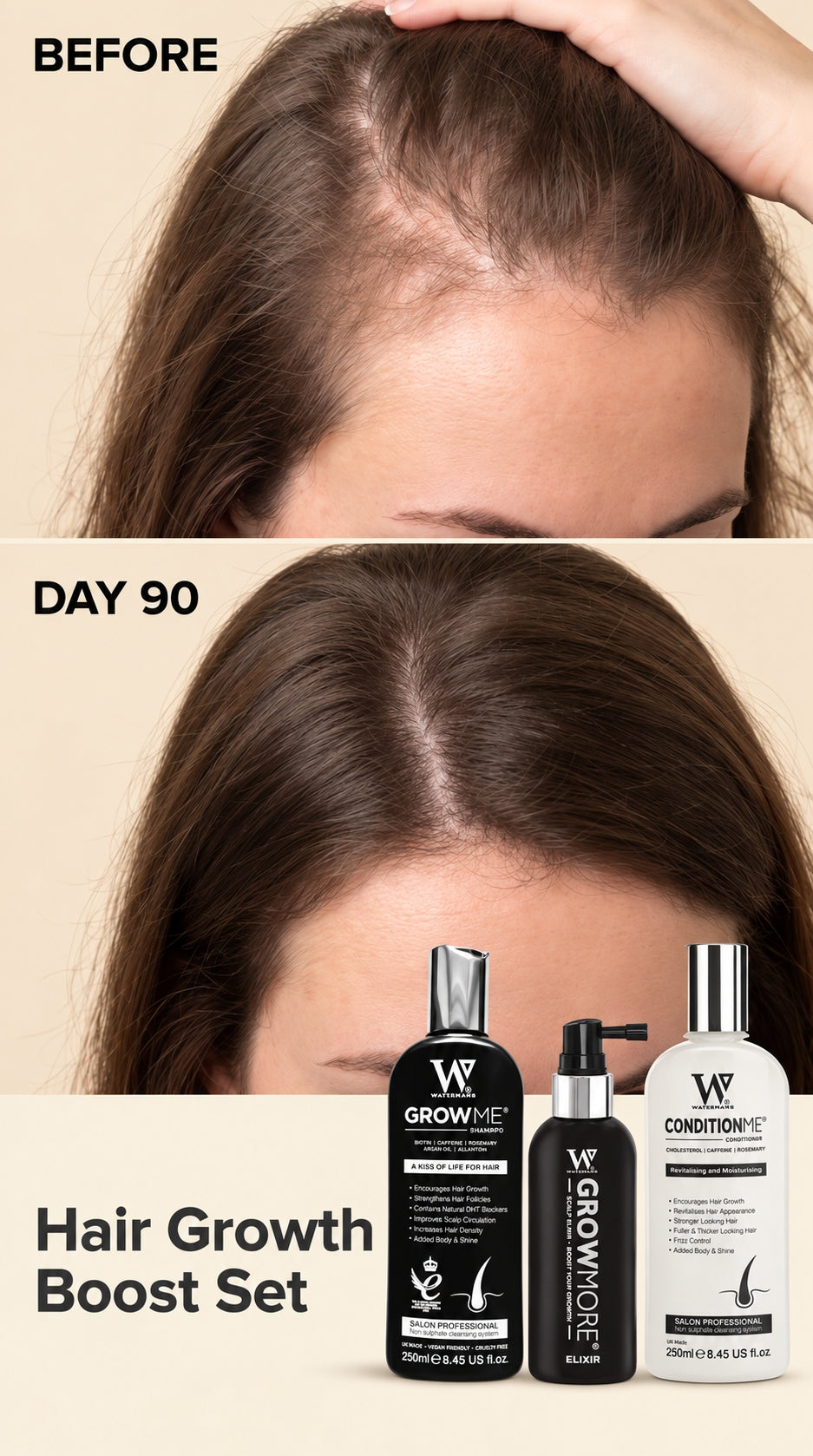
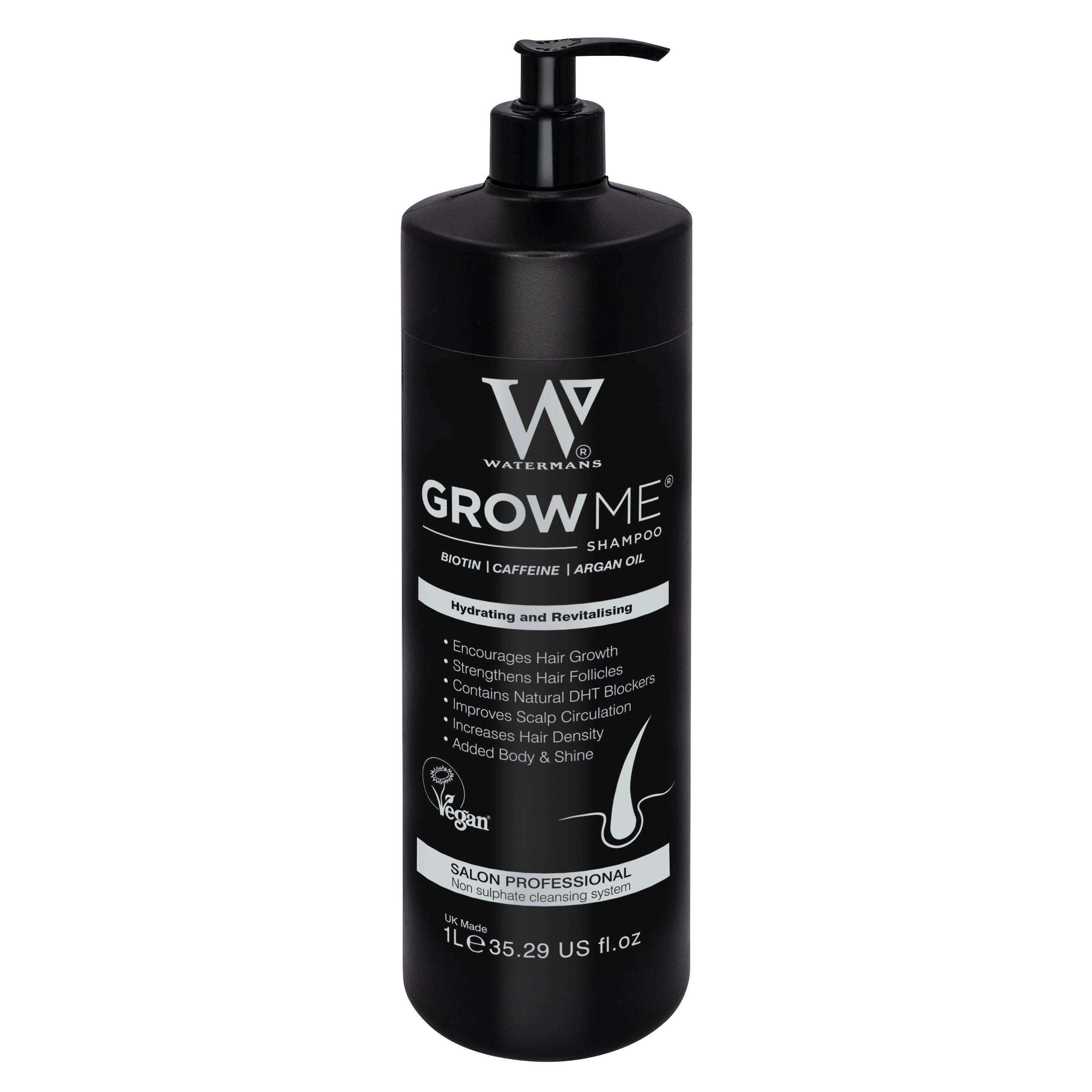
Grow Me® Hair Growth Shampoo, £14.95. A sulphate free daily shampoo that supports a healthy scalp environment and helps reduce breakage, so lengths hold on and look fuller.
Key takeaways
- Inherited follicle sensitivity is the cause. Nothing on this page starts the process in someone who is not genetically susceptible.
- Life events do not create pattern hair loss, they unmask it, which is why so many people date it to one stressful year.
- Family history is worth reading properly: both parents' lines count, and age of onset travels more reliably than severity.
- The changeable accelerants are real but modest. They alter the pace, not the destination.
- Hats, frequent washing and hair products are not androgenic alopecia triggers, and blaming them wastes time.
Why are a trigger and a cause not the same thing?
Most confusion about this condition comes from collapsing two different ideas into one word. The distinction is worth getting right because it changes what you do next.
The cause of androgenetic alopecia is inherited sensitivity in the follicles on the top and front of the scalp to androgens, principally dihydrotestosterone. Where that sensitivity exists, ordinary hormone levels are enough. Where it does not, high hormone levels change nothing about your hairline. This is why two men with identical testosterone can have entirely different heads of hair, and why the condition is so stubbornly unfair.
A trigger, in the sense people usually mean it, is an event that makes an existing, already-underway process visible sooner. A hard year does not install follicle sensitivity. It can push a batch of hairs into shedding, thin the camouflage, and let a pattern that was quietly developing for five years become obvious in five months. The pattern was always coming. The event set the date.
That distinction is not pedantry. If you believe the stress caused it, you will expect full recovery when life calms down and be badly disappointed. If you understand the stress revealed it, you will read the shedding as temporary and the pattern as a long game, which is the accurate reading and the more useful one.
How do you read your family history properly?
Family history is the strongest predictor available to you without a laboratory, and most people read it wrongly.
The old rule that you inherit your hair from your mother's father is a distortion of something real. One influential gene does sit on the X chromosome, which men receive from their mother, so the maternal line genuinely carries weight. But many other contributing genes sit elsewhere in the genome and come from either parent. Looking only at one grandfather and concluding you are safe is the most common mistake made about this condition.
Read it this way instead:
- Survey both sides. Parents, grandparents, aunts and uncles, and siblings on both lines. Breadth beats depth.
- Note age of onset, not just severity. When relatives started thinning is a better guide to your own timeline than how bald they eventually became.
- Include the women. Female pattern hair loss shows as a widening parting rather than a receding hairline, so it is routinely missed in a family survey. A grandmother whose parting widened in her sixties counts.
- Accept the limits. Inheritance here is polygenic, which means a clean family history reduces your odds without ruling anything out, and a heavy one raises them without settling anything.

Which life events unmask androgenic alopecia?
These are the moments people most often name as the start. In each case the honest description is that the process became visible, not that it began.
| Event | What actually happens | Does it change the long run? |
|---|---|---|
| Puberty and the years after | Androgen levels rise and sensitive follicles begin responding for the first time | Yes, this is genuinely the start |
| A prolonged stressful period or illness | A shedding wave removes hairs that were hiding the thinning underneath | No, the shedding layer recovers |
| Perimenopause and menopause | Falling oestrogen shifts the balance so androgen influence is less opposed | Yes, this commonly accelerates it |
| Stopping combined hormonal contraception | Suppressed androgen activity returns, sometimes with a shedding wave alongside | Partly, the underlying tendency reasserts |
| Conditions raising androgen activity, such as PCOS | More androgen signal reaching susceptible follicles | Yes, and it is worth medical attention |
| Simply getting older | Cumulative exposure means more cycles of progressive miniaturisation | Yes, time is the quiet accelerant |
The menopause row deserves emphasis because it is the single most common point at which women first notice pattern thinning. The detail is covered in the menopause and thinning hair guide, and the staging of a widening parting in the Ludwig scale guide.
Which accelerants can you genuinely influence?
Here is where honesty matters most, because this is the section every article on this subject inflates. The changeable factors below are real and worth attending to. None of them is decisive, and none will hold a genetic pattern in place on its own. Expect them to affect pace and the condition of the hair you keep, not the outcome. The same androgen sensitivity explains how hair behaves during gender affirming hormone therapy, where body and facial hair respond long before the scalp does.
- Smoking. The most consistently reported modifiable association with earlier and more severe pattern loss in men. It is also the one with the largest set of other reasons to act on it.
- Chronic under-eating and rapid weight loss. Sustained energy restriction adds a shedding layer on top of the pattern, and the two together look dramatic. The shedding part is recoverable.
- Iron status. Low ferritin does not cause pattern loss but reliably worsens overall density, which means correcting it makes the pattern less visible without touching the pattern itself.
- Sleep and sustained stress load. Poor for the shedding layer rather than the pattern layer. Genuine, but not the lever people hope it is.
- Traction from tight styling. A separate mechanism entirely, but it stacks on the same scalp and thins the same visible areas. See reducing breakage and tension damage.
Which myths are not androgenic alopecia triggers?
Time spent on these is time not spent on anything useful, so it is worth stating them plainly.
- Hats and helmets. Wearing them does not suffocate follicles or cause pattern loss. Hair follicles take their oxygen from the bloodstream, not from the air.
- Washing your hair often. Washing releases hairs that had already detached. It does not pull living hairs out, and washing less simply delays the same hairs into a larger, more upsetting wash.
- Ordinary shampoos and styling products. Cosmetic products applied to the scalp surface do not influence follicle sensitivity to androgens in either direction.
- Being stressed for a week. Shedding responds to sustained stress over months, not to a difficult fortnight.
- Cutting or shaving. Cutting hair does not change what the follicle produces next. Hair does not grow back thicker because it was cut.

Get a discount on your next order
Join the Watermans mailing list and we will email a discount code straight to your inbox. Made in the UK, over 6.5 million bottles sold since 2012.
How do you check whether pattern hair loss is even the right condition?
Before spending energy on androgenic alopecia triggers, confirm that pattern hair loss is what you are dealing with. Two features distinguish it from almost everything else.
First, it respects a map. The back and sides stay dense while the top, crown and hairline thin, because follicles at the back and sides are typically not androgen sensitive. Thinning that is genuinely even across the whole head is far more likely to be a shedding problem. If you are navigating this alongside a transition, our guide to transmasculine hair cuts and scalp care covers the practical styling side.
Second, it is slow. Pattern loss is measured in years and is usually invisible month to month. Something that arrived over six weeks is something else, or something else on top.
If neither description fits, work through the three clue self-check first, and if the loss is sudden and even, the guide to sudden all over shedding is the better page. For how the condition itself works and how it is staged, see pattern hair loss explained. Once you know where you stand, the first 90 days plan is the sequence to run.
Where does a GP fit in?
Pattern hair loss is not dangerous and is not a sign of ill health, which is exactly why it is often dismissed. It is still worth a GP conversation, for three reasons. Licensed medicines exist in the UK for androgen related hair changes, and only a clinician can tell you what applies to you and what the trade-offs are. We are a cosmetics company with no medical professional on record, so we do not name medicines or advise on them. If your question is about products or a routine rather than a medical one, you can talk to Gail Waterman, our co-founder, as an AI avatar on the Watermans homepage.
Second, other conditions can sit underneath or alongside. Thyroid changes, iron deficiency and, in women, signs of raised androgen activity such as irregular periods or new coarse facial hair all warrant investigation on their own terms.
Third, timing genuinely matters here in a way it does not for most cosmetic concerns. A follicle still producing a fine hair is in a different position from one that stopped years ago, so the conversation is more useful early than late.
What can cosmetic care do, and what can it not do?
The honest boundary, stated plainly. Nothing we sell alters androgen levels or changes how your follicles respond to them. A rinse-off product cannot reach that biology, and any brand implying it can is overstating its case.
What cosmetic care does is protect and present the hair that is still there. When density is already reduced, retaining length matters more, because breakage removes visible volume from hair you have not actually lost. A comfortable scalp, less snapping, and good coverage on the days you want it are all real and worth having. They are simply a different job from the one a medicine does.
Watermans products are 100% cosmetic and do not treat medical hair loss. Individual results may vary.

Grow Me® Shampoo
A gentle everyday cleanse that supports a healthy scalp environment and reduces breakage, so thinning areas are not made to look worse by strands snapping off. Vegan, cruelty free and made in the UK.
Shop Grow Me Shampoo
InstaHair Hair Building Fibres
Cosmetic fibres that cling to existing hair and disguise a visible scalp at the crown or parting in seconds. Useful for the wedding, the interview and the photographs, and they wash out completely.
Shop Hair FibresWatermans is a UK family business that has sold over 6.5 million bottles since 2012. The range is cruelty free.
Frequently asked questions
What are the main androgenic alopecia triggers?
Inherited follicle sensitivity to androgens is the cause. The events that make it visible or speed it up are puberty, ageing, the menopause, stopping hormonal contraception, and conditions that raise androgen activity such as PCOS. Smoking and sustained under-eating are the most consistently reported modifiable accelerants.
Can stress trigger androgenic alopecia?
Stress does not create the condition in someone without the genetic susceptibility. What sustained stress does is cause a shedding wave that strips away the hair partially concealing an existing pattern, so the pattern becomes obvious. The shedding layer usually recovers. The pattern underneath does not go back into hiding.
Is androgenic alopecia inherited only from the mother's side?
No. One influential gene sits on the X chromosome and therefore comes from the mother, which is where the folklore comes from, but many other contributing genes come from either parent. Survey both sides of the family, and include female relatives whose thinning showed as a widening parting.
At what age do androgenic alopecia triggers usually take effect?
In men it can begin any time after puberty, with the late teens and twenties being common for early onset. In women it more often becomes apparent in the forties and fifties, particularly around perimenopause, although it can start considerably earlier.
Do hats or washing cause pattern hair loss?
Neither. Follicles are supplied with oxygen by the bloodstream, so covering the head changes nothing, and washing releases hairs that had already detached rather than pulling out living ones.
Can changing my diet stop the process?
Correcting a genuine deficiency, iron in particular, improves overall density and makes the pattern less conspicuous. That is worth doing. It does not alter the inherited sensitivity driving the pattern, so it should be understood as improving the picture rather than changing the underlying course. That inherited difference in follicle response is the piece most explanations skip, and how scalp androgen receptors decide which follicles react sets out why the same hormone level produces a thin crown and a thick back of the head.
Does the condition mean something is wrong with my health?
Not in itself. Pattern hair loss is extremely common and is not a marker of poor health. In women, though, thinning alongside irregular periods, acne or new coarse facial hair is worth raising with a GP, because raised androgen activity has its own causes worth identifying. Our explainer on what actually shrinks inside a miniaturising follicle covers the mechanism itself.
What is the bottom line on androgenic alopecia triggers?
Androgenic alopecia triggers divide cleanly once you separate cause from accelerant. The cause is inherited follicle sensitivity, and no habit installs it. The accelerants, ageing, the menopause, hormonal shifts, smoking and sustained under-eating, change how early and how fast, which is worth acting on where you can. Hats, washing and shampoo are not on the list. Read your family history across both sides, note ages of onset, photograph monthly, and take the conversation to a GP earlier rather than later. The receptor side of this is covered in our guide to androgen sensitivity, which explains why hormone results usually come back normal.
If you take one thing from this, make it the wash step, and our sulphate free hair growth shampoo is built for exactly that. Made in the UK, with over 6.5 million bottles sold since 2012.
Sources and references
- NHS, Hair loss, on pattern hair loss as the most common form and on when to seek medical advice.
- NHS, Menopause and perimenopause, on the hormonal changes of this life stage and their wider effects.
- NHS, Polycystic ovary syndrome, on raised androgen activity and its associated features.
- NICE Clinical Knowledge Summaries, Hirsutism, on assessing signs of androgen excess and when investigation is warranted.
- British Association of Dermatologists, Telogen effluvium, on the shedding layer that commonly unmasks an underlying pattern.