Redensyl vs Caffeine: Comparing Hair Growth Actives

On Redensyl vs caffeine, the honest answer is that both are cosmetic ingredients rather than medicines, and neither will change pattern hair loss. Redensyl is a trademarked blend backed mainly by supplier funded work. Caffeine is cheap, generic and better documented in independent laboratory studies. For most people the formula, the concentration and six months of consistent use matter far more than which of the two is on the label.
Our overnight scalp elixir
Grow More® Overnight Scalp Elixir, £25.50. A leave in scalp serum worked into the roots at night, supporting a healthy scalp environment while you sleep.
Redensyl and caffeine are both cosmetic ingredients, and neither of them is a medicine. Redensyl is a trademarked blend sold to formulators, built around a green tea derivative and a molecule found in larch wood, and it is marketed on the idea of nudging follicles that are resting back towards their growing phase. Caffeine is a single, cheap, extremely well studied molecule used for the same broad purpose. If you are choosing between two bottles on that basis alone, the honest answer is that the difference between the two ingredients matters far less than whether you use the product consistently for six months, and far less than whether the rest of the formula stops your hair snapping off.
Key takeaways
- Redensyl is a supplier's brand name for a blend, not a single tested substance. That is a marketing asset, not evidence.
- Caffeine has more independent published work behind it, mostly small and mostly on hair follicles in laboratory conditions rather than on heads.
- Both are cosmetic. Neither is a medicine and neither is a substitute for seeing a GP about hair loss.
- Format matters more than most people think. A leave-on product stays on the scalp. A shampoo has about ninety seconds.
- Concentration is almost never on the label, which makes cross-brand comparison largely guesswork.
- Six months of consistent use, photographed monthly, is the only test that tells you anything.
What is Redensyl and what is it meant to do?
Redensyl is a cosmetic ingredient complex sold by an ingredient house to brands who then put it into their own products. Its two headline components are a catechin derived from green tea and a polyphenol called dihydroquercetin glucoside found in larch. It is sold to formulators on a specific story: that it acts on the cells at the base of the follicle and encourages hair to move out of its resting phase and back into the growing phase sooner than it otherwise would. Related reading: our guide to is redensyl fda approved.
That story is plausible in the way that a lot of cosmetic ingredient stories are plausible. It has a mechanism, it has laboratory work behind it, and it has a small human study that the ingredient supplier funded. What it does not have is a large body of independent research on real heads over real timescales, and the brands that put it on the front of a bottle are relying on the supplier's material rather than on anything they tested themselves.
None of that makes it worthless. It makes it a reasonable cosmetic ingredient with a marketing budget behind it, and it is worth knowing the difference when you are looking at a price tag.
What does caffeine actually do in a hair product?
Caffeine is the opposite kind of ingredient. It is generic, nobody owns it, it costs almost nothing, and precisely because of that there is no company with an incentive to fund glossy studies about it. What exists is a modest body of independent work, most of it on follicles cultured in a laboratory, showing that caffeine can extend the growing phase of the hair follicle in that setting and that it penetrates the scalp reasonably well from a topical product.
The gap between a follicle in a dish and a follicle in your scalp is genuinely large, and anyone who tells you caffeine has been shown to grow hair on real heads at scale is overselling it. What can fairly be said is that it is well tolerated, it gets where it needs to go, and it has more independent evidence behind it than most of the trademarked complexes that cost ten times as much.

Redensyl vs caffeine: how do they compare side by side?
| Redensyl | Caffeine | |
|---|---|---|
| What it is | A trademarked blend of four components | A single, generic molecule |
| Who owns the story | The ingredient supplier, who also funds the research | Nobody, which is why the research is sparse but independent |
| Evidence type | Laboratory work plus a small supplier funded human study | Mostly laboratory work on cultured follicles, some scalp penetration data |
| Cost to the formulator | High, and it shows in the retail price | Very low |
| Typical format | Leave-on serums, occasionally shampoos | Shampoos, conditioners and serums alike |
| Regulatory status in the UK | Cosmetic | Cosmetic |
| Honest verdict | Reasonable ingredient, premium price, story largely supplied by the seller | Reasonable ingredient, cheap, quietly better documented |
The thing nobody puts on the front of the bottle. A trademarked ingredient name in capital letters with a registered symbol after it tells you that a supplier has branded it. It tells you nothing whatsoever about how much of it is in the product you are holding, or whether that amount matches the amount used in the study you are being shown. Those are different questions, and only one of them is answered on the packaging.
How good is the evidence, really?
This is where the Redensyl vs caffeine comparison is actually decided, and it is less flattering to both than the marketing suggests.
Here are three questions worth asking of any study a hair product quotes at you, ours included.
- Who paid for it? If the ingredient supplier funded the trial of their own ingredient, that is not disqualifying, but it belongs in the same mental category as an advert. Independent replication is what turns a claim into a finding.
- How many people, and for how long? A great many cosmetic ingredient studies run on twenty or thirty people for three months. Hair grows about a centimetre a month and its cycle runs in years, so three months is barely long enough to see anything at all.
- What did they actually measure? "Improved density" can mean a hair count under magnification in a marked square of scalp, which is a real measurement, or it can mean a panel of participants ticking a box saying their hair looked better, which is not the same thing.
Apply those three questions to Redensyl and to caffeine and you end up in much the same place: mildly encouraging, nothing like proof, and not a reason to pay a large premium either way.
What about biotin, niacinamide and rosemary?
Most hair products contain several actives, not one, and the marketing usually leads with whichever has the best name recognition that year. Here is a fair summary of the common ones.
| Ingredient | What it is reasonably credited with | Where it is oversold |
|---|---|---|
| Caffeine | Penetrates the scalp, extends the growing phase in cultured follicles | Claims of visible density change from a shampoo alone |
| Redensyl | Laboratory activity on follicle cells, one small human study | Being presented as a proven alternative to medical options |
| Biotin | Genuinely needed for keratin production, useful if you are deficient | Most people are not deficient, and topping up beyond need does nothing |
| Niacinamide | Well documented on skin barrier, sensible on a scalp | Skin findings quietly reported as hair growth findings |
| Rosemary | One much quoted comparison trial, plus a long traditional history | That single trial being described as settled science |
| Peptides and proteins | Can bind to damaged hair and reduce breakage measurably | Marketed as acting on the follicle when they act on the fibre |
If you want to go deeper on the individual ingredients, we have honest write ups of what biotin does and does not do for hair, niacinamide on the scalp, and the rosemary oil evidence including its limits.
Get a discount on your next order
Join the Watermans mailing list and we will email a discount code straight to your inbox. Made in the UK, over 6.5 million bottles sold since 2012.
Does the concentration on the label matter?
Enormously, and you almost never get told it. UK and EU cosmetic labelling requires ingredients to be listed in descending order of quantity down to one per cent, after which they can appear in any order. That single rule is the most useful thing on the back of the bottle.
Find the fragrance, listed as parfum, or a preservative such as phenoxyethanol. Those are usually present at around or under one per cent. Anything listed after them is present in a smaller amount than that. If the trademarked active whose name is on the front of the bottle appears second from last, behind the fragrance, you are buying a name.
This is why cross-brand comparison of the same active is largely guesswork, and why the sensible way to shop is on the whole formula and the format rather than on one word in capital letters.

Which problem are you actually buying for?
Before comparing Redensyl vs caffeine at all, work out what your hair is doing, because these actives are only relevant to one of the three things people call thinning.
Hair loss is a follicle problem. In pattern hair loss the follicles shrink over years, a process called miniaturisation, so hairs return finer and shorter until they stop surfacing. It shows as a widening parting or receding temples rather than as even thinning. No cosmetic active changes this, and it is a matter for your GP.
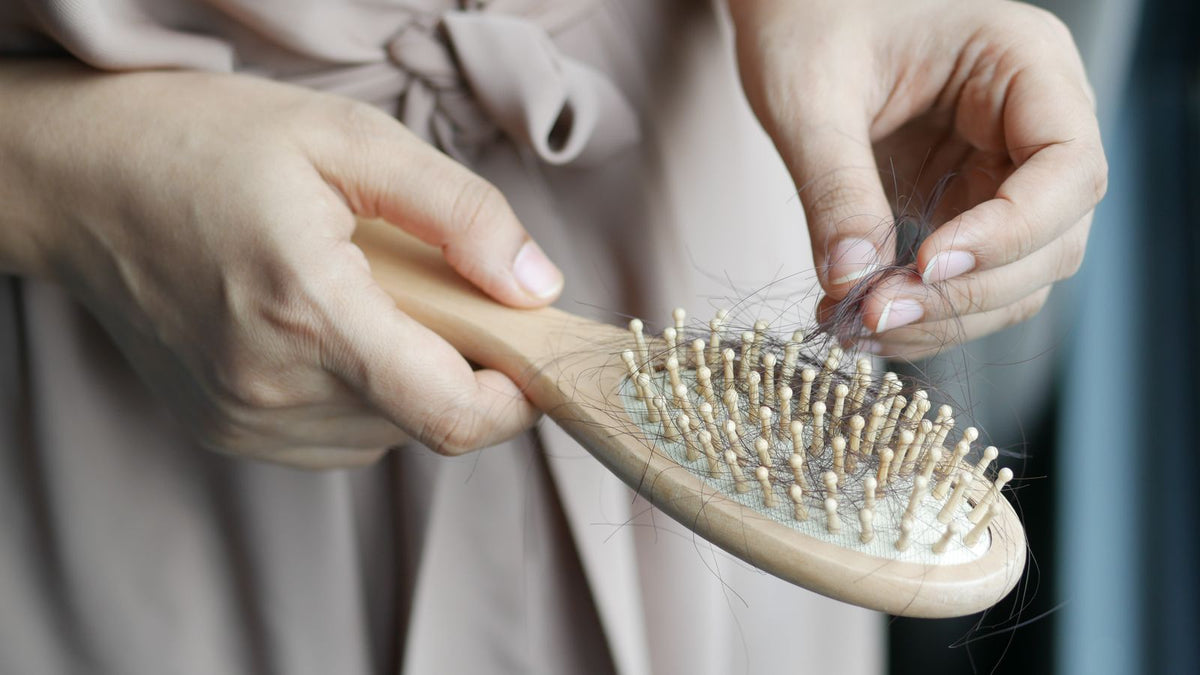
Hair shedding is a cycle problem. Whole hairs leave the scalp with a pale bulb at the root, from all over the head, usually two to four months after illness, childbirth, crash dieting or a change in medication. This is telogen effluvium and it normally settles by itself. A scalp serum will not shorten it.
Hair breakage is a fibre problem. The hair snaps along its length, leaving short pieces with no bulb, split ends and frizz. Heat, bleach and tight styling cause it. This is the one problem that hair products reliably improve, and it is usually addressed by a conditioner and gentler handling rather than by an active.
So the Redensyl vs caffeine question is worth asking if your scalp is healthy, your hair is generally stable and you want to support the environment it grows in. If your parting is widening, spend the money on a GP conversation about ferritin and thyroid function first.
Which format deserves your money?
Format is the decision most people get wrong, and it is a bigger lever than the choice between two actives.
- Shampoo. On the scalp for sixty to ninety seconds, then rinsed off entirely. Actives have very little contact time. What a shampoo genuinely controls is how harshly your hair is cleaned, which is not a small thing.
- Conditioner. Rinsed off as well, but it is the single best defence against breakage, because most of what people call thinning is hair snapping partway along its length rather than hair failing to grow.
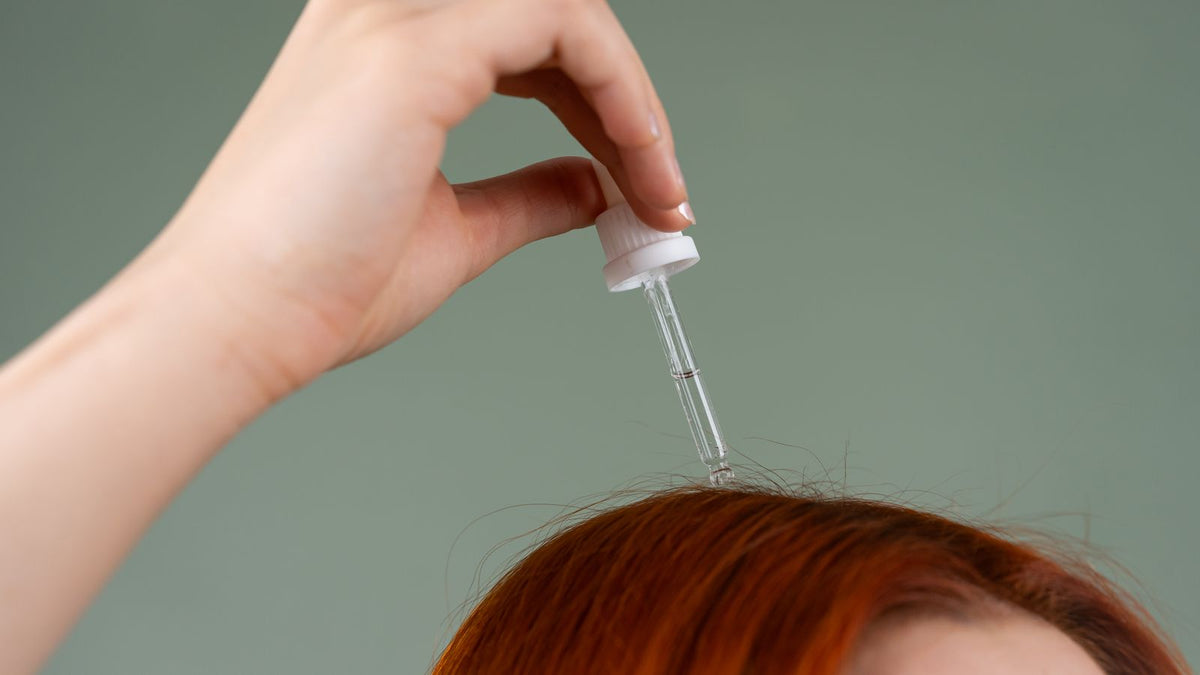
- Leave-on serum or elixir. Stays on the scalp for hours. If an active is going to do anything at all, this is the format that gives it the chance. It is also the format where irritation shows up, so patch test.
- Mask. Works on the fibre, not the follicle. Useful for condition and shine, irrelevant to density.
The practical conclusion is unglamorous: put the cheap, well tolerated active in the format that stays on your head, use a shampoo and conditioner that are gentle enough not to undo the work, and stop paying premiums for names.
What do we make, and what do we claim for it?
We use caffeine, biotin, rosemary, niacinamide and a hydrolysed lupine protein across our range. We use them because they are well tolerated, sensibly documented and affordable enough to include at amounts that are not decorative. We do not claim they change what a follicle does, because that is not a claim a cosmetic company gets to make.

The leave-on format, which is the one that gives any active real contact time. Caffeine, biotin, rosemary and niacinamide, applied to the parting overnight. If you are going to spend on one thing in a routine, spend it here rather than on a shampoo.

Sulphate free, so it cleans without stripping. Judge a shampoo on what it does not take away from you rather than on what it claims to add, and this is the standard we hold ours to.

Shampoo, conditioner and elixir together, which is the honest way to run the six month test described below, because changing one product at a time takes eighteen months and nobody does it.
How do you judge whether any of it is working?
- Photograph first. Same room, same light, dry hair, parting in the same place, front and crown. Before you start.
- Change one thing. If you start a serum, a supplement and a new shampoo in the same week, you will learn nothing.
- Give it six months. A hair that starts growing today is a centimetre long in a month. Three months tells you almost nothing.
- Count shed hairs, roughly. Losing fifty to a hundred a day is normal. What matters is whether that changes, not the absolute number.
- Re-photograph at three and six months. Compare photographs, never memories. Memory is uselessly optimistic and uselessly pessimistic on alternate days.
- Be willing to stop. If six honest months of consistent use show nothing, that is an answer. Spending another year on it is not loyalty, it is sunk cost.
What mistakes do people make with hair actives?
Most of the disappointment around Redensyl vs caffeine comes from these five habits rather than from the ingredients themselves.
- Buying on the trademarked name rather than the position of the ingredient in the list.
- Using a leave-on product twice in the first fortnight and then forgetting it. Consistency beats potency every time.
- Applying a scalp product to the hair rather than the skin, where it does nothing at all.
- Judging at six weeks and switching, then judging at six weeks and switching again, forever.
- Assuming a cosmetic product is an alternative to seeing a GP about hair loss. It is not, and delay costs options.
- Ignoring the boring inputs. Iron, ferritin, thyroid function and protein intake move hair more than any bottle on this page.
Sources & References
- Transepidermal UV radiation of scalp skin ex vivo induces hair follicle damage that is alleviated by the topical treatment with caffeine, International Journal of Cosmetic Science (2019), for what caffeine has actually been shown to do, in ex vivo tissue rather than on human heads.
- Protective Role of Nutritional Plants Containing Flavonoids in Hair Follicle Disruption: A Review, International Journal of Molecular Sciences (2020), for the evidence behind plant derived actives of the kind Redensyl is built from.
- Dias MFRG, Hair Cosmetics: An Overview, International Journal of Trichology (2015), for why format and delivery usually matter more than the headline active.
- DermNet, Female pattern hair loss, for how patterned thinning differs from diffuse shedding.
- NHS, Hair loss, for when thinning needs a GP rather than another product.
The sources disagree in a way worth naming. Supplier literature for trademarked actives reports large percentage improvements, while independent laboratory work on the same ingredient classes is far more cautious and rarely extends to human scalp outcomes. We have weighted the independent work, which is why this page is less exciting than most Redensyl vs caffeine comparisons you will read. For another heavily marketed active judged on the same basis, see what the copper peptide GHK-Cu can and cannot do.
Frequently asked questions
Is Redensyl better than caffeine?
There is no fair head to head comparison of the two, so nobody can honestly say. Caffeine has more independent evidence, Redensyl has more marketing. At the amounts used in real products the difference is unlikely to be the deciding factor in your result.
Can I use a Redensyl serum and a caffeine shampoo together?
Yes, there is no known interaction, and it is a common combination. Just remember that stacking two things makes it impossible to tell which one did anything.
How long before I see a difference?
Six months of consistent daily use before you make a judgement. Any brand quoting you four weeks is quoting you a marketing timeline rather than a biological one.
Are these ingredients safe?
Both are widely used in cosmetics with a good tolerance record. A small number of people react to any leave-on scalp product, so patch test behind the ear for two days before you commit.
Is a more expensive serum better?
Not reliably. Price tracks the licensing cost of trademarked ingredients and the marketing spend far more closely than it tracks the amount of active you are getting.
Do these work for androgenetic hair loss?
They are cosmetic products, so they support the condition and appearance of the hair you have. Androgenetic hair loss is a medical matter and the conversation to have is with your GP, ideally early. If your question is about products or a routine rather than a medical one, you can talk to Gail Waterman, our co-founder, as an AI avatar on the Watermans homepage.
Why will nobody tell me the concentration?
Because they are not obliged to, and because it is commercially sensitive. The ordering rule on the back of the pack is the closest you get, and it is more informative than most people realise.
Does caffeine in coffee do anything for hair?
No. Drinking it and applying it to the scalp are entirely different routes, and rinsing coffee through your hair leaves a stain and very little else.
What is the bottom line on redensyl vs caffeine?
On Redensyl vs caffeine, caffeine is the better documented and far cheaper of the two, Redensyl is the better marketed, and neither is a medicine. Judge the finished product on its formula, its concentration and whether you will genuinely use it for six months.
Redensyl and caffeine are both reasonable cosmetic actives with modest evidence, and the honest gap between them is much smaller than the gap in price. Buy on the whole formula, favour the format that stays on your scalp, read the position of the ingredient in the list rather than the size of its name on the front, and give whatever you choose six photographed months before you decide. Then be willing to stop.
Watermans is UK made, and has sold over 6.5 million bottles since 2012. We would rather you understood what you are buying than bought more of it.
For the everyday version of all this, Grow Me hair growth shampoo does the scalp work while you get on with the rest.
Watermans products are 100% cosmetic and do not treat medical hair loss. Individual results may vary.