Redensyl Serum: What to Check Before You Buy
A redensyl serum is a leave-on scalp product built around Redensyl, a cosmetic active made by the Swiss supplier Givaudan and sold to brands who formulate it themselves. Before you buy one, check three things: the brand discloses the concentration, the formula is a proper leave-on serum rather than a rinse-off, and the label makes no FDA approved claim, because the FDA does not approve cosmetics at all.
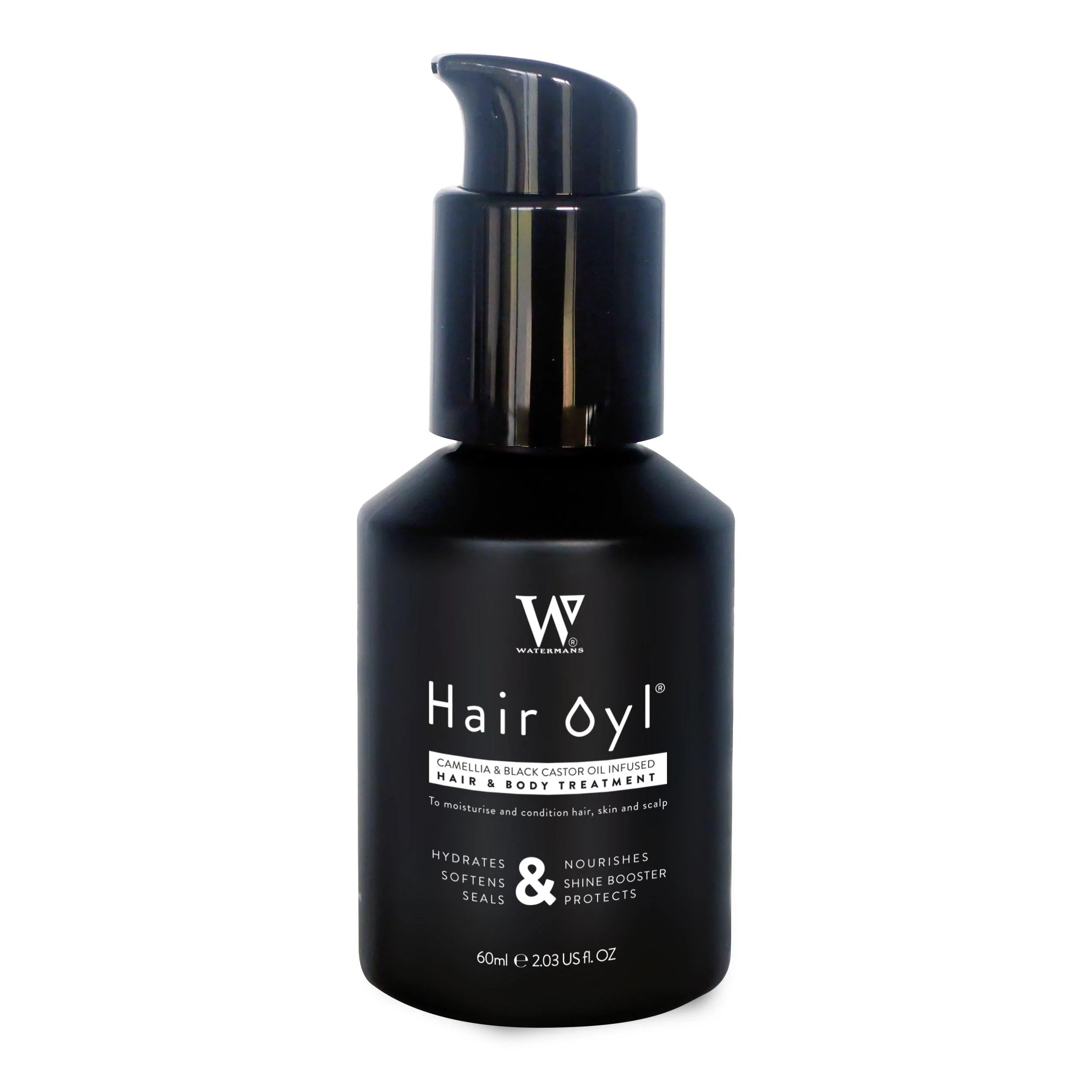
Our leave-on scalp serum
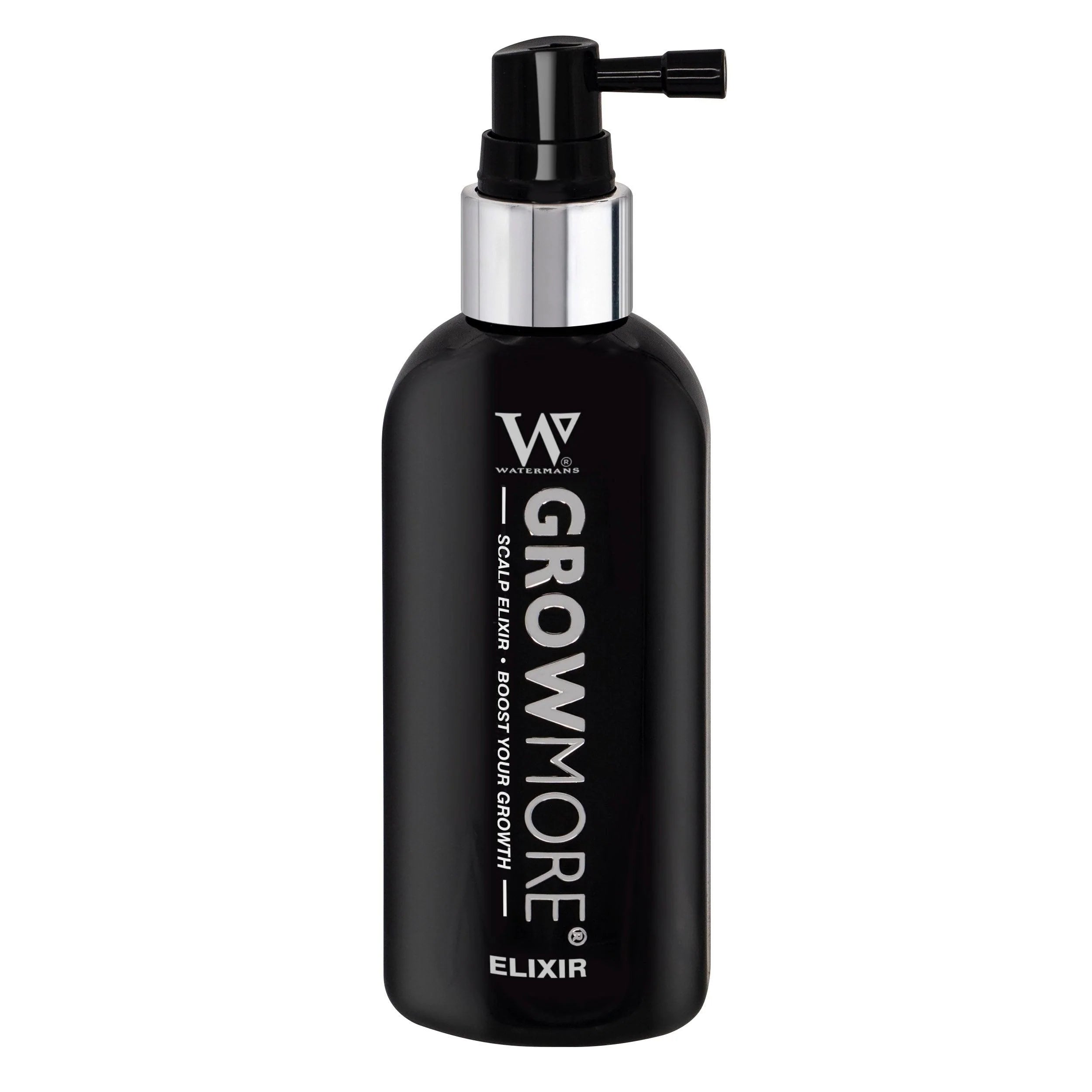
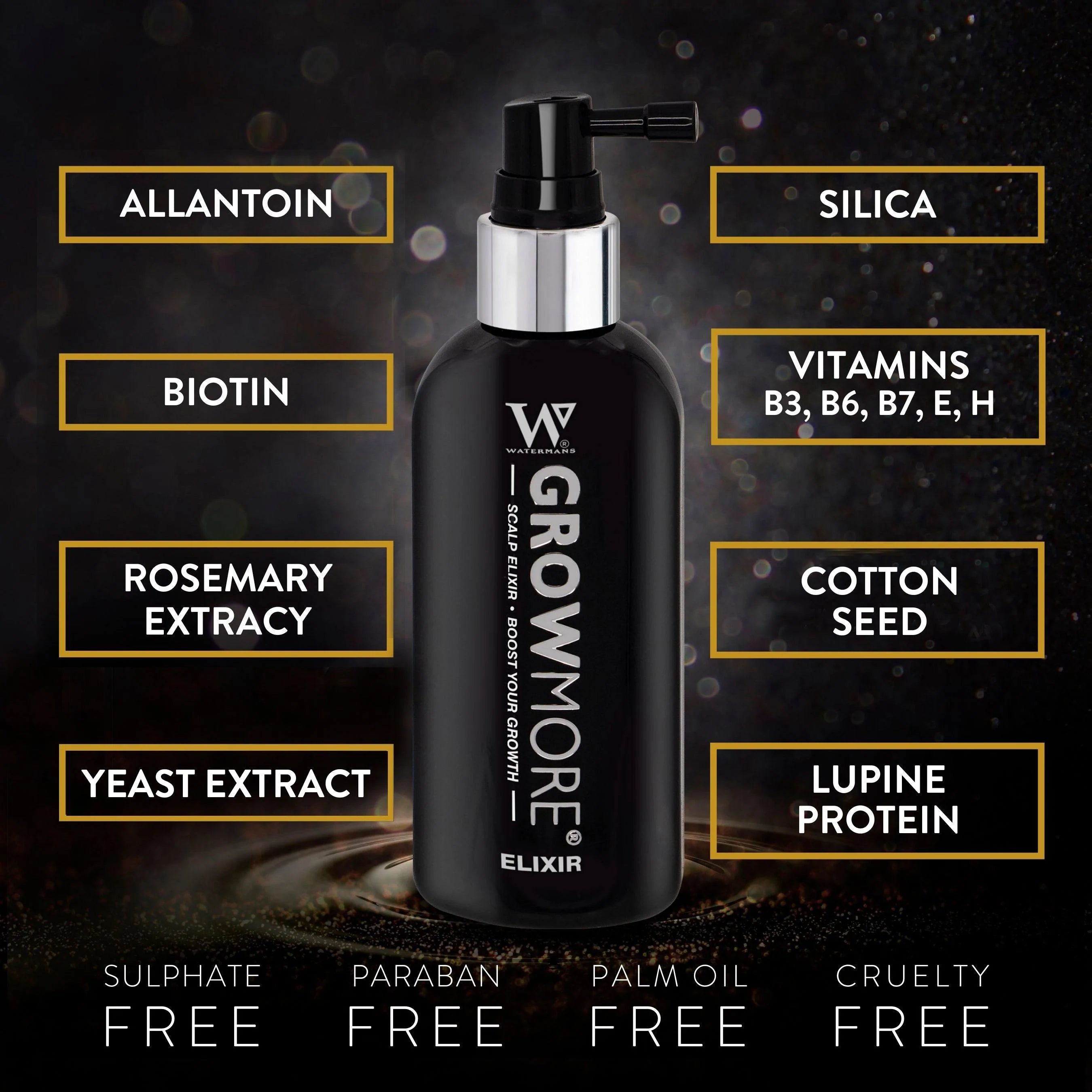
Grow More® Scalp Elixir, £25.50. We do not use Redensyl. Our overnight scalp serum is built on caffeine, rosemary, niacinamide and lupine protein, and supports a healthy scalp environment for fuller-looking hair.
Key takeaways
- Redensyl is an ingredient, not a product. Two serums naming it can differ completely in concentration, base and companion actives.
- The best buying signal is disclosure: a stated Redensyl percentage, its position in the INCI list, and a named UK responsible person.
- No serum of any kind is FDA approved as a cosmetic. The FDA does not approve cosmetics or cosmetic ingredients, so the badge is a red flag about the seller.
- Redensyl is a blend built around two glucosides, DHQG and EGCG2, plus glycine and zinc.
- The figures quoted in product copy come from a small group over about three months, and few peer-reviewed studies have repeated them. Judge any serum over twelve weeks, not two.
What is a redensyl serum, and what is actually in one?
A Redensyl scalp product is a cosmetic in which Redensyl, a Givaudan Active Beauty blend, is one of the actives. Its two headline components are DHQG, a derivative of dihydroquercetin, and EGCG2, a derivative of epigallocatechin gallate, the polyphenol most associated with green tea. Glycine, zinc chloride and meta-bisulphite make up the rest of the blend.
The supplier sells that blend to brands, and each brand then chooses the concentration, the base (water, alcohol or oil), the preservative system and whatever other actives sit alongside it. That is why the ingredient name on its own tells you very little. The proposed mechanism, as the supplier describes it, involves cells in the outer root sheath of the follicle and the balance between the anagen (growth) phase and the telogen (resting) phase of the hair cycle. That is a plausible line of interest rather than a settled account, so hold it loosely.
What should you look for when buying a redensyl serum?
When buying a redensyl serum, look first for disclosure: a stated percentage of Redensyl, the ingredient appearing high in the INCI list rather than at the tail end, a leave-on format you apply to the scalp itself, and the name and UK address of the responsible person on the pack. A brand that shows those four things is at least being straight with you. If you have seen Capilia Longa on a label, our guide to Capilia Longa explains what the turmeric stem cell extract can and cannot do.
| What to check | Good sign | Warning sign |
|---|---|---|
| Concentration | A stated percentage on the pack or product page | "Contains Redensyl" with no figure anywhere |
| INCI position | The blend components appear in the upper part of the list | They sit after the fragrance and preservatives |
| Format | Leave-on serum with a dropper or nozzle for the scalp | A rinse-off shampoo marketed on the same ingredient |
| Regulatory wording | Named UK responsible person and a full ingredient list | An FDA approved badge or a medical-sounding promise |
| Timescale | Asks you to judge after about three months of daily use | Promises visible change in two to four weeks |
| Price per ml | Enough in the bottle for a 12 week trial at the stated dose | A 30 ml bottle that lasts two weeks at the recommended dose |
Do the maths before you pay
Hair works on a months-long cycle, so any scalp serum needs roughly twelve weeks of consistent use before you can judge it. Divide the bottle size by the daily dose on the label and work out what a full twelve week trial actually costs, not what one bottle costs.
Two further checks help. Patch test any new leave-on product behind the ear for 48 hours, because leave-on formulas sit on the skin far longer than a shampoo does. And be wary of a serum that stacks five or six fashionable actives at undisclosed levels: a long ingredient story is not the same as a meaningful dose of any one of them.
Is a redensyl serum FDA approved?
No redensyl serum is FDA approved, and none can be, because the FDA does not approve cosmetics or cosmetic ingredients at all. The question sounds like it should have a yes or no answer about quality, but it contains a hidden assumption: that FDA approval is a ladder every hair product could climb if it were good enough. It is not a ladder. It is a gate on a completely different road. Medicines go through approval. Cosmetics go through a safety and labelling regime. A cosmetic ingredient is no more eligible for FDA approval than a jumper is eligible for an MOT.
So when a brand writes FDA approved on a scalp serum, one of two things is happening. Either they have misunderstood their own regulatory position, or they are borrowing the authority of a word they know shoppers respond to. Neither is a comment on whether the ingredient does anything, but it is a useful comment on the seller.
What does the FDA actually do with cosmetics?
In the United States, the FDA regulates cosmetics without approving them. Companies are responsible for the safety of what they sell, ingredient labelling is mandatory, colour additives are the one category requiring specific approval, and the agency can act after the fact against products that turn out to be unsafe or misbranded. What does not happen is any pre-market review or sign-off for the product as a whole. If that matches your situation, read our guide to fda-approved hair growth products.
| Category | Approved before sale? | Who carries the burden | Examples |
|---|---|---|---|
| Prescription medicine | Yes, full approval | Manufacturer proves safety and efficacy to the regulator | Medicines a doctor issues for scalp conditions |
| Over-the-counter monograph product | Conforms to a published standard | Active and labelling must match the monograph | A small, defined list of non-prescription actives |
| Colour additive in a cosmetic | Yes, the additive itself | Specific approval for that colourant | Dyes used in cosmetic formulas |
| Cosmetic ingredient or finished cosmetic | No | The company, who must ensure safety and label correctly | Shampoos, conditioners, scalp serums, Redensyl |
Read the bottom row and the answer to is redensyl fda approved becomes structural rather than a judgement on quality. Every serum on a UK shelf sits in the one row where approval is not part of the process.
What actually governs a scalp serum sold in Britain?
This matters more than the American question for anyone reading from the UK, because the FDA has no authority here whatsoever. A cosmetic sold in Britain falls under the retained EU Cosmetic Products Regulation, enforced by Trading Standards. It requires a named responsible person, a product information file, and a documented safety assessment carried out by a suitably qualified assessor before the product goes on sale. Ingredients must appear in INCI order on the pack.

That is a genuine compliance burden. It is simply not called approval, and it produces no certificate a marketing team can wave. So a British shopper comparing one Redensyl product with another is better served by asking whether the finished product is compliant here, with a named responsible person and a full ingredient list, which any reputable UK seller should be able to confirm.
Get a discount on the thinning hair range
Join the Watermans mailing list and we will email a discount code straight to your inbox, so you can try the thinning hair range for less. Made in the UK, over 6.5 million bottles sold since 2012.
What does the evidence behind a redensyl serum actually say?

The evidence behind Redensyl is limited: the figures quoted in product copy come from the ingredient's technical documentation, measured on a small group over roughly three months using hair-cycle counts. Few peer-reviewed studies have repeated that work, so there is no large body of published research to lean on either way.
That does not make the ingredient pointless, and it does not make it proven. It means the honest position is proportionate expectations: a cosmetic serum, used consistently for twelve weeks or more, judged against photographs rather than memory. The same test applies to every scalp active on the market, ours included. Our guide to judging hair growth options honestly sets out how to weigh this kind of claim across the whole category.
A test for any ingredient claim
Ask two questions. How many people were measured, and for how long? Has anyone published a repeat of the work? An ingredient can be perfectly reasonable and still have thin answers to both, which tells you to keep your expectations proportionate rather than to avoid it.
How should you read hair product marketing generally?
The FDA approval claim belongs to a family of phrases that borrow authority without carrying meaning. Dermatologist tested says a test happened, not that it passed. Clinical strength has no legal definition. Natural has no legal definition either. Results in 30 days is a claim about a timeline no cosmetic can honestly promise, given that the hair cycle works in months.
None of this means the products are worthless. It means the label is doing marketing work rather than informational work, and the useful information is elsewhere: the INCI list, the concentration if disclosed, and whether the brand is willing to describe limits as well as benefits. Our guide to what hair vitamins actually do applies the same scepticism to the supplement aisle, where the pattern is, if anything, worse.
What can a redensyl serum realistically do for thinning hair?
A Redensyl product can realistically offer a cosmetic-scale effect at best, over months rather than weeks, and it is not a substitute for finding out why your hair is changing. Against genuine follicular hair loss, a cosmetic effect of that size is unlikely to be visible.
Three different things get confused constantly. Hair loss means the follicle has stopped producing normally, as in androgenetic alopecia. Hair shedding means the growth cycle has pushed an unusual number of follicles into their resting phase at once, as in telogen effluvium following illness, childbirth, surgery or rapid weight loss. Hair breakage means the fibre snapped along its length while the follicle carried on working perfectly well. A cosmetic serum has no meaningful role in the first, may coincide with the natural recovery of the second, and does nothing for the third that a decent conditioner would not do better. Our guide to the honest options for hair loss covers where the boundaries sit.
Where does Watermans sit on this?

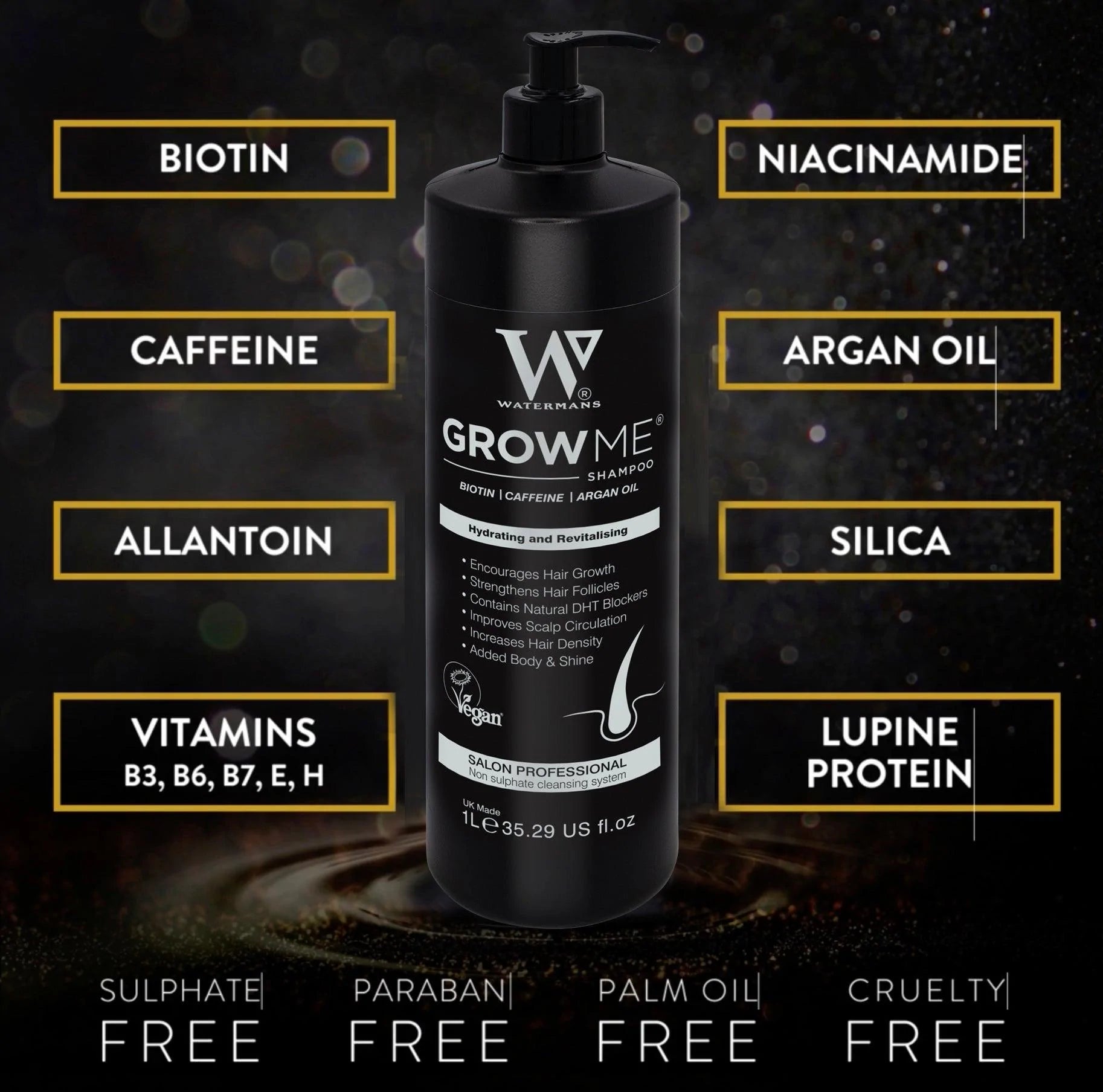
We should declare our interest plainly: we sell scalp and hair products, so we are not a neutral party. We also do not use Redensyl. Our formulas are built on a different set of cosmetic ingredients, including caffeine, biotin, rosemary extract, niacinamide, lupine protein and argan oil. We are not claiming Redensyl fails and we are not claiming ours is superior in some measured way we have not demonstrated. If you are choosing a leave-on scalp serum and Redensyl is not a must-have for you, ours is one honest option to compare against the checklist above. We are saying what is in the bottle and what job it is doing.
That job is cosmetic: supporting the scalp and reducing breakage so more of the hair you already grow stays on your head and the density you have looks as full as it can. We are made in the UK, and over 6.5 million bottles have sold since 2012. None of that is a regulatory approval either, and we are not going to dress it up as one.

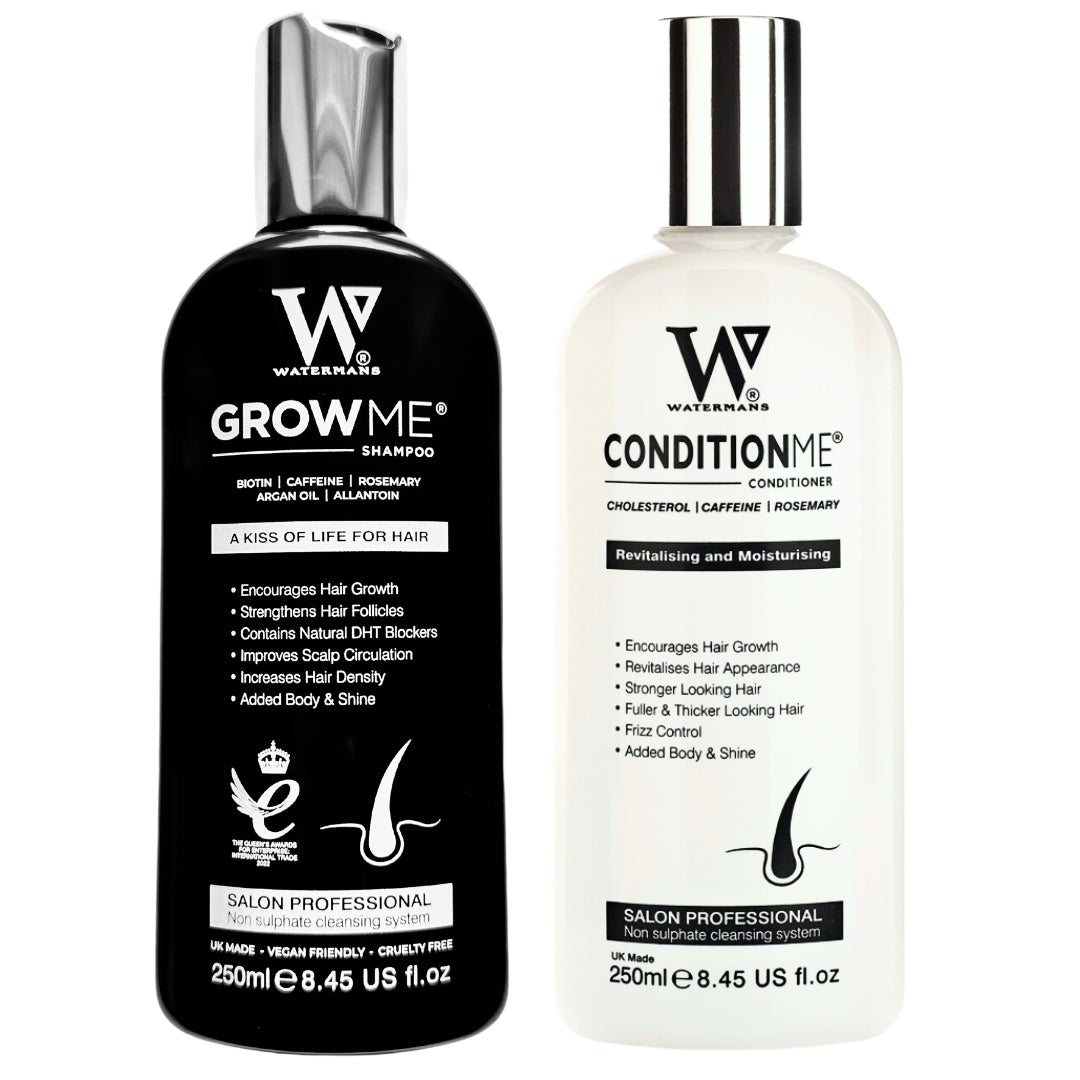
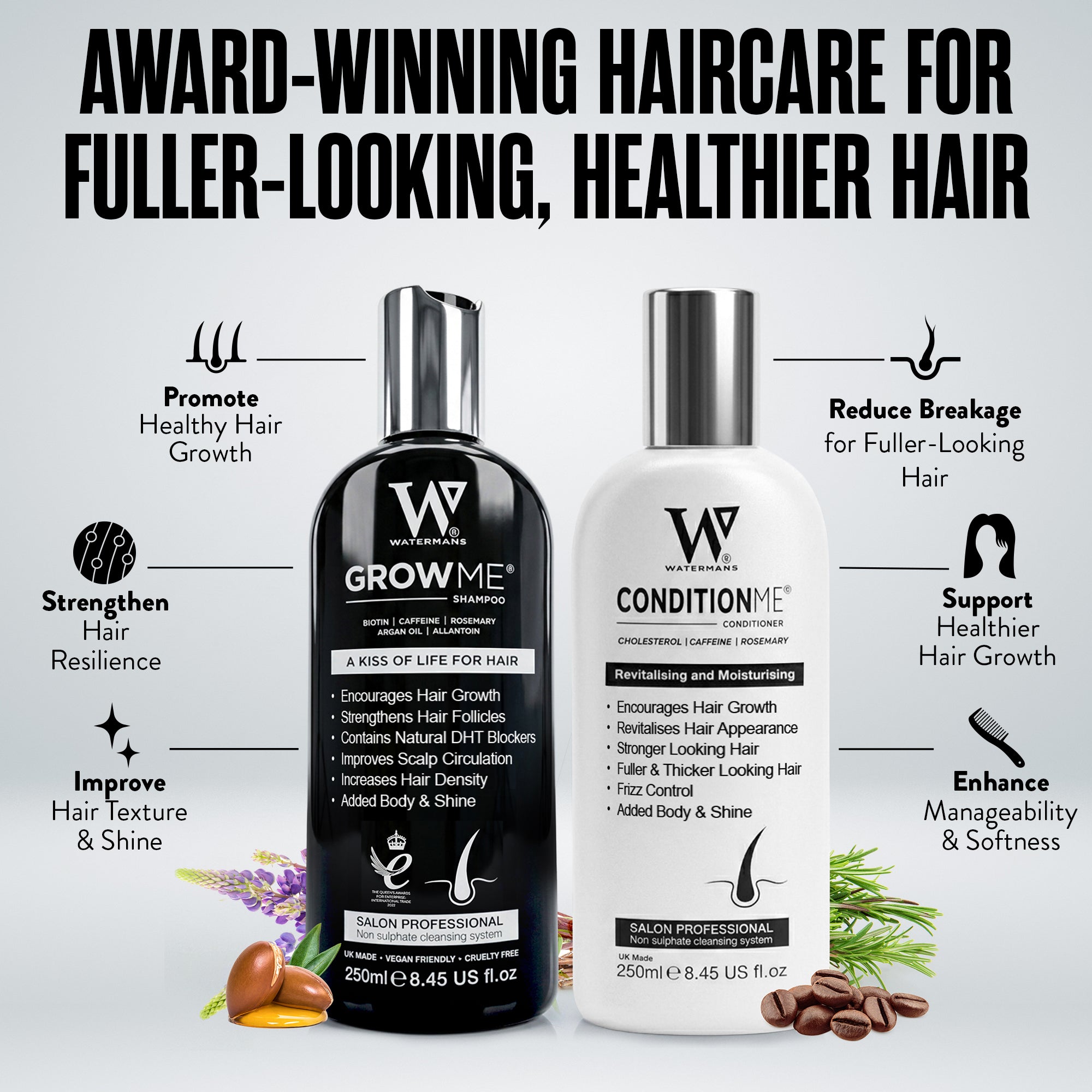
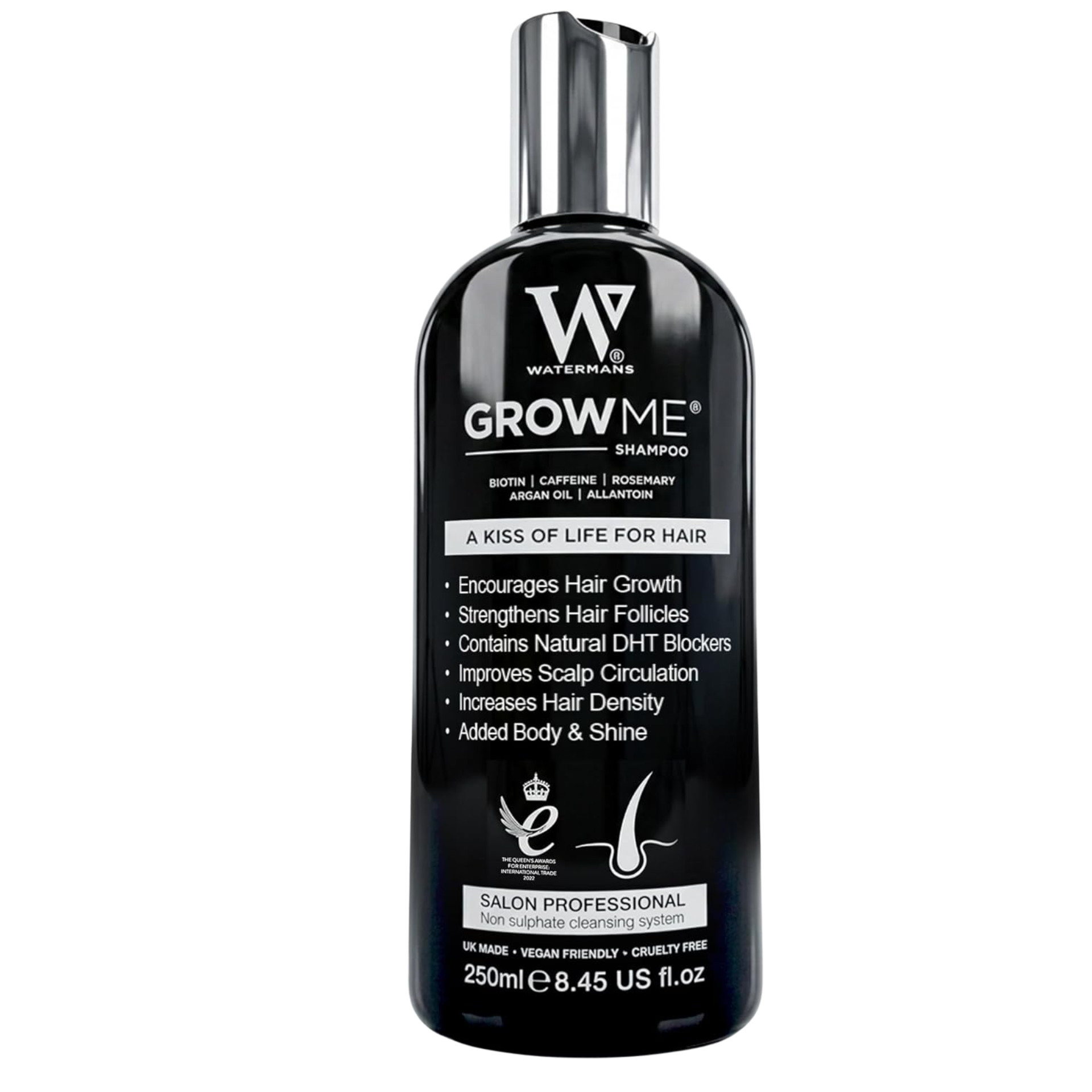
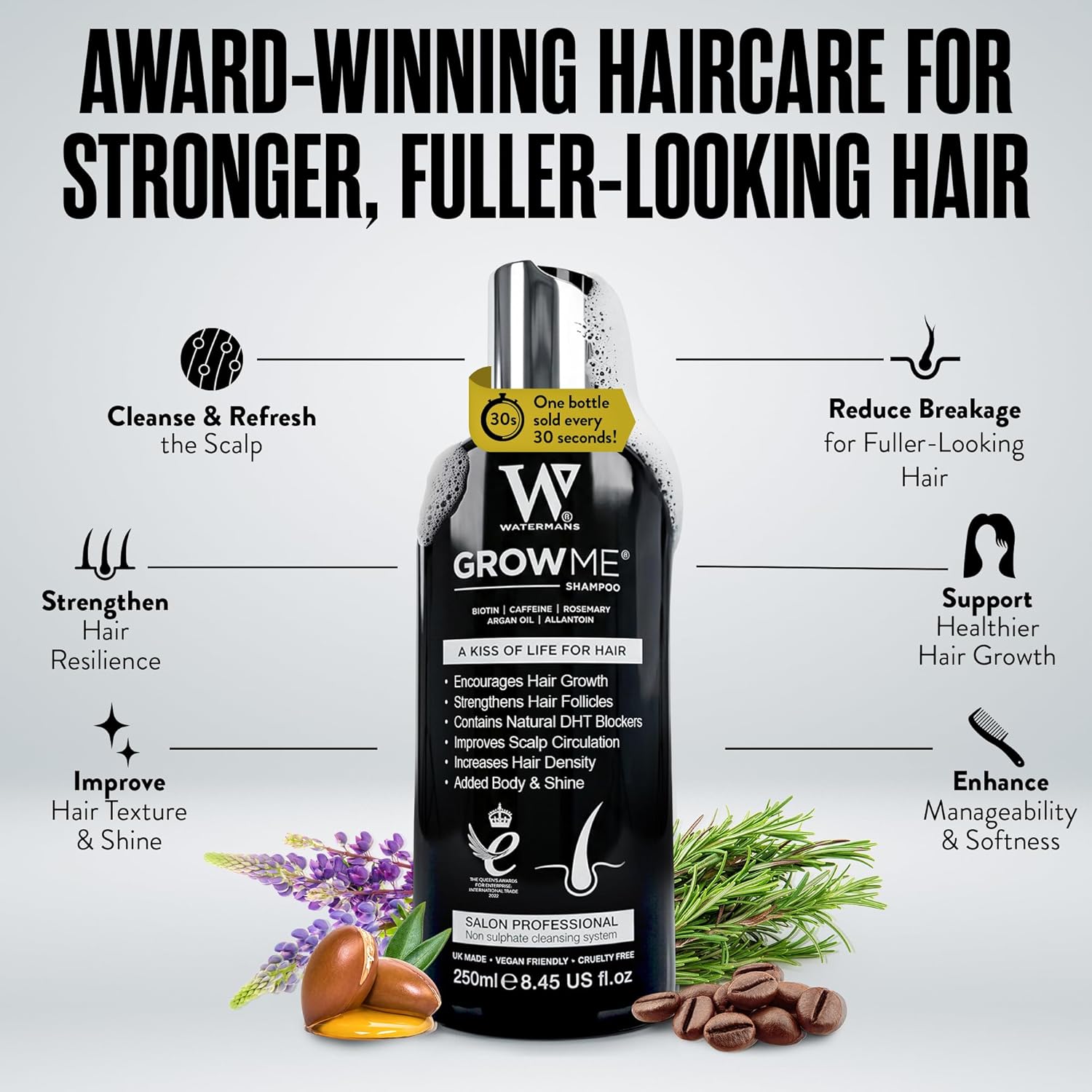
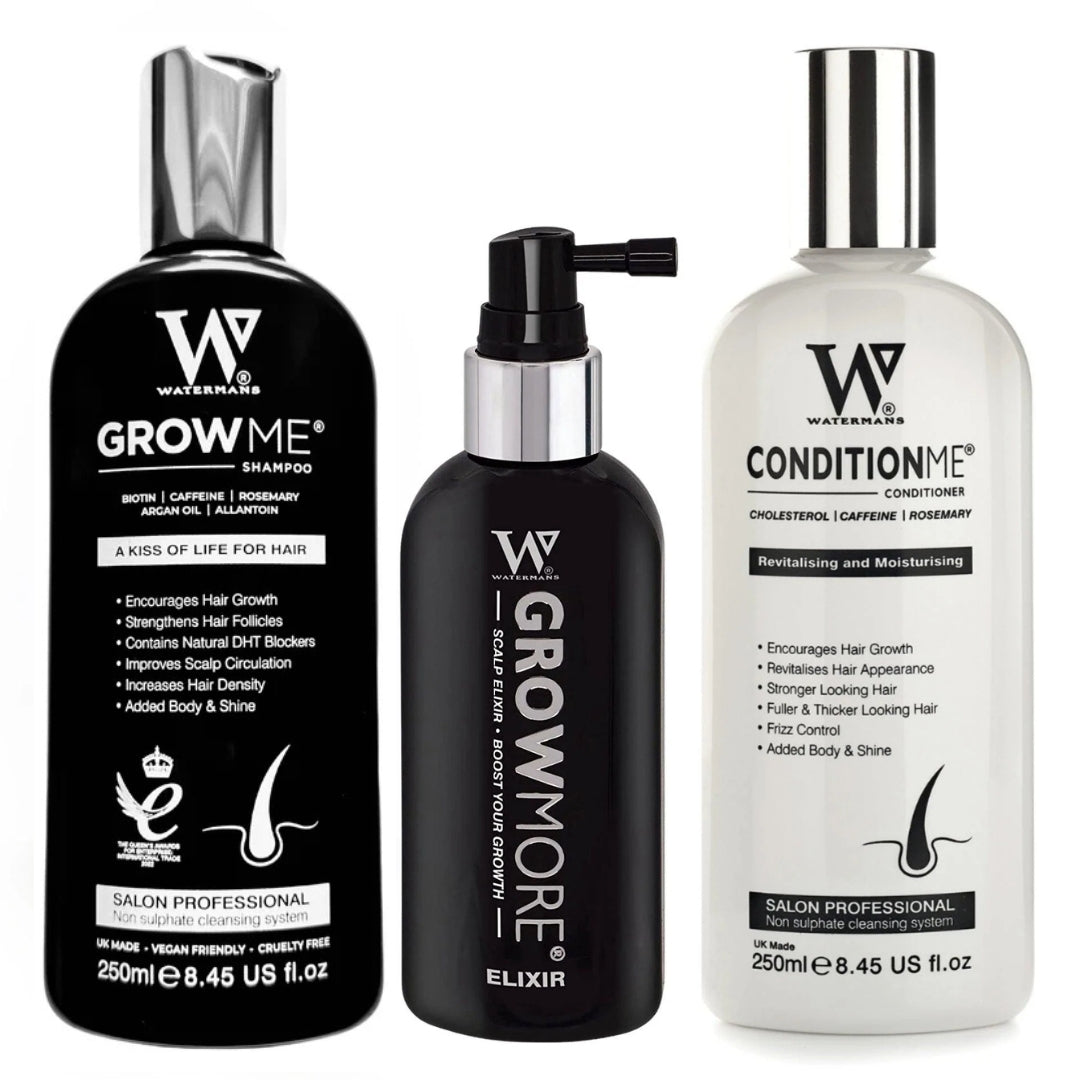
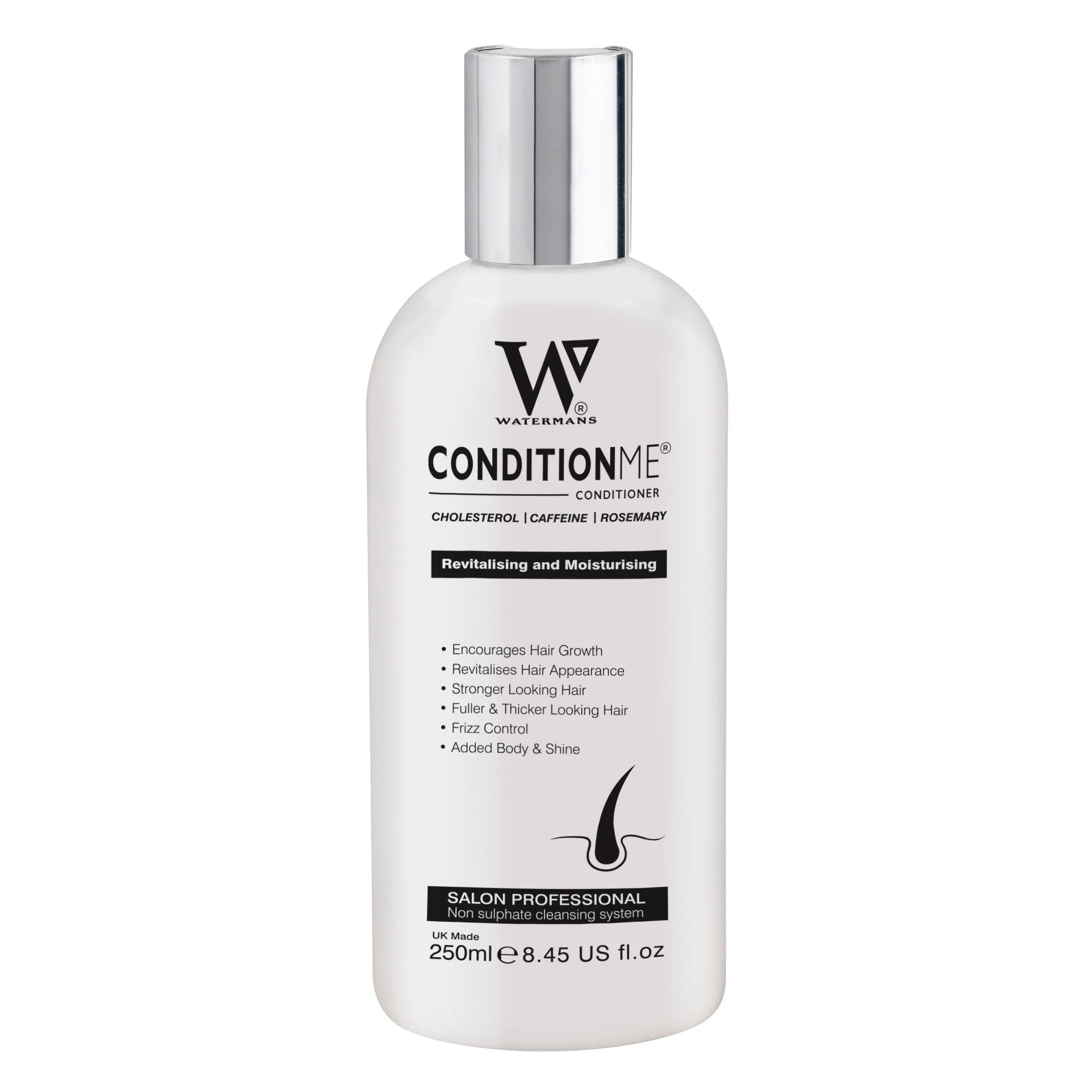
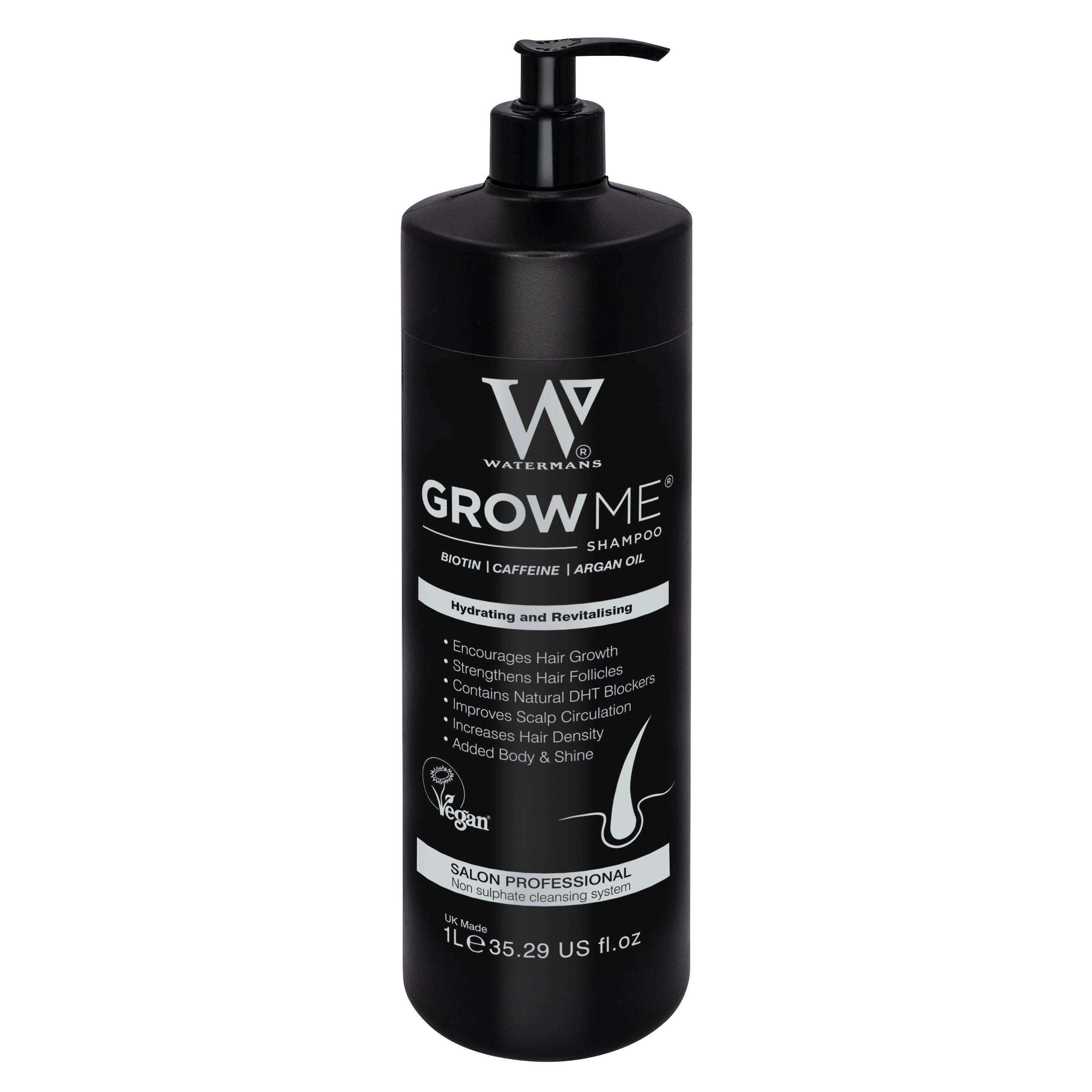
Grow Me® Hair Growth Shampoo
A sulphate free daily shampoo with caffeine, biotin, rosemary and lupine protein. Massage into the scalp and leave three to four minutes before rinsing.

Grow More® Scalp Elixir
A leave-in overnight scalp serum applied directly to the areas you want to work on, rather than sprayed through the lengths. Nightly, for at least eight to twelve weeks before judging.

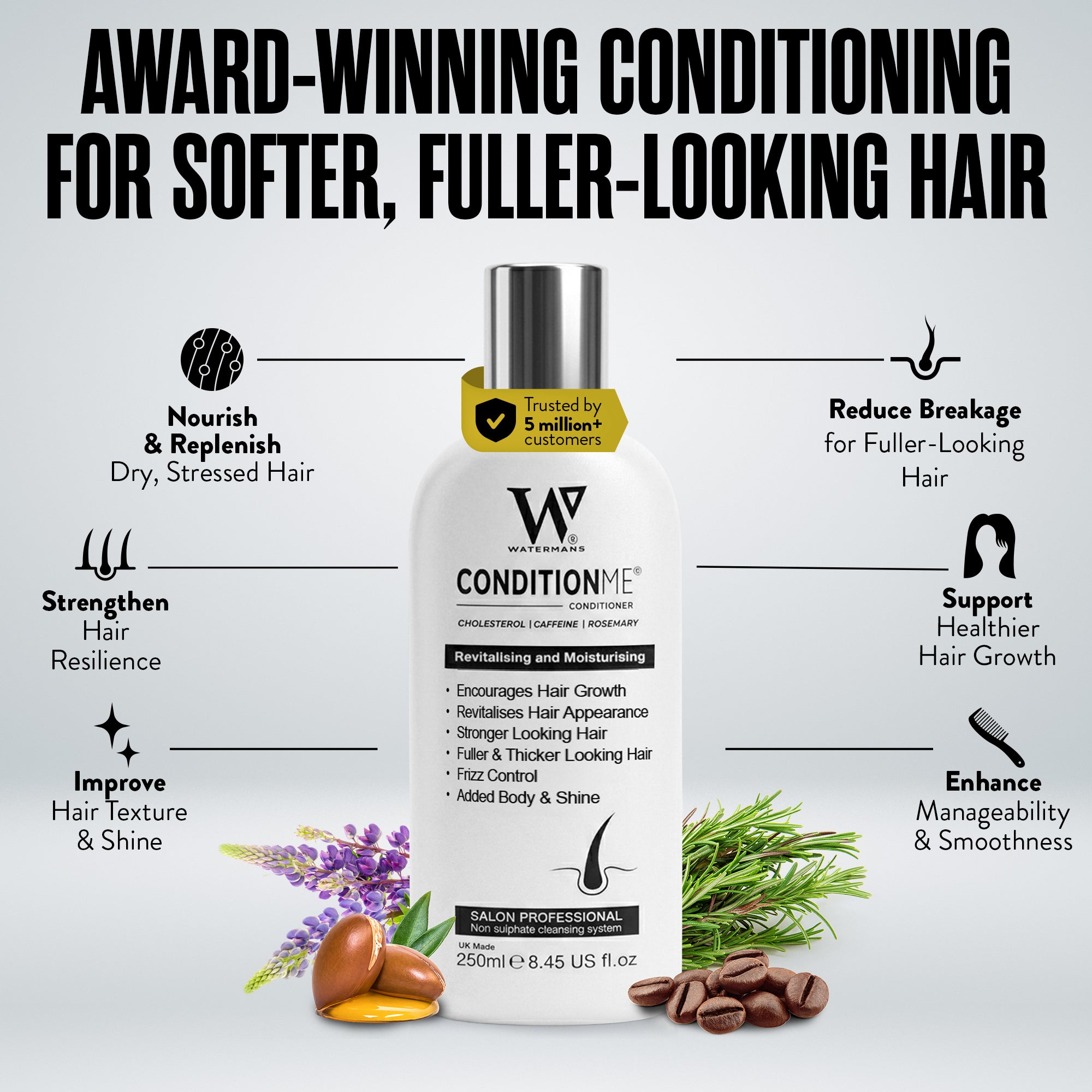
Condition Me® Hair Growth Conditioner
Conditioning through the mid lengths and ends, which is where breakage actually happens. Two minutes, then rinse cool.
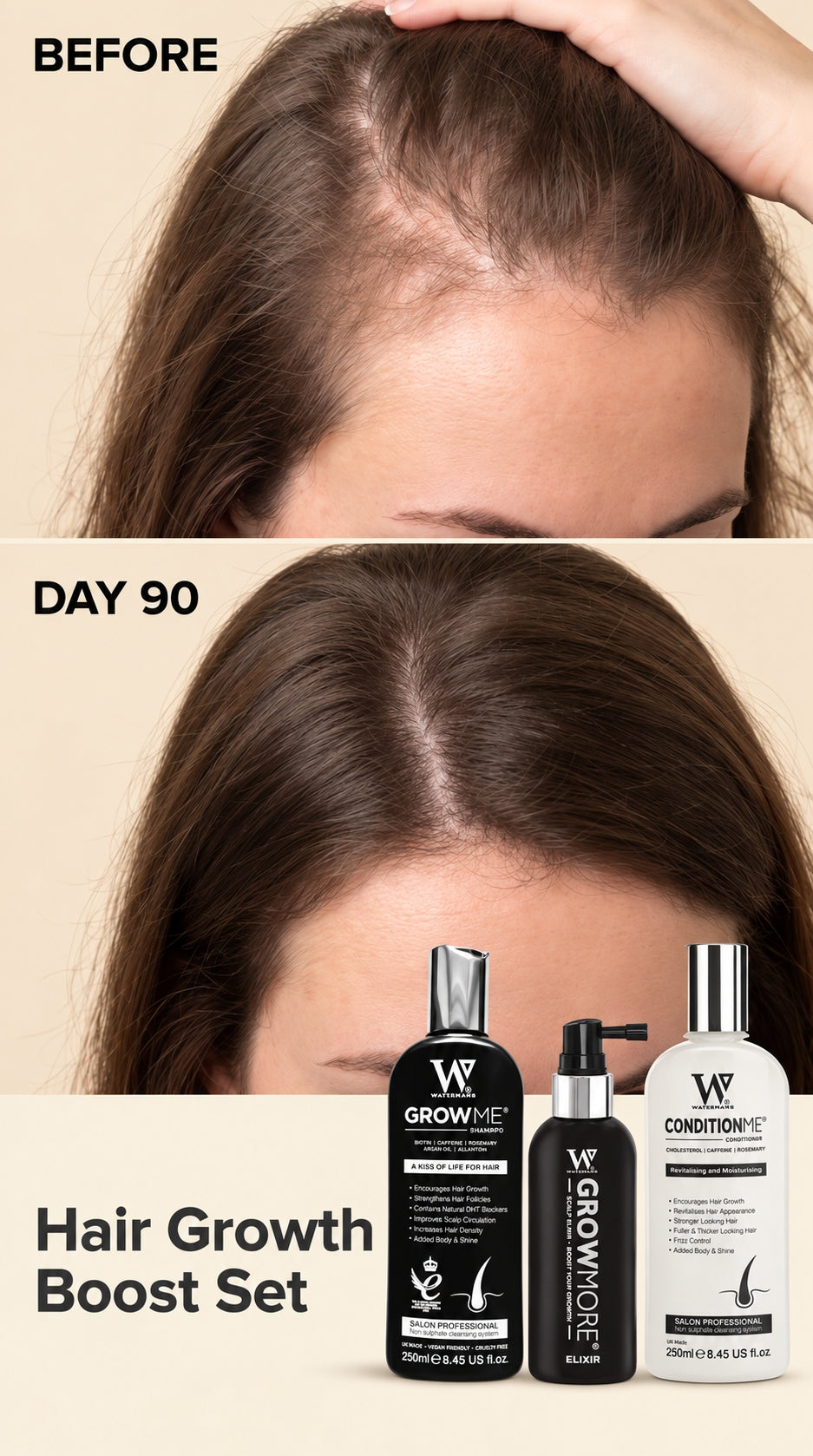
Watermans products are 100% cosmetic and do not treat medical hair loss. Individual results may vary.
What should you actually do about thinning hair?
Start by working out which of the three things above you are seeing, because the answers diverge completely from that point. Photograph your parting in the same light once a month rather than examining it daily, since day-to-day variation is enormous and hair works on a months-long cycle. Be gentle mechanically: condition every wash, detangle wet hair with a wide tooth comb, and go easy on heat and tension, all of which reduce breakage regardless of what serum you own. And get the boring things checked, because iron, ferritin, thyroid function and vitamin D explain a great many cases that people spend a fortune on serums for. Our guide to what the evidence says about rosemary oil covers the plant-derived actives in more detail if that is the direction you are considering. If you want the detail on that, our guide to scalp serum on wet hair walks through it step by step.
When should you speak to a GP?
A widening parting, a receding hairline, visible scalp at the crown, patches with no hair at all, or a shed that has run past six months are all questions for a GP rather than for an ingredient comparison. A GP can arrange blood tests for iron, ferritin, thyroid function and vitamin D, and can refer onward where that is warranted. Sudden patchy loss, a painful or scarred scalp, or hair changes alongside other unexplained symptoms should be looked at promptly. No cosmetic serum, ours included, substitutes for that conversation. If your question is about products or a routine rather than a medical one, you can talk to Gail Waterman, our co-founder, as an AI avatar on the Watermans homepage.
Frequently asked questions
Is a redensyl serum worth buying?
It can be, if the brand discloses the concentration, the product is a leave-on scalp format, and you are prepared to use it daily for about twelve weeks before judging. Expect a cosmetic effect at most. If your hair change is sudden, patchy or getting worse, see a GP first.
Is redensyl fda approved?
No. Redensyl is sold as a cosmetic ingredient, and the FDA does not run an approval scheme for cosmetic ingredients or for the finished cosmetics that contain them. A brand that describes a serum as FDA approved is describing a status that does not exist for cosmetics.
If a serum is not approved, is it therefore unsafe?
No. Absence of approval is not a safety warning, it is a statement about which regulatory route the product took. Cosmetics sold in the UK must be safe and must carry a documented safety assessment under the cosmetic regulations. That is a real obligation, just a different one from medicines approval.
What is Redensyl made of?
It is a blend from the Swiss supplier Givaudan, built around two glucosides, DHQG (a dihydroquercetin derivative) and EGCG2 (a derivative of the green tea polyphenol epigallocatechin gallate), alongside glycine, zinc chloride and meta-bisulphite. Brands formulate it into serums at their own concentration.
How long should I use a redensyl serum before judging it?
About twelve weeks of consistent daily use, because the hair cycle works over months. Photograph your parting or hairline in the same light once a month and compare the photographs, rather than judging by the mirror from day to day.
Can I use Redensyl with other scalp products?
Generally yes, as long as each product is a cosmetic used as directed. Apply the leave-on serum to a clean scalp, let it absorb before styling, and introduce one new product at a time so you can tell which one is responsible if your scalp reacts.
Should I avoid products that claim FDA approval?
Treat the claim as a signal about the brand rather than about the ingredient. A company willing to invent a regulatory status is a company whose other statements deserve more scepticism. The ingredient itself is not discredited by a marketing team's overreach.
Is Redensyl in Watermans products?
No. Our formulas are built on a different set of cosmetic ingredients, including caffeine, biotin, rosemary extract, niacinamide, lupine protein and argan oil. We are not making a claim that Redensyl does or does not work, only being clear that it is not what we use.
What is the bottom line on redensyl serum?
The bottom line on redensyl serum is that the ingredient name is the least useful thing on the bottle. Redensyl is a Givaudan blend of two glucosides with a small, short evidence base and few peer-reviewed repeats, and no serum containing it is FDA approved, because that route does not exist for cosmetics. What separates a sensible purchase from a poor one is disclosure: a stated concentration, a leave-on format, a full UK-compliant label and a seller who talks in months rather than weeks. Buy one if a modest cosmetic effect at that price appeals to you and the label passes the checklist above. Do not buy one because of a regulatory badge, and do not let any serum delay a GP visit that the pattern of your hair change actually warrants.
If you would rather compare a leave-on option without Redensyl, our overnight scalp serum is built on caffeine, rosemary and lupine protein. Vegan and made in the UK.
Sources and References
- US Food and Drug Administration. FDA authority over cosmetics: how cosmetics are not FDA-approved but are FDA-regulated. fda.gov. The primary source for the distinction this article rests on.
- US Food and Drug Administration. Over-the-counter (OTC) monograph process. fda.gov. Explains the separate route by which a small number of non-prescription actives are permitted.
- UK Government. Retained EU Cosmetic Products Regulation 1223/2009 and the Cosmetic Products Enforcement Regulations 2013. legislation.gov.uk. The framework that actually governs a scalp serum sold in Britain.
- Givaudan Active Beauty. Redensyl technical and product documentation. givaudan.com. The origin of the composition and the study figures described here.
- Advertising Standards Authority. CAP Code rulings on health, beauty and cosmetic claims. asa.org.uk. Background on how efficacy and regulatory claims are handled in UK advertising.
- NHS. Hair loss. nhs.uk. Guidance on the common causes of hair loss and shedding, and when to speak to a GP.