Non Surgical Hair Replacement for Men: Systems, SMP and Fibres Compared
Non surgical hair replacement covers everything that adds visible hair without a transplant: bonded or clipped hair systems, scalp micropigmentation, hair toppers and building fibres, with a daily breakage routine underneath all of them. The non-surgical hair restoration men are offered in UK clinics sits alongside it, microneedling, light therapy and platelet-rich plasma, with genuine but uneven evidence. Knowing which of those you are shopping for, and whether you have hair loss, shedding or breakage, stops most of the wasted money.
Our hair growth shampoo
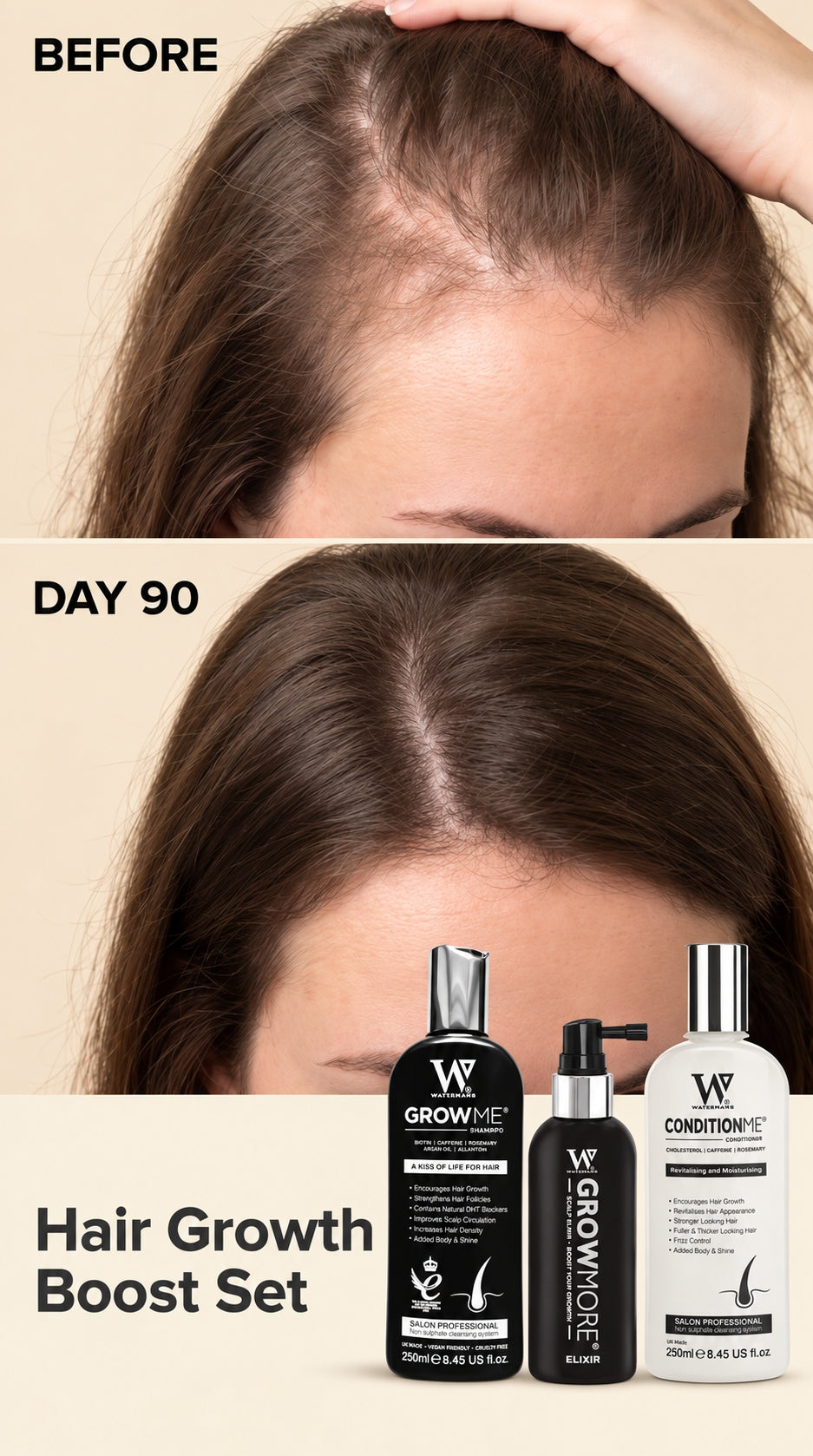
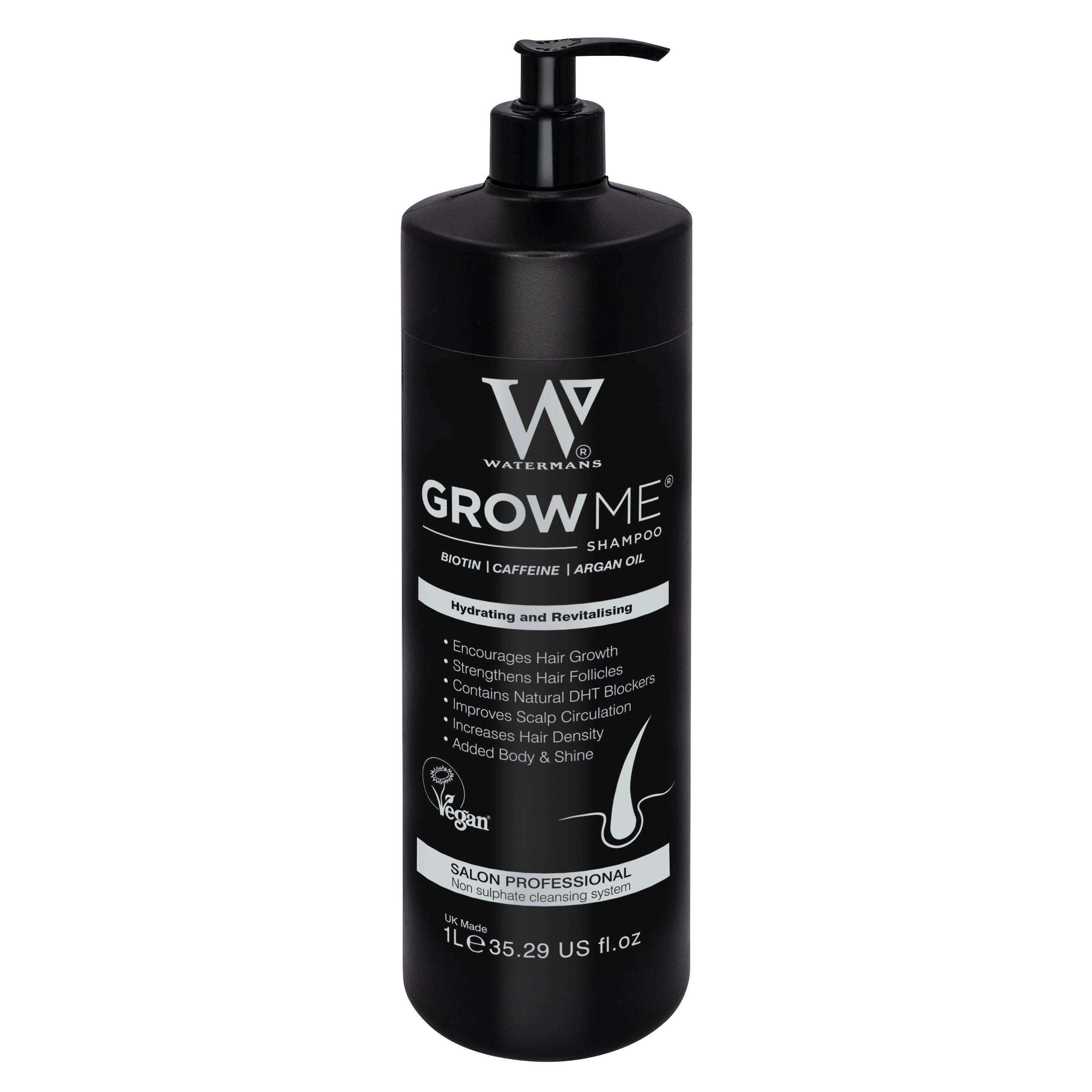
Grow Me® Hair Growth Shampoo, £14.95. A sulphate free daily shampoo that supports a healthy scalp environment and helps reduce breakage, so lengths hold on and look fuller.
Key takeaways
- There is no single best option. Non surgical hair replacement means systems, pigmentation, toppers and fibres, and which one suits you depends on whether you are losing hair, shedding it temporarily, or snapping it off.
- The cheapest tier is the one most men skip: wash routine, breakage control, sleep, iron and protein intake.
- Clinic procedures are real but oversold. The published evidence is mostly small studies with short follow-up.
- Appearance-changers are the only tier that works the same day, and they are not a failure to use.
- Anything sudden, patchy or itchy is a reason to see a GP rather than shop.
What counts as non-surgical hair restoration, and what does not?
Non-surgical hair restoration is any approach to fuller-looking hair that does not involve a surgeon moving follicles from the back of your head to the front. Hair transplant surgery is the line. Everything on this side of it, from a bottle of shampoo to a course of scalp micropigmentation, sits in the non-surgical category, which is exactly why the category is so confusing: it contains both a fifteen pound purchase and a two thousand pound procedure, sold with similar-sounding language.
Two things are worth separating before you spend anything. Cosmetic products, including everything Watermans makes, work on the hair fibre and the scalp environment. They can reduce breakage, support scalp comfort and make hair look thicker. Medical routes work on the biology of the follicle and are a matter for a GP or a dermatologist, not a shampoo aisle. This article covers the first properly and points you to the right door for the second.

Hair loss, hair shedding or hair breakage: which one do you have?
Most men buy the wrong thing because they have not worked out which of three different problems they have. The three look similar in the plughole and respond to completely different approaches.
Hair loss is follicular. In pattern hair loss the follicle itself miniaturises over years, producing finer, shorter, lighter hairs until it produces nothing visible. It shows up as a receding temple line and a thinning crown, and it is progressive. Hair shedding is a cycle problem. A stressor such as illness, crash dieting or a rough few months pushes a large group of follicles into their resting phase at once, and roughly three months later they release together. Shedding is dramatic, frightening and usually temporary. Hair breakage is not a follicle problem at all. The fibre snaps partway along its length because it is dry, over-brushed, over-styled or over-bleached, and the density loss is entirely above the scalp.
| Sign | Hair loss | Hair shedding | Hair breakage |
|---|---|---|---|
| End of the hair | Small white bulb | Small white bulb | Blunt, no bulb |
| Pattern | Temples and crown | All over the head | Worst at mid-lengths |
| Timescale | Years, gradual | Weeks, sudden | Follows styling habits |
| Best first move | See a GP, then tier 2 or 3 | Find the trigger, give it time | Fix the routine, tier 1 |
Pull five or six hairs gently from the mid-scalp and look at the ends against a sheet of white paper. A tiny pale bulb means the hair came out of the follicle. A blunt end means it snapped. That thirty second check tells you more than most product descriptions. If you want the longer version, our guide to what causes thinning hair walks through all three mechanisms in detail.
Tier one: what is the daily foundation almost every man skips?
The first tier of non-surgical hair restoration men should exhaust before spending on anything clinical is unglamorous, which is precisely why it gets skipped. It is also the only tier that improves how hair looks regardless of which of the three problems you have.
Breakage control comes first. Hair you already grew is free density, and losing it to friction is the easiest loss to stop. Wash with something sulphate-free, condition the mid-lengths and ends every single wash rather than occasionally, detangle from the bottom upwards, and let hair dry a little before a towel goes near it. Wet hair is at its most fragile, and rough towel-drying does more damage than most men realise.
Scalp condition comes second. Flaking, itching and irritation make people wash less and scratch more, and both make the picture worse. A calm, comfortable scalp is the environment hair grows out of. Washing more often is usually better than washing less, contrary to a stubborn myth.
Nutrition comes third and matters more than the supplement aisle suggests. Low iron stores and low protein intake genuinely show up in hair, and the NHS iron guidance is a better starting point than a gummy. If you are eating adequately, more vitamins will not add density. If you are not, fixing that will do more than any bottle.
Sleep, smoking and crash dieting all belong here too. None of it is exciting, and all of it is free.

Where products honestly fit. A cosmetic range cannot change what a follicle is doing. What it can do is stop you losing length to breakage, keep the scalp comfortable, and make the hair you have look denser. That is a real, visible difference, and it is a different claim from changing the course of hair loss. For the full field measured against that limit, our guide to what hair loss options actually do in 2026 compares the options honestly.

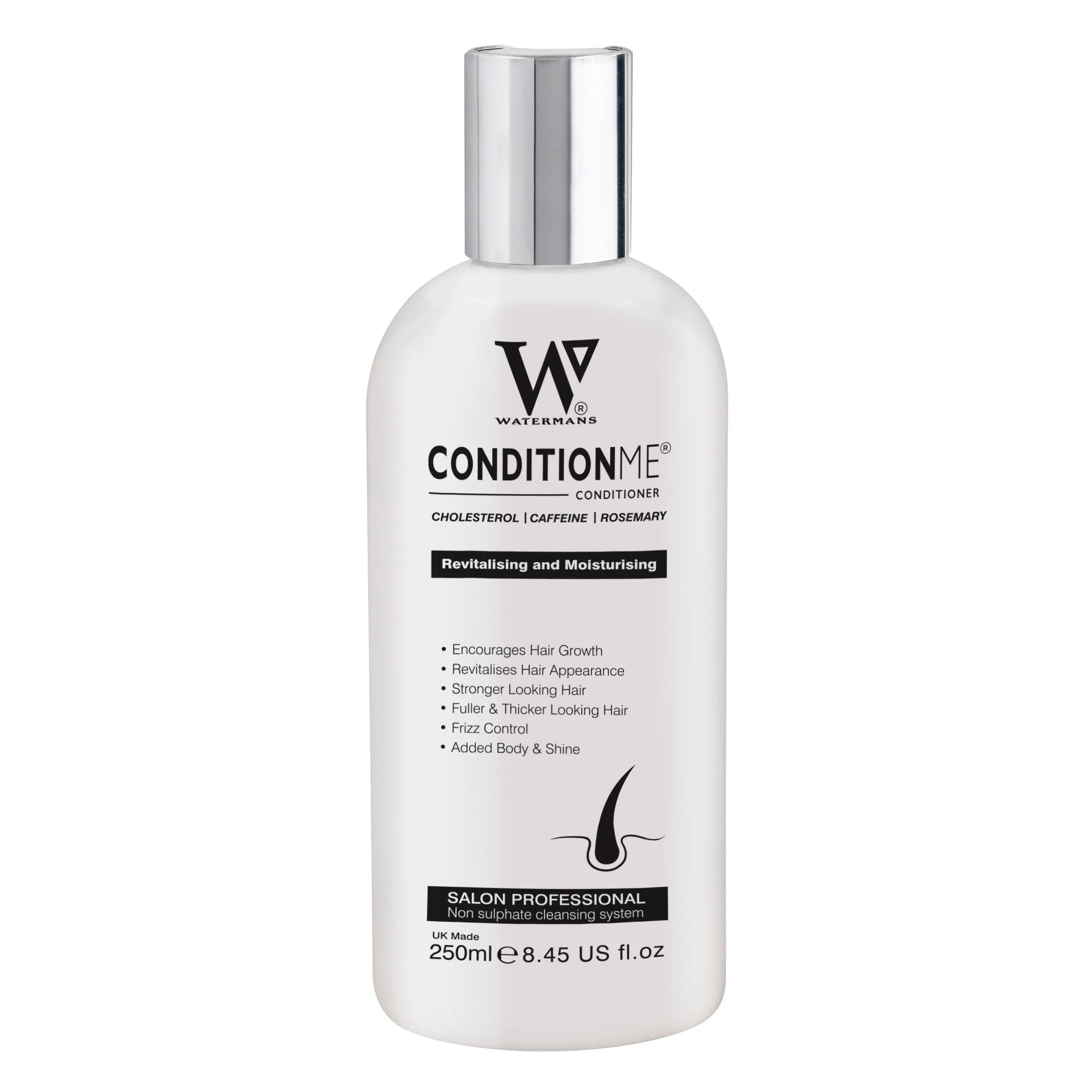
Grow Me Hair Growth Shampoo, 14.95 GBP
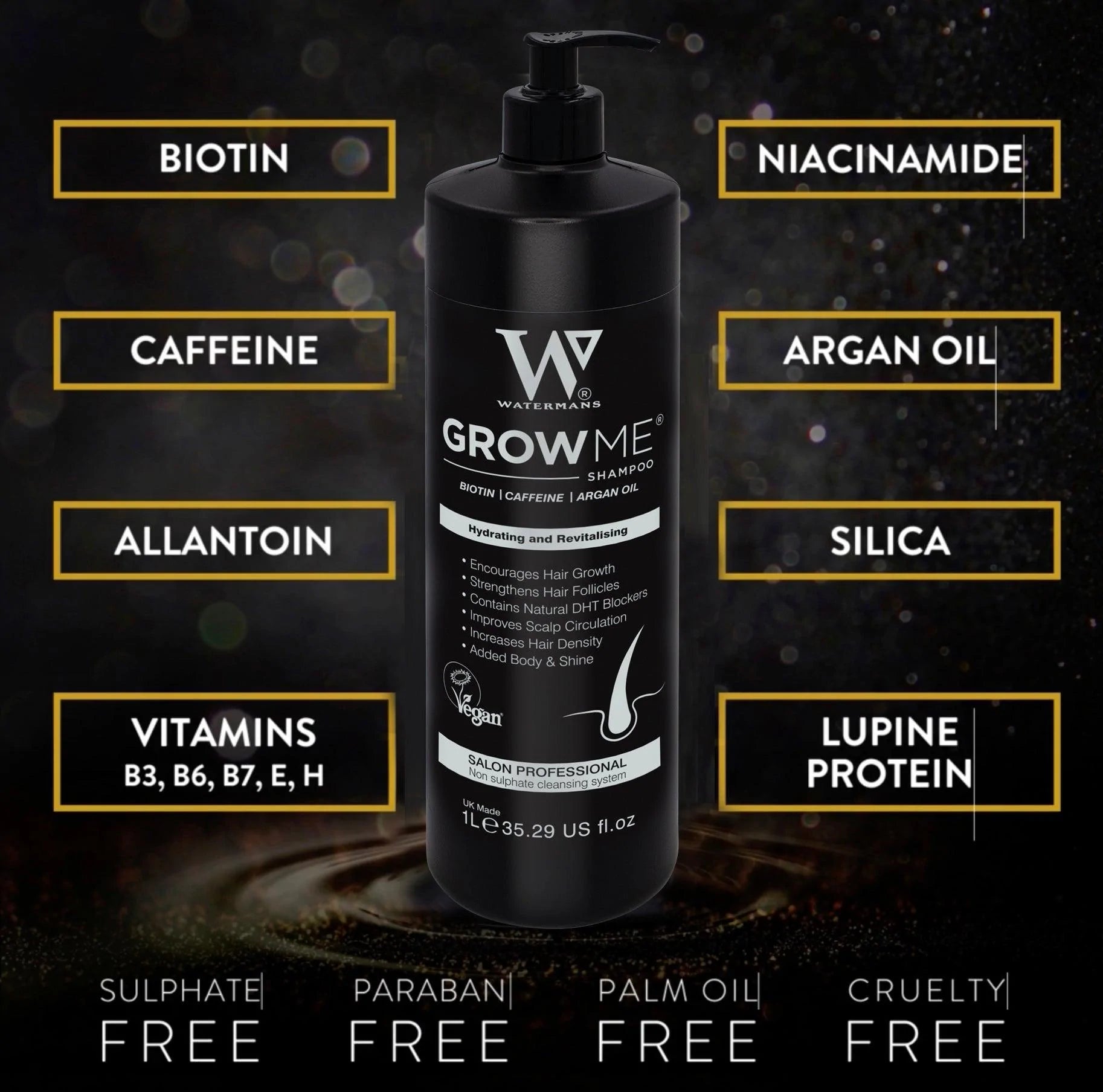
Sulphate-free daily wash with biotin, caffeine, rosemary and niacinamide. Formulated to reduce breakage so hair looks fuller and holds its length. Vegan and made in the UK.
See Grow Me ShampooGet a discount on the thinning hair range
Join the Watermans mailing list and we will email a discount code straight to your inbox, so you can try the thinning hair range for less. Made in the UK, over 6.5 million bottles sold since 2012.
What non-surgical hair restoration men pay clinics for, and does it work?
Tier two is where the money goes and where the marketing is loudest. Three procedures dominate the non-surgical hair restoration men are offered at UK clinics, and all three deserve a more careful look than a before-and-after gallery.
Microneedling uses fine needles to create controlled micro-injuries in the scalp. Reviews of the published work report improvement in hair density when microneedling is used in a course, often alongside other approaches, though most of the studies are small and short. Depth matters and hygiene matters more; a dirty or over-deep roller does harm. Our guide to whether a 0.25mm derma roller is effective covers what the shallow home devices can and cannot do.
Low-level light therapy, sold as laser caps, combs and helmets, has been studied for over a decade. Several controlled studies report modest density gains over sixteen to twenty-four weeks. The devices are expensive, the effect sizes are small, and compliance over months is the practical failure point.
Platelet-rich plasma involves drawing your blood, spinning it, and injecting the concentrated fraction into the scalp. This is the one where good sources genuinely disagree. Some randomised work reports meaningful density improvement; other reviews describe the field as heterogeneous, with inconsistent preparation protocols making studies hard to compare, and at least one placebo-controlled pilot found results that were far less impressive than clinic marketing implies. It is reasonable to try and unreasonable to present as settled.
A fair summary of tier two: real signals, small studies, short follow-up, and costs that run into four figures for a course. Go in with that expectation rather than the one on the website.


Grow More Leave-In Density Serum, 25.50 GBP
An overnight leave-on scalp elixir for lower-density areas at the crown and parting. A sensible companion to a microneedling routine on the nights you are not rolling.
See the Grow More ElixirTier three: which non surgical hair replacement options work the same day?
Non surgical hair replacement changes nothing biological and everything visible, which makes it the most underrated tier of the whole menu. Nobody looking at you can tell the difference between density you grew and density you added.
Scalp micropigmentation places tiny pigment deposits in the scalp to mimic the shadow of closely shaved stubble. On a shaved or very short cut it is convincing, and the published case work describes it as an effective concealing option for localised hair loss. It is a tattoo, so it fades and needs topping up, and the operator matters enormously.
Hair systems have improved beyond recognition. A well-fitted modern system on a good hairline, maintained properly, is genuinely hard to spot. The honest costs are the ongoing maintenance appointments and the fact that it becomes part of your routine forever.
Building fibres are the cheapest and fastest of all. Electrostatically charged keratin fibres cling to existing hairs and cast shadow across the gaps. They work best on diffuse thinning where hair remains, not on smooth bald scalp, and they last until the next wash.
The haircut itself is the cheapest non-surgical hair restoration men have available, and it routinely beats everything above. Shorter on top reduces the contrast between hair and scalp. Matte products beat shine, because shine reflects scalp. A barber who works with thinning hair every day will do more for the mirror in twenty minutes than most purchases.


Hair Building Fibres 23g, 19.95 GBP
Keratin fibres that cling to the hair you have and cover the gaps at the crown and parting in seconds. Washes out. The fastest way to change what the mirror shows.
See Hair Building FibresHow do you choose between the non surgical hair replacement options?
Choosing a non surgical hair replacement comes down to four questions: how much hair you still have to blend into, whether you want a shaved look or length, how much upkeep you will genuinely keep doing, and whether you need to be able to take it off. A clip-in topper suits a thinning parting with hair around it, a bonded system suits a receded front with hair left at the sides, pigmentation suits a shaved head, and fibres suit diffuse thinning where hair remains.
| Option | Suits | Upkeep | Reversible |
|---|---|---|---|
| Bonded or clipped hair system | Advanced loss at the front or crown, with some hair left for blending | Refit and re-bond every few weeks; the system itself is replaced on a cycle | Yes, but hair underneath needs care while it is covered |
| Hair topper | Thinning at the parting or crown with hair to clip into | Daily clip-in, wash as the maker directs | Yes, instantly |
| Full wig | Diffuse or near-total loss, or hair loss during medical care | Washing, styling and eventual replacement | Yes, instantly |
| Scalp micropigmentation | Shaved or very short styles, or a scar line | Top-ups as it fades, over years | No, it is a tattoo, although it fades |
| Hair building fibres | Diffuse thinning where hair remains | Reapply after each wash | Yes, washes out |
Price is the other question, and the NHS gives a useful benchmark for one end of it. In England an NHS stock modacrylic wig costs £80.15, a partial human hair wig £212.35 and a full bespoke human hair wig £310.55, and wigs are free for under 16s, for 16 to 18 year olds in full time education, for hospital inpatients and for people on qualifying benefits or with an HC2 certificate. Private non surgical hair replacement runs well above that once fitting and maintenance visits are included, so ask any provider for the first year total, not the price of the piece alone.
Before you commit to a hair system, ask about the base material (lace, polyurethane or a mono mesh), how it attaches (tape, adhesive or clips), how often it needs refitting, how long a system lasts before replacement, and whether you can trial a fitting first. If a clip-in piece is more your speed, our guide to hair toppers covers base size, colour matching and the care the hair underneath still needs.
How much does each tier cost, and how fast does it show?
| Option | Rough UK cost | Time to visible change | Strength of evidence |
|---|---|---|---|
| Routine and breakage control | 15 to 60 GBP | 4 to 12 weeks | Strong for breakage, cosmetic only |
| Microneedling course | 30 GBP at home, 400 GBP plus in clinic | 3 to 6 months | Moderate, small studies |
| Low-level light device | 200 to 900 GBP | 4 to 6 months | Modest, mixed |
| Platelet-rich plasma course | 1,000 to 2,500 GBP | 3 to 6 months | Contested, protocols vary |
| Scalp micropigmentation | 1,000 to 3,000 GBP | Immediate | Cosmetic, works as described |
| Building fibres | 20 GBP | Seconds | Cosmetic, works as described |
When should you see a GP instead of shopping?
Some hair changes are a medical matter and no purchase is the right first step. See a GP if hair comes out in discrete round patches, if the scalp is sore, scaly, red or scarring, if hair loss arrives suddenly and heavily rather than gradually, if it follows a new medicine or a serious illness, or if you have other symptoms such as fatigue, weight change or brittle nails that might point to something systemic. A GP can arrange blood tests and, where it is warranted, a referral to a dermatologist who can discuss the regulated medical routes available in the UK. Watermans does not run clinics and cannot assess your scalp, so this is genuinely a different door, not a soft sell. If your question is about products or a routine rather than a medical one, you can talk to Gail Waterman, our co-founder, as an AI avatar on the Watermans homepage.
It is also worth understanding the shape of what you are dealing with before you commit money. Our explainer on pattern hair loss stages and causes and the piece on the hair growth cycle both help you read your own timeline properly.
Frequently asked questions
Is non surgical hair replacement the same as a wig?
A wig is one form of it. The term also covers partial hair systems bonded or clipped to the scalp, hair toppers that clip into existing hair, scalp micropigmentation and building fibres. The common thread is that nothing is implanted and nothing changes at the follicle, so the result is immediate and, apart from pigmentation, reversible.
What is the best non-surgical hair restoration men can start with?
The daily foundation, because it costs least and helps in every scenario. Fix the wash and detangling routine, keep the scalp comfortable, check iron and protein intake, and get a cut that suits the density you have. Only then consider paying for a clinic course.
Do hair systems look natural now?
Yes, far more than their reputation suggests. A modern system fitted by an experienced technician, with a properly designed hairline and regular maintenance, is difficult to detect. The commitment is the ongoing upkeep rather than the initial fitting.
Is scalp micropigmentation worth it?
For men who already wear their hair very short or shaved, it is one of the most convincing options available and the published case work supports it as a concealing technique. It suits a shaved look far better than an attempt to fake length. Choose the practitioner on their healed work, not their fresh work.
How long before any of this shows?
Appearance-changers are immediate. Routine changes show over one to three months as breakage falls. Clinic courses need three to six months before a fair judgement, because the growth cycle itself moves slowly.
Can shampoo restore hair that has already gone?
No, and any brand implying otherwise is overselling. A cosmetic shampoo works on the fibre and the scalp. It can reduce breakage and make hair look fuller and healthier, which is a genuine and visible benefit, but it does not change follicular biology.
Does massaging the scalp help?
The evidence is thin but it is free, pleasant and harmless, and it encourages people to handle their scalp gently rather than scratch at it. Think of it as a good habit rather than a strategy.
Are hair vitamins worth buying?
Only if you are genuinely short of something. Correcting low iron or inadequate protein can make a real difference. Adding nutrients you already have enough of will not.
Will stopping a clinic course undo the results?
Generally yes for anything that works by ongoing stimulation. Density gained from a course tends to drift back once the course stops, so factor the ongoing cost in from the start rather than treating it as a one-off.
What is the bottom line on non surgical hair replacement?
The bottom line on non surgical hair replacement is that the option men actually get value from is rarely the most expensive thing on the menu. Work out first whether you are dealing with loss, shedding or breakage, because they need different responses. Exhaust the free and cheap tier properly before paying for a clinic course, since it improves every scenario. Read tier two as promising rather than settled, and budget for the ongoing commitment. And do not dismiss tier three: a good cut, a matte product and a tub of fibres change what you see in the mirror this morning, which is what most men actually wanted from the outset. Laser caps and combs are the other non-surgical option men ask about, and our low level laser therapy guide explains what to check before buying one.
If you want something to act on today, the Grow Me hair growth shampoo is the simplest place to begin. Made in the UK, with over 6.5 million bottles sold since 2012.
Watermans products are 100% cosmetic and do not treat medical hair loss. Individual results may vary.
Grow Me shampoo is vegan, Watermans is made in the UK, and we have sold over 6.5 million bottles since 2012.
Sources and References
- NHS. Hair loss. Accessed August 2026.
- NHS. Vitamins and minerals: Iron. Accessed August 2026.
- NHS. Wigs and fabric supports on the NHS. Charges and exemptions in England, accessed October 2026.
- Physical Treatments and Therapies for Androgenetic Alopecia. Journal of Clinical Medicine, 2024. PMC11313483.
- Clinical Efficacy and Mechanisms of Microneedling Alone or Combined With Drugs in the Treatment of Androgenetic Alopecia. Journal of Cosmetic Dermatology, 2026. PMC12883901.
- Promises and Pitfalls of Regenerative Therapies for Androgenetic Alopecia: Platelet-Rich Plasma, Photobiomodulation. Medical Sciences, 2025. PMC12821594.
- Scalp micropigmentation: a concealer for hair and scalp deformities. Journal of Clinical and Aesthetic Dermatology, 2015. PMC4382144.