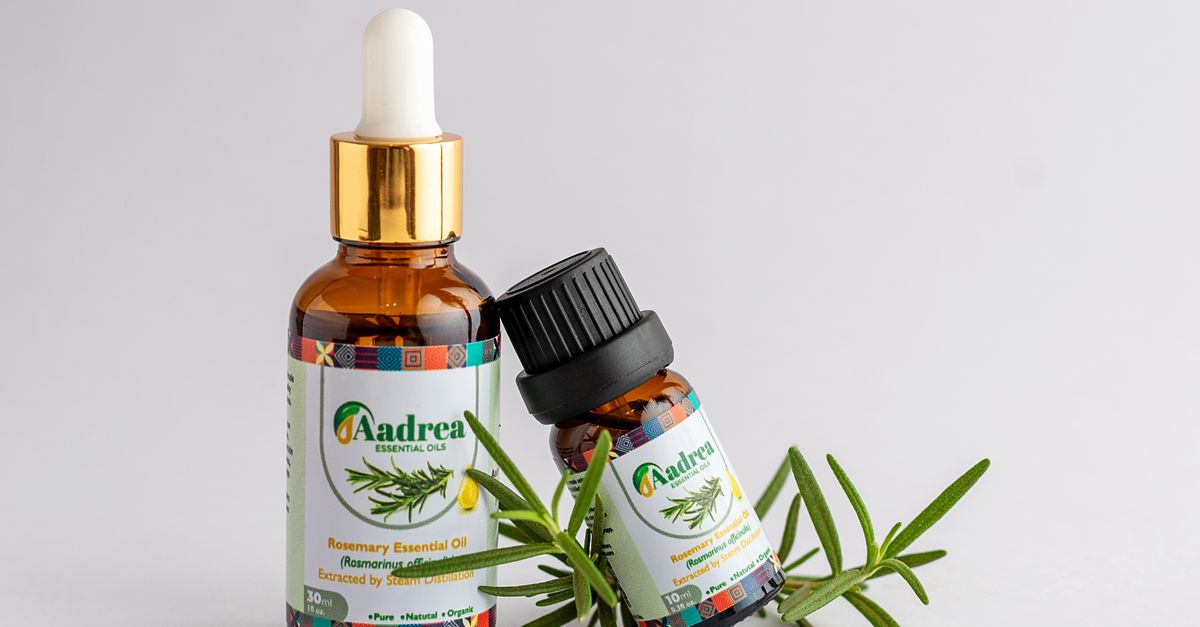
The Best Herbs for Hair Growth: What the Evidence Says
The best herbs for hair growth are the ones with real human research behind them and a sensible job to do, which is a much shorter list than most articles admit. Rosemary has the strongest evidence, peppermint and pumpkin seed have promising early work, and the rest are pleasant to use but largely unproven. None of them are medicines. For the evidence on the most popular herbal option, see our guide to saw palmetto hair loss supplements.
What a well made herbal oil genuinely offers is a calmer, better conditioned scalp and less breakage along the lengths, which makes hair look thicker because you are keeping more of it. Sage is the herb most often suggested alongside rosemary, and we cover sage rinses for hair and their safety in a separate guide.
Our hair and body oil
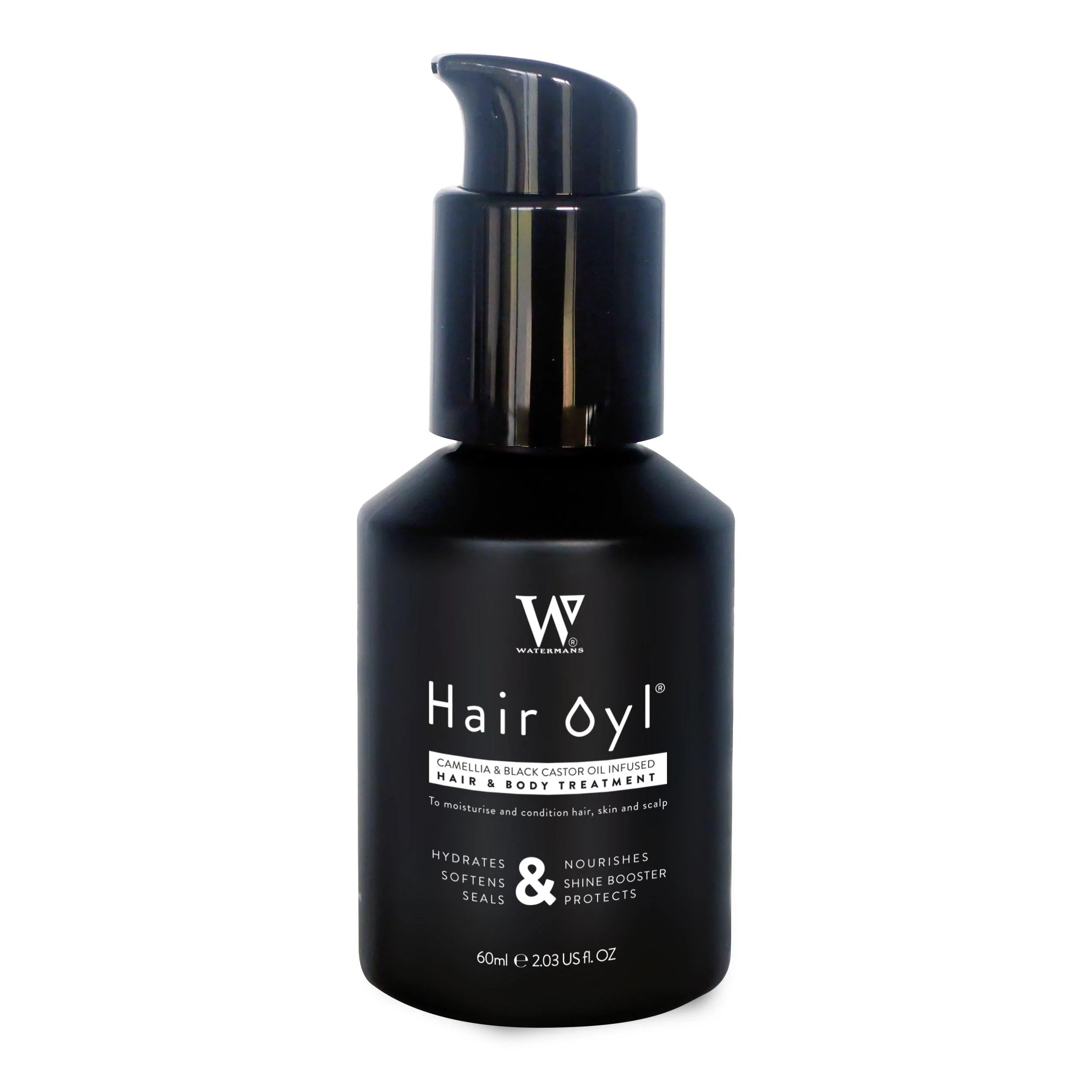
Camellia & Black Castor Hair & Body Oil, £24.95. Adds hydration and shine to dry lengths and smooths the hair before a blow dry, without weighing fine hair down.
Key takeaways
- Rosemary is the single best researched of the best herbs for hair growth, with one small randomised human trial behind it.
- Peppermint and pumpkin seed have encouraging early evidence. Most other herbs have tradition rather than data.
- Herbs work on the scalp environment and on breakage. They do not change a follicle that has already miniaturised.
- Infused oil is safe to make if you keep water out of it, use dried herbs, and store it cool and dark.
- Work out first whether you are dealing with hair loss, shedding or breakage. The answer changes what will help.

What are the best herbs for hair growth, and what can they realistically do?
The best herbs for hair growth fall into three honest groups: a small number with human trial data, a second group with laboratory or animal work only, and a long tail carried by tradition alone. Herbs act on the scalp as skin. They can soften the effects of irritation, add slip and lubrication to the hair fibre, and make combing gentler. That is genuinely worth having, because a large part of what people call thinning is hair snapping off before it reaches full length.
What herbs cannot do is alter the hormonal signalling that drives pattern thinning, or restart a follicle that has shrunk over years. Any article promising that is selling you something. Judge a herb by whether it makes your scalp more comfortable and your hair easier to handle, and you will not be disappointed.
Which herbs have the strongest human evidence?
Rosemary leads, and by some distance. A small randomised comparative trial published in Skinmed in 2015 followed adults with androgenetic alopecia for six months and found rosemary oil performed comparably to the active topical it was tested against, with less scalp itching reported. It was a small study and it has not been replicated at scale, so treat it as encouraging rather than settled.
Pumpkin seed oil has one randomised placebo controlled trial in men from 2014 showing an increase in hair count over 24 weeks, though that was an oral supplement rather than something you rub in. Peppermint oil has a frequently cited 2014 study, but it was carried out in mice, and mouse skin behaves very differently from human scalp. Saw palmetto, nettle, hibiscus, amla, fenugreek and horsetail all have supporters and very little human data. The most popular of those pairings gets its own assessment in our look at what rosemary and mint really do for hair.
| Herb | Strength of evidence | Realistic job |
|---|---|---|
| Rosemary | One small human randomised trial | Scalp comfort, the best supported option |
| Pumpkin seed | One human trial, taken orally | Possible density support, not topical |
| Peppermint | Animal study only | Cooling sensation, unproven in people |
| Nettle, amla, hibiscus | Traditional use, minimal data | Conditioning and slip |
| Fenugreek, horsetail | Laboratory work only | Mucilage, softness, easier combing |
If you want the detail on the rosemary research specifically, we have covered it in full in our guide to what the rosemary oil evidence actually says.
Are you dealing with hair loss, hair shedding or hair breakage?
These three problems look similar in the plughole and respond to completely different things, so naming yours first will save you months. Hair loss means follicles are producing finer, shorter hairs over time, as in androgenetic alopecia. The hair you lose is not replaced like for like, the parting widens, and no herb changes that process.
Hair shedding is a cycle problem. A stress, an illness, childbirth or a crash diet pushes many follicles into their resting phase at once, and about three months later they release together. This is telogen effluvium, it is usually self limiting, and the shed hairs come back on their own. Our guide to what causes telogen effluvium walks through the timeline.
Hair breakage is mechanical. The fibre snaps partway along its length from heat, bleach, tight styling or rough detangling. You see short broken pieces of uneven length rather than whole hairs with a small white root. Breakage is where herbal oils and good conditioning genuinely earn their place, because you are protecting hair you already have.

How do you infuse herbs in oil safely at home?
Infusing is simple, and the one rule that matters is that water and oil do not mix safely. Fresh plant material carries moisture, and moisture in a sealed oil is how you grow bacteria you cannot see. Use properly dried herbs and the process is very low risk. We have a separate guide to lime for hair if that is the part you need. If you want the detail on that, our guide to frankincense oil for hair walks through it step by step.
The slow method: fill a clean, completely dry jar about a third full with dried herbs, cover with your carrier oil to at least two centimetres above the plant material, seal, and leave somewhere warm and dark for two to four weeks, shaking every few days. Strain through muslin, squeeze the herbs out, and bottle into a dark glass container.
The quick method: sit the jar in a pan of water held around 50 to 60 degrees for two to three hours, then strain. It is faster but a little more of the aroma is lost. Either way, label the bottle with the date and use it within about six months.
Safety points worth taking seriously
Always patch test on your inner elbow for 24 hours before putting a new oil on your scalp. Never apply undiluted essential oils. If you are pregnant, breastfeeding or have a broken or inflamed scalp, check with your pharmacist first. Discard any oil that smells sharp, sour or fermented rather than herbal.
If you would rather follow a worked example end to end, our honest guide to making horsetail infused hair oil takes you through one recipe step by step.
Get a discount on the hair growth range
Join the Watermans mailing list and we will email a discount code straight to your inbox, so you can try the hair growth range for less. Made in the UK, over 6.5 million bottles sold since 2012.
Which carrier oil should you choose?
The carrier does more of the practical work than the herb. Lighter oils such as jojoba, grapeseed and sweet almond spread easily and rinse out without a fight, which suits fine hair and anyone applying to the scalp. Coconut oil is unusual in that it penetrates the hair shaft and reduces protein loss during washing, so it is a strong pre wash choice for coarse or damaged lengths, though some people find it drying with repeated use.
Castor oil is thick and sticky and needs blending with something lighter, but it gives a lot of slip and shine. Camellia oil is a good middle ground, light enough for daily use and rich enough for dry ends.

Camellia & Black Castor Hair & Body Oil £24.95
Our Camellia and Black Castor oil is the shop bought version of exactly this idea, a light camellia base carrying black castor oil, so it conditions the lengths and adds shine without the sticky feel of neat castor. Useful as a pre wash treatment or a small amount smoothed through dry ends.
How often should you use a herb infused oil, and for how long?
Once or twice a week is plenty for most people. Warm a small amount, part the hair in sections, apply to the scalp rather than the lengths if scalp comfort is your aim, and massage for a few minutes. Leave it for at least half an hour, or overnight on a towel, then shampoo out. Two washes are often needed.
Give any routine at least three months before judging it. Hair grows roughly a centimetre a month, so nothing shows up sooner than that. The massage itself may be doing as much as the oil, and it costs nothing, which is why we cover technique separately in our guide to scalp massage.
Where do shampoos and conditioners fit alongside herbs?
An infused oil is a weekly ritual. What you do every wash matters more, simply because it happens more often. A shampoo that cleans without stripping and a conditioner that lets a comb pass through without tugging will do more for how thick your hair looks than any herb, because both reduce the breakage that shortens your lengths.

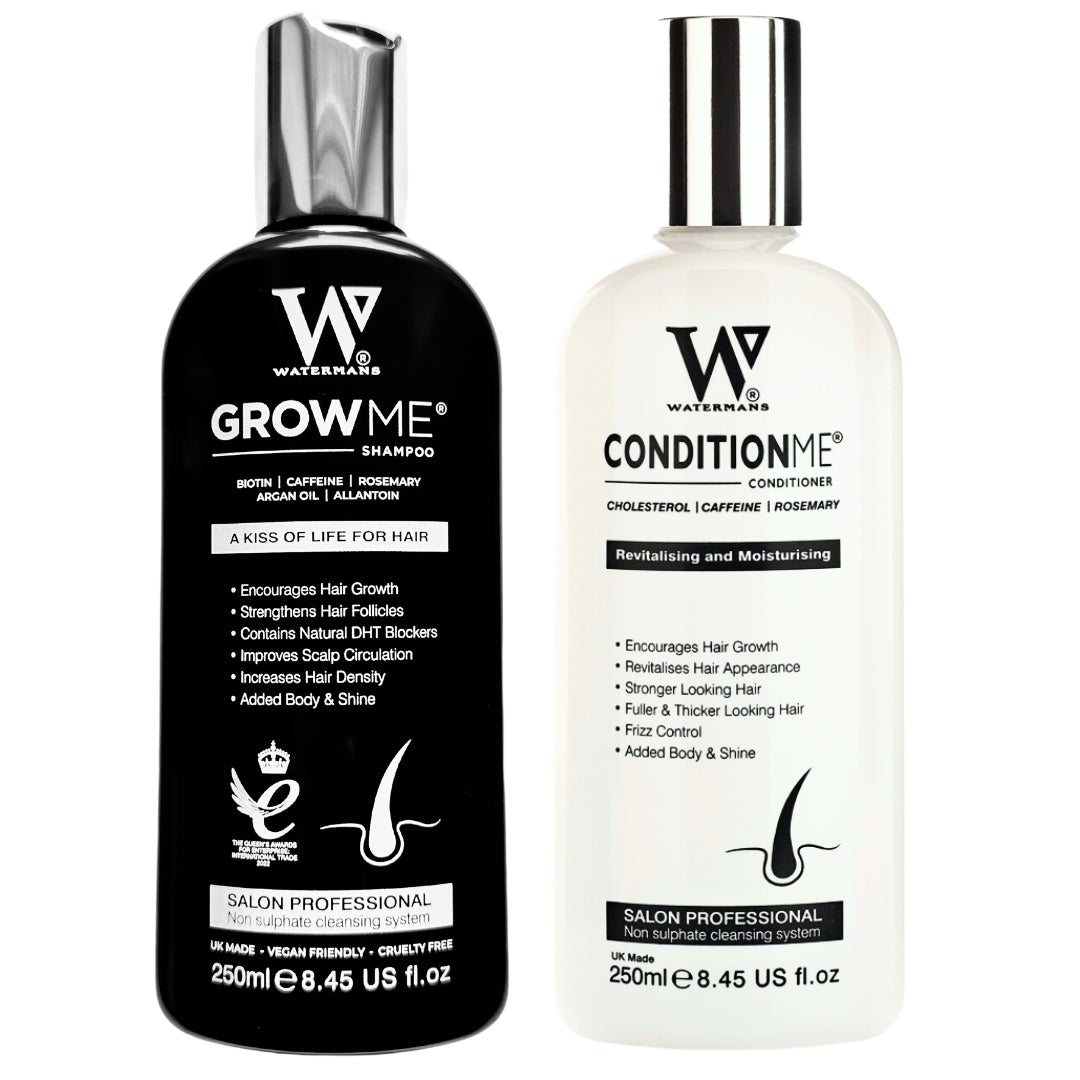
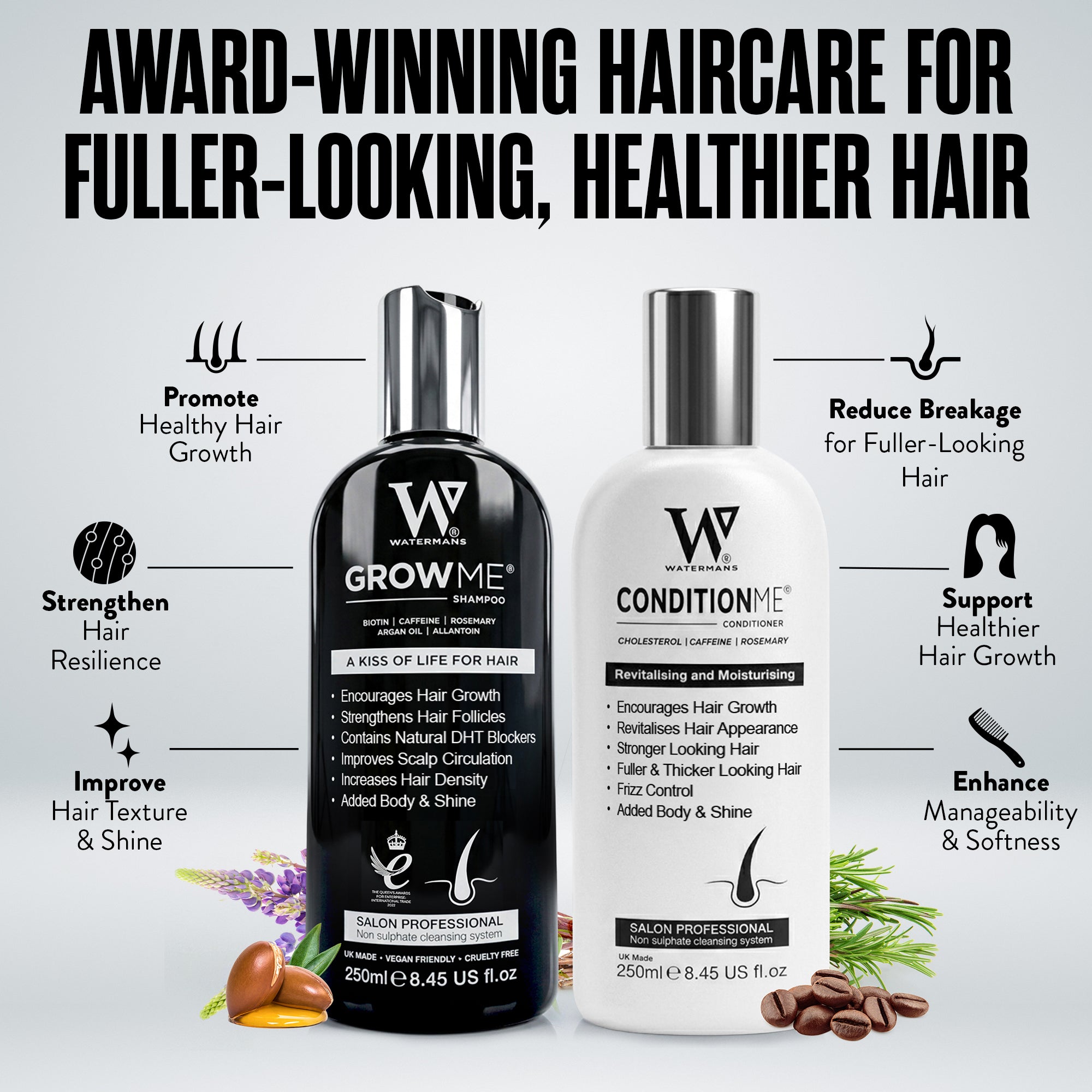
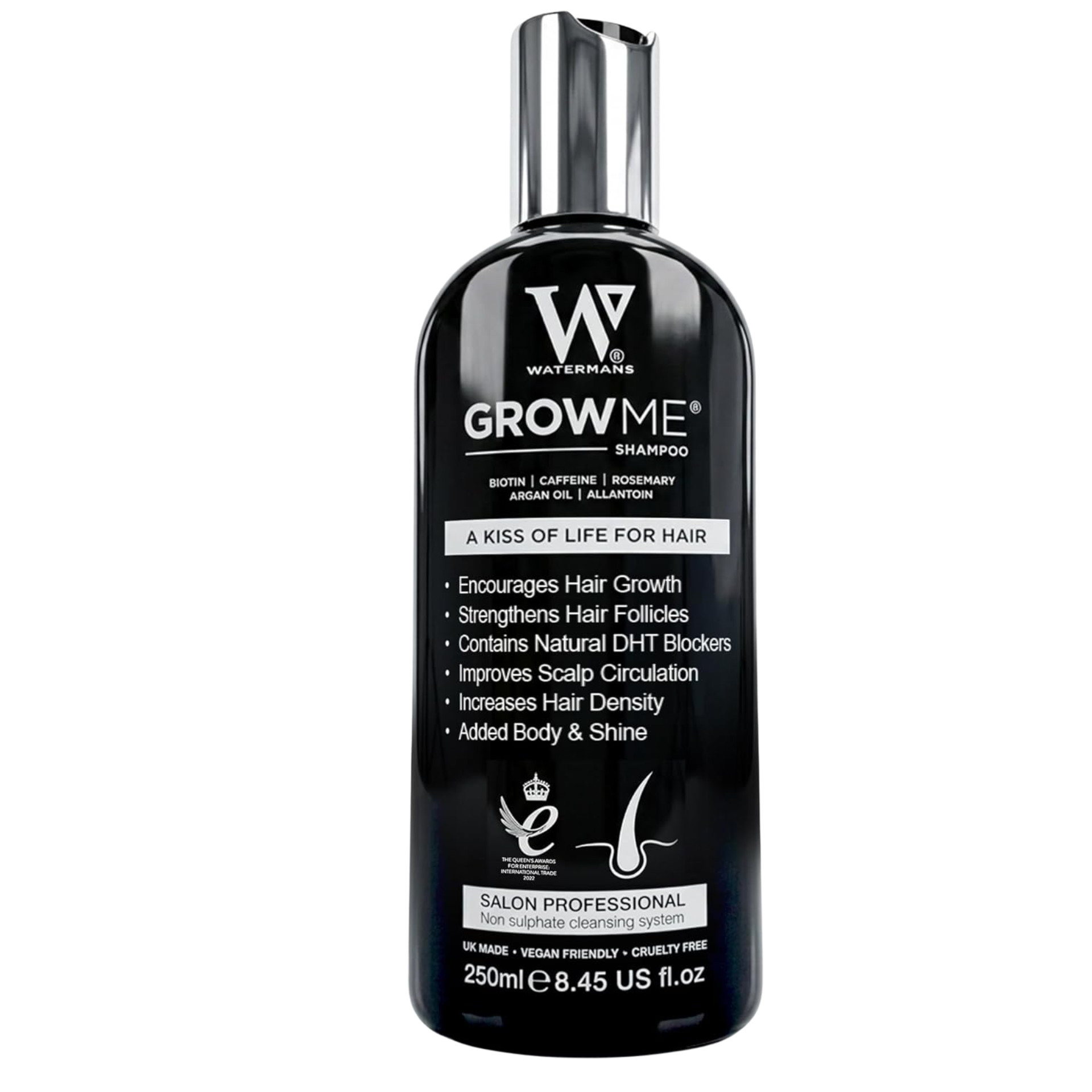
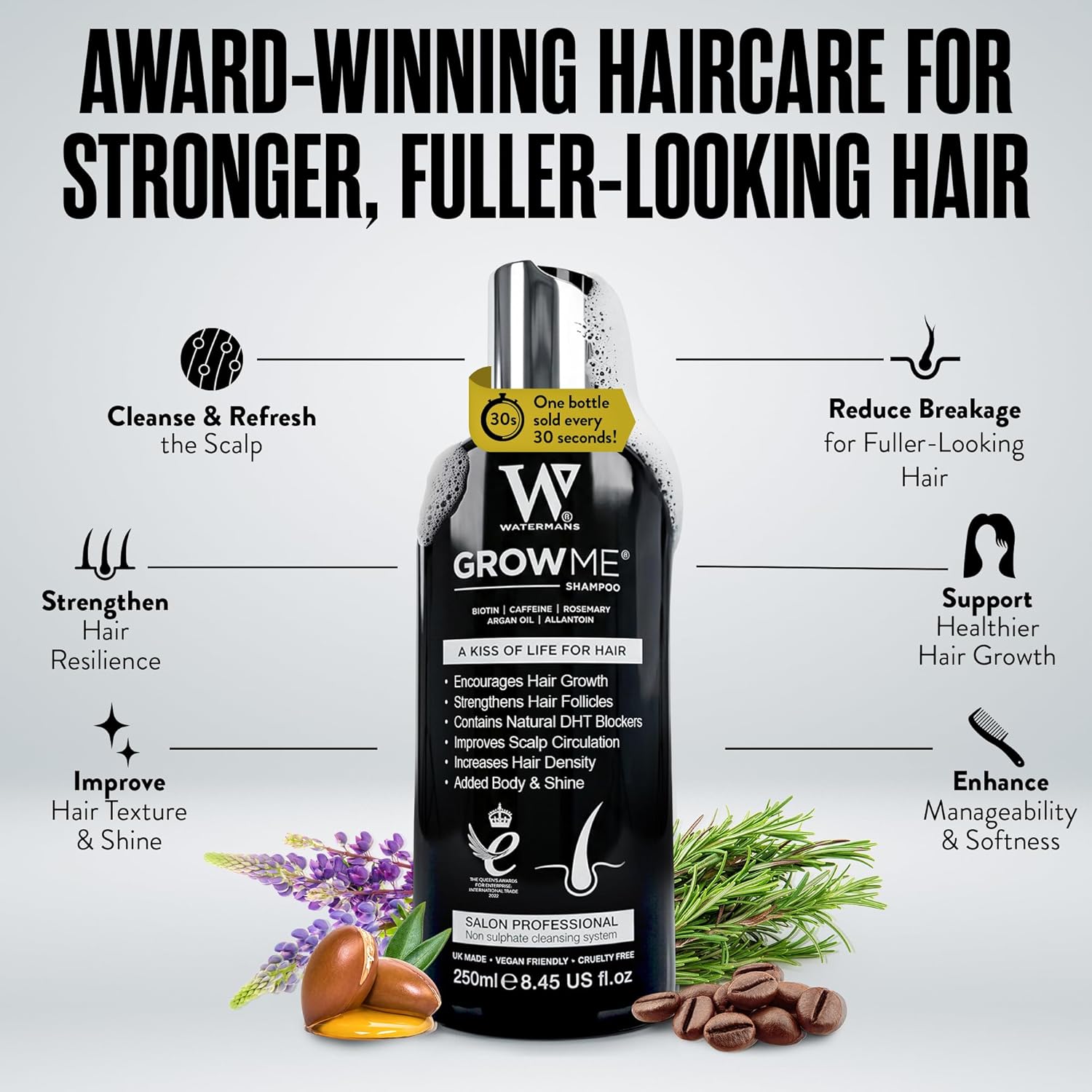
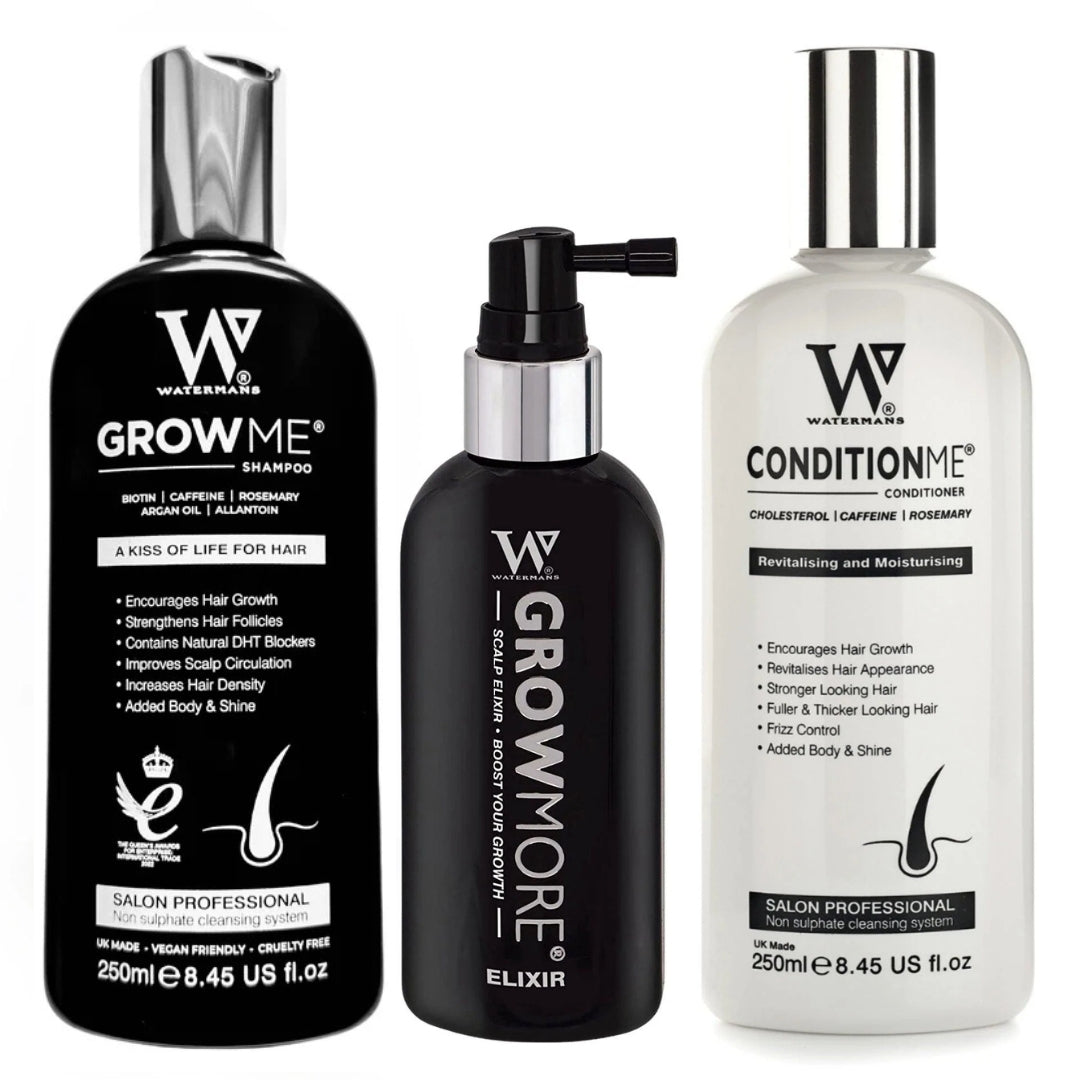
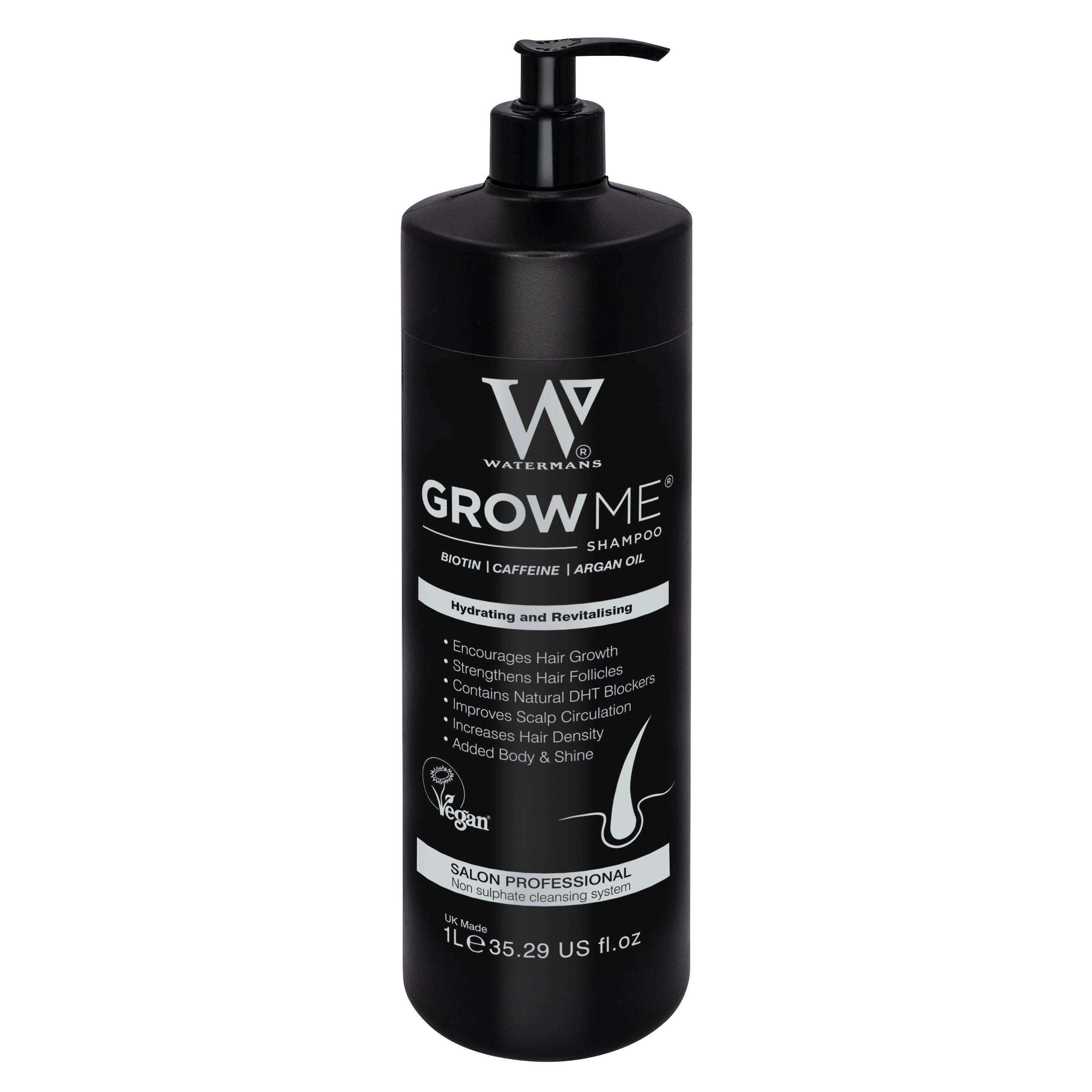
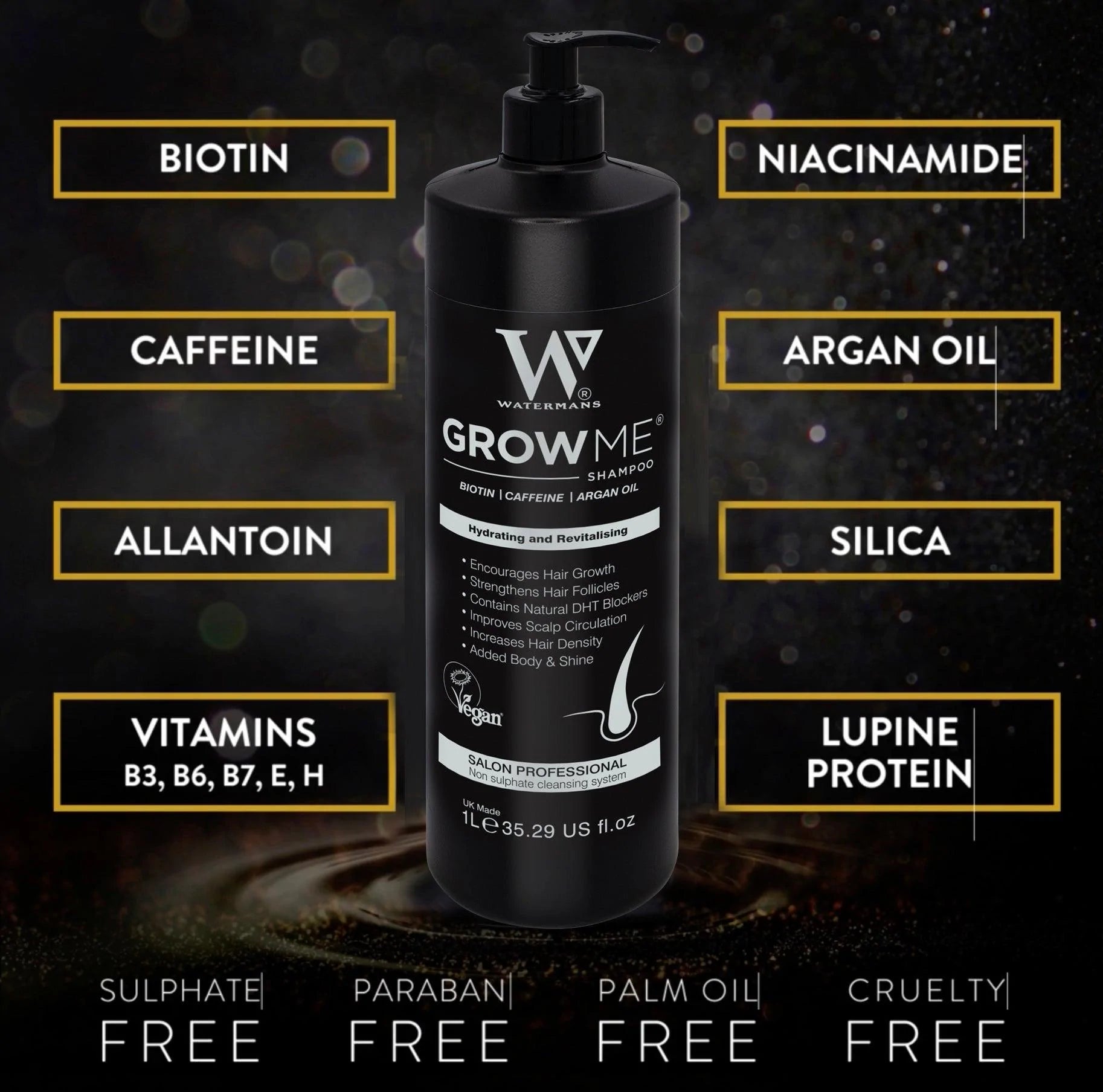
Grow Me® Hair Growth Shampoo £14.95
A sulfate free shampoo built around rosemary, caffeine, biotin and niacinamide, so you get the rosemary theme of this article in the step you actually repeat two or three times a week. Vegan, made in the UK.

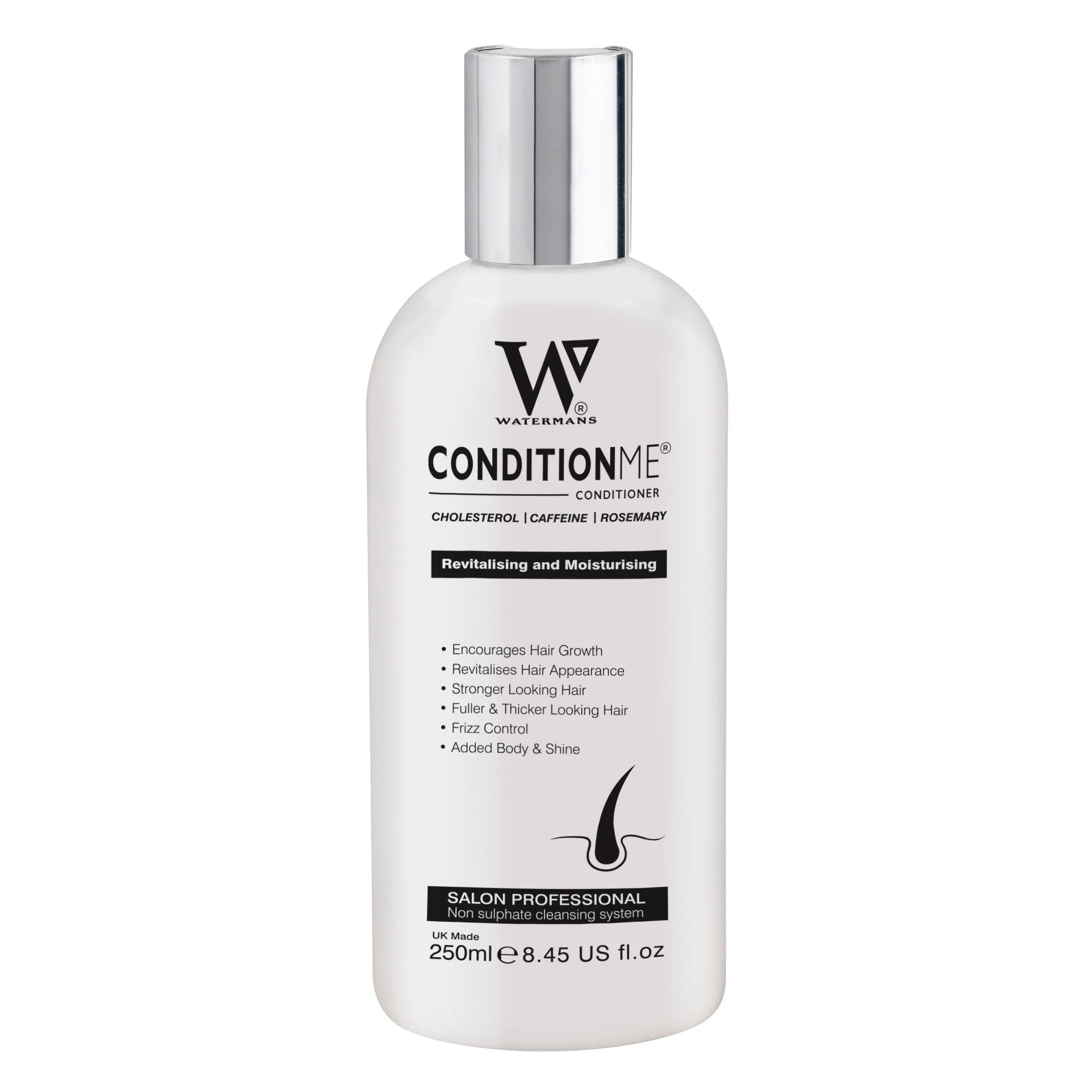
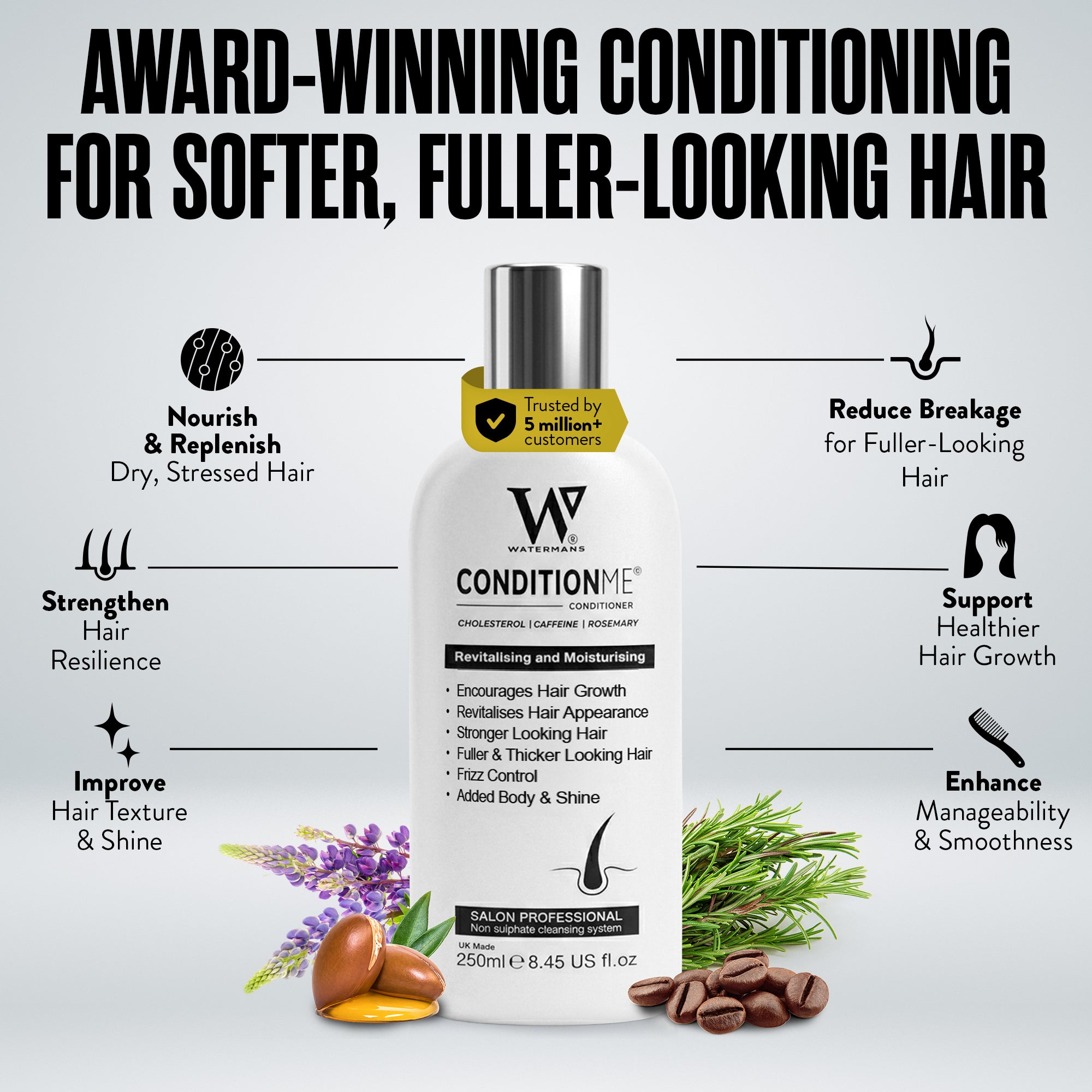
Condition Me® Hair Growth Conditioner £13.95
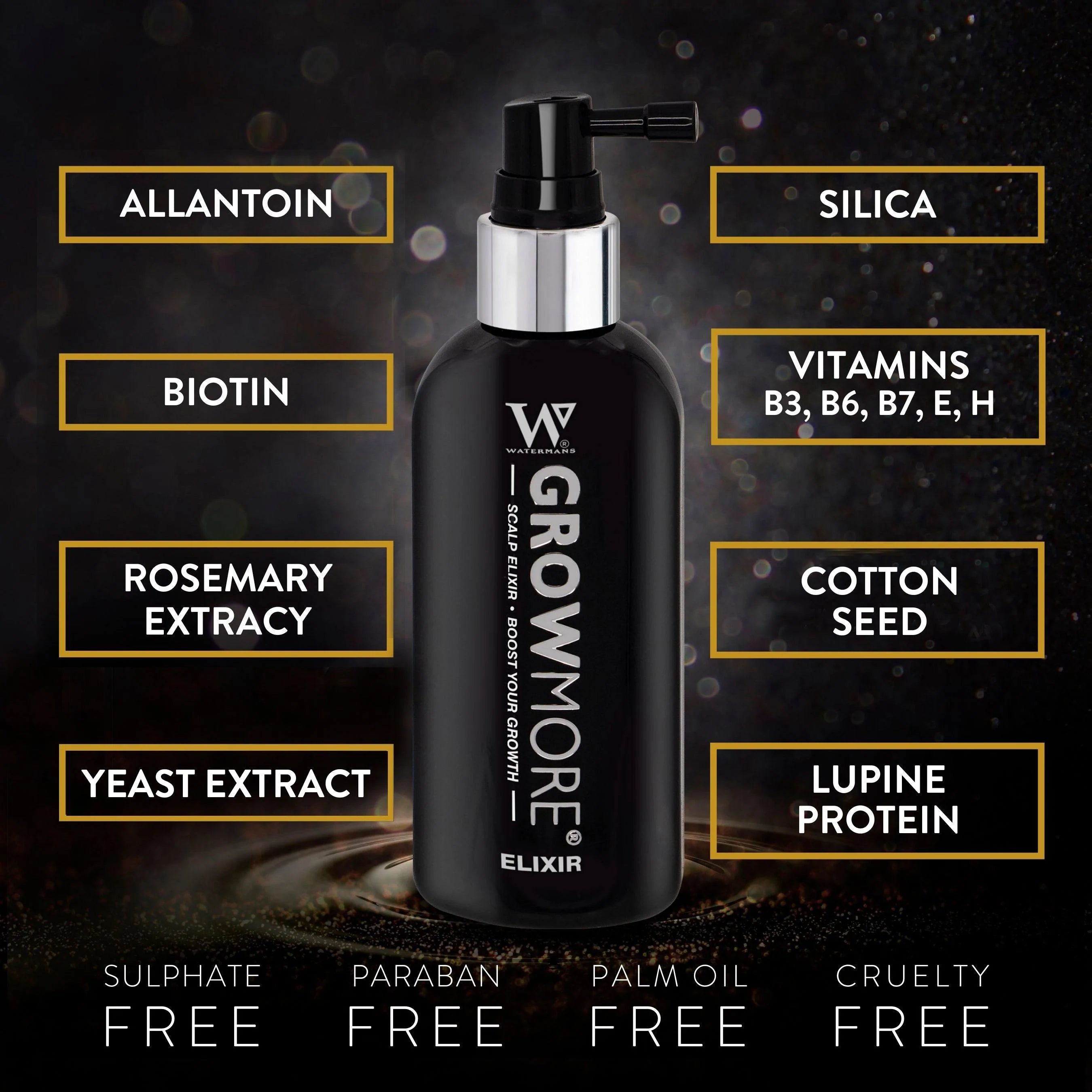
The pair to it. Cholesterol, shea butter and hydrolysed lupine protein give enough slip that detangling stops snapping hair, which is where most everyday breakage happens.
Over 6.5 million bottles sold since 2012, all made in the UK. These are cosmetic products for the look, feel and condition of hair.
When should you speak to a GP or pharmacist?
Herbs are a reasonable thing to try for general scalp comfort. They are not the right answer when something else is going on. Book time with your GP if you notice hair coming out in distinct round patches, if the scalp is sore, scaly, weeping or intensely itchy, if hair loss arrives with fatigue, weight change or altered periods, or if shedding is heavy and has continued beyond about six months. If your question is about products or a routine rather than a medical one, you can talk to Gail Waterman, our co-founder, as an AI avatar on the Watermans homepage.
Sudden or patchy loss in particular deserves a proper look rather than another bottle of oil. The NHS hair loss pages are a sensible, non commercial place to read about the different patterns before you go.
Frequently asked questions
What are the best herbs for hair growth if I only pick one?
Rosemary. It has the only human randomised trial of the group, it is cheap, and it is well tolerated on most scalps. Use it diluted in a carrier oil or in a shampoo that already contains it.
How long does it take to see anything from a herbal oil?
Give it three to six months. Hair grows around a centimetre a month, so a shorter trial tells you nothing. What you may notice sooner is less itching and easier combing.
Can I use fresh herbs instead of dried?
It is better not to. Fresh plant material carries water, and water trapped in oil allows bacteria to grow. If you do use fresh herbs, dry them thoroughly first and use the oil within a few weeks.
Do herbal oils help with a receding hairline?
Not meaningfully. A receding hairline is usually pattern thinning driven by hormones and genetics. An oil can keep the surrounding scalp comfortable and reduce breakage, but it will not change the pattern.
Is it safe to leave oil on overnight?
Yes for most people, provided you have patch tested and you are not applying neat essential oils. Use a towel on the pillow and wash it out properly in the morning.
Are shop bought herbal products better than homemade?
They are more consistent and preserved properly, which matters for shelf life. Homemade is cheaper and you control what goes in. Both are cosmetic products either way.
Can herbs help hair breakage as well as thinning?
Yes, and breakage is where they help most. Oils add lubrication so the fibre bends and slides instead of snapping, which keeps more length on your head.
What is the bottom line on best herbs for hair growth?
The best herbs for hair growth are rosemary first, then pumpkin seed and peppermint with thinner evidence, and everything else on tradition rather than proof. Used as an infused oil once or twice a week, they make the scalp more comfortable and the hair easier to handle, which reduces breakage and helps hair look fuller. Keep water out of your infusion, patch test, give it three months, and get anything sudden, patchy or painful looked at properly rather than treating it at home.
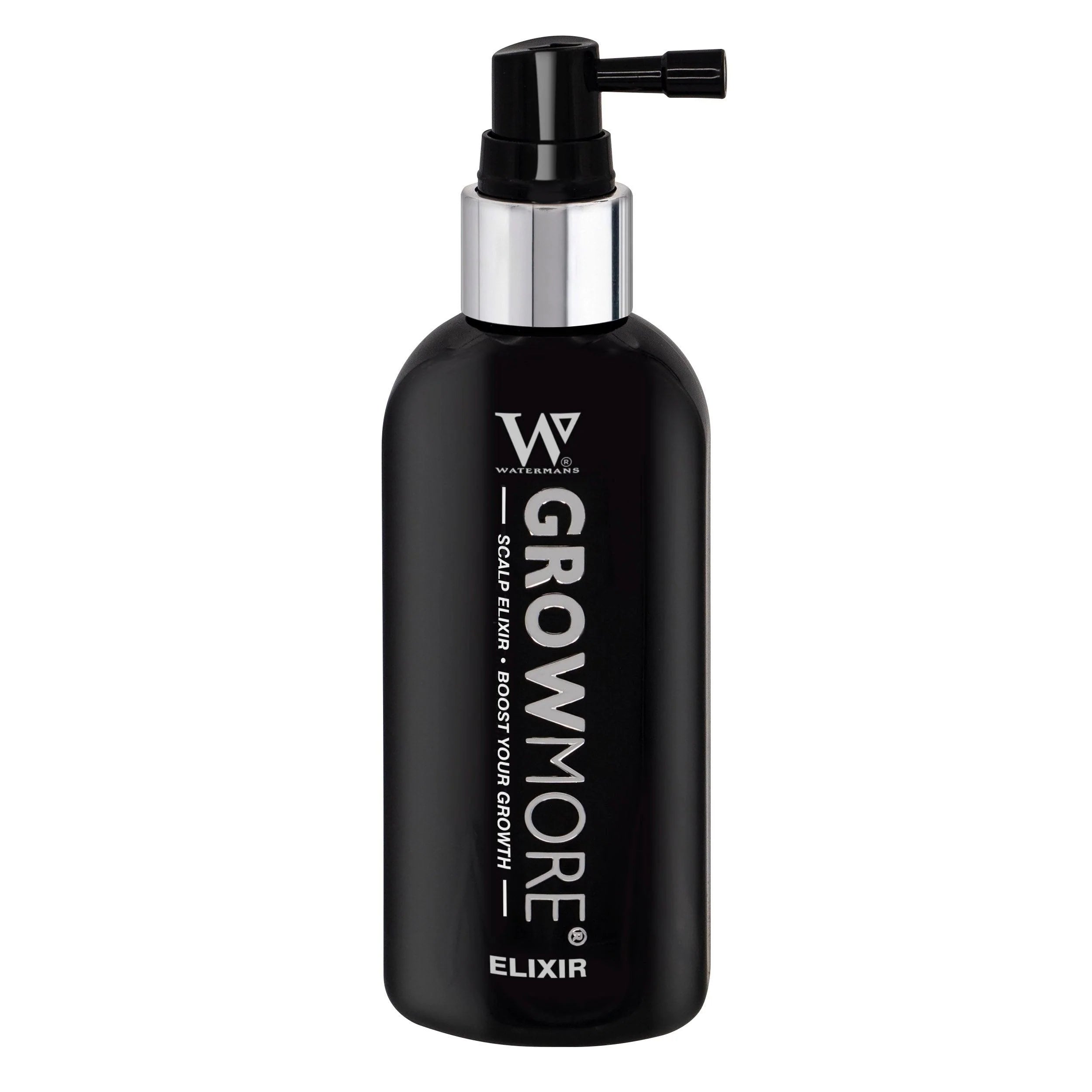
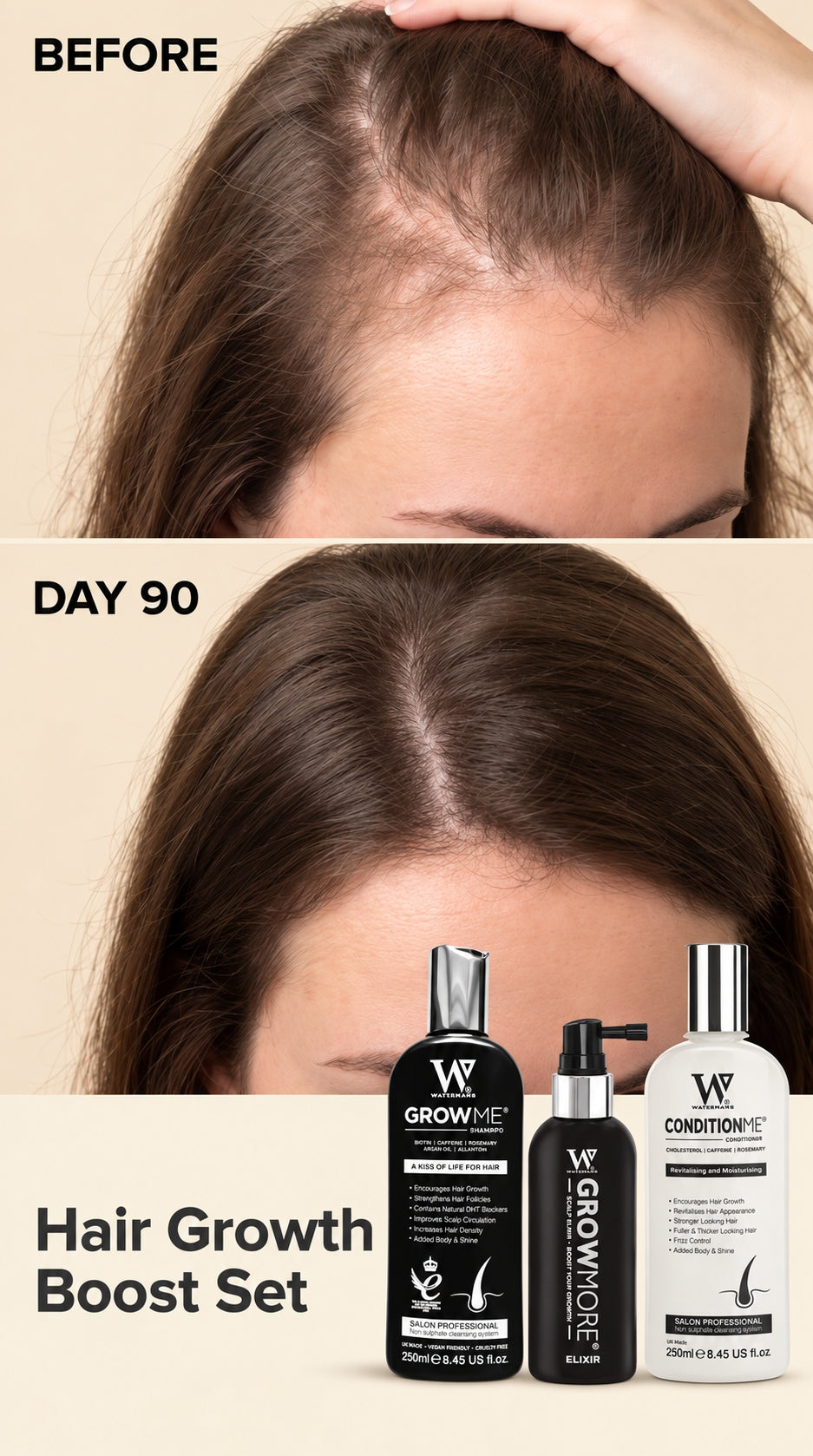
Most routines fall over because they are complicated, so start with Grow Me hair growth shampoo and nothing else. Vegan, made in the UK.
Sources & References
- Panahi Y and others (2015). Randomised comparative trial of rosemary oil in androgenetic alopecia, six month follow up. Skinmed. PubMed 25842469
- Cho YH and others (2014). Effect of pumpkin seed oil on hair growth in men with androgenetic alopecia: a randomised, double blind, placebo controlled trial. Evidence-Based Complementary and Alternative Medicine. PubMed 24864154
- Oh JY and others (2014). Peppermint oil promotes hair growth without toxic signs (animal study). Toxicological Research. PubMed 25584150
- NHS. Hair loss: causes, patterns and when to see a GP. nhs.uk
Watermans products are 100% cosmetic and do not treat medical hair loss. Individual results may vary.