Shampoo for Oily Scalp: How to Choose One and Use It Properly
A shampoo for oily scalp is a lightweight wash that clears scalp sebum from the roots without stripping the skin, used as often as the roots need it and kept away from the ends. Scalp sebum is the oil produced by sebaceous glands attached to each hair follicle. It keeps the skin barrier intact and gives hair its natural shine, but too much leaves roots flat within a day while the ends stay dry. The right shampoo manages the distribution, because nothing applied to the skin changes how much oil the scalp makes.
Our hair growth shampoo
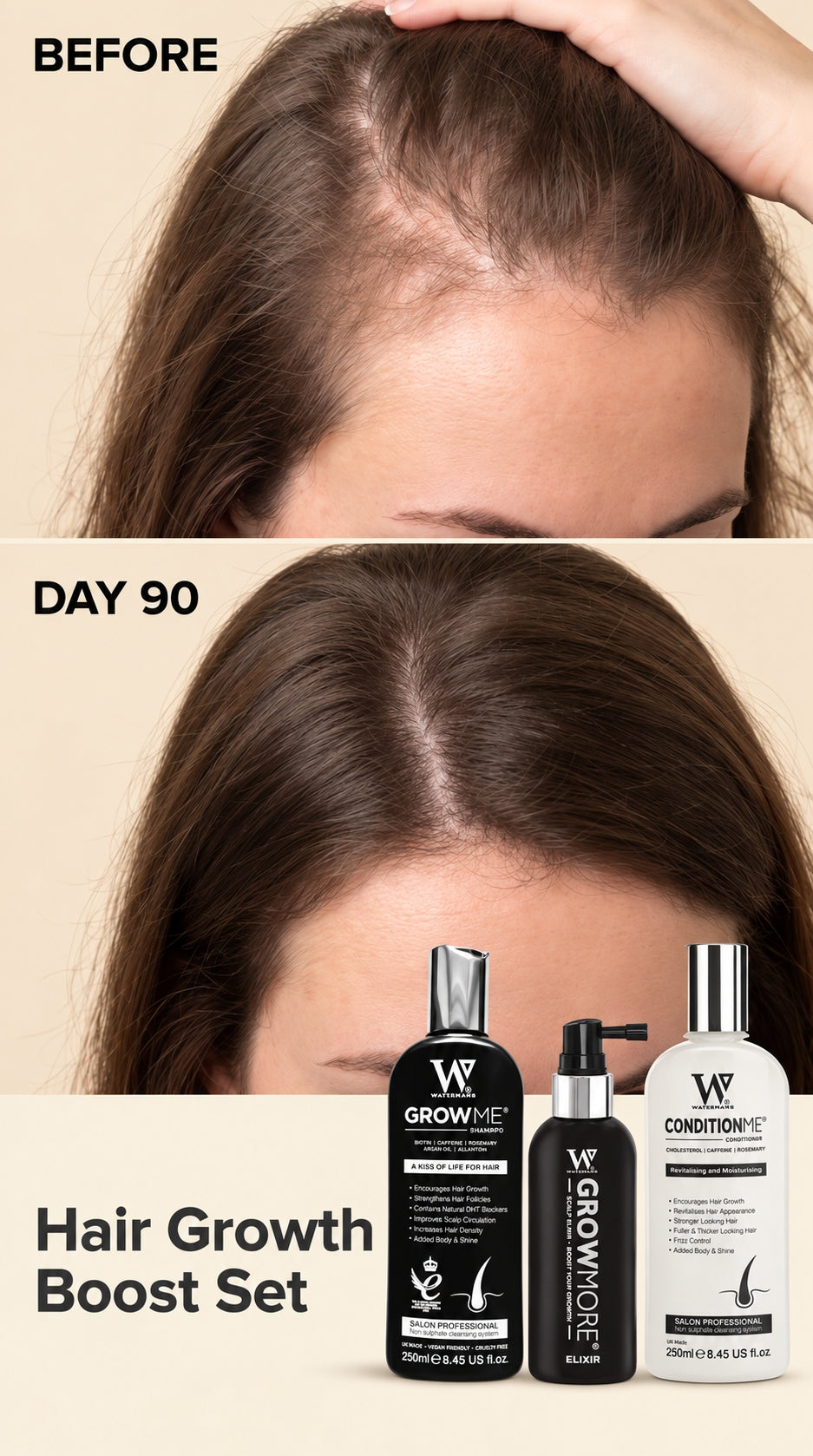
Grow Me® Hair Growth Shampoo, £14.95. A sulphate free daily shampoo that supports a healthy scalp environment and helps reduce breakage, so lengths hold on and look fuller.
Key takeaways
- Sebum is normal and useful. The goal is managing how much sits at the roots, not eliminating it.
- A shampoo for oily scalp should be light, rinse clean and be used as often as you need it. Harsh, stripping formulas backfire.
- The scalp has one of the highest densities of sebaceous glands on the body, which is why it gets greasy faster than your arms.
- Washing less does not train your scalp to produce less oil. Production is driven by hormones and genetics.
- Oily roots with dry ends is the most common pattern. It calls for different products at the root and the lengths.
- Persistent flaking, itching or redness is a scalp condition, not just oil, and is worth a pharmacist or GP visit.
What is scalp sebum and what does it do?
Scalp sebum is an oily mixture of triglycerides, wax esters, squalene and fatty acids, made by sebaceous glands that sit alongside each follicle and empty into the follicle channel. It travels up with the hair, spreads down the fibre, and forms part of the skin barrier that keeps water in and irritants out. It is not dirt.
Its useful job is lubrication and protection. Hair coated in a thin film of its own oil is smoother, shinier, less prone to static and slightly better protected against water loss. The problem is purely one of distribution. The oil is produced at the root, so the root gets the most and the ends, sometimes two years of growth away, get almost none.

What controls how much oil your scalp produces?
Hormones and genetics do most of it, which is why production is highest in the teens and twenties and tends to fall with age. Androgens increase the size and output of sebaceous glands, so the same hormonal shifts that drive acne also drive an oily scalp. Nothing applied to the skin surface changes that underlying rate.
Temperature and humidity add a smaller, real effect: warm weather thins the oil and makes it spread faster, which is why hair looks greasy sooner in summer. Some medicines change oil production as a side effect, which is a conversation for your GP or pharmacist rather than a reason to change shampoo. If your question is about products or a routine rather than a medical one, you can talk to Gail Waterman, our co-founder, as an AI avatar on the Watermans homepage.
What actually drives an oily scalp
| Factor | Effect on scalp sebum | Can you change it? |
|---|---|---|
| Hormones and age | The largest driver. Peaks in teens and twenties, declines later | No, and products claiming to are overselling |
| Genetics | Sets your baseline gland size and output | No |
| Heat and humidity | Oil spreads faster and feels heavier | Partly. Wash frequency can follow the season |
| Washing frequency | Changes how much has accumulated, not how much is made | Yes, and this is the practical lever |
| Touching and brushing | Moves oil from roots down the hair and from hands onto hair | Yes, and it cuts both ways |
Does washing less reduce oil production?
No. The idea that the scalp can be trained to produce less by washing less is not supported: production is set by hormones and gland size, not by how recently oil was removed. What changes during a washing break is your tolerance for how the hair looks, and how much oil has accumulated, which is a different thing entirely.
There is a grain of truth underneath the myth. Over-washing with a harsh sulphate shampoo can leave the scalp tight and irritated, and irritated skin flakes, so people conclude that washing is the problem. The fix there is a gentler shampoo, not a longer gap. If your scalp is genuinely oily, washing daily with something mild is perfectly reasonable and is what most dermatology guidance suggests for oily scalps.
Oily roots, dry ends, one head of hair
Handle the two zones as separate. Shampoo belongs at the scalp and is the only thing that needs to go there. Conditioner and masks belong from the mid-lengths down and should not touch the roots. Most people do the opposite of this and then wonder why their roots are flat and their ends are rough.
How should you wash an oily scalp?
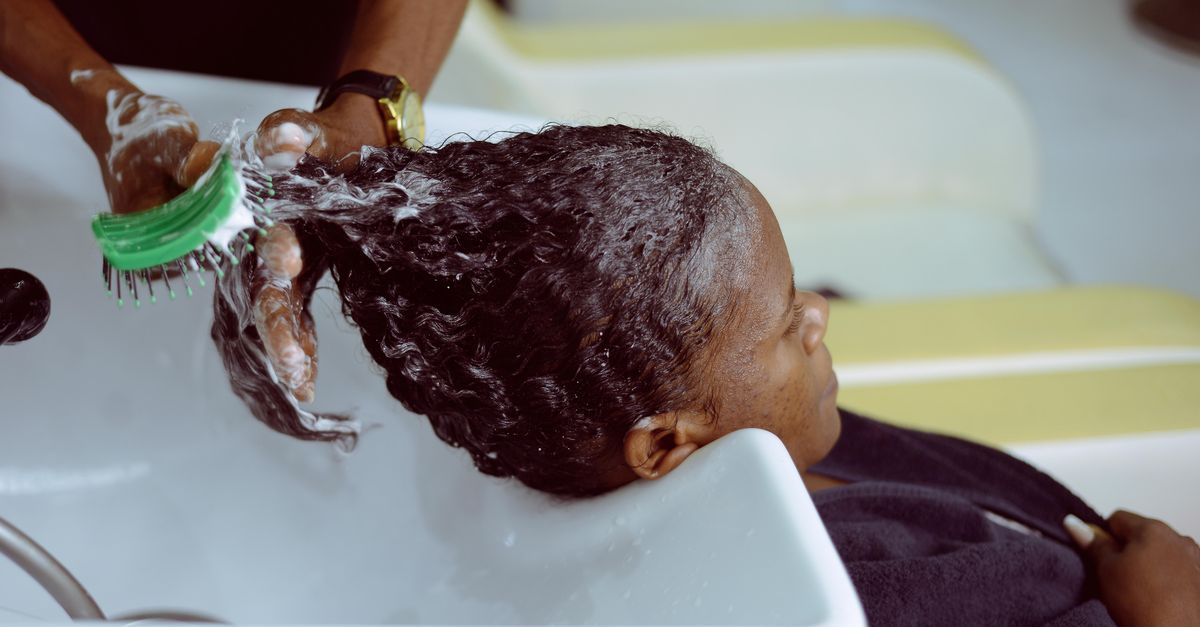
Lather twice at the scalp only, using fingertips rather than nails, and rinse for longer than feels necessary. The first lather lifts oil and product; the second actually cleans. Concentrate on the scalp and let the runoff handle the lengths, because dragging shampoo down long hair strips ends that had almost no oil to begin with.
Water temperature matters less than people think, though very hot water is uncomfortable on an irritated scalp and encourages scratching. Rinse until the hair genuinely squeaks nothing and feels clean rather than slippery. Leftover shampoo and conditioner at the roots is a common and avoidable cause of hair looking greasy the day after a wash.

What should you look for in a shampoo for oily scalp?
A shampoo for oily scalp should clean the roots thoroughly with a light, rinse clean formula, carry no heavy conditioning agents or oils that resettle on the scalp, and be mild enough to use every day if that is how often your roots need it. The NHS advice for dandruff, which often travels with an oily scalp, is a separate shelf: an anti-dandruff shampoo used for up to 4 weeks before you judge it.
The label tells you more than the front of the bottle. Lightweight cleansers, a short ingredient list and no silicones or butters high up the list are the signs of a wash that will not leave a film behind. The word "clarifying" is not a daily shampoo for oily scalp; it is the fortnightly reset described below.
| What to check | What to look for | Why it matters |
|---|---|---|
| Cleansing base | A lightweight, rinse clean surfactant blend | Heavy, creamy washes leave conditioning agents at the roots, which is exactly where oil already collects. |
| Conditioning agents | None, or very low in the list | Silicones, oils and butters resettle on the scalp and make hair look greasy by the next morning. |
| Fragrance and menthol | Low, if your scalp itches or feels tight | A cooling tingle is a sensation, not evidence of cleaning, and fragrance is a common irritant on a scalp you wash often. |
| Daily use | Mild enough to use every day | The NHS and most dermatology guidance regard daily washing of a genuinely oily scalp as reasonable, so the formula has to tolerate it. |
| Anti-dandruff actives | Only if there are flakes with the oil | Flakes with itching point to seborrhoeic dermatitis, which needs an anti-dandruff shampoo from a pharmacy rather than a stronger everyday wash. |
| Claims | Clean roots, lighter feel, longer between washes | Be wary of any shampoo for oily scalp that promises to reduce how much oil you make. Production is hormonal and no wash changes it. |
Where does our own wash sit? Grow Me shampoo is a sulphate free daily cosmetic shampoo with caffeine, biotin and rosemary and no heavy butters, so it belongs in the light, daily use row of that table. It is fragranced, and it is not an anti-dandruff product. We will not claim it is the best shampoo for oily scalp, because the best one is whichever light, mild wash you will actually use often enough: judge ours against the table like any other.
If your complaint is the hair rather than the skin, greasy lengths a day after washing, our separate guide to shampoo for greasy hair covers the lengths and the washing routine, while this page stays on the scalp itself.
What about dry shampoo and clarifying washes?
Dry shampoo absorbs oil at the surface and adds texture, which buys a day between washes. It does not clean, so it accumulates alongside the oil it is soaking up. Used for a day or two between washes it is genuinely useful. Used for a week straight it contributes to buildup, itching and flaking.
A clarifying wash once every week or two removes accumulated product, minerals from hard water and the residue dry shampoo leaves behind. Do not make it your everyday shampoo, because a stripping formula used daily on an already irritated scalp makes flaking worse. Think of it as a reset, not a routine.

A daily cosmetic shampoo that cleans the scalp without the heavy conditioning agents that weigh fine, oily-rooted hair down. Caffeine, biotin and Baicapil, vegan and made in the UK.

Condition Me® Hair Growth Conditioner
Use from the mid-lengths to the ends only, where the oil never reaches. Keeping conditioner off the roots is the fastest fix for hair that goes flat within a day.
Get a discount on the oily scalp range
Join the Watermans mailing list and we will email a discount code straight to your inbox, so you can try the oily scalp range for less. Made in the UK, over 6.5 million bottles sold since 2012.
How does hard water change the picture?
Hard water leaves mineral deposits on the hair and scalp that shampoo has to work harder to shift, so hair can feel coated and look dull even on a wash day. Much of England and Wales sits in a hard or very hard water area, which is why the same shampoo behaves differently after a house move.
The practical signs are hair that feels rough straight out of the shower, shampoo that will not lather properly, and a film that builds up over weeks. A clarifying wash every week or two clears it. A shower filter is an option, though the honest position is that the evidence for them is mostly anecdotal and a clarifying shampoo does the same job for a fraction of the cost. Petrolatum gets blamed for the same feeling, and our honest answer on whether petrolatum is bad for hair separates the fair criticisms from the myths.
A fortnight is the fair test
Any change to a washing routine needs about two weeks before you judge it, because you are waiting for accumulated product and minerals to clear as well as for your own habits to settle. Changing shampoo every three days tells you nothing except that new bottles feel different.
Is an oily scalp the same as dandruff?
No, though they often appear together. Dandruff and seborrhoeic dermatitis involve inflammation and a yeast called Malassezia that lives on skin and uses sebum, which is why an oily scalp is more prone to both. The flaking is caused by the inflammatory reaction, not by the oil itself, so degreasing alone does not resolve it.
The distinction matters because the response is different. Oily roots with no itching and no flakes is a washing and product question. Yellowish, greasy flakes with redness and itching is seborrhoeic dermatitis and responds to specific anti-fungal shampoos a pharmacist can point you to. Small dry white flakes on a tight, non-oily scalp is usually simple dryness or irritation from a harsh product. For the practical fix rather than the biology, read why roots go greasy between washes.
Telling oil apart from a scalp condition
| What you see | Likely cause | First step |
|---|---|---|
| Flat, greasy roots within a day, no flaking | Normal sebum production plus product at the roots | Shampoo the scalp twice, keep conditioner off the roots |
| Yellowish greasy flakes, redness, itching | Seborrhoeic dermatitis | Ask a pharmacist about an anti-fungal shampoo; see a GP if it persists |
| Small dry white flakes, tight scalp, no oil | Dryness or irritation from a harsh product | Switch to a gentler shampoo, wash less aggressively |
| Oily scalp and dry, rough ends | Normal distribution problem over long hair | Different products at root and lengths, plus a weekly mask on the ends only |
How do you look after the ends when the roots are oily?
Give the ends what never reaches them: conditioner on every wash from the mid-lengths down, and a mask once a week if they feel rough. The ends of long hair are the oldest part of the fibre, have been through every wash and blow dry, and have had almost no natural oil since they passed shoulder height.
This is also where the loss, shedding and breakage distinction matters. Oily roots have nothing to do with hair loss at the follicle. What an oily-rooted, dry-ended head of hair often does have is breakage, where the fibre snaps along its dry length while the follicle is completely fine, and that can look like thinning without being it.

Masque Me® Repairing Hair Mask
A weekly repairing mask for the dry ends that natural oil never reaches. Apply from the mid-lengths down, leave for a few minutes, and keep it well away from the roots.

For the wider routine, whether sulphate free shampoo is really better is directly relevant if washing leaves your scalp tight, and how to use conditioner properly covers the root-versus-lengths rule in detail. If flaking is the bigger problem, the guide to a flaky scalp goes further, and keeping your scalp healthy ties the whole routine together.
Frequently asked questions
What is the best shampoo for oily scalp?
The best shampoo for oily scalp is a light, mild, rinse clean wash with no heavy conditioning agents, used as often as your roots need it, which for many people is daily. If the oil comes with yellowish flakes and itching, the NHS advises an anti-dandruff shampoo from a pharmacy for up to 4 weeks instead. No shampoo for oily scalp reduces how much oil you make.
Why is my scalp oily but my ends are dry?
Because scalp sebum is produced at the root and has to travel the length of the hair. On anything past shoulder length it never makes the journey, so the roots have a surplus and the ends have almost none. Long hair makes this worse, not better.
Can I wash my hair every day?
Yes, if you use a gentle shampoo and keep conditioner off the roots. Daily washing is commonly recommended for genuinely oily scalps. The advice to wash less often is aimed at dry, coarse or chemically processed hair, which is a different problem.
Does brushing spread scalp sebum down the hair?
It does, which is the sensible half of the old hundred strokes advice. A soft brush from root to tip moves oil down to ends that need it. Overdoing it adds friction and breakage, so a couple of gentle passes is enough.
Will a stripping shampoo stop my hair getting greasy?
Only briefly, and it often backfires. Harsh detergents leave the scalp tight and irritated, and an irritated scalp flakes and itches. A mild shampoo used more often beats a harsh one used less often.
Does diet affect oil production?
Far less than marketing suggests. Hormones and genetics dominate. There is some evidence linking high glycaemic diets to sebum production in the context of acne, but changing your diet is not a reliable way to manage an oily scalp.
Is greasy hair a sign of hair loss?
No. Sebum production and follicle health are separate things, and an oily scalp is not a cause of hair loss. If hair looks thinner alongside oiliness, it is usually because flat, oily roots make any hair look less full.
How long should I leave dry shampoo in?
Spray at the roots, wait 30 seconds for it to absorb, then work it in and brush the excess out. Leaving visible powder sitting on the scalp for days is what leads to buildup and itching. Wash properly within a day or two.
Should I use a scalp scrub for oily roots?
Once a week at most, and only if your scalp is not inflamed. Scrubs remove buildup and feel fresh, but they do not reduce how much oil is made, and used on sore or flaking skin they make matters worse.
What is the bottom line on shampoo for oily scalp?
The right shampoo for oily scalp is a light one used often, not a harsh one used rarely. Scalp sebum is not the enemy. It is a normal secretion that protects the skin barrier and conditions the hair, and the only real problem is that it is made at one end of a fibre that can be half a metre long. Manage the distribution and most of the complaint disappears.
In practice that means a gentle shampoo used as often as you need it, lathered twice at the scalp only, conditioner strictly from the mid-lengths down, and a weekly mask for the ends. If there is redness, itching or persistent flaking underneath it all, that is a scalp condition and worth taking to a pharmacist rather than solving with another bottle.
To get the two zones right with one routine, pair a hair growth shampoo at the scalp with conditioner kept to the lengths, and give it a fortnight before you judge it.
Watermans products are 100% cosmetic and do not treat medical hair loss. Individual results may vary.