Best Sulfate-Free Shampoo for Thinning Hair (UK Guide)
A sulfate-free shampoo for thinning hair is a cleanser that uses milder surfactants instead of sodium lauryl sulfate or sodium laureth sulfate. It will not change what is happening inside your follicles, and no shampoo can. What it does is clean without stripping, so fragile hair snaps less during washing and detangling, and the length you keep looks denser. Choose one for gentleness and scalp comfort, not for a growth promise.
Our hair growth shampoo
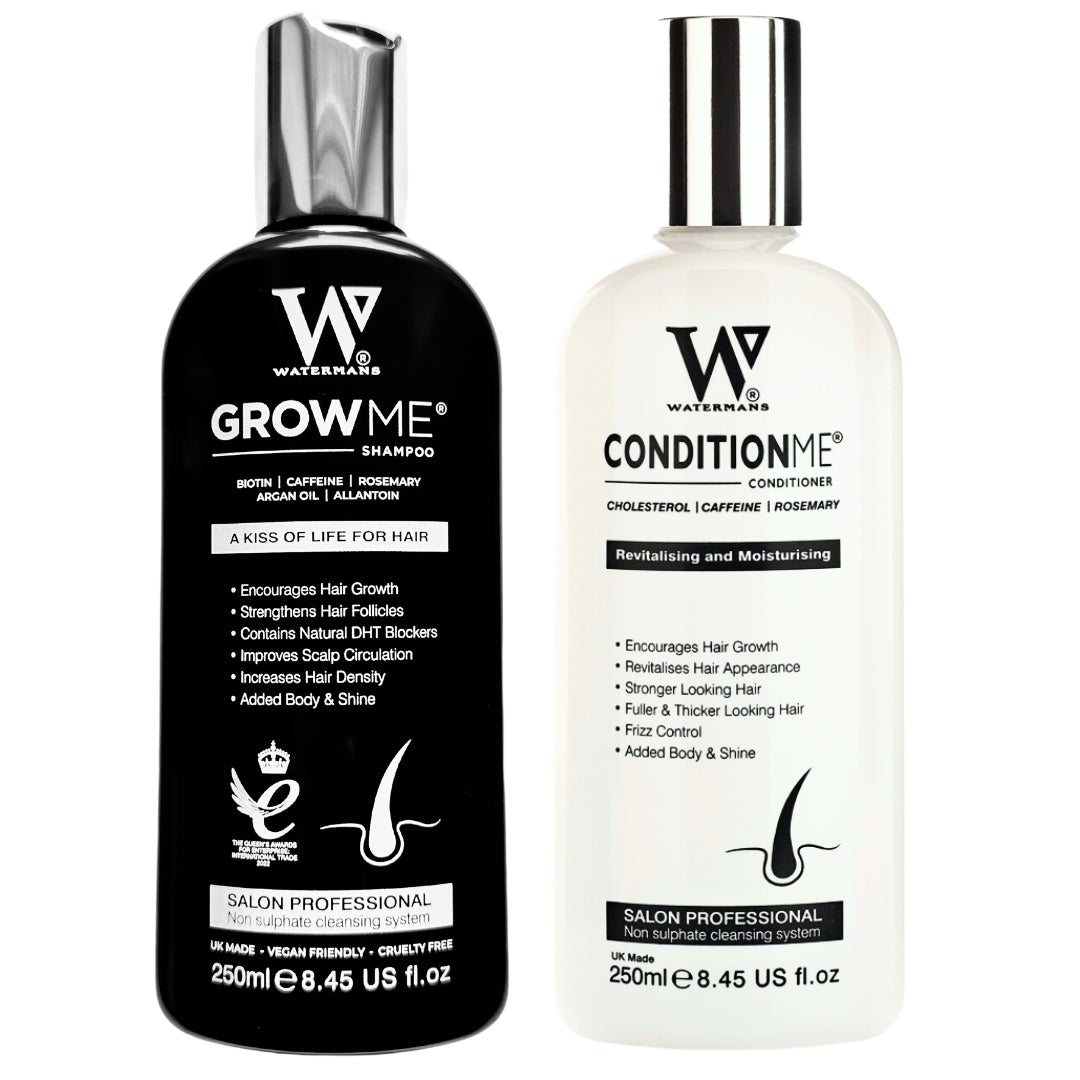
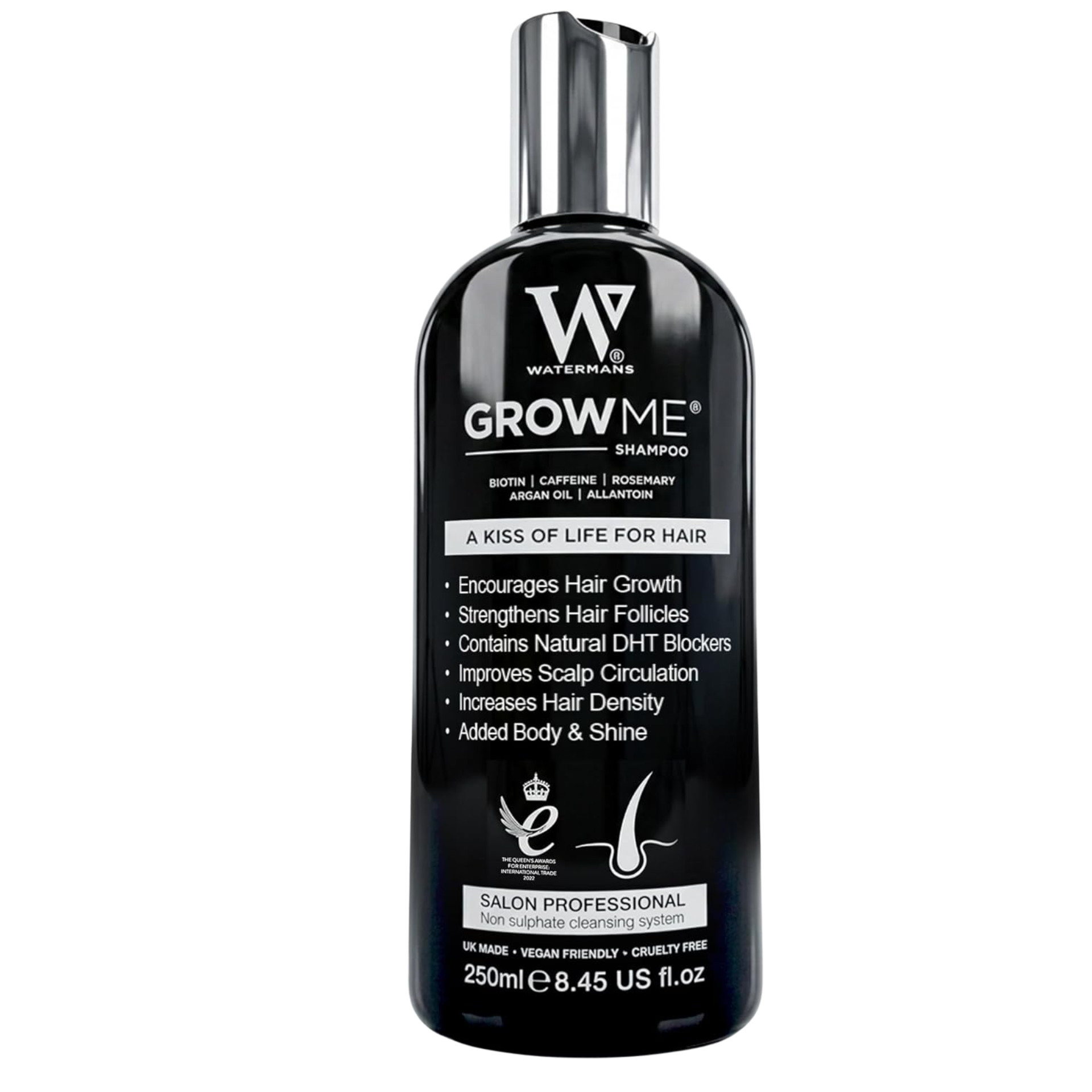
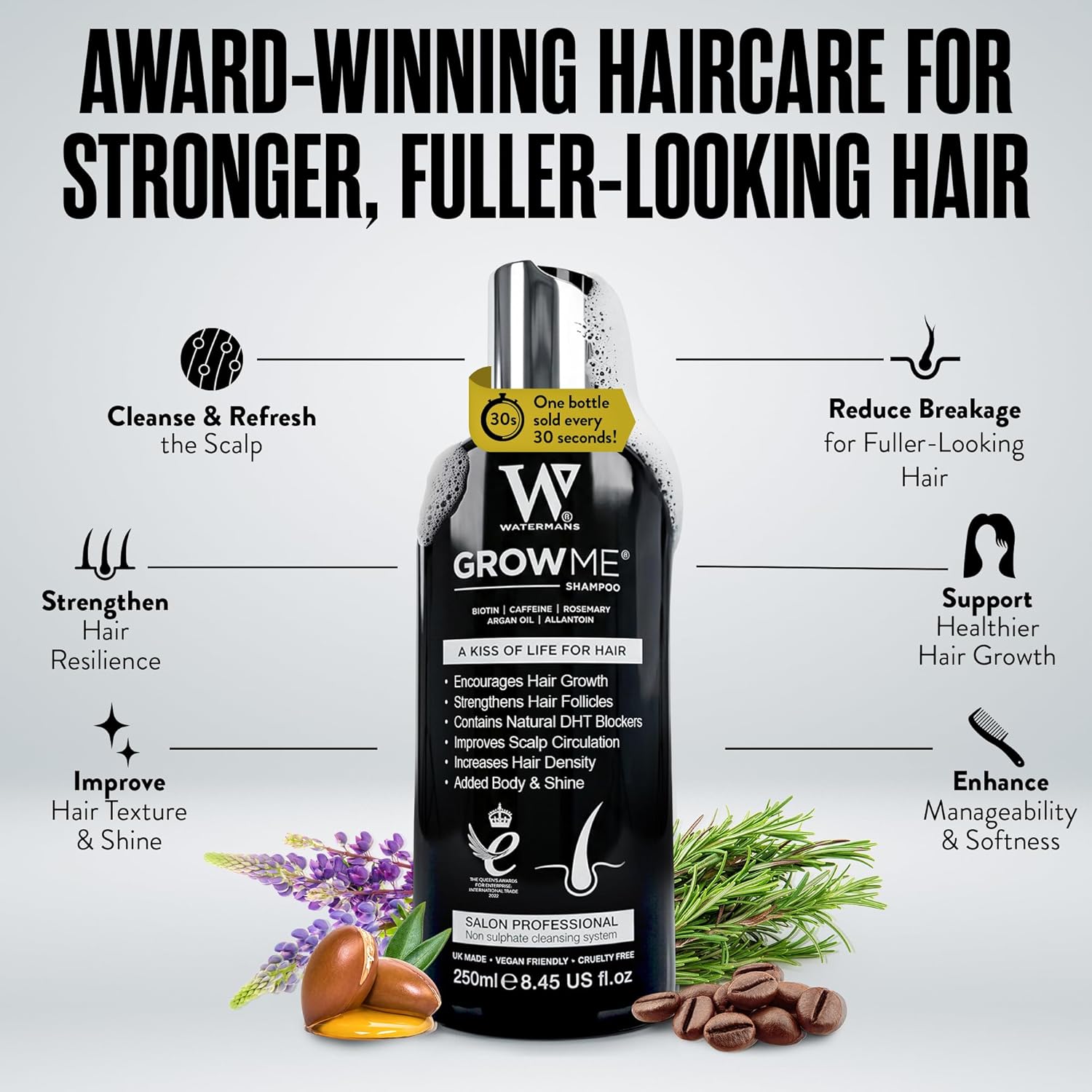
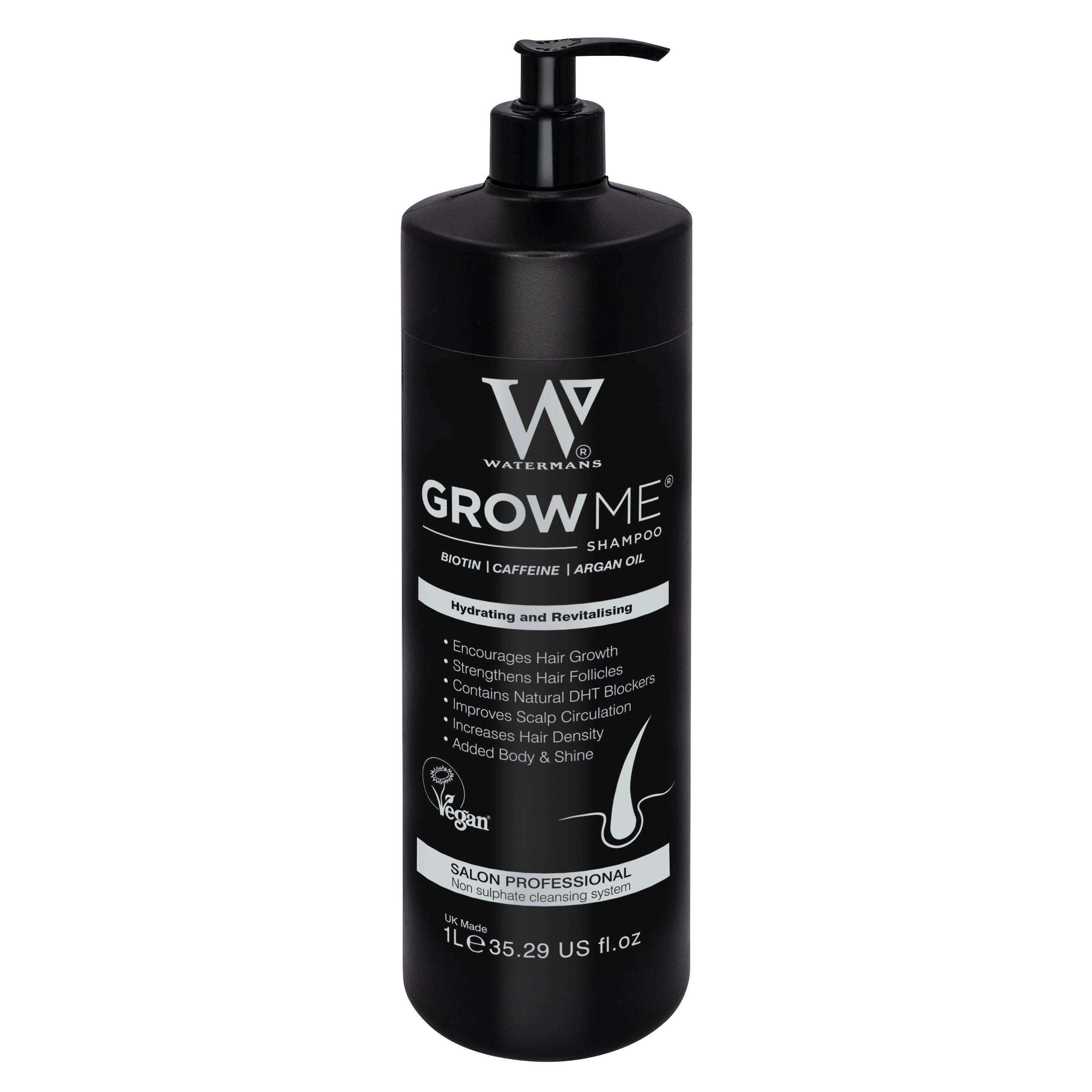
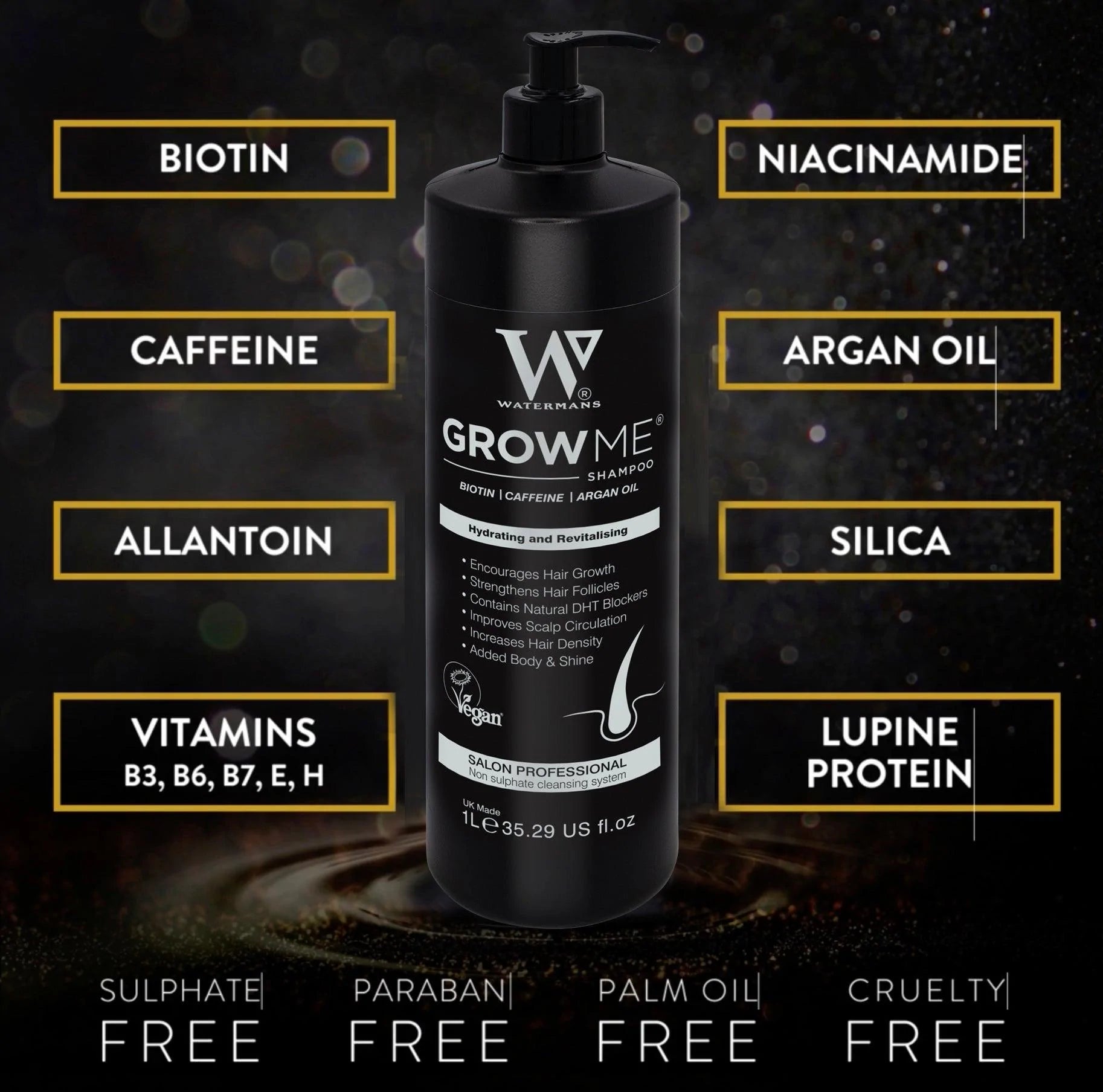
Grow Me® Hair Growth Shampoo, £14.95. A sulphate free daily shampoo that supports a healthy scalp environment and helps reduce breakage, so lengths hold on and look fuller.
Key Takeaways
- Sulfates do not cause hair loss. They are efficient detergents that can leave fine, fragile or colour treated hair rough and prone to snapping.
- The real job of a sulfate-free shampoo for thinning hair is retention, keeping the length you already have rather than adding new hair.
- Thinning has three quite different causes, and only one of them, breakage, responds to a change of shampoo.
- Look for mild surfactants, a light conditioning agent and a comfortable scalp feel. Ignore any bottle promising to stop hair falling.
- Sulfate-free does not mean weaker cleaning. It means slower, gentler cleaning, so you often need a slightly longer massage and sometimes two washes.
- Give any new shampoo eight to twelve weeks before judging it. Hair works on a much slower clock than skincare.

What is a sulfate-free shampoo for thinning hair?
A sulfate-free shampoo for thinning hair is simply a shampoo built on milder cleansing agents. Conventional shampoos usually lead with sodium lauryl sulfate (SLS) or sodium laureth sulfate (SLES). These are cheap, foam beautifully and remove oil very efficiently. Sulfate-free formulas swap them for gentler surfactants such as cocamidopropyl betaine, sodium cocoyl isethionate, decyl glucoside or coco glucoside.
The word most people miss is efficiently. Sulfates are not toxic and they are not banned in the UK. They are just very good at their job, and on fine, fragile, chemically treated or naturally dry hair, very good can tip into too much. Strip the natural lipid layer off a fragile fibre often enough and it roughens, tangles and snaps. That snapping is what people usually feel as their hair getting thinner.
British readers will see both spellings on the shelf. Sulphate is the UK spelling and sulfate is the international one, and they mean exactly the same ingredient. Our companion piece on whether sulphate free shampoo is really better covers the general case for every hair type. This page is narrower on purpose: it is about what to do when hair is getting thinner.
Do sulfates actually cause hair loss?
No. There is no credible evidence that sulfates cause hair to fall from the follicle, and it is worth saying plainly because a great deal of marketing implies otherwise. Sulfates are surface cleansers. Hair falling from the root is governed by the hair cycle, by hormones, by iron and thyroid status and by genetics, none of which a shampoo reaches.
What sulfates can genuinely do is contribute to breakage and to scalp irritation in people prone to it. A sensitive, tight or flaky scalp is uncomfortable, and an irritated scalp is not a good environment for hair. So the honest version of the claim is narrower and much more useful than the marketing one: switching can reduce breakage and improve scalp comfort. It cannot change your hair cycle.
The claim to walk away from
If a bottle tells you it stops hair falling out, prevents baldness or is proven to make hair grow back, put it down. In the UK a cosmetic product is not allowed to make that claim, and a product that makes it is telling you something about the company rather than about the formula.
Is your hair thinning, shedding, or breaking?
These three feel identical in the mirror and need completely different responses. Working out which one you have is the most valuable ten minutes in this whole article.
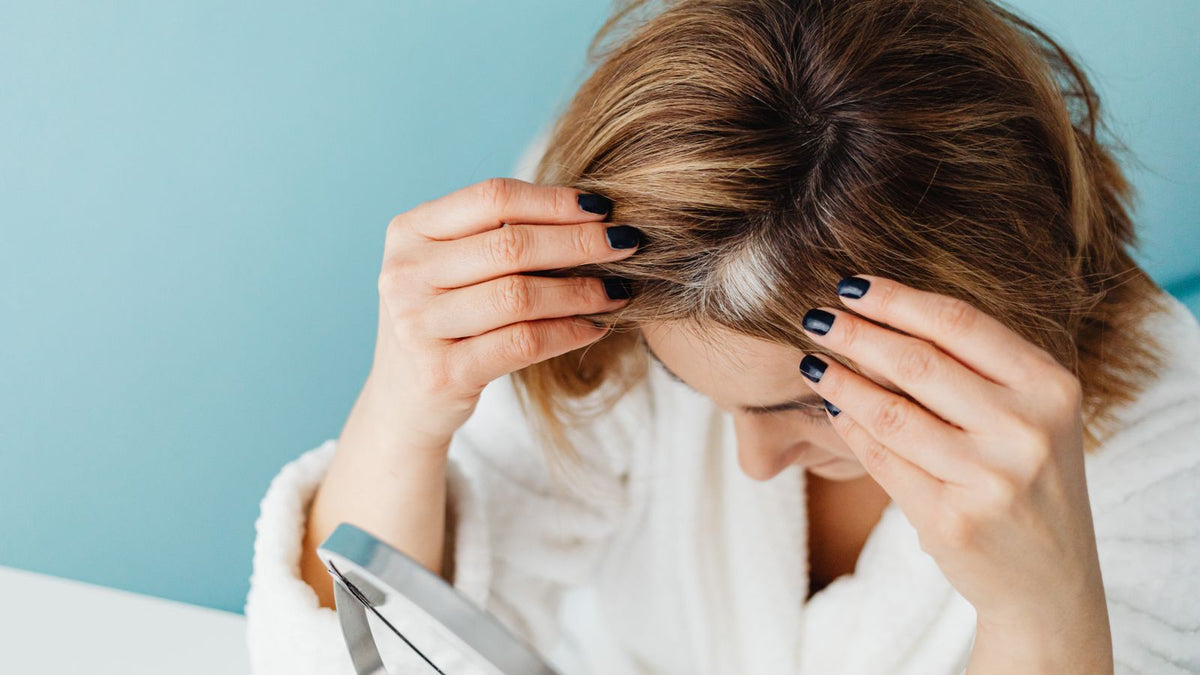
Hair loss means the follicle is producing progressively finer hair, or has stopped producing. In pattern hair loss the follicles miniaturise over years, so the parting widens or the temples recede. It is patterned rather than even, it does not resolve on its own, and it is a matter for your GP.
Hair shedding means whole hairs are leaving the scalp in larger than usual numbers, from everywhere, each with a small pale bulb at the root. This is telogen effluvium, and it follows illness, childbirth, crash dieting, severe stress or a change in medication by two to four months. It normally settles by itself.
Hair breakage means the fibre is snapping along its length. You find short broken pieces with no bulb, plus split ends, roughness and frizz. This is the one that a shampoo, a conditioner and gentler handling genuinely change.
| If you see this | It is probably | Will a shampoo change it? |
|---|---|---|
| Short snapped pieces, split ends, frizz halo | Breakage | Yes, meaningfully |
| Handfuls of full-length hairs with a pale bulb | Shedding (telogen effluvium) | No, but gentle care limits extra losses |
| Widening parting, thinner ponytail over years | Pattern hair loss | No. See your GP |
| Itchy, flaky, tight or sore scalp | Scalp irritation or a scalp condition | Often yes, if the formula is milder |
Our guide to the three mechanisms behind thinning hair goes through each in more detail, and what causes hair damage covers the breakage side.
Get a discount on the thinning hair range
Join the Watermans mailing list and we will email a discount code straight to your inbox, so you can try the thinning hair range for less. Made in the UK, over 6.5 million bottles sold since 2012.
What should you look for in a sulfate-free shampoo for thinning hair?
Read the first five ingredients. After water, the surfactant system comes first, and that is where the whole character of a shampoo is decided. Everything below the halfway point of an ingredient list is present in small amounts.

- Mild primary surfactants. Sodium cocoyl isethionate, disodium laureth sulfosuccinate, decyl or coco glucoside, cocamidopropyl betaine. These clean thoroughly with less lipid stripping.
- A conditioning agent. Panthenol, glycerin, a light silicone or a hydrolysed protein. Fine hair needs slip so that combing does not cost you length, but not so much weight that the hair goes flat.
- Hydrolysed proteins. Small enough to sit on and briefly within the fibre, which improves tensile strength and reduces snapping. Useful on chemically treated hair in particular.
- Scalp comfort ingredients. Niacinamide, allantoin, panthenol, zinc pyrithione or piroctone olamine if you are flaky. A comfortable scalp is the baseline for everything else.
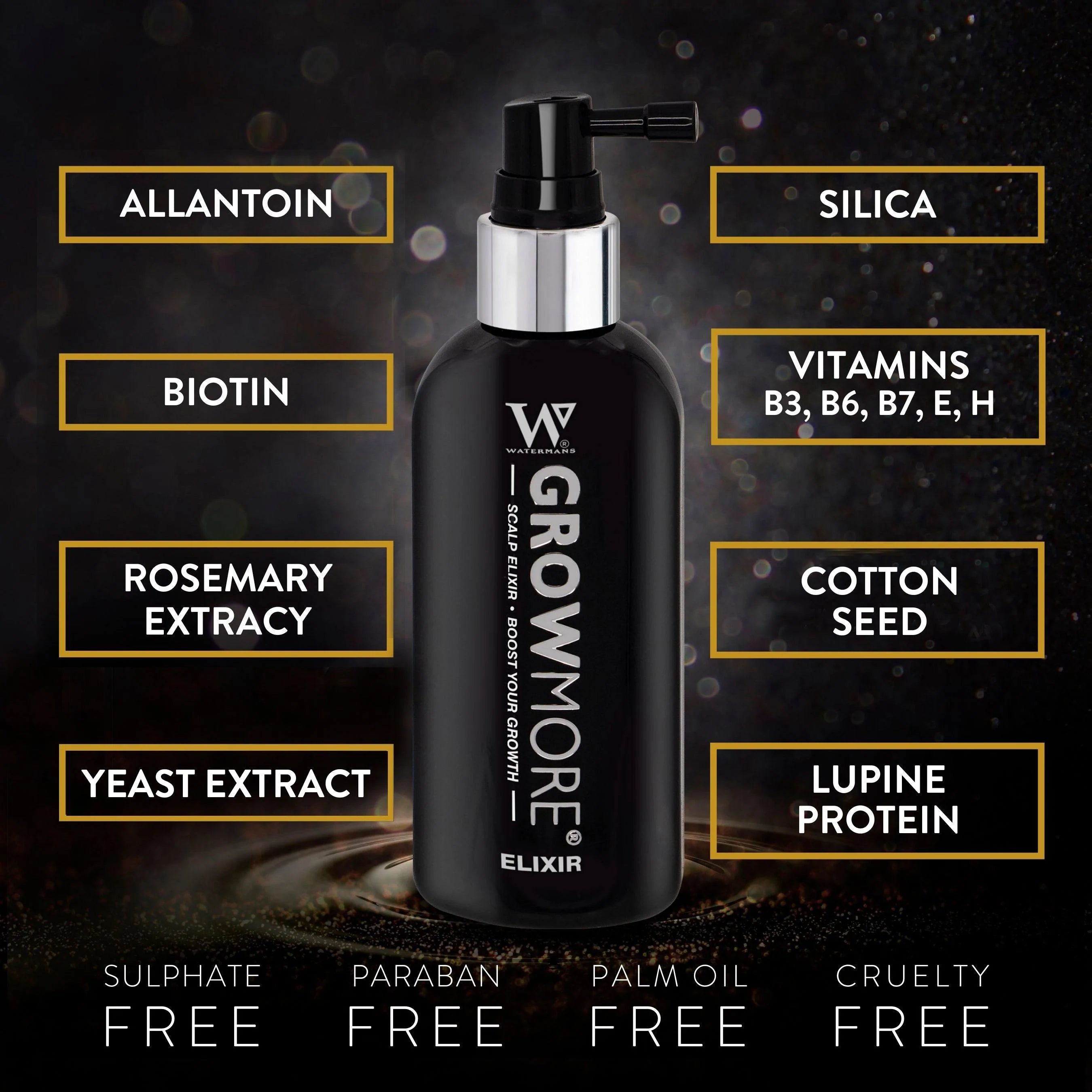
- Caffeine, biotin, rosemary and similar actives. Reasonable to have, honest to describe as supporting a healthy scalp environment, and not a substitute for medical advice if hair is genuinely receding.
What "sulfate-free" is not a promise of
Sulfate-free is a statement about one ingredient family, not a quality mark. A sulfate-free shampoo can still be heavily fragranced, drying, or loaded with waxes that build up. Judge the whole formula, and judge how your hair and scalp feel after four weeks.
How should you wash thinning hair?
Technique matters more than most people expect, and it costs nothing. A gentler formula used roughly still produces breakage.
- Wet the hair thoroughly first. Sulfate-free formulas lather less readily, and most of the complaints about them come from applying shampoo to hair that was not wet enough.
- Shampoo the scalp, not the lengths. The scalp is where the oil and product build up sit. The lengths get cleaned enough by the runoff.
- Massage with your fingertips for 60 seconds. Not nails. Milder surfactants need contact time to do what sulfates do instantly.
- Wash twice when you need to. The first pass lifts oil and product, the second actually cleans. This is normal with gentle formulas and not a sign of failure.
- Condition mid-length to ends, every wash. Skipping conditioner to avoid weight is a false economy on thinning hair. Detangling dry, unconditioned hair is where length dies.
- Detangle with a wide tooth comb, ends first. Work upwards in sections.
- Squeeze, do not rub, with a towel, then air dry to around 80 percent before any heat.

How often should you wash? As often as your scalp needs. Washing does not cause shedding, it simply collects the hairs that had already released. Leaving hair unwashed for a week to reduce fall just means more comes out at once, and a congested scalp on top. Our guide to keeping your scalp healthy covers this in more depth.
What about co-washing and clarifying?
Co-washing, cleansing with conditioner alone, suits coily and very dry hair. On fine or thinning hair it usually backfires, because the residue weighs down exactly the hair you are trying to make look fuller and it builds up on the scalp.
Clarifying is the opposite problem and the opposite solution. If you use dry shampoo, styling products, hard water or heavy oils, a deeper clarifying wash every three or four weeks stops build-up flattening the hair. Many people who conclude that their sulfate-free shampoo "stopped working" have simply accumulated residue.
Which Watermans shampoo fits, and what do we claim for it?
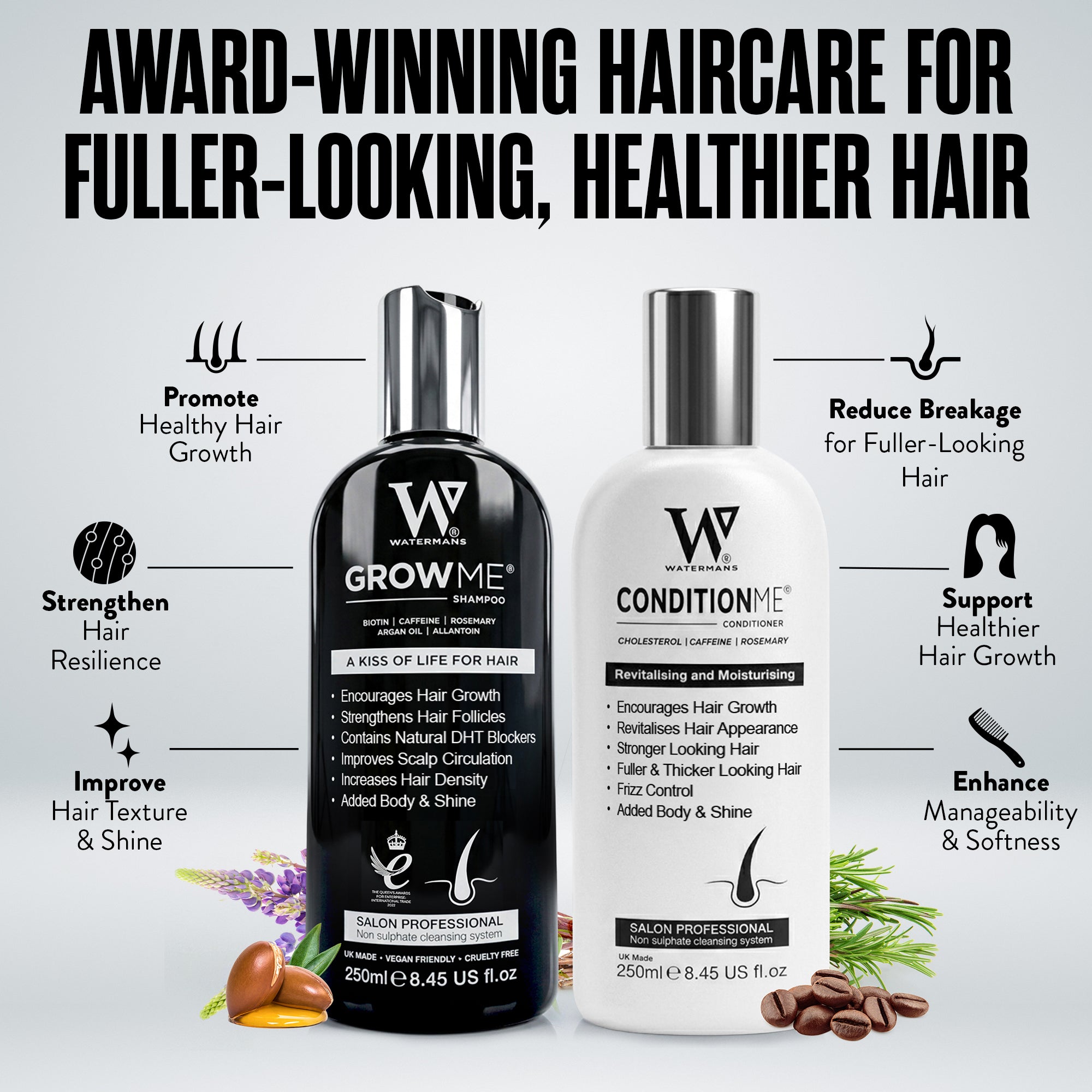
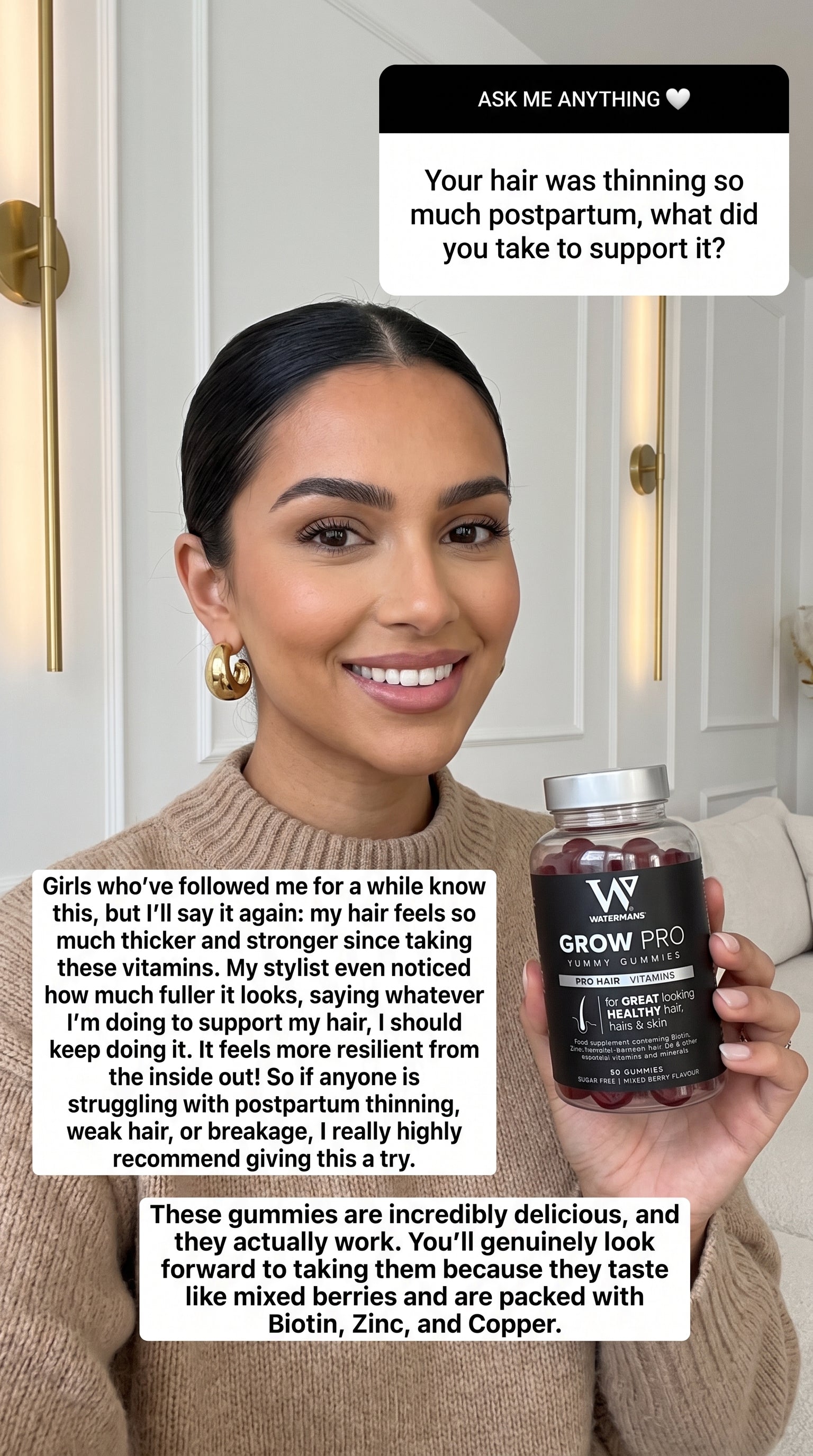
Grow Me is our sulfate-free everyday shampoo, and it is the one we would point a reader here towards. We describe it the way the formula justifies: it cleanses gently, supports a healthy scalp environment, and works with the conditioner to reduce breakage so hair looks fuller. We do not claim it changes the hair cycle, because it does not. Getting the most from any of them comes down to method, which we set out in how to use a hair growth shampoo.

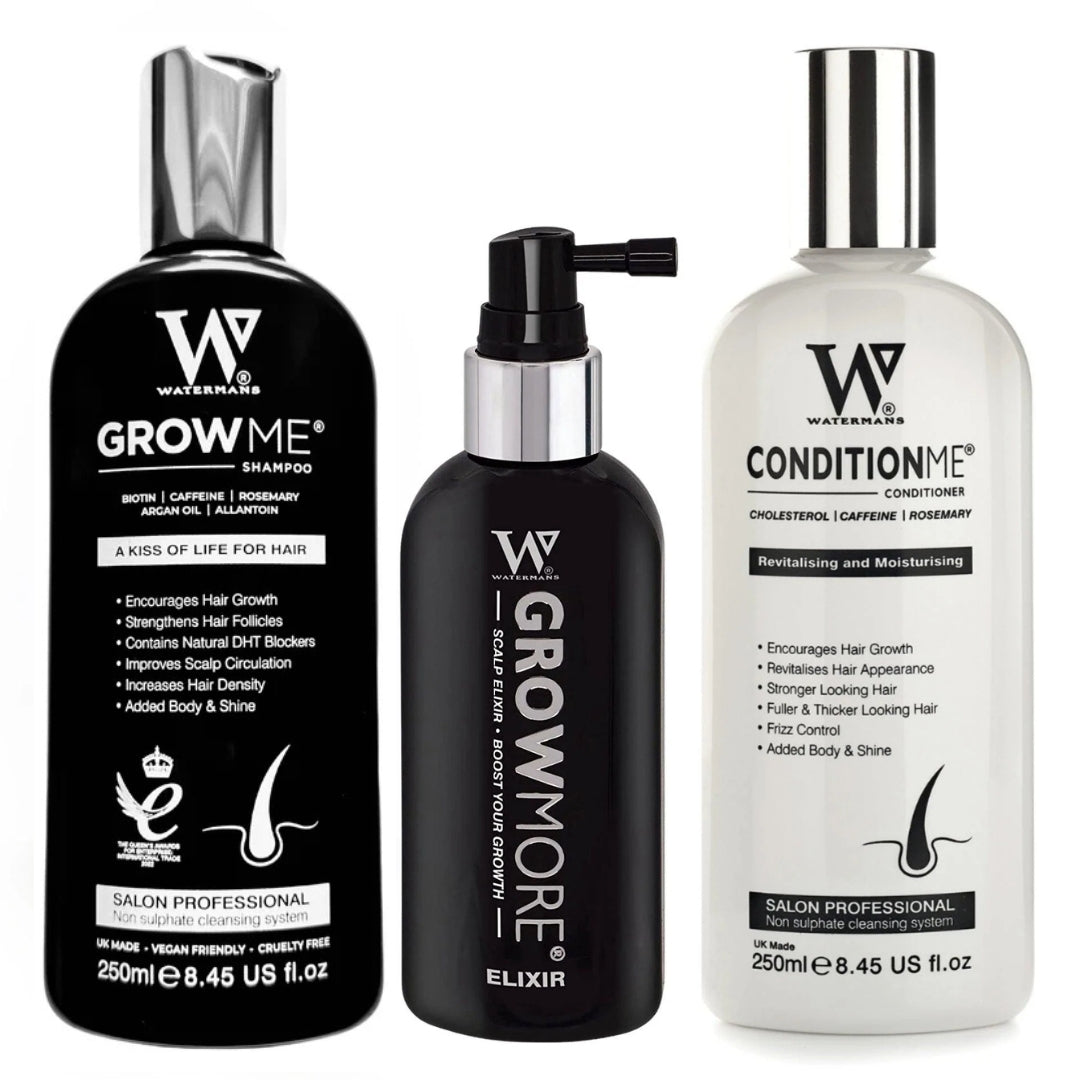
Grow Me® Hair Growth Shampoo £14.95
Sulfate-free daily shampoo with caffeine, biotin, niacinamide, rosemary and hydrolysed lupine protein. The starting point for a gentler wash on fine or thinning hair.

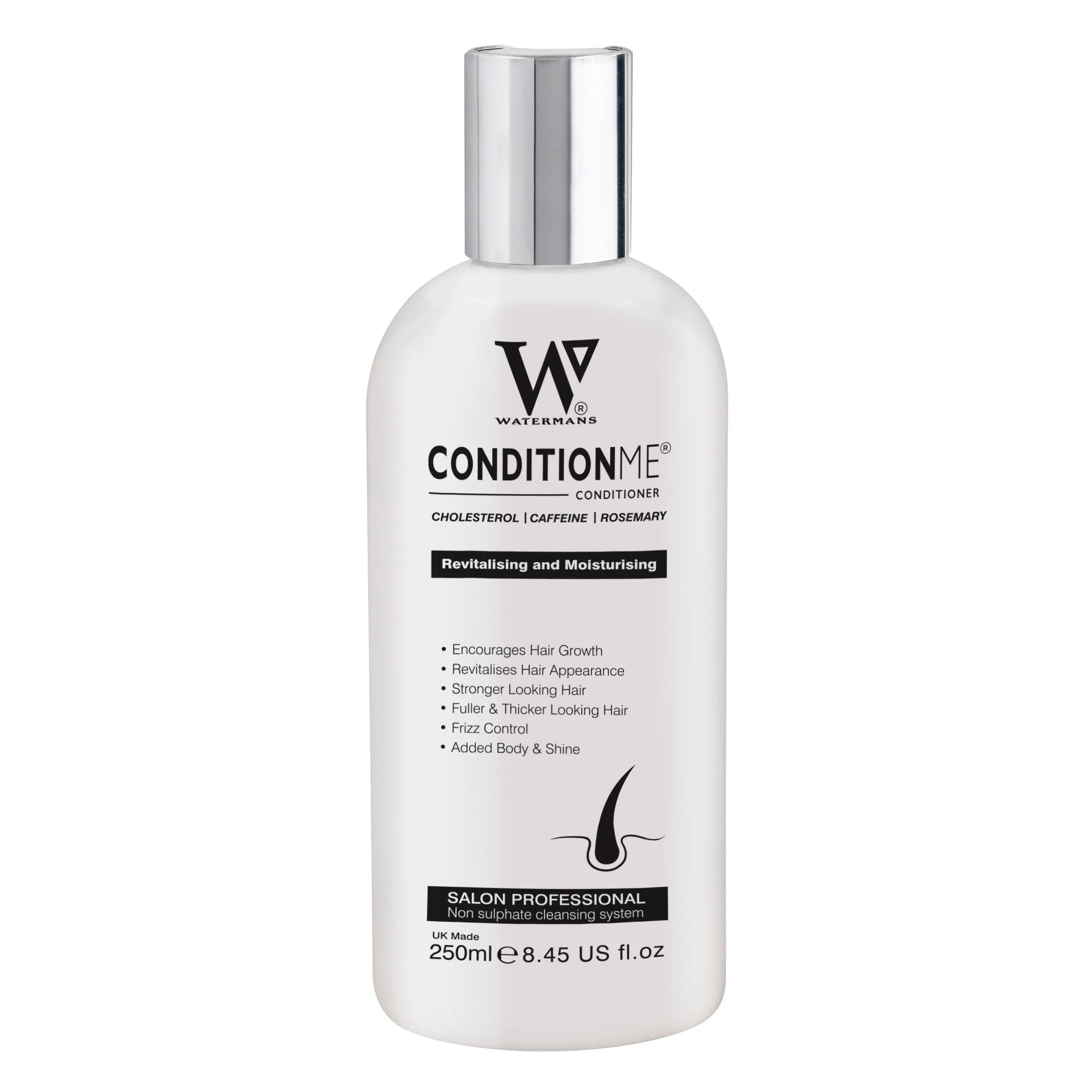
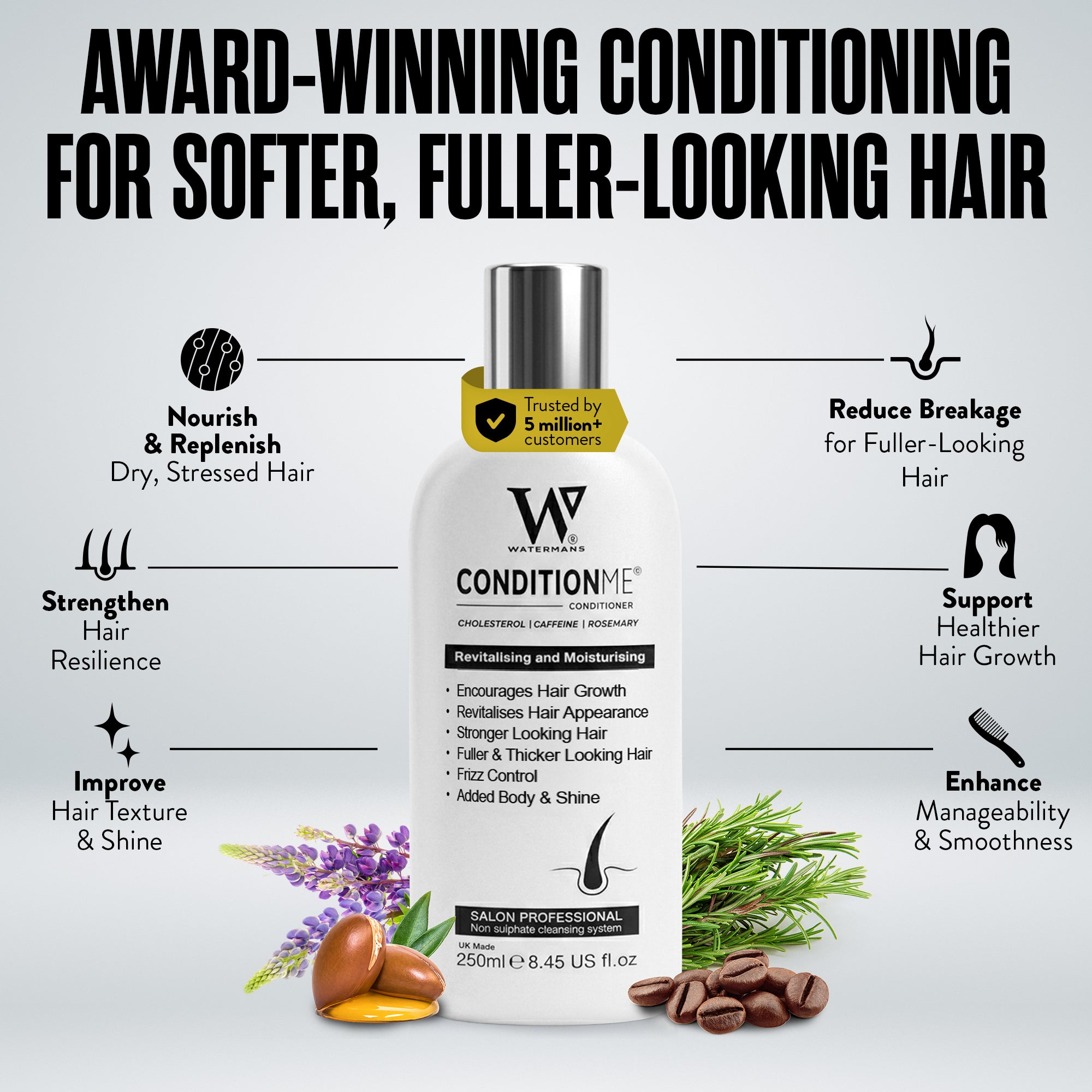
Condition Me® Hair Growth Conditioner £13.95
Breakage-defence conditioner with hydrolysed lupine protein, shea butter and glycerin. Adds slip for safe detangling without the weight that flattens fine hair.

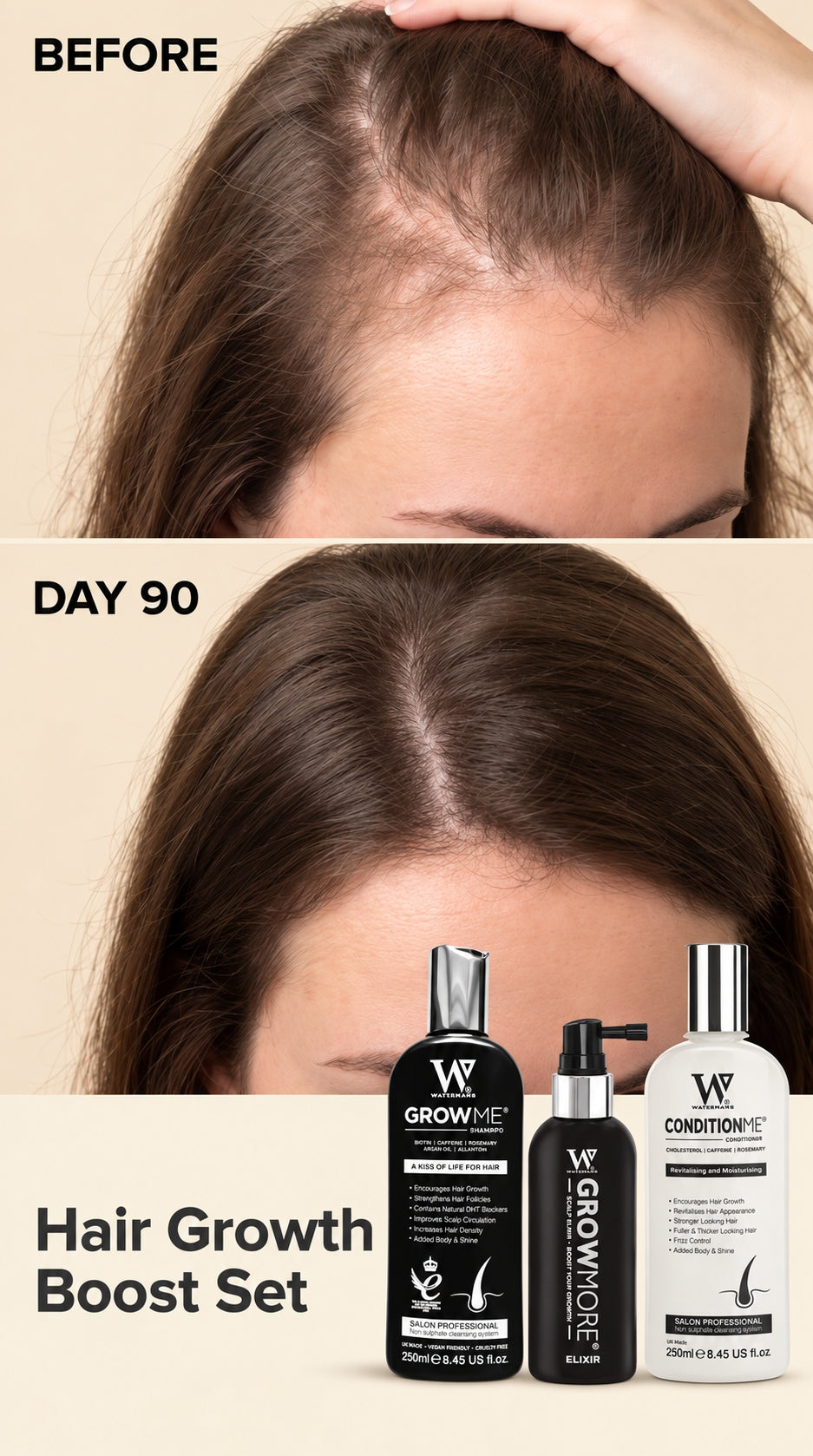
Hair Growth Boost Set £53.40
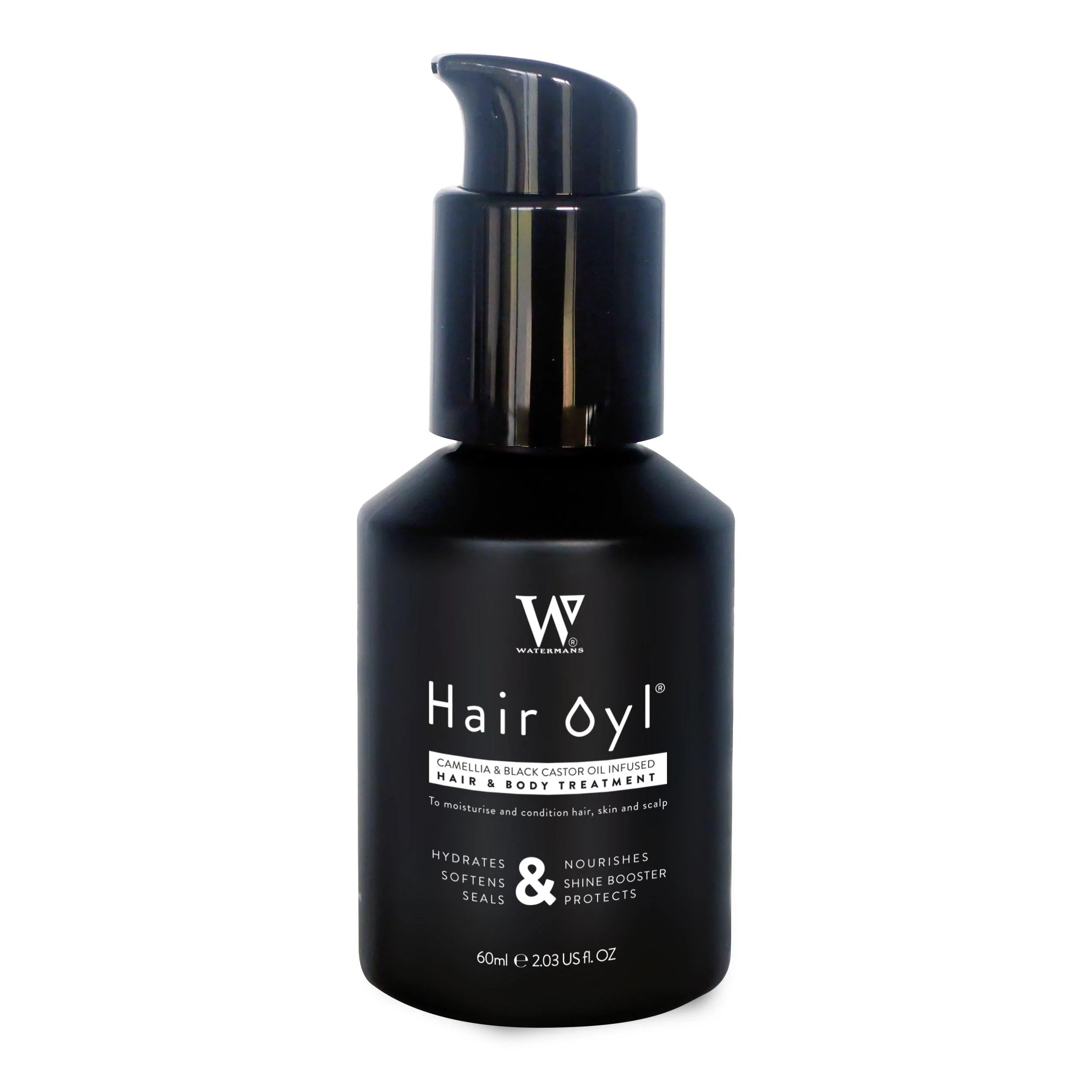
Shampoo, conditioner and the Grow More scalp elixir together. Worth it only if you want the full routine, since consistency over three months matters far more than the number of steps.
Watermans is a British brand. Everything we make is made in the UK, and we have sold over 6.5 million bottles since 2012.
Important: Watermans products are 100% cosmetic and do not treat medical hair loss. Individual results may vary.
What mistakes undo a good shampoo?
- Judging it in two weeks. Breakage improvements show in four to eight weeks, and anything involving the hair cycle takes three months or more.
- Changing everything at once. New shampoo, new conditioner, new supplement and a new styling routine in the same week means you learn nothing.
- Skipping conditioner. The single most common own goal on fine hair.
- Keeping the heat and the tight styling. A gentler shampoo cannot outrun daily 200 degree straightening or a tight ponytail worn in the same place every day.
- Ignoring a widening parting. If the pattern is patterned rather than even, that is a conversation with your GP, not a shopping decision.

If you are still weighing up formats, our UK hair thickening shampoo buyer's guide compares the wider category on how they build apparent volume.
Sources & References
- Dias MFRG, Hair Cosmetics: An Overview, International Journal of Trichology (2015), for shampoo surfactant classes and what cleansing agents do to the fibre.
- DermNet, Shampoos, for surfactant types and irritancy.
- NHS, Hair loss, for causes and when to see a GP.
- DermNet, Female pattern hair loss, for how patterned thinning differs from diffuse shedding.
Worth noting where the evidence is thin rather than settled: there is good published work on what surfactants do to the hair fibre, and very little controlled work comparing finished sulfate-free shampoos against conventional ones for people with thinning hair specifically. Anyone quoting a precise percentage for that comparison is going beyond what has actually been measured.
Frequently asked questions
Is a sulfate-free shampoo for thinning hair actually better?
For fine, fragile, dry or colour treated hair, usually yes, because a sulfate-free shampoo for thinning hair strips less and so causes less breakage. For someone with a robust scalp and oily hair, a conventional shampoo may suit better. It is a question of match, not of one being universally superior.
Will a sulfate-free shampoo make my hair grow?
No. No shampoo changes the hair cycle. What a gentler formula can do is reduce breakage so you keep more of the length you grow, and keep the scalp comfortable. Those are real benefits, but they are not growth.
Why does my sulfate-free shampoo not lather?
Milder surfactants foam less, and foam is not a measure of cleaning. Wet the hair thoroughly first, use a little more product than you would with a sulfate shampoo, massage for a full minute and wash twice if the hair was very oily or heavily product loaded.
How long before I know whether it is working?
Give it eight to twelve weeks. Changes in breakage typically show at four to eight weeks, and anything involving the hair cycle takes at least three months. Take a photo in the same light on day one so you have something honest to compare against.
Can I use a sulfate-free shampoo every day?
Yes. Daily washing is fine if that is what your scalp prefers, and a gentle formula is better suited to it than a strong one. Wash frequency should follow your scalp, not a rule you read online.
Do I still need to clarify if I use a sulfate-free shampoo?
If you use dry shampoo, styling products, heavy oils or live in a hard water area, yes, roughly every three to four weeks. Build-up flattens fine hair and is the usual reason a shampoo seems to stop working.
Is sulphate free the same as sulfate free?
Yes. Sulphate is the British spelling and sulfate is the international one. They refer to the same ingredient family, most commonly sodium lauryl sulfate and sodium laureth sulfate.
My parting is getting wider. Will changing shampoo fix it?
A widening parting suggests patterned thinning rather than breakage, and a shampoo will not change that. It is worth seeing your GP, who can check iron, ferritin and thyroid function and talk through the options. If your question is about products or a routine rather than a medical one, you can talk to Gail Waterman, our co-founder, as an AI avatar on the Watermans homepage.
What is the bottom line on sulfate-free shampoo for thinning hair?
A sulfate-free shampoo for thinning hair is a sensible, low risk choice if your hair is fine, fragile or colour treated, or if your scalp reacts to strong detergents. It reduces breakage and keeps the scalp comfortable, which means the hair you have looks fuller and holds its length. It does not, and cannot, change what is happening in the follicle. Work out first whether you are dealing with breakage, shedding or patterned loss, then pick the shampoo for the job it can actually do, and give it three months. Baby shampoo is often assumed to be the gentlest option, so it is worth checking whether baby shampoo is actually sulfate free.
Our own gentle pair is Grow Me shampoo with Condition Me conditioner, and the rest of the routine is technique that costs nothing.