Trichologists in Bebington: Hair Breaking or Thinning at the Nape
Short, frayed hairs sitting just above your collar are usually a friction problem, not a follicle problem.
If you are looking up trichologists in Bebington because the hair at the back of your neck keeps breaking or looks thinner, start with what rubs it. Collars, scarves, coat hoods, bag straps, car headrests, necklace clasps and low buns all wear the nape down, and snapped pieces with no root bulb are breakage, not hair loss. A smooth patch, itching, scaling or bumps at the nape are a reason to speak to your own GP first.
Our hair growth conditioner
Condition Me® Hair Growth Conditioner, £13.95. Detangles and strengthens the hair fibre so lengths snap less on the brush and look thicker through the ends.
Key takeaways
- The nape takes friction all day from collars, scarves, straps, headrests and clasps, and a 2015 review in the International Journal of Trichology names abrasion and friction as causes of hair damage through protein loss.
- Short, uneven pieces with blunt ends and no bulb are breakage; full-length hairs with a small pale bulb are shedding, and the NHS says losing 50 to 100 hairs a day is normal.
- The British Association of Dermatologists says tight buns can cause traction alopecia at the sides and back of the scalp, and long-term pulling can make it permanent.
- A smooth round patch, itchy thickened skin, scaling or bumps along the back hairline need your own GP, not a new hair routine.
- Change what touches the nape first; save trichologists in Bebington for breakage that carries on after a few months of gentler habits.
What makes hair at the nape break more easily than the rest?
Hair at the nape breaks more easily than the rest because the back of the neck is where hair meets almost everything you wear and lean on, from shirt collars and scarves to headrests and bag straps, so the same short stretch of each strand is rubbed, bent and pressed many times a day.
The 2015 review of hair cosmetics by Gavazzoni Dias in the International Journal of Trichology describes weathering as the progressive degeneration of the hair shaft from root to tip, and says normal weathering comes from daily grooming. It lists repeated rough washing, unprotected drying and friction among the things that strip lipids from the surface of the hair, and names abrasion and friction as causes of damage through protein loss. Once the cuticle, the overlapping outer scales of each strand, has worn away, the review explains, damage to the cortex beneath can end with the fibre snapping.
Nothing about that is unique to the nape. What is different is the dose. Your fringe and parting are rarely touched once you leave the house, but the hair at the back of the neck is brushed by fabric every time you turn your head, pressed into a car seat on every journey and gripped by a band on most working days. The damage builds up in one place, and because few people check the back of their neck, a band of short pieces can grow for months before anyone notices.
Which everyday habits rub the hair at the back of the neck?
The everyday habits that rub hair at the back of the neck are mostly about clothing and posture: stiff or high collars, wool scarves, coat hoods, backpack and handbag straps, car headrests and high seat backs, necklace clasps, towel wrapping after a wash, tight low buns and ponytails, and resting the back of your head against things for long periods.
| Friction source | What it does to nape hair | A simple swap |
|---|---|---|
| Shirt collars and high necklines | Rub the same short band of hair each time you turn your head | Wear hair loosely up on long days, or choose softer, lower collars |
| Wool scarves and coat hoods | Rough fibres catch and drag hairs, and static makes them cling | Lay hair over the scarf rather than under it, with cotton or silk next to the neck |
| Backpack and handbag straps | Pin hair against the shoulders and tug it with every step | Move hair forward over the other shoulder, or loosen the strap |
| Car headrests and high seat backs | Press and rub the back of the head on every journey | Avoid a bun that pushes into the headrest; sit so it barely touches |
| Necklace clasps and chains | Catch fine hairs in the fastening and twist them | Lift hair clear before fastening, and check clasps for rough edges |
| Towel wrapping | A tight turban twists wet hair at the nape when it stretches most easily | Blot with a towel or cotton T-shirt instead of twisting |
| Tight low buns and ponytails | Grip and pull the same hairs for hours | Loosen the band and change its position from day to day |
Wet hair makes every item on that list worse. The 2015 review notes that wet, undamaged hair can be stretched by 30% of its original length without damage, but that stretching it between 30% and 70% causes irreversible changes. The American Academy of Dermatology (AAD) advises wrapping hair in a towel or T-shirt to absorb the water gently, because roughly rubbing it dry can cause damage. So a damp nape tucked straight into a coat collar or a scarf is a combination worth avoiding.
Jewellery is easy to overlook. DermNet lists necklaces and necklace clips among the items that may contain nickel, and notes that nine-carat gold and white gold contain nickel while solid gold of 12 carats or more, silver and hypoallergenic stainless steel should be safe for people with a nickel allergy. A clasp that sits at the nape can snag hair every time it is fastened, and if the skin under it also itches or reddens, that is worth a separate look.

Sleep is the other big source of rubbing at the back of the head, especially for people who lie on their back. Night-time friction has its own set of fixes, and our guide to hair on your pillow and night-time breakage covers pillowcases, plaits and bedtime hair in detail, so this guide sticks to the daytime.
Can tight low buns and ponytails thin the hair at the nape?
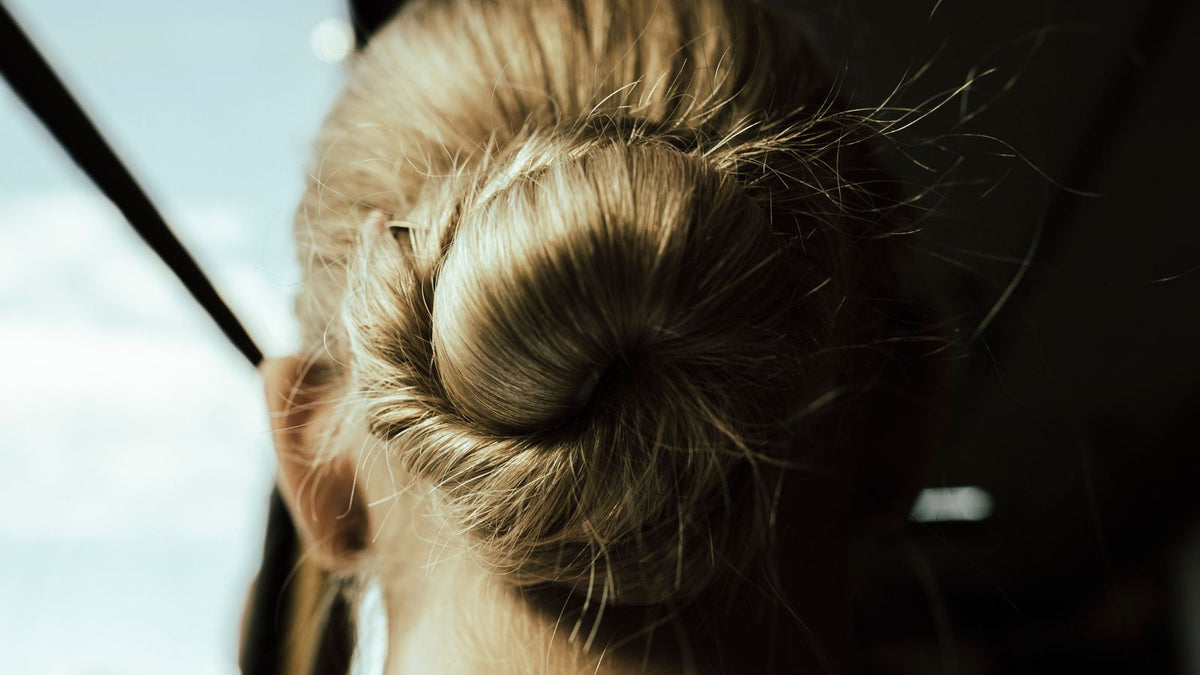
Tight low buns and ponytails can thin the hair at the nape in two separate ways: the band snaps lengths where it grips, which is breakage, and constant pulling on the roots can cause traction alopecia, a genuine form of hair loss that the British Association of Dermatologists links with tight buns at the sides and back of the scalp.
The BAD leaflet on traction alopecia says the pattern of hair loss depends on the style and where the tension is highest: tight ponytails are linked with loss at the front and side margins of the scalp, and tight buns with loss at the sides and back. It adds that traction alopecia can get better when it has been present for only a few weeks or months and the tension stops, but that long-term, repeated pulling can permanently damage the follicles that produce the hair.
The same leaflet describes two clues worth knowing. Smaller hairs within a thinning patch are often unaffected, and a rim of slightly longer hairs, called the fringe sign, may remain at the edge of the patch furthest from the pull. Small flakes attached to the hairs, called hair casts, may be seen at the margins closest to the tension. DermNet adds that traction alopecia usually starts without scarring, which is why catching it early matters.
- Loosen the band. If a style leaves the back of your scalp tender or aching when you take it down, it was too tight.
- Move it around. Alternate a low bun with a higher, looser one or a clip on different days so the same hairs are not gripped every time.
- Choose covered bands. Fabric-covered ties or spiral ties without a metal join grip less harshly than bare elastic.
- Give the nape rest days. Wear hair down or loosely clipped on days when you are at home.
- Tie it dry. A bun made from damp hair holds the nape in tension while the strands are at their softest.
For the full story on tension-related loss, including braids, weaves and how long recovery takes, see our guide to traction alopecia.
Is nape thinning breakage, shedding or hair loss?
Nape thinning can be breakage, where hair snaps along its length and leaves short uneven pieces; shedding, where whole hairs fall out at the end of their growth cycle; or hair loss, where the follicles themselves produce less hair or none, and each one looks different when you examine the hairs and the skin beneath them.
- Hair breakage. The fibre snaps along its length and the follicle is untouched, so the hair keeps growing from the root.
- Hair shedding. A whole hair is released at the end of its cycle. The NHS says we can lose between 50 and 100 hairs a day, often without noticing, spread across the whole scalp.
- Hair loss. The follicle changes or is damaged, as in long-standing traction alopecia or alopecia areata, and the change shows on the skin itself.
| Clue | Breakage at the nape | Shedding | Hair loss at the nape |
|---|---|---|---|
| Hair length | Short, uneven pieces, often at collar or strap height | Full length | Hair around the area may look normal |
| Ends | Blunt, frayed or split, with no bulb | A small, pale, rounded bulb at the root | Short, tapered hairs at the edge of some patches |
| Skin | Looks normal | Looks normal | A smooth bare patch, or skin that is scaly, red or thickened |
| Pattern | A band where something rubs or grips | Spread over the whole scalp | A defined patch or a thinning back hairline |
| First step | Gentler habits for a few months | Usually settles; GP if heavy or ongoing | Speak to your own GP |
The tapered hairs in the last column are worth a note. The BAD describes short, tapered hairs called exclamation mark hairs at the edge of some alopecia areata patches, and says the patches themselves are usually smooth, not inflamed or scaly. A snapped hair, by contrast, ends bluntly or looks frayed, and the skin around it looks like the rest of your scalp.
Get a discount on the hair breakage range
Join the Watermans mailing list and we will email a discount code straight to your inbox, so you can try the hair breakage range for less. Made in the UK, over 6.5 million bottles sold since 2012.
How can you check the back of your neck at home?
You can check the back of your neck at home with a phone camera or two mirrors in good daylight: lift the hair, photograph the hairline and the band just above it, and look at whether the short hairs end bluntly at one level or whether the skin itself looks bare, flaky, red or thickened. The nape suffers most from overnight ties, and our guide to hair ties, clips and breakage covers what to wear instead.
- Photograph it. Take the same shot near a window once a month, with your hair lifted the same way, so you compare like with like.
- Feel the height. Run a fingertip up from the hairline. Breakage often feels like a line of stubble at one height, level with a collar, a strap or the spot where a band sits.
- Collect the evidence. For a week, pick hairs off your collar, scarf, coat hood and car headrest and lay them on white paper. Sort them into full-length hairs with a bulb and short pieces without one.
- Match it to a habit. Note which side the short pieces favour. If they gather where your bag strap sits or where your ponytail falls, you have probably found the cause.
- Look at the skin. A smooth bare patch, scaling, thick itchy skin or bumps along the hairline are not breakage, and belong with your GP.
The height clue
Snapped hairs that all end at roughly the same height usually match something that touches the nape at that height. Hairs lost from a patch leave bare skin behind; hairs broken by friction leave a short, blunt fringe on skin that looks normal.
Itching deserves its own mention, because scratching is friction too. The BAD leaflet on lichen simplex lists the nape of the neck among the areas most often affected, and describes an itch-scratch cycle in which rubbing thickens the skin and makes it itch more. DermNet notes broken hairs in affected areas. If you keep rubbing the back of your neck without thinking, the broken hairs may be a sign of the itch rather than of your collar.
How do you protect the nape from friction day to day?
Protecting the nape from friction day to day means changing what touches it: wearing hair loosely up or over one shoulder when collars, scarves or straps are on, choosing smoother fabrics next to the neck, moving buns and ponytails around, and lifting hair clear of clasps, headrests and seat backs.
- Collars. On days with a stiff shirt collar or a high neckline, a loose, high clip keeps the nape clear. If you wear hair down, let it sit outside the collar rather than trapped inside it.
- Scarves. The BAD lichen simplex leaflet advises avoiding contact with clothing made from wool or synthetic fibre, which may irritate the skin, and says cotton and silk are best. The same choice is kinder to the hair resting on it. Lay your hair over the scarf, or wear a cotton or silk layer underneath a wool one.
- Coats and hoods. Pull hair forward or up before zipping a coat, and push a hood back gently rather than dragging it off.
- Bags. Swap shoulders, or swing your hair to the side away from the strap. A backpack worn daily is one of the most consistent sources of rubbing at the nape.
- Car and train seats. A bun at the nape grinds into a headrest. On long journeys wear hair loose or in a soft clip higher on the head.
- Jewellery. Fasten necklaces with your hair lifted or clipped up, and check that clasps have no rough edges.

Winter is when the nape has the hardest time. Coat collars, scarves and hoods pile on at once, hair is more often damp from rain, and static makes fine hairs cling to fabric. Bebington is part of the Wirral in Merseyside, and whether you commute from there or anywhere else in the UK, cold months are a good time to check the back of your neck, because breakage from those layers can take until spring to show.
How should you wash, detangle and style hair at the nape?
Hair at the nape should be washed with the scalp in mind and conditioned along the lengths, then blotted rather than twisted, detangled from the ends upwards with a wide-tooth comb, and styled with low tension, because this is the stretch of hair that gets rubbed hardest once you are dressed.
The AAD says hair is delicate when it is wet, so a wide-tooth comb is a better choice than a brush for wet hair, and advises combing the ends first and then working higher. The 2015 review explains why conditioner helps here: conditioners decrease friction, detangle and improve combability by adding positive charges to hair that washing leaves negatively charged, and by lubricating the cuticle.
- Section the nape on its own. Clip the rest of your hair up so you can see and reach the short layer at the back.
- Condition the lengths every wash. The ends at the nape have taken the most rubbing, so make sure they are covered.
- Blot, then dry the nape first. Hair that goes into a collar or scarf damp stays soft and swollen for longer.
- Comb from the tips. Hold the section above the knot so the pull lands on your fingers rather than on the roots.
- Style low tension. A loose plait, a soft clip or hair worn down all put less strain on the nape than a tight bun.
Knots at the back of the head are often where most snapping happens, and our guide to tangles, knots and brushing breakage walks through the full ends-first method, with a comparison of combs and brushes.


A breakage-defence conditioner with cholesterol, shea butter and niacinamide, £13.95 in September 2026. Smooth it through the lengths that sit against your collar and comb it through from the tips before rinsing, for slip that reduces breakage.

An 8-in-1 deep conditioning mask with niacinamide, provitamin B5 and rosemary, £24.95 in September 2026. Once a week, leave it on the nape lengths and ends before a gentle comb-through, so hair that has been rubbed all week looks and feels smoother.

Camellia & Black Castor Hair & Body Oil
A lightweight hair and body oil with camellia oil and black castor oil, UK made in a glass bottle, £24.95 in September 2026. Warm one or two drops between your palms and smooth them over the nape lengths before a scarf or collar goes on, for softness and shine.
When does thinning or a patch at the nape need your own GP?
Thinning or a patch at the nape needs your own GP rather than a new routine when you find a smooth bald patch, skin that itches, thickens or scales, bumps or spots along the back hairline, a sore or weeping rash, or hair loss that keeps spreading, because these signs point to a skin or scalp condition rather than friction.
- A smooth, round patch. The BAD describes alopecia areata as a common, non-scarring condition that usually causes small, coin-sized, round patches. It also notes that the chance of hair growing back on its own is lower when the loss affects the hairline at the back of the scalp, so a patch at the nape is worth showing a GP promptly.
- Itching and thickened skin. Lichen simplex often affects the nape of the neck, according to the BAD, and the itch tends to come in bursts, often worse at rest and at night.
- Scaling with broken hairs. The NHS says ringworm can appear on the scalp, where the rash may be scaly, dry or itchy and can cause patchy hair loss. The NHS advises seeing a GP for ringworm on the scalp rather than relying on pharmacy creams.
- Bumps along the back hairline. The AAD says acne keloidalis nuchae is often mistaken for acne or razor bumps on the back of the neck, and that left alone it tends to worsen and can lead to raised scars and hair loss, so early medical advice matters.
- A rash where a clasp or collar sits. The NHS lists some metals, including nickel, among the triggers of allergic contact dermatitis.

Speak to your own GP first if
You find a smooth bald patch at the nape; the skin there itches, thickens, scales or weeps; bumps or spots appear along the back hairline; a rash sits where a necklace or collar touches; or hair is coming out in handfuls of whole hairs. The NHS advises seeing a GP to get an idea of what is causing hair loss before thinking about going to a commercial hair clinic.
None of those signs is a reason to panic, and many have simple explanations. They are simply outside what a new scarf or a looser bun can fix, and a GP can look at the skin and the hairs together before you spend money with trichologists in Bebington or anywhere else.
Should you look for trichologists in Bebington for breakage at the nape?
Looking for trichologists in Bebington makes sense when breakage at the nape carries on after a few months of gentler habits, when your GP has found no medical cause but you want the hairs examined more closely, or when you cannot work out what is rubbing the hair and want an experienced second pair of eyes. If your question is about products or a routine rather than a medical one, you can talk to Gail Waterman, our co-founder, as an AI avatar on the Watermans homepage.
A trichologist is a private hair and scalp practitioner, and most are not medical doctors. The Institute of Trichologists says its register is accredited under the Accredited Registers scheme run by the Professional Standards Authority, and that it is the only UK organisation whose register of trichologists holds that accreditation. It trains practitioners through a two and a half year Level 5 distance-learning course. The Trichological Society is the other main UK body, and says it has offered distance-learning courses for over 25 years.
Bebington sits on the Wirral in Merseyside, so a search for trichologists in Bebington may bring up practitioners across the peninsula and further afield. Whoever you find, confirm their membership on the professional body’s own website before you pay, and ask three questions:
- Will you look at the hairs at my nape under magnification and ask about my collars, scarves, bags and how I tie my hair?
- If you think this is a patch, an itchy skin condition or something else medical, will you send me back to my GP?
- Are you recommending products you sell, and can I keep using my own?
Watermans runs no clinics and offers no hair assessments, in Bebington or anywhere else, so weigh our view with that in mind. We make cosmetic hair care, made in the UK, with over 6.5 million bottles sold since 2012. Our products help hair look and feel healthier and reduce breakage, but they cannot change how a follicle behaves.
What are the most frequently asked questions about hair breaking at the nape?
Why is the hair at the back of my neck shorter than the rest?
Usually because it has snapped. The nape rubs against collars, scarves, coat hoods, bag straps and car headrests all day, and a 2015 review in the International Journal of Trichology names abrasion and friction as causes of hair damage. Short pieces that end at about the same height, often level with your collar, point to breakage rather than hair loss.
Can a scarf or coat collar really break hair?
Repeated rubbing can. Rough fabric catches and drags the same short band of hair every time you turn your head, and over weeks that wears through the outer layer of each strand until it snaps. Tucking hair over the scarf, wearing it loosely up, or choosing cotton or silk next to the neck all cut down the rubbing.
How can I tell nape breakage from hair loss?
Look at the hairs and then at the skin. Breakage leaves short, uneven pieces with blunt or frayed ends and no bulb, on normal-looking skin. Shed hairs are full length with a small pale bulb, and the NHS says losing 50 to 100 a day is normal. Hair loss shows on the scalp itself, as a smooth patch or a thinning hairline.
Do low buns cause hair loss at the back of the head?
Tight ones can. The British Association of Dermatologists says tight buns can cause traction alopecia at the sides and back of the scalp. It can get better when it has been present for only a few weeks or months and the tension stops, but long-term, repeated pulling can damage the follicles for good, so loosen the bun and move it around.
Why is the skin at my nape itchy, and does it matter for my hair?
It can matter. The British Association of Dermatologists lists the nape of the neck among the commonest sites of lichen simplex, where an itch-scratch cycle thickens the skin, and DermNet notes broken hairs in affected areas. Scaly patches can also be scalp ringworm, and a rash under a clasp can be a nickel allergy. Speak to your own GP.
Should I see one of the trichologists in Bebington about nape breakage?
Not straight away. Change what rubs the nape and handle it gently for a few months first. See your own GP for a smooth patch, itching, scaling, bumps or a sore rash. A registered trichologist is worth it when breakage continues after that and you want the hairs examined under magnification by someone who can talk through your habits.
How long before nape breakage looks better?
Longer than most people expect. A snapped hair keeps growing from its follicle, so once the rubbing stops, the new length still has to grow past the break before the band of short pieces blends in. Photograph the nape in the same light once a month and judge the change over months rather than weeks.
Sources & references
- NHS, Hair loss
- NHS, Ringworm
- NHS, Contact dermatitis
- British Association of Dermatologists (skinhealthinfo.org.uk), Traction alopecia
- British Association of Dermatologists (skinhealthinfo.org.uk), Alopecia areata
- British Association of Dermatologists (skinhealthinfo.org.uk), Lichen simplex
- DermNet, Lichen simplex
- DermNet, Nickel allergy
- DermNet, Traction alopecia
- American Academy of Dermatology, Tips for healthy hair
- American Academy of Dermatology, Acne keloidalis nuchae: overview
- Gavazzoni Dias MF. Hair cosmetics: an overview. Int J Trichology, 2015
- The Institute of Trichologists
- The Trichological Society
What is the bottom line on trichologists in Bebington?
Hair that breaks or looks thinner at the back of the neck is usually worn down by what touches it: collars, scarves, hoods, bag straps, headrests, clasps, towel turbans and tight low buns. Check whether you are finding short, blunt pieces or full-length hairs, remembering the NHS figure of 50 to 100 shed hairs a day, then change what rubs the nape and handle it gently for a few months. Save trichologists in Bebington for breakage that outlasts those changes, and speak to your own GP first about a smooth patch, itching, scaling or bumps.
For slip on the lengths that rub against your collar every day, a detangling conditioner such as Condition Me coats the hair with cholesterol and shea butter so a comb glides through the nape instead of snagging.
Watermans products are 100% cosmetic and do not treat medical hair loss. Individual results may vary.