Trichologists Batley: Shampoo Bars or Liquid Shampoo for Fine, Thinning Hair?
For fine or thinning hair, the type of shampoo bar you buy matters far more than whether it comes as a bar.
If you are searching for trichologists Batley because fine or thinning hair turned flat, dull or tangly after switching to a shampoo bar, check which kind of bar you bought. True soap bars are alkaline, usually around pH 9 to 10, and form scum with hard water. Syndet bars use the same kind of cleansers as liquid shampoo and can suit fine hair well. Most flatness is residue or breakage rather than hair loss, but sudden shedding, bald patches or a sore scalp should go to your GP first.
Our hair growth shampoo
Grow Me® Hair Growth Shampoo, £14.95. A sulphate free daily shampoo that supports a healthy scalp environment and helps reduce breakage, so lengths hold on and look fuller.
Key takeaways
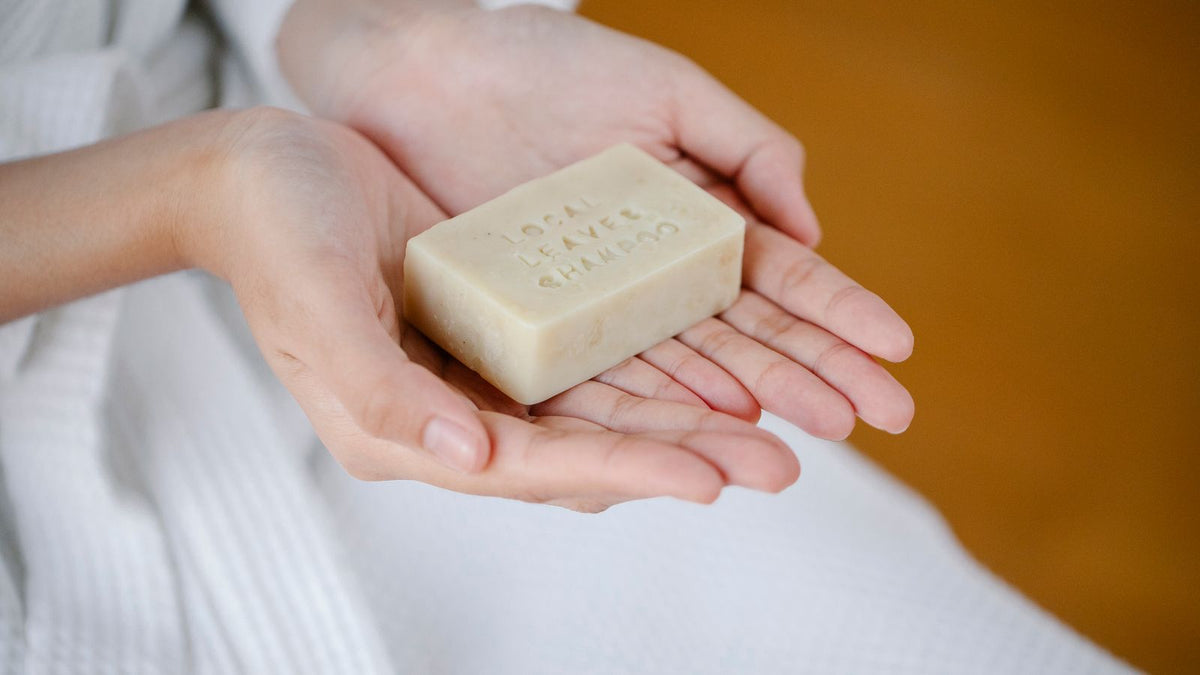
- Shampoo bars come in two kinds: true soap bars, made by reacting oils with an alkali, and syndet bars, made from synthetic detergents pressed into a solid.
- In a 2014 study of products bought from local shops in Kerala, most bathing soaps had a pH of 9 to 10 and most shampoos 6 to 7. The hair fibre is closest to neutral charge at about pH 3.67 and the scalp sits near 5.5.
- An alkaline wash adds negative charge to the hair surface, which raises friction between strands and lifts the cuticle when wet, according to a 2014 review that measured 123 shampoos.
- Soap reacts with the calcium and magnesium in hard water to form an insoluble scum. Yorkshire Water says softer water tends to be found in the west of its region, but your own postcode is what counts.
- The popular "transition period" after switching has no controlled study behind it that we could find; scum and residue explain most waxy, heavy hair.
- The NHS says losing 50 to 100 hairs a day is normal. Short snapped pieces are breakage, whole hairs with a bulb are shedding, and patches or a sore scalp go to your GP before any of the trichologists Batley searches bring up.
What is the difference between a soap shampoo bar and a syndet shampoo bar?
A soap shampoo bar is true soap, made by reacting plant oils or animal fats with an alkali, while a syndet shampoo bar is made from synthetic detergents, the same family of cleansers found in most liquid shampoos, pressed into a solid block. Both look identical on a shop shelf, yet they behave very differently on fine hair.
Soap came first. A 2010 review of hair cleansing by Zoe Draelos, a dermatologist at Duke University, in the International Journal of Trichology, notes that bar soap was used to wash hair until the mid 1930s, when liquid formulas that lathered and rinsed better took over. A 2015 review in the Indian Journal of Dermatology dates modern shampoo to the same decade and explains that shampoos usually rely on synthetic detergents, shortened to syndets, as their main cleansers. The shampoo bar has simply brought both options back in solid form, often side by side on the same shelf and with very similar packaging.
Every cleanser, soap included, works the same basic way: each molecule has one end that grips oil and one that grips water, so sebum, sweat, flakes and old styling product lift off the hair and rinse away. The difference is what gets left behind. Soap is itself an anionic detergent, and a 2014 review of shampoo pH in the International Journal of Trichology explains that in water it leaves an alkaline residue that can settle out as calcium salts, which build up on the strands and leave them dull and tangled. The review adds that the newer synthetic cleansers do not behave that way.
| Soap shampoo bar | Syndet shampoo bar | Liquid shampoo | |
|---|---|---|---|
| What it is | Oils or fats reacted with an alkali | Synthetic cleansers compressed into a solid | Synthetic cleansers dissolved in water |
| Typical pH | Alkaline; most soaps in one 2014 study measured 9 to 10 | Depends on the formula; ask the brand | Varies widely: 3.5 to 9.0 across 123 shampoos |
| In hard water | Reacts with calcium and magnesium to form scum | Synthetic cleansers do not form soap scum | Usually contains sequestering agents that bind calcium and magnesium |
| On fine hair | Often waxy, dull or tangly, especially in hard water | Can work well if the bar is light on butters | Can work well if the formula is lightweight |

Why can an alkaline soap bar leave fine hair rough and tangled?
An alkaline soap bar can leave fine hair rough and tangled because a high pH adds negative electrical charge to the hair surface, so strands repel and rub against each other more, the cuticle scales lift while wet, and fine fibres, which have less bulk to spare, snap more easily when you comb them.
The figures come from two measuring studies. When dermatologists in Thrissur, Kerala, tested bathing soaps and shampoos bought from local shops, most soaps had a pH of 9 to 10 and most shampoos 6 to 7, as reported in the Indian Journal of Dermatology in 2014. A Rio de Janeiro team led by Maria Fernanda Gavazzoni Dias measured 123 shampoos from international brands and found values from 3.5 to 9.0, with only 38% at pH 5.5 or below. The same review puts the isoelectric point of hair, the pH at which its surface charge is neutral, at about 3.67, and the scalp at around 5.5 like the rest of the skin.
Gavazzoni Dias and colleagues explain that any product with a pH above 3.67 increases the negative charge on the fibre, which means more static and more repulsion between strands. In alkaline conditions hair also takes up more water, and when it is wet the cuticle scales lift, which the review links to cuticle loss, fragmentation and cracks along the fibre. Their conclusion is that lower-pH shampoos causing less frizz is a reality rather than a myth. They are also careful to say that no standard pH has been agreed and that more studies are needed to settle the best range for scalp and hair. Water temperature plays a part as well, and our Havant guide to hot showers and fine, thinning hair explains why warm beats hot on the scalp.
Is pH the whole story?
No. Fine hair also snaps from rough towelling, tight bands, hot tools and brushing wet lengths. pH is one factor you can control cheaply, not a single cause. The 2015 Indian Journal of Dermatology review notes that coloured or permed hair does better with neutral-pH cleansers, so an alkaline soap bar is the least forgiving choice for fine hair that is also coloured or bleached. Many soap-bar users follow with a vinegar rinse to bring the pH back down, but a kitchen mix has no set strength, so check how your scalp feels before making it a habit.
Does hard water around Batley make soap shampoo bars worse?
Hard water makes soap shampoo bars worse because soap reacts with the calcium and magnesium dissolved in the water to form an insoluble scum that clings to hair, and Yorkshire Water says its softer water tends to be found in the west of its region, which suggests homes in West Yorkshire see less of it than the east, though your own postcode is what counts.
The Drinking Water Inspectorate explains that water hardness is caused by dissolved calcium and magnesium, that the level depends on local geology, and that hard water produces less lather from soap and leaves tide marks on basins, sinks and baths. It measures hardness as milligrams of calcium carbonate per litre and notes that water at 200 mg/l or higher will produce scale. Yorkshire Water's own education page describes the regional pattern: hard water is mainly found in the east of the region, whereas softer water tends to be found in the west, where the landscape is more moorland than chalk and limestone. It also describes the kitchen test: if soap makes only a few bubbles and the water turns cloudy, the soap has reacted with calcium and magnesium to form a layer that will not dissolve, the same film that leaves a ring around the bath.
Research on hard water and hair itself is small, and it pulls in two directions. In a 2016 study by Srinivasan and Rangachari in the International Journal of Dermatology, hair strands from 15 women were washed in hard water containing 212.5 ppm of calcium carbonate for 30 days; under the electron microscope they looked ruffled, carried more calcium and magnesium, and measured 72.78 micrometres thick against 78.14 for strands washed in distilled water. A 2017 Saudi study of samples from 20 volunteers found more magnesium on hard-water hair but no significant difference in surface damage. A 2011 laboratory study by Evans and colleagues found that hardness metals stiffen the hair fibre. The practical point survives both views: scum is the part you can see and feel, and soap is what makes it.
Using a bar where the water is hard
- Check your postcode on Yorkshire Water's water hardness checker rather than guessing from the town name.
- Rub the bar into your hands or wet hair to make lather first, rather than dragging the bar along fine lengths.
- Rinse for a full minute or more, lifting the hair at the roots so water reaches the scalp.
- If hair still feels waxy, switch to a syndet bar or a liquid shampoo, which contain cleansers that do not form soap scum.
For a closer look at minerals, dryness and brittle ends, our guide to hard water and dry, brittle hair covers shower filters, softeners and chelating products in more depth.
Get a discount on the fine, thinning hair range
Join the Watermans mailing list and we will email a discount code straight to your inbox, so you can try the fine, thinning hair range for less. Made in the UK, over 6.5 million bottles sold since 2012.
Why does residue make fine hair look flat or greasy?
Residue makes fine hair look flat or greasy because each fine strand has little weight or width to carry a coating, so a film of soap scum, heavy conditioning agents, styling product or leftover sebum sits along the length, glues neighbouring strands together and lets them lie close to the scalp instead of lifting away from it.
Gavazzoni Dias's 2015 overview of hair cosmetics notes that fine, straight hair carries sebum along its length very well, which is why fine hair can look oily a day after washing while curly hair hides the same amount of oil. The same overview explains that some conditioning polymers build up on hair, and the 2015 Indian Journal of Dermatology review adds that these polymers can make hair look rough and dull with continued use. Draelos describes the soap side of the problem: shampoos contain sequestering agents that bind calcium and magnesium, and without them a cleanser leaves a scum film that makes hair look dull. A pure soap bar has no such protection built into its chemistry. Whichever format you land on, our guide to volumising shampoo for fine hair covers what to look for on the label.
Signs that residue, rather than your hair, is the problem:
- A tacky or waxy feel once dry, especially at the crown where the bar was rubbed most.
- Strands clumping into sections that show more scalp than usual, which makes fine hair look thinner than it is.
- Dullness even straight after washing, and a comb that drags through the lengths.
- Roots that look greasy early, sometimes within a day, even though you washed thoroughly.
- Hair that behaves normally again after a single wash with a different cleanser.
The fixes are simple. Keep conditioner, oils and masks on the mid-lengths and ends rather than the scalp. Use a clarifying wash now and then: the 2015 overview suggests an anti-residue shampoo every 10 washes or so, followed by conditioner on the lengths, and more often if you use a lot of leave-in products. If you want to know which ingredients are most likely to build up in the first place, our guide to sulfates, silicones and parabens sorts the real concerns from the scare stories.

Is the shampoo bar "transition period" real?
The shampoo bar transition period, a few weeks of waxy, heavy or greasy hair said to pass as your scalp adjusts, has no controlled study behind it that we could find, and the likelier explanations are soap scum in hard water, residue from an unfamiliar formula and ordinary changes in how often and how thoroughly you wash.
The idea usually goes like this: your scalp has been "stripped" by liquid shampoo, overproduces oil, and needs time to settle once you switch to a gentler bar. Two published reviews point to a simpler cause. Draelos writes that bar soaps are no longer recommended for washing hair because they leave behind a soap scum when mixed with hard water, and the 2015 Indian Journal of Dermatology review says the same scum is difficult to rinse off. A coating that builds a little with each wash would feel exactly like a "transition" that never quite ends. Whichever format you settle on, our guide to which volume products actually work on fine hair explains what to pair it with. Readers nearer Newry may find our guide to choosing between Belfast and Dublin from Newry more useful.
The claim also borrows from no-poo thinking, the idea that the scalp rebalances its oil output if you stop shampooing. Our guide to no-poo and co-washing for thinning hair looks at that claim and what the research says about sebum.
A fair way to test it at home:
- Read the label first. If the first ingredients are sodium cocoate or saponified oils, it is a soap bar and scum is the likely cause.
- Try one wash with a different cleanser. If a syndet bar or liquid shampoo leaves your hair normal straight away, your scalp was never "adjusting".
- Watch your scalp, not just your hair. The NHS names soaps and detergents as the most common irritant cause of contact dermatitis, and says a reaction usually appears within a few hours or days. Itching, tightness, redness or flaking means stop using that bar.
Are shampoo bars really better for the environment than bottles?
Shampoo bars usually use less packaging than bottles, since most come wrapped in card or paper, but a bar is not automatically the greener choice overall, because what matters is how many washes you get from it, whether it goes soggy and wastes, and whether a refill or a larger bottle would suit your hair better.
The honest case for bars is strong on packaging and transport. Draelos notes that in most cleansing shampoos water is the first ingredient listed, which means much of what a bottle carries around the country is water. A bar leaves that water out, so it is lighter and smaller for the number of washes it gives, and paper or card is easier to recycle than a pump bottle.
The trade-offs are real too, and few eco guides mention them:
- Soggy bars waste product. A bar left in a puddle on the bath edge softens and dissolves between washes. A draining soap dish and a dry spot away from the shower stream make a big difference to how long it lasts.
- Harder to share and to measure. A bar passed around a household is used unevenly, and it is easy to overload fine hair by rubbing too long.
- A product you abandon is waste. If a soap bar leaves fine hair coated, you are likely to wash twice, use more conditioner or give up on it half used.
- Bottles have greener options too. Refill shops, larger sizes and recyclable bottles cut plastic without changing the chemistry that suits your hair.
Our own shampoo is a liquid in a bottle, so read this section with that in mind. We think the fairest rule is to buy the format you will actually finish, in the chemistry your hair likes, and to judge a bar by the whole life of the product rather than by the wrapper alone.

How do you read the ingredient list on a shampoo bar?
Reading a shampoo bar's ingredient list starts with the first two or three names, because UK rules require cosmetic ingredients to be listed in descending order of weight, so the main cleanser sits near the top and tells you straight away whether you are holding a true soap bar or a syndet bar.
Business Companion, the Trading Standards guidance site, sets out the rules. The pack must carry a list headed "Ingredients" in descending order of weight at the time each ingredient was added, and anything under 1% may be listed in any order after the rest. Names follow the International Nomenclature of Cosmetic Ingredients, known as INCI, and every cosmetic product marketed anywhere in the UK has to carry the list, whatever channel it is sold through, which covers handmade bars on a market stall as well as supermarket shelves. The pH is a different matter: the 2014 pH review points out that it is not required on labels, so ask the maker if the label does not say.
| What you see near the top | What it usually means |
|---|---|
| Sodium cocoate, sodium olivate, sodium palmate, sodium castorate, or oils followed by sodium hydroxide | A true soap bar. Expect an alkaline pH and scum in hard water. |
| Sodium cocoyl isethionate, sodium lauryl sulfoacetate, disodium lauryl sulfosuccinate | A syndet bar built on synthetic cleansers, closer in behaviour to liquid shampoo. |
| Cocamidopropyl betaine | A mild amphoteric cleanser. Draelos notes these are used in shampoos for fine hair because they foam moderately while leaving hair manageable. |
| Citric acid or lactic acid | A pH adjuster. The 2015 Indian Journal of Dermatology review describes adding acids such as citric acid to bring shampoo down to around pH 5.5. |
| Disodium EDTA or tetrasodium EDTA | A sequestering agent that binds calcium and magnesium, useful in hard water. |
| Shea, cocoa or mango butter high in the list | A rich bar that may weigh fine hair down; better suited to thick, dry or curly hair. |
| Parfum | Fragrance. The 2015 overview of hair cosmetics lists fragrances as the most frequent cause of reactions to cosmetic ingredients. |
A "sulfate-free" or "natural" claim on the wrapper does not tell you which type of bar you have, since a soap bar is sulfate free by definition. For a line-by-line walk through a liquid shampoo's label, see our guide to reading a shampoo label for thinning hair.
Which is better for fine or thinning hair, a shampoo bar or a liquid shampoo?
For fine or thinning hair, a well-made syndet bar and a well-made liquid shampoo are close to equal because both rely on synthetic cleansers, while a true soap bar is usually the weakest choice, especially in hard water, so the better product is whichever leaves your roots clean and your lengths light without a coated feel. For the scalp side of the same question, read what actually helps a flaky, itchy scalp.
| Your situation | Usually a good fit | Watch out for |
|---|---|---|
| Fine hair, hard water | Liquid shampoo or a syndet bar | Soap bars and butter-rich bars |
| Fine hair, soft water, want less plastic | A light syndet bar, or a refillable liquid | Rubbing the bar straight onto the lengths |
| Coloured or bleached fine hair | A gentle, pH-adjusted liquid or syndet bar | Alkaline soap and vinegar-rinse routines |
| Oily roots, dry ends | Cleanser on the scalp, conditioner on the ends only | Heavy 2-in-1 formulas and oils at the root |
| Itchy or sensitive scalp | A simple formula with little or no fragrance | Strongly scented bars and essential oil blends |
We make a liquid shampoo rather than a bar, so weigh our view accordingly. If you prefer a bottle, or your bar has left fine hair coated, these are the products from our range that fit this topic. They are cosmetic: they help hair look and feel fuller and reduce breakage, but they do not change what is happening at the follicle.

A vegan, sulfate-free 250ml liquid shampoo made in the UK, with biotin, caffeine, rosemary and niacinamide, £14.95 in September 2026. Lather it at the scalp with your fingertips and rinse well for a clean feel that helps fine hair look fuller.

A breakage-defence conditioner with cholesterol, shea butter and glycerin, £13.95 in September 2026. A small amount on the mid-lengths and ends, kept away from the roots, smooths the cuticle and cuts tangles without weighing fine hair down.

Grow Me® Shampoo and Conditioner Set
Grow Me shampoo with Condition Me conditioner, £26.95 in September 2026. A straightforward two-step routine for anyone moving back from a bar: cleanse the scalp, condition the ends.
How can you tell breakage, shedding and hair loss apart after changing shampoo?
Breakage leaves short, uneven snapped pieces because the fibre has broken somewhere along its length, shedding releases whole hairs with a small pale bulb at the root as part of the normal growth cycle, and hair loss means the follicles themselves are affected, showing as a widening parting, patches or thinning that does not fill back in.
- Hair breakage. The fibre snaps and the follicle is untouched. Friction from an alkaline wash, rough towelling and combing wet hair all add up, and the 2014 pH review links high-pH washing to cuticle damage and fibre breakage.
- Hair shedding. Whole hairs fall at the end of their cycle. The NHS says losing 50 to 100 hairs a day is normal. The British Association of Dermatologists explains that around 85% of scalp follicles are growing at any one time and around 15% are resting, that a resting follicle rests for two to four months before a new hair grows, and that shedding is most noticeable after washing or brushing.
- Hair loss. The follicle itself changes, as in pattern hair loss or patchy conditions, and the scalp looks different. That always belongs with your GP.
| What you see | Breakage | Shedding | Hair loss |
|---|---|---|---|
| The hair itself | Short pieces, no bulb | Full length with a small bulb | The change shows on the scalp |
| Link to your new bar | Can start within weeks of a harsh wash | Unlikely; triggers usually date back about 3 months | Not caused by shampoo |
| First step | Gentler cleanser, conditioner on the ends | Usually settles; GP if heavy or ongoing | Speak to your own GP |
Timing is the useful clue. The British Association of Dermatologists says telogen effluvium, a surge in shedding in which the resting share rises to 30% or more, can occur around 3 months after a trigger such as illness or major stress, and that the shedding phase lasts 3 to 6 months. So heavy shedding that starts a week after a new bar almost certainly began with something that happened months earlier; the new wash just makes the loose hairs easier to see in the plughole.

If breakage carries on for several weeks after you have gone back to a gentle cleanser and conditioner, that is a sensible point to look at the trichologists Batley residents can find on the professional registers, while anything visible on the scalp itself still goes to your GP first.
When should you speak to your GP or look for trichologists Batley?
Speak to your own GP first if hair is coming out in patches or heavy handfuls, or if your scalp is sore, red, scaly or itchy after a new product, and look for trichologists Batley residents can check on a professional register when the scalp is healthy but breakage, build-up or fine, thinning hair still bothers you.
The NHS advises seeing a GP if you are worried about hair loss, and says to see a GP to get an idea of what is causing it before thinking about going to a commercial hair clinic. It lists illness, stress, weight loss and iron deficiency among the causes of temporary hair loss, and a GP visit costs nothing. For a scalp that reacts to a new bar, the NHS contact dermatitis page suggests avoiding the product that triggers symptoms and using emollient soap substitutes rather than regular bar or liquid soaps, which can dry the skin; a pharmacist can help with a mild rash.
Trichologists are not medical doctors, and the title is not protected, so check membership before you pay. The Institute of Trichologists keeps a Find a Trichologist register, and the Trichological Society is the other main UK body. From Batley, practitioners in Dewsbury, Leeds, Wakefield, Huddersfield and Bradford are all within reach. When you contact trichologists Batley residents have found on those registers, take the wrapper or a photo of your shampoo bar's ingredient list, and ask:. Related reading: our guide to trichologists Wakefield.
- Which professional body do you belong to, and can I check your entry on its website?
- If this looks like a scalp condition, will you send me back to my GP?
- Do you sell the products you recommend, and can I keep using my own?
We make hair care and run no clinics, so we cannot look at your scalp. Grow Me shampoo is vegan and made in the UK, and Watermans has sold over 6.5 million bottles since 2012. Our products are cosmetic: they help hair look and feel healthier and reduce breakage, but they are not a remedy for a scalp condition or for medical hair loss.
What are the most frequently asked questions about shampoo bars and fine hair?
Should I contact trichologists Batley about hair that changed after switching to a shampoo bar?
Start by checking the bar, because a waxy, flat or tangly feel after a switch is usually soap scum or residue that a different cleanser fixes within a wash or two. See your GP first for patches, heavy shedding or a sore scalp. A registered trichologist is worth contacting if breakage or build-up carries on once the scalp is healthy.
Are shampoo bars bad for fine hair?
Not all of them. True soap bars are alkaline and form scum in hard water, which often leaves fine hair dull and coated. Syndet bars use synthetic cleansers like liquid shampoo and can suit fine hair well, especially if butters and oils are not high on the ingredient list.
What pH should a shampoo bar be?
No standard pH has been agreed. A 2014 review found hair is closest to neutral charge at about pH 3.67 and the scalp sits around 5.5, and it treated 5.5 or below as a low-pH shampoo. Most soaps tested in a separate 2014 study measured pH 9 to 10. If the label does not say, ask the maker.
How do I know if my shampoo bar is soap or syndet?
Read the first few ingredients, which UK rules list in descending order of weight. Sodium cocoate, sodium olivate or oils with sodium hydroxide mean a soap bar. Sodium cocoyl isethionate, sodium lauryl sulfoacetate or disodium lauryl sulfosuccinate mean a syndet bar.
Why does my hair feel waxy after using a shampoo bar?
A waxy feel usually means soap scum, formed when soap reacts with calcium and magnesium in the water, or a butter-rich bar leaving residue. Rinse for longer, lather in your hands first, and try one wash with a syndet bar or liquid shampoo. If the waxy feel goes, the bar was the cause.
Can a shampoo bar cause hair loss?
A shampoo bar does not cause pattern hair loss or damage follicles, but a harsh, alkaline wash can add to breakage, and residue can make fine hair look thinner. Heavy shedding usually traces back to a trigger about 3 months earlier, according to the British Association of Dermatologists. Speak to your GP if you are worried.
Is the water in Batley hard or soft?
Yorkshire Water says hard water is mainly found in the east of its region, while softer water tends to be found in the west, where the landscape is more moorland than chalk and limestone. Hardness varies by supply, so check your own postcode on the Yorkshire Water website.
Do I need a conditioner if I use a shampoo bar?
Most people with fine hair still benefit from a light conditioner on the mid-lengths and ends, because cleansing leaves hair with a negative charge that makes it tangle, and conditioners add positive charge back. Keep it off the roots so fine hair does not go flat.
Sources & references
- NHS, Hair loss
- NHS, Contact dermatitis
- British Association of Dermatologists, Telogen effluvium
- Drinking Water Inspectorate, Water hardness and hard water
- Yorkshire Water, Let's learn about water hardness
- Yorkshire Water, Check your water hardness
- Business Companion (Trading Standards), Cosmetic products
- Gavazzoni Dias MF et al. The shampoo pH can affect the hair: myth or reality? Int J Trichology, 2014
- Gavazzoni Dias MF. Hair cosmetics: an overview. Int J Trichology, 2015
- Draelos ZD. Essentials of hair care often neglected: hair cleansing. Int J Trichology, 2010
- D'Souza P, Rathi SK. Shampoo and conditioners: what a dermatologist should know? Indian J Dermatol, 2015
- Tarun J et al. Evaluation of pH of bathing soaps and shampoos for skin and hair care. Indian J Dermatol, 2014
- Srinivasan G, Chakravarthy Rangachari S. Scanning electron microscopy of hair treated in hard water. Int J Dermatol, 2016
- Alahmmed LM et al. Scanning electron microscopy study of hair shaft changes related to hardness of water. Indian J Dermatol Venereol Leprol, 2017
- Evans AO, Marsh JM, Wickett RR. The structural implications of water hardness metal uptake by human hair. Int J Cosmet Sci, 2011
- The Institute of Trichologists, Find a Trichologist
- The Trichological Society
What is the bottom line on trichologists Batley?
A shampoo bar is only as good as the cleanser inside it: true soap bars are alkaline and leave scum in hard water, which is why fine hair so often turns waxy, flat or tangly after a switch, while syndet bars behave much like liquid shampoo and can suit fine hair well. Read the first ingredients, rinse thoroughly, keep conditioner on the ends, and separate breakage from shedding before you worry. Take patches, heavy shedding or a sore scalp to your GP first, and save trichologists Batley for breakage or build-up that lasts once your scalp is healthy. If your question is about products or a routine rather than a medical one, you can talk to Gail Waterman, our co-founder, as an AI avatar on the Watermans homepage.
If your bar has left fine hair coated and you want a simple bottle instead, a sulfate-free shampoo such as Grow Me lathers at the scalp and rinses out cleanly, leaving fine hair light.
Watermans products are 100% cosmetic and do not treat medical hair loss. Individual results may vary.