Trichologists Chesterfield: Why Hair Looks Thinner in Photos
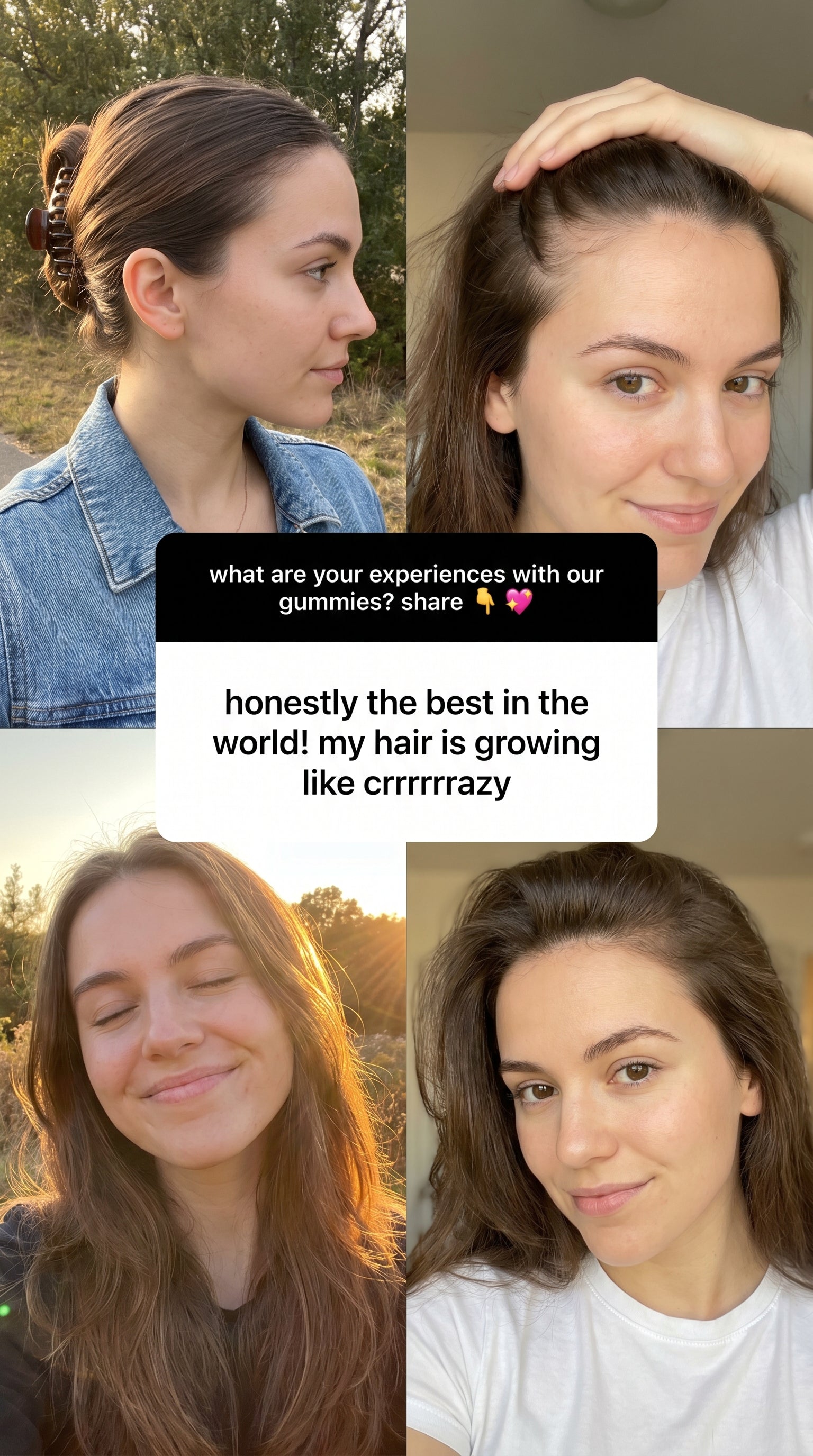
A surprising number of searches for trichologists Chesterfield begin with a photograph. Someone sends a group picture taken under a pub light, or a holiday shot from above, and the crown looks alarmingly sparse. The panic is genuine, but the evidence often is not. Photographs and mirrors are unreliable witnesses about hair density, and knowing why saves a great deal of unnecessary worry.
Our hair growth shampoo
Grow Me® Hair Growth Shampoo, £14.95. A sulphate free daily shampoo that supports a healthy scalp environment and helps reduce breakage, so lengths hold on and look fuller.
The short answer: overhead light, wet hair, wide-angle phone lenses and a downward camera angle all exaggerate how much scalp shows, sometimes dramatically. None of them changes how much hair you actually have. People search for trichologists Chesterfield after one bad photo far more often than after a real change, and the reliable signals are parting width over months, ponytail thickness and shedding count, not a single image.
Key takeaways
- Overhead lighting shines straight down the parting and throws the scalp into contrast. Side or window light hides the same scalp.
- Wet hair clumps into fewer, thicker strands, so scalp shows through gaps that dry hair covers. Never judge density wet.
- Front-facing phone cameras use a wide-angle lens held close, which widens partings and flattens crowns.
- A large share of density can be lost before thinning becomes obvious, which is why real change feels sudden when it is not.
- Track with dry hair, same spot, same light, every three months. Hair grows about a centimetre a month, so anything shorter is noise.
Why do photographs make hair look thinner than it is?
Cameras record a single instant from a single angle under one dominant light source, while your eyes and brain constantly average a moving, three-dimensional view. Hair is semi-transparent and made of individual fibres roughly 50 to 100 microns across, so how much scalp appears depends almost entirely on where the light comes from and where the fibres happen to be sitting.
A typical scalp carries around 100,000 follicles, and those hairs do not form a solid sheet. Light gets between them constantly. In diffuse daylight the scalp beneath is lit to a similar brightness as the hair and simply does not register. Under a single overhead lamp, the hair is lit and the scalp is shadowed, and the eye reads that contrast as bare skin.
Add a wide-angle front camera held above head height and you have stacked three distortions on top of each other. The result can look like significant loss on a head that has not changed at all in a year.
What does the mirror get wrong?
Mirrors are more honest than photographs but still misleading, mostly because of where the light in the room sits. Modern bathrooms are commonly lit by ceiling downlights placed directly above where you stand, which is the single least flattering arrangement for a parting. That light travels straight down the gap between the hair and lands on scalp.
The second problem is that you rarely look at the same thing twice. People check the crown with a hand mirror at odd angles, under different lights, at different times of day and with hair in different states of dryness. Comparing yesterday under a window with today under a downlight is comparing nothing at all.
If you want one change that makes the mirror useful, always check in the same place with the same light. Consistency turns a mirror from a source of anxiety into an actual measurement.

The pub-lighting test
Before worrying about a photo, take a second one in daylight near a window, dry hair, camera held at eye level by someone else. If the two images look completely different, the first one was a lighting artefact. If they look similar, you have something worth tracking properly.
Why does wet hair always look worse?
Water makes hair fibres stick together through surface tension, so a hundred separate strands become perhaps twenty visible clumps. Fewer, thicker groups leave wider gaps between them, and light reaches the scalp through those gaps. Wet hair is also heavier and lies flat rather than standing slightly away from the head, which removes the volume that hides scalp.
Both effects are entirely mechanical and entirely temporary. The same hair dried and separated will cover the same scalp it covered last week. Judging your density in the shower or immediately after it is the most reliable way to frighten yourself about nothing.
There is one genuine exception. If the hair you are seeing in the shower is coming out in noticeably greater quantity than your normal baseline, that is real information, and it is about shedding rather than about how the hair looks wet.

How do you tell hair loss, shedding and breakage apart?
Three distinct problems get described as thinning, and photographs cannot distinguish between them at all. Hair loss means follicles producing finer hair or stopping altogether, which shows as a widening parting over months. Shedding means more hairs than usual completing their cycle, against a baseline of roughly 50 to 100 a day. Breakage means the fibre snapping while the root stays in place. Lighting is only half the story, and our guide to why partings widen and whether to change yours covers the other half. Readers nearer Craigavon may find our guide to finding hair and scalp help in Craigavon more useful.
What you find tells you which one you have. Shed hairs are full length with a small pale bulb at the root end. Broken hairs are short, often one to three inches, with two blunt or frayed ends and no bulb. A widening parting with normal shedding and no broken ends points towards the first.
The reason this matters is that the three have completely different answers. Breakage responds to how you handle your hair. Shedding usually settles on its own once its trigger passes. A genuinely widening parting is the one that deserves a GP. Our three-clue guide to why hair is thinning goes through the self-check in detail.
Get a discount on the fine and thinning hair range
Join the Watermans mailing list and we will email a discount code straight to your inbox, so you can try the fine and thinning hair range for less. Vegan, made in the UK, over 6.5 million bottles sold since 2012.
How should you photograph your hair to track it honestly?
Standardise everything except the hair. Photograph dry hair only, in the same room, at the same time of day, with the same parting on the same side, with someone else holding the camera at a fixed distance and at eye level. Repeat every three months, because hair grows roughly one centimetre a month and shorter intervals capture noise rather than change.
- Dry hair, always. Wet hair is the single biggest source of false alarms.
- Same light, ideally a window. Daylight from the front or side, never a ceiling light directly above.
- Rear camera, held by someone else. Two metres back at eye level, not a front camera held overhead.
- Same parting, combed the same way. Moving a parting two centimetres changes the picture completely.
- Three shots: parting, crown, hairline. One angle hides what another shows.
- Every three months, dated. Anything more often will show you weather, not hair.
Two other measurements are worth more than any photograph. Measure your ponytail circumference with a tape at the same point on the band, and note it. And count shed hairs on one wash day a month rather than guessing. Both are numbers, and numbers do not care about lighting.
What everyday factors change how full your hair looks?
Several ordinary things change apparent density without changing a single follicle. Product build-up weighs hair down and makes it lie flat. A parting worn in the same place for years trains hair to fall away from it. Heavy conditioner at the roots removes volume. Long length pulls fine hair flat under its own weight, which is why a shorter cut often reads as fuller.
- Move your parting. The fastest cosmetic change available. Hair trained to fall one way leaves a visible channel.
- Keep conditioner off the roots. Mid-lengths and ends only, so the roots keep their lift.
- Consider length. Fine hair past the shoulders is pulled flat by its own weight.
- Watch the build-up. Dry shampoo layered for days coats the root and kills volume.
- Dry with the roots lifted. Drying with your head tipped forward gives lift that lasts the day.
If your ends have gone wispy while the roots look fine, that is a breakage pattern rather than a density one. Our guide to why your ends look so thin covers it.


A sulphate-free everyday shampoo with caffeine, biotin and allantoin. Cleanses without the heavy residue that flattens fine hair at the root, which is where apparent volume is won or lost.

Grow More® Leave-In Scalp Elixir
A leave-in scalp elixir for people who want a nightly step. Applied to the scalp and left on, it fits into a routine without adding weight to fine lengths.
When should you stop self-checking and see trichologists Chesterfield or a GP?
Move from self-checking to a professional opinion when the signals persist across lighting and time. See a GP if your parting is measurably wider over three to six months, if heavy shedding continues beyond about three months, if you find distinct bald patches, or if the scalp is sore, scaling or scarred. NHS dermatology comes through a GP referral at no cost. If your question is about products or a routine rather than a medical one, you can talk to Gail Waterman, our co-founder, as an AI avatar on the Watermans homepage.
Private specialists, including trichologists Chesterfield, are useful when you want an unhurried assessment with magnification and a written plan rather than a ten minute slot. Trichology sits outside the NHS, so expect to pay, commonly 40 to 90 pounds for a first session. They cannot write a prescription, so medicines still route through your GP.
Check credentials before paying, because trichologist is not a title protected by UK law. Membership of the Institute of Trichologists or the Trichological Society indicates assessed training. For context on what normal growth looks like over that period, our guide to how fast hair really grows is worth reading. On the money question, what is free on the health service and what you pay for privately sets out the split plainly.
Frequently asked questions
Why does my hair look so much thinner in photos than in the mirror?
A mirror shows you a moving, three-dimensional view lit from several directions, and your eyes average it out. A photo freezes one angle under one light source, usually overhead, which casts a shadow along the parting and makes the scalp read as a dark line. The hair has not changed between the two views.
Is the front camera on my phone making it worse?
Front cameras use a wide-angle lens held close to the face, which exaggerates whatever is nearest the lens and stretches the edges of the frame. Held above head height, that combination widens the parting and flattens the crown. A photo taken by someone else from two metres away with the rear camera is a far more honest picture.
How much hair do you lose before thinning becomes visible?
Standard dermatology teaching is that a substantial proportion of density, often quoted as up to around half, can be lost before thinning becomes obvious to the casual eye. That is why people frequently report that hair loss seemed to appear overnight when in reality it developed slowly over months or years.
Why does my hair look thinnest right after a shower?
Wet hair clumps together into fewer, thicker strands, so light passes between the clumps and reaches the scalp. Wet hair is also heavier and lies flat against the head instead of standing away from it. Both effects reveal scalp that dry, separated hair hides, which is why wet hair is the worst possible moment to judge density.
Does bathroom lighting really make that much difference?
Yes. Downlights directly above the head send light straight down the parting line and throw the scalp into contrast, while light from in front or the side falls across the hair instead. Move to a window, or stand side-on to a mirror, and the same head of hair can look noticeably fuller without anything having changed.
How should I photograph my hair before seeing trichologists Chesterfield?
Take photos on dry hair, in the same place, at the same time of day, with the same parting and the same lighting, roughly every three months. Hair grows about one centimetre a month, so shorter intervals show noise rather than change. Have someone else take the shot from a fixed distance rather than using the front camera.
Should I worry if only the photos look bad?
Not usually on its own. Look for corroborating signs instead: a parting that takes more hair to cover than it did, a ponytail that feels thinner in the hand, or noticeably more hairs than your usual baseline in the shower drain. One unflattering photo is evidence of lighting, not of hair loss.
When should I stop self-checking and see trichologists Chesterfield?
See a GP if your parting is visibly widening over months, if shedding stays heavy for longer than about three months, if you find distinct bald patches, or if the scalp is sore, scaly or scarred. Those are signs that outlast lighting and angles, and a GP referral into NHS dermatology costs nothing.
What is the bottom line on trichologists Chesterfield?
One bad photograph is almost never evidence of hair loss. Overhead light, wet hair, a wide-angle front camera and a downward angle each exaggerate visible scalp, and together they can make an unchanged head of hair look dramatically thinner. Judge density on dry hair in consistent light, track it every three months, and measure your ponytail rather than trusting your eyes. Searching for trichologists Chesterfield is worth it when the parting genuinely widens over months, and a GP should come first for patchy loss or a sore scalp.
Keep the three problems apart. Hair loss shows as a widening parting over months, shedding shows as a higher count against your own baseline, and breakage shows as short hairs with frayed ends. A photograph can show you none of them reliably.
If flat, weighed-down roots are making your hair look thinner than it is, a lighter hair growth shampoo that rinses clean is the simplest place to start, because root lift does more for apparent volume than anything you put on the ends.
Watermans products are 100% cosmetic and do not treat medical hair loss. Individual results may vary.
Sources & References
- NHS, Hair loss: normal shedding, when hair changes need a GP, and referral routes.
- British Association of Dermatologists, Hair and scalp information leaflets: follicle counts, hair growth rate and pattern hair loss.
- DermNet, Hair loss: how density loss becomes visually apparent and how it is assessed.
- Institute of Trichologists, Find a trichologist: UK membership and training standards.